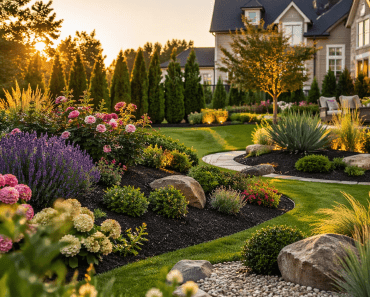
Apple Tree Garden Ideas can turn an ordinary backyard into a beautiful, productive, and surprisingly sophisticated outdoor space. An apple tree is much more than a source of fresh fruit. With thoughtful placement, companion planting, structural elements, and seasonal styling, it can become one of the strongest visual features in the entire garden.
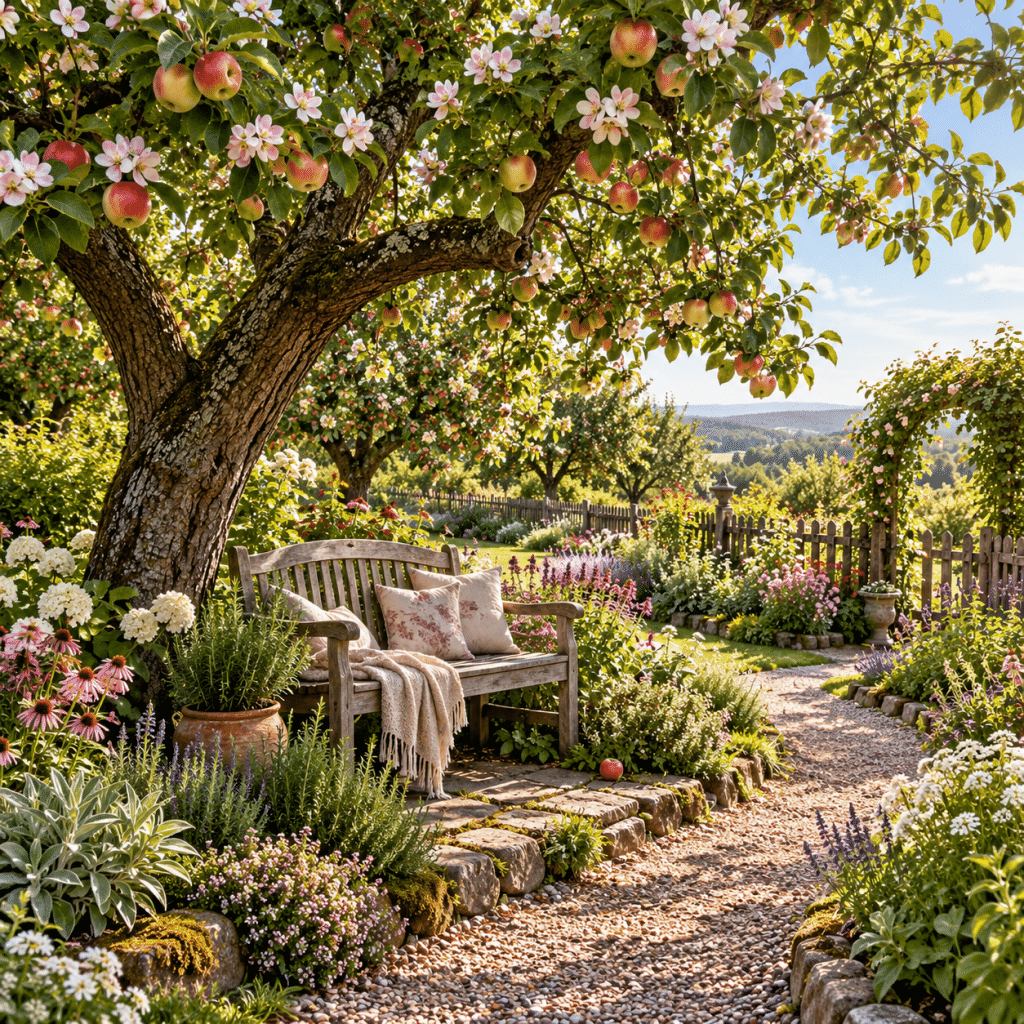
Few garden plants offer the same combination of beauty and usefulness. In spring, apple trees become covered in delicate blossoms. During summer, their green canopy creates welcome shade and structure. By late summer and autumn, branches begin carrying colorful fruit, while fallen leaves add another layer of seasonal character.
That natural cycle makes apple trees particularly interesting for gardeners who want landscapes that change throughout the year rather than gardens that look attractive during only one season. 🍎
The most successful approach is not simply planting an apple tree in the middle of a lawn. Instead, treat the tree as part of a complete garden composition.
These Best 3 Apple Tree Garden Ideas explore three very different ways to do exactly that:
🥇 Create a romantic apple tree garden room with layered planting
🥈 Turn apple trees into an elegant edible garden pathway
🥉 Design a naturalistic apple orchard corner with seating and meadow planting
Each concept can be adapted to large gardens, modest suburban yards, cottage-style landscapes, and even relatively compact spaces.
Why Apple Trees Can Become Powerful Garden Features
Apple trees are often treated primarily as fruit trees, but visually they can perform many of the same functions as ornamental specimen trees.
Their branching structure naturally creates character.
Older trees develop twisting limbs and textured bark, while younger trees can be trained into clean architectural shapes. Even without fruit, a well-positioned apple tree can create height, shade, movement, and a sense of permanence within a garden.
The spring blossom season is especially valuable.
Soft white and pale pink flowers can transform the canopy almost overnight. When surrounded by complementary planting, the effect can resemble a miniature flowering woodland.
Later, the appearance changes completely as green leaves fill the canopy.
Small fruits gradually become visible between the foliage, creating natural color accents throughout the tree. In autumn, red, yellow, or green apples can become decorative features in their own right.
🍏 This long seasonal transformation is one reason apple trees work so well as central garden-design elements.
They can also support a more relaxed style of gardening.
Rather than relying only on perfectly clipped hedges, formal borders, and ornamental plants, an apple tree introduces something productive and slightly unpredictable. That contrast can make the entire landscape feel more authentic.
What Makes the Best Apple Tree Garden Ideas Work
A strong apple tree design usually combines four elements:
structure, planting, accessibility, and seasonality.
The tree provides the primary structure, but everything around it determines whether the area looks intentional or unfinished.
Groundcover plants can soften the base.
Flowering perennials can bring color into the lower part of the composition.
Gravel paths or stepping stones can make fruit harvesting easier.
A bench can turn the tree into a destination rather than merely another plant.
Lighting can extend the atmosphere into the evening.
Even something as simple as leaving enough open space beneath the canopy can dramatically improve the design.
The following comparison shows how the three main ideas differ.
| Apple Tree Garden Idea | Best For | Main Design Feature | Planting Style | Overall Mood |
|---|---|---|---|---|
| 🥇 Romantic Garden Room | Cottage and decorative gardens | Apple tree with seating beneath canopy | Layered flowers and soft groundcovers | Intimate and romantic |
| 🥈 Edible Garden Pathway | Productive and organized gardens | Apple trees lining a path | Herbs edible flowers and compact plants | Structured and practical |
| 🥉 Natural Orchard Corner | Larger relaxed landscapes | Small orchard with meadow planting | Grasses wildflowers and bulbs | Natural and atmospheric |
There is no need for every apple-tree garden to follow the same formula.
A single mature tree may become the centerpiece of an intimate seating area, while several trees can create an orchard-inspired walkway or informal landscape zone.
The key is to design around the character of the tree rather than treating it as an isolated object.
Apple Tree Garden Ideas That Blend Beauty and Function
The strongest Apple Tree Garden Ideas usually solve more than one problem at once.
They provide fruit, but also shade.
They create height, but also soften the landscape.
They attract attention during blossom season, yet continue contributing texture long after flowering has finished.
A useful way to design around apple trees is therefore to ask one question:
What should happen underneath and around the tree?
That area determines whether the apple tree feels integrated into the garden.
Leaving bare soil or unmanaged grass around the trunk may be perfectly functional, but it rarely creates the most inspiring visual result.
Layering, pathways, furniture, meadow planting, bulbs, and low-growing herbs can all transform the surrounding area without competing with the tree itself.
The three ideas below approach that space in very different ways.
🥇 Best 1 Create a Romantic Apple Tree Garden Room
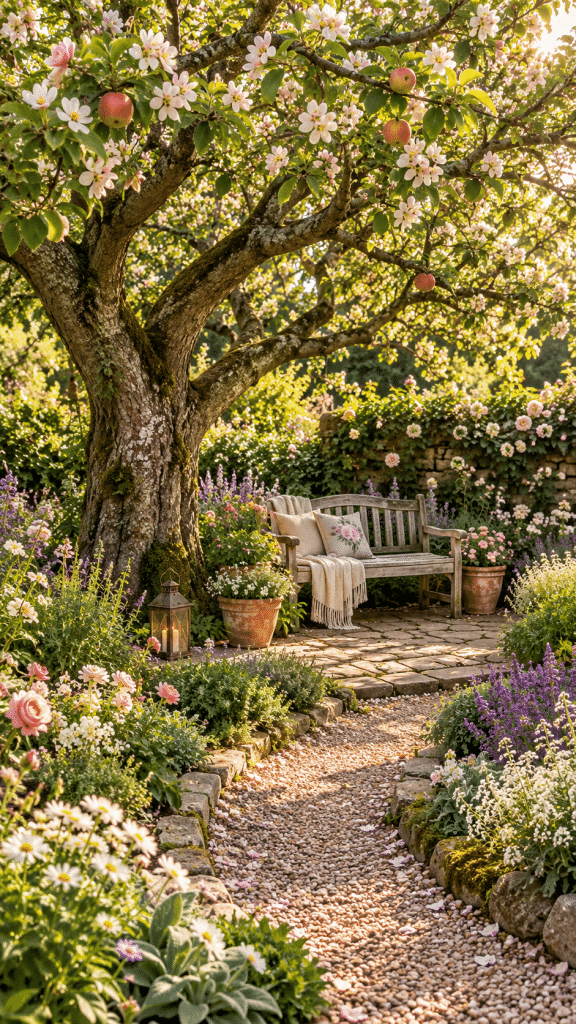
One of the most beautiful ways to use an apple tree is to transform the space beneath it into a small outdoor garden room.
The tree becomes the ceiling.
Its trunk becomes the central architectural feature.
The planting around it creates soft natural walls.
A bench, small chair, or compact café table completes the composition.
This concept is especially effective with a mature apple tree whose canopy already provides generous shade.
Instead of positioning furniture randomly underneath the branches, design the entire area as a deliberate destination.
A narrow path can guide visitors toward the tree.
Flowering plants can gradually become softer and lower as they approach the seating area.
The result should feel discovered rather than constructed. 🌿
Build the Design Around the Tree Canopy
Begin by looking at the natural spread of the branches.
The canopy creates an invisible boundary that can help determine the size of the garden room.
Rather than filling every inch beneath the tree with dense planting, leave open areas where people can comfortably sit, walk, and collect fruit.
A circular or gently curved layout usually suits an apple tree better than rigid rectangular beds.
Curves echo the shape of the canopy and help the garden feel relaxed.
A simple gravel surface beneath part of the tree can provide a practical seating base while still allowing the surrounding garden to feel natural.
Small irregular stepping stones are another option.
They work particularly well in cottage gardens where a highly polished paved terrace could feel too formal.
Create Layers of Soft Planting
The planting around a romantic apple tree garden should feel abundant without becoming chaotic.
Start with lower plants close to the tree.
Then gradually introduce slightly taller flowering perennials toward the outer edge.
This creates depth while keeping the trunk visible.
Plants with soft textures are especially effective.
Consider combinations of:
- low-growing thyme
- creeping groundcovers
- hardy geraniums
- catmint
- lady’s mantle
- small ornamental grasses
- foxgloves positioned farther from the trunk
- alliums
- spring bulbs
- soft white flowers
- pale pink flowering perennials
The goal is not to surround the apple tree with every possible cottage-garden plant.
Instead, repeat a limited selection.
Repetition creates rhythm and prevents the planting from looking visually cluttered.
During spring, bulbs can echo the pale apple blossoms above.
By summer, perennials can take over.
Autumn grasses and seed heads can then keep the area interesting as the apples mature.
Add a Beautiful Seat Beneath the Apple Tree
A seating element immediately changes the purpose of the tree.
Instead of simply being something to look at, it becomes somewhere to spend time.
A wooden bench works especially well because its material relates naturally to the trunk and branches.
An aged or weathered finish can look particularly appropriate in an established garden.
For a lighter composition, use one or two simple garden chairs.
The furniture should not overpower the tree.
Avoid large outdoor sofas or bulky dining sets directly beneath the canopy unless the tree is exceptionally large.
The apple tree should remain the hero feature.
🍎 A small bench placed slightly off-center often creates a more natural composition than furniture positioned perfectly symmetrically.
Use the Apple Blossoms as Seasonal Decoration
Spring may be the most magical period for this design.
Instead of adding excessive seasonal decorations, allow the blossoms themselves to provide the visual drama.
Pale flowers overhead can be echoed with white tulips, cream narcissus, pale pink bulbs, or flowering groundcovers below.
The repeated colors connect the canopy with the garden floor.
As petals begin to fall, they temporarily create a delicate natural layer across gravel, grass, or planting.
Rather than seeing this as mess, it can become part of the seasonal atmosphere.
Later, the same garden room changes character as apples develop among the leaves.
That evolving appearance is one of the main advantages of designing around a fruit tree rather than a static ornamental structure.
Important Note: Avoid piling mulch, soil, decorative stones, or dense planting directly against the apple tree trunk. Leave a clear breathing zone around the base to reduce moisture-related problems and make routine tree inspection easier.
Introduce Subtle Evening Lighting
An apple tree garden room does not need dramatic lighting.
In fact, subtle lighting is usually far more attractive.
A small number of low garden lights positioned around the planting can illuminate foliage from below.
Another option is a discreet light directed toward the trunk.
The bark then becomes a sculptural feature after sunset.
Warm light generally complements apple trees better than very bright white lighting.
The goal should be atmosphere rather than visibility from across the entire garden.
If using decorative lighting among branches, keep it restrained.
Tiny points of light can look elegant, but too many can turn a natural garden into something that resembles permanent holiday decoration.
Why This Apple Tree Garden Idea Works
This design succeeds because it transforms one tree into an entire experience.
The apple tree is not simply part of a flower border.
It becomes a place.
The canopy provides intimacy.
The flowers soften the ground.
The seat encourages people to stop.
Seasonal changes keep the area visually interesting.
For a cottage garden, romantic backyard, or older property with an established fruit tree, this may be the most atmospheric of all three concepts.
🥈 Best 2 Create an Elegant Apple Tree Edible Garden Pathway
The second idea takes a more architectural approach.
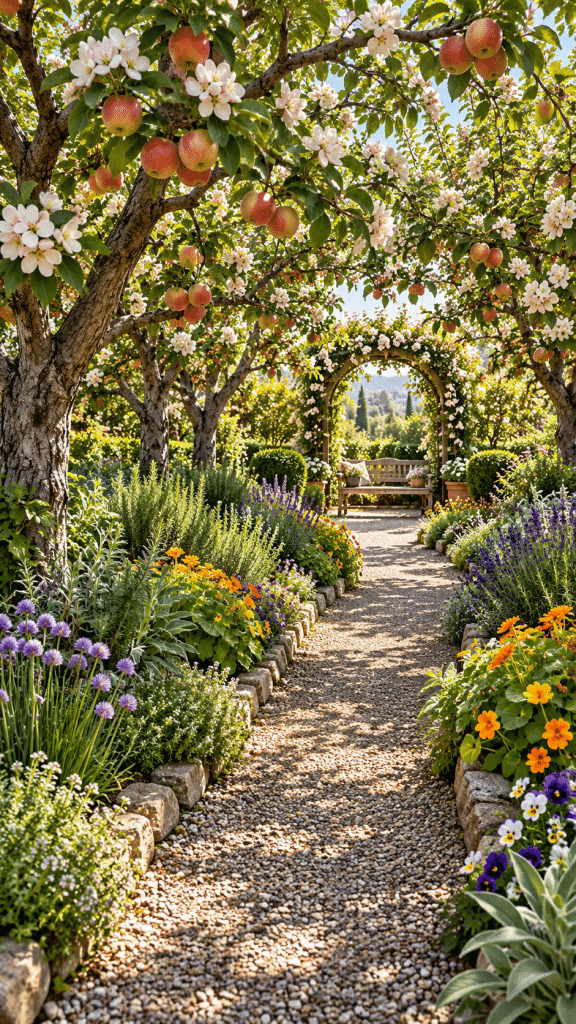
Instead of designing around one central tree, use several apple trees to define a pathway.
This creates a garden that feels organized, productive, and beautiful at the same time.
It can work particularly well in rectangular plots, side gardens, kitchen gardens, or areas that connect a house with a greenhouse, shed, vegetable garden, or outdoor dining space.
The path provides the structure.
The apple trees provide height.
Low edible planting creates the decorative layer beneath them.
The result can feel like a modern interpretation of a traditional orchard.
Use Apple Trees to Frame Movement Through the Garden
Paths are naturally powerful design elements because they tell people where to look and where to walk.
Planting apple trees along a path strengthens that effect.
The trunks create vertical repetition.
The canopies form a loose overhead rhythm.
In spring, blossom appears repeatedly through the landscape.
By late summer, fruit creates additional color at eye level.
Spacing should feel intentional.
Trees planted too closely may eventually become overcrowded, while trees spaced too far apart may fail to create a coherent pathway effect.
The eventual size and training form of the chosen apple variety should influence the layout.
Smaller trained forms can create a more controlled appearance.
Larger trees can create a relaxed orchard feel.
Consider Espalier Apple Trees for Small Gardens
Not every garden has enough room for multiple traditional fruit trees.
Espalier training offers an elegant alternative.
Apple branches can be trained horizontally along wires, fences, or freestanding supports.
This turns the tree into a living architectural feature.
It is particularly useful along narrow pathways because the tree remains relatively shallow.
Instead of a broad canopy extending into the walking area, the branches are organized into controlled horizontal layers.
This can look remarkably sophisticated.
The appearance combines productive gardening with geometric structure.
In a contemporary garden, espalier apples can soften walls without sacrificing clean lines.
In a cottage garden, the same technique can be combined with herbs, flowering plants, and aged brick.
Plant Herbs Along the Path
Herbs are a natural companion to an edible-garden concept.
They keep the space productive without creating too much height.
Thyme, chives, oregano, sage, parsley, and other useful culinary plants can create attractive texture along the pathway.
Flowering herbs are particularly valuable because they add seasonal color.
Chive flowers, for example, can create soft purple accents.
Thyme can form low mats.
Sage contributes silvery foliage.
This combination can make the garden feel decorative even when the apple trees are not flowering.
Herbs also introduce scent.
Walking along the path and brushing against aromatic foliage makes the garden more sensory.
That experience is difficult to achieve with purely ornamental planting.
Add Edible Flowers for More Color
An edible garden does not need to look utilitarian.
Flowers can provide strong visual interest while maintaining the productive theme.
Nasturtiums, calendula, violas, and other appropriate edible flowers can introduce bright seasonal accents.
They can be planted informally between herbs or grouped into small repeated pockets.
Repeated color is usually more effective than random combinations.
For example, orange and yellow flowers can bring warmth to an autumn-oriented garden.
White and purple flowers can create a calmer spring and summer palette.
Keep taller plants away from narrow walking areas so the path remains comfortable.
The trees should still provide the main vertical structure.
Choose the Right Path Material
The surface beneath the trees strongly affects the style.
Gravel creates a classic orchard and kitchen-garden appearance.
It is visually soft, relatively informal, and pairs beautifully with fruit trees.
Brick creates more architectural character.
Aged red or brown brick can work especially well with apple trees because the warm material complements bark, autumn leaves, and red fruit.
Natural stone creates a more premium look.
Stepping stones surrounded by low groundcover can make the path feel relaxed and romantic.
For a modern design, large-format paving can provide a strong contrast with the organic shape of the branches.
The best material depends on the overall garden style.
What matters most is consistency.
The path should feel like part of the property rather than a separate feature inserted beneath the trees.
Add a Destination at the End of the Path
A path becomes much more interesting when it leads somewhere.
That destination does not need to be elaborate.
It could be:
🍎 a small potting bench
🌿 a herb garden
🪑 a garden seat
🏡 a greenhouse
🥗 a kitchen garden
☕ a small outdoor table
The destination gives the row of apple trees a purpose beyond decoration.
It also strengthens perspective.
From one end of the garden, the viewer sees repeating trunks and foliage leading toward a clearly defined focal point.
This is a simple landscape-design technique, but it can make even a modest garden feel more thoughtfully planned.
Keep the Design Productive but Polished
Edible gardens sometimes become visually busy because everything is planted according to productivity alone.
The easiest solution is repetition.
Repeat the same path material.
Repeat certain herbs.
Repeat container styles.
Repeat one or two flower colors.
Allow the apple trees to become the dominant recurring element.
This visual discipline can turn a practical fruit-growing area into one of the most attractive parts of the property.
🥈 Among these Top 3 ideas, this concept is particularly useful for gardeners who value both organization and harvest.
🥉 Best 3 Create a Naturalistic Apple Orchard Corner
The third concept is the most relaxed.
Instead of carefully framing one apple tree or arranging several trees along a structured path, create a small orchard-inspired landscape.
This style works beautifully in larger gardens, rural properties, cottage gardens, and backyards where a softer approach is preferred.
The goal is not to recreate a commercial orchard.
It is to capture the feeling of one.
A few apple trees, meadow grasses, wildflowers, spring bulbs, a mown path, and simple seating can be enough.
The design should feel peaceful and slightly untamed while still showing clear signs of intention.
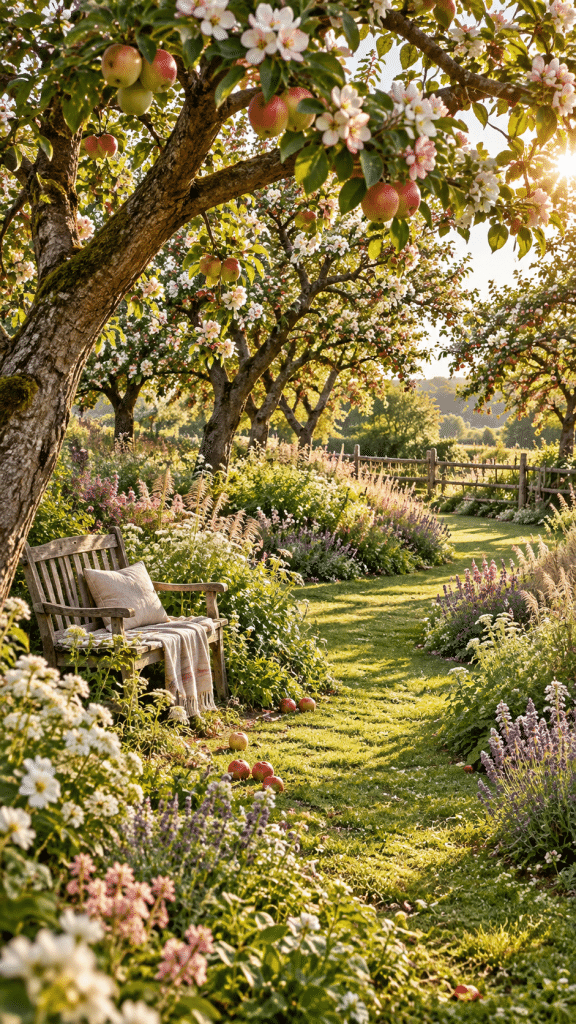
Group Several Apple Trees Informally
Perfect spacing is not essential visually, although horticultural spacing requirements still matter.
From a design perspective, slight asymmetry creates a more natural appearance.
Three trees can already suggest a small orchard.
Five or more can create a stronger effect.
Instead of placing them in one obvious straight row, consider a loose arrangement that creates different views from different parts of the garden.
One tree may sit closer to the foreground.
Others can appear farther back.
This layered composition makes the landscape feel deeper.
It is especially useful in long gardens where depth needs to be emphasized.
Replace Perfect Lawn With Meadow Style Planting
One of the easiest ways to create orchard atmosphere is to change the ground layer.
A perfectly manicured lawn produces a clean appearance, but it may make the fruit trees feel isolated.
A softer meadow layer connects everything visually.
This does not necessarily mean allowing the entire area to become unmanaged.
A designed meadow can combine grasses, bulbs, low wildflowers, and mown areas.
The contrast is important.
Mown paths show that the landscape is intentional.
Longer grass between the trees provides texture.
Small pockets of flowers create seasonal variation.
The effect can be beautiful during early summer when grasses move in the breeze beneath the apple branches.
Add Spring Bulbs Beneath the Apple Trees
Spring bulbs are particularly valuable because they can flower around the same period that the trees are beginning their seasonal transformation.
Naturalized bulbs can appear in loose groups beneath and between trees.
Rather than planting them in perfect circles, scatter them irregularly.
This creates the illusion that they have gradually spread through the orchard.
Daffodils are a classic option.
Crocuses can provide earlier color.
Camassias can introduce more vertical flower spikes.
Small white bulbs can complement apple blossom.
The exact selection should suit the garden conditions and climate.
The broader design principle is simple:
allow spring interest to begin at ground level and then rise into the flowering canopy.
Create a Mown Path Through the Orchard
A naturalistic area still benefits from structure.
One of the simplest solutions is a mown grass path.
Instead of installing paving, allow parts of the meadow to remain longer while maintaining a clearly defined walking route.
The path can curve gently between the trees.
Curves create mystery because the entire route is not immediately visible.
A path might lead toward a bench beneath the oldest tree or disappear behind planting.
This is one of the cheapest ways to create strong visual design in a larger landscape.
It also helps visitors interact with the orchard without flattening the surrounding meadow.
Add a Rustic Bench or Simple Orchard Seat
Furniture in this type of garden should be understated.
A simple wooden bench can be enough.
Place it where several trees are visible rather than automatically positioning it beneath the largest specimen.
The best seat may be at the edge of the orchard looking inward.
This allows the entire planting composition to become the view.
Weathered timber works especially well.
Stone can also be beautiful, particularly in older gardens.
Avoid overly polished outdoor furniture unless the rest of the property has a more contemporary style.
The objective is to create something that feels as though it belongs naturally within the landscape.
Leave Some Seasonal Imperfection
Naturalistic gardens become more convincing when not everything is immediately removed.
A few fallen leaves can add autumn texture.
Some seed heads can remain through winter.
Long grass may turn golden.
Bare apple branches can become sculptural during the colder months.
This does not mean ignoring maintenance.
Diseased fruit, problematic fallen material, damaged branches, and other horticultural issues still need appropriate attention.
The design principle is simply to avoid removing every sign of the season.
A garden can look cared for without looking sterile.
🍂 Allowing seasonal change to remain visible is one of the strongest characteristics of this orchard-inspired approach.
How to Choose Between These Top 3 Apple Tree Garden Ideas
The right design depends mainly on the size of the garden and how the space will be used.
If there is only one mature apple tree, the romantic garden-room concept may offer the strongest transformation.
It allows the existing tree to become a central destination without requiring additional fruit trees.
If the garden is narrow or highly organized, the edible pathway may be more suitable.
Trained apples, herbs, and structured paths can create productivity without sacrificing design quality.
If there is enough space for several trees, the natural orchard concept offers an entirely different atmosphere.
It creates a landscape rather than a single decorated feature.
Think about maintenance as well.
A layered cottage-style garden may require regular editing of perennials.
An espalier system requires training and pruning.
A meadow orchard may require less frequent mowing but still needs seasonal management.
The most successful design is not necessarily the most elaborate one.
It is the one that fits naturally into the way the garden is actually used.
Apple Tree Garden Ideas for Small Backyards
Limited space does not automatically rule out apple trees.
The solution is to control their form.
Dwarf or appropriately sized varieties can provide fruit and seasonal interest without dominating the entire backyard.
Trained forms can be even more space-efficient.
An espalier apple against a sunny boundary can function almost like living wall art.
Underplanting should remain relatively low.
Herbs, bulbs, and compact perennials can bring color without creating overcrowding.
Vertical design becomes especially important.
Instead of trying to build a miniature orchard, use one apple tree as the main focal point and allow supporting plants to remain secondary.
Containers can also help.
Large pots positioned nearby can hold seasonal flowers or herbs without permanently filling valuable planting space.
The overall effect can still communicate the character of an apple garden even when only one actual tree is present.
Apple Tree Garden Ideas for Cottage Gardens
Apple trees and cottage gardens naturally complement each other.
Both celebrate seasonal change, abundance, flowers, and slightly informal structure.
The biggest mistake is adding too many decorative elements.
The tree itself already provides significant character.
Allow flowers and paths to support it rather than compete for attention.
A cottage composition might include a gravel path passing near the trunk, soft perennial planting around the outer canopy, a weathered bench, and clusters of spring bulbs.
Climbing plants can appear on nearby structures, but they do not necessarily need to climb the apple tree itself.
Repeated colors help unify the space.
Pale pink, cream, soft blue, lavender, and fresh green can create a particularly gentle palette around spring blossom.
By autumn, the same garden naturally shifts toward warmer colors as leaves, fruit, and dried flower heads begin to dominate.
Apple Tree Garden Ideas for Modern Landscapes
Apple trees are not limited to traditional gardens.
They can look striking in modern landscapes.
The contrast between controlled architecture and organic branching can be particularly effective.
Imagine a single apple tree emerging from a restrained gravel bed surrounded by simple ornamental grasses.
Large-format paving could run nearby.
A minimal timber bench might sit just outside the canopy.
Instead of mixing many flower varieties, the planting could rely on repetition and foliage texture.
Espalier forms are even more suitable for contemporary gardens.
Their horizontal branch structure creates clear geometry.
Against a smooth wall or dark fence, the branches can become almost graphic.
Fruit then introduces small points of color.
Modern apple tree design is therefore less about adding decoration and more about emphasizing form.
Make Apple Harvest Part of the Garden Experience
One major advantage of these designs is that harvesting becomes part of the enjoyment of the landscape.
Instead of hiding fruit trees at the back of a utility area, position them where their seasonal development can be observed.
Watching blossoms become tiny fruits and then mature apples creates a stronger connection with the garden.
Children can find this particularly engaging.
Visitors also tend to notice fruit-bearing trees because they combine familiarity with visual interest.
A pathway through an apple garden naturally encourages interaction.
A bench beneath a fruiting tree turns harvesting into a slower experience.
Even a simple basket temporarily placed beneath the branches during harvest season can become part of the garden’s visual story.
🍎 Productive landscapes often feel more personal because they change according to what can be gathered, eaten, or shared.
Use Color Carefully Around Apple Trees
Apple trees already introduce several colors throughout the year.
Spring brings white or pale pink.
Summer is dominated by green.
Late summer and autumn may introduce red, yellow, green, or russet fruit.
Autumn foliage can add gold and brown.
Because the tree itself changes, surrounding colors should support rather than fight with those transitions.
Soft planting palettes often work best.
White flowers can echo spring blossoms.
Purple and blue flowers create contrast with green summer foliage.
Warm orange and burgundy tones can complement autumn fruit.
Too many strong colors at once may distract from the apples.
Think seasonally rather than trying to create maximum color every month.
This allows the tree’s own transformations to become part of the design.
Use Texture to Keep the Garden Interesting
Flowers are only one part of a successful apple tree garden.
Texture matters just as much.
Tree bark creates a rough vertical surface.
Grasses introduce movement.
Gravel provides fine texture.
Stone creates weight.
Herbs contribute small detailed leaves.
Wooden seating repeats the natural qualities of the trunk.
Combining these elements creates depth even when very few flowers are blooming.
This is particularly valuable in winter.
A bare apple tree can still look beautiful when surrounded by strong materials and structured planting.
The branches become highly visible.
Their shape is easier to appreciate.
In this way, good garden design extends the visual value of the tree far beyond harvest season.
Final Thoughts on the Best 3 Apple Tree Garden Ideas
The most inspiring Apple Tree Garden Ideas treat fruit trees as essential parts of the landscape rather than purely practical plants.
🥇 A Romantic Apple Tree Garden Room is ideal when one beautiful tree can become an intimate place for seating, flowers, shade, and seasonal atmosphere.
🥈 An Apple Tree Edible Garden Pathway combines productivity with structure, making it especially useful for organized gardens, kitchen gardens, and smaller landscapes using trained fruit trees.
🥉 A Naturalistic Apple Orchard Corner creates the most relaxed effect, combining several apple trees with meadow grasses, bulbs, curved paths, and simple seating.
Each approach creates a different experience, but they all share the same principle.
The apple tree should influence the design around it.
Instead of hiding fruit trees in an unused corner, allow their blossoms, branches, shade, fruit, bark, and seasonal changes to become part of the visual identity of the garden.
A well-designed apple tree area can be productive without looking purely functional.
It can be romantic without becoming overly decorative.
It can be natural without appearing neglected.
And it can remain interesting from the first spring blossoms to the final autumn apples and the sculptural bare branches of winter.
That is what makes these Best 3 Apple Tree Garden Ideas so adaptable.
The tree becomes more than something that produces fruit.
It becomes a living piece of garden architecture that changes with every season.