Tree Branch Garden Projects are one of the most creative ways to turn ordinary natural materials into beautiful and useful features for an outdoor space. Fallen branches, pruning leftovers, and interesting pieces of weathered wood often get discarded after seasonal garden maintenance, yet many of them have exactly the organic shape and texture needed to create garden structures that feel unique, natural, and surprisingly sophisticated.
Instead of buying another generic garden decoration, a carefully chosen branch can become part of the landscape itself. 🌿 Its irregular curves, knots, bark texture, and weathered surface introduce something manufactured materials often struggle to imitate: genuine character.
Tree branches are especially effective in cottage gardens, woodland gardens, rustic landscapes, wildlife-friendly spaces, and informal backyard designs. However, they can also work beautifully in modern gardens when the project is kept sculptural and restrained. A single architectural branch positioned against a clean wall can look dramatically different from a densely woven rustic fence, even though both begin with the same basic material.
The most successful projects also do more than decorate the garden. They can support climbing plants, define pathways, create habitat, add privacy, provide height, or bring visual structure into empty planting areas.
This guide explores the Best 3 Tree Branch Garden Projects for gardeners who want outdoor features that feel creative, practical, inexpensive, and deeply connected to the natural landscape.
Why Tree Branch Garden Projects Are Becoming So Appealing 🌿
Garden design is increasingly moving away from spaces that look overly manufactured. Perfectly identical containers, plastic decorations, and mass-produced ornaments can certainly be useful, but they sometimes make outdoor areas feel disconnected from the landscape around them.
Natural materials provide an alternative.
Branches immediately introduce irregularity. No two pieces are shaped exactly the same way. One may twist sideways before narrowing into a delicate tip, while another may be covered with deep bark ridges, pale lichen, or naturally bleached wood.
Those imperfections create visual richness.
A branch placed vertically among grasses can resemble a small sculptural element. Several branches woven together can become a functional screen. A collection of sturdy limbs can form a plant support that gradually disappears beneath climbing flowers.
There is also something satisfying about using materials already available in the garden. Pruning a tree does not necessarily need to produce a pile of waste. With careful selection, some of those branches can become the raw material for another garden feature.
This approach can reduce the need to purchase new decorative objects while giving the garden a more authentic sense of place.
The Natural Texture Makes Every Project Different
Manufactured garden materials usually aim for consistency. Natural branches do the opposite.
Their uneven surfaces catch sunlight differently throughout the day. Bark becomes darker after rain. Moss may slowly develop on shaded sections. Weather gradually softens the wood into grey, silver, brown, or charcoal tones.
That means a branch project can continue changing after it has been built.
In many gardens, this weathering process actually improves the appearance because the feature begins blending into surrounding planting rather than looking newly installed.
The result feels less like an object placed in the garden and more like something that belongs there.
Branch Projects Can Be Surprisingly Functional
The strongest garden projects usually combine appearance with purpose.
Branches can become:
- climbing plant supports
- low garden edging
- rustic trellises
- woven screens
- wildlife habitat
- decorative arches
- plant markers
- hanging structures
- sculptural focal points
🌱 This combination of beauty and practicality is one reason branch-based ideas work so well in smaller gardens. Instead of using valuable space for a purely decorative feature, the same structure can support plants or define an area.
Best 3 Tree Branch Garden Projects at a Glance
Before exploring each project in detail, this comparison offers a quick way to decide which idea best fits a particular garden.
| Tree Branch Garden Project | Best For | Difficulty | Main Materials | Overall Look |
|---|---|---|---|---|
| 🥇 Natural Branch Climbing Trellis | Climbing flowers vegetables and vines | Easy to Moderate | Long branches twine garden stakes | Romantic organic vertical feature |
| 🥈 Woven Branch Garden Screen | Privacy boundaries and garden zoning | Moderate | Flexible branches sturdy posts | Rustic architectural woodland style |
| 🥉 Sculptural Branch Wildlife Corner | Biodiversity woodland atmosphere and decoration | Easy | Interesting branches logs stones planting | Natural artistic ecological feature |
Each project creates a completely different effect.
The first focuses on vertical gardening and plant support.
The second transforms branches into garden architecture.
The third treats branches almost like natural sculpture while creating habitat for wildlife.
🥇 Best 1 Tree Branch Garden Projects With a Natural Climbing Trellis
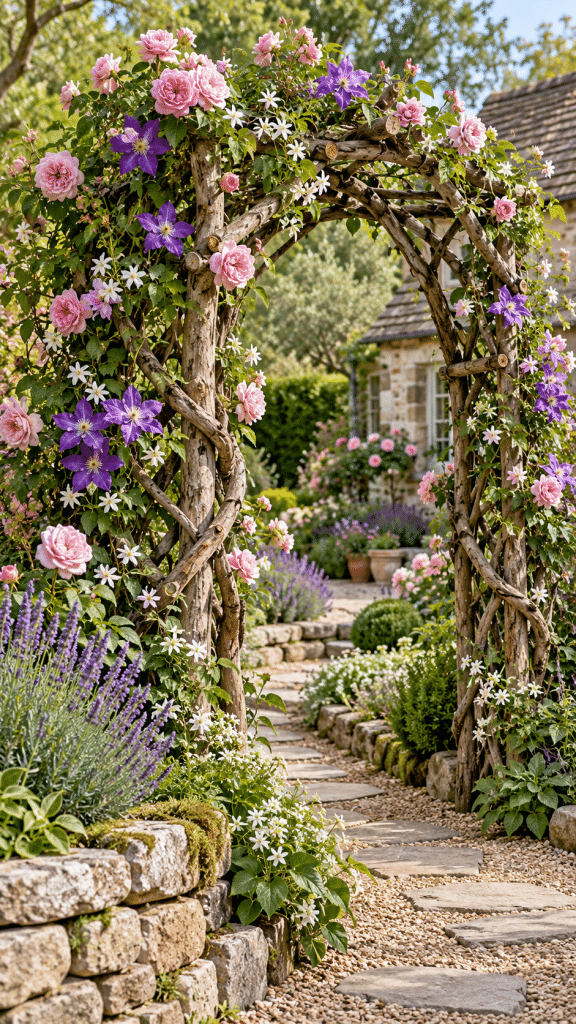
Among all Tree Branch Garden Projects, a natural climbing trellis is one of the easiest to integrate into an existing garden.
A trellis made from branches has a completely different personality from a perfectly symmetrical metal or plastic plant support. Instead of straight manufactured lines, it creates an irregular framework that feels softer and more connected to surrounding vegetation.
This makes it particularly suitable for cottage gardens, vegetable plots, pollinator gardens, and informal backyard borders.
Creating the Main Structure
Start with several strong branches that are relatively straight but still retain some natural character.
Branches roughly similar in thickness are easier to work with, although they do not need to match perfectly. In fact, slight variation often makes the finished structure more attractive.
Two or three longer branches can form the main vertical supports.
Smaller branches can then be positioned horizontally or diagonally between them.
They can be attached using natural jute twine, garden wire, or discreet outdoor ties depending on how rustic or refined the structure should appear.
An intentionally imperfect grid usually looks better than trying to create precise geometric squares.
The goal is to create enough support for climbing plants while still allowing the structure to feel light and organic.
Choose Branches With Interesting Shapes
One of the advantages of this project is that slightly crooked branches are not a problem.
A curved branch can create movement.
A forked branch can provide extra support.
A branch with patches of pale lichen may become a decorative feature even before any plants begin climbing.
🌿 Look for branches that feel visually expressive rather than perfectly straight.
However, heavily rotten, brittle, or insect-damaged wood should generally be avoided when structural strength is important.
Which Plants Work Best
Once the framework is installed, the character of the trellis will change dramatically depending on the plant growing over it.
For a romantic cottage atmosphere, flowering climbers can soften the entire structure.
Good possibilities include:
Clematis
Its fine stems and abundant flowers work beautifully with rustic branch supports.
Sweet peas
These create a delicate seasonal display and are particularly effective on smaller structures.
Nasturtiums
Their round foliage and bright flowers create a casual, abundant appearance.
Morning glory
Fast-growing vines can cover the structure quickly during the growing season.
Climbing beans
A branch trellis can also become productive rather than purely decorative.
Vegetables and ornamental plants do not necessarily need separate garden structures. A thoughtfully designed trellis can perform both roles.
Build a Freestanding Branch Obelisk
The same idea can be adapted into a freestanding form.
Instead of positioning branches against a wall or fence, place three to five tall branches in a circle and lean their tops together.
Tie them securely near the top.
Then wrap smaller flexible twigs around the structure horizontally.
The result resembles a rustic garden obelisk.
This works especially well when placed directly inside a flower border because it introduces vertical height among lower planting.
Before vines cover it, the branch framework creates structure.
After vines cover it, the support almost disappears.
That transformation is part of its appeal.
Make the Trellis Feel Designed Rather Than Improvised
There is a fine line between charmingly natural and visually messy.
To keep the project intentional, repeat similar branch thicknesses and avoid using too many competing shapes.
A simple structure often looks more sophisticated than a complicated one.
Consider the background as well.
Against a white wall, weathered branches create strong contrast.
Against a dark wooden fence, pale branches can become more visible.
Inside lush planting, darker branches may blend beautifully with stems and foliage.
The surrounding garden should influence the wood chosen.
Add Seasonal Interest
A branch trellis does not have to become irrelevant when the growing season ends.
After annual vines are removed, the bare structure can remain as winter architecture.
Small seed heads, dried vines, or subtle evergreen cuttings can be left around parts of the support if they suit the garden style.
In cold-season gardens, frost on the branches can produce unexpectedly beautiful textures.
This makes the project valuable beyond summer.
Important Note: Always inspect collected or fallen branches before using them in a garden structure. Avoid severely decayed, unstable, diseased, or dangerously sharp wood, particularly when the project will stand near paths, seating areas, children, pets, or frequently used parts of the garden.
🥈 Best 2 Tree Branch Garden Projects With a Woven Privacy Screen
The second idea takes Tree Branch Garden Projects into a more architectural direction.
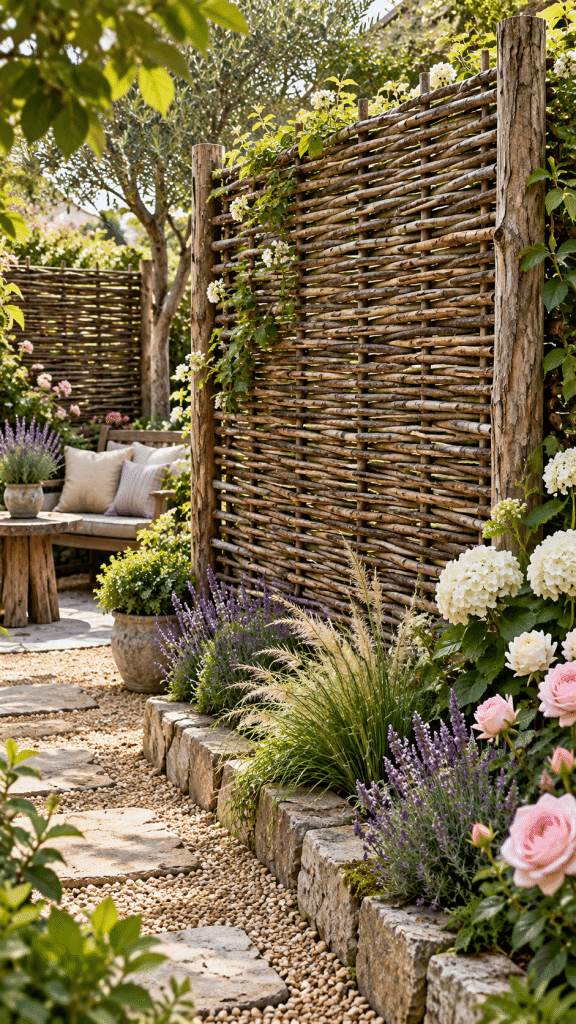
A woven branch screen can define spaces, soften unattractive boundaries, conceal utility areas, or create a gentle sense of privacy without building a heavy solid fence.
This type of structure is often inspired by traditional woven garden techniques in which flexible branches are threaded between upright posts.
The finished effect feels handcrafted, textural, and beautifully imperfect.
Where a Branch Screen Works Best
A full property boundary is not always the ideal location for this project.
Branch screens often work more effectively when used selectively.
For example, a small screen can hide compost bins.
Another can create separation between a vegetable garden and seating area.
A slightly taller version can form the backdrop behind an outdoor bench.
It can even be used to partially conceal a rain barrel or storage corner.
🌱 Because the screen does not need to surround the entire property, the project can remain manageable while still making a significant visual difference.
Build Strong Upright Supports First
The strength of a woven screen comes primarily from its vertical posts.
Use sturdy straight branches or appropriate garden posts positioned securely in the ground.
Spacing will depend on the flexibility and length of the branches being woven between them.
Once the posts are secure, longer flexible branches can be threaded alternately in front of and behind each post.
The next branch should reverse the pattern.
Gradually, the branches lock together and begin forming a continuous textured surface.
Flexible Branches Make Weaving Easier
Fresh or naturally flexible branches are generally easier to weave than thick dry wood.
Thin branches can bend around posts without snapping.
Depending on what is locally available, suitable materials may include pruning from flexible shrubs or trees.
The exact species is less important than the physical quality of the material.
Test a branch gently before building.
If it bends without splitting, it is much easier to work into a woven structure.
Let the Pattern Stay Slightly Irregular
Machine-made fencing depends on repetition.
A branch screen becomes interesting because the repetition is imperfect.
Some branches may be slightly thicker.
Others may curve.
Their bark may vary in tone.
This creates subtle movement across the surface.
The pattern can still be controlled by keeping the weave relatively horizontal and trimming excessively protruding ends.
The finished result should feel natural without appearing neglected.
Combine the Screen With Planting
The best woven branch screens rarely stand alone.
Planting around them makes them look established.
Ferns can soften the lower edge in shade.
Ornamental grasses can create movement in front of the branches.
Foxgloves, salvias, or other vertical perennials can echo the upright posts.
Climbing plants can also be encouraged to move through selected areas.
Avoid completely covering the screen, however, if the woven craftsmanship is part of its appeal.
Allow some branch texture to remain visible.
Use the Screen to Create Outdoor Rooms
One of the most useful garden design techniques is dividing a larger space into smaller visual zones.
A garden can feel more interesting when every section is not visible immediately.
A branch screen is ideal for this because it provides separation without feeling permanent or imposing.
Imagine a garden path that passes beside a partially woven screen.
Beyond it sits a small bench, herb garden, or flower-filled corner.
The screen creates curiosity.
Visitors see glimpses rather than the entire area at once.
This simple technique can make even a modest garden feel deeper and more layered.
Create a Curved Screen Instead of a Straight Fence
Another creative possibility is building the screen in a subtle curve.
Natural materials already contain organic shapes, so a curved layout often feels more appropriate than a rigid straight line.
A gentle arc around a seating area can create a sense of enclosure.
The curve can also follow existing planting beds.
This works particularly well in informal gardens where straight architectural lines might look too harsh.
Consider Different Weaving Densities
A screen does not need to be completely solid.
Loose weaving creates a semi-transparent texture.
This allows light and air to pass through while still creating visual separation.
Dense weaving provides stronger privacy and becomes a more dramatic feature.
The density should depend on the purpose.
For hiding unattractive objects, tighter weaving makes sense.
For separating planting zones, a lighter structure may look better.
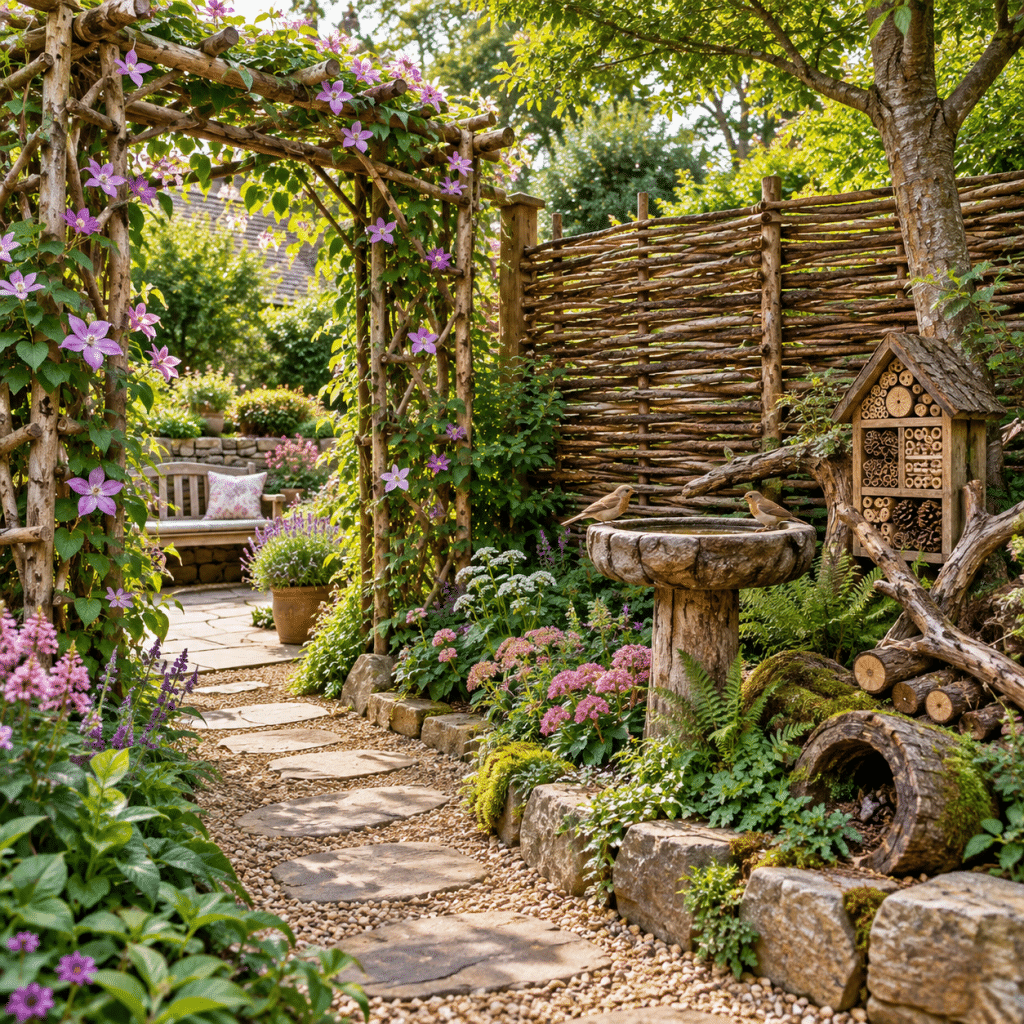
🥉 Best 3 Tree Branch Garden Projects With a Sculptural Wildlife Corner
The third project moves away from traditional garden construction and treats branches as a combination of natural sculpture, habitat, and landscape detail.
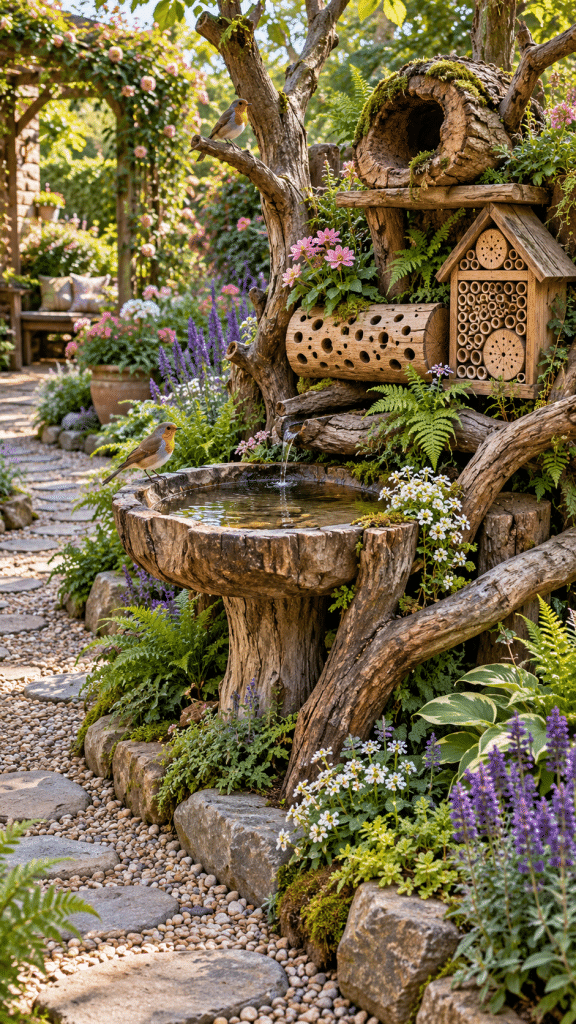
A sculptural wildlife corner uses carefully positioned branches, logs, stones, foliage, and ground-level planting to create a small area that looks intentional while also offering hiding spaces and perching opportunities for garden wildlife.
This is particularly effective in woodland-inspired gardens, naturalistic landscapes, and areas where conventional decorative objects feel too artificial.
Start With One Beautiful Branch as the Hero
Instead of collecting dozens of random branches immediately, begin with one visually interesting piece.
Look for distinctive characteristics such as:
- elegant curves
- multiple forks
- textured bark
- pale weathering
- interesting knots
- sculptural silhouettes
Position this branch first.
It could lean gently against a larger log, emerge vertically from planting, or rest horizontally above low vegetation.
Think of it almost like placing sculpture in a gallery.
The surrounding elements should support the main branch rather than compete with it.
Add Logs and Smaller Branches Gradually
After positioning the main piece, add several secondary materials.
A partially decaying log can sit lower in the composition.
Smaller branches can be layered nearby.
Stones may anchor the structure visually.
Leaf litter can fill gaps.
The arrangement should feel like something that could occur naturally in woodland, but slightly more composed.
🌿 Avoid arranging every element symmetrically.
Nature rarely creates perfect spacing.
Different heights, overlapping materials, and irregular gaps make the scene more convincing.
Create Habitat Without Making the Area Look Untidy
Wildlife-friendly gardening is sometimes mistakenly associated with abandoning maintenance entirely.
That is not necessary.
A habitat area can still look deliberate.
Define the edge using low planting or a subtle border.
Keep nearby pathways clear.
Group materials rather than scattering them randomly.
Allow one section to contain leaves, logs, and branches while surrounding areas remain visually controlled.
This contrast makes the habitat look intentional.
Surround the Branches With Woodland Style Planting
Plant selection can completely change the mood.
Ferns immediately enhance a woodland atmosphere.
Shade-tolerant groundcovers can spread beneath branches.
Moss may gradually establish naturally in suitable conditions.
Native flowering plants can provide resources for pollinators.
Grasses and seed heads add movement and seasonal texture.
The branches should feel embedded within planting rather than placed on bare soil with nothing around them.
Add a Small Water Element
If space allows, a shallow water dish or discreet wildlife-friendly basin can add another ecological layer.
Position it among stones and planting rather than making it the visual centerpiece.
Water introduces reflections, attracts insects and birds, and increases the sense that the area is a functioning miniature habitat.
Keep the design simple.
A sculptural wildlife corner becomes most attractive when its materials feel naturally related.
Allow Weathering to Become Part of the Design
This is one garden project that should not remain visually unchanged.
The branch may fade.
Bark may loosen.
Moss can appear.
Leaves may accumulate.
Fungi could emerge from decomposing wood.
These changes are part of the ecological process.
Instead of constantly trying to restore the wood to its original appearance, allow selected elements to age naturally as long as they remain safe.
The project gradually becomes richer in texture.
Why Deadwood Can Be Beautiful
Garden design often focuses heavily on flowers.
Yet branches and deadwood introduce shapes that flowers cannot.
Bare wood provides lines, shadows, silhouettes, and rough texture.
During winter, these qualities become even more important because the surrounding garden may contain fewer blooms.
A pale weathered branch against evergreen foliage can become a focal point.
Dark wet bark after rain can create dramatic contrast.
Morning frost highlights every ridge.
The beauty of the project comes from observing these subtle seasonal changes.
How to Choose the Best Branches for Garden Projects 🌳
Not every branch needs to be saved.
Selecting the right pieces makes the finished project easier to build and more attractive.
Look for Structural Character
Strong forks are useful for plant supports.
Long straight sections are valuable for frames and posts.
Flexible thin branches work well for weaving.
Twisted or dramatic shapes are ideal for sculptural projects.
Evaluate each branch according to its future role rather than collecting everything available.
Pay Attention to Scale
Large branches can overwhelm a tiny courtyard.
Very thin twigs may disappear visually in a large landscape.
Choose materials that relate to the size of the surrounding space.
A branch feature should feel noticeable without becoming disproportionate.
Consider Bark Color
Branches offer more color variation than many people expect.
Some woods appear warm brown.
Others become silver-grey.
Some have nearly black bark.
Pale branches can stand out beautifully against deep green planting.
Dark branches create stronger contrast against light walls or gravel.
Think about the background before deciding which materials to use.
Styling Tree Branch Garden Projects for Different Garden Styles
One of the biggest advantages of these projects is adaptability.
The same natural material can produce very different results depending on surrounding plants, colors, and construction style.
Cottage Garden Style
Use irregular branches with flowering climbers.
Allow plants to weave loosely through the structure.
Combine the wood with roses, foxgloves, herbs, lavender, and soft grasses.
The atmosphere should feel abundant and romantic rather than controlled.
Woodland Garden Style
Choose weathered branches with moss or lichen.
Combine them with ferns, shade plants, logs, stones, and leaf litter.
The structure should appear almost discovered rather than recently constructed.
Modern Naturalistic Style
Use fewer branches.
Choose pieces with strong sculptural shapes.
Place them against simple backgrounds such as gravel, smooth walls, ornamental grasses, or restrained planting.
Minimalism prevents the material from becoming overly rustic.
Vegetable Garden Style
Prioritize function.
Use branches for bean supports, pea trellises, tomato frames, or climbing cucumbers.
Even practical structures can be attractive when the branch sizes and spacing are chosen carefully.
How to Make Tree Branch Garden Projects Look More Professional
DIY natural-material projects sometimes look unfinished because there is no clear design decision behind them.
A few simple principles can prevent this.
Repeat Shapes
If using vertical branches, repeat the vertical rhythm.
If the project relies on curved pieces, introduce similar curves elsewhere.
Repetition creates visual coherence.
Limit the Number of Materials
Branches already provide significant texture.
Combining them with too many unrelated materials can make the design busy.
Wood, stone, planting, and perhaps one metal detail are often enough.
Hide Functional Connections
Bright plastic ties can immediately reduce the natural effect.
Where possible, use discreet wire, dark outdoor fasteners, or natural-looking twine.
Safety and strength remain the priority, but connection points do not always need to become visible design features.
Leave Negative Space
Not every gap needs to be filled.
Empty space allows the shape of each branch to remain visible.
This is particularly important in sculptural projects.
A beautiful forked branch loses much of its character if surrounded by too many competing materials.
Seasonal Ideas for Tree Branch Garden Projects
These structures can change throughout the year.
Spring 🌱
Allow fresh climbers to begin wrapping around trellises.
Combine branches with bulbs and emerging green foliage.
The contrast between bare wood and fresh growth is especially attractive.
Summer 🌼
Let flowering vines become the main feature.
Screens can provide background texture behind full planting.
Wildlife corners become increasingly active as vegetation grows.
Autumn 🍂
Branches work beautifully with dried grasses, seed heads, fallen leaves, and warm seasonal colors.
This is also a useful season for collecting pruned material after routine garden maintenance.
Winter ❄️
Bare structures become more visible.
A branch trellis that disappeared beneath summer vines suddenly becomes architectural again.
Frost, snow, and low winter light can make natural wood exceptionally photogenic.
Sustainable Benefits of Reusing Garden Branches
Reusing branches can reduce the amount of garden material immediately treated as waste.
Instead of purchasing a new trellis, some gardeners may be able to construct one using pruning leftovers.
This does not mean every piece of wood must remain in the garden.
The goal is selective reuse.
Choose the most useful and attractive pieces.
Compost, chip, or appropriately dispose of other material according to local gardening practices.
This balance keeps the garden practical while still making better use of available resources.
Natural structures can also be replaced gradually.
When one branch finally breaks down after several seasons, it can often be exchanged for another without rebuilding the entire garden.
Which of the Best 3 Tree Branch Garden Projects Should You Choose
The best project depends on what the garden actually needs.
Choose the 🥇 Natural Branch Climbing Trellis if vertical planting is the priority. It offers the strongest combination of simplicity, usefulness, and decorative value.
Choose the 🥈 Woven Branch Garden Screen if the space needs definition, privacy, or a natural architectural feature. It requires more construction but can dramatically transform how the garden is divided.
Choose the 🥉 Sculptural Branch Wildlife Corner if the goal is to create a more naturalistic atmosphere while supporting biodiversity and adding artistic interest.
There is also no reason to use only one idea.
A garden could include a branch trellis beside a vegetable bed, a woven screen around a seating area, and a wildlife corner beneath mature trees.
Because the materials are visually related, these projects can help different areas of the garden feel connected.
Final Thoughts on the Best 3 Tree Branch Garden Projects
The most compelling Tree Branch Garden Projects prove that beautiful garden design does not always require expensive materials or complicated construction.
Sometimes the raw material is already lying beneath a tree.
🥇 A natural branch climbing trellis transforms pruning material into a functional framework for flowers and edible vines.
🥈 A woven branch garden screen turns flexible wood into a textural architectural feature that creates privacy and structure.
🥉 A sculptural wildlife corner celebrates the beauty of weathered wood while introducing habitat, texture, and seasonal interest.
What makes these projects especially appealing is their ability to evolve.
Plants gradually climb over them.
Wood changes color.
Bark becomes weathered.
Moss may appear.
The garden slowly incorporates the structure until it feels less like a newly added DIY project and more like part of the landscape itself.
That is the real strength of designing with natural branches.
Rather than forcing the garden to look perfectly manufactured, these projects allow irregular shapes, changing textures, and seasonal aging to become part of the design.
A single fallen branch may appear ordinary at first.
Placed thoughtfully, it can become the beginning of one of the most distinctive features in the entire garden. 🌿