Old Ladder Garden Ideas are an unexpectedly beautiful way to transform a forgotten wooden ladder into something decorative, practical, and full of garden character. Instead of allowing an aging ladder to gather dust in a shed or sending it to the waste pile, it can become a vertical flower display, a rustic garden shelf, or even an atmospheric climbing structure covered in vines and soft outdoor lighting.
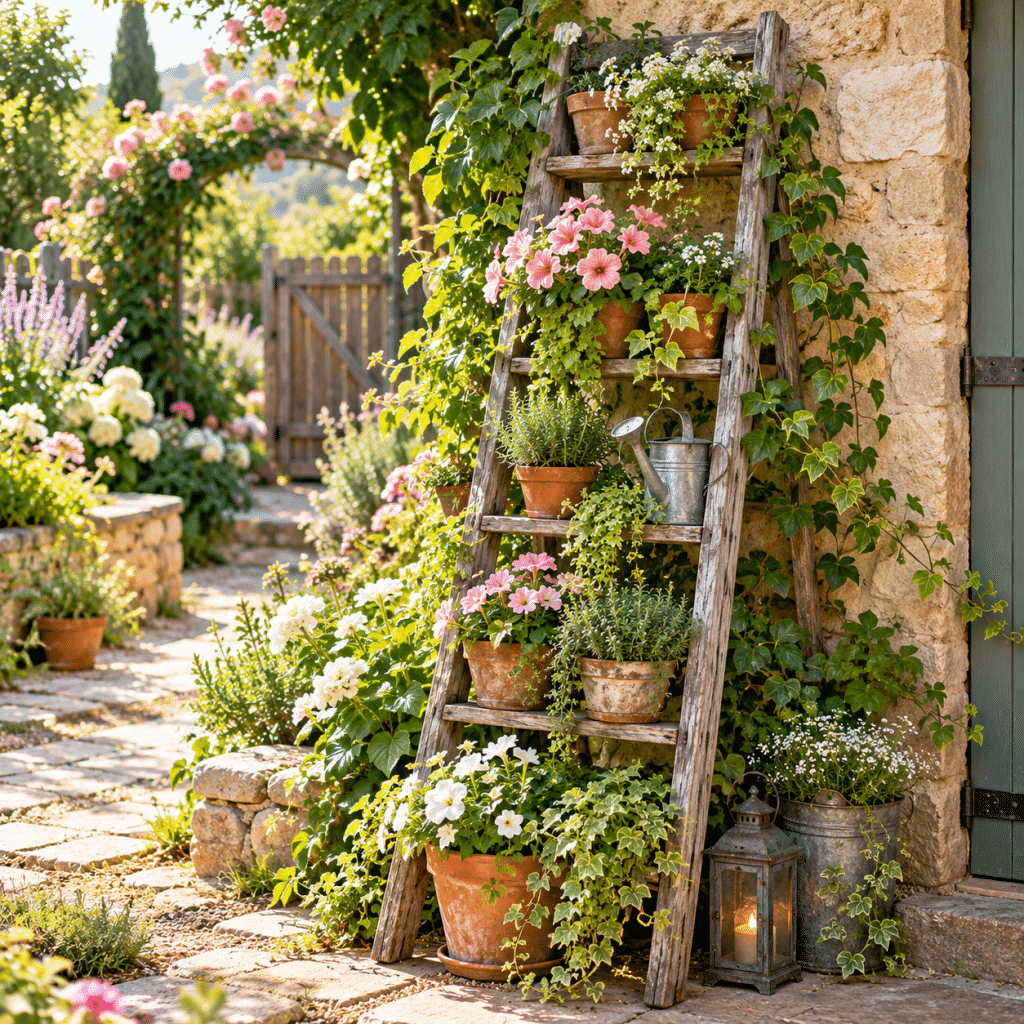
What makes an old ladder especially interesting in garden design is its naturally vertical shape. Most gardens are dominated by horizontal elements such as lawns, flower borders, pathways, patios, and low planting beds. A ladder introduces height almost instantly, drawing the eye upward and making even a modest garden feel more layered.
There is also something wonderfully imperfect about weathered wood. Faded paint, small cracks, worn edges, visible grain, and a little natural discoloration can give an outdoor space a sense of history that brand-new garden furniture often lacks.
🌿 The most attractive ladder projects usually do not attempt to hide that age. Instead, they celebrate it.
These Best 3 Old Ladder Garden Ideas focus on three very different approaches: a lush vertical planter, an elegant freestanding garden display, and a romantic climbing garden feature. Each can be adapted to patios, cottage gardens, small yards, balconies, courtyards, and larger landscaped spaces.
Why Old Ladder Garden Ideas Work So Well in Modern Gardens
One of the greatest advantages of using an old ladder outdoors is that it creates vertical gardening space without requiring complicated construction.
A conventional flower bed needs valuable ground area. A ladder, however, can support multiple pots, baskets, shelves, or climbing plants while occupying a surprisingly small footprint. This makes the idea particularly useful beside fences, against shed walls, near patios, or in narrow garden corners where traditional planting can feel difficult.
Vertical elements also help create visual depth.
Imagine a garden containing only low flowers and groundcover. It may still be beautiful, but the view tends to remain on one level. Introduce a tall ladder filled with trailing greenery and flowering pots, and suddenly the composition feels more dimensional.
The eye travels from the plants near the soil to the middle shelves and eventually toward the top of the ladder.
🌱 This layered effect can make small gardens appear more abundant.
Another advantage is flexibility. A ladder can look completely different depending on its finish and surroundings.
A heavily weathered wooden ladder surrounded by lavender and herbs can feel rustic and cottage-inspired. Paint the same structure charcoal and place it beside architectural grasses, and the mood becomes much more contemporary.
Use soft white paint, terracotta pots, and roses, and it can even create a romantic Mediterranean impression.
Old ladders therefore work less like a fixed decoration and more like a framework that can adapt to the personality of the garden.
Before Transforming an Old Ladder for the Garden
Before decorating an old ladder, examine its condition carefully.
A ladder that is no longer safe for climbing may still be perfectly suitable as a decorative structure, but severely rotten wood should not be used to support heavy flowerpots. Press gently around the feet, rungs, and joints to check whether the wood remains reasonably firm.
Metal brackets and screws should also be inspected.
Loose hardware can usually be tightened or replaced fairly easily. If the ladder will remain outdoors permanently, exterior-grade screws are preferable because they cope better with moisture.
Cleaning is another important step.
Remove soil, cobwebs, loose paint, algae, and dirt with a stiff brush. Depending on the finish, the ladder can then be lightly sanded.
There is no need to remove every mark or imperfection.
In fact, leaving some weathering visible usually makes the finished piece more interesting.
Important Note: Never use a decorative reclaimed ladder for climbing unless it has been professionally confirmed as structurally safe. Once converted into a planter or garden display, treat it purely as decorative garden furniture.
If desired, apply exterior wood protection before adding plants. Clear outdoor wood oil preserves much of the original character, while exterior paint can completely change the appearance.
The ideal preparation therefore depends on whether the goal is rustic aging, colorful cottage charm, or a cleaner modern finish.
Quick Old Ladder Garden Ideas Planning Guide
Different ladder styles work better for different projects. This simple comparison can help determine which direction suits the available space.
| Garden Idea | Best Ladder Type | Best Location | Main Visual Effect | Difficulty |
|---|---|---|---|---|
| Vertical Cascading Planter | Leaning wooden ladder | Fence shed wall patio edge | Lush layered greenery | Easy |
| Freestanding Garden Shelf | A frame step ladder | Patio courtyard garden corner | Styled decorative focal point | Easy to Medium |
| Climbing Vine Garden Feature | Tall straight ladder | Wall fence pergola edge | Romantic vertical greenery | Medium |
There is no requirement to copy these combinations exactly.
A small step ladder can become a miniature herb station, while an unusually tall ladder can create a dramatic flower tower.
The important principle is to match the scale of the ladder with its surroundings.
A huge ladder can overwhelm a tiny balcony, while a very small ladder may disappear visually in a large landscape.
Proportion is what makes the finished project look intentional.
🥇 Best 1 Turn an Old Ladder Into a Cascading Vertical Planter
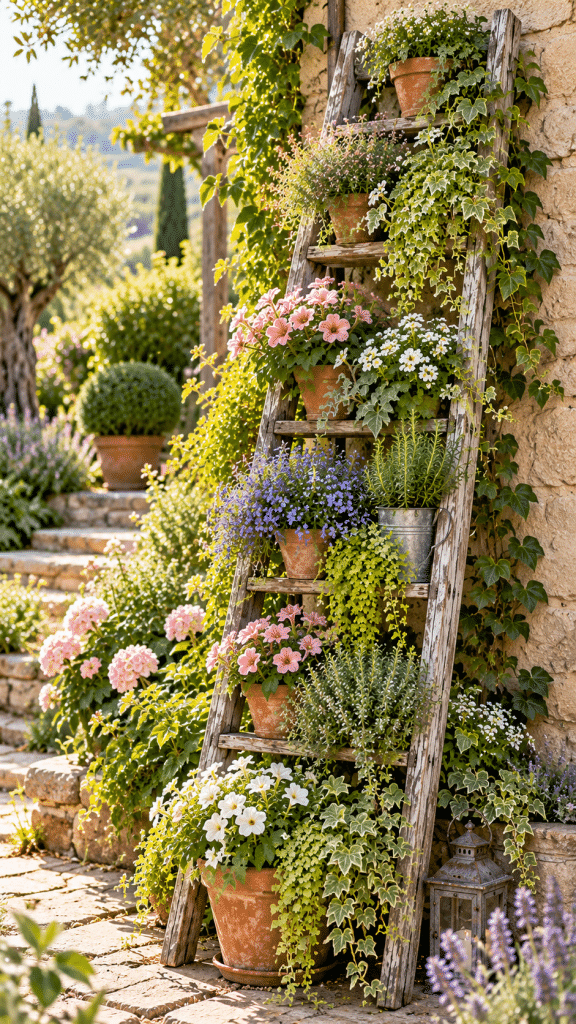
The first and perhaps most versatile idea is to transform an old leaning ladder into a layered vertical planter filled with flowers, herbs, and cascading greenery.
Rather than placing identical pots on every rung, treat the ladder like a miniature garden composition.
The plants should vary in height, shape, texture, and direction.
Place compact pots near the upper rungs, fuller plants around the middle, and trailing varieties where foliage can spill downward naturally.
This creates a cascading effect that gradually softens the wooden structure.
After several weeks of growth, parts of the ladder may appear to disappear behind leaves and flowers, making the entire arrangement look almost like a vertical garden growing through an old architectural frame.
🌿 The result can feel beautifully organic.
Choose a Layered Plant Combination
Plant selection determines whether the display looks random or professionally styled.
Begin with foliage.
Green leaves provide continuity between different flower colors and help prevent the composition from becoming visually chaotic. Ferns, ivy, creeping Jenny, small ornamental grasses, herbs, and other textured greenery can form the foundation.
Next, add flowers strategically.
Geraniums, petunias, calibrachoa, lobelia, violas, begonias, and compact flowering plants can introduce seasonal color.
However, avoid using every color available.
Two or three dominant flower colors usually create a stronger result than a rainbow mixture.
For example, a sophisticated summer palette could combine:
🌸 dusty pink flowers
🤍 creamy white blooms
🌿 fresh green foliage
🪴 warm terracotta containers
This limited palette allows the texture of the old ladder to remain visible rather than competing with excessive color.
Use Different Container Shapes
One of the easiest ways to make an old ladder planter look more interesting is to vary the containers.
A combination of small terracotta pots, aged metal buckets, shallow wooden boxes, and hanging baskets produces much more personality than identical plastic containers.
Containers do not necessarily need to sit directly on every rung.
Some can hang from hooks.
Others can rest on small boards placed across two ladder steps.
Tiny pots can even be attached to the ladder sides using suitable outdoor brackets.
This creates depth because the plants occupy slightly different positions rather than forming one perfectly flat vertical line.
For a more contemporary appearance, use fewer container types.
Simple matte ceramic pots in warm gray, cream, black, or muted green can make an old wooden ladder feel surprisingly sophisticated.
Create a Strong Bottom to Top Composition
A successful vertical planter often feels heavier near the bottom and lighter near the top.
Place the largest containers on or near the ground.
Medium pots can occupy the lower and middle rungs, while smaller plants should be positioned higher.
This visual hierarchy mirrors the way many natural plant communities grow and helps the ladder feel stable.
Trailing plants are particularly valuable.
Allow them to fall from several different levels rather than just the highest rung.
One vine might drop 20 centimeters while another reaches nearly to the ground.
The irregular lengths create natural movement.
✨ A few empty sections should remain visible as well.
A completely packed ladder may look cluttered. Small areas of visible weathered wood provide contrast and remind viewers that the ladder itself is part of the design.
Where This Old Ladder Garden Idea Looks Best
A vertical ladder planter is ideal beside a garden shed, blank fence, brick wall, or patio boundary.
These areas often need decoration but cannot accommodate deep planting beds.
Against a dark fence, a pale or weathered ladder can become highly visible.
Against a white wall, darker natural wood creates stronger contrast.
The idea can also work beside an outdoor dining area.
Fill several pots with rosemary, thyme, mint, basil, or parsley and the ladder becomes both decorative and useful.
A mixture of edible herbs and flowers is especially attractive because it avoids the rigid appearance of a conventional herb rack.
🥇 Best for: small gardens, cottage gardens, patios, rental-friendly outdoor decoration, and anyone wanting maximum planting impact from minimal ground space.
🥈 Best 2 Create a Freestanding Old Ladder Garden Display With Shelves
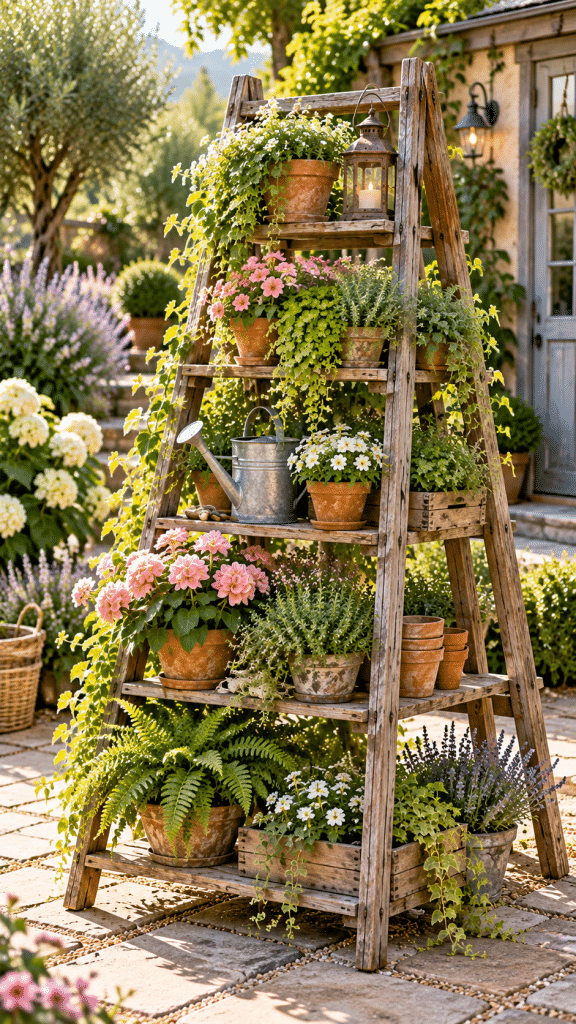
For a completely different appearance, use an old A frame ladder or folding step ladder as a freestanding garden shelf.
Instead of covering the ladder with plants, create several horizontal display surfaces by placing strong wooden boards across the steps.
The result resembles a narrow outdoor shelving unit with a distinctive triangular silhouette.
This format offers far more styling possibilities because objects can be arranged rather than simply attached.
Plants remain important, but they can be combined with watering cans, baskets, lanterns, vintage containers, gardening tools, seasonal decorations, and natural materials.
The ladder becomes a carefully curated garden vignette.
Build Simple Removable Ladder Shelves
Boards can be positioned across corresponding steps on both sides of an open ladder.
The lowest board should usually be the deepest because the ladder is widest at the bottom.
Upper shelves become progressively shorter.
This naturally creates a tiered structure reminiscent of traditional garden plant stands.
For a rustic finish, reclaimed boards can work beautifully.
Visible knots, saw marks, and slight imperfections complement an old ladder.
For a cleaner style, sand the boards and finish them with matching exterior stain or paint.
The boards should always sit securely.
If the installation is intended to remain outdoors, fixing them in place may be preferable to simply resting them across the steps.
This is especially important in areas exposed to wind.
Style the Ladder Like an Outdoor Interior Display
A common mistake when styling ladder shelves is placing one flowerpot in the middle of every level.
Although neat, this creates a predictable pattern.
Instead, use groups of objects with different heights.
For example, the lowest shelf might contain a large fern beside two smaller terracotta pots.
The middle shelf could feature an old watering can, one flowering plant, and a small wooden box.
Higher levels might hold a compact herb pot and a decorative lantern.
The goal is controlled asymmetry.
Objects should feel related without being perfectly mirrored.
🪴 Repeating one or two materials throughout the display helps create unity.
Terracotta can appear on multiple levels.
Galvanized metal can repeat in a watering can and small bucket.
Weathered wood connects naturally with the ladder itself.
This repetition allows the overall display to remain cohesive even when many different objects are used.
Create Seasonal Versions Throughout the Year
One major advantage of a ladder shelf is that the decoration can change with the seasons.
During spring, decorate it with fresh greenery, pale flowering plants, seedling pots, and gardening baskets.
In summer, use abundant herbs, geraniums, trailing flowers, and perhaps a small watering can.
Autumn can introduce ornamental grasses, miniature pumpkins, dried seed heads, warm-colored foliage, and weathered lanterns.
For winter, simplify the arrangement with evergreen branches, pinecones, outdoor-safe lanterns, and natural wooden ornaments.
🍂 The ladder effectively becomes an outdoor seasonal display station.
Because only a few accessories need to change, the structure can remain in place throughout much of the year.
This is especially useful near an entrance or covered patio where seasonal styling is highly visible.
Try a Garden Potting Station Version
The same freestanding ladder can also become a compact decorative potting station.
Place gardening gloves, small hand tools, twine, labels, and empty terracotta pots on the shelves.
A basket beneath the ladder can hold potting supplies or additional containers.
This idea works particularly well beside a greenhouse, shed, garage, or kitchen garden.
The best designs balance function and decoration.
Frequently used items remain accessible while attractive containers keep the station visually organized.
There is something especially appealing about a garden corner that looks actively used rather than purely decorative.
A few imperfect clay pots, pruning scissors, and a worn watering can can create more atmosphere than perfectly coordinated accessories.
🥈 Best for: patios, farmhouse gardens, cottage-style spaces, seasonal decorating, and gardeners who enjoy regularly changing outdoor displays.
🥉 Best 3 Transform an Old Ladder Into a Romantic Climbing Vine Garden Feature
The third idea takes the ladder beyond shelving entirely.
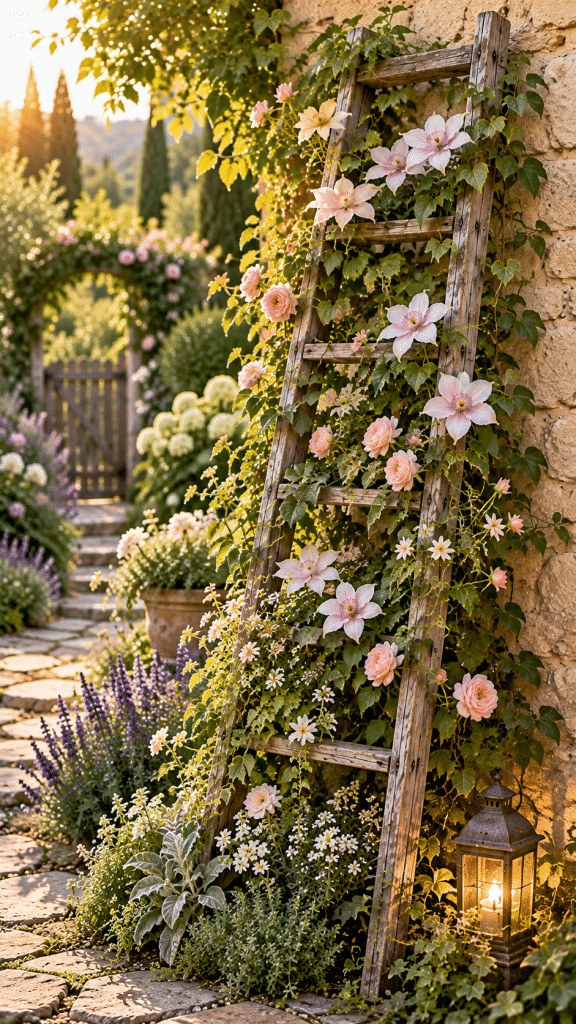
Instead of decorating it with containers, use a tall old ladder as a vertical support for climbing plants.
Positioned against a wall, fence, large tree, or sturdy garden structure, the ladder can function visually like an informal trellis.
As vines weave through the rungs, the straight geometry of the ladder gradually becomes softened by foliage.
Eventually, the structure may look as though it has been standing in the garden for decades.
🌿 This is one of the most atmospheric ways to use a truly weathered ladder.
Choose Climbing Plants That Match the Scale
Not every climbing plant is suitable for every ladder.
Very vigorous climbers may overwhelm a small decorative structure, while delicate annual vines can disappear against a very tall one.
Compact clematis varieties can create elegant flowers without producing enormous weight.
Sweet peas provide a lighter seasonal appearance.
Nasturtiums offer relaxed trailing growth and warm-colored blooms.
Morning glory can create fast seasonal coverage where appropriate.
Climbing roses can also be beautiful, but they usually require additional support and careful tying because the ladder alone may not support mature growth.
For a leafy effect, climbing foliage plants can be used instead of heavily flowering varieties.
The goal should be to maintain some visibility of the ladder beneath the greenery.
If every rung disappears completely, the special character of the reused structure is lost.
Angle the Ladder for a More Natural Look
A ladder placed perfectly upright against a wall can look practical rather than decorative.
A subtle lean creates a softer, more natural composition.
Position the feet among low planting where possible.
Groundcover, herbs, ferns, or small flowers around the base help the ladder feel embedded within the garden instead of simply placed on top of it.
The surrounding planting should gradually connect the ladder with the rest of the landscape.
For example, imagine a weathered wooden ladder leaning beside an old brick wall.
At the base are lavender, salvia, and low silver foliage.
A pale clematis grows through the rungs.
Nearby ornamental grass moves gently in the breeze.
The ladder becomes only one element of a larger composition rather than a standalone decoration.
That integrated approach often produces the most convincing result.
Add Subtle Lighting for Evening Atmosphere
Lighting can transform this idea after sunset.
Instead of wrapping the ladder heavily in bright string lights, use a restrained approach.
A short strand of warm micro lights can follow part of the ladder frame.
Alternatively, position a small outdoor lantern at the base so the light grazes upward across the wood and leaves.
Warm lighting highlights surface texture beautifully.
Old wood, peeling paint, rough brick, and twisting vines become much more dramatic when illuminated from the side.
✨ The effect is especially attractive near a patio or seating area where the ladder can form part of the evening view.
Solar lighting may be convenient if no outdoor electrical outlet is nearby.
Choose warm rather than extremely cool white light if the goal is a romantic garden atmosphere.
Turn the Ladder Into a Garden Gateway Detail
For a larger property, two ladders can even be used creatively near a pathway.
They should not function as structural architecture, but they can form decorative vertical accents on either side of a walkway.
Climbing plants growing through the rungs visually connect the structures with surrounding borders.
A nearby arch or overhead branch structure can complete the scene.
The result can resemble the entrance to a secret garden.
This approach works beautifully in informal landscapes where slightly unexpected reused objects add character.
🥉 Best for: romantic gardens, cottage landscapes, flower borders, vine lovers, mature gardens, and spaces needing additional vertical structure.
Choosing the Right Finish for Old Ladder Garden Ideas
The finish of the ladder has almost as much impact as the plants.
Natural weathered timber is the easiest choice because it already works beautifully with green foliage.
Gray wood feels quiet and authentic, especially beside stone, brick, and neutral planting.
White or cream paint creates a brighter cottage look.
Rather than applying perfectly smooth paint, allowing small amounts of previous wood or paint color to show through can produce a softer aged appearance.
Muted sage green is another excellent choice.
It blends with foliage without disappearing completely and works particularly well with terracotta and creamy flowers.
For modern gardens, charcoal can be surprisingly effective.
A dark ladder creates a graphic vertical structure, particularly against pale rendered walls.
Pair it with simple planters and structural foliage rather than heavily rustic accessories.
🎨 The best color is ultimately the one that creates contrast with the background while still connecting with other materials in the garden.
How to Make an Old Ladder Garden Look Intentional Rather Than Cluttered
Recycled garden projects sometimes become cluttered because too many decorative objects are added at once.
The easiest solution is to establish a clear theme before decorating.
Choose a limited palette.
Repeat materials.
Leave some empty space.
Most importantly, identify one hero feature.
If the ladder contains spectacular cascading plants, decorative signs, birdhouses, lanterns, tools, baskets, and dozens of ornaments are unnecessary.
Let the plants dominate.
If the goal is a styled potting display, the composition can contain more objects, but they should share similar colors and materials.
Repetition creates visual order.
For example, three separate terracotta pots located on different shelves help connect the entire arrangement.
A pair of aged metal objects can provide a second repeated material.
Green foliage becomes the third unifying element.
🌿 A garden display becomes more beautiful when the eye knows where to rest.
Best Plants to Pair With Old Garden Ladders
Old timber naturally complements plants with relaxed growth habits.
Trailing plants soften hard ladder edges.
Upright grasses provide contrast.
Small flowering plants introduce focal color.
Herbs add fragrance and usefulness.
Rather than selecting plants only because they are fashionable, consider the actual conditions around the ladder.
A ladder against a sunny south-facing wall can experience much more heat than one standing under a tree.
Containers also dry faster than plants growing directly in the ground.
Shade-loving ferns may flourish beside a sheltered fence but struggle in intense afternoon sunshine.
Similarly, Mediterranean herbs may appreciate sunny conditions but dislike constantly wet soil.
🌞 Matching plants to the location reduces maintenance and keeps the ladder display attractive for longer.
Small Garden Old Ladder Garden Ideas
Small gardens often benefit the most from ladder projects because vertical displays preserve ground space.
A narrow leaning ladder can hold several levels of plants while occupying little more floor area than one large planter.
On a balcony, use a smaller ladder and lightweight containers.
A miniature herb garden can work beautifully.
Place frequently used herbs around waist height and decorative trailing plants higher up.
On a tiny courtyard wall, a narrow vintage ladder with three or four carefully selected pots can become a major focal point.
The goal should not be to maximize the number of plants.
Instead, maximize visual impact.
Three beautiful containers arranged carefully can look far more sophisticated than twelve mismatched pots squeezed together.
🌱 Small spaces reward restraint.
Rustic Versus Modern Old Ladder Garden Styling
Old ladders are usually associated with rustic gardens, but they do not need to remain rustic.
For a traditional cottage appearance, combine weathered wood with terracotta, galvanized metal, herbs, flowering plants, and relaxed greenery.
Allow a little imperfection.
Uneven plant growth and faded surfaces reinforce the charm.
For modern styling, simplify everything.
Paint or stain the ladder in charcoal, deep brown, black, or natural oak tones.
Use identical or closely related planters.
Choose foliage with strong architectural shapes.
Limit flowers to one color.
Place the structure against a simple wall or fence.
The underlying ladder remains old, but the composition feels contemporary because the styling is controlled.
✨ This contrast between reclaimed materials and clean modern planting can be extremely striking.
Mistakes to Avoid With Old Ladder Garden Projects
The first common mistake is overloading the structure.
Flowerpots become surprisingly heavy after watering.
Heavy ceramic containers should therefore be positioned on the lowest and strongest areas.
Lightweight pots are better for higher levels.
Another problem is insufficient stability.
A leaning ladder should not simply rest loosely against a wall in a windy location.
It needs appropriate stabilization so it cannot slide or fall.
Freestanding ladders should also sit on a firm, level surface.
A third mistake is excessive decoration.
Vintage garden styling does not require covering every available centimeter.
Plants need room to grow, and beautiful materials deserve breathing space.
Finally, consider irrigation.
Water dripping from upper containers can damage delicate plants below or stain certain surfaces.
Arrange pots so excess water can drain safely.
💧 Thoughtful practical planning allows the decorative effect to remain beautiful throughout the growing season.
Final Thoughts on the Best 3 Old Ladder Garden Ideas
The most appealing Old Ladder Garden Ideas succeed because they transform an ordinary forgotten object without erasing its history.
A scratched rung, faded paint layer, weathered timber surface, or slightly uneven shape can become part of the finished aesthetic rather than something that must be repaired completely.
🥇 A cascading vertical planter is the strongest choice for gardeners who want abundant planting and maximum use of vertical space.
🥈 A freestanding ladder shelf display offers the greatest flexibility and can change beautifully with different seasons.
🥉 A climbing vine ladder feature creates the most romantic and integrated garden effect, especially when the structure gradually disappears among flowers and foliage.
The right option depends on the available ladder, the size of the garden, and the atmosphere being created.
Whether the goal is cottage charm, a practical herb display, a decorative patio focal point, or a softly overgrown climbing feature, an old ladder provides something new garden furniture cannot easily replicate — visible character and history.
Instead of asking whether an old ladder still belongs in the shed, imagine what could happen when it becomes part of the garden.
With a few plants, carefully selected containers, and thoughtful placement, one forgotten object can become one of the most memorable features in the entire outdoor space. 🌿