The best fall window boxes ideas can completely transform the exterior of a home with surprisingly little effort. When summer flowers begin to fade and the air turns cooler, window boxes become one of the easiest places to introduce rich autumn color, seasonal texture, and welcoming curb appeal. A carefully styled fall window box can make an ordinary window feel like a beautiful focal point filled with ornamental grasses, trailing greenery, colorful foliage, miniature pumpkins, flowering plants, berries, and natural seasonal details.
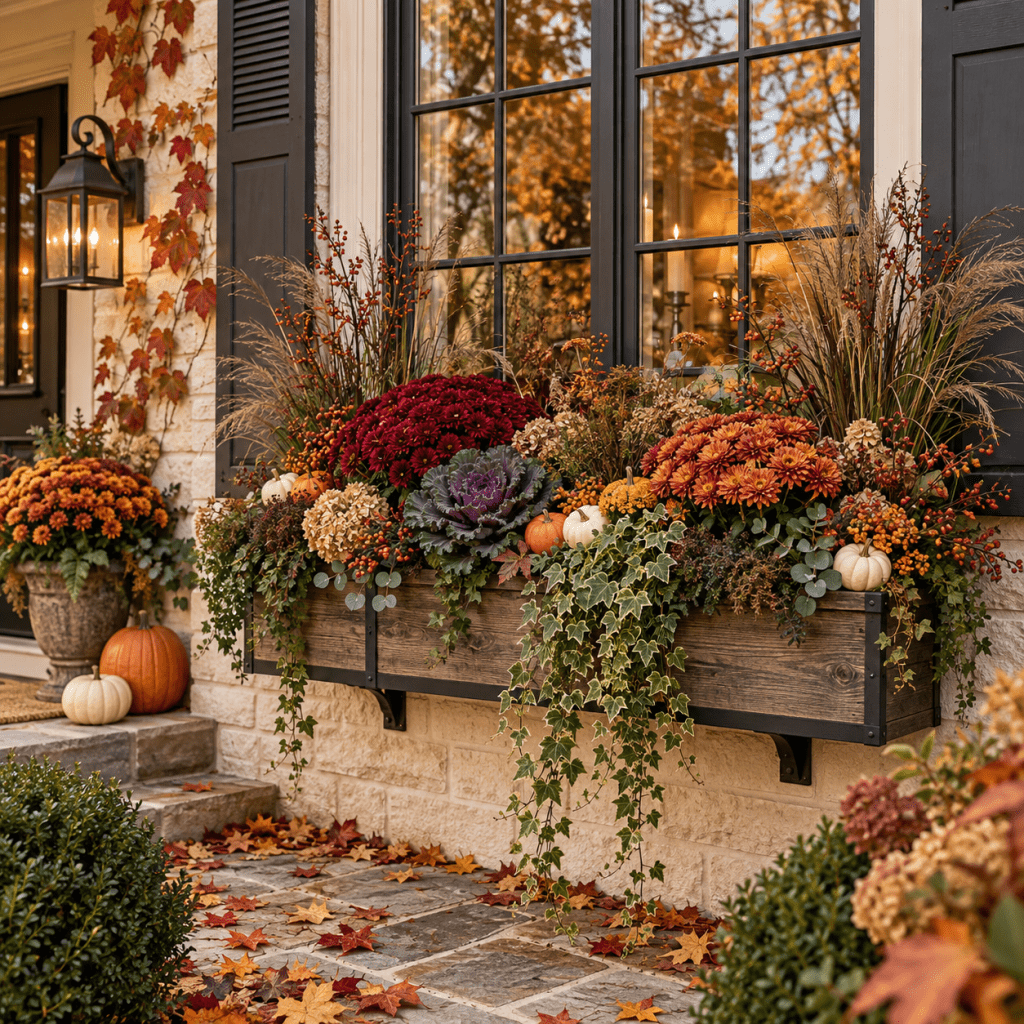
What makes autumn window boxes especially appealing is their versatility. They can look rustic and overflowing, elegant and botanical, or simple and modern depending on the plants, containers, and accessories used. Even a small window can gain enormous visual impact when the box underneath it is layered with plants of different heights, colors, and textures.
🍂 The secret is not simply filling a container with autumn flowers. The most attractive arrangements create depth. Tall plants provide structure, medium-height foliage creates body, trailing plants soften the edges, and small seasonal accents complete the display.
The following three approaches offer some of the most beautiful and practical ways to create window boxes that remain attractive throughout the autumn season.
Why Fall Window Boxes Ideas Can Transform Your Home Exterior
Window boxes occupy an interesting position in exterior decorating because they visually connect the architecture of a house with the surrounding landscape. They introduce plants exactly where the eye naturally looks: around windows, shutters, porches, and entryways.
During spring and summer, window boxes are usually filled with colorful annual flowers. Autumn offers an opportunity to create something richer and more textural. Instead of relying entirely on blooms, fall arrangements can combine ornamental cabbage, chrysanthemums, grasses, vines, herbs, pumpkins, berries, dried seed heads, and evergreen foliage.
This mix makes autumn containers feel more layered and sophisticated.
Fall window boxes are also useful for homes with limited garden space. Apartments, cottages, townhouses, and smaller homes can all benefit from seasonal window displays without requiring large flower beds or extensive landscaping.
🏡 Even one beautifully arranged box beneath a front-facing window can create a strong impression.
The most successful arrangements usually follow a simple design principle sometimes described as thriller filler and spiller.
The thriller is the tallest or most dramatic plant.
The filler creates fullness around the middle.
The spiller trails naturally over the edges of the container.
Once this basic structure is established, seasonal accessories such as miniature pumpkins, pinecones, decorative branches, or berries can be added without making the arrangement feel random.
Choosing the Best Style for Fall Window Boxes Ideas
Before purchasing plants, consider the overall appearance of the house. Window boxes should complement the architecture rather than compete with it.
A traditional cottage might look beautiful with overflowing chrysanthemums, ivy, ornamental kale, and miniature pumpkins. A modern home may benefit from a simpler arrangement built around grasses, burgundy foliage, and trailing greenery. Farmhouse-style homes often work beautifully with rustic wooden boxes filled with warm-toned flowers and natural harvest materials.
Color is another important consideration.
Classic autumn palettes include:
🍁 Burnt orange
🌾 Golden yellow
🍷 Burgundy
🌿 Olive green
🤎 Warm brown
🤍 Cream
🧡 Copper
🌱 Deep forest green
However, autumn decorating does not need to rely exclusively on orange.
Soft cream, dusty purple, muted green, burgundy, and dark chocolate foliage can create an elegant autumn atmosphere that feels more refined than traditional pumpkin-orange displays.
The container itself also influences the finished appearance. Natural wood creates a warm rustic look, black metal feels sophisticated, terracotta introduces Mediterranean warmth, and painted boxes can coordinate with shutters or trim.
Quick Comparison of the Top 3 Fall Window Box Styles
| Fall Window Box Style | Best Features | Ideal Colors | Key Plants and Elements | Best For |
|---|---|---|---|---|
| 🥇 Layered Harvest Botanical Box | Rich texture and dramatic curb appeal | Burgundy orange green cream | Chrysanthemums ornamental kale grasses pumpkins ivy | Traditional cottage and farmhouse homes |
| 🥈 Elegant Neutral Autumn Box | Sophisticated and timeless appearance | Cream sage bronze soft brown | White mums eucalyptus grasses heuchera pale pumpkins | Modern classic and neutral homes |
| 🥉 Rustic Woodland Window Box | Natural relaxed and organic appearance | Moss green brown rust burgundy | Ferns branches sedge berries ivy pinecones | Cabins cottages and woodland inspired homes |
Each of these styles can be adapted depending on climate, window size, available plants, and personal preference.
🥇 Top 1 Layered Harvest Botanical Fall Window Box
A layered harvest window box is one of the most visually impressive ways to decorate for autumn. Instead of focusing on one type of plant, this arrangement combines several seasonal elements into a dense botanical composition.
The result should feel abundant rather than perfectly symmetrical.
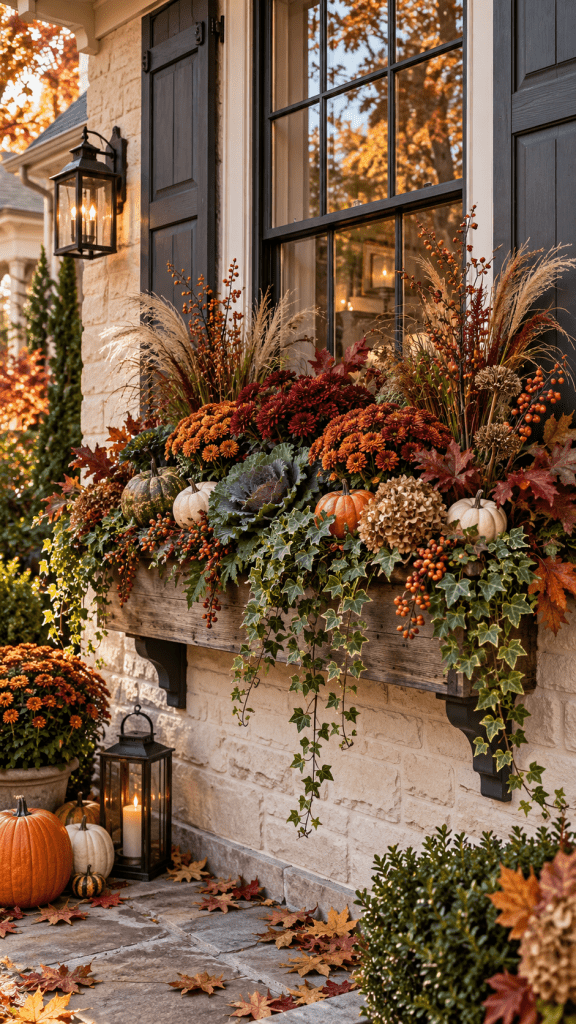
Imagine tall bronze or burgundy ornamental grasses rising from the back of the box. Below them sit clusters of chrysanthemums in rust, burnt orange, deep red, or muted golden yellow. Ornamental kale introduces large sculptural leaves in green, purple, cream, or dusty rose.
Trailing ivy or sweet potato vine can spill naturally over the front edge.
Small pumpkins and gourds can then be tucked between the plants.
🎃 The pumpkins should act as accents rather than dominate the arrangement.
When everything is layered correctly, the window box looks almost like a miniature autumn garden growing directly beneath the window.
Create Height With Ornamental Grasses
Height is one of the most important elements in a visually balanced window box.
Without tall plants, an arrangement can appear flat.
Ornamental grasses are particularly effective because their narrow leaves introduce movement without blocking the window. Their texture also contrasts beautifully with round chrysanthemums and broad ornamental cabbage leaves.
Popular visual choices include bronze grasses, purple fountain grass, sedges, and compact miscanthus varieties where suitable.
Position the tallest grasses near the back or slightly off-center.
Perfect symmetry is not necessary.
In fact, slightly asymmetrical arrangements often feel more natural and professionally designed.
🌾 Allow several grass blades to lean naturally rather than trimming everything into a uniform shape.
That subtle movement can make the entire arrangement feel more relaxed.
Add Chrysanthemums for Classic Autumn Color
Chrysanthemums remain one of the most recognizable autumn container flowers.
Their dense clusters of blooms create immediate impact and provide the color needed to anchor a harvest-inspired arrangement.
Instead of mixing every available color, select two or three complementary shades.
For example, burgundy mums paired with burnt orange and cream can feel sophisticated while still clearly communicating autumn.
Another attractive combination is rusty red with muted yellow and deep green foliage.
Plant chrysanthemums toward the middle section of the box where their rounded shapes can create fullness.
If the box is long, repeating clusters of the same color creates rhythm.
Avoid placing one different flower every few inches. Repetition usually makes an arrangement look more intentional.
Use Ornamental Kale for Sculptural Texture
Ornamental kale and cabbage can become some of the most interesting plants in autumn containers.
Their layered leaves resemble giant botanical roses.
Green varieties blend beautifully with other foliage, while purple and cream varieties can introduce subtle color without relying on flowers.
Place ornamental kale near the front or middle of the arrangement where the shape of the leaves is clearly visible.
Because the plants naturally form strong rosettes, only a few may be necessary.
Their sturdy appearance also creates an attractive contrast against softer chrysanthemums and fine-textured grasses.
🥬 The goal is not to make the box look like a vegetable garden. Instead, treat ornamental kale as an architectural foliage plant.
Finish With Mini Pumpkins and Trailing Greenery
Miniature pumpkins are the finishing detail that transforms a botanical container into an unmistakably autumnal display.
Small white pumpkins create a refined appearance.
Traditional orange pumpkins feel warmer and more rustic.
Muted green or striped gourds can provide additional texture.
Rather than placing pumpkins in a straight row, tuck them naturally between plants at slightly different heights.
Some should remain partially hidden by foliage.
Others can sit closer to the edge of the box.
Trailing ivy, creeping Jenny, or another suitable trailing plant can then soften the container.
The vines should fall naturally rather than completely covering the front.
Important Note: Always consider the weight and drainage capacity of a window box before adding pumpkins, heavy soil, stones, or large plants. Window boxes should be securely attached and have clear drainage holes so excess autumn rain does not create dangerous additional weight.
Best Color Palette for This Fall Window Box
A layered harvest arrangement looks especially beautiful when the color palette reflects natural autumn landscapes.
Try combining:
🍷 Deep burgundy
🧡 Burnt orange
🌿 Dark green
🤍 Warm cream
🌾 Golden brown
🎃 Muted pumpkin orange
The palette can be adjusted according to the house exterior.
Against white siding, deeper burgundy and orange create dramatic contrast.
Against brick, cream pumpkins and green foliage may stand out better.
Against dark gray or black exteriors, golden grasses and pale flowers can create a striking effect.
The architecture should help determine which colors deserve the strongest emphasis.
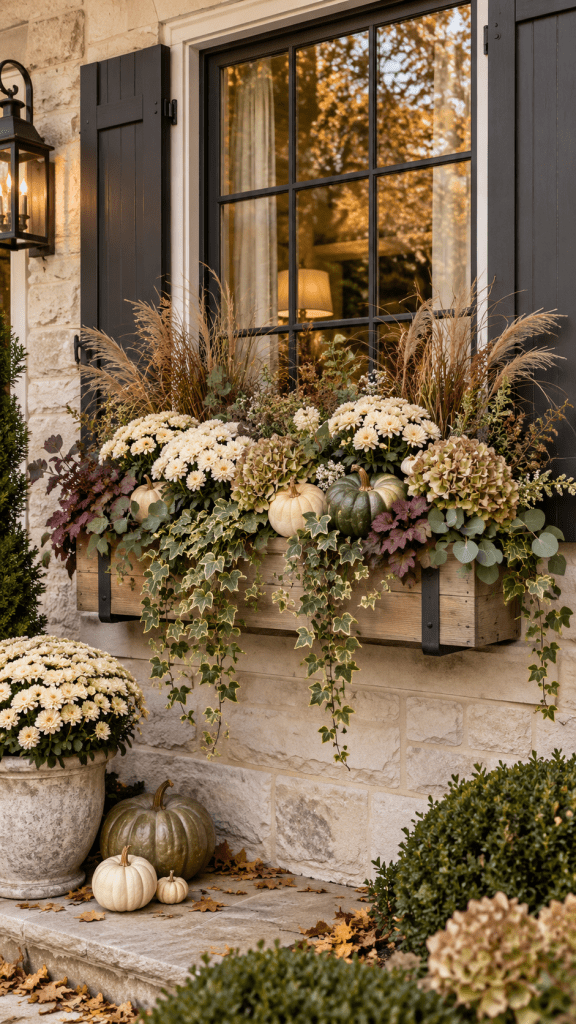
🥈 Top 2 Elegant Neutral Fall Window Box With Cream Green and Bronze
Not every autumn window box needs bright orange flowers.
A neutral arrangement can feel exceptionally luxurious.
This style focuses on warm white, soft green, sage, bronze, taupe, and muted brown. The result feels seasonal without becoming overly themed.
It is particularly attractive on modern farmhouse, European-inspired, transitional, or modern-classic homes.
The arrangement can combine white chrysanthemums, silvery foliage, bronze grasses, burgundy heuchera, eucalyptus-like greenery, trailing ivy, and pale pumpkins.
🤍 Instead of dramatic color contrast, the beauty comes from variation in texture.
This makes the window box look elegant even from close range.
Begin With Soft Green Foliage
Green should form the foundation of this arrangement.
Choose foliage with several different shapes.
One plant might have broad rounded leaves.
Another may have thin grassy foliage.
A trailing plant can introduce long flowing lines.
Using multiple shades of green creates visual richness without making the box colorful.
Sage green, olive, blue-green, and deep forest tones work especially well together.
Eucalyptus-inspired foliage can also introduce a soft silver cast.
The greenery should occupy a significant portion of the box because it creates the calm visual background that allows cream flowers and bronze details to stand out.
Introduce Cream and White Autumn Flowers
White chrysanthemums are a natural choice for neutral autumn arrangements.
Their clustered flowers brighten the container while remaining elegant.
Cream flowers often look slightly softer than bright pure white, especially when paired with warm wood or brick exteriors.
Place the flowering plants between foliage rather than creating a solid row.
The greenery should weave visually around the flowers.
This makes the arrangement appear integrated.
Depending on local availability and growing conditions, other pale seasonal flowers can also be incorporated.
The main goal is maintaining a restrained palette.
🌼 One dominant flower color usually looks more refined than combining many pale shades.
Add Bronze and Burgundy Foliage for Depth
A completely cream-and-green arrangement can sometimes appear more spring-like than autumnal.
Introducing deeper foliage solves this problem.
Burgundy heuchera, bronze sedges, dark coleus where conditions remain warm enough, or other seasonally appropriate foliage plants can create shadows between lighter elements.
These darker plants do not need to dominate.
Even one or two clusters can dramatically increase visual depth.
Think of burgundy as the visual equivalent of a shadow.
It helps pale flowers appear brighter and makes green foliage look richer.
🍷 Deep foliage is especially effective when repeated elsewhere on the porch through wreaths, planters, or outdoor textiles.
Style With White or Muted Green Pumpkins
Pale pumpkins are almost ideal for a neutral fall arrangement.
Small white pumpkins can be nestled between chrysanthemums or placed near the corners of the window box.
Muted sage-green pumpkins also work beautifully.
Avoid arranging them too evenly.
A cluster of two small pumpkins on one side and a single pumpkin on the other can create a more natural composition.
The arrangement should feel botanical first and decorative second.
This distinction is important.
When too many decorative accessories are added, plants lose their visual importance.
A sophisticated window box should still look like a garden.
Add Natural Bronze Details
Bronze does not necessarily mean metallic decorations.
The color can appear naturally through dried grasses, seed heads, brown stems, wheat-like foliage, or dried leaves.
These materials make a neutral container feel more autumnal.
A few slender dried stems can be inserted among living plants to increase height.
Small dried seed heads can create subtle sculptural interest.
Natural materials also age beautifully as the season progresses.
Instead of requiring the arrangement to remain perfectly fresh, this style embraces gradual seasonal change.
That quality can make the window box look even better toward late autumn.
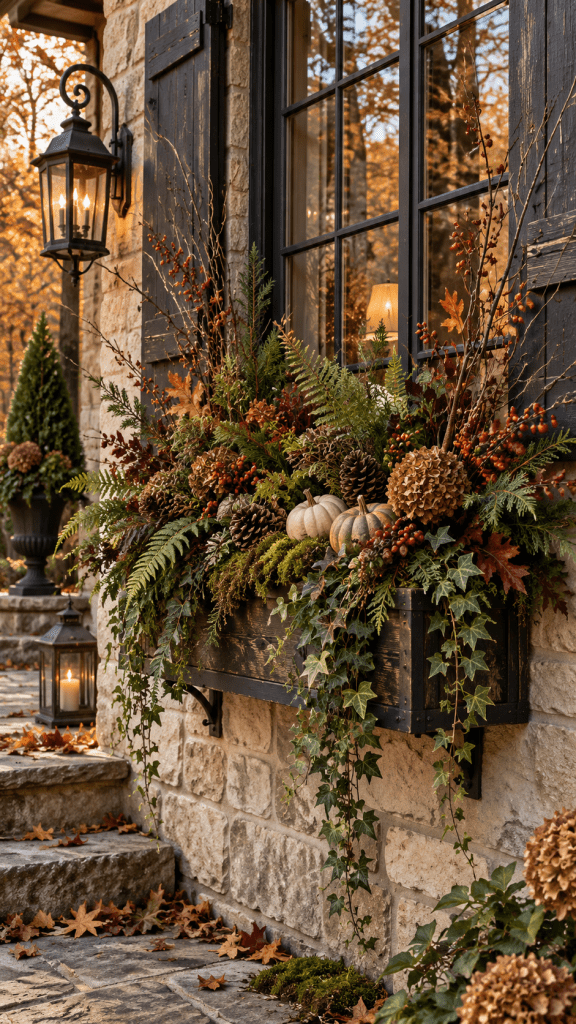
🥉 Top 3 Rustic Woodland Fall Window Box With Branches Berries and Evergreen Texture
The third style takes inspiration from woodland landscapes.
Instead of looking polished and floral, it feels organic, slightly wild, and deeply connected to nature.
This type of window box works especially well on cottages, cabins, rustic homes, farmhouse exteriors, and houses surrounded by mature trees.
The arrangement can combine ferns, sedges, ivy, woody branches, berry stems, moss, evergreen foliage, pinecones, and a small amount of autumn color.
🌲 The finished box should look almost as if materials were gathered from the surrounding landscape.
The strength of this style comes from texture.
Branches create height.
Ferns create softness.
Evergreen foliage provides density.
Berries introduce small points of color.
Pinecones create natural structure.
Together, these elements produce an arrangement that feels seasonal without depending heavily on flowers.
Build the Arrangement Around Natural Branches
Branches are an excellent way to create dramatic height in a woodland window box.
Choose several thin branches with interesting shapes.
They can be bare, lightly covered with autumn leaves, or decorated naturally with berries depending on available materials.
Insert the tallest branches toward the back.
Instead of placing them perfectly upright, allow some to lean slightly outward.
This creates the appearance of natural growth.
Branches also make a relatively small window box appear much larger.
The eye follows the vertical lines upward, visually connecting the arrangement with the window above.
For a more dramatic look, dark branches can be paired with burgundy berries.
For a softer appearance, pale branches can be combined with green foliage and cream accessories.
Layer Ferns and Evergreen Foliage
Ferns contribute delicate leaf patterns that contrast beautifully with heavier autumn materials.
In climates where suitable fern varieties remain attractive during fall, they can form an excellent middle layer.
Evergreen foliage can also be introduced as the season becomes colder.
Small cedar-like branches, pine textures, or other suitable evergreens provide volume while transitioning the arrangement naturally toward late autumn.
🌿 Mixing several foliage textures is more effective than filling the box with one type of greenery.
For example, feathery fern foliage might sit beside narrow sedge leaves and broad ivy.
The contrast makes each plant more visible.
This is one of the easiest techniques for creating professional-looking container arrangements.
Introduce Berries for Controlled Autumn Color
Berries are ideal for woodland-inspired arrangements because they provide color without overwhelming the natural palette.
Deep red berries create a classic fall appearance.
Burgundy berries feel moodier.
Orange berries can introduce warmth.
Small clusters should be distributed throughout the arrangement rather than concentrated in one area.
From a distance, these berries function like visual highlights.
They guide the eye through the composition.
When paired with green foliage and brown branches, even small quantities can have strong visual impact.
🍒 Artificial berry stems may also be used as decorative accents if suitable living plants are unavailable, although realistic natural-looking materials produce the most convincing result.
Add Moss and Pinecones Along the Surface
The surface of a window box is often overlooked.
Visible potting soil can make an otherwise beautiful arrangement feel unfinished.
Moss is a useful way to disguise exposed soil while reinforcing the woodland theme.
It can be placed gently around plants without completely covering their crowns.
Pinecones can then be added in small clusters.
Large pinecones create strong focal points.
Smaller ones work well as filler.
Again, irregular positioning is more convincing than a straight row.
A few pinecones partially hidden behind foliage will look more natural than pinecones placed prominently at identical distances.
Let Trailing Ivy Soften the Window Box
Trailing plants are especially important in woodland arrangements.
Ivy can spill over the edges, softening the rectangular shape of the container.
Allow some vines to hang longer than others.
That irregularity helps create the relaxed woodland aesthetic.
A beautifully weathered wooden window box with ivy cascading over the front can become an architectural feature even before seasonal accessories are added.
If ivy is unsuitable for the location or climate, another trailing foliage plant can provide the same design effect.
The key is creating downward movement.
Without trailing plants, tall branches can make the composition appear visually top-heavy.
The combination of vertical branches and cascading foliage creates balance.
How to Arrange Fall Window Boxes Like a Professional
Beautiful window boxes depend as much on composition as plant selection.
Start by identifying the viewing angle.
Most window boxes are seen primarily from the street or walkway rather than from directly above.
Therefore, taller plants should generally sit toward the back.
Medium plants belong in the middle.
Short plants and trailing materials should occupy the front.
This layering prevents smaller plants from disappearing behind larger ones.
It also creates depth.
Instead of thinking of the container as a straight line, imagine three visual layers.
🌾 Back layer for height
🌼 Middle layer for fullness
🌿 Front layer for trailing texture
The arrangement should also contain repetition.
If burgundy foliage appears on the left side, consider repeating a smaller amount on the right.
If cream flowers are used in the center, repeat them elsewhere.
Repetition creates visual cohesion.
However, repetition does not require perfect symmetry.
Natural variation usually looks more sophisticated.
Avoid Overfilling the Box With Decorations
Pumpkins, signs, ribbons, pinecones, berries, lanterns, and seasonal ornaments can all be attractive.
Using all of them at once is rarely necessary.
Plants should remain the primary focus.
Decorative objects should support the arrangement.
A good rule is to select one or two seasonal accessory categories.
For example:
Pumpkins plus berries.
Or pinecones plus branches.
Or gourds plus dried grasses.
This restraint allows individual materials to remain visible.
It also helps window boxes complement other autumn decorations around the home rather than competing with them.
Choose Plants Based on Sunlight
A beautiful design still needs to suit the growing conditions around the window.
Observe the amount of sunlight the box receives.
South-facing windows may receive strong sun.
North-facing windows may remain shaded.
Trees, porches, rooflines, and neighboring buildings can also affect light levels.
Plants that perform beautifully in full sun may struggle in deep shade.
Likewise, shade-loving plants may become stressed in intense afternoon sun.
Whenever living plants are used, select varieties that match the actual conditions.
This practical step can dramatically extend the attractive life of the arrangement.
Maintain Consistent Moisture
Window boxes can dry out more quickly than larger garden beds because their soil volume is limited.
Autumn temperatures may be cooler than summer, but wind can still remove moisture quickly.
Check the soil regularly.
Water according to the needs of the plants rather than following a rigid schedule.
Containers should also drain freely.
Standing water can damage roots and make containers unnecessarily heavy.
Using good-quality container soil can help maintain a useful balance between moisture retention and drainage.
Best Fall Window Boxes Ideas for Different Home Styles
One of the easiest ways to make window boxes look intentional is matching them to the architecture of the house.
Different homes naturally support different plant combinations.
Farmhouse Homes
Farmhouse exteriors work beautifully with abundant arrangements.
Use wooden boxes filled with chrysanthemums, ornamental cabbage, grasses, ivy, and miniature pumpkins.
Cream, rust, burgundy, and deep green create a warm farmhouse palette.
Natural materials such as pinecones and dried wheat can add additional texture.
The overall appearance can be slightly relaxed rather than perfectly manicured.
Modern Homes
Modern architecture usually benefits from greater simplicity.
Instead of combining many flower colors, focus on foliage.
Bronze grasses, dark burgundy plants, trailing green vines, and one pale flower variety can create a sophisticated arrangement.
Black or charcoal window boxes are particularly effective.
🎨 Repetition is important for modern styling.
If a house has three front windows, consider using nearly identical arrangements under each one.
The repetition reinforces clean architectural lines.
Cottage Homes
Cottages can handle more romantic arrangements.
Use overflowing greenery, ivy, small chrysanthemums, ornamental kale, berries, and soft grasses.
Allow plants to spill slightly beyond the edges.
Cream, dusty purple, burgundy, muted orange, and green work especially well.
A cottage window box should feel lush rather than controlled.
Brick Homes
Brick already contains strong warm colors.
Instead of matching it with large amounts of orange, consider creating contrast.
Cream flowers, white pumpkins, deep green foliage, and burgundy leaves can look exceptional against red or brown brick.
Black window boxes also create a beautiful visual boundary between colorful plants and textured brick walls.
How to Transition Fall Window Boxes Into Late Autumn
One advantage of designing fall window boxes around foliage and texture is that the display can evolve naturally as temperatures drop.
Early autumn might include chrysanthemums and grasses.
As flowers fade, some can be replaced with evergreen foliage.
Pumpkins can remain through much of the harvest season.
Later, they can be removed and replaced with pinecones, winter berries, cedar-like foliage, or decorative branches.
This gradual transformation avoids rebuilding the entire arrangement.
🍂 Early fall can feel colorful and botanical.
🌲 Late fall can become deeper, greener, and more woodland-inspired.
Eventually, the same container can transition into winter decoration.
This makes well-designed window boxes practical as well as beautiful.
Simple Accessories That Make Fall Window Boxes Look More Expensive
Expensive-looking seasonal decorating is usually more about editing than buying more accessories.
Natural materials tend to create the strongest effect.
Consider using:
- Mini white pumpkins
- Small heirloom-style gourds
- Pinecones
- Realistic berry branches
- Dried seed heads
- Dried hydrangea
- Decorative twigs
- Moss
- Small pieces of trailing vine
- Dried grasses
Choose accessories that repeat colors already present in the plants.
For example, a cream pumpkin can repeat the color of white chrysanthemums.
A burgundy berry stem can coordinate with dark heuchera.
A brown pinecone can echo the warm tone of a wooden window box.
These subtle relationships make an arrangement feel cohesive.
Final Thoughts on the Best Fall Window Boxes Ideas
The most beautiful fall window boxes ideas combine seasonal atmosphere with thoughtful plant design. Rather than simply placing several autumn flowers beneath a window, successful arrangements use height, texture, repetition, trailing foliage, and carefully selected seasonal accents to create a complete composition.
🥇 A Layered Harvest Botanical Window Box is ideal for anyone who loves abundant autumn color. Chrysanthemums, ornamental kale, grasses, ivy, and miniature pumpkins create a dramatic display filled with classic harvest character.
🥈 An Elegant Neutral Autumn Window Box offers a more sophisticated interpretation. Cream chrysanthemums, muted green foliage, bronze grasses, burgundy leaves, and white pumpkins create seasonal curb appeal without relying heavily on bright orange.
🥉 A Rustic Woodland Window Box brings the atmosphere of an autumn forest directly to the home. Branches, berries, ferns, evergreens, moss, pinecones, and trailing ivy create rich natural texture that can continue beautifully into late fall.
The best approach ultimately depends on the architecture of the home and the atmosphere the exterior should create.
A farmhouse may look best with overflowing harvest colors.
A modern home may benefit from a restrained botanical palette.
A cottage can embrace romantic greenery and berries.
A woodland home can rely almost entirely on natural textures.
🍁 What connects all three styles is layering.
Tall plants or branches establish structure. Medium plants create fullness. Trailing foliage softens the container. Seasonal details provide personality.
When those elements are balanced carefully, even a small window box can become one of the most memorable features of an autumn exterior.
From rich chrysanthemums and sculptural kale to delicate grasses, miniature pumpkins, trailing ivy, berries, and woodland branches, autumn offers an extraordinary range of materials for creative window-box styling.
The result is more than seasonal decoration.
It is a miniature landscape that frames the home, enhances curb appeal, and brings the warmth and beauty of fall directly to the windows.