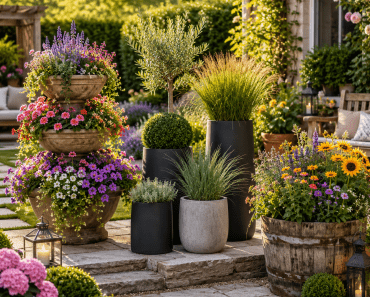
Marigold Flower Garden Ideas are one of the easiest ways to bring intense color, cheerful character, and practical value into an outdoor space. With their glowing shades of yellow, orange, gold, copper, and deep rust, marigolds can instantly make garden beds, pathways, patios, and vegetable plots feel warmer and more inviting. They are especially attractive for gardeners who want dramatic seasonal color without relying on complicated planting schemes or difficult maintenance routines.
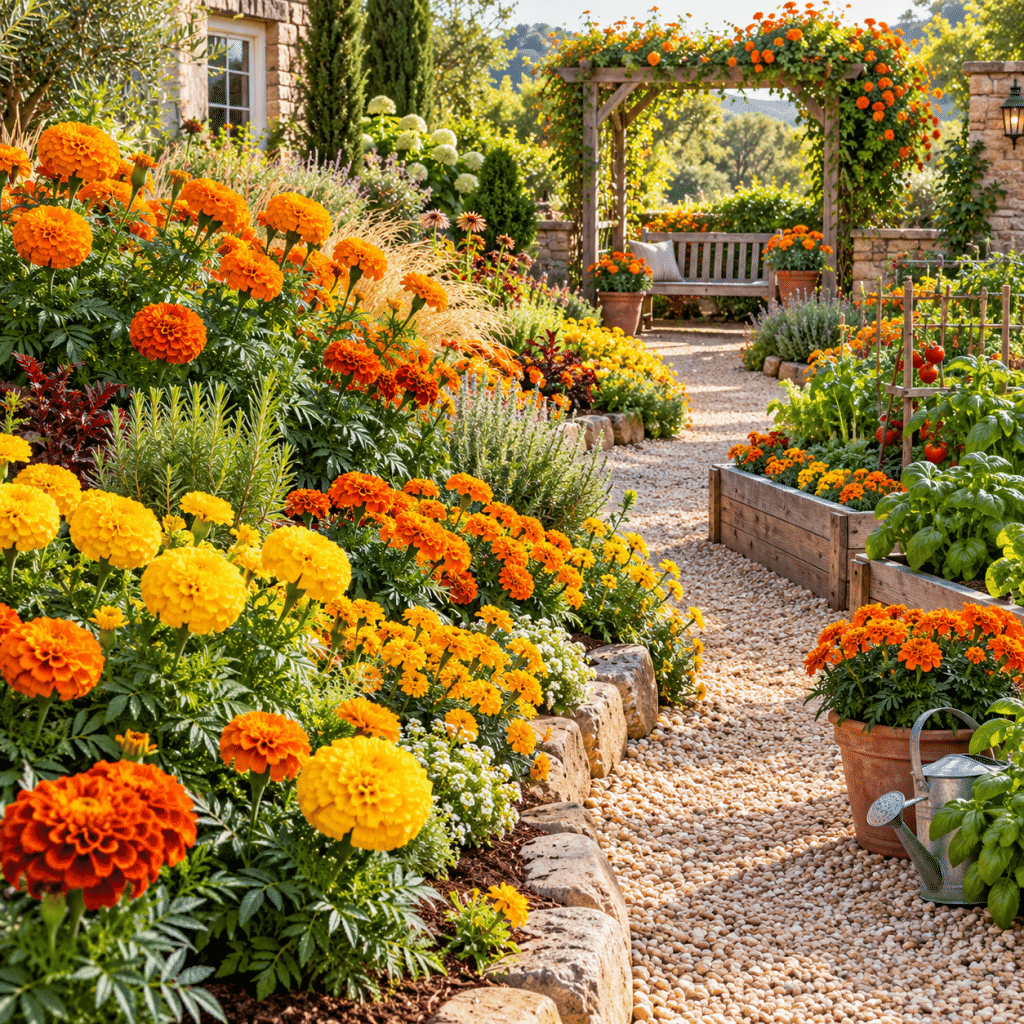
Marigolds are also surprisingly versatile. They can work beautifully in cottage gardens, edible landscapes, formal borders, raised beds, pollinator gardens, rustic yards, or compact urban spaces. Some varieties stay small and tidy, while others produce taller stems and large pompom-like flowers that become strong visual features.
The best designs usually do more than simply scatter marigolds around the garden. A thoughtfully planned marigold garden considers height, repetition, complementary foliage, neighboring plants, pathways, focal points, and seasonal changes.
🌼 The following Best 3 Marigold Flower Garden Ideas offer three distinct approaches: a richly layered border, a productive vegetable garden filled with companion planting, and a dramatic golden pathway designed to turn marigolds into a true landscape feature.
Why Marigold Flowers Work So Well in Garden Design
Marigolds have a naturally strong visual presence. Their blooms are dense, bright, and easy to recognize from a distance, which makes them excellent plants for creating rhythm and repetition throughout a landscape.
Instead of relying on isolated patches of flowers, gardeners can repeat marigold clusters along borders or pathways to visually connect different areas of the yard. This repeated color creates continuity, helping even a relatively simple garden feel intentional and professionally planned.
Another advantage is the wide range of marigold varieties available. French marigolds tend to remain relatively compact and are ideal for edging or container gardens. African marigolds are usually taller and can produce much larger flowers, making them useful in the middle or back of borders.
Signet marigolds have smaller flowers and delicate foliage, creating a softer and more informal effect. Their lighter appearance works particularly well in herb gardens, naturalistic beds, and edible landscapes.
Marigolds also combine easily with many familiar garden materials. Their warm flower colors look especially attractive beside aged brick, terracotta, weathered wood, natural stone, gravel, galvanized metal, and dark green foliage.
This versatility allows Marigold Flower Garden Ideas to fit traditional cottage gardens as easily as modern raised-bed landscapes.
Choosing the Right Marigold Variety for Your Garden
Before designing the garden, it helps to understand how different marigold types behave.
A small edging plant cannot create the same visual effect as a tall African marigold, while a large variety may overwhelm a narrow border that was originally intended to feel delicate.
The table below offers a simple comparison.
| Marigold Type | Typical Height | Flower Appearance | Best Garden Use | Overall Look |
|---|---|---|---|---|
| French Marigold | 15–30 cm | Small to medium double blooms | Edging, pathways, containers | Compact and colorful |
| African Marigold | 60–90 cm or more | Large rounded blooms | Borders, focal planting, cutting garden | Bold and dramatic |
| Signet Marigold | 20–30 cm | Small simple flowers | Herb gardens, informal beds | Light and natural |
| Dwarf Marigold | 15–20 cm | Compact dense blooms | Front borders and pots | Neat and structured |
| Tall Hybrid Marigold | 45–75 cm | Large decorative blooms | Mixed borders and mass planting | Full and luxurious |
When planning a garden, mixing different heights can create stronger depth.
For example, dwarf French marigolds can define the front of a flower bed while taller varieties rise behind them. Herbs, ornamental grasses, vegetables, or flowering perennials can then create an additional background layer.
🌿 This approach transforms a single flower into part of a complete landscape composition.
🥇 Best 1 Marigold Flower Garden Ideas With a Layered Golden Border
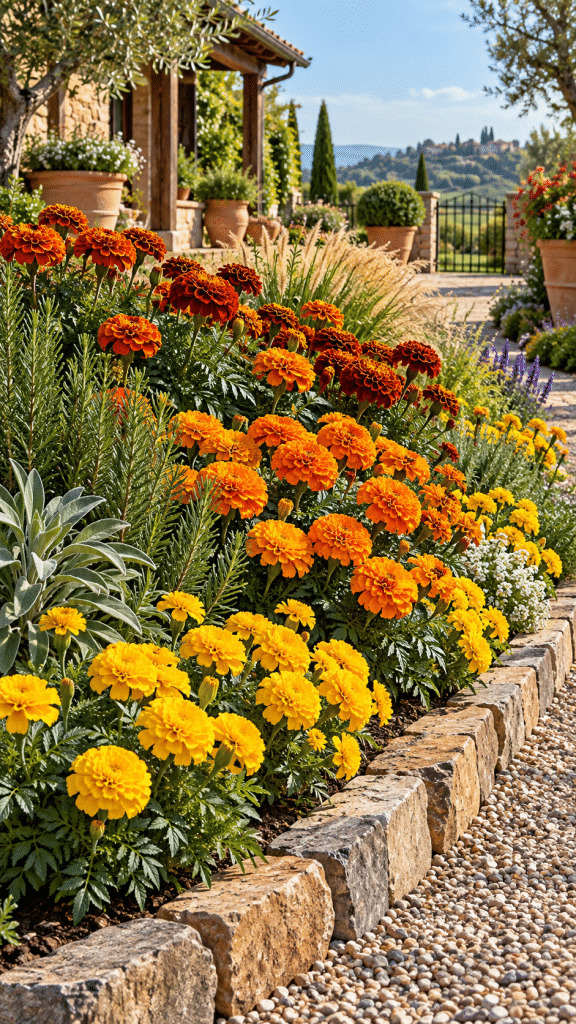
One of the most attractive ways to use marigolds is to build a layered golden flower border along a fence, garden wall, walkway, patio, or lawn.
Rather than planting a single straight row, this design uses several layers of plants with different heights and textures. Marigolds provide the primary seasonal color, while supporting plants create structure around them.
The finished border feels abundant and sophisticated without becoming overly formal.
Create a Strong Marigold Edge
Begin with compact French or dwarf marigolds near the front of the border.
Plant them in generous groups rather than placing individual plants far apart. Repeated clusters create stronger blocks of color and help the border look intentional.
A combination of golden yellow and deep burnt orange can create natural variation without making the garden feel chaotic.
Instead of alternating colors plant by plant, consider creating larger groups of each shade. One group might contain warm yellow marigolds, followed by a section of orange, then a darker rust-colored section.
This approach produces a flowing visual rhythm.
The front edge can also gently curve instead of following a perfectly straight line. Soft curves usually feel more natural and can make small gardens appear larger.
Add Taller Flowers Behind the Marigolds
Behind the compact front layer, taller marigolds can create height.
African marigolds are especially useful because their large round flower heads rise above shorter plants and immediately attract attention.
However, the border does not need to consist entirely of marigolds. Adding a few complementary flowering plants can make the design feel richer.
Cream cosmos, purple salvia, white alyssum, ornamental basil, zinnias, or soft grasses can all work beautifully near marigolds.
The goal is to let marigolds remain the dominant visual theme while allowing other plants to create contrast.
Purple and blue flowers are particularly effective because they sit opposite warm yellow-orange tones visually. Even a small amount of violet color can make golden marigolds appear brighter.
Use Dark Green Foliage for Contrast
The most successful bright flower gardens often include strong areas of green.
Without enough foliage, a garden filled entirely with yellow and orange flowers can become visually overwhelming.
Deep green plants provide a resting place for the eye.
Rosemary, basil, boxwood, sage, ornamental peppers, compact shrubs, or dark-leaved herbs can all provide background structure.
A simple strategy is to allow approximately two-thirds of the visual space to remain foliage and structure while flowers provide concentrated highlights.
This balance makes the marigolds look even more vibrant.
Add Stone or Brick for a Finished Look
Hardscape materials can transform a simple marigold planting into a polished garden feature.
A narrow border of natural stone, reclaimed brick, or gravel helps define the flower bed and separates it visually from lawn or surrounding soil.
Warm terracotta brick pairs especially well with orange and golden marigolds.
For a softer cottage-garden look, irregular stone edging can be used instead.
In modern landscapes, pale gravel or dark charcoal edging can create stronger contrast.
🌼 The key is to choose one material and repeat it elsewhere in the garden so the marigold border feels connected to the broader landscape.
Where This Marigold Border Works Best
A layered marigold border works particularly well along sunny pathways, fences, driveways, vegetable gardens, and patio edges.
It is also an excellent solution for long narrow spaces that may otherwise feel empty.
Because the flowers create such strong color, even a relatively inexpensive planting can make a large visual impact.
This makes the design especially useful for gardeners who want to improve curb appeal without completely redesigning the yard.
🥈 Best 2 Marigold Flower Garden Ideas for a Beautiful Vegetable Garden
The second of these Marigold Flower Garden Ideas blends ornamental beauty with food production.
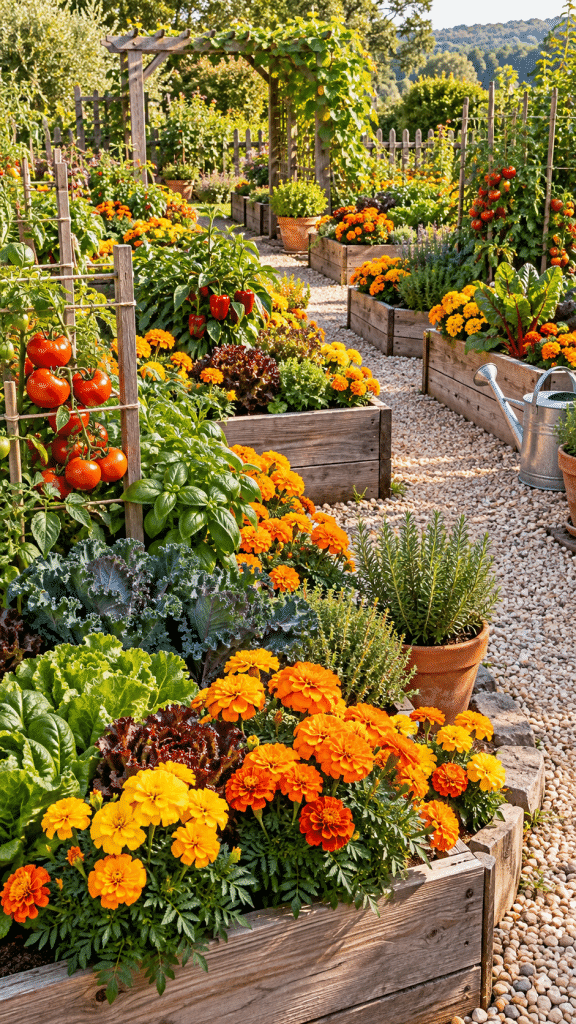
A vegetable garden does not need to look purely functional. By integrating marigolds around raised beds, vegetable rows, herbs, and pathways, the space can become one of the most visually attractive areas of the yard.
Marigolds add cheerful color between crops that may otherwise consist mainly of green foliage.
Tomatoes, peppers, kale, lettuce, herbs, beans, and cucumbers all create different shapes and textures, while marigold flowers introduce concentrated bursts of yellow and orange.
The result is a garden that feels productive and decorative at the same time.
Frame Raised Beds With Marigolds
One of the easiest approaches is planting marigolds around the perimeter of raised vegetable beds.
Compact French marigolds are usually the best choice because they remain low enough that they do not dominate smaller crops.
Plant several clusters near the corners rather than surrounding every centimeter of the bed.
This creates visual structure while still leaving space for vegetables.
In larger raised beds, a few marigolds can also be placed between vegetable groups.
For example, a tomato bed might include marigolds at the outer corners, basil near the tomato plants, and low-growing herbs along the front.
This creates a miniature edible landscape rather than a simple vegetable row.
Create Repeating Color Through the Kitchen Garden
Repetition is one of the simplest ways to make a garden look professionally designed.
Instead of placing marigolds in only one vegetable bed, repeat them across several areas.
A cluster of yellow marigolds might appear beside tomatoes, another near peppers, and another beside an herb planter.
From a distance, these repeated flower colors visually connect the entire garden.
The effect becomes even stronger when the same variety is used repeatedly.
If the vegetable garden already contains many different crops, keeping the flower palette relatively simple can prevent the space from feeling cluttered.
Golden yellow and orange are usually enough to create a strong theme.
Combine Marigolds With Culinary Herbs
Herbs and marigolds can form an especially attractive combination.
Rosemary provides upright evergreen structure, basil creates broad leafy texture, thyme can trail along edges, and sage adds soft gray-green foliage.
Against these different shades of green, marigolds appear extremely vibrant.
A small herb garden can therefore become one of the prettiest features in the yard.
Signet marigolds are particularly suitable for this type of space because their smaller flowers and fine foliage blend naturally with herbs.
Instead of appearing like a formal flower display, the garden feels loose, edible, fragrant, and abundant.
Add Gravel or Mulch Pathways
Pathways play an important role in vegetable garden design.
They provide practical access, but they also create visual structure.
Gravel paths surrounded by wood-framed raised beds can create a clean modern look, while straw, bark mulch, brick, or stepping stones produce a more rustic atmosphere.
Marigolds can be planted along selected path edges to soften the transition between the walkway and planting beds.
A few flowers leaning slightly toward the path create a relaxed cottage-garden character.
In a more structured garden, evenly spaced clusters can create a cleaner appearance.
Important Note: Marigolds are often promoted as universal pest-control plants, but their effects vary depending on the pest, marigold species, and growing conditions. Use them as part of a diverse garden strategy rather than assuming they will eliminate every insect or soil problem.
Turn the Vegetable Garden Into a Decorative Destination
A productive garden becomes much more inviting when it includes a small place to pause.
Consider adding a wooden bench, compact bistro chair, watering station, potting table, or decorative terracotta collection near the garden entrance.
Marigolds can then frame the area.
A simple weathered bench surrounded by orange marigolds and herbs can create an unexpectedly beautiful garden moment.
This is particularly effective in backyard vegetable gardens where practicality usually dominates the design.
🌿 Small decorative details make the space feel intentional rather than purely agricultural.
🥉 Best 3 Marigold Flower Garden Ideas With a Golden Garden Path
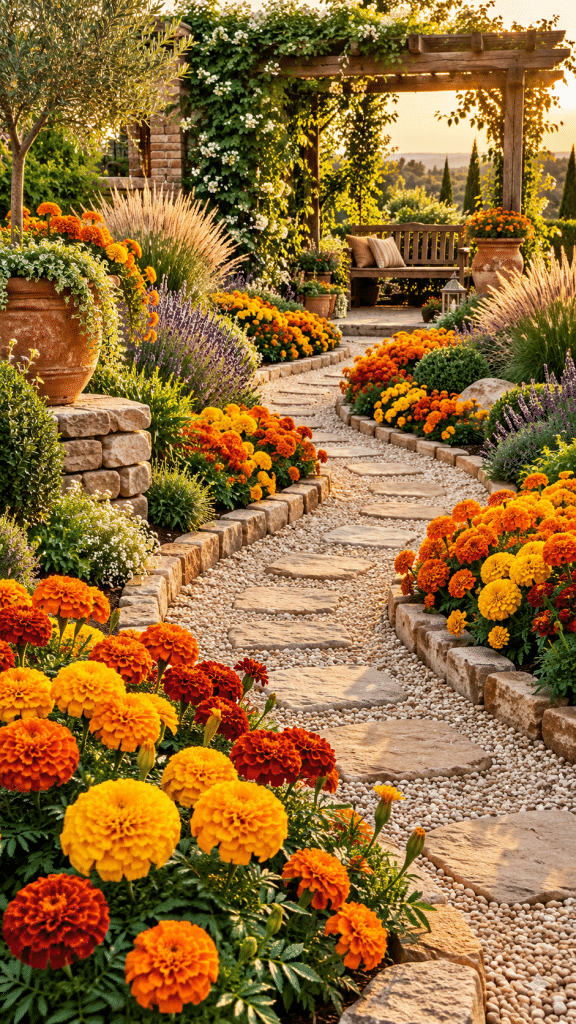
The third design turns marigolds into a strong landscape feature by placing them along a pathway.
This concept works especially well in medium or large gardens because the repeated flowers lead the eye through the landscape.
A winding path bordered with golden flowers can feel almost like a glowing ribbon through the garden.
Instead of treating marigolds as background plants, this design makes them part of the garden architecture.
Build the Path First
The path should create the underlying structure.
Natural stone stepping stones can produce a relaxed informal garden, while brick creates a traditional look.
Fine gravel works well for cottage gardens, Mediterranean landscapes, and vegetable gardens.
A narrow mulch path is an affordable alternative for rustic spaces.
The path does not need to be perfectly symmetrical.
Gentle curves often create a more interesting experience because the entire garden is not visible at once.
As visitors walk through the space, new planting areas gradually appear.
This sense of discovery is especially effective when marigolds are used repeatedly along the route.
Plant Marigolds in Generous Drifts
Instead of placing one marigold every few inches, plant larger groups.
A cluster might contain several plants of similar color, followed by a small gap of foliage or ornamental grass.
Another marigold cluster can appear several feet farther along.
This creates rhythm rather than a continuous solid stripe.
For a naturalistic effect, slightly vary the size of each group.
Some sections might contain five or six plants while others contain a larger mass.
The result feels spontaneous even though the placement has been carefully designed.
Mix Golden Flowers With Soft Grasses
Ornamental grasses are excellent companions for marigolds because their fine leaves and seed heads contrast with the dense round flowers.
Compact fountain grass, sedges, or other regionally suitable ornamental grasses can provide movement.
When the wind moves through the grass while bright marigolds remain visually solid beneath them, the planting becomes much more dynamic.
This combination is especially effective in late summer and autumn.
The golden colors of marigolds naturally complement drying grass seed heads, creating a warm harvest-season atmosphere.
🍂 The garden can therefore transition beautifully from summer into fall.
Add Garden Features Along the Route
A pathway becomes more interesting when it leads to something.
The destination might be a bench, arbor, birdbath, small tree, vegetable garden, greenhouse, fire pit, fountain, or secluded seating area.
Marigolds can guide visitors toward this focal point.
For example, a gravel path could begin near the patio, curve between flower beds, pass through clusters of orange marigolds, and end beneath a wooden arbor.
Adding one or two large terracotta containers near the destination can reinforce the warm color palette.
Tall marigolds planted behind the pots help connect vertical features with lower pathway planting.
Create a Sunset Color Palette
Marigolds naturally lend themselves to warm garden color schemes.
Instead of combining many unrelated flower colors, consider building a palette inspired by sunset.
Use golden yellow, burnt orange, copper, rust, deep red, and touches of creamy white.
The colors can appear in flowers, containers, outdoor cushions, brickwork, or decorative objects.
Dark green foliage prevents the warm palette from becoming too intense.
The result is especially beautiful during late-afternoon sunlight when golden flowers appear almost luminous.
How to Make Marigold Gardens Look More Expensive
A large budget is not necessary to create a polished garden.
Professional-looking landscapes usually depend more on repetition and restraint than expensive plants.
Choose only a few marigold varieties and repeat them throughout the design.
Avoid using a different flower color in every available space.
Instead, create larger masses of similar plants.
Clear edges also improve the appearance dramatically.
Trim lawn edges, define pathways, remove weeds, and use mulch to create a clean background.
Mulch visually unifies the soil surface while helping flower colors stand out.
Containers can also elevate the design.
Large terracotta pots usually create a stronger impression than many tiny mismatched containers.
One generous pot filled with marigolds, ornamental grass, and trailing foliage can become an effective focal point.
🌼 Simple repetition often creates more impact than excessive decoration.
Marigold Flower Garden Ideas for Small Yards
Small gardens can still benefit from marigolds.
In fact, their intense color can make compact outdoor spaces feel more energetic.
The key is controlling the number of varieties.
Choose one dominant marigold color and repeat it.
A narrow garden might use golden French marigolds along a pathway, while taller plants grow against the back fence.
Vertical herbs, climbing vegetables, or trellises can provide height without occupying much ground space.
Containers are also useful.
A group of three pots in different sizes can create a layered flower display on a patio.
The largest pot might contain a taller marigold variety, while the smaller containers hold compact flowers and herbs.
By repeating the same color palette, the arrangement feels coordinated.
Marigold Flower Garden Ideas for Cottage Gardens
Marigolds can blend naturally into cottage-style landscapes when combined with softer planting.
Instead of arranging them in straight lines, plant them loosely between herbs, perennials, ornamental grasses, and vegetables.
Allow some flowers to overlap slightly into pathways.
This relaxed structure creates the feeling that plants have naturally spread throughout the garden.
Weathered wood, brick, terracotta, galvanized watering cans, and aged stone all reinforce the cottage atmosphere.
The warm orange tones of marigolds look especially attractive beside these materials.
A few taller flowers such as cosmos or zinnias can create additional vertical movement.
The final garden should feel abundant but not completely uncontrolled.
Defined edges or pathways provide enough structure to balance the informal planting.
Marigold Flower Garden Ideas for Modern Gardens
Marigolds can also work in contemporary landscapes.
The trick is using them in simple concentrated blocks.
Instead of mixing many different plants, create one bold mass of yellow or orange marigolds beside neutral hardscape.
Concrete, pale gravel, charcoal planters, black metal edging, and warm wood all create strong contrast with bright flowers.
A rectangular bed filled almost entirely with one marigold variety can become surprisingly modern.
The repetition creates a graphic field of color.
Modern planting works best when neighboring areas remain simple.
A large group of marigolds beside clean gravel and ornamental grasses usually looks more sophisticated than a heavily mixed bed.
Caring for a Marigold Garden
Marigolds are generally straightforward plants, but strong flowering depends on suitable growing conditions.
Sunlight is particularly important.
Most marigolds perform best where they receive generous direct sun. Too much shade can lead to weaker growth and fewer flowers.
Soil drainage also matters.
The plants typically prefer soil that does not remain constantly waterlogged.
In containers, drainage holes are essential.
Water young plants consistently while they establish roots. Once mature, watering frequency depends on climate, rainfall, container size, and soil conditions.
Removing faded flowers can encourage a tidier appearance and may help maintain continued blooming.
However, leaving a few mature flowers late in the season can provide seed for future planting.
Extending Marigold Color Through the Season
A garden can maintain stronger seasonal impact by staggering planting times.
Instead of planting every marigold on the same day, gardeners may introduce additional young plants later in the season where climate allows.
This can help replace tired or damaged plants.
Regular observation is also important.
Remove heavily damaged foliage, maintain clear airflow, and avoid allowing neighboring plants to completely cover compact marigolds.
Container-grown marigolds may require more frequent watering than those planted directly in the ground because potting mix dries faster.
🌞 During hot weather, checking soil moisture regularly is particularly important.
Combining Marigolds With Autumn Garden Decor
Marigolds naturally transition into fall because their colors already resemble autumn foliage.
Orange and yellow flowers pair beautifully with pumpkins, gourds, straw, weathered baskets, dried grasses, corn stalks, and rustic wooden decorations.
A porch planter can begin as a summer marigold container and later become part of an autumn display.
Simply add pumpkins around the base or introduce ornamental grasses for additional height.
In the garden, marigolds can surround a small seasonal harvest display without requiring a completely separate decorative planting.
Copper, rust, mustard yellow, cream, and muted green create a sophisticated autumn palette.
Best Color Combinations for a Marigold Garden
Golden yellow marigolds look vibrant beside lavender, purple salvia, deep green herbs, and blue-gray foliage.
Orange marigolds pair particularly well with cream flowers, burgundy foliage, dark grasses, and natural wood.
Deep rust varieties work beautifully in autumn-themed gardens beside ornamental grasses, pumpkins, and copper-toned foliage.
White flowers can also create breathing space.
A border filled only with intense colors may feel visually heavy, while occasional white blooms brighten the composition.
The strongest combinations typically use one dominant warm marigold tone, one contrasting flower color, and plenty of green foliage.
Final Thoughts on the Best Marigold Flower Garden Ideas
The most successful Marigold Flower Garden Ideas use marigolds as more than simple filler flowers.
They turn their intense color into a design tool.
🥇 A layered golden marigold border is ideal for gardeners who want rich color along fences, patios, or lawn edges. Different heights, dark green foliage, and natural edging materials create a full and polished landscape.
🥈 A marigold vegetable garden combines beauty with productivity. Repeated flower clusters among vegetables and herbs make raised beds feel decorative while preserving their practical purpose.
🥉 A golden marigold garden path creates the strongest landscape statement. Repeated drifts of flowers guide visitors through the garden while grasses, stone, gravel, and destination features create depth and movement.
Marigolds prove that a familiar and affordable flower can still create an extraordinary garden.
The secret is not planting as many varieties as possible. It is choosing a clear design direction, repeating colors intentionally, using contrasting foliage, and allowing paths, borders, containers, and hardscape to support the flowers.
Whether the garden is a tiny patio, productive vegetable plot, informal cottage yard, or spacious landscaped property, marigolds can introduce warmth, structure, and unmistakable seasonal charm.
With thoughtful placement, these glowing flowers can transform an ordinary outdoor space into a garden that feels vibrant, welcoming, and beautifully designed.