A natural rock retaining wall can completely change the look and function of an outdoor space. It adds structure, controls soil erosion, creates usable levels on sloped land, and brings timeless beauty that blends naturally with the landscape. Unlike plain concrete walls, stone walls feel warm, organic, and high-end. They look like they have always belonged there.
Homeowners love the charm of stone because it works with nearly every style—modern homes, rustic cottages, farmhouse yards, woodland gardens, and luxury estates. A thoughtfully designed retaining wall does more than hold back soil. It becomes a visual statement, a seating feature, a garden border, and a value-boosting upgrade.
If your yard feels uneven, messy, or underused, these Best 3 natural rock retaining wall ideas can turn that wasted area into something stunning. Whether you have a steep slope or just want stronger curb appeal, these ideas deliver style and practicality at the same time.
Why a Natural Rock Retaining Wall Is Worth It
Before choosing a design, it helps to understand why so many homeowners prefer natural stone over other materials.
🌿 Timeless Beauty
Natural rock has texture, color variation, and character that manufactured materials often cannot copy. Every stone is unique, which means your wall becomes one of a kind.
💪 Long Lasting Strength
Stone retaining walls can last for decades when properly built. They resist weather, insects, and everyday wear better than many wood alternatives.
💧 Better Drainage Potential
With the right construction methods, rock walls can allow water to move through gaps and drainage systems more naturally, reducing pressure buildup behind the wall.
🏡 Boosted Property Value
Landscaping upgrades often improve first impressions. A beautiful retaining wall makes the home look professionally designed and cared for.
🌎 Eco Friendly Appeal
Natural stone is often considered a more sustainable visual choice because it is durable and long-lasting, reducing replacement frequency.
Best 3 Natural Rock Retaining Wall Styles for Every Yard
Not every yard needs the same wall style. Some need strength for slopes, while others need beauty for garden borders. These three ideas cover the most popular and effective looks.
1 Rustic Stacked Natural Rock Retaining Wall for Organic Charm
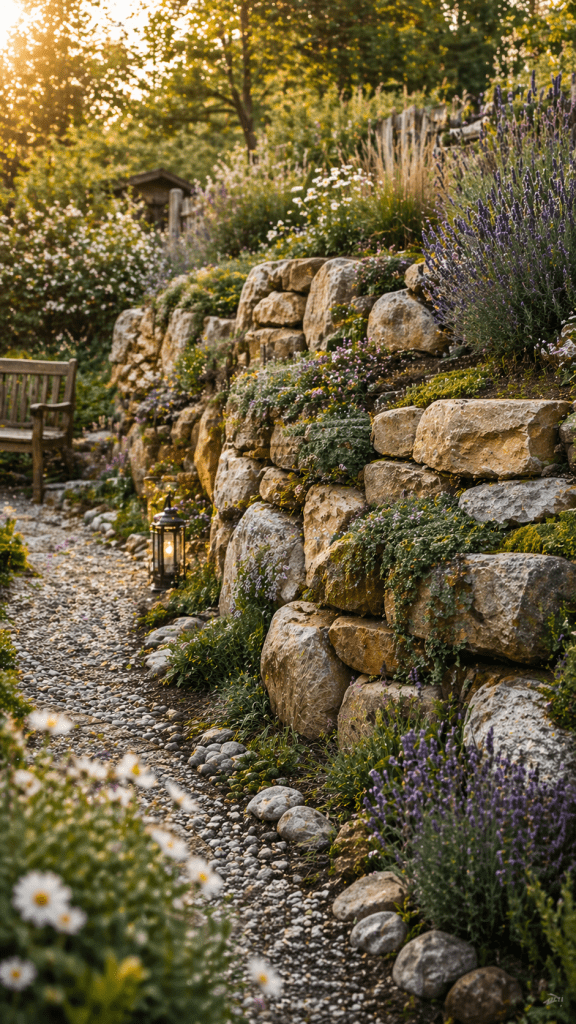
A rustic stacked wall uses irregular stones placed carefully together to create a natural, handcrafted appearance. This style feels like it grew from the landscape itself.
Large and medium stones are stacked with attention to balance and weight. The uneven faces and varied colors create texture that looks especially beautiful in cottage gardens, forest landscapes, and country homes.
This design works wonderfully beside flower beds, winding paths, or backyard terraces. Moss, creeping thyme, and soft greenery around the wall make it even more magical.
🌼 Why It Works So Well
The rustic style softens hard lines in a yard. If your space feels too sharp or artificial, this wall adds warmth and character.
It also ages beautifully. Over time, the stone may develop even more charm through weathering and subtle natural patina.
🌿 Best Places to Use It
- Sloped cottage gardens
- Woodland pathways
- Backyard seating terraces
- Farmhouse landscaping
- Natural pond edges
2 Tiered Natural Rock Retaining Wall for Sloped Yards
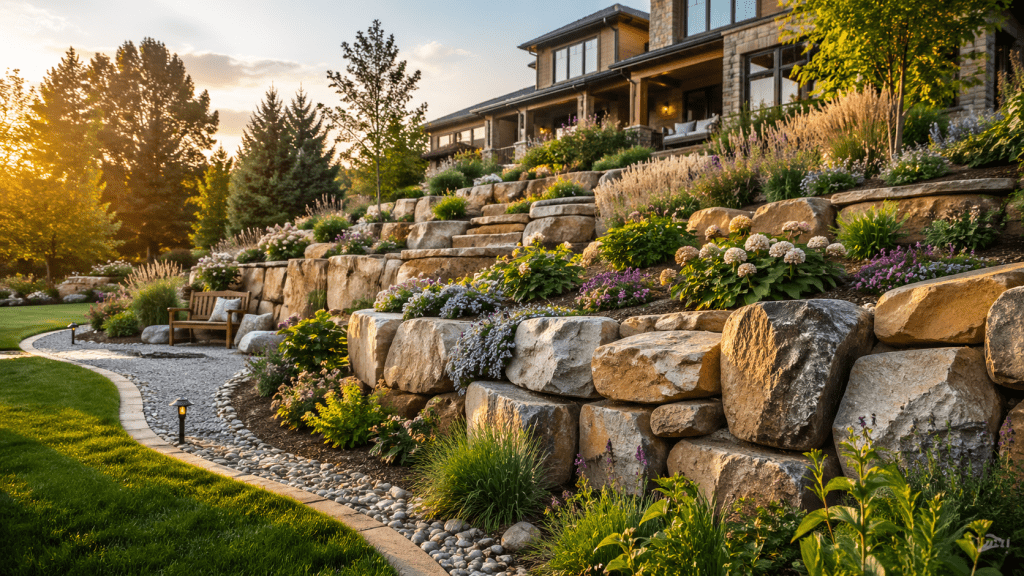
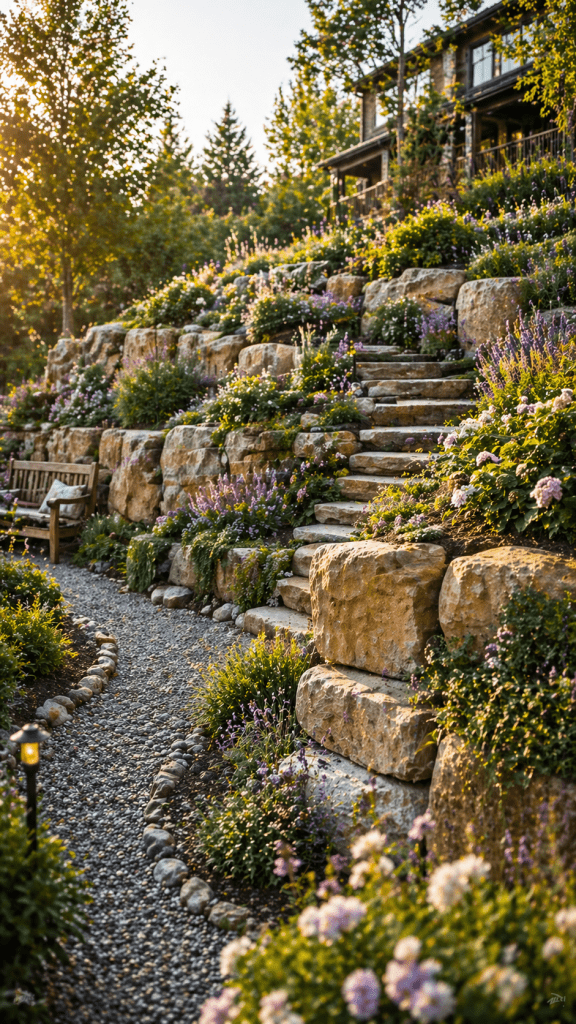
If your property has a steep incline, a tiered natural rock retaining wall may be the smartest solution. Instead of one tall wall, multiple shorter walls are built in levels.
Each level creates a flat planting zone or usable terrace. This transforms difficult slopes into organized layers that can hold flowers, shrubs, herbs, or seating areas.
Tiered walls also look more elegant than one giant vertical wall. They reduce visual heaviness and create a luxurious landscaped effect.
🏔 Why Homeowners Love Tiered Walls
A steep slope can feel like wasted land. Tiered walls turn it into functional outdoor space.
You can use each level differently:
- Upper level for privacy shrubs
- Middle level for flowers
- Lower level for pathway lighting
- One section for vegetables or herbs
- One section for lounge furniture
🌸 Design Tip
Use cascading plants between levels for dramatic beauty. Creeping phlox, ivy, trailing rosemary, or ornamental grasses look amazing.
Important Note: Always include proper drainage behind any retaining wall. Water pressure is one of the biggest causes of wall failure over time.
3 Modern Natural Rock Retaining Wall with Clean Luxury Lines
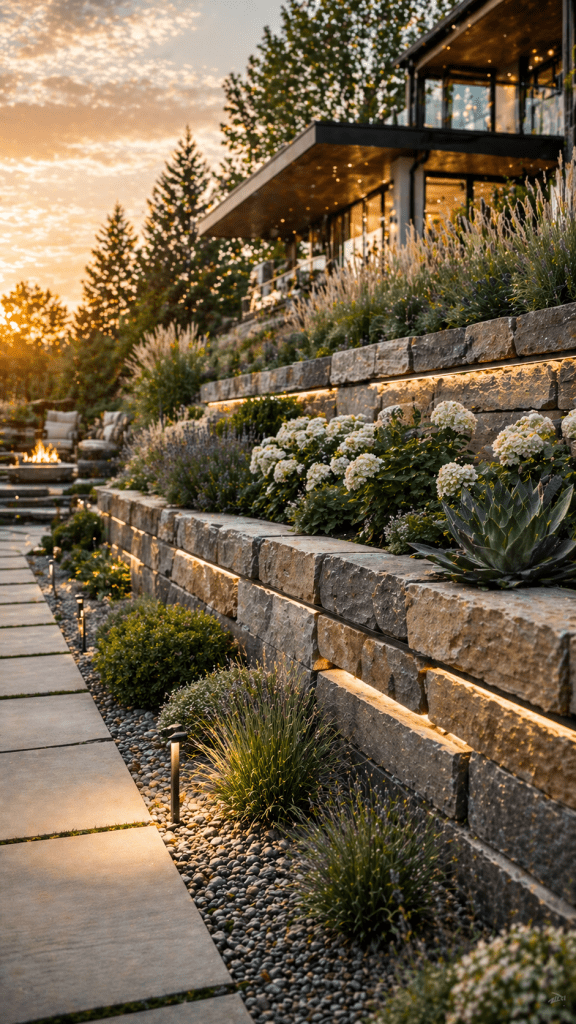
Some people love stone but want a cleaner, more contemporary look. This style uses carefully selected rocks with flatter faces and tighter placement for a refined result.
Instead of rugged randomness, stones are arranged in a more linear pattern. Colors often stay within a controlled palette such as gray, beige, charcoal, or warm sandstone.
This style looks incredible with:
- Modern architecture
- Minimalist gardens
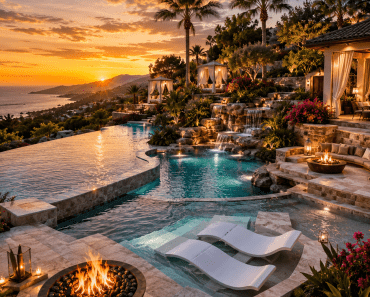
- Poolside landscaping
- Sleek front yards
- Outdoor fire pit zones
✨ Why It Feels Expensive
The combination of natural texture and clean structure gives designer-level appeal. It feels polished without losing authenticity.
Pair it with steel edging, gravel paths, LED lighting, and sculptural plants for a premium landscape look.
Natural Rock Retaining Wall Comparison Table
| Style | Best For | Visual Feel | Maintenance | Cost Range |
|---|---|---|---|---|
| Rustic Stacked | Cottage or woodland yards | Warm and natural | Low to medium | Medium |
| Tiered Wall | Sloped properties | Grand and functional | Medium | Medium to high |
| Modern Clean Line | Contemporary homes | Sleek and upscale | Low | High |
How to Choose the Right Natural Rock Retaining Wall
Choosing the best wall depends on your yard, budget, and design goals.
📏 Consider the Slope
If the land has a steep incline, tiered walls often work better than one tall wall.
🏠 Match the Home Style
A rustic wall may clash with ultra-modern architecture. Likewise, a minimalist wall may feel cold in a cottage garden.
💰 Set a Realistic Budget
Natural stone varies in price depending on type, availability, transport, and labor. Local stone is often more affordable than imported options.
🧱 Think Long Term
A cheaper shortcut today can become an expensive repair later. Strong foundations and drainage matter just as much as appearance.
Best Types of Stone for a Natural Rock Retaining Wall
The stone you choose affects the look, durability, and budget.
Granite
Very durable and strong. Great for premium projects and long life.
Limestone
Soft elegant color tones. Excellent for warm and classic landscapes.
Sandstone
Beautiful layered texture and earthy appeal.
Fieldstone
Irregular natural shapes perfect for rustic walls.
Basalt
Dark dramatic tones ideal for modern landscapes.
Common Mistakes to Avoid
Even gorgeous materials can fail if planning is poor. Avoid these common mistakes.
🚫 Ignoring Drainage
Water buildup behind walls creates pressure that can push the wall outward.
🚫 No Proper Base
Without a compacted gravel base, settling may happen.
🚫 Choosing Looks Over Function
A beautiful wall still needs engineering logic.
🚫 Building Too Tall Without Help
Tall retaining walls often require permits, structural planning, or professional installation.
🚫 Wrong Stone Size
Tiny stones may not suit high-load areas. Larger stones often provide better stability.
Landscaping Ideas Around a Natural Rock Retaining Wall
Once the wall is installed, surrounding design choices make it even more impressive.
🌺 Flower Beds
Use layered flowers for seasonal color. Lavender, salvia, daisies, and hydrangeas work beautifully.
🌿 Groundcovers
Soften edges with creeping thyme, sedum, or ivy.
💡 Lighting
Install warm uplights or pathway lights to highlight texture at night.
🪑 Built In Seating
Wider top stones can become casual seating areas.
🪨 Gravel Paths
Stone walls and gravel paths naturally complement each other.
DIY or Professional Installation
Many homeowners ask if they can build one themselves.
DIY May Work For:
- Low garden border walls
- Decorative short walls
- Small level changes
- Basic edging projects
Hire a Professional For:
- Walls over several feet high
- Major slopes
- Drainage challenges
- Load-bearing walls
- Premium finish expectations
A professional may cost more upfront but can prevent expensive failures later.
How Much Does a Natural Rock Retaining Wall Cost
Costs vary widely based on region, labor, stone type, access, and wall height.
Typical Factors That Affect Price
- Type of stone
- Wall height
- Length of wall
- Excavation needs
- Drainage system
- Equipment access
- Labor rates
A short decorative wall may be manageable, while a large engineered slope project can become a premium investment.
Seasonal Care Tips
Natural stone is durable, but small maintenance steps help preserve appearance.
Spring
Check for movement, clean debris, refresh plants nearby.
Summer
Monitor irrigation so oversaturation does not weaken soil.
Fall
Remove leaf buildup and inspect drainage outlets.
Winter
Watch freeze-thaw areas where water may expand in cracks.
Why Natural Rock Retaining Walls Never Go Out of Style
Trends come and go, but stone remains desirable because it feels permanent, elegant, and grounded. A natural wall connects architecture with nature in a way synthetic materials often cannot.
It works equally well in luxury homes, humble cottages, suburban yards, and countryside estates. That flexibility is rare.
Stone also improves with time. Many walls look even better years later as plants mature around them.
Final Thoughts on the Best 3 Natural Rock Retaining Wall Ideas
The right natural rock retaining wall can solve slope problems, create more usable space, and make a yard look dramatically more beautiful. It is one of those upgrades that blends function with style.
If you want organic charm, choose the rustic stacked wall. If you need to tame a slope, go tiered. If you love a sleek upscale look, choose the modern clean-line design.
No matter which style you choose, thoughtful planning, proper drainage, and quality materials make all the difference. A beautiful stone wall is not just landscaping—it is an investment in the entire outdoor experience.