Creating a Fall Garden Wildlife Habitat is one of the most rewarding ways to transform an ordinary backyard into a thriving natural sanctuary. As temperatures fall, daylight becomes shorter, and seasonal flowers disappear, birds, beneficial insects, small mammals, and other garden wildlife begin searching for dependable food, protective shelter, and suitable places to survive the colder months.
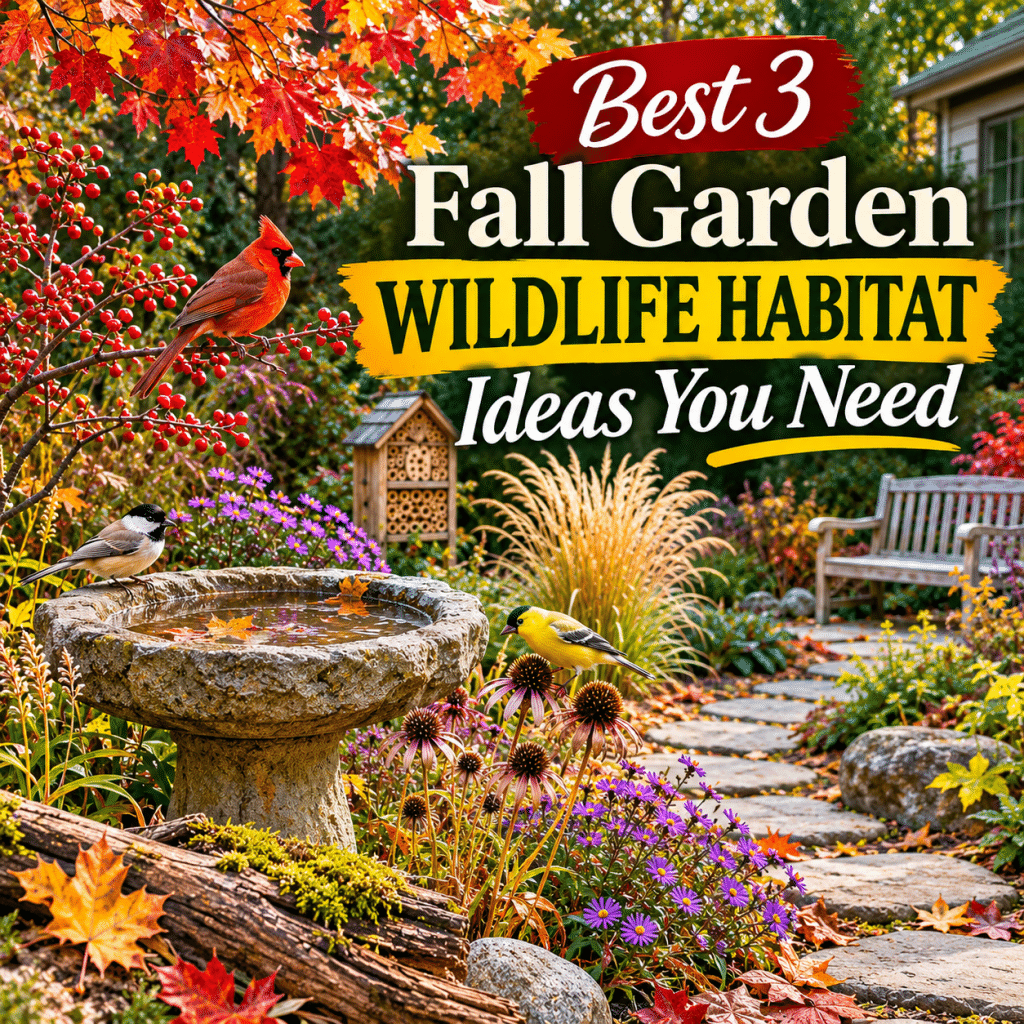
While many homeowners focus on preparing their gardens for winter, autumn also presents an extraordinary opportunity to design outdoor spaces that actively support biodiversity. A thoughtfully designed wildlife habitat can provide essential resources while maintaining an attractive, organized, and visually inspiring landscape throughout fall and winter.
The secret is to create a complete habitat rather than simply adding a bird feeder or insect hotel. Different wildlife species require different combinations of vegetation, nesting materials, protected pathways, water sources, and undisturbed shelter.
🍂 Imagine stepping into your backyard on a crisp autumn morning and discovering songbirds feeding among native grasses, beneficial insects finding refuge within hollow stems, and small woodland creatures exploring sheltered corridors beneath colorful shrubs.
Even a relatively small suburban garden can become an important wildlife sanctuary when these elements are arranged strategically.
These three creative habitat designs focus on interconnected wildlife ecosystems, specialized overwintering shelters, and dependable feeding and hydration opportunities that can make your backyard more welcoming throughout the colder seasons.
Why a Fall Garden Wildlife Habitat Is Essential for Backyard Biodiversity
Autumn marks a significant transition in the natural world. Many migratory birds begin traveling toward warmer regions, while resident birds must adapt to declining food availability. Insects prepare to overwinter in protected locations, and various small animals search for shelter from cold temperatures and predators.
Unfortunately, conventional residential landscapes frequently provide very few opportunities for wildlife to complete these seasonal transitions successfully.
Large expanses of lawn, isolated ornamental plants, solid fencing, artificial outdoor lighting, and the absence of native vegetation can make otherwise beautiful gardens surprisingly difficult places for wildlife to survive.
A wildlife-friendly autumn landscape offers a different approach. Instead of treating the backyard exclusively as an ornamental space, it becomes a carefully designed environment where decorative beauty and ecological functionality coexist.
Supporting Wildlife Through Seasonal Changes
Different species respond to autumn in remarkably different ways.
Some butterflies overwinter as pupae attached to vegetation. Certain native bees spend winter inside hollow plant stems or underground nesting chambers. Resident birds depend on seeds, berries, and insects, while other animals seek sheltered locations beneath vegetation or within natural cavities.
A garden containing multiple habitat types can accommodate a much broader range of wildlife than a landscape designed around a single feature.
The most successful approach involves creating several distinct habitat zones that work together as part of a larger ecological network.
Creating a Beautiful Garden That Remains Alive Throughout Winter
Wildlife-friendly gardens do not need to appear neglected or excessively wild.
Native ornamental grasses, sculptural seed heads, berry-producing shrubs, natural stone arrangements, and carefully positioned weathered branches can create an exceptionally attractive landscape.
Autumn sunlight highlights the golden textures of grasses, while evergreen vegetation provides architectural structure. Frost can transform dried flower heads into delicate natural sculptures, and visiting birds introduce movement into an otherwise quiet winter landscape.
🌿 A well-designed wildlife habitat brings visual interest to the garden precisely when conventional flower displays begin to disappear.
The Best 3 Fall Garden Wildlife Habitat Ideas at a Glance
| Wildlife Habitat Design | Primary Purpose | Wildlife Supported | Ideal Garden Location |
|---|---|---|---|
| Layered Wildlife Sanctuary and Habitat Corridors | Create interconnected living spaces | Birds, butterflies, small mammals and beneficial insects | Garden boundaries and mixed borders |
| Architectural Overwintering Microhabitats | Provide specialized winter shelters | Native bees, butterflies, beetles and amphibians | Protected garden corners |
| Seasonal Wildlife Resource Garden | Supply dependable food and water | Songbirds, seed-eating birds and various beneficial insects | Open areas near protective vegetation |
Each design addresses a different aspect of wildlife survival. Combining elements from all three can create a more complete backyard ecosystem, although every individual design can also function independently.
🥇 Best 1 Fall Garden Wildlife Habitat With a Layered Wildlife Sanctuary and Hidden Habitat Corridors
One of the most transformative ways to support backyard wildlife during autumn is to create an interconnected sanctuary that allows animals to move between different areas of the garden without unnecessary exposure to predators, strong winds, or harsh weather conditions.
Rather than placing individual wildlife-friendly features randomly throughout the landscape, this approach connects trees, shrubs, grasses, and ground-level vegetation into a continuous ecological network.
The inspiration comes from natural woodland edges, where vegetation gradually transitions from tall trees to shrubs, herbaceous plants, and sheltered ground-level environments.
These natural transitions create remarkably diverse living spaces within relatively small areas.
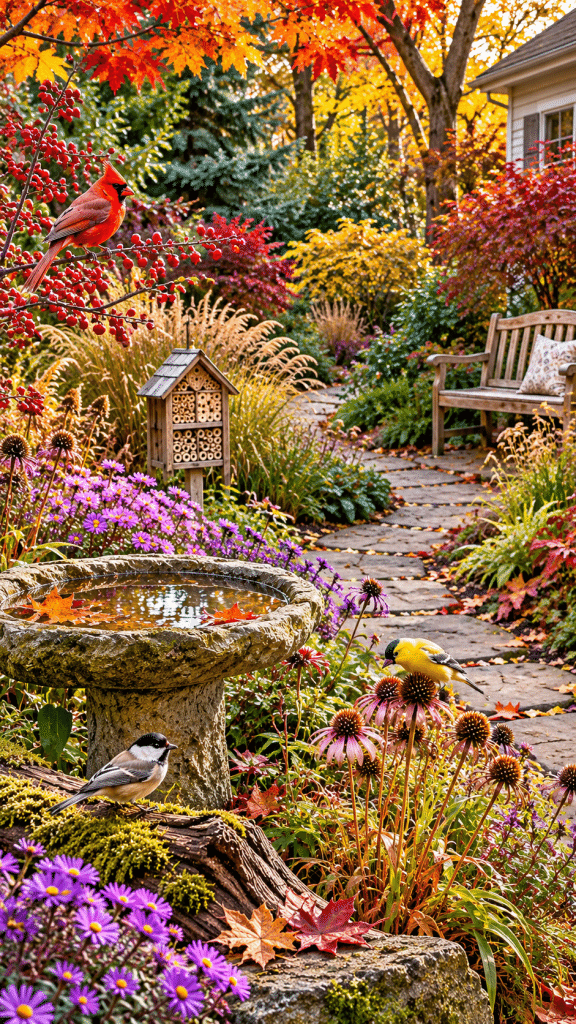
Design a Multilevel Wildlife Habitat
A conventional backyard often contains a lawn surrounded by isolated planting beds. Although this arrangement may appear spacious and organized, it provides limited protective connectivity for wildlife.
A layered sanctuary introduces vegetation at several different heights. Each layer serves a particular ecological function while contributing to the overall appearance of the garden.
The upper layer consists of suitable native trees or taller shrubs. These provide elevated resting areas, observation points, and protection from some weather conditions.
The middle layer contains densely branched shrubs that offer sheltered spaces where birds can retreat between feeding activities.
The lower layer includes native grasses, ground covers, and compact perennials that create protected environments for insects and ground-dwelling wildlife.
| Habitat Layer | Suggested Vegetation | Primary Wildlife Benefit |
|---|---|---|
| Upper canopy | Native oaks, serviceberries and suitable conifers | Elevated shelter and natural food |
| Shrub layer | Native viburnums, dogwoods and winterberry | Protective cover and seasonal berries |
| Herbaceous layer | Asters, coneflowers and goldenrods | Seeds and late-season insect resources |
| Grass layer | Little bluestem, switchgrass and native sedges | Ground-level shelter and seeds |
| Ground layer | Native woodland ground covers | Protected microhabitats |
Plant selection should reflect the local climate, available sunlight, soil conditions, and regional native plant communities.
A species that performs beautifully in a northeastern American garden may be completely unsuitable for an arid southwestern landscape. Selecting locally adapted plants makes the habitat more resilient and ecologically valuable.
Create Hidden Wildlife Corridors Between Garden Zones
Wildlife corridors are connecting areas that allow animals to travel between suitable habitats.
In a residential backyard, these corridors do not need to be particularly large. A continuous planting strip running along a fence, a gently curved border connecting two shrubs, or a sheltered passage beneath vegetation can provide useful connectivity.
Begin by identifying isolated habitat features already present in the garden.
Perhaps a mature tree stands at one end of the property, while a group of shrubs occupies the opposite corner. Connecting these areas with appropriately spaced vegetation can help create a more cohesive wildlife environment.
Use low-growing native grasses and perennial plants to establish the connecting route. Taller shrubs can provide additional shelter at strategic intervals.
The resulting landscape should contain both sheltered areas and small openings rather than forming an impenetrable wall of vegetation.
🐦 Birds can move between protective shrubs, while insects gain access to a greater variety of suitable habitat conditions throughout the garden.
Introduce a Sheltered Evergreen Retreat
Deciduous shrubs create beautiful autumn colors, but their protective foliage gradually disappears as winter approaches.
Evergreen vegetation helps compensate for this seasonal change by maintaining relatively consistent cover throughout the year.
Regionally appropriate native junipers, hollies, pines, cedars, or other evergreen species can form the foundation of a sheltered winter retreat.
Position these plants where they can reduce exposure to prevailing winds without creating excessive shade over areas that require sunlight.
A combination of evergreen and deciduous vegetation is generally more useful than a landscape dominated entirely by one type of plant.
Deciduous species may provide berries, seeds, and insect resources, while evergreen vegetation contributes persistent structural protection.
Together, they create an attractive winter landscape with contrasting colors, textures, and ecological functions.
Design a Quiet Wildlife Observation Area
One of the most enjoyable aspects of a backyard wildlife sanctuary is the opportunity to observe natural activity without disturbing its inhabitants.
A small seating area positioned outside the main habitat zone allows homeowners to enjoy visiting birds and seasonal changes.
Choose a location with a clear view of the planting layers while maintaining a comfortable distance from important shelter areas.
A natural wooden bench, simple stone seat, or existing patio can become an excellent observation point.
Avoid placing seating directly beside frequently used nesting locations or dense refuges.
The objective is to allow wildlife to behave naturally while creating a peaceful environment for people to appreciate the garden.
Reduce Artificial Lighting Around Habitat Corridors
Many nocturnal insects and other animals rely on natural patterns of darkness and daylight.
Bright landscape lighting can disrupt these patterns and reduce the suitability of otherwise attractive habitat spaces.
Instead of illuminating the entire garden, concentrate necessary lighting around entrances, stairs, and frequently used pathways.
Choose shielded fixtures directed downward and switch them off when they are no longer needed.
Leave the main wildlife corridors and sheltered garden boundaries naturally dark whenever practical.
This approach can also create a more peaceful atmosphere while reducing unnecessary electricity consumption.
Make the Sanctuary Look Beautiful and Intentional
A wildlife sanctuary becomes particularly attractive when its natural appearance is balanced with a clear landscape structure.
Curved planting boundaries, carefully positioned stones, defined pathways, and repeated plant varieties help establish visual organization.
Groups of ornamental grasses can create rhythm throughout the landscape, while berry-producing shrubs introduce seasonal color.
Evergreen foliage provides a consistent architectural foundation against which autumn leaves and winter frost become especially beautiful.
The result is a backyard that feels sophisticated and naturally immersive rather than disorganized.
This layered sanctuary is the best overall option for homeowners who want to create a long-term wildlife ecosystem instead of relying exclusively on individual wildlife accessories.
🥈 Best 2 Fall Garden Wildlife Habitat With Architectural Overwintering Microhabitats
Many of the smallest garden inhabitants disappear from view as temperatures decline.
However, their absence does not necessarily mean that they have left the garden.
Native bees, butterflies, moths, beetles, spiders, and numerous other beneficial organisms may spend winter hidden within highly specific environmental conditions.
Some require protected cavities, while others depend on undisturbed soil, standing vegetation, or naturally decaying wood.
Creating a collection of specialized overwintering microhabitats allows a backyard to accommodate these different survival strategies.
Unlike a conventional insect hotel, this approach uses several naturally functioning habitat structures distributed throughout the landscape.
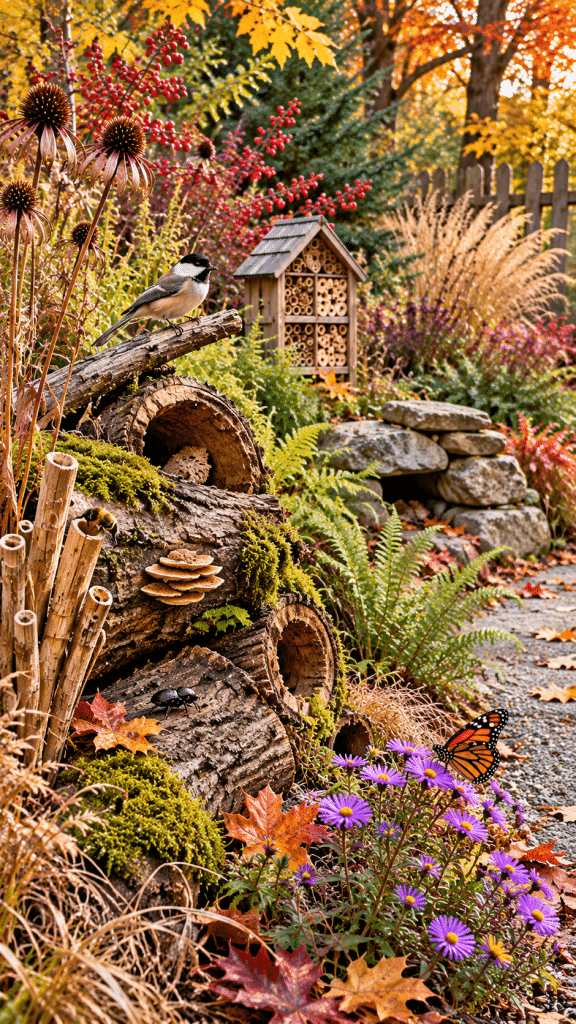
Establish a Natural Deadwood Habitat Gallery
Weathered wood is an incredibly valuable ecological resource that is often overlooked in residential garden design.
As wood gradually decomposes, it develops cracks, cavities, fungal communities, and different moisture conditions that support numerous organisms.
A dedicated deadwood habitat can incorporate untreated logs, naturally fallen branches, and partially decayed tree sections.
Choose wood from healthy, noninvasive local vegetation whenever possible. Avoid transporting potentially pest-infested firewood from distant locations.
Arrange larger logs horizontally on stable ground. Smaller pieces can be positioned around them to create a composition inspired by natural woodland environments.
Some sections should receive sunlight, while others remain partially shaded.
These contrasting conditions can accommodate organisms with different environmental preferences.
🪵 Weathered logs also introduce beautiful natural textures that complement autumn grasses, mosses, stones, and woodland vegetation.
Create a Dedicated Stem Nesting Habitat
Certain native bee species use naturally hollow or soft-centered plant stems for nesting.
A dedicated stem habitat can be established within a small planting area containing suitable native perennials and shrubs.
Rather than constructing an oversized commercial insect hotel, encourage natural nesting opportunities throughout the garden.
Maintain previously occupied stems and provide newly accessible stems where appropriate. Varying stem heights and diameters can accommodate different species.
Avoid routinely replacing every stem during spring maintenance because some nesting insects may still be developing inside.
The Xerces Society emphasizes the ecological advantages of naturally distributed nesting materials, which can help avoid the concentrated parasite and disease problems sometimes associated with artificial insect hotels. Xerces Society+1
The finished habitat can resemble a beautifully textured miniature meadow, with upright stems creating delicate silhouettes throughout winter.
Establish a Protected Ground Nesting Zone
Many native bees nest underground rather than inside above-ground structures.
A garden covered entirely with thick mulch, decorative gravel, landscape fabric, or dense ground covers may provide limited opportunities for these species.
Set aside a small area of suitable, well-drained, relatively undisturbed soil.
A sunny location protected from frequent foot traffic can be particularly useful for many ground-nesting species, although preferences vary.
Avoid compacting the soil or disturbing existing nesting entrances.
This zone does not need to occupy a prominent central location. It can be incorporated into the edge of a native planting bed or positioned beside a quiet garden pathway.
Small groups of surrounding vegetation can visually integrate the exposed soil into the overall landscape.
Build a Natural Stone and Wood Refuge
Different materials create different temperature and moisture conditions within the garden.
Natural stones can form sheltered spaces, while nearby wood and vegetation create additional protection from environmental extremes.
A small refuge constructed from stable, irregular stones and untreated logs can support suitable local invertebrates and, in some environments, amphibians.
Choose a location that receives partial shade and does not experience frequent disturbance.
Avoid unstable stone towers or arrangements that could collapse. Larger stones should rest securely on firm ground.
In gardens where amphibians naturally occur, nearby damp vegetation and protected ground-level access can increase the usefulness of the refuge.
However, wildlife should never be collected from other environments and introduced artificially into the garden.
A successful habitat allows local species to discover suitable conditions independently.
Design Microhabitats According to Environmental Conditions
A single shelter cannot provide ideal conditions for every organism.
Some insects prefer sunny, dry environments, while others require cooler, shaded locations with greater moisture availability.
Creating several distinct microhabitats increases the diversity of environmental conditions available within the backyard.
| Microhabitat | Preferred Location | Main Materials | Potential Wildlife |
|---|---|---|---|
| Deadwood refuge | Partial shade | Untreated logs and branches | Beetles, spiders and decomposers |
| Stem nesting garden | Sunny to partly sunny | Native hollow and pithy stems | Stem-nesting bees |
| Ground nesting zone | Well-drained sheltered soil | Undisturbed exposed ground | Ground-nesting native bees |
| Stone refuge | Protected garden boundary | Stable natural stones | Various invertebrates |
| Moist woodland pocket | Shaded garden corner | Wood, vegetation and natural ground cover | Moisture-loving organisms |
| Standing vegetation zone | Quiet perennial border | Native grasses and sturdy stems | Overwintering insects and spiders |
Distributing these features across the garden also prevents excessive concentration of wildlife in one artificial structure.
Protect Overwintering Wildlife From Unnecessary Disturbance
The most important feature of an overwintering refuge is not necessarily its appearance or complexity. It is the stability of the environment.
Frequently moving logs, examining cavities, rearranging stones, or opening insect nesting structures can expose their inhabitants to unfavorable conditions.
Once a habitat has been established, allow natural processes to occur with minimal intervention.
Avoid inspecting sheltered animals simply to determine whether the habitat is being used. Many successful microhabitats appear completely inactive from the outside.
Important Note: Never relocate occupied wildlife shelters, disturb active nesting sites, or introduce wild animals from another location simply to populate a backyard habitat. Prioritize naturally occurring species, preserve occupied refuges, and follow local wildlife regulations and fire-safety requirements.
Turn Functional Microhabitats Into Natural Garden Art
Specialized wildlife shelters can become visually appealing landscape features when designed with care.
A curved arrangement of weathered logs surrounded by native sedges creates a natural woodland composition.
A low stone refuge beside golden grasses introduces sculptural contrast.
Standing perennial stems can form an elegant architectural display against evergreen foliage.
The beauty of this approach lies in allowing ecological functionality to guide the aesthetic design.
Instead of purchasing numerous decorative accessories, homeowners can create a distinctive garden using natural materials that become increasingly interesting as they age.
This habitat concept is especially suitable for compact gardens because individual microhabitats can occupy relatively small spaces without requiring a complete landscape transformation.
🥉 Best 3 Fall Garden Wildlife Habitat With a Seasonal Wildlife Resource Garden
Food and water availability can change dramatically throughout autumn and winter.
In some regions, freezing temperatures reduce access to liquid water. Seasonal insects become less active, while available fruits and seeds gradually decline.
A seasonal wildlife resource garden addresses these challenges by establishing a collection of natural feeding areas, suitable water sources, and nearby protective vegetation.
Unlike a traditional bird-feeding station, this design prioritizes living plants as the primary source of wildlife nutrition.
Supplementary feeders and water features can enhance the habitat when they are managed responsibly.
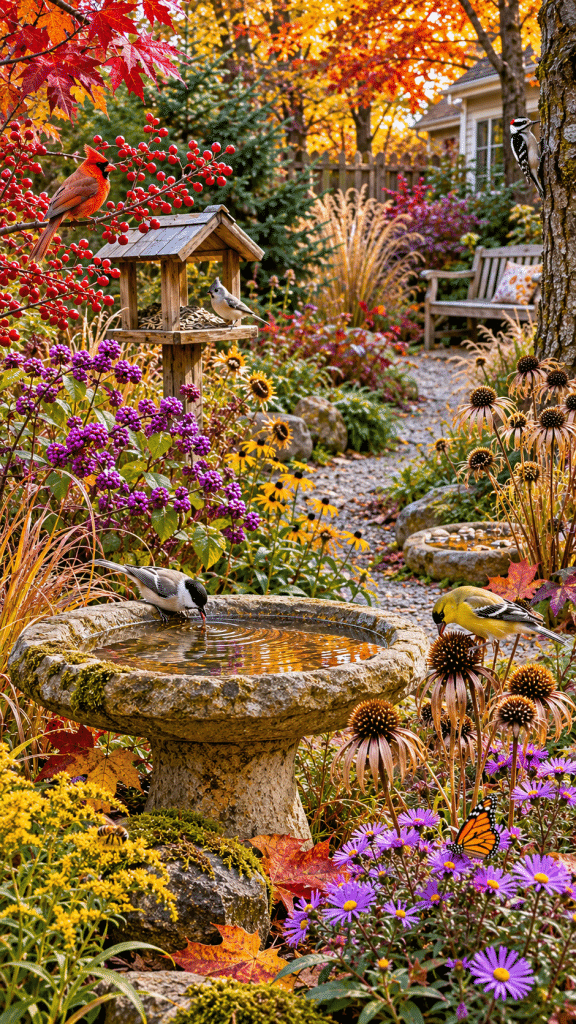
Create a Natural Autumn and Winter Seed Garden
Seed-producing native plants are among the most beautiful and functional additions to a seasonal wildlife garden.
Their dried flower heads create architectural interest while potentially providing natural food for seed-eating birds.
Purple coneflowers, black-eyed Susans, native sunflowers, and regionally appropriate grasses can contribute to a diverse seed-producing landscape.
Arrange taller plants toward the back of the border and shorter species near the front.
Allow suitable seed heads to remain accessible throughout the season.
Different seed-bearing plants mature at different times, helping create a more extended period of resource availability.
Their natural shapes also capture frost and morning sunlight, creating extraordinary visual interest during colder months.
Introduce a Living Berry Resource Station
Berry-producing native shrubs provide another important component of a seasonal wildlife resource garden.
Rather than placing all food resources in one location, distribute suitable shrubs throughout the landscape.
Winterberry, native dogwoods, American beautyberry, and appropriate native viburnums can be considered where they are naturally adapted.
Different species produce fruit at different times, and some berries remain available longer than others depending on the climate and local wildlife activity.
A combination of several compatible shrubs may provide a more dependable seasonal food supply than a single ornamental species.
Some plants, including winterberry, require compatible male and female plants for reliable fruit production.
Understanding these requirements before planting helps ensure that the garden develops its intended ecological functionality.
| Native Plant Example | Main Seasonal Resource | Potential Wildlife Benefit |
|---|---|---|
| Purple coneflower | Dried seeds | Seed-eating birds |
| Black-eyed Susan | Small seeds | Finches and other suitable birds |
| Little bluestem | Grass seeds and structure | Birds and insects |
| Winterberry | Persistent red fruit | Fruit-eating birds |
| American beautyberry | Seasonal purple berries | Various native birds |
| Native dogwood | Fruits and branches | Food and protective cover |
| Native asters | Late-season flowers and seeds | Pollinators and birds |
| Native goldenrods | Late-season nectar | Autumn-active beneficial insects |
These plants are examples for suitable North American regions rather than a universal planting list.
Local native plant societies and cooperative extension services can help identify the best alternatives for specific growing conditions.
Install a Safe and Accessible Wildlife Water Station
💧 Water is an essential component of a complete wildlife habitat.
Even gardens containing abundant natural food may be less attractive to certain species when accessible water is unavailable.
A shallow birdbath can provide opportunities for birds to drink and bathe.
Choose a basin with gently sloping sides and a textured surface. Position it securely so that it cannot easily overturn.
Small stones placed in shallow water can create additional landing surfaces for insects.
The water station should have clear surroundings that allow birds to detect approaching predators, while nearby vegetation provides accessible retreat opportunities.
Replace water regularly and clean the basin to prevent the accumulation of algae, contamination, and mosquito larvae.
In freezing climates, a properly rated outdoor heated birdbath can help maintain access to liquid water.
Never add antifreeze, salt, or other chemicals to prevent the water from freezing.
Create Separate Feeding and Hydration Areas
Although placing all wildlife features together may appear convenient, a distributed layout can offer several advantages.
Natural seed-producing plants can occupy one section of the garden, while berry shrubs are positioned along a different boundary.
A water station can be established in a relatively open area with suitable nearby shelter.
Supplementary bird feeders, if used, can be placed separately to reduce contamination of drinking water by spilled seeds and bird droppings.
This arrangement encourages movement throughout the landscape and creates several opportunities for wildlife observation.
It can also make individual features easier to maintain without disturbing the entire habitat.
Add Supplementary Bird Feeders Responsibly
Natural vegetation should remain the foundation of a wildlife resource garden.
However, supplementary feeders can provide additional opportunities to support and observe suitable backyard bird species.
Choose feeders appropriate for the birds commonly found in the local area.
Black oil sunflower seeds appeal to many seed-eating birds, while appropriate suet products may attract certain woodpeckers and other species during colder conditions.
Avoid offering moldy food, salted snacks, bread, or heavily processed human foods.
Clean feeders regularly, remove spoiled seed, and monitor local wildlife agency guidance regarding bird disease outbreaks.
If wildlife authorities recommend temporarily removing feeders and birdbaths, follow that advice.
The goal is to support wildlife without creating unnecessary health risks through excessive congregation.
Establish a Seasonal Resource Calendar
An effective wildlife garden provides resources across multiple seasons rather than relying exclusively on autumn abundance.
Planning ahead allows homeowners to identify periods when food, water, or suitable protection may become limited.
| Seasonal Period | Main Wildlife Resource | Recommended Habitat Feature |
|---|---|---|
| Early fall | Nectar and insects | Late-flowering native plants |
| Mid-fall | Ripening fruits and seeds | Berry shrubs and native seed plants |
| Late fall | Accessible food and protection | Persistent seed heads and sheltered vegetation |
| Early winter | Liquid water and remaining fruit | Water station and berry-producing shrubs |
| Midwinter | Shelter and available seeds | Evergreen cover and managed supplementary feeders |
| Late winter | Remaining food and water | Persistent resources and suitable hydration stations |
| Early spring | Emerging insects and early flowers | Regionally appropriate early-blooming native plants |
The precise timing will vary according to geography, weather conditions, and plant species.
Observing how resources change throughout the season makes it easier to identify opportunities for improving the garden over time.
Prevent Wildlife Resource Stations From Becoming Pest Attractions
Supporting biodiversity does not mean attracting unlimited numbers of animals into residential spaces.
Excessive supplementary food, poorly maintained feeders, and accumulated spilled seeds can attract unwanted rodents.
Use appropriate quantities of bird food and store supplies in secure containers.
Avoid scattering large amounts of food directly onto the ground.
Keep feeding areas away from building openings and follow local recommendations where larger wildlife, including bears, may be present.
A habitat built primarily around native vegetation generally provides a more natural resource distribution than a backyard dominated by supplementary feeding stations.
This seasonal resource garden is particularly rewarding for homeowners who enjoy birdwatching and want to experience visible wildlife activity throughout autumn and winter.
How to Combine All Three Fall Garden Wildlife Habitat Ideas Into One Backyard
Although each of these concepts can function independently, combining them creates a more complete ecological environment.
The layered sanctuary provides connectivity and protective vegetation.
The architectural microhabitats create specialized shelter opportunities.
The seasonal resource garden supplies food and water.
Together, these features address several fundamental requirements of backyard wildlife.
Create a Functional Habitat Master Plan
Begin by dividing the backyard into several ecological zones based on existing environmental conditions.
A sheltered boundary can become the main wildlife corridor, while a sunny perennial border can provide seed-producing vegetation and suitable insect habitat.
A partially shaded corner may accommodate natural deadwood features.
The water station can occupy an accessible area where maintenance and observation are convenient.
Existing mature trees and established native shrubs should be treated as valuable assets rather than obstacles to redesigning the landscape.
Working with existing vegetation can reduce costs and preserve habitat opportunities that are already functioning.
Adapt the Habitat to Your Backyard Size
A large property is not necessary to make a meaningful contribution to local biodiversity.
Compact backyards can accommodate a small native shrub, a shallow water station, and several specialized nesting environments.
Medium-sized properties offer additional opportunities for connected borders and multiple vegetation layers.
Larger gardens can establish more extensive habitat networks while preserving open areas for recreation.
| Backyard Size | Recommended Habitat Combination | Design Priority |
|---|---|---|
| Small urban backyard | Compact shrub border, stem habitat and shallow water station | Maximize vertical space |
| Medium suburban backyard | Connected native borders, deadwood refuge and seed garden | Create habitat connectivity |
| Large residential backyard | Multilevel sanctuary, distributed microhabitats and resource zones | Establish diverse ecosystems |
| Patio or courtyard garden | Native container plants and accessible water | Provide manageable resources |
| Woodland-edge property | Native understory, sheltered corridors and appropriate deadwood | Strengthen existing natural habitat |
Even small habitat improvements can become valuable when neighboring gardens also contain wildlife-friendly vegetation.
Over time, multiple residential properties may contribute to a broader network of suitable environments.
Establish Clear Boundaries Between Wildlife and Human Spaces
An attractive wildlife garden should accommodate human activities as well as ecological functions.
Frequently used pathways, recreational lawns, patios, and entrances can remain accessible and clearly defined.
Position more sensitive wildlife refuges away from areas experiencing regular disturbance.
Where children and pets use the backyard, choose stable materials and avoid potentially hazardous plant species in accessible locations.
Keep combustible habitat materials away from buildings according to local wildfire and fire-safety guidance.
A successful garden balances ecological opportunities with the practical requirements of everyday outdoor living.
Common Fall Garden Wildlife Habitat Design Mistakes to Avoid
Creating wildlife habitat involves more than purchasing accessories marketed as environmentally friendly.
Some seemingly beneficial additions can provide limited ecological value when poorly positioned or maintained.
Understanding these common mistakes helps create a more effective and sustainable backyard sanctuary.
Relying Too Heavily on Artificial Wildlife Accessories
Decorative birdhouses, insect hotels, and elaborate feeders can make a garden appear wildlife-friendly.
However, these accessories cannot replace healthy vegetation, suitable shelter, natural food sources, and appropriate environmental conditions.
A backyard with several birdhouses but very little protective vegetation may offer fewer opportunities than a garden containing a diverse collection of locally adapted plants.
Prioritize living habitat before investing in supplementary structures.
Selecting Plants Exclusively for Their Appearance
Beautiful ornamental plants do not always provide equivalent ecological benefits.
Some highly modified cultivars offer limited resources compared with suitable native species, while certain nonnative plants can become invasive.
Evaluate plants according to their ecological functionality as well as their appearance.
Consider whether they support local insects, provide suitable vegetation structure, produce accessible food, or contribute to seasonal habitat diversity.
This approach results in a garden that remains both attractive and ecologically meaningful.
Creating Isolated Habitat Features
A single shrub surrounded by exposed lawn provides different conditions from a shrub connected to protective vegetation.
Similarly, a water station positioned far from suitable shelter may be less attractive to some birds.
Consider how animals might move between different areas of the backyard.
Habitat connectivity is particularly important when designing residential landscapes that contain buildings, fences, paved surfaces, and other potential barriers.
Using Chemical Treatments Around Wildlife Refuges
Broad-spectrum insecticides can harm beneficial insects that form an essential part of the backyard food web.
Rodenticides may also create secondary poisoning risks for predators and scavengers.
Where pest management becomes necessary, prioritize accurate identification, prevention, physical exclusion, and targeted methods appropriate for the specific problem.
A diverse wildlife habitat is not guaranteed to eliminate garden pests, but it can support organisms that participate in natural ecological processes.
Expecting Immediate Wildlife Activity
A newly established wildlife habitat may appear quiet for weeks or even months.
Native shrubs need time to mature, while local animals gradually discover available resources.
Some of the most valuable ecological activity occurs underground, within plant stems, or beneath natural materials.
Avoid interpreting the absence of visible wildlife as evidence that the habitat has failed.
Patience allows the garden to develop increasingly complex ecological relationships over successive seasons.
Affordable Ways to Build a Fall Garden Wildlife Habitat
Transforming a backyard into a seasonal wildlife sanctuary does not necessarily require an expensive landscape renovation.
Existing vegetation, locally available natural materials, and simple design adjustments can form the foundation of an effective habitat.
Start With Existing Natural Resources
Examine the garden before purchasing new plants or accessories.
An established shrub may already provide suitable protective cover. A mature native tree may support an important community of insects and birds.
Naturally fallen branches can become part of a dedicated microhabitat, provided they are suitable, safe, and free from relevant pest or disease concerns.
Using existing resources preserves ecological continuity while reducing unnecessary expenses.
Invest Gradually in Native Vegetation
Adding several suitable native plant species each year can gradually transform an ordinary landscape.
Begin with plants that address the most obvious habitat deficiencies.
If the garden lacks winter cover, suitable evergreen shrubs may be a priority.
If natural seed resources are limited, establish a collection of native seed-producing perennials.
A garden developed gradually allows homeowners to observe which plants thrive and which wildlife species naturally visit the landscape.
| Habitat Improvement | Relative Cost | Long-Term Value |
|---|---|---|
| Connecting existing planting areas | Low | High |
| Establishing a natural deadwood refuge | Very low | High |
| Creating a protected ground nesting zone | Very low | High |
| Installing a shallow birdbath | Low to moderate | High |
| Adding native perennial plants | Low to moderate | High |
| Planting native berry shrubs | Moderate | Very high |
| Establishing a layered evergreen sanctuary | Moderate to high | Very high |
The greatest long-term value often comes from improvements that continue functioning naturally without requiring constant replacement.
Monitor the Garden Through Simple Wildlife Observations
Keep track of the birds, insects, and other organisms that appear throughout the season.
Observe which shrubs receive frequent visits, which seed heads attract birds, and which water stations are regularly used.
Photographs taken from a consistent location can reveal how the habitat changes throughout autumn, winter, and spring.
Avoid disturbing shelters to determine whether animals are present.
These observations can guide future improvements and make the experience of developing a wildlife-friendly backyard even more rewarding.
Frequently Asked Questions About Fall Garden Wildlife Habitat
When Is the Best Time to Create a Fall Garden Wildlife Habitat
Late summer through autumn can be an excellent period to begin establishing wildlife habitat features.
Creating protected zones before severe winter conditions arrive allows animals to discover available shelter and resources naturally.
Planting schedules should follow regional climate conditions. Where the ground freezes early, major planting projects may need to begin earlier in autumn or continue the following spring.
Can a Small Backyard Support Wildlife During Winter
Absolutely. A small garden can provide meaningful resources through native vegetation, suitable nesting materials, accessible water, and protected spaces.
The ecological quality of the habitat is often more important than its overall size.
A thoughtfully designed compact garden may provide more useful resources than a much larger property dominated by lawn and unsuitable ornamental vegetation.
What Wildlife Is Most Likely to Visit an Autumn Garden
Common visitors may include finches, chickadees, sparrows, woodpeckers, butterflies, native bees, beetles, and spiders.
The exact species depend on regional biodiversity, available vegetation, surrounding landscapes, and seasonal weather conditions.
Gardens should be designed around naturally occurring local wildlife rather than attempting to attract particular species that do not normally inhabit the area.
Do Wildlife Habitats Need Bird Feeders
No. Bird feeders are supplementary features rather than essential components of a wildlife habitat.
Native vegetation that provides seeds, fruits, insects, and protective cover can support birds without requiring artificial feeding stations.
Feeders can be enjoyable additions when managed responsibly, but they should not become substitutes for natural food resources.
Are Insect Hotels Necessary for Overwintering Wildlife
Insect hotels are not necessary for creating an effective wildlife habitat.
Naturally occurring stems, suitable soil, decaying wood, and appropriate vegetation can provide nesting and shelter opportunities for numerous insect species.
Natural habitats also distribute nesting opportunities throughout the landscape instead of concentrating large numbers of insects into a single structure.
How Can a Wildlife Habitat Remain Attractive During Winter
Combine evergreen vegetation with architectural grasses, persistent seed heads, weathered wood, and carefully defined planting boundaries.
These features create an interesting composition even when flowers are absent.
Natural frost, visiting birds, colorful berries, and contrasting vegetation textures can make the winter garden remarkably beautiful.
Final Thoughts on the Best Fall Garden Wildlife Habitat Ideas
Creating a Fall Garden Wildlife Habitat is an opportunity to transform an ordinary residential landscape into a more resilient, fascinating, and environmentally valuable outdoor environment.
The most successful wildlife gardens do not depend on a single accessory or temporary seasonal decoration. They provide a thoughtful combination of connectivity, shelter, natural food, and accessible water.
🥇 The layered wildlife sanctuary and hidden habitat corridors offer the most comprehensive approach for homeowners seeking a long-term ecological transformation.
🥈 Architectural overwintering microhabitats provide specialized opportunities for beneficial insects and other small garden inhabitants that are frequently overlooked.
🥉 The seasonal wildlife resource garden creates dependable feeding and hydration opportunities while bringing visible natural activity into the backyard.
Combining these three ideas can establish a garden that remains ecologically valuable throughout the changing seasons.
Instead of becoming an empty and lifeless landscape when autumn ends, your backyard can develop into a sheltered natural sanctuary filled with beautiful textures, fascinating wildlife activity, and hidden ecological wonders.
Every native shrub, protected nesting area, natural wildlife corridor, and accessible water source represents another opportunity to support local biodiversity.
🍁 The most extraordinary autumn garden is not necessarily the one with the most expensive decorations or the most immaculate appearance. It is the one that continues to nurture life long after its final flowers have faded.