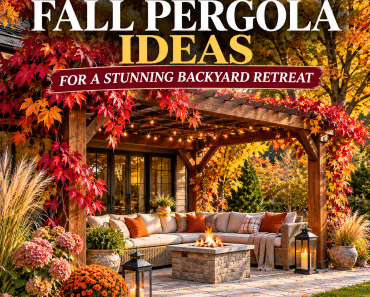
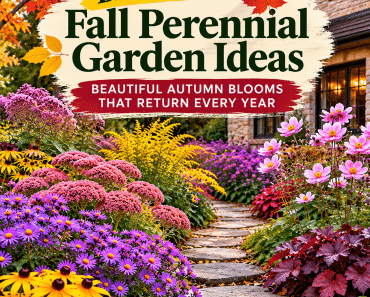
Fall Patio Garden Ideas can transform an ordinary outdoor space into an enchanting autumn sanctuary filled with rich seasonal colors, beautiful botanical textures, and inviting places to enjoy the crisp air. While many homeowners begin abandoning their patios when summer ends, autumn actually offers an extraordinary opportunity to create an outdoor environment that feels more sophisticated, comfortable, and visually captivating than ever.

Imagine stepping onto a patio surrounded by warm amber foliage, delicate ornamental grasses, architectural greenery, and softly illuminated garden features. A comfortable seating area becomes the perfect destination for peaceful mornings, afternoon conversations, or cozy evenings beneath the changing autumn sky. 🍂
The secret to creating a remarkable fall patio garden is not simply adding pumpkins, purchasing seasonal flowers, or replacing summer decorations. Instead, the most beautiful transformations come from treating the entire patio as a thoughtfully designed garden environment where plants, furniture, pathways, vertical features, and lighting work together.
A successful patio garden creates a meaningful connection between outdoor living and natural beauty. It should feel like a destination rather than a collection of decorations. Every element contributes to a carefully considered atmosphere, from the arrangement of botanical layers to the positioning of a favorite chair.
Whether your outdoor area is a compact urban courtyard, a contemporary backyard patio, or a spacious terrace overlooking the garden, the following three extraordinary ideas reveal how to make the most of autumn’s unique character.
Each approach offers a different experience: romantic woodland immersion, modern architectural elegance, or an intimate outdoor living sanctuary.
Why Fall Patio Garden Ideas Can Make Outdoor Spaces More Beautiful Than Summer
Summer patios often emphasize bright flowers, abundant greenery, and open spaces designed for entertaining. Autumn introduces a completely different visual language.
As temperatures gradually become cooler, sunlight takes on a softer character, deciduous foliage develops warmer colors, and the garden begins revealing fascinating structures that may have gone unnoticed during summer.
These seasonal changes create opportunities for outdoor spaces that feel luxurious without requiring elaborate renovations.
The most effective autumn patio designs take advantage of three natural characteristics.
🍁 Rich seasonal color: Burgundy, copper, amber, muted gold, olive green, and earthy brown create sophisticated combinations that feel harmonious with the surrounding landscape.
🌾 Extraordinary natural texture: Weathered wood, textured stone, ornamental grass foliage, mossy surfaces, and sculptural branches introduce visual interest even when flowers become less abundant.
✨ Atmospheric outdoor living: Lower-angle sunlight, comfortable textiles, sheltered seating, and carefully positioned lighting make the patio feel inviting during shorter autumn days.
Unlike traditional seasonal decorating, a garden-focused patio transformation provides an experience that evolves throughout the season.
Early autumn may offer flowering perennials and colorful foliage. Mid-autumn brings golden leaves and increasingly dramatic plant silhouettes. By late autumn, evergreen structure, ornamental seed heads, and architectural features become the stars of the space.
The following three approaches embrace that progression while creating distinctly different patio environments.
🥇 Best 1 Fall Patio Garden Ideas With an Enchanted Woodland Retreat and Romantic Autumn Layers
One of the most breathtaking ways to transform a patio for autumn is to create a romantic woodland retreat inspired by natural forest landscapes.
This design takes the beauty of an autumn woodland and brings it directly into the outdoor living area, combining softly overlapping foliage, organic materials, intimate seating, and a sense of peaceful enclosure.
Rather than arranging plants as isolated decorative objects, the woodland approach creates a connected botanical environment that gently surrounds the patio.
The result is a space that feels surprisingly secluded, even when it is located in an ordinary suburban backyard.
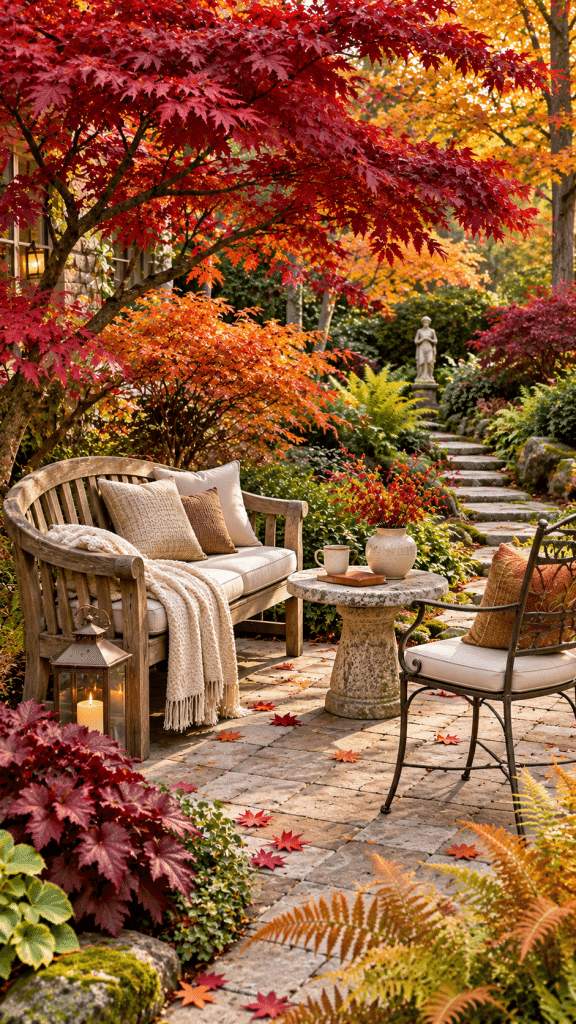
Create a Woodland Inspired Patio Garden With Natural Planting Layers
The foundation of a beautiful woodland patio is a layered arrangement of vegetation that mimics how plants grow along the edge of a forest.
In nature, woodland landscapes rarely contain plants of identical height placed in perfectly symmetrical rows. Instead, taller shrubs form a backdrop, medium-sized plants create movement, and low-growing foliage softens the ground.
Recreating this structure around a patio produces a natural sense of depth.
Begin by studying the existing boundaries. A wooden fence, brick wall, or neighboring garden can become the background for carefully selected foliage.
Where climate, growing conditions, and available soil permit, consider introducing compact deciduous shrubs near the patio perimeter. Their autumn colors can create a beautiful visual transition between the hardscape and surrounding garden.
Japanese maples can become spectacular focal points in locations that suit their requirements. Certain cultivars develop brilliant crimson, orange, or golden foliage and offer graceful branching structures.
For areas with partial shade, hardy ferns, coral bells, and suitable sedges can introduce contrasting leaf shapes and colors.
The objective is not to cover every available surface with vegetation. Instead, allow foliage to overlap visually while preserving comfortable walking space.
A woodland patio should feel abundant but never overcrowded.
Introduce a Beautiful Autumn Color Palette Inspired by the Forest
Color is particularly important when creating a romantic autumn garden atmosphere.
Instead of combining every available seasonal shade, choose a restrained palette that reflects the natural environment.
Warm rust, muted burgundy, golden brown, moss green, and soft cream create an elegant woodland combination.
A dark burgundy Japanese maple might provide the dominant color, while copper-colored leaves and muted green foliage soften the overall composition.
Natural stone surfaces and weathered wooden furniture help ground the design.
For a particularly beautiful effect, introduce small amounts of pale foliage or light-colored flowers. These brighter elements prevent the surrounding deeper colors from appearing visually heavy.
The interplay between dark foliage and subtle highlights creates the impression of an established garden rather than a temporary autumn display.
Design a Secret Garden Seating Corner for Peaceful Autumn Afternoons
A woodland-inspired patio becomes especially inviting when it includes a small, intimate seating destination.
Position a comfortable bench or two outdoor chairs where they overlook the most beautiful planting layers.
Instead of placing the furniture directly in the center, experiment with a slightly sheltered position near a garden boundary.
This arrangement creates a sense of privacy and encourages visitors to experience the surrounding foliage.
A weather-resistant wooden bench with gently curved details can complement the organic atmosphere. Alternatively, simple dark metal furniture introduces a romantic European garden character.
Choose outdoor cushions in subdued natural colors such as oatmeal, muted olive, or warm taupe.
A small side table provides space for a warm drink, a favorite book, or a simple seasonal arrangement.
The surrounding plants should frame the seating area without obstructing access or trapping excessive moisture against the furniture.
🍂 Design inspiration: Create a narrow visual opening between foliage layers so the seating corner looks toward a beautiful tree, sculptural garden feature, or particularly colorful section of the backyard.
This subtle design technique makes a small patio feel connected to a much larger landscape.
Add Woodland Character With Natural Stone and Organic Materials
A convincing woodland retreat depends as much on materials as it does on plants.
Smooth concrete and shiny metal can feel overly formal in this environment, especially when used without softer natural elements.
Introduce materials that appear comfortable beside fallen leaves and woodland vegetation.
Weathered timber, natural stone, gravel edging, and textured outdoor ceramics work particularly well.
If the patio already has a stone surface, emphasize its natural character by keeping the surrounding boundaries visually soft.
A narrow planted strip can soften the transition from paving to garden soil.
In suitable locations, irregular stepping stones may connect the patio to an adjacent garden path, creating the feeling of a gentle journey through the landscape.
A weather-resistant garden sculpture, small stone basin, or understated wooden feature can become a quiet focal point.
Avoid filling the garden with too many unrelated ornaments. Woodland beauty depends on the impression that the space developed naturally over time.
Use Gentle Lighting to Create a Magical Woodland Atmosphere
Lighting can transform a romantic woodland patio after sunset.
However, the most beautiful effect comes from highlighting selected features rather than illuminating the entire garden evenly.
A low-glare, warm-toned outdoor light can reveal the branching structure of a small ornamental tree.
Subtle lighting near a seating corner adds comfort without overwhelming the natural atmosphere.
If a woodland pathway connects the patio to another part of the garden, carefully positioned low-level lights can help define its edges.
Choose weather-rated outdoor fixtures and keep electrical connections protected from moisture.
Where the patio is near neighboring homes, use shielded lights directed downward to minimize glare and unnecessary disturbance to nocturnal wildlife.
The finished garden should retain a sense of darkness and mystery, with just enough illumination to appreciate its most beautiful features.
This design is particularly effective for homeowners who enjoy romantic gardens, peaceful outdoor reading spaces, and richly textured autumn landscapes.
🥈 Best 2 Fall Patio Garden Ideas With Modern Architectural Greenery and Sophisticated Autumn Contrast
For homeowners who prefer clean lines and contemporary outdoor design, a modern architectural patio garden offers an entirely different interpretation of autumn.
Instead of romantic abundance, this approach celebrates structure, repetition, negative space, and carefully controlled color.
The garden becomes an elegant extension of the home’s architecture.
Autumn provides an especially interesting opportunity for this style because the changing season naturally emphasizes silhouettes, branching patterns, and foliage contrast.
The result can feel remarkably luxurious even when the patio contains relatively few plants.
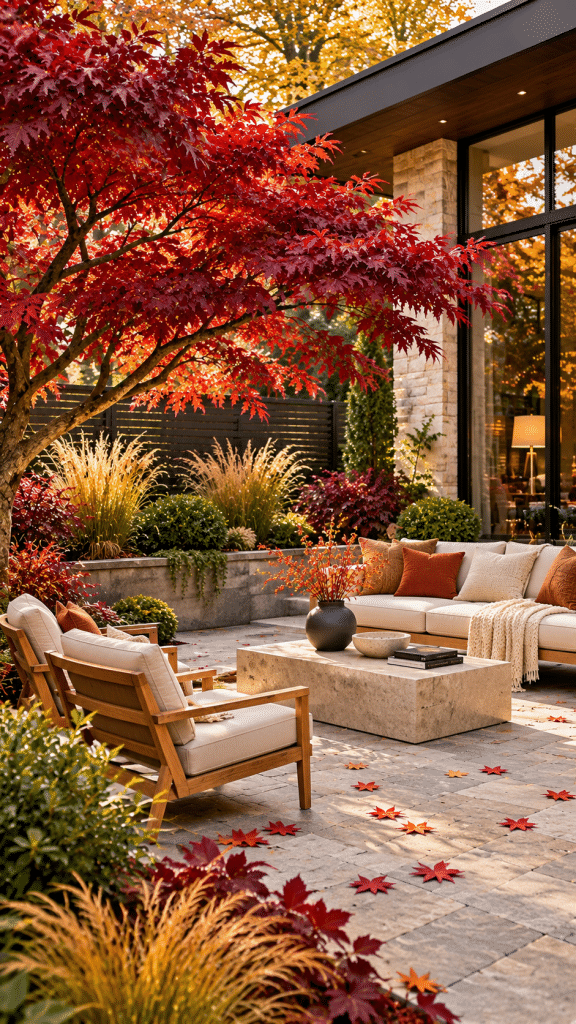
Transform the Patio With a Strong Architectural Garden Layout
A modern patio garden begins with organization.
Before selecting plants or accessories, identify the patio’s most important architectural lines.
These may include the edge of the terrace, the horizontal shape of a retaining wall, the alignment of sliding glass doors, or the geometry of an adjacent lawn.
Use these features to guide the garden layout.
For example, a long patio can feel more sophisticated when its planted boundaries reinforce the dominant horizontal lines.
A compact square patio may benefit from a clearly defined central seating zone surrounded by carefully proportioned greenery.
Rather than allowing every corner to become a separate decorative area, establish one primary focal point and support it with a small number of secondary elements.
A low garden wall, narrow planting border, or minimalist outdoor screen can create structure while maintaining visual openness.
The strongest modern designs use empty space deliberately.
A clear area of paving allows the eye to appreciate the contrast between smooth architectural surfaces and richly textured autumn vegetation.
Combine Sculptural Foliage With Dramatic Seasonal Silhouettes
Plants in a modern patio garden should be selected for their shapes as much as their colors.
A compact tree with an elegant branching structure can become an outdoor sculpture.
Upright evergreen forms introduce year-round stability, while deciduous shrubs provide seasonal transformation.
For suitable climates and growing conditions, compact ornamental trees such as Japanese maples can supply dramatic autumn color without overwhelming the surrounding architecture.
Evergreen shrubs can maintain a consistent structural framework.
Where garden space permits, carefully chosen clumping grasses or sedges can introduce movement and soften the edges of the design.
The important distinction is how these plants are arranged.
Rather than creating a broad ornamental grass garden, use a few distinct structural groupings to reinforce the patio’s geometry.
A repeated planting rhythm can appear particularly refined.
Three similar clumps of an appropriately sized plant, positioned at measured intervals along a border, can create a sense of architectural continuity.
A single contrasting tree or shrub then provides the visual punctuation.
🌿 Design inspiration: Combine one sculptural focal tree with low evergreen structure and a carefully positioned accent of burgundy foliage for an understated but striking autumn composition.
Choose a Refined Color Palette for a Luxury Autumn Patio
Modern autumn gardens rarely need large quantities of bright orange or yellow to communicate the season.
In fact, darker and more restrained combinations can create an even stronger visual impression.
Consider charcoal gray, muted bronze, burgundy, deep green, and warm stone.
These colors work beautifully with contemporary architecture.
A dark garden boundary can make copper or crimson foliage appear particularly luminous.
Light-colored paving, meanwhile, creates contrast against sculptural green plants.
Natural wood introduces warmth and prevents the design from feeling excessively formal.
For an especially sophisticated result, repeat one or two colors across multiple elements.
A bronze-toned metal detail might connect visually with the warm shades of nearby autumn leaves.
A charcoal outdoor chair can echo the color of a garden screen.
These subtle connections make the patio feel professionally designed.
The objective is to create visual harmony rather than a collection of individually attractive objects.
Build an Outdoor Focal Point Around a Sculptural Garden Feature
Every memorable modern patio benefits from a focal point.
This might be a beautifully shaped small tree, a minimalist water feature, or a carefully positioned piece of garden sculpture.
A sculptural tree is particularly effective because it changes appearance throughout the seasons.
In early autumn, foliage provides color and fullness.
As leaves fall, the branching pattern becomes increasingly visible, introducing a different form of beauty.
When choosing a focal tree, consider its mature size, root system, sunlight requirements, and proximity to paving or buildings.
A species that looks perfectly proportioned when young may become unsuitable if its mature dimensions are ignored.
For patios where planting a tree in the ground is not possible, an existing architectural element can become the focus instead.
A textured wall or carefully detailed vertical screen can provide a sophisticated backdrop.
A small water feature may also contribute gentle sound and movement, provided it is designed for local weather conditions and can be maintained safely during freezing periods.
Keep surrounding elements understated so the focal point remains visually dominant.
Create a Minimalist Autumn Patio That Still Feels Warm and Comfortable
One challenge with modern outdoor spaces is preventing the design from appearing cold.
The solution is to balance architectural precision with natural texture.
Choose furniture with clean lines but comfortable proportions.
Powder-coated metal, weather-resistant wood, and outdoor upholstery in neutral shades can work beautifully together.
An elegant low seating arrangement emphasizes the horizontal character of the patio.
A textured outdoor cushion or carefully selected weather-resistant throw adds softness without disturbing the minimalist atmosphere.
Underfoot, the original paving can remain the primary surface.
If an outdoor rug is appropriate for the climate and drainage conditions, choose a simple design that complements the architecture rather than competing with the garden.
Warm, low-glare lighting further softens the space during autumn evenings.
The final arrangement should feel intentional, spacious, and quietly luxurious.
Extend the Modern Garden Design Into Late Autumn
A major advantage of architectural planting is that the garden does not depend entirely on flowers.
As autumn progresses, evergreen foliage, branching patterns, seed heads, and structural materials continue to provide interest.
This makes the design particularly suitable for homeowners who want a patio that remains visually appealing beyond the peak of autumn color.
A carefully chosen evergreen framework can maintain the patio’s proportions even after deciduous plants lose their leaves.
Natural stone and weathered wood continue contributing texture throughout the colder months.
Decorative lighting can reveal these architectural qualities when daylight hours become shorter.
Rather than completely redesigning the patio for winter, allow the seasonal transition to become part of its identity.
The finished space offers an elegant balance between contemporary outdoor living and the changing natural world.
🥉 Best 3 Fall Patio Garden Ideas With a Cozy Outdoor Living Sanctuary and Beautiful Seasonal Garden Views
The third approach focuses on creating a patio that feels like an outdoor living room surrounded by the beauty of autumn.
This design is ideal for homeowners who want to continue enjoying their garden even when temperatures begin to fall.
Unlike a purely decorative patio, the outdoor living sanctuary is organized around everyday comfort.
Seating, shelter, views, lighting, and practical circulation become just as important as plants.
The goal is to create a beautiful place where people genuinely want to spend time.
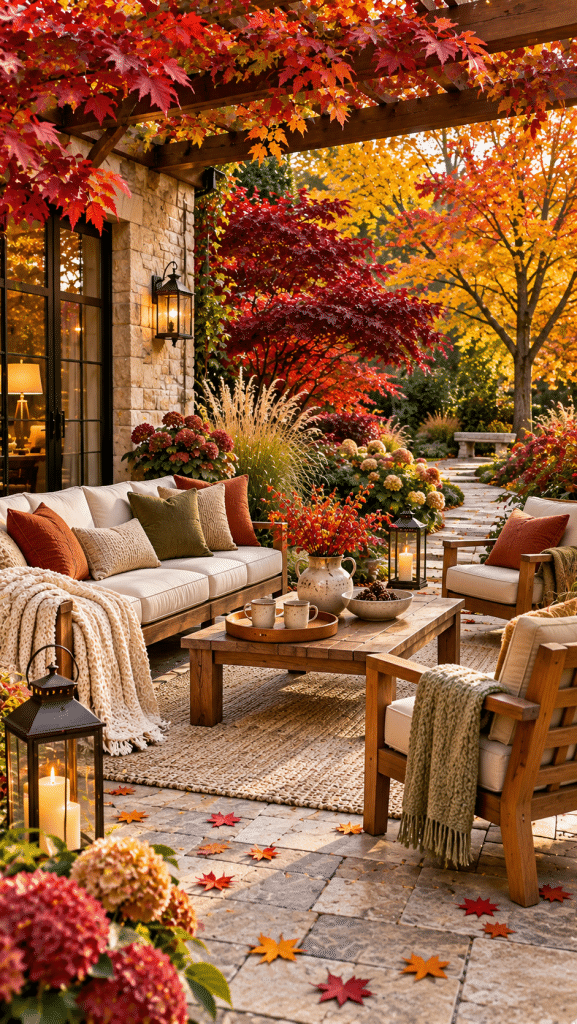
Create a Garden Centered Outdoor Living Room
Begin by identifying the primary activity the patio should support.
Perhaps it is a peaceful morning coffee, relaxed conversations with friends, reading during a sunny afternoon, or enjoying the garden after work.
The answer determines the seating arrangement.
For a small patio, two comfortable chairs positioned around a compact table may be more practical than a large outdoor sofa.
A spacious terrace can accommodate a larger conversation area, provided there is enough room to move comfortably around the furniture.
Arrange the seating to face the most attractive garden view rather than automatically pointing everything toward the house.
This simple decision strengthens the connection between the patio and landscape.
If the best autumn foliage is visible along one side of the garden, orient the seating so that the changing colors become part of the experience.
Allow comfortable walking routes between doors, chairs, and garden access points.
Avoid placing furniture where fallen leaves or rainwater routinely accumulate.
🍁 Design inspiration: Treat the most beautiful section of the autumn garden as living artwork and arrange the entire patio around that view.
Introduce Comfortable Textures Inspired by Autumn Landscapes
Comfort is essential for an outdoor living sanctuary.
Autumn temperatures can change dramatically between sunny afternoons and chilly evenings, so a flexible arrangement is more useful than a purely decorative one.
Begin with weather-resistant seating cushions that provide genuine support.
Choose upholstery colors inspired by natural autumn landscapes, such as warm beige, cinnamon, muted terracotta, or olive green.
Combine smooth furniture materials with subtly textured outdoor fabrics to create visual depth.
A woven-look outdoor rug may help define the seating zone where it can be kept dry enough to avoid trapped moisture and mildew.
Keep blankets in a protected storage box so they remain clean and dry between uses.
Natural-looking wooden furniture can introduce warmth, while dark metal details add structure.
The key is to combine comfort with durability.
Materials intended only for indoor use can deteriorate quickly when exposed to moisture, temperature changes, and persistent outdoor humidity.
A truly inviting autumn patio must remain practical after the first rainy evening.
Frame Beautiful Garden Views With Thoughtful Landscape Design
One of the most effective ways to make an outdoor living area feel special is to create framed views.
Instead of treating the surrounding landscape as an undefined background, identify one or two visual destinations.
These might include an ornamental tree, a colorful perennial border, a distant section of lawn, or a distinctive garden sculpture.
Use existing planting, low garden boundaries, or architectural elements to guide the eye toward these features.
For example, two sections of low greenery might frame a distant tree with spectacular autumn foliage.
A narrow view between garden structures can create the impression of depth.
A low wall can subtly separate the seating area from the planting without blocking the landscape.
This technique is especially valuable in compact gardens because it encourages the eye to travel beyond the immediate patio.
The entire outdoor area begins to feel larger and more connected.
Avoid placing tall, dense plants directly in front of the most important view.
Instead, use lower foliage in the foreground and taller elements toward the edges.
The best design reveals the garden gradually while preserving comfortable sightlines.
Add a Small Outdoor Gathering Feature for Cozy Evenings
A welcoming autumn patio often benefits from a central feature that encourages people to gather.
For some gardens, this may be a compact outdoor table surrounded by comfortable chairs.
For others, a properly installed fire feature can create a warm social destination.
If considering a fire pit or outdoor heater, verify local regulations, manufacturer clearance requirements, ventilation, and the suitability of the patio surface.
Fire features require particular care near fences, roofed structures, overhanging branches, furniture, and dry vegetation.
Never place an unsuitable open-flame appliance beneath a patio roof or in an enclosed outdoor space.
An alternative is to create the same sense of intimacy through furniture arrangement and lighting.
A small central table, comfortable seating, and warm outdoor lamps can produce an inviting atmosphere without an open flame.
The important idea is to establish a shared focal point where people naturally gather.
Design an Autumn Patio That Feels Beautiful During the Day and at Night
The character of an outdoor living sanctuary changes dramatically as daylight fades.
During the afternoon, the garden may be filled with golden sunlight and beautiful foliage.
After sunset, visual comfort depends more heavily on lighting and sheltered seating.
Use several subtle sources of illumination rather than relying on one extremely bright light.
A wall-mounted fixture can provide practical lighting near the entrance.
Low-level pathway lighting can improve visibility along walking routes.
A portable, weather-rated outdoor lamp can create a gentle glow beside the seating area.
Where possible, choose warm-colored, shielded lighting that minimizes glare.
Avoid pointing bright fixtures directly toward seating positions.
A beautiful evening patio should feel softly illuminated rather than exposed.
When the lighting is thoughtfully arranged, the surrounding garden remains visible enough to contribute atmosphere while the seating area feels comfortable and secure.
Make the Outdoor Sanctuary Practical for Changing Autumn Weather
A beautiful patio should accommodate the realities of autumn weather.
Rainfall, wind, fallen leaves, and changing temperatures can affect how frequently the space is used.
Start by checking that water drains away from the seating area and the home’s foundation.
Furniture should be positioned where it does not obstruct drainage channels or collect excessive runoff.
If the patio is exposed to prevailing winds, an existing wall or suitable outdoor screen may provide protection.
Any new screen must be securely installed and appropriate for expected wind loads.
A properly designed overhead shelter can make the patio more useful during light rain, but it should comply with building requirements and local weather conditions.
Keep walking routes clear of slippery leaf accumulation.
Move delicate accessories into protected storage during severe weather.
These practical considerations are what distinguish a genuinely functional outdoor living sanctuary from a temporary seasonal display.
How to Choose the Best Fall Patio Garden Ideas for Your Outdoor Space
Each of the three design approaches creates a different experience.
The best choice depends on the architecture of the home, the available outdoor space, local growing conditions, and how the patio will be used.
A romantic woodland retreat is particularly suitable for patios surrounded by established gardens or partially shaded planting areas.
A modern architectural design is often effective beside contemporary homes with clean lines and relatively open outdoor spaces.
A cozy outdoor living sanctuary works especially well when comfort, social activities, and garden views are the main priorities.
The following comparison highlights the characteristics of each approach.
| Design feature | 🥇 Woodland Retreat | 🥈 Modern Architectural Garden | 🥉 Cozy Outdoor Sanctuary |
|---|---|---|---|
| Main atmosphere | Romantic and peaceful | Elegant and contemporary | Warm and welcoming |
| Primary focus | Immersive botanical layers | Structure and clean lines | Comfortable garden living |
| Ideal patio setting | Established gardens and sheltered courtyards | Contemporary terraces and geometric patios | Outdoor seating areas with attractive views |
| Dominant colors | Rust, burgundy, moss green | Charcoal, bronze, deep green | Terracotta, cream, olive |
| Signature feature | Secret garden seating corner | Sculptural tree or architectural focal point | Inviting conversation area |
| Planting character | Soft, layered, naturalistic | Restrained, structural, rhythmic | Framing vegetation and attractive garden views |
| Main challenge | Preventing overcrowding | Avoiding an overly cold atmosphere | Protecting furnishings from changing weather |
| Best experience | Quiet relaxation | Appreciating garden design | Everyday outdoor enjoyment |
The three approaches are not mutually exclusive.
A contemporary patio might borrow the comfortable seating arrangement of an outdoor sanctuary.
A woodland retreat can incorporate modern lighting.
A cozy outdoor living area may benefit from a few architectural planting elements.
However, choosing one dominant design identity helps prevent the patio from becoming visually inconsistent.
Fall Patio Garden Ideas for Small Spaces Without Making Them Feel Crowded
Small patios can be particularly beautiful in autumn because their limited dimensions encourage thoughtful design.
A compact space does not need an elaborate landscape to create a strong impression.
In fact, too many decorative elements can reduce the sense of comfort.
The most effective small patio gardens prioritize proportion, circulation, and visual depth.
Use Vertical Boundaries Without Overwhelming the Patio
When horizontal space is limited, existing walls and boundaries become important design opportunities.
A narrow garden screen, architectural trellis, or wall-mounted feature can create visual interest without occupying a large section of the floor.
Where climbing plants are appropriate, select species suitable for the local climate, sunlight, and available support.
Consider their mature size and maintenance requirements before planting.
A compact patio can quickly become overwhelmed by a vigorous climber that requires frequent pruning.
Keep the design restrained and avoid covering every wall with unrelated features.
One attractive vertical focal point often has more impact than several competing decorative elements.
Select Furniture That Preserves Comfortable Movement
Oversized outdoor furniture is one of the easiest ways to make a small patio feel cramped.
Measure the available area before purchasing seating.
Consider how chairs move when someone sits down or stands up.
A compact bistro arrangement may provide a more enjoyable experience than a large sectional sofa that blocks access.
Furniture with visually open frames can make the space feel lighter.
A narrow bench positioned along a wall may help preserve central floor space.
The objective is not to fit as many objects as possible.
Instead, create enough openness for the patio to feel comfortable and welcoming.
Create Depth With Contrasting Heights and Textures
Even a small outdoor space can feel visually layered.
The secret is to establish a clear foreground, middle ground, and background.
A low planting edge near the patio can form the foreground.
A seating area or small architectural feature creates the middle ground.
A wall, tree, or garden boundary provides the background.
Introduce contrasting textures within these layers.
For example, fine foliage can look beautiful beside a smooth wall, while broad leaves create contrast against narrow paving joints.
These subtle relationships make the space feel intentionally designed without requiring extensive decoration.
The Best Autumn Plants for Supporting a Beautiful Patio Landscape
Plants give a fall patio its seasonal identity, but selecting them requires more consideration than choosing attractive colors.
Light exposure, drainage, climate, mature dimensions, and maintenance needs all influence success.
A plant that performs beautifully in a cool northern garden may struggle in a warm southern climate.
Similarly, foliage suitable for partial shade may become stressed in strong afternoon sunlight.
The best approach is to select plants for specific design functions rather than collecting varieties without a plan.
Choose Plants for Seasonal Color and Garden Structure
Deciduous trees and shrubs can provide dramatic autumn transformation where the climate supports reliable fall color.
Japanese maples are particularly admired for their graceful forms, although their performance varies by cultivar and growing conditions.
Serviceberries can offer seasonal interest through foliage, flowers, and fruit in suitable locations.
Evergreen shrubs establish year-round structure, allowing the patio to remain visually balanced after autumn leaves fall.
Coral bells can contribute colorful foliage in appropriate climates.
Hardy ferns and sedges may offer softer textures where their light and moisture requirements are met.
Rather than selecting every plant for its autumn color, combine seasonal performers with dependable structural vegetation.
This creates a landscape that remains attractive as the seasons change.
Consider Late Season Flowering Plants for Gentle Color Accents
Although the patio design should not depend entirely on flowering displays, a few well-positioned seasonal flowers can provide beautiful accents.
Chrysanthemums are widely associated with autumn and can introduce rich shades of yellow, bronze, red, and purple.
Pansies and violas may perform well during cooler periods where local conditions are suitable.
Certain asters provide late-season flowers that can contribute valuable resources for pollinators.
Ornamental kale can offer distinctive foliage color as temperatures cool.
These plants should support the broader patio composition rather than become its only feature.
A restrained planting accent beside a seating area or along an existing garden edge may be enough.
Choose plants based on local suitability, and remember that cold tolerance varies between species and cultivars.
Understand How Autumn Conditions Affect Plant Performance
Cooler weather often reduces plant water demand, but it does not eliminate the need for moisture.
Newly installed plants still require attention while establishing roots.
Periods of dry autumn weather can be particularly stressful for recent plantings.
Check the soil rather than watering according to a rigid schedule.
Ensure that planting areas drain adequately.
In colder climates, the timing of installation is important because plants need an opportunity to establish before the ground freezes.
Avoid relying on late-season planting as a guarantee of winter survival.
Important Note
🌿 A beautiful fall patio garden begins with plants suited to the local climate and site conditions. Before planting, check mature size, sunlight requirements, drainage, and cold hardiness. Plants growing in exposed containers may experience colder root conditions than the same plants growing in the ground.
A thoughtful plant selection creates a healthier, more attractive garden and reduces unnecessary maintenance.
How to Create an Expensive Looking Fall Patio Garden on a Realistic Budget
A luxurious autumn patio does not necessarily require expensive furniture, professional landscaping, or extensive construction.
The greatest visual improvements often come from reconsidering how existing elements are arranged.
Start by identifying what already works.
A beautiful tree, attractive stone surface, weathered wooden bench, or established garden border may provide the foundation for a complete transformation.
Instead of replacing these elements, build the design around them.
Refresh the Existing Patio Layout Before Buying Anything
Begin by removing unnecessary objects and evaluating the available space.
Look for furniture that interrupts circulation or blocks attractive garden views.
Experiment with alternative seating positions.
Move a chair closer to a beautiful focal point or reorient the conversation area toward the garden.
Clean the patio surface using methods appropriate for its material.
Remove weeds from paving joints where necessary and address drainage problems.
Prune plants selectively to reveal their natural forms without removing valuable autumn color prematurely.
These simple adjustments can dramatically improve the patio’s appearance.
A clean, organized outdoor space often feels more luxurious than one crowded with expensive decorations.
Prioritize One High Impact Garden Improvement
When working with a limited budget, avoid purchasing many unrelated accessories.
Instead, choose one improvement that makes a meaningful difference.
This could be a comfortable outdoor chair, a beautiful structural plant, a modest garden screen, or a carefully positioned lighting fixture.
A single well-chosen feature can establish a stronger visual identity than several small seasonal purchases.
If the patio already has comfortable furniture, improving the surrounding landscape may provide the greatest benefit.
If the garden is attractive but rarely used, investing in seating might be more valuable.
The best purchase solves a specific design problem.
Use Existing Natural Materials to Reinforce the Autumn Atmosphere
Autumn landscapes offer abundant visual inspiration.
Weathered wood, natural stone, fallen leaves, and changing foliage colors can guide material choices.
Existing stone edging can be cleaned and emphasized.
A wooden bench may benefit from appropriate maintenance.
Natural textures already present in the garden can become part of the design rather than being replaced.
Avoid using unstable branches or untreated materials as structural supports.
Also avoid collecting plants or natural materials from protected locations.
A sophisticated autumn patio should feel connected to nature without relying on unnecessary consumption.
Fall Patio Garden Maintenance That Keeps the Space Beautiful Throughout Autumn
A successful patio garden should remain attractive as the season progresses.
Autumn maintenance is different from summer gardening because changes in temperature, rainfall, and daylight affect both plants and outdoor materials.
Regular small adjustments are often more effective than occasional major cleanups.
Keep Fallen Leaves Under Control Without Removing Every Trace of Autumn
Fallen leaves contribute enormously to the beauty of an autumn landscape.
However, thick layers of wet leaves can create slippery patio surfaces and obstruct drainage.
Remove leaves regularly from walkways, steps, and seating areas.
Pay particular attention to drainage channels and low points where moisture collects.
Healthy leaves can often be reused as mulch or composted, depending on the needs of the garden.
Avoid piling dense leaves directly against vulnerable plant crowns or building materials.
A few dry leaves in appropriate garden areas can support the seasonal atmosphere, while clean walking surfaces maintain safety.
The aim is to manage autumn naturally rather than remove every visible sign of the season.
Protect Outdoor Furniture From Rain and Moisture
Outdoor furniture needs appropriate care as autumn weather becomes less predictable.
Clean surfaces according to the manufacturer’s instructions.
Allow cushions to dry thoroughly before storing them.
Check whether furniture covers provide ventilation as well as protection from rain.
Poorly ventilated covers can trap moisture and encourage mildew.
Where possible, store delicate textiles in a dry, sheltered location.
Inspect wooden furniture for areas that may require maintenance.
Metal furniture should be checked for damaged protective finishes.
These practical steps help preserve the patio’s appearance and extend the life of its furnishings.
Prepare Patio Plants for the Transition Into Winter
As autumn approaches winter, some plants enter dormancy while others continue growing slowly.
Reduce watering when conditions require it, but do not allow vulnerable plants to become excessively dry.
Avoid stimulating tender new growth with unnecessary late-season fertilizer.
Check that drainage remains effective, particularly during prolonged rainfall.
In freezing climates, protect vulnerable containers and roots according to species-specific recommendations.
Move tender plants into appropriate shelter before damaging temperatures arrive.
Where plants remain outdoors, account for their exposure to wind, freezing temperatures, and moisture.
A patio that is prepared gradually for winter will often require fewer emergency interventions during severe weather.
Common Fall Patio Garden Design Mistakes to Avoid
Even attractive outdoor spaces can feel disappointing when important design principles are overlooked.
One common mistake is treating the patio as a place to display seasonal objects rather than as a functional garden.
Too many pumpkins, ornaments, furniture pieces, and unrelated plants can compete for attention.
A second mistake is ignoring scale.
Large furniture can overwhelm a compact patio, while tiny decorative features may disappear in a spacious terrace.
Another problem is choosing plants solely for their appearance without considering growing conditions.
Shade-loving foliage may struggle in an exposed sunny location, while moisture-sensitive plants can decline in poorly drained soil.
Lighting is another frequently overlooked element.
Extremely bright fixtures may make an otherwise beautiful autumn patio feel harsh and unwelcoming.
Finally, a design that ignores weather protection can become impractical after the first period of heavy rain.
The most successful patios balance visual beauty with comfort, durability, and appropriate maintenance.
How to Keep Your Fall Patio Garden Beautiful From September Through November
Autumn does not look or feel the same throughout the season.
A patio designed to evolve gradually can remain attractive for several months without constant rearrangement.
The following seasonal approach can help maintain visual interest in temperate Northern Hemisphere climates. Adjust the timing to local weather and frost conditions.
Early Fall Create the Foundation in September
Early autumn is an excellent time to evaluate the patio’s layout and establish the main design direction.
Begin by identifying the seating area, surrounding views, and any structural improvements.
Inspect existing garden plants and determine which ones will contribute seasonal interest.
Where conditions are suitable, establish appropriate hardy plants early enough for root development before significant cold arrives.
Refresh outdoor furniture and check lighting.
The priority is to establish a functional, visually balanced space before peak autumn color arrives.
Mid Fall Emphasize Rich Colors and Comfortable Living in October
October often offers dramatic seasonal color in many temperate regions.
This is the moment to emphasize the garden’s natural beauty.
Keep attractive foliage visible from seating areas.
Maintain clear walking routes as leaves begin accumulating.
Introduce weather-resistant textiles and prepare comfortable storage for items that need protection from moisture.
Adjust outdoor lighting as evenings become darker.
The patio should now feel like a fully developed autumn destination.
Late Fall Reveal Garden Structure in November
By November, many deciduous plants in colder climates begin losing their leaves.
Instead of trying to preserve the appearance of early autumn, embrace the new character of the landscape.
Architectural branches, evergreen foliage, natural stone, and garden boundaries become increasingly important.
Remove damaged seasonal plants where necessary and care for remaining hardy vegetation according to local conditions.
Prepare vulnerable materials for winter.
Continue enjoying the patio when weather permits, but prioritize safety during freezing or stormy conditions.
A well-designed autumn garden remains interesting even when its brightest colors begin to disappear.
Frequently Asked Questions About Fall Patio Garden Ideas
What Are the Best Fall Patio Garden Ideas for a Small Backyard?
A small backyard patio benefits from a clear focal point, compact furniture, and carefully arranged planting layers.
A woodland-inspired seating corner can create a peaceful atmosphere, while a restrained architectural design can make the space appear more organized.
The most important consideration is preserving comfortable circulation.
Choose one dominant design style and avoid overcrowding the patio with unrelated decorative features.
How Can I Make My Patio Look Beautiful in Fall Without Using Pumpkins?
Focus on natural foliage color, sculptural greenery, textured materials, comfortable seating, and subtle lighting.
A striking ornamental tree, warm wooden furniture, or a beautiful arrangement of garden views can communicate autumn without traditional holiday decorations.
Rust, burgundy, amber, bronze, and olive green are especially effective seasonal colors.
These elements create an elegant autumn atmosphere that remains appropriate throughout the season.
What Is the Best Color Scheme for a Fall Patio Garden?
The ideal color palette depends on the desired atmosphere.
Romantic gardens often look beautiful with burgundy, copper, moss green, and cream.
Contemporary patios benefit from charcoal, bronze, muted gold, and deep green.
Cozy outdoor living areas can incorporate terracotta, oatmeal, warm beige, and olive.
For the most cohesive appearance, choose a small number of dominant colors and repeat them throughout the design.
How Do I Make a Fall Patio Feel Cozy Without a Fire Pit?
Comfortable seating, sheltered positioning, warm-colored lighting, and weather-resistant textiles can create an inviting outdoor atmosphere.
Arrange furniture around a small table or attractive garden view to encourage conversation.
Use outdoor cushions in warm neutral colors and store blankets where they remain dry.
A softly illuminated garden backdrop can make the patio feel intimate without requiring an open flame.
Can a Fall Patio Garden Stay Attractive During Winter?
Yes, especially when the design includes evergreen structure, attractive branches, durable hardscape materials, and architectural focal points.
A garden that depends entirely on short-lived flowers may lose much of its appeal after the first significant frost.
Combining deciduous seasonal interest with dependable year-round structure helps preserve visual balance.
The exact plant choices and winter protection requirements depend on local growing conditions.
Which Fall Patio Garden Style Looks the Most Expensive?
A modern architectural patio can create a particularly sophisticated appearance because it emphasizes strong proportions, restrained colors, and carefully selected focal points.
However, a romantic woodland patio can also look luxurious when its planting layers are balanced and its materials are cohesive.
The appearance of quality comes less from price and more from thoughtful organization, attractive proportions, and attention to detail.
Final Thoughts on Creating a Stunning Fall Patio Garden
The most beautiful Fall Patio Garden Ideas go far beyond temporary seasonal decorating. They transform an outdoor area into a thoughtfully designed destination that celebrates the changing landscape while remaining comfortable and practical.
A romantic woodland retreat creates an enchanting atmosphere through layered foliage, natural textures, and intimate seating.
A modern architectural garden delivers sophistication through clean lines, sculptural plants, and carefully controlled seasonal contrast.
A cozy outdoor living sanctuary makes autumn an experience to enjoy, combining beautiful garden views with comfortable furniture and welcoming lighting.
Each approach offers a distinctive way to connect outdoor living with the natural beauty of the season.
The secret is to choose a clear design direction, respect the existing landscape, and create a meaningful relationship between the patio and garden.
With thoughtful proportions, suitable plants, durable materials, and attention to seasonal change, even an ordinary outdoor space can become a remarkable autumn retreat.
🍂 The ultimate fall patio garden is not simply a place that looks beautiful in autumn. It is a place that makes you want to spend more time outdoors, appreciating every golden afternoon, changing leaf, and peaceful moment the season has to offer.
Horticultural references for plant selection, drainage, and seasonal maintenance: New York Botanical Garden, Rutgers Cooperative Extension, and Penn State Extension. libguides.nybg.org+2