🍂 Fall Garden Cleanup is one of the most valuable gardening activities of the year, but the secret to a beautiful and healthy backyard is not simply removing every fallen leaf, cutting back every plant, or making every garden bed perfectly spotless. The most successful autumn cleanup combines smart organization, natural soil protection, and wildlife-friendly gardening practices to create an outdoor space that looks beautiful throughout winter while preparing for an extraordinary growing season in spring.

As summer flowers fade, vegetable plants finish producing, and golden leaves begin covering the ground, many gardeners feel overwhelmed by the amount of work waiting outside. Overgrown pathways, tangled plant stems, fallen branches, and neglected gardening tools can make even a carefully designed backyard appear messy and difficult to maintain.
However, an effective fall garden cleanup does not require exhausting weekends, expensive equipment, or a complete garden makeover. With a thoughtful approach, ordinary seasonal maintenance can become an opportunity to improve soil health, prevent recurring plant diseases, protect beneficial insects, and create a more attractive winter landscape.
The best approach is to concentrate on three essential strategies: a selective cleanup system that removes genuine problems, a natural recycling method that transforms healthy garden waste into valuable resources, and a wildlife-friendly winter preparation routine that protects the garden’s ecological balance.
These three fall garden cleanup secrets work beautifully for small suburban backyards, cottage gardens, established perennial borders, and larger residential landscapes. Each method addresses a different challenge while supporting the same goal of a healthier, easier-to-maintain garden.
🍁 Why Fall Garden Cleanup Is More Important Than Most Gardeners Realize
Autumn marks a major transition in the garden. Plants begin slowing their growth, deciduous trees release their leaves, and changing temperatures influence soil organisms, insects, and perennial root systems.
Although the most visible gardening activity happens during spring and summer, the decisions made in fall can influence how successfully the landscape performs the following year.
One of the greatest benefits of seasonal cleanup is reducing the amount of infected plant material that remains around vulnerable plants. Certain fungal and bacterial pathogens can survive on diseased stems, leaves, and discarded fruit, potentially contributing to recurring problems when growing conditions become favorable again.
Removing clearly diseased plant debris helps interrupt this cycle. Healthy organic matter, however, can often remain in the landscape to support soil organisms and overwintering wildlife. This distinction is central to modern fall garden maintenance. extension.iastate.edu+1
Fall is also an excellent opportunity to examine the structure of the garden without the distraction of abundant summer foliage. Gardeners can identify damaged edging, poorly draining areas, blocked pathways, unstable supports, and spaces where maintenance has become unnecessarily complicated.
🌿 The greatest advantage of thoughtful fall cleanup is that it solves existing problems without creating unnecessary work or disturbing beneficial natural processes.
Rather than treating autumn as the end of the gardening season, it becomes the foundation for a more manageable and productive spring.
🥇 Best 1 Fall Garden Cleanup With the Smart Selective Clearing Method
The first and most important fall garden cleanup strategy involves learning exactly what should be removed, what should remain, and what should be postponed until spring.
Traditional gardening advice often encouraged removing nearly every dead stem and fallen leaf before winter. Although this creates a temporarily spotless appearance, excessive cleanup can eliminate valuable habitats and remove natural protection from the soil.
A more effective approach separates the garden into functional areas and assigns each one a different level of maintenance.
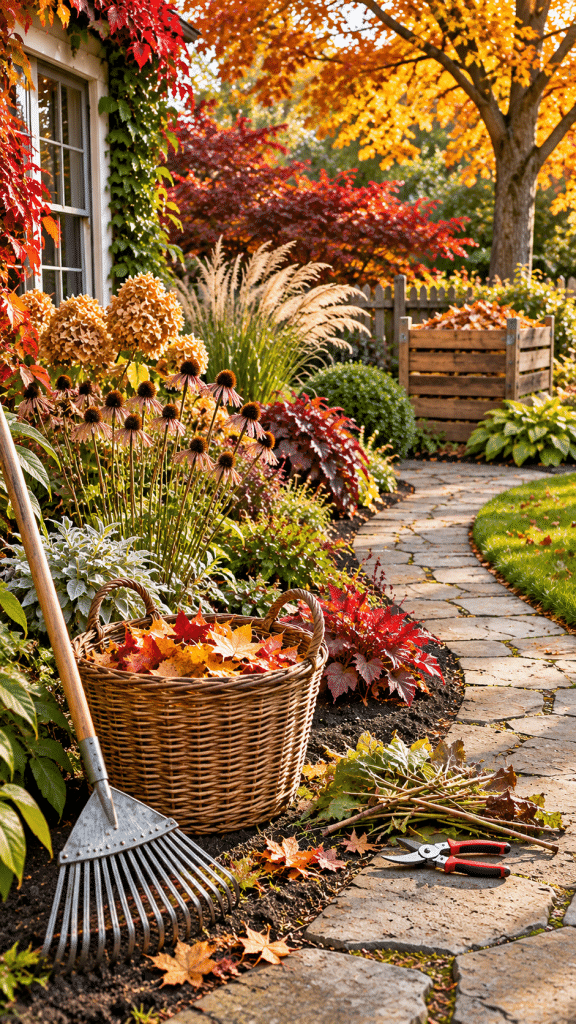
🍂 Start Fall Garden Cleanup by Identifying Three Different Garden Zones
Before picking up a rake or pruning shears, walk slowly through the entire backyard and observe which areas genuinely need attention.
The first category is the active cleanup zone. This includes vegetable plots with spent crops, plants affected by disease, walkways covered with slippery leaves, blocked drainage channels, and areas containing broken branches or potentially hazardous debris.
These locations deserve immediate attention because leaving them neglected can create practical problems or increase the likelihood of disease recurring.
The second category is the low-maintenance zone. Established perennial borders, healthy shrub beds, and ornamental planting areas often benefit from a lighter approach.
Here, the goal is not to eliminate every natural material. Instead, remove obvious problems while preserving healthy vegetation and protective leaf cover.
The third category is the wildlife refuge zone. Quiet corners, native planting areas, and sheltered borders can retain fallen leaves, hollow stems, and selected seed heads through winter.
These locations provide valuable habitat for insects and other small garden organisms that contribute to a healthier landscape.
A simple zoning system prevents unnecessary work and makes the entire cleanup process more efficient.
🌱 Remove Diseased Plants Without Disturbing Healthy Garden Areas
One of the most important fall maintenance tasks is identifying plants that experienced serious disease problems during the growing season.
Common examples include tomato plants affected by early blight, rose foliage with black spot, and plants displaying persistent fungal leaf infections.
Diseased leaves and stems may contain pathogens capable of surviving between growing seasons.
Carefully remove affected material, including infected debris lying beneath the plants. Avoid shaking diseased foliage unnecessarily or spreading contaminated material into nearby healthy beds.
For ordinary home compost piles, which may not consistently reach temperatures capable of destroying pathogens, disposing of infected material through an appropriate waste system is generally safer than adding it to homemade compost.
Healthy plant material should be managed differently. Uninfected perennial stems, clean leaves, and other disease-free organic matter may provide environmental benefits when left in suitable locations.
This distinction reduces unnecessary waste while addressing genuine garden health concerns.
✂️ Know Which Perennial Plants Should Stay Standing Through Winter
Not every perennial needs autumn pruning.
Many ornamental plants develop attractive seed heads and architectural stems that remain interesting long after their flowers disappear.
Coneflowers, black-eyed Susans, ornamental grasses, and several native flowering perennials can create beautiful winter silhouettes while offering resources or shelter for wildlife.
Standing stems may also provide nesting spaces for some native bees, while seed heads can become seasonal food sources for birds.
Removing all of this vegetation during fall can reduce the ecological value of the garden.
The University of Illinois Extension recommends retaining suitable plant stems and natural debris to support overwintering pollinators. Illinois
Consider allowing healthy ornamental stems to remain until spring, especially in less formal sections of the landscape.
Diseased foliage, dangerous broken branches, and plants requiring species-specific autumn pruning should still receive appropriate attention.
⚠️ Important Note: Fall garden cleanup should never mean removing everything. Prioritize diseased plants, hazardous debris, blocked drainage, and invasive weeds while preserving healthy leaves, suitable perennial stems, and beneficial wildlife habitats wherever practical.
🧹 Create Clean Garden Edges Without Stripping the Entire Landscape
One of the simplest ways to make a backyard appear professionally maintained is to focus on the boundaries between different spaces.
Clear leaves from walking paths, remove weeds growing through paving joints, and restore the visible edges of existing garden beds.
These small improvements create a strong visual contrast between maintained surfaces and natural planting areas.
For example, a cottage garden with dried flower stems and autumn leaves can still look beautifully organized when its pathways are clean and its borders have clear boundaries.
Likewise, a modern backyard can maintain its sophisticated appearance by keeping patios and access routes tidy while allowing planted areas to remain naturally textured.
This strategy is particularly useful for homeowners who prefer a polished landscape without sacrificing environmental benefits.
🍃 Make the Cleanup Process Easier With Small Working Sections
A large backyard can feel overwhelming when every maintenance task is approached simultaneously.
Instead, divide the work into small sections based on physical location or the type of work required.
Complete one pathway before moving to another. Remove diseased vegetation from one planting area before addressing nearby shrubs. Collect fallen branches in one section before working elsewhere.
This approach helps maintain focus and prevents repetitive movement across the garden.
It also makes it easier to stop after completing a manageable amount of work.
For smaller gardens, a few focused sessions may be sufficient. Larger properties can be maintained gradually over several weekends, depending on weather conditions and the amount of debris.
The result is a more organized autumn maintenance experience without unnecessary exhaustion.
🥈 Best 2 Fall Garden Cleanup With a Natural Leaf Recycling and Soil Protection System
The second fall garden cleanup secret transforms one of autumn’s biggest maintenance challenges into a valuable gardening resource.
Fallen leaves are frequently treated as waste, yet healthy leaves contain organic material that can contribute to improved soil structure and nutrient cycling as they decompose.
Instead of automatically placing every leaf into disposal bags, gardeners can use a selective recycling system.
This approach reduces unnecessary waste, protects exposed soil, and creates useful materials for future gardening activities.
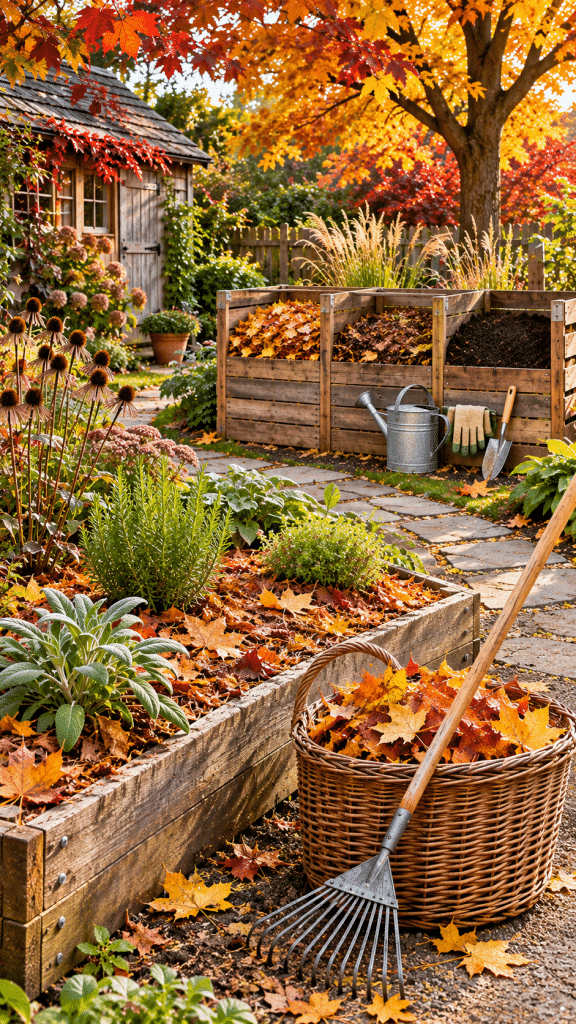
🍁 Turn Fallen Leaves Into Natural Garden Mulch
Autumn leaves can become an effective mulch for appropriate garden areas.
As organic mulch gradually breaks down, it contributes organic matter to the soil. It can also help moderate soil temperature, reduce surface erosion, and limit weed germination.
Leaves are especially useful beneath established shrubs, around trees, and across suitable ornamental planting areas.
Begin by collecting healthy leaves from pathways and areas where accumulation creates problems.
Then redistribute some of those leaves into garden beds where natural cover is beneficial.
Whole leaves can remain in suitable wildlife areas. In more formal planting beds, lightly shredded leaves may create a neater surface and settle more evenly.
Avoid piling thick, wet mats of leaves directly against plant crowns, tree trunks, or delicate evergreen foliage.
A loose layer generally provides better air circulation and reduces the risk of smothering sensitive plants.
Diseased leaves should not be reused around susceptible plants.
🌿 Build a Simple Leaf Composting Area for Future Garden Use
A dedicated leaf composting area can turn seasonal cleanup into a long-term gardening investment.
Choose a convenient location that does not interfere with walking routes or normal backyard activities.
A simple wire enclosure, wooden compost bin, or designated composting section can hold collected healthy leaves while allowing airflow.
Leaves decompose more slowly than many soft green materials because they contain relatively high amounts of carbon.
Shredding them and maintaining moderate moisture can accelerate decomposition, although producing well-finished leaf mold may still take many months or longer.
The resulting material can improve soil texture and moisture management when incorporated into appropriate gardening applications.
For gardeners who collect large quantities of leaves every autumn, this system gradually creates a useful supply of organic material.
The greatest advantage is that the process converts an annual disposal problem into a recurring resource.
🌱 Protect Bare Soil From Winter Weather
Exposed soil can be vulnerable to rainfall, runoff, surface crusting, and erosion.
An important part of fall garden cleanup is ensuring that unused soil does not remain unnecessarily exposed throughout winter.
Healthy shredded leaves, suitable organic mulch, and other appropriate coverings can provide a protective barrier.
The goal is to preserve existing soil structure rather than repeatedly digging or disturbing it.
Excessive cultivation during wet weather may compact or damage soil, particularly when clay-rich ground becomes saturated.
A lighter approach protects the underground environment while reducing the amount of work required in spring.
Gardeners should also evaluate local conditions. In wet climates, materials that remain constantly saturated may need to be applied more sparingly around sensitive plants.
In regions with wildfire risks, leaves and combustible debris must be managed according to local defensible-space recommendations rather than retained indiscriminately.
🍂 Create a Beautiful Natural Leaf Storage Corner
Leaf storage does not have to make a garden appear untidy.
A thoughtfully selected corner can integrate naturally into the landscape while keeping recyclable materials contained.
For example, a modest wooden enclosure positioned behind established shrubs can hold dry leaves without dominating the backyard.
A circular wire bin can also provide a compact storage solution for smaller properties.
Choose a location where collected material will not block drainage, cover important utilities, or interfere with neighboring properties.
Keeping the storage area accessible encourages regular use and eliminates the need to transport debris repeatedly across the garden.
The enclosure does not need elaborate decoration. Simple natural materials and an organized position can make it feel like an intentional part of the garden.
♻️ Understand Which Fall Garden Materials Can Be Reused
Different types of garden debris require different management methods.
The following table provides a practical overview of how common autumn materials can be handled.
| Garden material | Recommended cleanup action | Potential benefit |
|---|---|---|
| Healthy fallen leaves | Leave in suitable beds or collect for leaf mold | Soil protection and organic matter |
| Diseased leaves and stems | Remove and dispose of appropriately | Reduces potential pathogen carryover |
| Healthy perennial seed heads | Leave standing where practical | Wildlife food and winter interest |
| Spent annual vegetable plants | Remove after harvest, especially if diseased | Improves sanitation and access |
| Small healthy branches | Reuse selectively in suitable habitat areas | Shelter for wildlife |
| Invasive weeds with seeds | Remove and dispose of securely | Limits unwanted spread |
| Clean grass clippings | Compost in moderate amounts | Recycles nutrients |
| Broken or hazardous branches | Remove promptly | Improves garden safety |
The most important principle is to evaluate the condition and location of each material rather than applying the same treatment to everything.
A selective recycling system makes cleanup more sustainable while maintaining a visually organized landscape.
🥉 Best 3 Fall Garden Cleanup With a Wildlife Friendly Winter Readiness Routine
The third strategy combines practical maintenance with ecological awareness.
A garden preparing for winter needs more than attractive surfaces. It also contains living organisms that depend on natural shelter, stable soil conditions, and seasonal food sources.
Beneficial insects, birds, soil organisms, and other wildlife use different parts of the landscape throughout the colder months.
By adjusting the intensity of autumn cleanup, homeowners can create a garden that remains functional and interesting even when active plant growth slows.
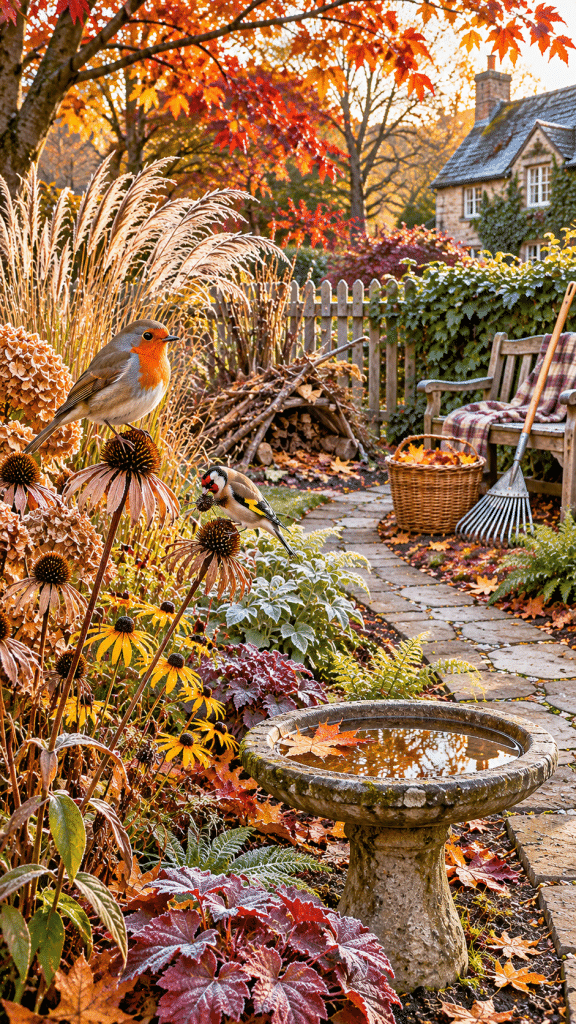
🐝 Preserve Natural Shelter for Beneficial Insects
Many beneficial insects spend part of their life cycles hidden within fallen leaves, standing stems, soil, or other protected areas.
Some native bees use hollow or pithy plant stems for nesting. Other insects shelter within leaf litter or near the soil surface.
Removing all dead vegetation can unintentionally eliminate these resources.
Instead, retain selected areas where healthy natural materials remain undisturbed.
An established perennial border is often an excellent location because it already contains plant structures and protective vegetation.
Avoid unnecessary digging, heavy foot traffic, or repeated disturbance in these refuge areas.
Research-based guidance from the University of Maryland Extension emphasizes preserving fallen leaves and standing plant stems to support insect communities in urban and suburban landscapes. extension.umd.edu
This approach can benefit even compact backyards because a small undisturbed habitat area may provide useful shelter.
🐦 Leave Attractive Seed Heads for Winter Birds
Autumn seed heads are not merely the remains of summer flowers.
Many provide ornamental structure and may also offer food for seed-eating birds.
Coneflowers, black-eyed Susans, and other suitable flowering plants can create distinctive silhouettes against frosty mornings and muted winter skies.
Instead of removing every dried flower stalk, select healthy plants that remain upright and visually appealing.
These standing structures introduce natural height and texture into a garden that might otherwise appear empty.
Their shapes become particularly attractive when illuminated by low winter sunlight.
The combination of ecological usefulness and seasonal beauty makes retained seed heads one of the easiest winter garden improvements.
🌳 Inspect Trees and Shrubs Without Unnecessary Heavy Pruning
Fall provides an opportunity to inspect larger plants as foliage becomes thinner.
Look for damaged branches, signs of disease, weak supports, and branches obstructing important access routes.
Broken or dangerous limbs deserve prompt attention, particularly near entrances, walking paths, and outdoor seating areas.
However, major pruning should not automatically become part of every autumn cleanup routine.
Different trees and shrubs have different pruning requirements. Some spring-flowering shrubs carry next year’s flower buds on older stems, while certain plants are more vulnerable to damage when pruned at unsuitable times.
Identify the species and its pruning needs before cutting healthy branches.
Large, high, or structurally hazardous limbs should be evaluated by a qualified arborist.
This careful approach avoids damaging plants merely to achieve a temporarily tidy appearance.
💧 Prevent Drainage Problems Before Heavy Rain or Snow
One of the most practical winter preparation tasks is clearing drainage routes.
Leaves, twigs, soil, and other debris can accumulate around surface drains, channels, and low areas.
When water cannot move freely, it may collect near foundations, patios, garden structures, or vulnerable planting areas.
Inspect drainage points during dry weather when they are easier to access safely.
Remove loose obstructions and confirm that runoff has a clear route away from sensitive structures.
Pay particular attention to places where leaves naturally collect against fences, steps, and hardscape edges.
For homeowners in regions with heavy autumn rainfall, this task may be more urgent than cosmetic pruning.
Drainage maintenance protects both the garden and the surrounding property.
🪴 Clean and Store Garden Tools Before Winter
An effective fall garden cleanup also includes caring for the equipment used throughout the growing season.
Dirty pruning tools, neglected hoses, and gardening accessories left outside may deteriorate unnecessarily.
Begin by removing soil and plant residue from shovels, trowels, and hand tools.
Dry metal surfaces thoroughly and apply appropriate protective care where needed to reduce corrosion.
Pruning blades should be cleaned, sharpened when necessary, and disinfected after contact with diseased plant material.
Drain hoses and irrigation accessories before freezing conditions arrive, where applicable.
Store equipment in a dry, organized location so it remains accessible when spring maintenance begins.
Well-maintained tools make future gardening tasks easier and may reduce replacement costs.
🍃 Create an Attractive Winter Landscape With Minimal Disturbance
A wildlife-friendly garden does not need to look abandoned.
The key is to combine natural planting areas with clear signs of intentional maintenance.
Keep walking surfaces accessible, remove hazardous debris, and maintain the visible structure of the landscape.
Allow suitable ornamental grasses, healthy seed heads, and natural leaf cover to remain in selected locations.
This creates visual balance between order and seasonal change.
A garden with clean pathways, well-defined beds, and beautiful dried plant forms can appear sophisticated without excessive decoration.
The resulting landscape feels peaceful, natural, and connected to the season.
🌾 Fall Garden Cleanup Comparison to Choose the Best Method
Although the three methods work together, each addresses a different gardening priority.
| Cleanup strategy | Primary focus | Best suited for | Main advantage | Maintenance effort |
|---|---|---|---|---|
| 🥇 Smart Selective Clearing | Removing problems while preserving healthy areas | Established gardens with mixed plantings | Better sanitation and organization | Moderate |
| 🥈 Natural Leaf Recycling | Reusing healthy organic materials | Leaf-heavy yards and ornamental beds | Reduced waste and improved soil cover | Low to moderate |
| 🥉 Wildlife Friendly Winter Readiness | Protecting habitat and winter functionality | Cottage gardens and wildlife-conscious landscapes | Better habitat and winter resilience | Low to moderate |
For many residential gardens, selective clearing is the best starting point because it identifies the most urgent maintenance needs.
Natural recycling becomes especially valuable when deciduous trees produce large quantities of leaves.
Wildlife-friendly preparation then helps preserve beneficial garden features while reducing unnecessary disturbance.
The strongest long-term results come from combining all three methods according to the garden’s actual conditions.
🧤 Essential Tools for an Easier Fall Garden Cleanup
Having a few reliable tools available can make autumn maintenance significantly more manageable.
A lightweight leaf rake is useful for clearing pathways and collecting loose debris without the aggressive scraping associated with heavier equipment.
Bypass pruning shears are appropriate for many small, healthy stems and light maintenance cuts. Larger branches require correctly sized tools, while hazardous tree work should be left to professionals.
A sturdy garden fork can help move compost materials and loosen compacted organic debris without requiring extensive soil disturbance.
Reusable garden bags or containers make transporting leaves, weeds, and branches easier.
Protective gloves, closed-toe footwear, and eye protection are also important when handling sharp branches or operating garden equipment.
For larger properties, a wheelbarrow can reduce repeated trips and help move bulky materials more efficiently.
The objective is not to own every gardening accessory available. A small collection of appropriate, well-maintained tools is usually more useful than an overcrowded shed.
📅 The Best Fall Garden Cleanup Schedule for a Stress Free Autumn
Fall cleanup becomes easier when individual tasks are distributed across the season.
Rather than attempting everything on a single weekend, organize activities according to plant conditions, weather, and urgency.
🍂 Early Fall Focus on Observation and Problem Prevention
Early autumn is an excellent time to inspect the landscape before major leaf fall begins.
Identify plants displaying disease symptoms, inspect garden supports, and note areas where drainage may become problematic.
Remove invasive weeds before they spread additional seeds when possible.
Begin organizing tools and preparing storage areas for collected organic materials.
Avoid unnecessarily removing healthy foliage from perennial plants that are still actively growing.
Early fall should concentrate on observing the garden and resolving immediate problems rather than performing a complete seasonal reset.
🍁 Mid Fall Concentrate on Leaves and Spent Plants
As deciduous trees release more foliage, leaf management becomes a regular maintenance task.
Clear high-traffic pathways and drainage points while allowing suitable leaves to remain in planted areas.
Collect healthy surplus leaves for composting or leaf mold production.
Remove finished vegetable crops and diseased plant material according to their condition.
This is also a useful time to inspect edging, supports, and existing landscape structures.
By completing these tasks gradually, the garden remains organized without losing its natural autumn character.
❄️ Late Fall Complete Winter Safety and Equipment Preparation
Late autumn is the time to address remaining practical concerns before prolonged freezing weather or heavy winter precipitation arrives.
Inspect exposed outdoor plumbing and irrigation equipment where relevant.
Store gardening tools, secure lightweight accessories, and remove loose objects that could become hazardous during storms.
Check drainage routes after significant leaf fall.
Leave suitable perennial stems and wildlife habitat areas undisturbed.
The final objective is a landscape that is safe, manageable, and ready for winter rather than perfectly bare.
🌿 Common Fall Garden Cleanup Mistakes That Can Damage Your Backyard
Several familiar autumn gardening habits may create more problems than they solve.
Understanding these mistakes can help gardeners work more efficiently and protect the long-term health of their plants.
❌ Removing Every Fallen Leaf From the Garden
Completely removing leaves from all planting areas eliminates potential organic mulch and habitat.
Although excessive leaves may damage turf or smother sensitive plants, healthy leaves in suitable ornamental beds often provide benefits.
The better solution is selective removal.
Keep heavily used surfaces clear, prevent thick leaf mats from accumulating over lawns, and retain appropriate natural cover elsewhere.
This balanced approach supports both appearance and ecological function.
❌ Cutting Every Perennial Down to Ground Level
Aggressive autumn pruning can remove wildlife habitat and eliminate attractive winter structure.
It may also reduce natural protection for certain plants.
Healthy ornamental perennials frequently benefit from remaining standing until appropriate spring maintenance.
Species-specific pruning recommendations should always take priority over blanket cleanup rules.
❌ Composting Diseased Garden Debris Without Considering Pathogens
Not every home composting system becomes hot enough to destroy plant disease organisms.
Adding heavily infected foliage to an ordinary backyard compost pile may allow some problems to persist.
Separate diseased material from healthy organic waste and follow appropriate local disposal recommendations.
Good sanitation is more effective when it is targeted rather than indiscriminate.
❌ Leaving Bare Soil Exposed All Winter
Unprotected soil may experience erosion, surface damage, and unnecessary disturbance.
Suitable organic mulch or another appropriate protective cover can reduce these risks.
Avoid compacting wet soil or repeatedly cultivating beds simply to make the garden look freshly worked.
Protecting existing soil structure is often more beneficial than excessive autumn digging.
❌ Performing Heavy Pruning Without Understanding Plant Growth
Pruning every shrub and tree in autumn may remove flower buds, expose sensitive tissues, or interfere with natural growth patterns.
Some species tolerate autumn pruning better than others.
Research the individual plant before undertaking major cuts.
Remove hazardous material promptly, but reserve routine shaping for the appropriate season.
🌻 How Fall Garden Cleanup Can Make Spring Gardening Much Easier
One of the most satisfying results of thoughtful autumn maintenance becomes visible several months later.
When the first warmer days arrive, the garden is easier to navigate and inspect because major sanitation and safety issues have already been addressed.
Pathways remain accessible, tools are organized, and drainage problems are less likely to have been overlooked.
Healthy organic materials left in suitable locations may continue decomposing and contributing to soil health.
Plants that benefited from appropriate winter protection can resume growth without having experienced unnecessary disturbance.
Perhaps most importantly, spring gardening becomes a process of responding to new growth rather than dealing with every unresolved problem from the previous season.
🌱 Reduce Spring Work Without Sacrificing Garden Health
The objective of autumn cleanup is not to eliminate all spring maintenance.
Some activities are better performed after winter, including managing retained perennial stems and assessing cold-weather damage.
However, removing diseased crops, correcting obvious hazards, and organizing tools in fall reduces the number of urgent tasks waiting later.
This leaves more time for enjoying early flowers, observing emerging plants, and planning seasonal improvements.
A well-maintained garden also becomes easier to evaluate because its underlying structure remains visible.
Gardeners can distinguish between healthy returning plants, persistent weeds, and areas requiring additional attention.
🐝 Allow Overwintering Wildlife Time to Emerge
Spring cleanup should be approached with the same ecological awareness as fall maintenance.
Beneficial insects may remain within plant stems and leaf litter even after the first warm days of the season.
Avoid stripping wildlife refuge areas immediately when temperatures briefly rise.
Where practical, delay disturbing retained habitat until sustained seasonal warming gives more overwintering insects an opportunity to emerge.
Exact timing varies by climate and species, so local extension guidance is more reliable than one universal calendar date.
This continuation of wildlife-friendly gardening ensures that the benefits of autumn habitat preservation are not lost through excessively early spring cleanup.
🍂 Fall Garden Cleanup Ideas for Different Backyard Sizes
Not every property requires the same maintenance routine.
The scale, planting style, and surrounding environment should influence how much work is necessary.
🏡 Small Backyard Fall Garden Cleanup
In compact gardens, concentrate on the areas that affect everyday use.
Keep narrow pathways accessible, prevent leaves from blocking drains, and remove damaged plants from high-visibility spaces.
A single container for healthy leaf storage may be sufficient.
Retain small amounts of suitable natural cover beneath shrubs or within established perennial planting areas.
Even a modest garden can support wildlife without becoming overcrowded.
The best small-space approach prioritizes efficiency and uses each section of the landscape intentionally.
🌳 Large Backyard Fall Garden Cleanup
Larger properties benefit from a more systematic approach.
Divide the landscape into manageable working zones and prioritize essential access routes and problem areas.
Healthy leaves can often remain beneath trees or in established naturalized sections where they pose no practical concern.
Dedicated composting or leaf-mold areas may handle larger quantities of organic material.
A broad property also offers opportunities to maintain undisturbed habitat sections away from frequently used outdoor spaces.
This reduces unnecessary labor while preserving ecological diversity.
🌸 Cottage Garden Fall Garden Cleanup
Cottage gardens often contain dense perennial planting, informal pathways, and numerous flowering species.
Their natural appearance makes them particularly suitable for selective cleanup.
Retain healthy seed heads and ornamental stems while removing diseased plants and clearing walking routes.
Avoid cutting all vegetation to the same height or eliminating the layered character that gives cottage gardens their charm.
A thoughtful balance of dried flowers, natural leaves, and defined pathways creates a beautiful transition between autumn and winter.
🪴 Modern Minimalist Backyard Fall Garden Cleanup
Modern landscapes typically emphasize clean lines, organized surfaces, and restrained planting arrangements.
In these gardens, selective natural maintenance can still work effectively.
Keep paving, steps, drainage points, and structural edges clean.
Allow appropriate natural cover within carefully defined planting beds rather than scattering debris across hard surfaces.
Healthy architectural stems and ornamental grasses can provide elegant winter structure.
This creates a sophisticated appearance while reducing unnecessary ecological disturbance.
🌱 Frequently Asked Questions About Fall Garden Cleanup
When Should You Start Fall Garden Cleanup
The best time depends on regional climate and the condition of the garden.
Inspection, disease management, and weed removal can begin during early fall.
Leaf management becomes more important as trees shed foliage, while winter-specific equipment tasks should be completed before damaging freezing weather.
There is no single date that works for every garden.
Should You Remove All Dead Plants in the Fall
No. Diseased plants and spent annual crops often benefit from targeted removal, but many healthy perennial stems can remain standing through winter.
Seed heads and stems may provide wildlife resources and ornamental value.
Decisions should consider plant health, species requirements, and the location of the vegetation.
Is It Better to Rake Leaves or Leave Them on the Ground
Both approaches can be appropriate.
Leaves should be managed when they create slippery walking surfaces, block drainage, or form heavy mats over turf.
Healthy leaves can often remain in suitable garden beds or naturalized areas.
Excess material may be collected for composting or leaf mold.
Can Fall Garden Cleanup Help Prevent Plant Diseases
Yes, targeted sanitation can reduce some disease risks.
Removing infected leaves, stems, and fruit may limit the amount of pathogen-containing material remaining in the garden.
However, cleanup alone cannot prevent every disease because weather, plant susceptibility, soil conditions, and other factors also influence infection.
Should Garden Soil Be Dug Over During Fall Cleanup
Routine digging is not always necessary.
Excessive soil disturbance can damage structure, particularly when the ground is wet.
In many situations, maintaining protective organic cover and minimizing unnecessary cultivation is a more practical approach.
Specific soil problems may require additional treatment, but these should be evaluated individually.
What Is the Easiest Fall Garden Cleanup Method for Beginners
Begin by removing obvious problems.
Clear walking routes, collect hazardous branches, remove diseased plants, and organize essential tools.
Then decide which healthy leaves and perennial stems can remain.
This simple sequence creates noticeable improvements without requiring specialist equipment or extensive gardening experience.
🍁 Final Thoughts on the Best 3 Fall Garden Cleanup Secrets
A beautiful autumn garden does not need to be completely cleared to be healthy, attractive, or ready for winter.
The most successful fall garden cleanup combines practical maintenance with a better understanding of natural processes.
🥇 Smart Selective Clearing focuses on genuine problems while preserving healthy parts of the landscape. It provides an organized foundation for reducing disease risks and unnecessary work.
🥈 Natural Leaf Recycling and Soil Protection transforms suitable organic debris into valuable garden resources. It reduces waste, supports soil health, and makes use of materials that autumn naturally provides.
🥉 Wildlife Friendly Winter Readiness protects beneficial habitat while ensuring pathways, drainage systems, and gardening equipment remain properly maintained.
Together, these three strategies create a garden that feels intentional rather than excessively manicured, natural rather than neglected, and beautiful even when summer flowers have disappeared.
The greatest secret to successful fall garden cleanup is understanding that some things should be removed, some should be recycled, and some are far more valuable when left exactly where nature placed them.
By following this balanced approach, an ordinary backyard can move into winter with healthier soil, fewer maintenance problems, and the quiet beauty of a landscape prepared for another remarkable growing season.