Late fall garden ideas can transform an ordinary backyard into an extraordinarily beautiful outdoor retreat when most gardens are beginning to lose their seasonal charm. Instead of allowing fading flowers, bare branches, and shorter days to make your outdoor space feel neglected, this transitional season offers a remarkable opportunity to embrace sophisticated textures, architectural planting arrangements, rich autumn colors, and peaceful natural scenery.
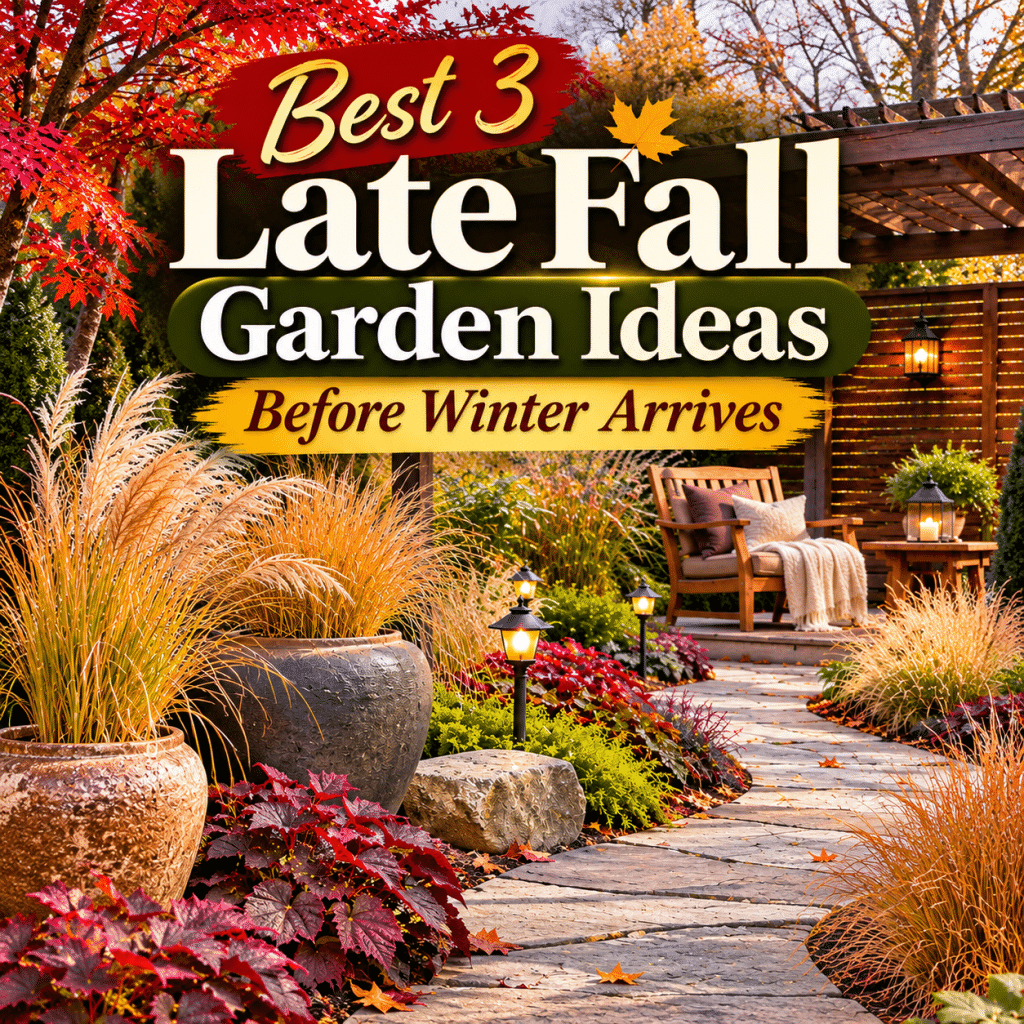
Late fall is often considered the least exciting gardening season. However, some of the most visually captivating landscapes emerge precisely when colorful summer flowers disappear and the underlying structure of the garden becomes more visible. Ornamental grasses develop golden silhouettes, deciduous trees reveal their artistic branching patterns, evergreen foliage becomes more prominent, and natural materials acquire beautifully weathered surfaces.
The secret is to approach late autumn as a distinct garden design season rather than simply the final stage of summer gardening.
Instead of concentrating on conventional seasonal maintenance, these three creative ideas focus on transforming the appearance, atmosphere, and functionality of outdoor spaces between the last colorful autumn days and the arrival of winter.
Whether you have a spacious backyard, a compact suburban garden, a cottage-style landscape, or a contemporary outdoor living area, these imaginative approaches can help your garden maintain its personality throughout the colder months.
Why Late Fall Is an Unexpectedly Beautiful Season for Garden Design
Late autumn introduces a unique visual language that cannot easily be recreated during spring or summer. The sunlight becomes softer, shadows grow longer, plant colors become more subdued, and the entire landscape develops a peaceful, almost painterly quality.
Garden elements that previously disappeared behind abundant summer foliage suddenly become important design features. Stone pathways, wooden structures, decorative containers, ornamental branches, and evergreen planting combinations receive greater visual attention.
🍂 Rather than trying to recreate the abundance of summer, successful late fall gardens celebrate the beauty of seasonal transition.
A well-designed November garden might include warm bronze foliage, copper-colored grasses, deep burgundy leaves, architectural seed heads, textured bark, and muted evergreen plants. Together, these elements create an atmosphere that feels sophisticated, natural, and timeless.
Late fall also provides an excellent opportunity to reconsider how different areas of the garden are experienced. A forgotten corner can become a decorative botanical gallery. An ordinary pathway can become an immersive seasonal landscape. An empty patio can become a beautifully arranged outdoor retreat.
The possibilities extend far beyond traditional autumn decorations.
The Best 3 Late Fall Garden Ideas for a Beautiful Seasonal Transformation
| Garden idea | Main design feature | Ideal location | Visual atmosphere |
|---|---|---|---|
| 🥇 Late Fall Botanical Gallery | Sculptural plants and natural materials | Garden borders and courtyards | Artistic and sophisticated |
| 🥈 Golden Hour Garden Walk | Seasonal pathways and layered planting | Backyard paths and narrow gardens | Romantic and immersive |
| 🥉 Autumn to Winter Garden Retreat | Modular seasonal displays and outdoor seating | Patios and sheltered garden corners | Cozy and elegant |
Each concept offers a different way to celebrate the final weeks of autumn. Instead of requiring a complete landscape renovation, these approaches work with existing garden features and introduce carefully selected design elements that enhance the natural beauty of the season.
🥇 Best 1 Late Fall Garden Ideas With an Artistic Botanical Gallery
One of the most extraordinary ways to elevate a late autumn landscape is to transform part of the garden into an outdoor botanical gallery. This concept takes inspiration from contemporary landscape architecture, naturalistic European gardens, and artistic outdoor exhibitions, where individual plants and natural materials are presented as living works of art.
Instead of filling every available space with colorful flowers or traditional seasonal decorations, a botanical gallery celebrates carefully selected specimens, sculptural arrangements, contrasting textures, and beautifully composed natural elements.
The result is a garden that feels intentional, sophisticated, and visually fascinating even when relatively few plants are flowering.
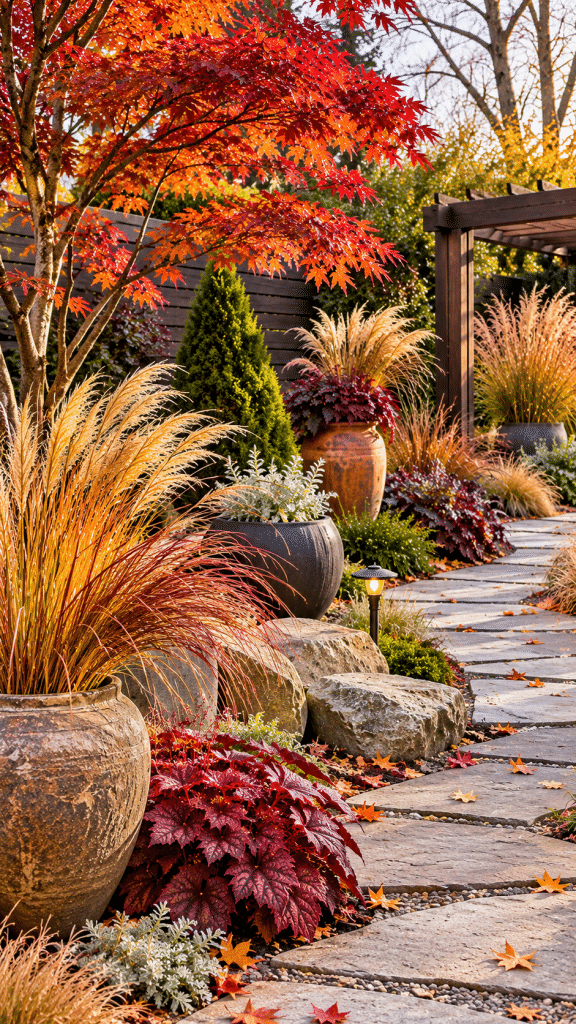
Create Sculptural Planting Islands
Traditional garden borders often rely on continuous masses of foliage and flowers. A late fall botanical gallery takes a different approach by introducing distinct planting islands that highlight the individual characteristics of selected plants.
Imagine a beautiful ornamental grass surrounded by a simple arrangement of natural stones, with burgundy foliage providing a contrasting background. Nearby, a small ornamental tree displays its fascinating branch structure against a dark evergreen hedge.
Each planting island becomes an individual composition.
These arrangements can be especially effective in gardens where existing plants have begun losing their leaves. Rather than attempting to disguise seasonal changes, the design emphasizes the newly revealed architectural qualities of the landscape.
Consider incorporating plants with distinctive shapes, including compact conifers, Japanese forest grass, switchgrass, dwarf ornamental trees, and evergreen sedges suitable for your growing region.
🌾 Plants with graceful silhouettes often become particularly attractive when illuminated by soft late afternoon sunlight.
Leave sufficient visual space between individual arrangements. Empty areas are not necessarily design problems. They can provide contrast, allowing the more interesting botanical features to receive greater attention.
Introduce Natural Materials as Artistic Garden Features
Late autumn is an ideal season for incorporating natural materials that complement subdued botanical colors.
Weathered timber, limestone, slate, sandstone, terracotta, and beautifully textured branches can introduce visual depth without overwhelming the garden.
A carefully positioned weathered log might become the foundation of a miniature botanical composition. Several upright branches can create an abstract sculptural feature. A collection of large stones can provide contrast against the delicate movements of ornamental grasses.
The key is to select materials that feel connected to the surrounding landscape.
For example, a modern garden might benefit from dark slate, smooth river stones, and minimalist wooden structures. A cottage garden might look more attractive with irregular sandstone, rustic timber, and aged terracotta containers.
A woodland-inspired backyard could incorporate fallen branches, textured bark, and naturally shaped stones.
Avoid adding too many different materials within a small area. A limited collection of complementary textures usually produces a more harmonious and expensive-looking result.
Design a Sophisticated Late Fall Color Palette
Color coordination becomes particularly important when the garden has fewer flowers. A thoughtful palette can connect existing plants, decorative materials, and architectural features into a unified seasonal landscape.
Rather than relying exclusively on traditional orange and yellow autumn decorations, experiment with more sophisticated combinations inspired by nature.
| Color palette | Suggested botanical elements | Complementary materials |
|---|---|---|
| Bronze and charcoal | Copper-colored grasses and dark foliage | Slate and blackened timber |
| Burgundy and cream | Burgundy coral bells and pale seed heads | Limestone and terracotta |
| Golden brown and forest green | Golden grasses and compact conifers | Weathered oak and sandstone |
| Silver and plum | Silver foliage and purple ornamental plants | Gray stone and aged metal |
| Amber and olive green | Golden foliage and muted evergreens | Natural wood and warm ceramics |
These combinations create a more refined appearance than randomly introducing colorful seasonal accessories.
For example, bronze ornamental grasses look particularly striking against dark charcoal containers. Deep burgundy foliage can become more noticeable when positioned beside pale natural stones. Evergreen plants provide a consistent background that prevents the composition from appearing excessively brown.
Repeat selected colors in different areas of the gallery to establish visual continuity.
Display Decorative Containers Like Individual Artworks
Containers provide an excellent opportunity to create miniature botanical installations without significantly changing permanent garden beds.
Choose several distinctive planters rather than a large collection of unrelated pots. Oversized terracotta vessels, textured ceramic bowls, contemporary concrete containers, and weather-resistant metal planters can all contribute to the gallery atmosphere.
Each container should have a clear visual purpose.
One planter might feature a compact evergreen surrounded by decorative stones. Another could showcase a fountain-like ornamental grass. A third might contain cold-tolerant foliage plants with contrasting burgundy and silver leaves.
Depending on your local climate, suitable container plants may include coral bells, ornamental kale, hardy sedges, dwarf conifers, and winter heathers.
Containers can be positioned at different heights using sturdy stone platforms or weather-resistant plant stands. This creates a layered display that resembles a professionally curated outdoor exhibition.
Ensure that containers have adequate drainage and are suitable for expected freezing conditions.
Use Garden Backdrops to Emphasize Botanical Silhouettes
A visually busy background can prevent individual plants from receiving the attention they deserve. Late fall offers an opportunity to simplify garden views and create more attractive botanical compositions.
An evergreen hedge provides an excellent backdrop for golden grasses and pale branches. A dark wooden fence can emphasize silver foliage. A neutral garden wall can highlight the intricate branching structure of a small deciduous tree.
Even an ordinary fence can become part of an artistic garden arrangement when its color and texture complement the plants positioned in front of it.
Vertical wooden slats are particularly effective in contemporary landscapes. Their straight lines contrast beautifully with the irregular shapes of natural branches and ornamental grasses.
For a softer appearance, consider a simple trellis or woven willow screen positioned behind a carefully selected planting composition.
The background should support the main botanical feature rather than compete with it.
Make Seasonal Changes Part of the Exhibition
A botanical gallery does not need to look identical throughout the year. Its greatest appeal comes from the gradual transformation of natural materials and plants.
During late fall, grasses may shift from green to gold. Leaves may change from burgundy to copper. Bare branches become increasingly visible as deciduous trees enter dormancy.
Morning dew and occasional frost can introduce additional decorative details, creating delicate highlights across textured surfaces.
Instead of treating these changes as signs that the garden is losing its beauty, consider them part of an evolving outdoor exhibition.
📸 A botanical gallery can look remarkably different depending on the time of day, weather conditions, and stage of seasonal transition.
This makes it one of the most rewarding late fall garden ideas for homeowners who appreciate artistic landscapes, natural textures, and understated outdoor elegance.
🥈 Best 2 Late Fall Garden Ideas With an Enchanting Golden Hour Garden Walk
A beautifully designed garden pathway can transform the experience of an entire backyard. During late autumn, when sunlight becomes softer and ornamental grasses develop warm golden tones, a simple walking route can become an extraordinarily atmospheric landscape feature.
The golden hour garden walk focuses on creating a visually immersive journey through the garden rather than concentrating on a single decorative arrangement.
Every section of the pathway introduces a slightly different combination of colors, textures, planting heights, and seasonal perspectives.
This idea works especially well in medium-sized gardens, narrow side yards, cottage gardens, woodland-inspired landscapes, and backyards with existing pathways.
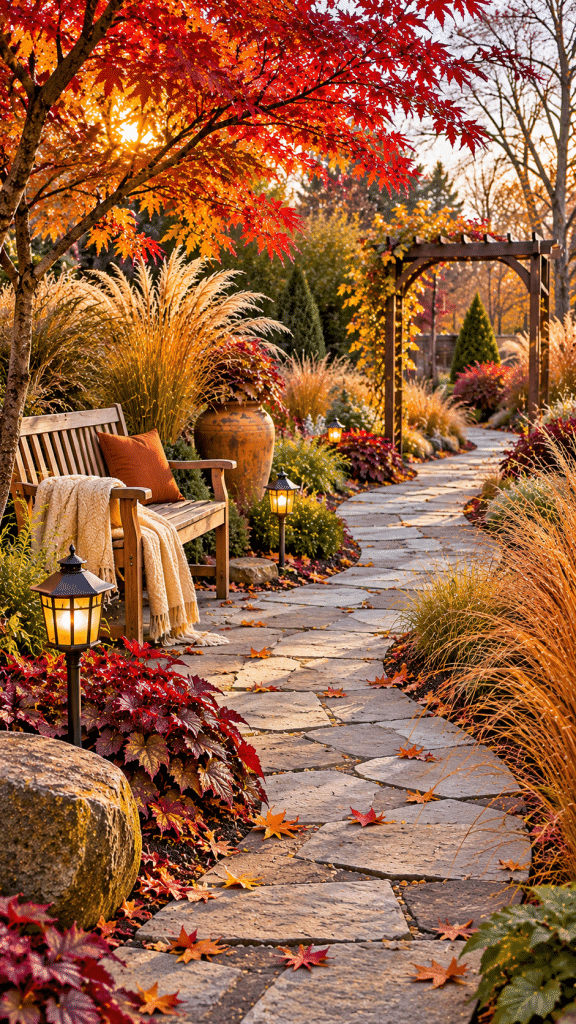
Create a Pathway That Reveals the Garden Gradually
A straight pathway provides efficient access, but a gently curving route can create a more engaging visual experience.
Curves encourage visitors to discover different areas gradually. They can conceal certain decorative features until the viewer approaches, making a relatively small garden feel more interesting and spacious.
An existing pathway can be visually transformed by adjusting the arrangements of containers, decorative stones, and surrounding plants.
Position taller botanical elements near selected corners. Introduce shorter plants along open sections. Place an attractive focal point where the path changes direction.
Even a subtle variation in planting height can create an impression of movement and discovery.
For gardens with limited space, a short route connecting the patio to a seating area can provide the same experience on a smaller scale.
The objective is not necessarily to create a long walking trail. It is to make every step through the garden feel intentional.
Frame the Pathway With Golden Ornamental Grasses
Few garden plants capture the atmosphere of late autumn as effectively as ornamental grasses.
Their delicate foliage, graceful movements, and beautiful seed heads introduce warmth and texture when many other plants have entered dormancy.
Suitable noninvasive varieties can be positioned along pathways to create soft botanical borders.
Switchgrass, little bluestem, tufted hair grass, and selected sedges can offer attractive seasonal silhouettes, depending on the growing region.
Different grass varieties produce different visual effects. Some develop upright architectural forms, while others create soft fountain-like shapes. Their colors may range from pale straw and muted gold to bronze and deep reddish brown.
When selecting grasses, consider mature plant size and ensure that foliage does not obstruct the walking surface.
🌅 The most spectacular effect often occurs when low autumn sunlight passes through pale grass blades and seed heads, creating a luminous golden border.
For greater visual impact, repeat the same ornamental grass in several locations rather than using a different variety at every point along the pathway.
Introduce Small Seasonal Discovery Points
A memorable garden walk should contain several visually interesting moments.
These discovery points can be simple arrangements that encourage someone to stop, observe, and appreciate the landscape from a different perspective.
One location might feature a stone pedestal supporting a decorative ceramic vessel. Another could include a beautifully textured tree trunk surrounded by low-growing plants.
A third might contain a small arrangement of natural branches and warm-colored foliage.
The individual features do not need to be large or expensive. Their effectiveness depends on how well they relate to the surrounding landscape.
Some creative discovery points include a sculptural stone arrangement, an elegant garden bench overlooking golden foliage, a minimalist wooden arch, a decorative urn surrounded by evergreen plants, or a collection of textured containers positioned beside a pathway bend.
These features introduce personality without turning the garden into an overcrowded collection of decorations.
Highlight the Beauty of Contrasting Ground Materials
Garden pathways become increasingly important when seasonal foliage begins to disappear.
Late fall is an excellent time to appreciate the colors and textures of existing paving materials and introduce complementary decorative elements where appropriate.
Natural stone creates an elegant contrast against bronze grasses. Gravel introduces a lighter, more relaxed appearance. Brick offers warm reddish tones that complement traditional autumn colors.
| Pathway material | Visual character | Best matching garden style |
|---|---|---|
| Natural flagstone | Organic and timeless | Cottage and woodland gardens |
| Compacted fine gravel | Relaxed and understated | Mediterranean and naturalistic gardens |
| Reclaimed brick | Warm and nostalgic | Traditional and rustic gardens |
| Textured concrete pavers | Clean and architectural | Contemporary gardens |
| Textured slate | Dramatic and sophisticated | Modern minimalist gardens |
Different materials also influence how surrounding plants are perceived.
Pale stone can make dark foliage appear richer, while darker paving creates an attractive background for golden leaves and ornamental grasses.
Existing paths can be enhanced simply by introducing complementary edging materials or strategically positioned decorative containers.
Incorporate Subtle Lighting for Beautiful Autumn Evenings
Shorter days do not mean the garden must become visually inaccessible after sunset.
Thoughtfully positioned outdoor lighting can extend the enjoyment of a late fall garden walk while emphasizing selected architectural and botanical features.
Low-level pathway lights can improve visibility without overwhelming the natural atmosphere. A small directional light might illuminate the bark of an ornamental tree or highlight the texture of a decorative stone.
Warm, subdued lighting generally complements autumn colors more effectively than intensely bright or cool-toned lights.
Avoid illuminating every plant and garden surface. Selected areas of darkness provide visual contrast and make individual illuminated features more attractive.
Consider shielded, downward-facing fixtures, motion sensors, or timers to limit unnecessary nighttime lighting.
Important Note: When creating late fall garden displays and illuminated pathways, prioritize weather-resistant materials, stable walking surfaces, adequate drainage, and outdoor-rated electrical equipment. Decorative arrangements should remain safe during rain, strong winds, frost, and changing seasonal conditions.
A carefully illuminated garden walk can create a peaceful atmosphere without requiring an elaborate outdoor lighting system.
Create Beautiful Framed Views Along the Garden Walk
Framed views are commonly used in professional landscape architecture to direct attention toward attractive features.
A pair of evergreen shrubs might frame a distant ornamental tree. An archway could reveal a small decorative seating area. Tall grasses positioned on either side of a pathway might create a natural entrance into a more open garden space.
These visual arrangements encourage the viewer to look beyond the immediate surroundings.
Late autumn is particularly suitable for experimenting with framed views because the garden’s underlying structure becomes more visible.
Observe the garden from different positions and identify its most attractive perspectives. Consider which plants, containers, or decorative structures could enhance these views.
Sometimes repositioning a single planter or introducing a small decorative feature is enough to create a much more balanced composition.
Turn an Ordinary Backyard Walk Into a Seasonal Experience
The golden hour garden walk is ultimately about enjoying the landscape more intentionally.
The gentle movement of grasses, the subtle variations in autumn foliage, and the beautiful contrasts between stone and vegetation can create an environment that feels peaceful and remarkably sophisticated.
This design encourages homeowners to appreciate their outdoor spaces even when conventional gardening activities become less frequent.
A carefully designed route can become a favorite place for quiet morning walks, afternoon relaxation, or simply observing the changing colors of the season.
Among the best late fall garden ideas, this approach is particularly effective for creating a memorable landscape without completely redesigning the backyard.
🥉 Best 3 Late Fall Garden Ideas With a Beautiful Autumn to Winter Garden Retreat
As temperatures become cooler and daylight hours decrease, outdoor spaces are often used less frequently. However, a thoughtfully designed garden retreat can preserve the welcoming atmosphere of a backyard well into late autumn.
The autumn to winter garden retreat combines comfortable outdoor seating, adaptable seasonal displays, attractive container arrangements, and carefully selected natural materials.
Unlike conventional autumn patio decorations, this concept focuses on creating a flexible botanical environment that gradually changes with the seasons.
It feels less like a temporary holiday display and more like a beautifully designed outdoor room.
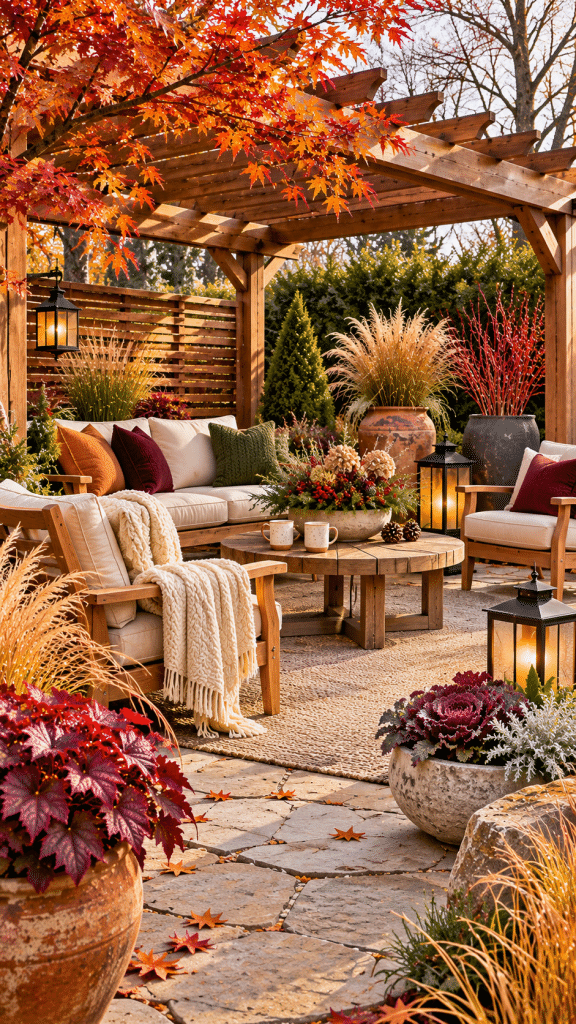
Choose a Sheltered Location With an Attractive View
The most successful late autumn retreats are usually positioned where the surrounding landscape provides some protection from uncomfortable weather.
A sheltered patio, partially enclosed courtyard, covered porch overlooking the garden, or quiet corner beside an evergreen hedge can all provide an attractive foundation.
Consider how the garden looks from the chosen seating position.
A view of golden grasses, decorative containers, textured stone, or evergreen plants can make the retreat feel connected to the surrounding landscape.
Avoid positioning seating where the primary view consists of utility equipment, empty storage areas, or visually distracting structures.
Where possible, use existing plants or simple decorative screens to create a more attractive backdrop.
A compact seating arrangement often feels more intimate and welcoming than an oversized collection of outdoor furniture.
Build a Modular Botanical Display Around the Seating Area
Modular botanical displays allow seasonal decorations to evolve without requiring a complete redesign every few weeks.
Begin with a small collection of permanent elements, such as weather-resistant containers, evergreen plants, decorative stones, and wooden platforms.
These features establish a consistent visual foundation.
Temporary seasonal elements can then be introduced and gradually replaced as autumn transitions into winter.
For example, an arrangement featuring ornamental kale, bronze grasses, and decorative gourds might gradually evolve into a composition containing evergreen foliage, sculptural branches, and natural pinecones.
The permanent components remain in place, maintaining the overall design.
This approach reduces unnecessary purchases and makes seasonal styling more convenient.
| Display component | Late autumn appearance | Early winter appearance |
|---|---|---|
| Main containers | Bronze grasses and burgundy foliage | Evergreen plants and decorative branches |
| Decorative accessories | Gourds and textured autumn materials | Pinecones and natural winter accents |
| Wooden display platforms | Warm botanical arrangements | Sculptural evergreen arrangements |
| Background planting | Golden and copper foliage | Evergreen structure and bare branches |
| Outdoor textiles | Rust, caramel, and muted brown | Cream, charcoal, and forest green |
The gradual transformation creates continuity between seasons rather than an abrupt visual change.
Combine Different Heights for a Luxurious Garden Arrangement
A common problem with outdoor seasonal displays is that every decorative element is placed at ground level.
This creates a relatively flat composition that can appear less interesting from a seated position.
Introduce different levels using sturdy benches, decorative platforms, large containers, and low botanical arrangements.
A tall planter might contain an upright evergreen specimen. A medium-height container could feature ornamental grasses or cold-tolerant foliage. A shallow decorative bowl might introduce natural stones, pinecones, or seasonal botanical materials.
These variations create visual rhythm.
The arrangement should gradually guide the eye from ground-level details toward taller architectural features.
In a contemporary garden, use simple geometric platforms and containers with complementary finishes. In a more traditional garden, weathered wooden stands and aged terracotta vessels may produce a softer appearance.
Maintain sufficient space between arrangements so the seating area remains comfortable and accessible.
Create an Elegant Late Autumn Outdoor Color Scheme
An outdoor retreat should feel visually connected to the changing colors of the garden.
Warm caramel, oatmeal, chestnut brown, muted olive green, charcoal, and deep burgundy are particularly attractive late autumn colors.
These tones work beautifully with natural wood, textured stone, evergreen foliage, and warm metallic accents.
For a luxurious appearance, use a limited palette of three or four complementary colors.
An arrangement featuring oatmeal cushions, dark wooden furniture, bronze grasses, and evergreen containers can feel timeless and sophisticated.
Alternatively, burgundy textiles, gray stone, and silver foliage can create a more dramatic contemporary aesthetic.
🪴 Natural botanical colors should remain the dominant feature, while furniture and accessories provide complementary visual support.
Choose outdoor-appropriate textiles and store removable cushions and blankets in a dry location when they are not being used.
Incorporate a Small Botanical Display Table
A dedicated display table can become the centerpiece of an autumn garden retreat.
Instead of covering the surface with numerous unrelated decorations, create a restrained arrangement inspired by the surrounding landscape.
A shallow ceramic bowl containing textured pinecones and natural stones might provide an attractive foundation. A small container with evergreen foliage can introduce height and color.
Decorative branches, dried botanical materials, or a sculptural garden ornament can complete the arrangement.
The display should remain low enough to preserve comfortable conversation and attractive views.
A larger table might accommodate several complementary miniature botanical arrangements, while a small side table may need only one striking decorative feature.
Use heavy, stable objects that are less likely to move during windy weather.
For evening enjoyment, an outdoor-rated battery-powered lantern can introduce a gentle glow without an exposed flame near dry botanical materials.
Add Architectural Screens for Greater Intimacy
A well-positioned garden screen can make an outdoor retreat feel significantly more comfortable and visually appealing.
Screens help define the seating area as a distinct garden room. Depending on their design, they may also offer privacy and some protection from prevailing winds.
Vertical wooden slats create a clean architectural appearance. Woven willow screens provide a softer natural texture. Decorative metal panels can introduce artistic patterns suitable for contemporary gardens.
Existing evergreen hedges may already provide an attractive enclosure without requiring additional structures.
The screen should complement the garden rather than dominate it.
An attractive arrangement of containers positioned in front of the screen can further soften its appearance and create a layered botanical background.
Choose securely installed structures appropriate for local wind conditions.
Make the Retreat Beautiful Even When Nobody Is Using It
The best outdoor retreats contribute to the overall appearance of the garden throughout the day.
Even when temperatures are too cold for extended outdoor relaxation, a beautifully arranged seating area can remain an attractive focal point when viewed through a window or from another section of the backyard.
The permanent containers, evergreen plants, sculptural branches, decorative platforms, and thoughtfully coordinated materials continue providing visual interest.
This is particularly valuable during late fall and early winter, when homeowners may spend more time observing their gardens from indoors.
A well-designed retreat makes the landscape feel welcoming rather than abandoned.
It also provides a beautiful setting for occasional mild afternoons, warm drinks, quiet reading, and peaceful seasonal moments.
How to Choose the Best Late Fall Garden Ideas for Your Backyard
Every garden has different architectural characteristics, available space, existing plants, and environmental conditions.
The most successful approach is to choose a design that enhances what is already present instead of attempting to introduce every possible seasonal feature.
A garden with attractive planting borders and distinctive ornamental specimens may benefit most from the botanical gallery concept.
A backyard with existing pathways and multiple planting areas is particularly suitable for the golden hour garden walk.
A garden with a sheltered patio, courtyard, or attractive seating location may be ideal for the autumn to winter garden retreat.
| Garden characteristic | Recommended idea | Main advantage | Relative cost |
|---|---|---|---|
| Small urban backyard | Botanical gallery | Strong visual impact in limited space | Low to moderate |
| Long narrow garden | Golden hour garden walk | Creates depth and visual movement | Low to moderate |
| Large suburban backyard | Golden hour garden walk | Connects multiple landscape features | Moderate |
| Contemporary courtyard | Botanical gallery | Emphasizes architectural simplicity | Moderate |
| Covered patio | Autumn to winter retreat | Extends seasonal enjoyment | Low to moderate |
| Traditional cottage garden | Golden hour garden walk | Highlights natural seasonal textures | Low |
| Garden with limited planting space | Autumn to winter retreat | Uses adaptable container displays | Low to moderate |
It is also possible to combine selected elements from all three concepts.
For example, a botanical gallery could be positioned beside a garden pathway that eventually leads to a sheltered outdoor retreat.
Such a combination creates a cohesive landscape experience, provided the individual elements share complementary colors, materials, and visual characteristics.
Beautiful Plants That Enhance a Late Fall Garden
Plant selection plays an important role in maintaining attractive outdoor spaces during the final weeks of autumn.
While flowering plants can introduce seasonal color, foliage, texture, bark, branching structures, and evergreen forms often provide more dependable visual interest as temperatures decline.
The following plants offer different decorative characteristics that can complement the three garden design concepts.
| Plant | Main decorative feature | Approximate USDA hardiness zones |
|---|---|---|
| Switchgrass | Golden foliage and upright seed heads | 4–9 |
| Little bluestem | Copper and reddish autumn foliage | 3–9 |
| Coral bells | Colorful decorative foliage | 4–9 |
| Red twig dogwood | Decorative red stems | 3–7 |
| Winterberry holly | Bright seasonal berries on female plants | 3–9 |
| Dwarf mountain pine | Compact evergreen structure | 2–7 |
| Japanese maple | Autumn foliage and artistic branches | 5–8 |
| Winter heath | Evergreen foliage and seasonal flowers | 5–7 |
| Tufted hair grass | Delicate seed heads and soft texture | 4–9 |
| Pennsylvania sedge | Fine-textured foliage | 3–8 |
Hardiness varies by species, cultivar, growing conditions, and local climate. Some plants may lose their foliage earlier than expected, while others retain decorative characteristics well into winter.
Winterberry holly generally requires a compatible male pollinator nearby for female plants to produce berries.
When combining different species, consider how their mature sizes, sunlight requirements, soil preferences, and seasonal appearances complement one another.
A successful late autumn landscape does not require dozens of plant varieties. A carefully selected collection of plants with contrasting characteristics can produce a much stronger visual effect.
How to Make a Late Fall Garden Look Expensive Without Spending a Fortune
An elegant garden does not necessarily require luxury furniture, expensive sculptures, or professionally installed landscape features.
Some of the most sophisticated outdoor spaces achieve their appearance through careful composition, repetition, simplicity, and thoughtful use of existing materials.
Repeat Materials and Colors Throughout the Garden
Repetition creates a sense of unity.
If natural sandstone appears in one botanical arrangement, introduce a similar material elsewhere in the garden. If bronze grasses provide the main seasonal color, repeat related warm tones in containers or outdoor accessories.
This makes different garden areas feel connected.
Avoid purchasing decorations simply because they look attractive individually. Consider how each new feature contributes to the overall landscape.
A smaller collection of carefully coordinated elements often creates a more luxurious appearance than numerous unrelated accessories.
Reuse Existing Garden Features Creatively
An old wooden bench can become a botanical display platform. A collection of unused terracotta pots can be transformed into a coordinated seasonal arrangement.
Existing decorative stones can be repositioned to highlight individual plants, while naturally shaped branches can become artistic garden features when securely arranged.
Look for opportunities to reinterpret materials that are already available.
This approach not only reduces expenses but can also introduce authenticity and personality into the landscape.
Weathered materials often possess attractive textures that newly purchased decorations cannot easily reproduce.
Focus on One Extraordinary Feature
Every garden benefits from a clear focal point.
Rather than introducing numerous competing decorative arrangements, invest greater attention in one particularly beautiful feature.
This might be a sculptural ornamental tree, an oversized botanical container, an elegant seating arrangement, or a beautifully framed pathway entrance.
Supporting elements should complement the main feature.
When every object demands equal attention, the landscape can become visually confusing. A strong focal point establishes hierarchy and makes the overall design feel more intentional.
✨ Understated elegance is often achieved by knowing which elements to leave out rather than continually adding more decorations.
Common Late Fall Garden Design Mistakes to Avoid
Late autumn landscapes can lose their visual appeal when seasonal decorations are introduced without considering the surrounding environment.
One frequent mistake is relying too heavily on bright artificial autumn colors. Although vivid decorations may appear cheerful, they can clash with the softer, more sophisticated colors naturally present during November and early December.
Another mistake is overcrowding outdoor spaces with containers, accessories, furniture, and decorative objects. Excessive ornamentation can obscure the architectural beauty of plants and natural materials.
Selecting plants solely for their summer appearance can also create disappointing results. A successful late fall garden requires consideration of how individual plants look after flowering and during dormancy.
Poorly positioned decorative features may interrupt attractive views or interfere with garden pathways.
The most effective approach is to evaluate each arrangement from several perspectives, including views from indoor windows, garden entrances, seating areas, and existing pathways.
A landscape that looks attractive from multiple positions will generally feel more balanced and professionally designed.
Frequently Asked Questions About Late Fall Garden Ideas
How Can I Make My Garden Look Beautiful in Late November?
Concentrate on architectural planting forms, evergreen foliage, decorative containers, ornamental grasses, and complementary natural materials.
These elements can provide attractive visual interest even when relatively few plants are flowering.
Create one or two clearly defined focal points instead of attempting to decorate every available section of the garden.
What Colors Look Best in a Late Fall Garden?
Bronze, burgundy, copper, muted gold, forest green, olive, cream, and charcoal are particularly attractive during late autumn.
These colors complement naturally fading foliage and introduce a sophisticated atmosphere.
Combining warm botanical colors with neutral stone, wood, and ceramic materials can create an especially elegant landscape.
Can a Small Backyard Look Beautiful During Late Fall?
Absolutely. Small gardens can benefit enormously from carefully arranged botanical displays and thoughtfully selected containers.
A compact garden may require only three distinctive planters, one attractive decorative feature, and a coordinated background to achieve a remarkable transformation.
The limited space can actually make it easier to establish a cohesive design.
How Can I Decorate My Late Fall Garden Without Making It Look Too Christmassy?
Focus on natural botanical textures rather than traditional holiday accessories.
Ornamental grasses, sculptural branches, evergreen foliage, textured stones, wooden structures, and neutral containers provide seasonal beauty without creating an explicitly festive appearance.
Avoid excessive red decorations, ribbons, ornaments, and recognizable Christmas symbols if the goal is to maintain a timeless late autumn landscape.
Which Late Fall Garden Idea Is the Most Affordable?
The botanical gallery can be particularly affordable because it relies heavily on creative arrangements of existing plants and natural materials.
Repositioning containers, coordinating decorative stones, highlighting interesting botanical silhouettes, and simplifying existing arrangements can produce a noticeable transformation with relatively little expense.
The cost depends primarily on whether additional plants, containers, or architectural features are required.
How Can I Transition My Autumn Garden Into Winter?
Use permanent decorative foundations that remain attractive throughout both seasons.
Evergreen plants, weather-resistant containers, natural stone, wooden structures, and sculptural branches can maintain visual continuity.
Gradually replace temporary autumn accessories with more neutral botanical materials as winter approaches.
This creates an elegant seasonal transition without requiring an entirely new garden design.
Final Thoughts on the Best 3 Late Fall Garden Ideas
Late autumn should never be considered a lost season for garden design. It offers an extraordinary opportunity to appreciate the architectural beauty, natural textures, and peaceful atmosphere that often remain hidden during the abundant growing months.
The three best late fall garden ideas introduce different ways to transform an outdoor space during this remarkable seasonal transition.
🥇 The Artistic Botanical Gallery celebrates sculptural plants, natural materials, sophisticated colors, and carefully composed botanical arrangements.
🥈 The Golden Hour Garden Walk transforms ordinary pathways into immersive seasonal landscapes filled with golden grasses, beautiful framed views, contrasting textures, and subtle lighting.
🥉 The Autumn to Winter Garden Retreat creates a welcoming outdoor environment through adaptable botanical displays, elegant seating arrangements, natural materials, and timeless seasonal styling.
Each concept demonstrates that a beautiful garden does not depend exclusively on colorful flowers or lush summer foliage.
Sometimes the most captivating landscapes emerge when nature becomes quieter, colors become softer, and individual botanical details receive the attention they deserve.
With thoughtful design choices, creative arrangements, and an appreciation for seasonal transformation, your backyard can become one of its most beautiful versions precisely when winter is about to arrive.