Preparing Garden Beds for Winter is one of the most rewarding gardening tasks you can complete before freezing temperatures arrive. While many gardeners focus on the final harvest of the year, the condition of their garden beds throughout winter can significantly influence soil quality, drainage, plant health, and productivity during the following growing season.

Imagine stepping into your backyard in early spring and discovering garden beds that are structurally sound, properly drained, easy to work with, and ready for planting. Instead of spending valuable spring weekends repairing damaged raised beds, dealing with compacted soil, or reorganizing planting areas, you can concentrate on growing beautiful flowers, delicious vegetables, and healthy herbs.
Winter preparation is about much more than simply covering exposed soil or removing old plants. It provides an opportunity to evaluate the physical condition of your garden beds, improve their internal organization, correct structural weaknesses, and establish a practical foundation for next year’s garden.
Whether you grow vegetables in wooden raised beds, cultivate flowers in traditional garden borders, or maintain a productive backyard kitchen garden, a thoughtful winter preparation strategy can make a remarkable difference.
The following three methods focus on different aspects of garden bed readiness, including soil structure restoration, winter drainage management, and strategic spring planting preparation.
Each approach offers practical benefits that extend well beyond the winter months.
Why Preparing Garden Beds for Winter Makes Such a Big Difference
Many gardeners underestimate how dramatically winter weather can affect the physical condition of their growing spaces. Repeated freezing and thawing, prolonged rainfall, melting snow, and seasonal temperature fluctuations can gradually change the structure of garden beds.
Soil that appeared perfectly healthy during summer may become compacted, uneven, or excessively wet by early spring. Wooden raised beds may develop loose corners, while older garden borders can lose their original shape.
These changes are not always immediately visible. Problems often become apparent only when gardeners begin preparing their beds for spring planting.
Preparing garden beds before winter allows you to address potential problems while the soil remains workable and outdoor conditions are relatively comfortable.
🌱 Create Better Growing Conditions for Spring
Healthy roots require an appropriate balance of moisture, oxygen, nutrients, and physical growing space. When garden soil becomes excessively compacted or remains saturated for extended periods, these conditions can become less favorable.
A properly prepared garden bed can encourage better root development by maintaining a functional soil structure throughout the colder months.
Spring planting also becomes considerably easier when garden beds are already organized, structurally stable, and accessible.
Instead of beginning the growing season with extensive repair work, gardeners can focus on seed selection, transplanting, and enjoying the excitement of new growth.
❄️ Reduce the Impact of Winter Weather
Winter presents different challenges depending on your climate. Northern gardens may experience deep freezes and heavy snowfall, while gardens in milder regions may face persistent rainfall and fluctuating temperatures.
Both conditions can create problems when garden beds are poorly designed or inadequately prepared.
Evaluating bed height, drainage patterns, soil settlement, and structural stability before winter can reduce the risk of seasonal damage.
Even relatively small improvements can make a meaningful difference when repeated winter storms expose garden beds to months of challenging conditions.
🌿 Make Your Garden More Efficient
Winter preparation offers an excellent opportunity to reconsider how your garden functions as a complete system.
Perhaps certain beds were difficult to access during summer. Some planting areas may have received insufficient sunlight, while others became overcrowded or consistently retained too much moisture.
Addressing these issues before winter allows you to approach the following growing season with a clearer plan.
A well-organized garden is generally easier to maintain, more enjoyable to work in, and better suited to long-term productivity.
The Best 3 Methods for Preparing Garden Beds for Winter
Different gardens require different preparation strategies. The most suitable method depends on the condition of your soil, the construction of your garden beds, local winter weather, and your plans for the following growing season.
| Winter preparation method | Primary purpose | Best suited for | Main spring benefit |
|---|---|---|---|
| 🥇 Soil Structure Restoration | Restore physical soil conditions and correct settlement | Established vegetable and raised beds | Healthier root development |
| 🥈 Winter Drainage and Structural Protection | Manage excess water and reinforce bed construction | Wet climates and aging raised beds | Reduced waterlogging and structural damage |
| 🥉 Spring Ready Garden Bed Planning | Organize growing areas for the next season | Kitchen gardens and intensive planting spaces | Faster and more efficient spring planting |
These methods can be used individually, but combining all three can provide a comprehensive winter preparation strategy for many backyard gardens.
🥇 Best 1 Preparing Garden Beds for Winter With Targeted Soil Structure Restoration
One of the most effective ways to prepare garden beds for winter is to restore their physical soil structure without unnecessarily disturbing the entire growing area.
Throughout the growing season, garden soil naturally settles. Frequent watering, harvesting, root development, and exposure to changing weather conditions can gradually create areas of uneven soil density.
Rather than completely turning over every garden bed, targeted soil restoration focuses on identifying specific problems and correcting them before winter arrives.
This approach is particularly valuable for established vegetable gardens, raised beds, and intensively cultivated backyard growing spaces.
Understand What Happened Beneath Your Plants During Summer
A productive summer garden can hide several developing soil problems.
Large vegetable plants such as tomatoes, squash, cucumbers, and peppers create extensive root systems. Meanwhile, repeated irrigation can gradually settle loose soil, particularly in raised beds containing recently added growing mixtures.
Some areas may remain beautifully loose, while others develop dense layers that restrict root movement.
Before making any improvements, examine different sections of your garden bed with a small hand trowel.
Pay attention to how easily the tool enters the soil, whether the soil contains large compacted clumps, and whether certain areas appear significantly wetter than others.
These observations can help you determine which sections actually require intervention.
Identify Different Soil Conditions Within the Same Garden Bed
Garden soil is rarely completely uniform. Even a relatively small raised bed can contain several distinct soil conditions.
The area near an irrigation outlet may retain more moisture, while exposed corners may dry more quickly. Sections previously occupied by large plants may contain extensive root channels, while frequently accessed edges may become compacted.
Treating every section identically can waste time and potentially disturb healthy soil.
Instead, divide the garden bed mentally into several smaller zones and evaluate each one separately.
| Soil condition | Common signs | Recommended winter preparation |
|---|---|---|
| Compacted soil | Hard surface and restricted penetration | Gently loosen affected areas when sufficiently dry |
| Settled soil | Reduced soil height and uneven surfaces | Replenish with suitable growing soil |
| Healthy soil | Crumbly texture and visible pore spaces | Minimize disturbance |
| Excessively wet soil | Sticky texture and prolonged moisture | Investigate drainage before working |
| Nutrient-depleted soil | Previous poor growth or confirmed deficiencies | Follow soil test recommendations |
| Eroded soil | Exposed roots and uneven depressions | Restore the original soil profile |
This targeted evaluation makes winter preparation more efficient and helps preserve beneficial soil structures that have developed naturally.
Restore Compacted Areas Without Excessive Digging
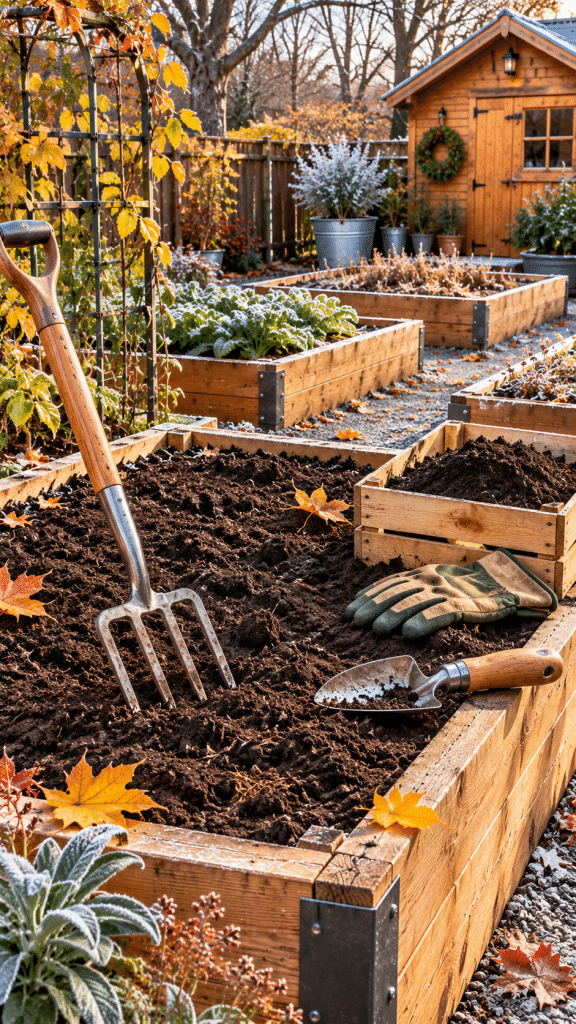
A garden fork can be an extremely useful tool for improving localized compaction.
Insert the fork into workable soil and gently rock the handle backward to create small openings. There is no need to completely overturn the soil or aggressively break apart every layer.
This technique can help improve pore space while minimizing unnecessary disruption.
However, healthy, uncompacted areas generally do not need to be loosened simply because winter is approaching.
🌱 The objective is to restore functional soil structure rather than create a perfectly uniform appearance.
Leaving undisturbed sections intact can also preserve existing root channels and biological activity.
Colorado State University Extension recommends avoiding unnecessary traffic across growing beds and avoiding cultivation of wet clay soils to minimize compaction. CSU Extension
Important Note: Never dig, fork, or aggressively cultivate garden soil while it is saturated or frozen. Working excessively wet soil can damage its natural structure, particularly in clay-heavy gardens, and create compaction problems that persist into spring.
Replenish Soil That Has Settled During the Growing Season
Raised garden beds frequently lose some of their original soil height as organic materials decompose and loose growing mixtures settle.
This is especially noticeable in newer raised beds filled with substantial quantities of organic material.
Before winter, measure the distance between the soil surface and the upper edge of the bed. Compare the results with the original growing depth whenever possible.
If the soil has settled considerably, replenish the missing volume using a compatible growing mixture.
Avoid filling the entire deficit with nutrient-rich compost alone. Excessive additions can create nutrient imbalances, especially in established garden beds that have received regular organic amendments.
A balanced mixture appropriate for the existing soil is generally a better choice.
Restoring the growing depth before winter also gives newly added material an opportunity to settle naturally before spring planting.
Use Soil Testing to Create a Customized Improvement Plan
Autumn provides an excellent opportunity to discover what your garden soil actually needs.
Rather than purchasing fertilizers, lime, or other amendments based on assumptions, consider submitting a representative soil sample to a local agricultural extension service or soil testing laboratory.
A standard garden soil test may provide information about soil pH, phosphorus, potassium, and other characteristics relevant to plant growth.
With this information, gardeners can make more informed decisions about preparing individual beds for the next growing season.
For example, a bed intended for vegetables may already contain sufficient phosphorus despite showing disappointing summer growth. The real problem could be poor drainage, unsuitable pH, inconsistent watering, or another environmental factor.
Testing helps distinguish nutritional problems from physical soil problems.
It can also prevent unnecessary spending on amendments that provide little benefit.
Create a Smooth and Functional Winter Soil Profile
Once the necessary soil improvements have been completed, gently restore the surface of the garden bed.
Remove unnecessary depressions where water could collect and correct pronounced unevenness caused by previous harvesting activities.
In most established beds, the goal is a reasonably level growing surface rather than an excessively fine or tightly compressed finish.
Avoid pressing the soil down to create a perfectly flat appearance.
A naturally textured surface allows rainfall to enter the soil while maintaining useful pore spaces.
This simple finishing step can make garden beds more practical to inspect throughout winter and easier to prepare for spring planting.
Why Targeted Soil Restoration Works So Well
Many gardeners associate successful soil preparation with extensive digging and dramatic visible changes.
However, the most useful improvements are often relatively subtle.
Correcting a compacted corner, replenishing a settled growing area, or restoring a damaged soil profile can improve the overall functionality of a garden without disturbing healthy sections.
By concentrating on actual problems, gardeners can preserve existing biological activity while preparing their beds for the physical challenges of winter.
This makes targeted soil structure restoration an excellent foundation for long-term garden productivity.
🥈 Best 2 Preparing Garden Beds for Winter With Strategic Drainage and Structural Protection
Winter weather can place considerable stress on garden bed construction.
Persistent rainfall, heavy snow, freezing temperatures, expanding ice, and saturated surrounding soil may gradually weaken garden structures.
Wooden boards can deteriorate, metal panels may become loose, and poorly supported corners can shift under pressure.
Traditional in-ground beds can also experience erosion, unstable borders, and drainage problems.
A strategic structural protection approach focuses on ensuring that garden beds remain physically functional throughout winter.
Rather than simply preparing the soil surface, this method considers the entire growing environment as an interconnected system.
💧 Observe How Rainwater Moves Around Your Garden Beds
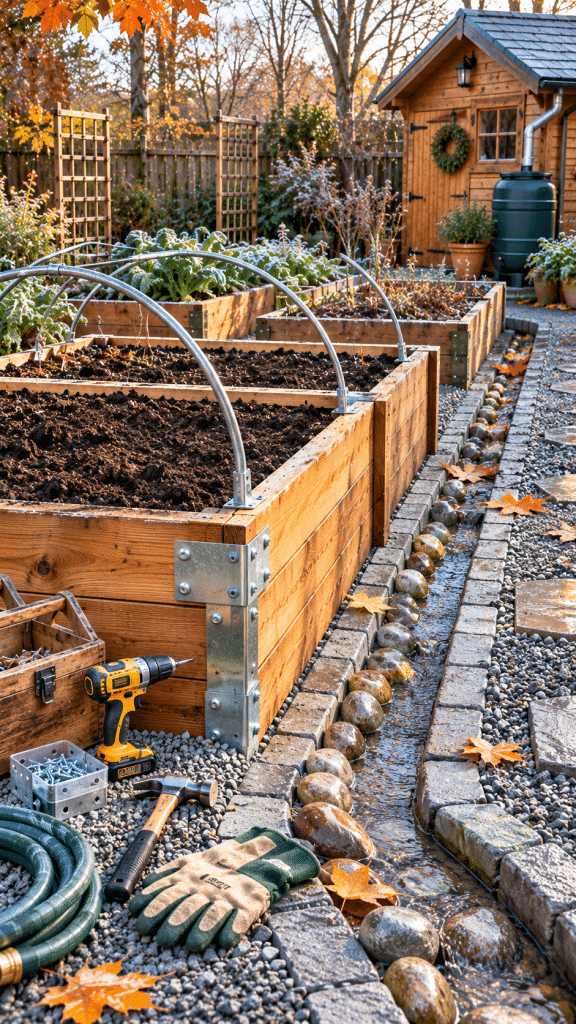
One of the simplest ways to understand winter drainage is to visit your garden shortly after substantial rainfall.
Observe where water naturally travels, which pathways remain wet, and whether puddles develop around particular garden beds.
Water flowing from roofs, patios, driveways, and surrounding lawns can sometimes enter growing areas unexpectedly.
Even beautifully constructed raised beds may experience moisture problems when their surrounding environment consistently channels excessive water toward them.
Look for repeated patterns instead of making decisions based on a single unusual storm.
Understanding natural water movement allows gardeners to identify drainage problems before they become more serious during winter.
Correct Low Spots Around Garden Beds
Low areas surrounding garden beds can become temporary reservoirs during prolonged rainfall.
Although standing water may disappear eventually, repeated saturation can contribute to muddy pathways, deteriorating wooden structures, and difficult garden access.
Where appropriate, correct minor depressions using suitable landscaping materials while maintaining a drainage route away from growing areas.
Avoid creating new barriers that redirect water toward neighboring beds, buildings, or adjacent properties.
For more significant drainage problems, professional landscaping advice may be necessary.
A thoughtful drainage arrangement can protect both the growing beds and the surrounding outdoor environment.
Avoid Creating Hidden Drainage Problems Inside Raised Beds
A common misconception is that adding a thick layer of gravel underneath garden soil will automatically improve drainage.
In reality, abrupt changes between fine soil and coarse materials can sometimes cause water to remain above the boundary until the upper soil becomes sufficiently saturated.
For many open-bottom raised beds, maintaining a suitable connection between the growing soil and the underlying ground is more useful than creating unnecessary layers.
Check whether the lower portion of your raised bed allows water to escape naturally.
If a raised planter has a solid base, inspect its drainage openings for obstructions.
The objective is to allow excess moisture to leave the root zone without unnecessarily drying out the growing mixture.
Inspect Every Corner of Wooden Raised Garden Beds
Wooden raised beds are attractive, practical, and popular among backyard gardeners.
However, their structural condition can gradually decline after several growing seasons.
Before winter, carefully inspect corner connections, horizontal boards, screws, brackets, and supporting stakes.
Look for signs of soft wood, splitting, movement, and deteriorating fasteners.
Small structural weaknesses are generally easier to address before the surrounding soil becomes saturated or frozen.
| Structural problem | Possible winter consequence | Recommended action |
|---|---|---|
| Loose corner connections | Boards separating under pressure | Secure or replace fasteners |
| Deteriorating wooden panels | Partial structural collapse | Replace damaged boards |
| Bowing side walls | Increased outward movement | Install suitable structural supports |
| Unstable edging | Loss of bed shape | Reposition and stabilize edging |
| Blocked planter drainage | Excessive water retention | Clear drainage openings |
| Damaged metal connections | Reduced structural stability | Tighten or replace connections |
Periodic inspection and replacement of deteriorating enclosure materials are normal parts of maintaining raised garden beds. University of Maryland Extension
Addressing these problems during autumn can significantly reduce the amount of repair work required during spring.
Reinforce Long Garden Bed Walls
Long raised garden beds can experience outward pressure from the soil they contain.
This pressure may become more noticeable when the growing mixture is heavily saturated.
Inspect long side walls for visible bowing or movement.
Where the construction requires additional reinforcement, install appropriate supports or cross-bracing according to the bed’s design.
Use durable materials suitable for outdoor gardening environments.
For edible gardens, select construction materials appropriate for use around food crops.
A structurally stable raised bed helps preserve its original growing dimensions and reduces the likelihood of unexpected repairs during the following season.
Prepare Garden Bed Pathways for Winter Access
Garden pathways are often overlooked because they are not directly involved in plant cultivation.
Nevertheless, they play an essential role in winter garden maintenance.
Well-designed pathways allow gardeners to inspect growing areas without stepping onto vulnerable soil.
They also provide access for carrying gardening tools, repairing structures, and checking drainage conditions.
Consider whether your existing pathways remain sufficiently wide and accessible after rainfall.
If necessary, improve unstable surfaces or correct areas that become excessively muddy.
Maintaining a comfortable working route around each bed can make winter inspections considerably easier.
It can also reduce unnecessary compaction of the growing soil when spring arrives.
Disconnect and Protect Seasonal Irrigation Components
Preparing garden beds for winter should also include an evaluation of their irrigation systems.
Exposed hoses, connectors, timers, filters, and irrigation lines may be vulnerable to freezing temperatures.
In regions with hard freezes, trapped water can expand and damage certain irrigation components.
Follow the manufacturer’s winterization instructions for your particular system.
Drain or disconnect vulnerable equipment when required and store removable components in a suitable protected location.
Label individual irrigation sections before storing them.
This small organizational step can simplify reinstallation when the next growing season begins.
For gardens containing overwintering plants, continue monitoring their moisture requirements rather than assuming irrigation is unnecessary throughout winter.
Protect Garden Bed Hardware and Growing Supports
Permanent trellises, metal supports, anchor points, and garden hoops can also deteriorate during winter.
Inspect their connections and evaluate whether they are designed to remain outdoors throughout the colder months.
Remove lightweight seasonal structures that could be damaged or displaced by strong winds or heavy snowfall.
Permanent structures should be securely attached and capable of handling the expected local weather conditions.
Store removable hardware together in labeled containers.
When spring arrives, everything will be easier to locate and reinstall.
This is particularly beneficial for gardeners growing climbing vegetables such as beans, peas, cucumbers, and indeterminate tomatoes.
Adapt Structural Protection to Your Winter Climate
Not every garden requires the same level of winter protection.
A garden in Minnesota may experience very different conditions from one in coastal California or the southeastern United States.
The most effective preparation strategy responds to the actual environmental challenges of your location.
| Winter climate | Primary challenge | Preparation priority |
|---|---|---|
| Cold and snowy | Snow loads and freeze-thaw cycles | Structural reinforcement |
| Mild and rainy | Prolonged saturation | Drainage management |
| Cold and relatively dry | Freezing temperatures and moisture loss | Moisture monitoring and equipment protection |
| Windy and exposed | Movement of unsecured structures | Secure permanent garden hardware |
| Frequently fluctuating temperatures | Repeated freezing and thawing | Inspect connections and vulnerable materials |
❄️ Climate-specific preparation helps gardeners invest their time and resources in improvements that provide genuine benefits.
There is little reason to adopt an intensive winterization strategy designed for severe northern winters if your garden primarily experiences moderate temperatures and occasional rainfall.
🥉 Best 3 Preparing Garden Beds for Winter With a Strategic Spring Ready Planting System
The third approach transforms winter preparation into an opportunity to design a more productive and organized garden for the following year.
Instead of treating autumn as the end of the gardening season, consider it the beginning of your next garden planning cycle.
The quieter months before winter provide an excellent opportunity to evaluate previous growing results, organize planting areas, and prepare infrastructure for future crops.
This method is particularly valuable for gardeners who manage multiple raised beds, grow a wide variety of vegetables, or want to improve the efficiency of a small backyard garden.
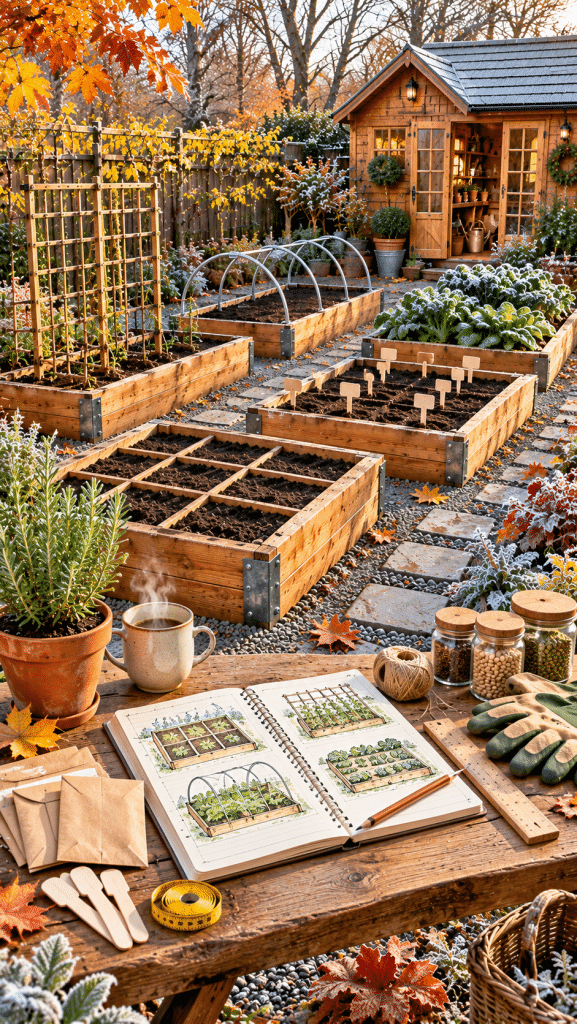
Review the Performance of Every Garden Bed
Before changing your garden layout, reflect on what happened throughout the previous growing season.
Some garden beds may have produced exceptionally healthy vegetables, while others struggled despite receiving similar care.
Consider differences in sunlight exposure, irrigation, soil condition, plant spacing, and surrounding vegetation.
Record observations while they remain fresh in your memory.
For example, one bed may have been ideal for leafy greens but too shaded for tomatoes. Another may have received abundant sunlight but experienced persistent moisture problems.
These observations can provide valuable guidance when deciding what to grow next year.
Over time, a simple garden performance record can become one of your most useful gardening resources.
Create a Permanent Garden Bed Identification System
Giving each garden bed a permanent identification number or name can dramatically simplify garden organization.
Instead of referring to growing areas by their general location, assign each bed a consistent designation.
Weather-resistant labels can be attached to wooden frames, mounted on small stakes, or recorded on a permanent garden map.
For example, Bed A could be located near the kitchen, Bed B beside a greenhouse, and Bed C along the southern garden boundary.
A consistent identification system makes it easier to track previous crops, soil test results, structural repairs, and future planting plans.
It becomes especially valuable when managing several growing areas over multiple years.
Design a Practical Crop Rotation Plan
Autumn is an excellent time to begin planning where different vegetables will grow next season.
Crop rotation involves changing the location of related plant families when practical.
It can help reduce some soilborne disease and pest pressures, although its effectiveness depends on the organisms involved, the rotation interval, and the size of the garden.
Small backyard gardens may not always have enough space for an ideal rotation schedule.
Nevertheless, recording crop locations and avoiding unnecessary repetition can support better garden management.
| Garden bed | Previous main crop | Potential next crop | Preparation consideration |
|---|---|---|---|
| Bed A | Tomatoes | Leafy greens | Check soil fertility |
| Bed B | Beans | Carrots | Evaluate soil depth and texture |
| Bed C | Cucumbers | Broccoli | Review drainage and growing space |
| Bed D | Carrots | Tomatoes | Prepare future plant support |
| Bed E | Leafy greens | Peas | Identify trellis anchor points |
This example provides a starting point rather than a universal rotation prescription.
Adjust crop selections according to your climate, plant families, disease history, garden size, and personal preferences.
Organize Garden Beds According to Planting Time
Not every vegetable should be planted at the same time.
Cool-season vegetables can often be established earlier than heat-loving crops, depending on local weather and soil conditions.
Before winter, identify which beds will be needed first during the upcoming growing season.
A bed intended for early lettuce or spinach may require different preparation from one reserved for peppers or summer squash.
Organizing growing areas by planting time helps prevent unnecessary spring delays.
It can also make purchasing seeds and preparing garden supplies more manageable.
| Spring planting group | Example vegetables | Winter planning priority |
|---|---|---|
| Early cool-season crops | Spinach, peas, radishes | Accessible beds with suitable drainage |
| Cool-season transplants | Broccoli, cabbage, kale | Plant spacing and soil condition |
| Warm-season vegetables | Tomatoes, peppers | Support systems and sunlight exposure |
| Spreading summer crops | Squash, cucumbers | Adequate growing space |
| Root vegetables | Carrots, beets | Suitable growing depth and soil texture |
This planning system allows gardeners to prioritize their limited time as spring approaches.
Rather than preparing every bed simultaneously, attention can be directed toward the areas needed first.
Install Permanent Anchor Points for Future Garden Accessories
Many garden accessories require secure attachment points.
These may include plant supports, removable hoops, vertical growing structures, protective netting, and seasonal irrigation equipment.
Preparing appropriate anchor points before winter can make future installation easier.
For example, gardeners planning to grow climbing vegetables can determine where trellises will eventually stand and whether additional support brackets are necessary.
A raised bed intended for early-season growing may benefit from attachment points for removable garden hoops.
The accessories themselves can remain safely stored until needed.
This approach reduces clutter while preserving the flexibility of the growing area.
Reserve Growing Space for Spring Succession Planting
Succession planting involves establishing crops at different times to extend the harvesting period or make more efficient use of available space.
Many gardeners unintentionally fill their entire garden during the first planting weekend of spring.
This can leave little room for later plantings and create excessively large harvests of certain vegetables.
Planning growing zones before winter provides an opportunity to avoid this problem.
Reserve selected sections for later sowings or crops that will replace earlier vegetables after harvesting.
You do not need to create permanent physical dividers.
A simple drawing showing anticipated planting sections can provide sufficient guidance.
🌿 Thoughtful space management can help a relatively small garden produce a more continuous and varied harvest throughout the growing season.
Create a Garden Bed Preparation Record
Keeping records does not need to be complicated.
A small gardening notebook, spreadsheet, or printed garden map can contain the essential information required for future planning.
Record the date each bed was inspected, the soil condition, repairs completed, previous crops, and planned spring improvements.
Over several growing seasons, these records may reveal recurring patterns.
Perhaps a particular bed requires frequent soil replenishment because its original growing mixture contains substantial decomposable material.
Another bed may repeatedly experience drainage difficulties after prolonged rainfall.
Understanding these patterns makes it easier to address underlying problems rather than repeatedly treating their symptoms.
Good records can gradually transform winter preparation from a general seasonal chore into a highly personalized garden management system.
When Is the Best Time for Preparing Garden Beds for Winter
The ideal preparation period depends on local climate, harvesting schedules, and soil moisture.
For many gardeners in temperate regions of the United States, garden bed preparation begins after the main autumn harvest and continues until the ground becomes frozen or excessively wet.
However, there is no single date that works for every garden.
Gardeners growing cool-season vegetables may continue using selected beds well into winter, while others may finish harvesting much earlier.
The most practical approach is to prepare each bed individually when its seasonal crops are finished and environmental conditions remain suitable.
| Approximate preparation period | Recommended activity |
|---|---|
| Early autumn | Review summer growing performance |
| Mid-autumn | Inspect soil condition and garden structures |
| Late autumn | Complete necessary soil and structural improvements |
| Before persistent freezing | Protect vulnerable irrigation equipment |
| During winter | Inspect beds after significant weather events |
| Early spring | Evaluate planting readiness and complete final adjustments |
Gardeners in warmer regions can adapt this schedule around their local growing seasons rather than following northern winter preparation dates.
Common Mistakes to Avoid When Preparing Garden Beds for Winter
Even experienced gardeners can make mistakes when transitioning their growing areas into winter.
Many problems arise from unnecessary intervention, unsuitable timing, or assuming that every garden bed requires identical treatment.
Understanding these mistakes can help gardeners achieve better results with less effort.
Completely Replacing Healthy Garden Soil
Replacing all the soil in an established raised bed is rarely necessary without a specific reason, such as confirmed contamination or another serious problem.
Healthy garden soil contains valuable biological activity and physical structures that develop over time.
Completely removing it can be expensive and labor-intensive.
In most situations, restoring growing depth and correcting specific problems is a more practical approach.
Adding Amendments Without Understanding Soil Requirements
More fertilizer does not necessarily produce healthier vegetables.
Established garden beds may already contain substantial nutrient reserves from previous applications.
Adding amendments every autumn without evaluating actual soil conditions can gradually create imbalances.
Use soil testing and previous growing observations to guide decisions.
This approach is generally more economical and environmentally responsible.
Ignoring the Condition of Garden Bed Frames
Gardeners frequently concentrate on soil improvements while overlooking deteriorating structures.
A raised bed with unstable walls or weakened corners may require significant repairs regardless of how healthy its growing mixture is.
Inspecting and maintaining the physical enclosure should be considered part of routine garden bed management.
Small repairs can prevent larger problems.
Treating Every Garden Bed Exactly the Same
Different growing areas often develop different requirements.
One bed may need additional growing soil, another may require improved drainage, and a third may be perfectly healthy.
Applying the same intensive preparation process to every bed can waste valuable time and resources.
Customized preparation produces a more practical and efficient result.
Leaving All Planning Until Spring
Spring can become an exceptionally busy period for backyard gardeners.
Seed starting, transplanting, purchasing supplies, installing irrigation, and preparing growing areas often occur within a relatively short window.
Completing organizational tasks during autumn and winter reduces this seasonal pressure.
It also gives gardeners more time to evaluate their planting decisions before committing valuable growing space.
How to Know Whether Your Garden Beds Are Ready for Winter
A winter-ready garden bed does not necessarily need to look completely new or perfectly symmetrical.
Its readiness is better judged by its physical condition, drainage performance, structural stability, and suitability for future growing activities.
Use the following checklist to evaluate your preparation results.
| Garden bed preparation checklist | Completed |
|---|---|
| Soil condition evaluated | ☐ |
| Localized compaction addressed where necessary | ☐ |
| Settled growing soil replenished | ☐ |
| Soil amendments based on actual requirements | ☐ |
| Raised bed walls inspected | ☐ |
| Damaged corners and connections repaired | ☐ |
| Drainage routes evaluated | ☐ |
| Garden pathways accessible | ☐ |
| Vulnerable irrigation equipment protected | ☐ |
| Permanent growing supports inspected | ☐ |
| Previous crops recorded | ☐ |
| Spring planting locations planned | ☐ |
| Exposed soil protected appropriately for local conditions | ☐ |
The final item is particularly relevant for beds that will remain unplanted throughout winter. Suitable seasonal soil protection should complement your structural preparation rather than replace it.
Completing this checklist provides a practical foundation for maintaining healthy, functional growing areas throughout the colder months.
Frequently Asked Questions About Preparing Garden Beds for Winter
Should Garden Beds Be Emptied Before Winter
There is generally no need to empty established garden beds before winter.
Healthy growing soil can remain in place throughout the colder months.
Gardeners should concentrate on preserving soil structure, maintaining appropriate growing depth, and correcting specific problems rather than replacing the entire growing mixture unnecessarily.
Should Garden Beds Be Watered Before Winter
The answer depends on existing soil moisture, local weather, and whether plants remain in the bed.
Garden soil should not become unnecessarily saturated before freezing conditions arrive.
However, overwintering plants may still require adequate moisture, especially during prolonged dry periods.
Monitor actual soil conditions and adjust watering accordingly.
Can Garden Beds Be Prepared After the First Frost
Yes. A light frost does not necessarily prevent garden bed preparation.
Many structural inspections, planning activities, and equipment maintenance tasks can still be completed afterward.
Soil-related work should only proceed when the ground remains workable and is neither frozen nor excessively wet.
Should Raised Garden Beds Be Refilled Every Autumn
Raised garden beds should only be replenished when their soil level or growing conditions indicate a genuine need.
Newer beds may experience more noticeable settlement during their first few seasons.
Older established beds may require considerably less additional material.
Inspect the growing depth before deciding how much soil to add.
Is It Necessary to Dig Every Garden Bed Before Winter
No. Healthy garden soil does not automatically benefit from annual digging.
Unnecessary cultivation can disturb existing soil aggregates and beneficial biological activity.
Targeted intervention is generally more appropriate when specific areas show signs of compaction or other physical problems.
Can Garden Bed Preparation Be Completed During a Single Weekend
Many small backyard gardens can undergo their primary winter preparation during a single weekend when weather and soil conditions are favorable.
Larger gardens or those requiring extensive structural repairs may benefit from several shorter working sessions.
Prioritize necessary repairs, drainage issues, and time-sensitive irrigation maintenance before less urgent organizational tasks.
Do Flower Beds Require the Same Preparation as Vegetable Beds
Flower beds and vegetable beds share several requirements, including suitable drainage and healthy soil structure.
However, perennial flower beds contain permanent root systems and plant crowns that should not be unnecessarily disturbed.
Adapt soil improvements and structural changes to the needs of existing plants.
Vegetable beds that will remain unplanted generally provide more flexibility for physical restoration and reorganization.
Final Thoughts on the Best Methods for Preparing Garden Beds for Winter
Preparing Garden Beds for Winter is an investment in the long-term health, functionality, and productivity of your backyard garden.
The most successful approach involves understanding what each growing area actually needs rather than performing the same seasonal routine every year.
🥇 Targeted Soil Structure Restoration focuses on correcting compaction, restoring growing depth, and preserving healthy soil conditions.
🥈 Strategic Drainage and Structural Protection helps garden beds withstand challenging winter weather while maintaining stable growing areas and accessible pathways.
🥉 A Strategic Spring Ready Planting System transforms the quieter gardening months into an opportunity to organize crops, improve growing efficiency, and prepare for the next harvest.
Together, these three methods create a comprehensive preparation strategy that extends far beyond basic seasonal maintenance.
A garden that enters winter with functional structures, appropriate soil conditions, effective drainage, and a thoughtful planting plan is better positioned to welcome the next growing season.
The greatest reward may become apparent on that first beautiful spring morning when the temperatures begin to rise, the garden comes back to life, and your carefully prepared growing beds are ready for another season of possibilities.