The Passionflower Plant is one of the most extraordinary flowering vines a gardener can grow. With its intricate blooms, vigorous climbing habit, and ability to attract butterflies, bees, and even hummingbirds in some regions, this remarkable plant instantly becomes the centerpiece of any landscape. Whether the goal is creating a lush backyard retreat, covering an unattractive fence, or adding an exotic touch to a patio, the Passionflower Plant delivers beauty that few ornamental plants can match.
Beyond its breathtaking flowers, the Passionflower Plant is surprisingly versatile. Some varieties produce delicious edible fruits, while others are treasured for their medicinal history or exceptional wildlife value. The combination of dramatic flowers, fast growth, and relatively simple care makes it an excellent choice for beginners and experienced gardeners alike.
If choosing the perfect passionflower seems overwhelming because of the many available species, this guide explores the Best 3 Passionflower Plant varieties, explains how to grow them successfully, and shares expert care tips to keep them healthy and blooming throughout the growing season.
Why the Passionflower Plant Is So Popular
The Passionflower Plant belongs to the Passiflora genus, which includes more than 500 species native mainly to Central and South America. Over time, these spectacular vines have become favorites in gardens worldwide thanks to their unique appearance and impressive adaptability.
Unlike ordinary flowering vines, passionflowers produce blooms that look almost architectural. Multiple layers of petals, colorful filaments, and striking central structures create flowers that appear almost unreal. Every blossom becomes a natural conversation piece.
🌿 Gardeners appreciate passionflowers because they offer numerous benefits:
- 🌸 Stunning tropical-looking flowers
- 🦋 Excellent pollinator attraction
- 🍇 Edible fruit on certain varieties
- 🌞 Fast-growing climbing habit
- 🌿 Natural privacy screening
- 🏡 Beautiful vertical garden coverage
Many species also remain attractive even when not flowering because of their lush green foliage that quickly transforms empty spaces into living walls.
Best 3 Passionflower Plant Varieties
Not every passionflower grows the same way. Some are grown mainly for flowers, while others are cultivated for their fruit or cold tolerance. Choosing the right variety depends on climate, available space, and gardening goals.
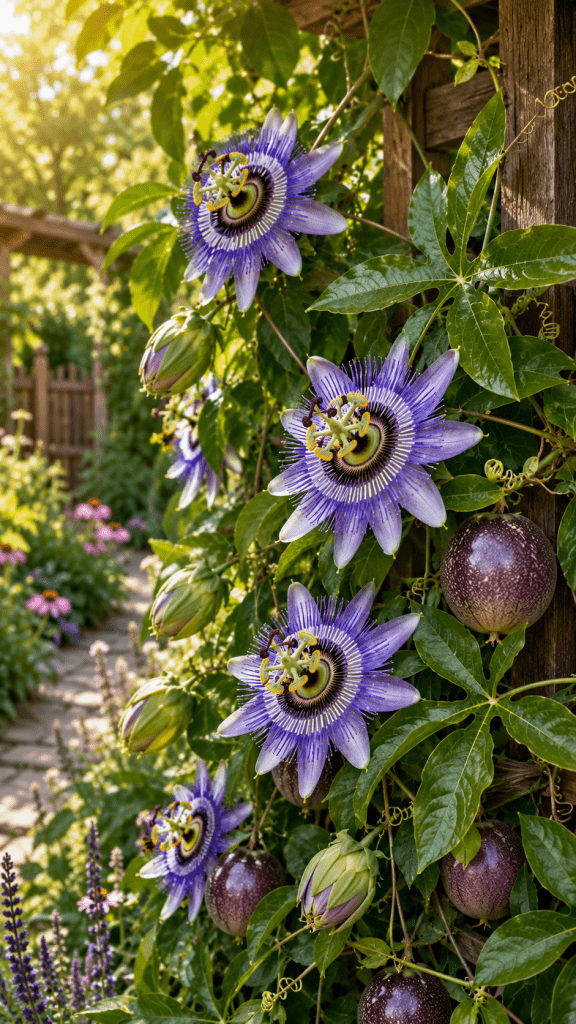
🥇 1. Purple Passionflower (Passiflora incarnata)
The Purple Passionflower is widely considered one of the best varieties for home gardens. Native to the southeastern United States, it combines stunning beauty with impressive hardiness.
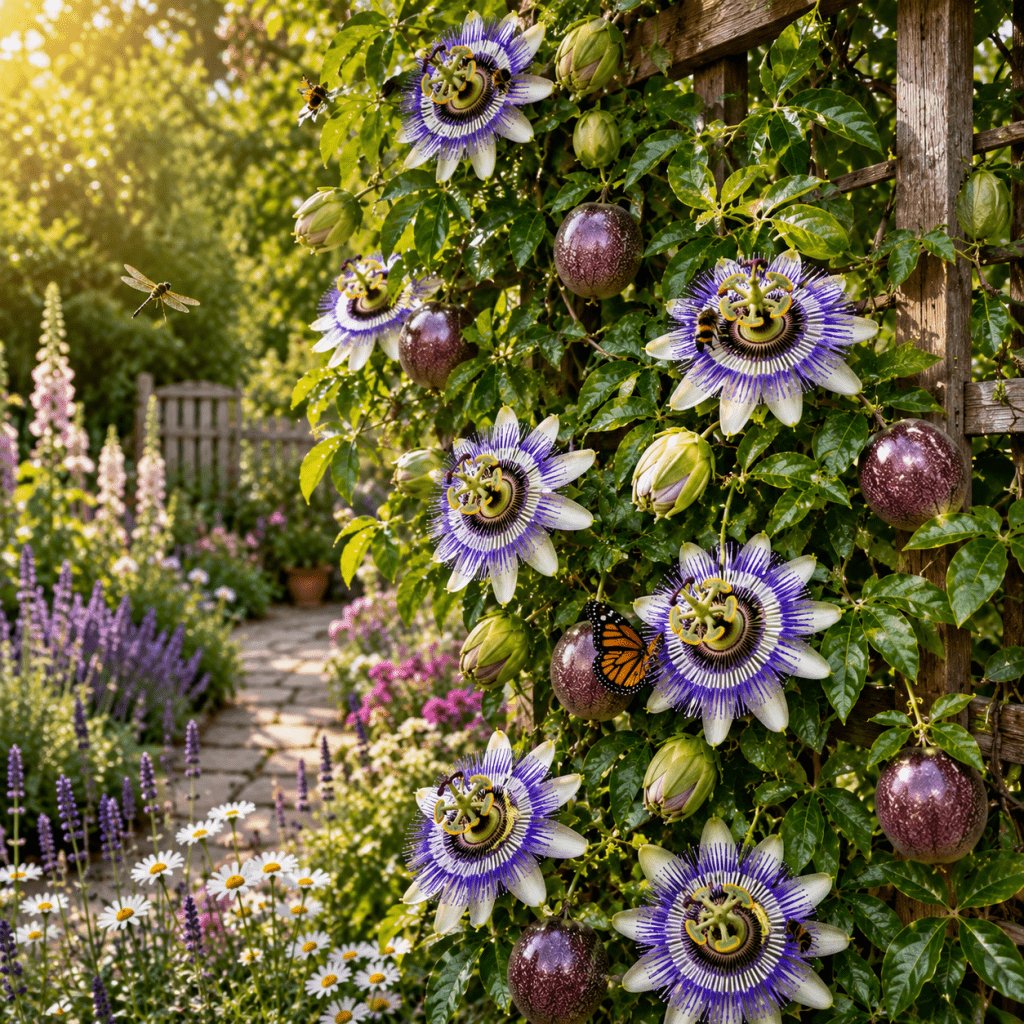
Its flowers display lavender-purple petals surrounding intricate white and violet filaments that create an unforgettable tropical appearance. During summer, vines become covered with blooms that may reach nearly four inches across.
One of the greatest advantages of this species is its adaptability. Unlike many tropical passionflowers, it tolerates colder winters and often regrows from the roots after frost.
This variety also produces edible fruits commonly called maypops. Although not as sweet as commercial passionfruit, they provide a pleasant tropical flavor when fully ripe.
Why gardeners love it
- 💜 Beautiful purple flowers
- ❄️ Better cold tolerance
- 🦋 Butterfly host plant
- 🍈 Edible fruit
- 🌿 Fast vigorous growth
Its wildlife value is equally impressive. Gulf Fritillary butterflies rely on this plant as an important host species for laying eggs.
🥈 2. Blue Passionflower (Passiflora caerulea)
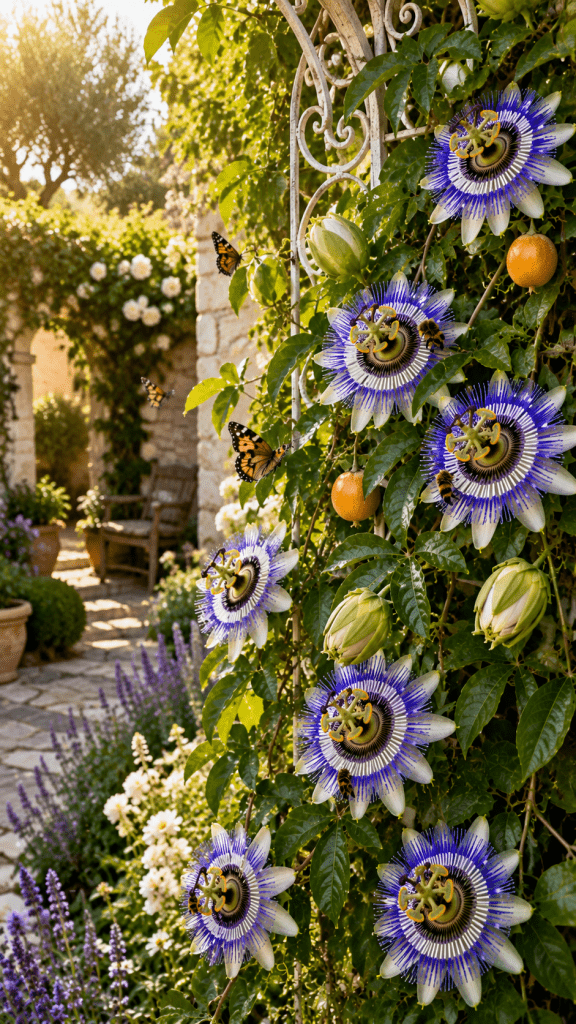
Blue Passionflower is among the most recognizable ornamental passionflowers in the world. It thrives in mild climates and is commonly grown on walls, pergolas, arches, and fences.
Its spectacular flowers feature white petals surrounded by dramatic blue, purple, and white filaments that resemble delicate artwork.
Unlike many tropical species, Blue Passionflower tolerates cooler temperatures and can survive in regions where winters are relatively mild.
Its climbing ability allows it to cover structures rapidly, making it ideal for creating natural privacy or softening hard architectural features.
Key advantages
- 💙 Unique blue flowers
- 🌞 Long flowering season
- 🏡 Excellent for pergolas
- 🌿 Rapid climbing growth
- ❄️ Moderate cold resistance
Many gardeners choose this species specifically because it combines exotic beauty with relatively low maintenance.
🥉 3. Purple Passion Fruit Vine (Passiflora edulis)
When delicious fruit is the primary goal, Passiflora edulis remains the top choice.
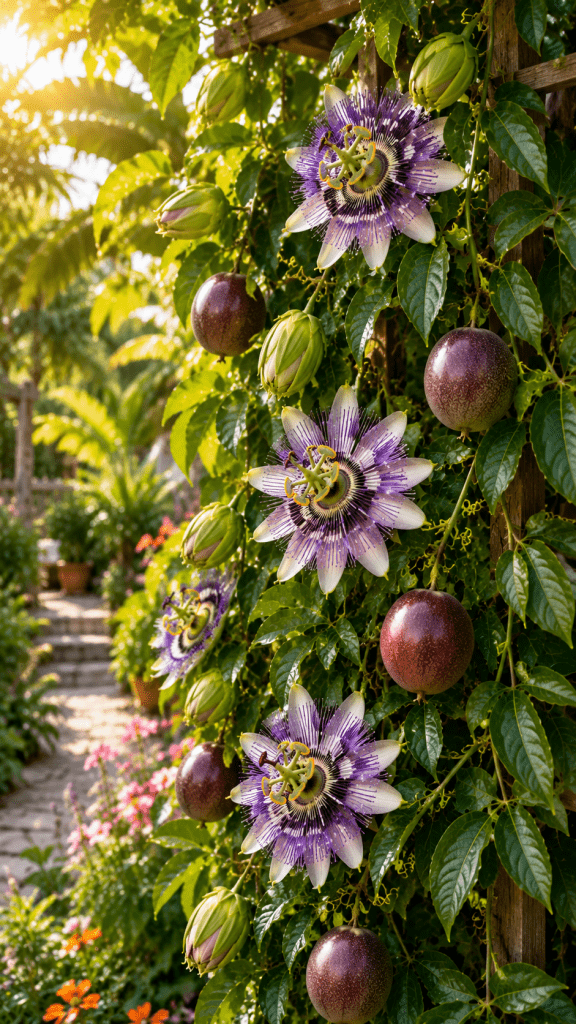
This species produces the famous purple passion fruits commonly sold in grocery stores. Besides offering attractive white-and-purple flowers, it rewards gardeners with aromatic fruits packed with juicy pulp.
The fruits are rich in vitamin C, antioxidants, and dietary fiber, making this species both ornamental and productive.
Because it originates from tropical climates, it performs best in warm regions with plenty of sunshine.
Best features
- 🍇 Produces edible passion fruit
- 🌸 Attractive flowers
- 🌞 Heavy fruit production
- 🌿 Fast-growing vine
- 🍹 Excellent for fresh juice and desserts
Many gardeners appreciate growing a plant that combines landscaping beauty with practical food production.
Comparison of the Best 3 Passionflower Plant Varieties
| Variety | Flower Color | Edible Fruit | Cold Tolerance | Best For |
|---|---|---|---|---|
| Purple Passionflower (P. incarnata) | Purple | Yes | High | Wildlife gardens |
| Blue Passionflower (P. caerulea) | Blue and White | Occasionally | Moderate | Decorative climbing vine |
| Purple Passion Fruit (P. edulis) | White and Purple | Yes | Low | Fruit production |
How to Choose the Right Passionflower Plant
Choosing the ideal Passionflower Plant depends on more than appearance. Climate, available space, maintenance expectations, and desired benefits all influence which variety performs best.
Gardeners living in cooler climates often enjoy greater success with Purple Passionflower because of its winter hardiness. Those seeking dramatic landscaping features frequently prefer Blue Passionflower, while anyone interested in harvesting fruit naturally gravitates toward Purple Passion Fruit.
Think about how the vine will be used in the garden. A pergola, arbor, trellis, or fence provides excellent support and allows the plant to showcase its climbing habit. Smaller gardens may benefit from container-grown specimens trained on decorative obelisks or compact trellises.
Considering these factors before planting helps ensure years of healthy growth and abundant flowering.
Ideal Growing Conditions for a Passionflower Plant
Providing the proper environment dramatically improves flowering and overall plant health.
🌞 Sunlight
Passionflowers perform best with six to eight hours of direct sunlight every day.
Morning sun combined with light afternoon shade works well in regions experiencing intense summer heat. Too much shade often results in lush leaves but very few flowers.
🌱 Soil
Well-draining soil is essential.
A fertile loamy soil enriched with compost encourages vigorous root development while reducing drainage problems.
Ideal characteristics include:
- Rich organic matter
- Slightly acidic to neutral pH
- Excellent drainage
- Moderate moisture retention
Heavy clay soils should be improved before planting.
💧 Water
Young plants require consistent watering while establishing roots.
Once mature, many passionflower species tolerate short dry periods, although regular watering produces more flowers and healthier foliage.
Deep watering encourages stronger root systems than frequent shallow irrigation.
🌡️ Temperature
Different species vary greatly in cold tolerance.
Tropical passionflowers appreciate temperatures between 65°F and 85°F (18°C–29°C).
Hardier varieties survive occasional frost but often benefit from winter mulch.
How to Plant a Passionflower Plant Successfully
Planting correctly sets the stage for years of healthy growth.
Begin by selecting a sunny location with strong vertical support nearby.
Dig a hole approximately twice the width of the root ball while maintaining the same planting depth.
Mix compost into the excavated soil before backfilling.
After planting:
- 💧 Water thoroughly
- 🌱 Apply organic mulch
- 🪴 Install a sturdy trellis
- 🌿 Guide young vines toward supports
Avoid planting directly against walls without airflow, as improved ventilation helps prevent fungal issues.
Passionflower Plant Care Throughout the Seasons
Proper seasonal maintenance keeps vines vigorous year after year.
Spring
Spring marks the beginning of rapid growth.
Apply balanced fertilizer, inspect for winter damage, and prune dead stems.
Fresh mulch conserves moisture while suppressing weeds.
Summer
Summer is flowering season.
Continue deep watering during dry weather.
Guide new shoots onto supports to maintain an attractive appearance.
Deadheading isn’t essential but may improve the vine’s tidy look.
Autumn
Flowering gradually slows.
Reduce fertilizer applications while allowing fruits to ripen naturally.
Collect seeds from mature fruits if propagation is desired.
Winter
Cold-climate gardeners should protect roots with mulch.
Container plants may require relocation to sheltered locations before severe freezes arrive.
Important Note: Passionflower vines grow quickly and can become surprisingly vigorous. Regular pruning and sturdy support structures help keep growth manageable while encouraging healthier flowering and better airflow.
How to Fertilize a Passionflower Plant
Balanced nutrition supports continuous blooming.
During spring, apply a slow-release balanced fertilizer.
Avoid excessive nitrogen because it encourages leaf production at the expense of flowers.
Many gardeners also enrich the soil annually using:
- 🌿 Compost
- 🐄 Well-rotted manure
- 🍂 Leaf mold
- 🌱 Organic mulch
Organic amendments improve soil structure while feeding beneficial microorganisms.
Common Problems and Solutions
Even healthy vines occasionally encounter challenges.
Yellow Leaves
Possible causes include:
- Overwatering
- Poor drainage
- Nutrient deficiencies
- Root stress
Improving drainage usually solves many problems.
Few Flowers
Insufficient sunlight remains the most common cause.
Other possibilities include:
- Too much nitrogen
- Excessive pruning
- Immature plants
- Inadequate warmth
Pests
Occasionally encountered insects include:
- 🐛 Caterpillars
- 🕷️ Spider mites
- 🪰 Whiteflies
- 🪲 Aphids
Healthy plants typically recover well from minor infestations.
Natural predators often provide effective biological control.
Diseases
Good airflow helps reduce fungal diseases.
Avoid wetting leaves during watering whenever possible.
Prompt removal of infected foliage minimizes disease spread.
How to Propagate a Passionflower Plant
Propagation allows gardeners to expand collections without purchasing additional plants.
Stem Cuttings
Stem cuttings remain the easiest method.
Healthy semi-hardwood stems root successfully when placed in moist propagation mix.
Warm temperatures and consistent humidity improve success rates.
Seeds
Growing from seed requires patience.
Fresh seeds germinate more reliably than older stored seeds.
Scarifying the seed coat or soaking seeds overnight often improves germination.
Layering
Layering works exceptionally well because vines naturally root where stems contact moist soil.
Once rooted, the new plant can be separated from the parent.
Landscaping Ideas Using a Passionflower Plant
A Passionflower Plant offers remarkable design flexibility.
Popular landscape applications include:
🌿 Pergolas covered in flowering vines
🏡 Privacy screens along fences
🌸 Cottage garden accents
🌳 Tropical-themed gardens
🪴 Decorative patio containers
🌼 Butterfly gardens
🌞 Sunny courtyard walls
Combining passionflowers with complementary plants such as jasmine, climbing roses, mandevilla, or clematis creates season-long interest while increasing biodiversity.
Wildlife Benefits of a Passionflower Plant
One of the greatest advantages of growing passionflowers is their ecological value.
Butterflies depend on certain species as host plants for egg laying.
Native bees eagerly visit the intricate flowers for nectar and pollen.
In suitable regions, hummingbirds also become frequent visitors.
Growing passionflowers therefore contributes not only to a beautiful landscape but also to healthier local ecosystems.
Gardeners interested in pollinator-friendly landscapes often consider passionflowers among the most rewarding flowering vines available.
Frequently Asked Questions About Passionflower Plant
Does every Passionflower Plant produce edible fruit?
No. While many species develop fruit, not all produce fruits considered tasty or suitable for eating. Passiflora edulis is the primary commercial fruit-producing species.
How fast does a Passionflower Plant grow?
Under ideal conditions, many passionflower vines can grow several feet each growing season and quickly cover trellises or fences.
Can a Passionflower Plant grow in containers?
Yes. Large containers with excellent drainage and sturdy climbing supports work very well, especially for patios and balconies.
Does the Passionflower Plant attract pollinators?
Absolutely. Bees, butterflies, and other beneficial insects frequently visit the spectacular flowers.
Is pruning necessary?
Yes. Annual pruning improves airflow, controls size, encourages fresh growth, and often increases flowering.
Final Thoughts
The Passionflower Plant combines dramatic flowers, vigorous climbing growth, ecological value, and, in many cases, delicious fruit into one extraordinary garden plant. Whether selecting the hardy Purple Passionflower, the striking Blue Passionflower, or the productive Purple Passion Fruit vine, each variety offers unique strengths that can transform ordinary outdoor spaces into lush, tropical-inspired retreats.
Choosing among the Best 3 Passionflower Plant varieties depends on personal gardening goals. Those seeking abundant wildlife activity may favor Passiflora incarnata, gardeners focused on ornamental elegance often appreciate Passiflora caerulea, and fruit enthusiasts will find Passiflora edulis especially rewarding. With the right location, proper support, consistent watering, and seasonal care, these remarkable vines provide years of spectacular blooms, thriving greenery, and unforgettable garden beauty.