Growing plants indoors is one of the easiest and most rewarding ways to bring nature into your home. 🌿 Whether you live in a small apartment, a busy city, or simply want to enjoy greenery year-round, growing plants indoors can improve air quality, reduce stress, and create a beautiful living space.
Many people think indoor gardening is difficult, but the truth is that with the right plants and setup, anyone can create a thriving indoor garden. The secret is choosing plants that match your environment and understanding their basic needs.
In this guide, you’ll discover the Best 3 Growing Plants Indoors Ideas that are both beautiful and practical. These ideas work for beginners and experienced plant lovers alike, helping you create a stunning indoor oasis without turning your home into a jungle of maintenance problems.
Why Growing Plants Indoors Is More Popular Than Ever
Indoor gardening has exploded in popularity over the past few years. 🏡 People are spending more time at home and realizing how much plants can improve both their environment and their well-being.
Plants add color, texture, and life to rooms that might otherwise feel plain or sterile. They soften hard edges, create visual interest, and make spaces feel more welcoming.
Research also suggests that being around plants can help reduce stress levels and improve mood. Even a small collection of indoor plants can create a calming atmosphere that makes your home feel more peaceful.
Another major advantage is air quality. While plants won’t completely purify indoor air, they can contribute to a healthier indoor environment by increasing humidity and helping create a fresher feeling space.
Before choosing your indoor plants, it’s important to understand the growing conditions available in your home.
Understanding Light Requirements Before Growing Plants Indoors
Light is the most important factor for indoor gardening success. ☀️
Different plants require different amounts of sunlight. Some thrive in bright windows, while others are perfectly happy in dim corners.
Here is a simple guide:
| Light Level | Description | Best Plant Types |
|---|---|---|
| Bright Direct Light | 6+ hours of direct sun | Succulents, Cactus, Citrus |
| Bright Indirect Light | Near sunny window without harsh rays | Monstera, Philodendron, Fiddle Leaf Fig |
| Medium Light | Filtered daylight | Pothos, ZZ Plant, Spider Plant |
| Low Light | Few natural light sources | Snake Plant, Cast Iron Plant |
Understanding your available light helps prevent one of the biggest indoor gardening mistakes: choosing plants that cannot thrive in your environment.
Best 3 Growing Plants Indoors Ideas
🥉 Growing Plants Indoors Idea #3 Create a Low Maintenance Green Corner
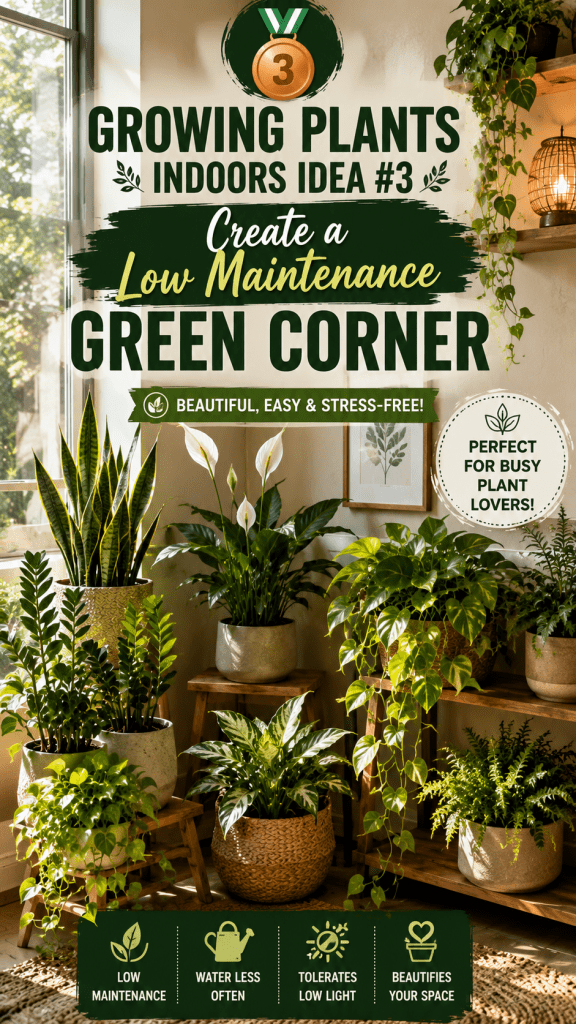
One of the easiest ways to start growing plants indoors is by creating a dedicated green corner filled with hardy plants.
This approach is ideal for beginners because it focuses on plants that tolerate occasional neglect. Life gets busy, and not everyone remembers watering schedules perfectly. Fortunately, several plants can handle missed waterings and inconsistent attention.
A green corner can be created in a living room, bedroom, office, or even a hallway. The goal is to gather several plants together to create visual impact while making care routines simpler.
Some excellent low-maintenance choices include:
- Snake Plant 🌱
- ZZ Plant 🌿
- Pothos 🍃
- Cast Iron Plant 🌾
- Chinese Evergreen 🌼
These plants tolerate lower light levels and generally require less watering than many other indoor varieties.
Grouping plants together also creates a more humid microclimate. Many tropical houseplants naturally grow in humid forests, so placing them near each other helps recreate those conditions.
A well-designed green corner can instantly transform an empty space into a focal point that feels vibrant and alive.
How To Style Your Indoor Green Corner
Styling is just as important as plant selection.
Use planters with different heights and textures to create visual interest. Place taller plants in the back and smaller plants in front.
Mix materials such as:
- Ceramic pots
- Woven baskets
- Wooden stands
- Metal containers
The variety creates a curated designer look rather than a collection of random plants.
Adding a floor lamp nearby can also enhance the visual appeal during evening hours while providing supplemental lighting if needed.
The result is a relaxing indoor retreat that requires surprisingly little maintenance.
🥈 Growing Plants Indoors Idea #2 Build a Stunning Indoor Vertical Garden
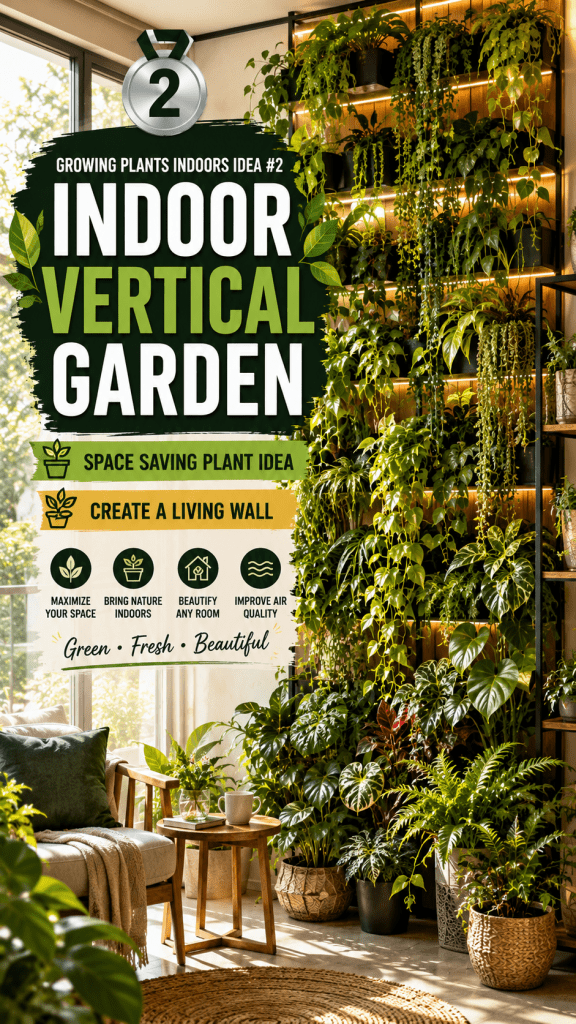
When floor space is limited, thinking vertically can completely change your indoor gardening experience. 🌿✨
A vertical garden allows you to grow dozens of plants without sacrificing valuable living space.
This concept works particularly well in apartments and smaller homes where every square foot matters.
Vertical gardens can be created using:
- Wall-mounted shelves
- Hanging planters
- Pegboard systems
- Ladder shelves
- Living wall structures
The beauty of a vertical garden is that it transforms an ordinary wall into a living piece of art.
Trailing plants are especially effective in these setups because they create cascading greenery that adds movement and drama.
Excellent choices include:
- Golden Pothos
- String of Pearls
- Heartleaf Philodendron
- English Ivy
- String of Hearts
The varying lengths and textures create an eye-catching display that often becomes the centerpiece of an entire room.
Benefits of Growing Plants Indoors Vertically
Vertical gardening offers more than just visual appeal.
One major advantage is improved organization. Instead of plants occupying tables, countertops, and floors, everything is arranged neatly on a dedicated structure.
Another benefit is easier maintenance. Plants are easier to inspect for pests, monitor for watering needs, and prune when they are displayed at eye level.
Vertical gardens also maximize light exposure. By positioning plants at different heights, you can ensure each one receives appropriate sunlight.
This setup often allows homeowners to grow a wider variety of species than they could using traditional arrangements.
⚠️ Important Note: Always ensure wall-mounted planters and shelves are securely anchored into studs or appropriate wall supports before adding heavy pots and moist soil.
Best Locations for Indoor Vertical Gardens
Location matters greatly when building a vertical garden.
Ideal locations include:
- Bright living room walls
- Home office spaces
- Kitchen corners
- Dining room accent walls
- Sunrooms
Avoid placing large vertical gardens directly above electronics or furniture that could be damaged by occasional dripping water.
Good airflow is equally important because crowded plants can develop fungal problems if air circulation is poor.
When properly designed, a vertical garden creates a dramatic natural feature that rivals expensive artwork.
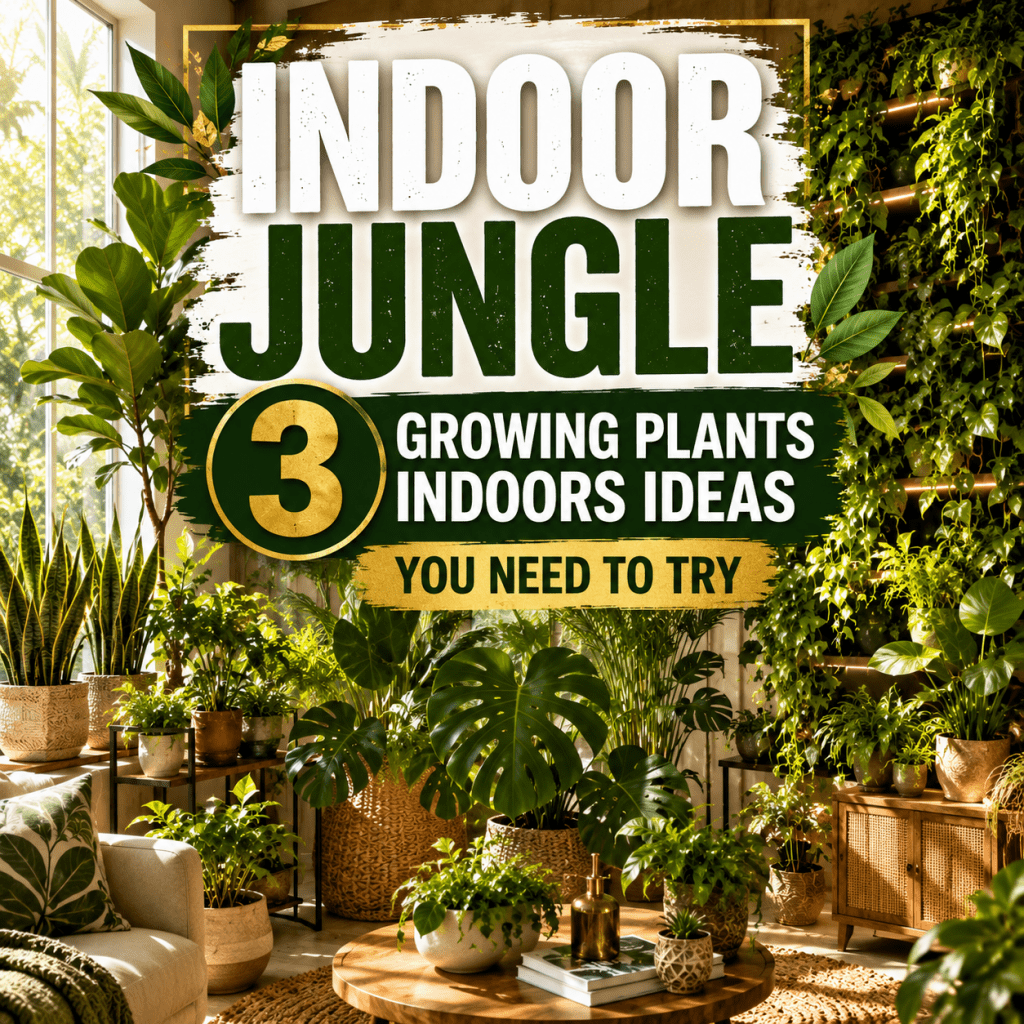
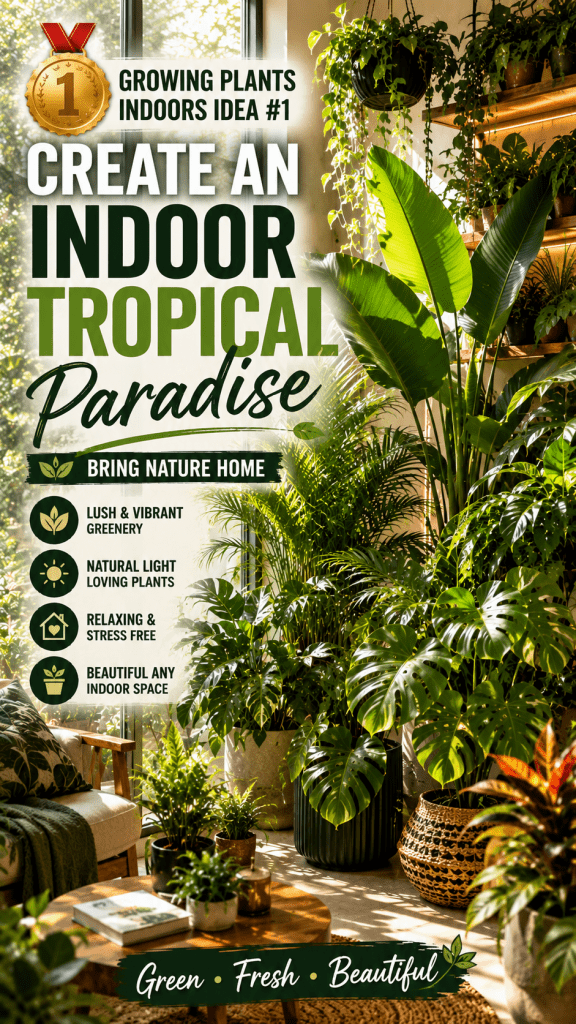
🥇 Growing Plants Indoors Idea #1 Create an Indoor Tropical Paradise
If you’re looking for the ultimate indoor gardening project, nothing beats creating a tropical paradise inside your home. 🌴🏡✨
This approach transforms ordinary rooms into lush retreats filled with large-leaf plants, vibrant textures, and a relaxing vacation-like atmosphere.
The tropical style has become one of the most popular interior design trends because it combines beauty, comfort, and nature.
The foundation of a tropical indoor garden starts with large statement plants such as:
- Monstera Deliciosa
- Bird of Paradise
- Fiddle Leaf Fig
- Rubber Plant
- Kentia Palm
These larger specimens establish the structure of the space and immediately create a luxurious appearance.
Once the foundation is established, medium-sized plants can fill gaps and add layers.
Popular choices include:
- Philodendrons
- Calatheas
- Alocasias
- Ferns
- Peace Lilies
The layering effect mimics the structure of a natural tropical forest.
Creating the Perfect Tropical Environment
Most tropical plants originate from warm, humid environments.
To recreate those conditions indoors, focus on:
- Consistent temperatures
- Moderate humidity
- Bright indirect light
- Regular watering
- Good drainage
Humidity is often the biggest challenge.
Simple solutions include:
- Humidifiers
- Pebble trays
- Grouping plants together
- Occasional misting
Maintaining proper humidity helps prevent brown leaf edges and encourages vigorous growth.
The extra effort pays off because tropical plants often develop larger leaves and richer colors when environmental conditions are optimized.
Decorating Around Tropical Indoor Plants
Indoor tropical gardens are most effective when integrated into your overall decor.
Natural materials work particularly well, including:
- Rattan furniture
- Bamboo accents
- Wooden tables
- Linen fabrics
- Woven baskets
Neutral colors allow plant foliage to become the star of the room.
Strategically placed lighting can highlight dramatic leaf shapes and create beautiful shadows in the evening.
Adding a few tropical-inspired decorative elements completes the atmosphere without making the space feel themed or artificial.
The goal is to create a sophisticated environment that feels connected to nature.
Common Mistakes When Growing Plants Indoors
Even experienced plant owners make mistakes. 🌱
One of the most common errors is overwatering.
Many people assume plants need water on a strict schedule, but soil moisture should guide watering decisions instead.
Another mistake is choosing plants based solely on appearance rather than environmental suitability.
A beautiful plant that requires bright sunlight will struggle in a dark apartment.
Ignoring drainage is another major issue. Pots without drainage holes can trap excess water and lead to root rot.
Finally, many plant owners underestimate the importance of cleaning leaves. Dust accumulation can reduce photosynthesis and make plants appear unhealthy.
Regular inspection and maintenance help prevent these problems before they become serious.
Essential Indoor Plant Care Checklist
To keep your indoor garden thriving, follow this simple checklist:
Weekly Tasks
✅ Check soil moisture
✅ Inspect for pests
✅ Rotate plants for even growth
✅ Remove dead leaves
Monthly Tasks
✅ Clean leaves
✅ Inspect roots if necessary
✅ Adjust plant placement seasonally
✅ Evaluate light conditions
Seasonal Tasks
✅ Repot root-bound plants
✅ Fertilize during active growth
✅ Prune excessive growth
✅ Deep clean plant containers
Consistency is more important than perfection.
Small regular efforts produce healthier plants than occasional intensive care sessions.
Final Thoughts on Growing Plants Indoors
Growing plants indoors is one of the most rewarding ways to enhance your home environment. 🌿✨ Whether you choose a simple low-maintenance green corner, an impressive vertical garden, or a luxurious tropical paradise, indoor plants can dramatically improve both the appearance and atmosphere of your living space.
The key to success is matching plants to your environment and committing to basic maintenance habits. Start small, learn what works in your home, and gradually expand your collection as your confidence grows.
With the right approach, growing plants indoors can transform ordinary rooms into beautiful, relaxing spaces filled with life, color, and natural beauty throughout the year.