Pollinator Garden Ideas can completely transform an ordinary backyard into a colorful, thriving outdoor paradise where flowers bloom throughout the growing season, bees gather nectar, hummingbirds explore vibrant blossoms, and beneficial insects bring natural energy to the landscape. Instead of creating another traditional flower bed that looks beautiful for only a few weeks, a thoughtfully designed pollinator garden combines breathtaking landscaping with a healthier, more balanced backyard ecosystem.
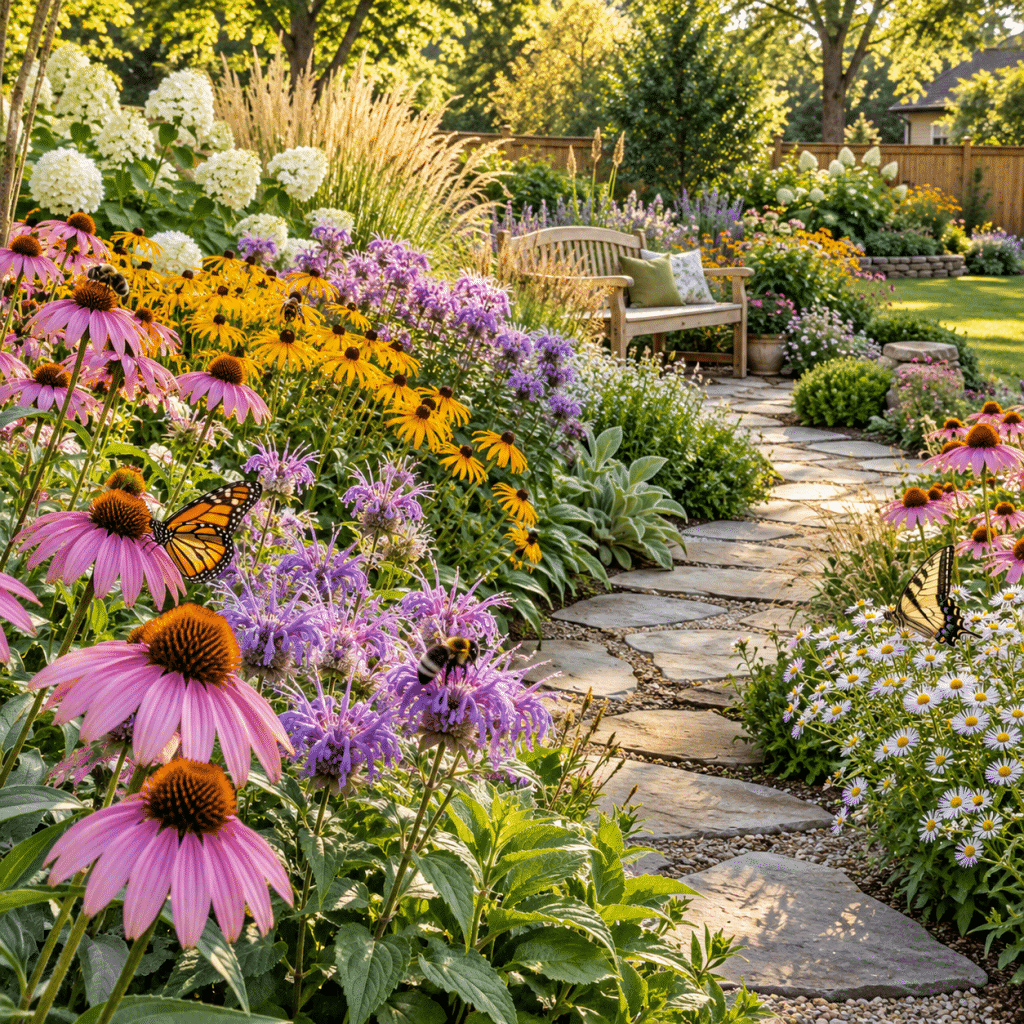
Imagine stepping outside on a warm morning and discovering golden flowers glowing in the sunlight, delicate purple blossoms swaying between ornamental grasses, and busy native bees moving naturally through waves of colorful flowers. 🌸 Every corner feels alive, yet the overall landscape remains elegant, organized, and surprisingly easy to maintain.
The secret behind successful pollinator-friendly landscaping is not simply planting as many flowers as possible. It involves combining the right plants, thoughtful garden architecture, seasonal flowering patterns, and wildlife-friendly features into one harmonious outdoor environment.
Whether your property includes a spacious suburban lawn, a compact backyard, or a productive kitchen garden, the following three inspiring designs offer practical ways to create an extraordinary landscape that supports bees, butterflies, hummingbirds, moths, and other important pollinating creatures.
From an elegant flowering border to a productive edible landscape and a fascinating miniature habitat sanctuary, these Top 3 Pollinator Garden Ideas demonstrate how ecological gardening can become one of the most beautiful features of a modern American backyard.
🌼 Why Pollinator Garden Ideas Are Transforming Modern Backyard Landscaping
Traditional residential landscaping often emphasizes perfectly trimmed lawns, decorative shrubs, and seasonal flowers chosen primarily for appearance. Although these features can create attractive outdoor spaces, they do not always provide the food, shelter, and nesting opportunities that local pollinators need.
Pollinator gardens offer a more environmentally supportive approach without sacrificing sophisticated garden design. By incorporating nectar-rich flowers, pollen-producing plants, native vegetation, and protected nesting areas, homeowners can create landscapes that are beautiful and ecologically functional.
Unlike a garden dedicated primarily to attracting butterflies, a broader pollinator garden considers the diverse requirements of native bees, hoverflies, beetles, moths, butterflies, and hummingbirds where they occur naturally.
These visitors have different feeding preferences, activity periods, and habitat needs. A landscape that accommodates this diversity can contribute more meaningfully to local wildlife than a collection of ornamental flowers alone.
The Beauty of a Garden Designed for Every Season
One of the most appealing aspects of pollinator-friendly landscaping is its potential to remain visually interesting across multiple seasons.
Early-flowering plants introduce delicate color when the garden begins awakening in spring. Summer brings abundant blooms, rich foliage, and energetic wildlife activity, while autumn-flowering perennials create beautiful displays before colder weather arrives.
Even winter can offer architectural interest through dried seed heads, ornamental grass silhouettes, and naturalistic planting arrangements.
🌿 Design inspiration: Instead of relying on one spectacular flowering period, combine plants with overlapping bloom times so the garden provides nectar and pollen across as much of the local growing season as possible.
This approach creates a more dynamic landscape while reducing periods when visiting pollinators have limited food resources.
How Thoughtful Landscaping Makes Pollinator Gardens Look Luxurious
Wildlife-friendly gardens do not have to appear messy, overgrown, or randomly planted.
Some of the most visually sophisticated naturalistic landscapes use carefully repeated flower varieties, restrained color palettes, clean pathways, structured borders, and contrasting plant heights.
A low stone edging can frame an abundant planting area. A narrow gravel walkway can create a graceful transition between flowering sections. Repeated groups of native perennials can provide the same visual consistency found in professionally designed ornamental gardens.
The key is combining natural abundance with intentional organization.
When structure and ecological value work together, a pollinator garden can become a memorable backyard feature rather than simply another flower bed.
🥇 Top 1 Pollinator Garden Ideas With a Four Season Flowering Ribbon and Elegant Native Plant Borders
The first design introduces a beautifully organized flowering ribbon that travels along the perimeter of a backyard, creating a continuous visual connection between different sections of the landscape.
Rather than placing small flower clusters randomly throughout the lawn, this concept uses long, gently curving planting beds filled with coordinated groups of native flowering plants.
The resulting landscape feels intentional, romantic, and surprisingly architectural.
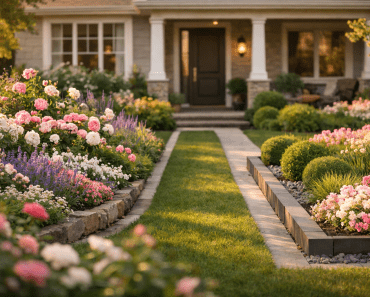
Imagine an elegant American backyard with a sweeping flower border following a curved lawn edge. Soft purple blooms rise above creamy white flowers, golden yellow blossoms create glowing accents, and delicate grasses bring movement into the arrangement.
The design is particularly attractive because it preserves open space in the center of the yard while turning the boundaries into richly layered botanical displays.
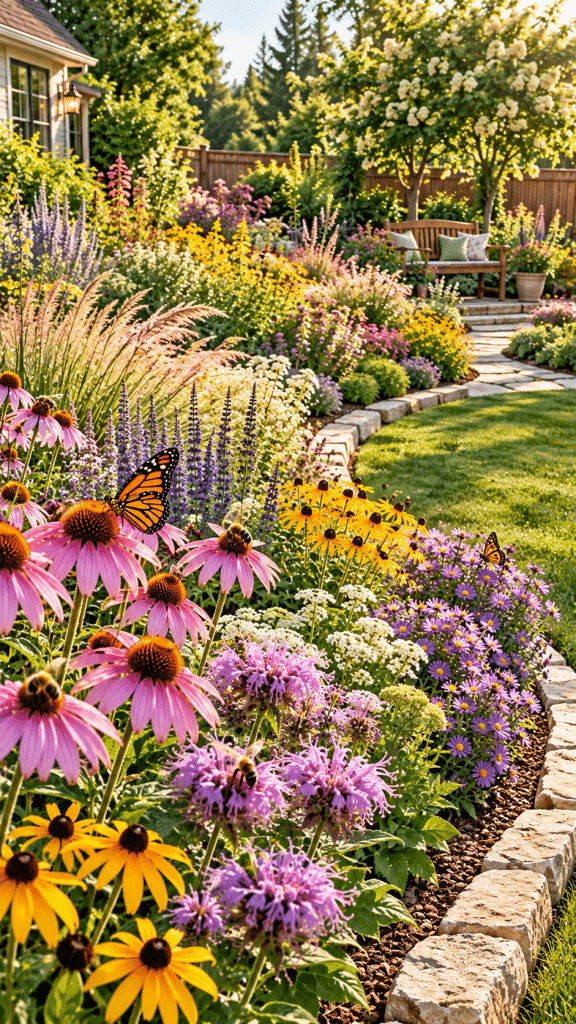
🌸 Create a Flowing Garden Border With Repeated Flowering Groups
A successful flowering ribbon begins with a clear landscape shape.
Instead of constructing several disconnected garden beds, establish one generous border that follows an existing fence, patio edge, or lawn boundary.
Gentle curves can soften the appearance of rectangular suburban properties and create an inviting sense of movement. Straight borders can work equally well in contemporary homes where geometric architecture is more appropriate.
Plant flowers in visible groups rather than scattering single specimens throughout the border.
For example, a broad cluster of purple coneflowers might be followed by a generous sweep of mountain mint, then a section of goldenrod or native asters.
Repeating selected plants at intervals gives the entire border a cohesive rhythm.
It also makes large patches of pollen and nectar easier for foraging insects to locate.
For a more natural appearance, allow individual clusters to overlap slightly while maintaining enough spacing for mature plants to develop without excessive competition.
🌺 Build a Seasonal Blooming Sequence That Supports Pollinators
The defining feature of this design is its progression of flowering plants throughout the year.
A garden containing only summer-blooming flowers may look magnificent during the warmest months, but it can leave early and late-season pollinators with fewer resources.
Instead, choose locally appropriate plants that bloom at different times.
In many temperate regions of the United States, spring bloomers might include woodland phlox in suitable conditions, native penstemons, and flowering shrubs such as serviceberry.
Summer can introduce purple coneflower, wild bergamot, mountain mint, and native blazing stars.
Late-season interest may come from asters, goldenrods, and regionally appropriate perennial sunflowers.
These combinations create a flowing visual transition rather than a single dramatic flowering event.
Seasonal planting inspiration for a temperate American pollinator border
| Blooming period | Example plants | Landscape appearance | Wildlife value |
|---|---|---|---|
| Early spring | Serviceberry, native penstemon, suitable native phlox | Soft whites, pinks, and delicate spring colors | Early nectar and pollen |
| Late spring to early summer | Beardtongue, wild indigo, locally native flowering herbs | Upright blossoms and fresh foliage | Supports active spring pollinators |
| Midsummer | Purple coneflower, wild bergamot, mountain mint | Vibrant purple, pink, and white flower masses | Diverse nectar and pollen sources |
| Late summer | Blazing star, native perennial sunflowers | Vertical purple flowers and warm golden accents | Sustains summer foraging |
| Fall | Native asters and goldenrods | Rich violet, yellow, and autumn textures | Important late-season floral resources |
| Winter | Standing perennial stems and native grasses | Architectural silhouettes and textured seed heads | Shelter and overwintering habitat |
Plant suitability and flowering dates vary by climate, location, and species. Select plants native to your particular region rather than treating this table as a universal planting list.
This seasonal approach makes the border more useful to local wildlife and produces a landscape that continually changes in character.
It also encourages a more thoughtful approach to gardening because plant selection becomes part of a coordinated year-round strategy.
🌿 Add Ornamental Grasses for Movement and Architectural Depth
Flowers provide color, but grasses introduce another essential design element: movement.
A few carefully chosen native bunchgrasses can make the entire garden appear more natural and sophisticated.
Little bluestem, for example, can create beautiful upright texture in regions where it is native and suited to the site. Prairie dropseed offers a softer, fountain-like appearance that complements flowering perennials.
Position taller grasses toward the rear of the border, where their fine foliage can contrast with broad flowering plants.
Medium-height grasses may be placed between flower clusters to create transitions, while shorter species can soften pathways and garden edges.
Native grasses can also contribute wildlife benefits beyond appearance, including protective cover and habitat for certain insects.
As the growing season ends, their dried foliage and seed heads produce attractive winter structure.
The result is a garden that remains visually interesting even when flowers are no longer blooming.
🪨 Introduce Elegant Edging Without Making the Landscape Feel Artificial
A pollinator border can look much more refined when the outer boundary is clearly defined.
Natural stone, brick, or a neatly maintained lawn edge can create a simple frame around the planting area.
For a traditional farmhouse-style backyard, weathered stone edging adds warmth and rustic character.
For a contemporary property, a restrained steel edge or straight-cut stone border can establish a cleaner architectural appearance.
Avoid covering every inch of soil with heavy decorative materials. Some native bees require access to exposed, undisturbed soil for nesting, so appropriate open-soil patches should remain available.
The most successful borders balance neat visual boundaries with an interior that allows plants and wildlife to function naturally.
✨ Why This Pollinator Garden Design Looks So Beautiful
The greatest advantage of the four-season flowering ribbon is its ability to make a yard feel professionally landscaped without requiring an entirely new garden layout.
It works especially well around fences, along sunny property boundaries, beside terraces, and around existing lawn areas.
The garden gains an abundant floral atmosphere while retaining practical open space for outdoor activities.
For homeowners seeking a sophisticated balance between ornamental beauty, seasonal interest, and ecological gardening, this flowing border is an excellent starting point.
🥈 Top 2 Pollinator Garden Ideas With an Edible Flower Corridor and Productive Kitchen Garden Landscape
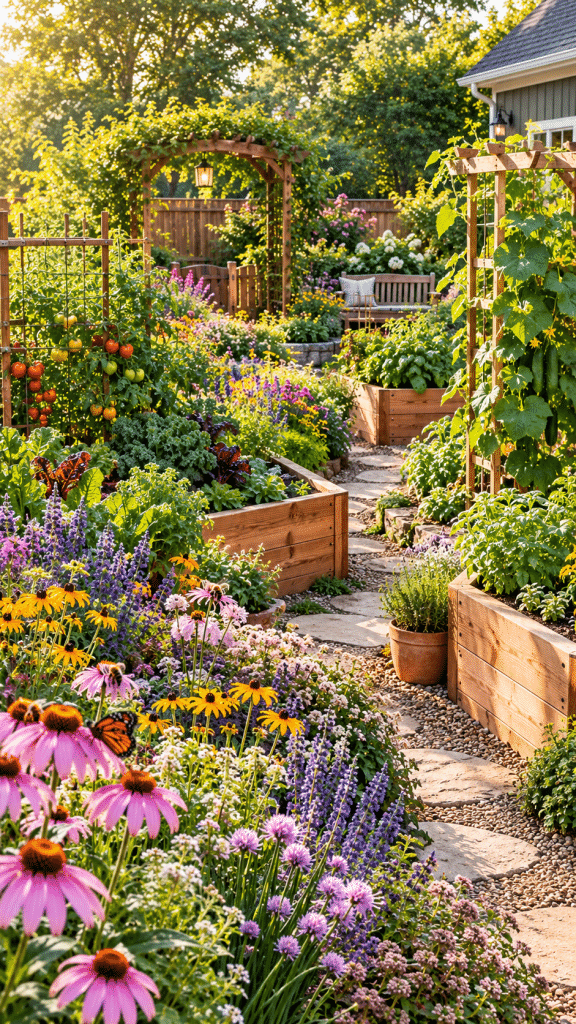
The second concept combines the visual charm of a decorative flower garden with the practical value of growing herbs, vegetables, and fruit.
Instead of separating edible plants from ornamental landscaping, this design creates a continuous flowering corridor around a productive kitchen garden.
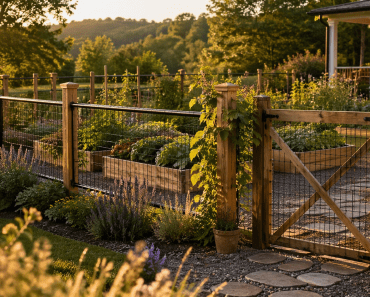
Imagine a sunny backyard featuring beautifully aligned cedar raised beds, tidy gravel pathways, fragrant herb borders, and clusters of colorful flowers positioned between vegetable-growing areas.
Tall flowering herbs create soft transitions between planting beds, while compact native flowers line the walkways.
The overall atmosphere resembles a sophisticated modern homestead garden where beauty and productivity support one another.
This approach is particularly appealing for homeowners who want their outdoor spaces to serve more than one purpose.
🍅 Combine Vegetable Beds With Flowering Planting Strips
Begin by organizing the edible portion of the garden into accessible planting beds.
Raised cedar beds offer a structured appearance, although traditional in-ground vegetable rows can work just as effectively.
Arrange the beds so gardeners can comfortably reach crops without stepping onto cultivated soil.
Between selected beds, create narrow flowering strips using regionally appropriate nectar and pollen plants.
These strips should receive adequate sunlight and should not interfere with access, irrigation, or the mature growth of vegetable crops.
A particularly attractive arrangement uses flowering plants at the corners of each raised bed, with a longer pollinator border positioned along the outer garden boundary.
For example, compact native flowers may soften the base of tomato trellises, while flowering herbs establish fragrant pathways nearby.
This layout allows the garden to feel visually complete even when certain vegetable beds are temporarily empty.
🌼 Use Flowering Herbs to Connect Beauty With Function
Herbs are especially useful in edible pollinator gardens because many produce flowers that attract visiting insects when allowed to bloom.
Basil, oregano, thyme, chives, and other suitable culinary herbs can become valuable elements of the flowering corridor.
Some herbs are particularly attractive when planted in repeated groups along a gravel pathway or at the ends of vegetable beds.
Imagine a row of flowering chives creating delicate lavender-colored accents beside a cedar planter.
Nearby, oregano produces clusters of small blossoms, while thyme softens the edges of a stone walkway.
These details create a beautifully layered landscape that feels both practical and carefully styled.
However, not every herb should be allowed to flower continuously if the primary goal is harvesting flavorful foliage.
A thoughtful compromise involves maintaining some plants for culinary harvest while allowing selected plants to bloom.
This creates an attractive balance between food production and pollinator resources.
🐝 Design Flowering Corridors That Encourage Beneficial Insect Activity
One of the most practical advantages of placing flowers near vegetables is the opportunity to support a variety of visiting insects.
Bees and other pollinators can contribute to the pollination of crops that depend on insects.
Squash, cucumbers, pumpkins, and melons are familiar examples of plants that benefit from insect pollination.
Tomatoes have different pollination requirements and are often self-fertile, although some bees can help release pollen through vibration.
Flowering plants may also attract beneficial insects such as hoverflies and certain parasitic wasps, whose immature stages can help suppress some garden pests.
These relationships should not be considered a guarantee of higher harvests or complete natural pest control.
Instead, they demonstrate why diverse flowering vegetation can become a valuable part of a more balanced growing environment.
🌻 Design inspiration: Position several generous flowering patches around the kitchen garden rather than relying on one isolated flower pot. Choose a succession of blooms so insects have resources before, during, and after the main vegetable flowering periods.
🌿 Create a Structured Herb Border Around Raised Garden Beds
A low herb border can provide one of the most elegant features of this garden concept.
Start with plants that remain relatively compact and tolerate the garden’s growing conditions.
In climates where thyme grows well, it can produce a low, textured edge along sunny pathways.
Chives introduce slender green leaves and distinctive round flowers. Oregano can create a fuller planting mass, although its spreading habit may require occasional trimming.
In warmer climates, choose locally suitable alternatives that tolerate heat and humidity.
Use repetition to make the planting feel intentional.
Instead of planting ten different herbs in a random pattern, repeat two or three compatible varieties in recognizable groups.
This approach creates visual harmony between the geometric raised beds and the softer botanical edges.
The contrast becomes especially beautiful when weathered timber, natural gravel, and fresh green foliage are combined.
🌺 Add Vertical Flowering Interest Without Competing With Vegetables
Vertical elements bring height and dimension to an edible landscape.
A simple wooden trellis can support climbing beans or another suitable edible climber, while upright flowering plants create a softer natural background.
The important consideration is sunlight.
Tall plants should be positioned so they do not unnecessarily shade vegetables that require full sun.
A trellis on the northern side of a garden in much of the Northern Hemisphere may help reduce shading of lower-growing crops, although the best position depends on the actual site.
Flowering plants with strong upright forms can also help define the ends of garden pathways.
Where appropriate, native blazing stars, penstemons, or other regionally suitable perennials can create dramatic vertical accents.
Together, these features give the kitchen garden a sense of depth and layered architecture.
💧 Include a Simple Water Feature for Visiting Insects
Water can complement a pollinator-friendly kitchen garden, particularly during warm and dry weather.
A shallow dish with clean water and stable pebbles or stones can provide landing surfaces for visiting insects.
Place it away from the busiest walking routes, and keep the water shallow.
Clean the container regularly to limit algae and mosquito breeding.
A large ornamental fountain is not necessary.
In fact, a simple, carefully positioned water source may suit the productive and practical character of the edible garden more naturally.
The feature should remain secondary to the most important habitat elements: flowering food sources, nesting opportunities, and protection from pesticides.
✨ Why This Pollinator Garden Design Is Perfect for Modern Homesteads
The edible flower corridor transforms a functional growing area into an attractive outdoor destination.
Its structured beds, fragrant herbs, colorful planting strips, and natural materials create the appeal of a professionally designed kitchen garden.
Homeowners can enjoy fresh produce while also creating additional opportunities for local pollinators and other beneficial insects.
This design is especially suitable for sunny suburban backyards, family kitchen gardens, and properties where both productive gardening and decorative landscaping are priorities.
Rather than treating vegetables and flowers as separate projects, the two become complementary parts of one beautiful garden.
🥉 Top 3 Pollinator Garden Ideas With a Mini Habitat Mosaic and Contemporary Wildlife Friendly Landscaping
The third design introduces a more unusual approach to pollinator gardening.
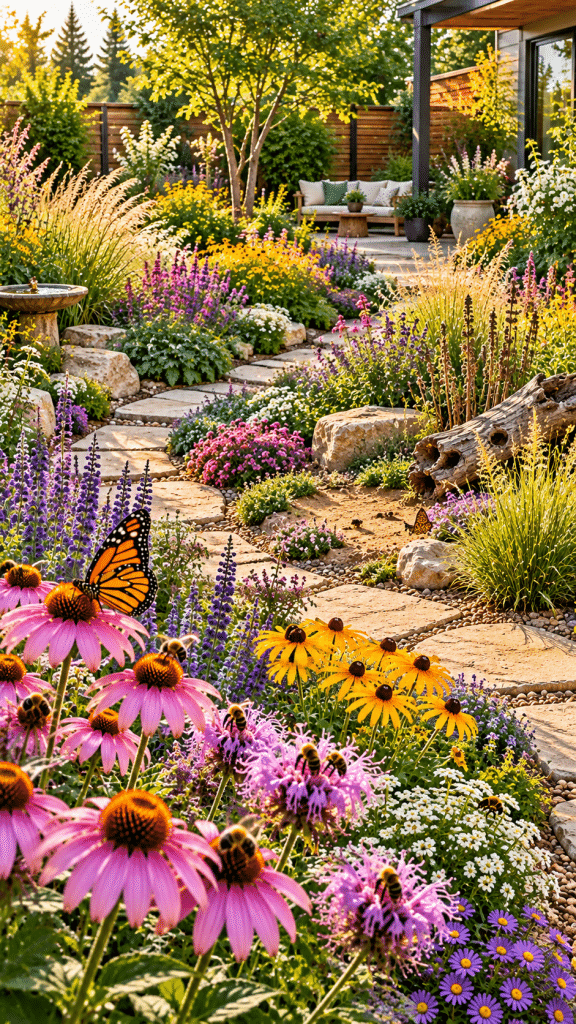
Instead of focusing primarily on large flower beds, this concept creates a miniature habitat mosaic using flowering pockets, exposed soil, natural stone, native grasses, hollow stems, and carefully arranged organic materials.
The result is a modern, artistic garden that celebrates the smaller details of the natural world.
Imagine an intimate sunny courtyard or compact backyard corner filled with sculptural clusters of flowering plants.
Warm-colored gravel pathways weave between low stone features, while soft purple and golden blooms create colorful highlights.
Small sections of exposed soil are intentionally incorporated into the planting design, and native grasses soften the harder landscape materials.
The atmosphere feels contemporary, calm, and beautifully natural.
More importantly, the garden offers resources beyond nectar and pollen.
🪨 Create Small Habitat Zones With Different Natural Textures
A habitat mosaic works by combining several complementary microhabitats within one cohesive landscape.
One section may feature nectar-rich flowers. Another might contain native grasses and leaf litter. A third area could include a stable patch of bare, well-drained soil.
These features provide different opportunities for insects to feed, shelter, or reproduce.
The design does not require a large property.
Even a relatively small garden can incorporate multiple habitat elements when space is organized thoughtfully.
The important consideration is ensuring that natural materials serve a practical ecological purpose rather than becoming purely decorative.
For example, a stone grouping can create visual interest and protected spaces, but it should not replace substantial flowering vegetation or suitable nesting resources.
Similarly, a small patch of exposed soil can be useful for certain ground-nesting bees, provided it remains undisturbed and accessible.
🐝 Design Bare Soil Nesting Pockets for Native Bees
One of the most overlooked pollinator garden features is exposed soil.
Many native bee species nest underground rather than in artificial bee houses.
These solitary bees often require relatively undisturbed, well-drained ground where they can excavate nesting tunnels.
A habitat mosaic can incorporate one or more sunny soil pockets surrounded by low-growing plants and small stones.
The bare ground should not be covered with landscape fabric, thick bark mulch, or dense vegetation.
Avoid regular digging, tilling, or watering practices that might disturb occupied nests.
A gentle slope with suitable drainage can be helpful, although different bee species have different preferences.
Because nesting requirements vary by location and species, an undisturbed soil patch should be considered one habitat opportunity rather than a guaranteed nesting site.
⚠️ Important Note: A successful pollinator garden should provide more than attractive flowers. Preserve suitable nesting habitat, choose regionally appropriate plants, and avoid routine pesticide use. Some native bees nest underground, while others use hollow or pithy stems. Do not assume that decorative bee hotels can replace natural habitat or that every commercially marketed pollinator plant is suitable for local ecosystems.
This small design decision can make the landscape more ecologically useful while introducing an unexpected educational feature.
It also creates an opportunity to appreciate the less visible lives of native insects.
🌾 Incorporate Standing Stems and Natural Overwintering Areas
Many gardeners traditionally cut every perennial stem to ground level at the end of the growing season.
Although this creates a tidy appearance, it can remove valuable shelter and potential nesting habitat.
Some cavity-nesting bees use hollow or pithy plant stems, while other insects overwinter within standing vegetation, fallen leaves, or protected ground-level debris.
A pollinator habitat mosaic can preserve selected stems through winter and into the following growing season.
Instead of allowing the entire garden to appear unmanaged, dedicate a clearly defined portion to overwintering habitat.
Native bunchgrasses can help disguise standing stems and provide an attractive structural backdrop.
A low stone border or carefully maintained pathway can reinforce the impression that the naturalistic planting is intentional.
In spring, avoid cutting everything back at once.
When management is necessary, stagger pruning and retain suitable stems so emerging insects have time to complete their development.
This approach introduces a more patient style of gardening in which plants are appreciated for their ecological roles as well as their appearance.
🌸 Use Compact Flowering Islands to Create a Colorful Mosaic
A miniature habitat garden still needs abundant flowers.
The strongest visual approach is to arrange flowering plants into several compact islands rather than distributing individual flowers randomly.
Each island can feature a coordinated combination of plant heights and flower shapes.
For example, one sunny section might contain compact native asters, a neighboring island might emphasize native penstemons, and another might feature golden-flowering perennials appropriate to the region.
Choose plants based on mature size, light requirements, soil conditions, and local ecological value.
Repeating a limited collection of plants throughout the mosaic can help connect the individual sections visually.
The result resembles a curated botanical composition rather than an ordinary mixed flower bed.
Flowers with different shapes can also provide resources to pollinators with different feeding behaviors and physical characteristics.
Open, accessible blooms may support a broad selection of insects, while tubular flowers can attract certain long-tongued bees and hummingbirds where those birds naturally occur.
A diverse planting arrangement makes the garden both visually interesting and functionally richer.
🏡 Balance Modern Hardscaping With Living Habitat
One reason this design feels distinctive is its combination of contemporary materials and naturalistic planting.
Gravel, stone, weathered timber, and simple geometric edging can create an elegant architectural framework.
However, excessive hardscaping can reduce the available area for flowering plants and habitat.
A successful balance allows vegetation to remain the main feature.
Use narrow paths rather than unnecessarily large paved surfaces.
Choose permeable materials where practical, and avoid covering potential nesting areas with impermeable membranes.
Position a small natural timber feature or bundle of suitable cut stems within a sheltered section, if useful to local cavity-nesting species.
Any artificial nesting structure should be designed and maintained carefully to reduce moisture problems, parasites, and disease risks.
The garden should feel like a living landscape enhanced by architecture, not a decorative gravel installation containing a few isolated flowers.
✨ Why This Mini Pollinator Habitat Feels So Unique
The habitat mosaic is particularly suitable for compact suburban properties, modern courtyards, and homeowners interested in ecological garden design.
Its combination of textures creates visual richness without depending entirely on dramatic flowering displays.
It also encourages closer observation of the garden.
A small patch of bare soil may reveal the activity of solitary bees. Standing stems become reminders of insects developing inside sheltered spaces. Seasonal plant changes create new patterns and textures throughout the year.
This makes the garden not only attractive but also a fascinating place to experience the complexity of a healthy local ecosystem.
🌻 How to Choose the Best Pollinator Garden Ideas for Your Backyard
Each of these three designs offers a different balance between visual style, available space, and practical gardening goals.
The four-season flowering ribbon is ideal for homeowners who want a dramatic ornamental landscape with reliable seasonal interest.
The edible flower corridor suits gardeners who enjoy growing vegetables and herbs while supporting beneficial insects.
The miniature habitat mosaic offers a distinctive alternative for smaller spaces or properties where ecological landscaping is a central design priority.
The best choice depends on how the space will be used, the growing conditions, and the amount of maintenance the homeowner can realistically provide.
Compare the Top 3 Pollinator Garden Designs
| Design feature | 🥇 Four Season Flowering Ribbon | 🥈 Edible Flower Corridor | 🥉 Mini Habitat Mosaic |
|---|---|---|---|
| Primary purpose | Continuous ornamental flowering | Combine edible crops and flowering habitat | Support diverse microhabitats |
| Ideal location | Sunny backyard borders | Kitchen gardens and productive yards | Compact yards and courtyards |
| Visual style | Romantic and elegantly naturalistic | Organized farmhouse-inspired landscaping | Contemporary ecological design |
| Signature feature | Repeated seasonal flower drifts | Flowers integrated with vegetable beds | Bare soil, stems, grasses, and flowering islands |
| Maintenance focus | Seasonal thinning and plant care | Vegetable care and flower maintenance | Habitat-sensitive pruning and weeding |
| Main advantage | Strong visual impact | Combines beauty with food production | Adds varied nesting and shelter opportunities |
| Important consideration | Matching plants to the local climate | Avoiding unwanted shade and plant competition | Preserving functional habitat rather than overdecorating |
A combination of these approaches can also work beautifully.
A large backyard might feature a flowering perimeter border, a kitchen garden near the patio, and a small undisturbed habitat corner beyond the main activity areas.
Connecting these elements creates a more complete landscape with food, shelter, and nesting opportunities spread throughout the property.
🌿 Essential Planting Principles for Successful Pollinator Garden Ideas
Regardless of the selected design, a few practical planting principles can make the garden considerably more effective.
The first is prioritizing plants that are genuinely appropriate to the region.
A flower described as pollinator-friendly in one part of the country may not provide the same benefits elsewhere.
Climate, soil type, elevation, local insect populations, and seasonal growing conditions can all influence plant performance.
Native plant nurseries, local cooperative extension programs, and reputable regional plant databases can help identify the most suitable species.
Choose Native Plants Before Relying on Decorative Hybrids
Native plants often have important ecological relationships with local insects.
Some specialist bees depend on pollen from particular groups of plants, while certain caterpillars require specific host plants.
A flower that looks spectacular in a garden center may produce little accessible nectar or pollen, particularly if it has been heavily bred for unusual ornamental characteristics.
This does not mean every nonnative ornamental is automatically useless.
However, a strong foundation of locally native plants generally offers a more reliable starting point for supporting regional biodiversity.
When selecting plants, examine their actual ecological value rather than relying entirely on colorful nursery labels.
Single flowers with accessible reproductive structures are often worth considering, alongside other suitable floral forms.
Prioritize plant diversity, appropriate bloom timing, and habitat compatibility.
Arrange Flowers in Groups Instead of Scattering Individual Plants
Large clusters of the same flowering species can create powerful visual effects.
They also make flower resources easier for visiting pollinators to discover and use.
A simple design strategy is to select several complementary flowering species and repeat them throughout the landscape.
Plant each species in generous groups where space permits.
A small backyard might use three or five plants of one species together, while a larger property can accommodate broader drifts.
These numbers are design examples rather than fixed ecological requirements.
The ideal grouping depends on mature plant size and available space.
Repeating flower colors at different points within the garden creates harmony while maintaining a natural appearance.
This simple principle can turn an ordinary collection of plants into a more cohesive and attractive landscape.
Plan for Early and Late Flowering Periods
Pollinators may need floral resources well before the main summer bloom begins and after many common garden flowers have faded.
Early-season flowering shrubs, trees, and perennials can be particularly useful when emerging pollinators begin foraging.
Late-season flowers can help support insects preparing for colder conditions or completing their annual life cycles.
Instead of selecting plants exclusively for midsummer color, create a planting schedule that covers the local growing season.
The goal is to avoid long periods without accessible flowers.
A beautifully designed pollinator garden should function as a continuing source of nourishment rather than a short-lived seasonal display.
💧 How to Maintain a Beautiful Pollinator Garden Naturally
Pollinator-friendly landscaping does not necessarily mean maintenance-free landscaping.
Plants still require appropriate watering, weed management, and occasional adjustments as they mature.
Newly installed perennials often need regular moisture while their roots establish.
Once established, many regionally appropriate native plants may require less supplemental irrigation than plants poorly adapted to local conditions.
However, drought tolerance varies by species and site.
Observe the garden carefully rather than assuming that all native plants can survive prolonged dry periods without assistance.
Water Carefully Without Disturbing Nesting Habitat
Direct irrigation toward the root zones of plants that need moisture.
Avoid repeatedly saturating exposed soil areas intentionally preserved for nesting bees.
Drip irrigation can be useful in organized planting beds, particularly when combined with thoughtful plant spacing and soil preparation.
A shallow, regularly cleaned water dish can also provide a supplementary resource for visiting insects.
Place the water source in a stable position and include safe landing surfaces.
Remember that the primary value of the garden comes from its living vegetation and functional habitat, not from decorative water features.
Reduce Pesticides and Encourage Ecological Balance
Routine insecticide applications can harm pollinators and other beneficial insects.
Herbicides may also remove flowering plants that provide essential food resources.
A healthier maintenance strategy emphasizes observation, plant selection, prevention, and targeted nonchemical pest management whenever practical.
Inspect plants regularly and identify actual problems before taking action.
Many cosmetic leaf imperfections do not require intervention.
Some caterpillars and plant-feeding insects are themselves important parts of the garden ecosystem.
Accepting a modest amount of natural insect activity can be part of maintaining a functioning habitat.
If treatment becomes necessary, carefully evaluate its effects on pollinators, host plants, nesting sites, and nearby flowering vegetation.
Maintain Natural Winter Shelter Without Losing Garden Structure
At the end of the growing season, resist the urge to remove every dried plant stem and fallen leaf.
Standing vegetation can provide valuable shelter, while appropriate leaf litter supports a variety of overwintering organisms.
Instead of leaving debris across every pathway, preserve it in designated planting areas.
Keep walkways clear and remove invasive or diseased material when necessary.
Selected seed heads and ornamental grasses can remain standing for winter texture.
This creates a visually appealing landscape while protecting important seasonal habitat.
When spring returns, gradually manage old vegetation rather than conducting an aggressive one-day cleanup throughout the entire property.
🌸 Common Pollinator Garden Mistakes That Can Ruin the Design
Even a colorful garden may provide limited ecological value when certain basic principles are overlooked.
One common mistake is choosing flowers exclusively for appearance without considering whether they supply accessible nectar or pollen.
Another is purchasing generic wildflower seed mixes without checking which species they contain.
Some mixes include plants unsuitable for local conditions or species that may become invasive.
A carefully selected regional seed mix or collection of locally adapted nursery plants is usually a better approach.
Planting Too Many Flowers With the Same Blooming Period
A garden filled with flowers that bloom simultaneously may produce an unforgettable display for several weeks.
However, the landscape can become nearly flowerless once that period ends.
Choose overlapping seasonal flowering groups to create a longer-lasting display.
Combining early, middle, and late-season flowers produces both visual continuity and a more consistent food supply.
Using Excessive Mulch and Landscape Fabric
Mulch can help retain soil moisture and suppress unwanted weeds in appropriate planting areas.
However, covering the entire garden with thick mulch or impermeable landscape fabric can restrict access to soil needed by ground-nesting bees.
Use mulch selectively and preserve suitable undisturbed nesting patches.
Avoid disturbing existing nests when maintaining these areas.
Making the Entire Garden Too Tidy
Perfectly manicured landscapes often remove many of the natural features insects need.
Repeatedly cutting all stems, clearing every leaf, and removing all exposed soil can reduce habitat opportunities.
A more thoughtful design combines maintained edges and paths with protected areas where natural processes can continue.
This approach allows the landscape to feel elegant without eliminating its ecological value.
Ignoring Mature Plant Size
Overcrowding plants can create unnecessary maintenance and competition.
Before planting, consider the eventual height and spread of every selected species.
Tall varieties belong where they will not dominate shorter flowers or block important pathways.
Allow suitable growing space while still arranging plants into attractive groups.
A pollinator garden should become more beautiful as plants mature, not require constant major reconstruction.
🏡 Make a Pollinator Garden Look Professionally Designed on a Budget
Creating a beautiful wildlife-friendly landscape does not require expensive materials or a complete backyard renovation.
The most effective strategy is to begin with one manageable section.
A sunny border along an existing fence, an unused corner near a vegetable garden, or a small lawn area can provide an excellent starting point.
Remove problematic weeds and prepare the soil according to the needs of the selected plants.
Instead of purchasing dozens of unrelated varieties, choose a focused plant palette with overlapping flowering periods.
Buy healthy, locally appropriate plants and allow them room to mature.
Some established perennials can later be divided when division is suitable for the species, creating additional planting material.
Seeds may also offer an economical option, particularly for larger areas, although native seed establishment often requires careful site preparation and patience.
Use Affordable Natural Materials for an Elegant Finish
Natural materials can create a sophisticated garden appearance without expensive decorative structures.
Simple stone edging, reclaimed timber where safe and appropriate, and modest gravel pathways can establish attractive visual boundaries.
The most important investment should remain the plants and habitat itself.
Avoid purchasing unnecessary ornamental features that consume planting space.
A garden with healthy vegetation, coordinated flowering colors, and well-maintained boundaries can look more luxurious than a heavily decorated landscape with sparse plantings.
Expand the Garden Gradually Over Several Growing Seasons
A gradual approach makes the project easier to manage and provides opportunities to learn from local conditions.
Start with the strongest planting area and observe which flowers perform well.
Note which plants attract frequent visitors, which areas receive sufficient sunlight, and where additional seasonal blooms are needed.
In the following season, expand into another section using the most successful design elements.
This process encourages steady improvement without requiring a large initial budget.
Over time, separate planting areas can become connected into a cohesive landscape that supports local pollinators throughout much of the growing season.
🐝 Frequently Asked Questions About Pollinator Garden Ideas
What Is the Best Location for a Pollinator Garden?
A sunny location with suitable soil and protection from excessive disturbance is generally a strong starting point.
Many popular pollinator plants perform best with at least six hours of direct sunlight, although exact requirements depend on the species.
Shade gardens can also support pollinators when planted with suitable woodland and shade-tolerant native species.
Choose plants according to the actual site rather than attempting to force sun-loving flowers into unfavorable conditions.
Can a Small Backyard Support Pollinators?
Yes. Even a compact garden can provide valuable flowering resources.
A small patch of native flowers, a carefully planted border, or a collection of suitable containers can offer nectar and pollen.
Where possible, additional nesting and shelter features can improve the habitat.
Small gardens may be especially effective when they complement other flowering landscapes nearby.
Which Flowers Attract the Most Pollinators?
There is no single flower that attracts every type of pollinator in every region.
Useful choices may include locally native asters, goldenrods, penstemons, coneflowers, mountain mints, and other regionally appropriate flowering plants.
Their suitability depends on climate, growing conditions, local wildlife, and flowering season.
A diverse selection of compatible plants is generally more useful than relying on one popular flower.
Are Pollinator Gardens Difficult to Maintain?
They can become relatively manageable once suitable plants are established.
However, new gardens need attention to watering, invasive weeds, plant competition, and seasonal habitat management.
Naturalistic landscapes still require thoughtful care.
The goal is not to abandon maintenance but to use methods that support wildlife instead of unnecessarily disturbing it.
Should Pollinator Gardens Include Bee Hotels?
Bee hotels can provide nesting opportunities for some cavity-nesting solitary bees when designed and maintained correctly.
However, many native bees nest in the ground and cannot use these structures.
Natural nesting areas, standing stems, native vegetation, and exposed soil should remain important parts of the design.
Artificial nesting structures should be considered optional additions rather than essential features.
How Long Does It Take to Establish a Pollinator Garden?
The timeline depends on plant type, installation method, climate, and growing conditions.
Container-grown flowering plants may offer visual interest relatively quickly.
Seed-grown native perennial plantings often require multiple growing seasons to reach their mature appearance.
Patience is especially important when creating larger naturalistic landscapes.
As plants establish, the garden can develop fuller textures, stronger seasonal displays, and more diverse habitat features.
🌻 Final Thoughts on the Best 3 Pollinator Garden Ideas for a Beautiful Backyard
The most extraordinary gardens do more than decorate outdoor spaces. They bring movement, seasonal color, natural texture, and a deeper connection to the surrounding environment.
These Top 3 Pollinator Garden Ideas provide three distinctive ways to achieve that transformation.
The four-season flowering ribbon creates graceful, colorful borders that bring elegance and botanical richness to ordinary backyard boundaries.
The edible flower corridor combines productive gardening with attractive flowering plants, creating a harmonious landscape where herbs, vegetables, and beneficial insects become part of one beautiful outdoor experience.
The mini habitat mosaic introduces a modern ecological approach, combining flowering islands, exposed soil, natural materials, and overwintering habitat into a uniquely captivating garden.
Each design demonstrates that supporting pollinators does not require sacrificing sophisticated landscaping.
With suitable native plants, coordinated bloom schedules, intentional garden structure, and habitat-sensitive maintenance, almost any backyard can become more vibrant and ecologically supportive.
🌸 A truly beautiful pollinator garden is not measured only by how many flowers it contains, but by how thoughtfully those flowers, plants, and natural spaces work together to support life throughout the seasons.
Whether the first project is a sweeping flower border, a fragrant kitchen garden, or a miniature wildlife sanctuary, every carefully planned planting area offers an opportunity to create a backyard that is more colorful, more engaging, and more connected to nature.