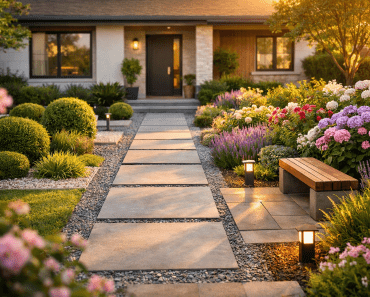
Tomato Plant Trellis Ideas can completely change the way a backyard vegetable garden looks, grows, and produces fresh tomatoes. Imagine walking into a beautifully organized garden where vibrant red tomatoes hang from lush green vines, sturdy vertical structures create elegant architectural lines, and every plant has enough room to grow without sprawling across the soil. 🍅 With the right trellis, even an ordinary vegetable patch can become a breathtaking garden feature that feels productive, intentional, and surprisingly luxurious.
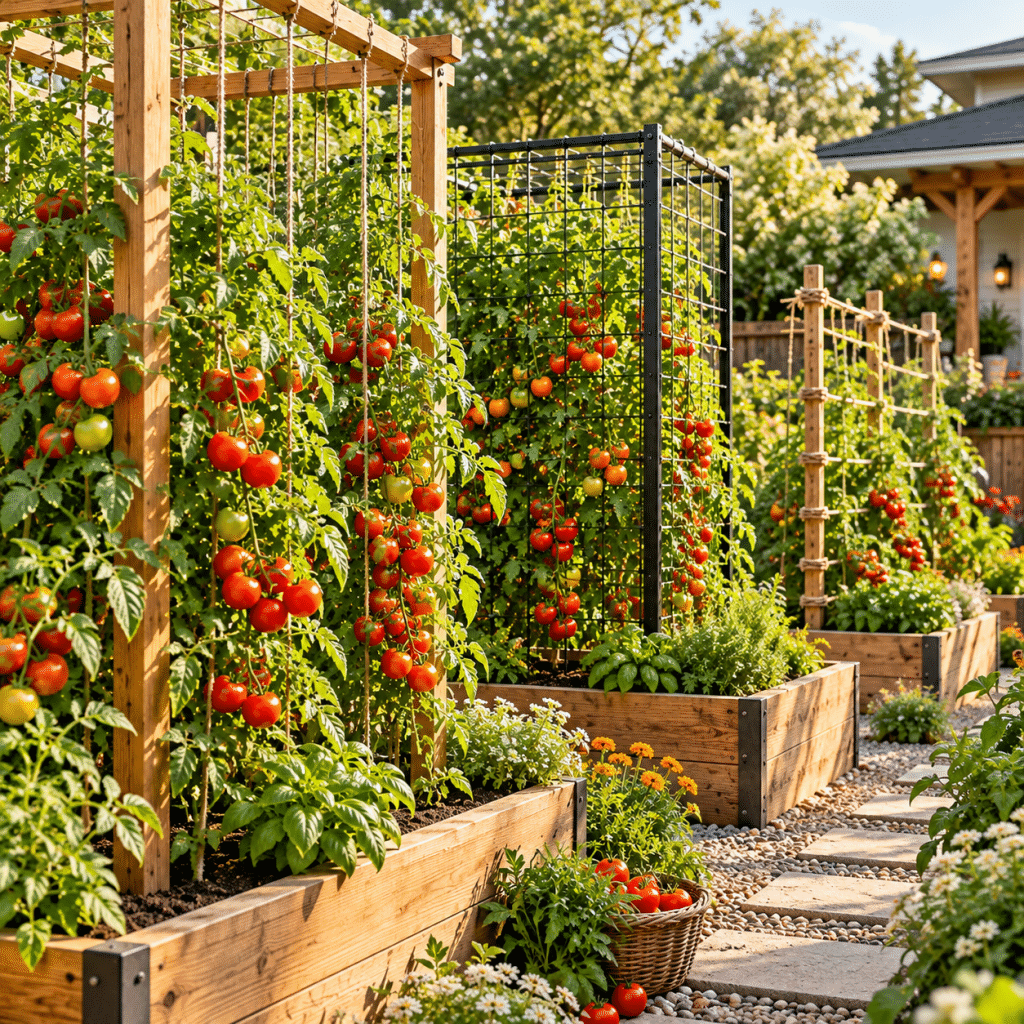
Growing tomatoes vertically is about much more than saving space. A thoughtfully designed trellis can make harvesting easier, improve access for pruning, support heavy fruiting branches, and create a more manageable growing environment. Instead of struggling with tangled stems and overcrowded foliage, gardeners can enjoy neatly trained plants that become attractive living elements in the landscape.
The most exciting part is that a tomato trellis does not have to look like an ordinary piece of gardening equipment. Modern designs combine natural wood, galvanized steel, durable garden twine, and carefully arranged planting beds to produce beautiful structures that complement everything from rustic farmhouse gardens to sophisticated contemporary backyards.
Whether the available space is a narrow raised bed, a sunny suburban vegetable garden, or a larger backyard growing area, the right support system can turn tomato cultivation into an enjoyable design experience.
These Top 3 Tomato Plant Trellis Ideas explore three distinctive approaches: an elegant overhead string trellis, a dramatic vertical metal-panel garden, and a charming farmhouse-inspired Florida weave system. Each idea balances visual beauty with practical plant support, offering a different way to create a garden that looks wonderful while producing delicious homegrown tomatoes. 🌿
Why Tomato Plant Trellis Ideas Can Make a Backyard Garden More Beautiful and Productive
Tomato plants naturally develop sprawling stems that become increasingly heavy as flowers and fruit appear. Without sufficient support, branches may bend toward the ground, become tangled with neighboring plants, or break under the weight of ripening tomatoes.
An effective trellis gives these vigorous plants a more controlled growing direction. The support allows gardeners to guide stems upward, maintain accessible pathways, and organize foliage so routine maintenance becomes easier.
For indeterminate tomato varieties, which continue growing and producing flowers over an extended season, vertical training is particularly valuable. These vigorous plants often need taller structures and regular attention to keep their growth manageable.
Determinate varieties, on the other hand, typically develop into bushier plants with a more limited growth habit. They may benefit from shorter stakes, reinforced cages, or horizontal support systems rather than intensive single-stem training.
🌱 The secret to choosing the right trellis is matching the structure to the tomato variety, planting arrangement, and maintenance routine.
A beautiful tomato garden also depends on balance. A structure that looks stunning when plants are young must remain strong enough to support mature vines loaded with fruit. Attractive materials, proper anchoring, and accessible spacing should always work together.
When these details are considered from the beginning, vertical tomato growing becomes an opportunity to blend productive gardening with attractive outdoor design.
🥇 Top 1 Tomato Plant Trellis Ideas With an Elegant Overhead String Garden and Modern Vertical Growing
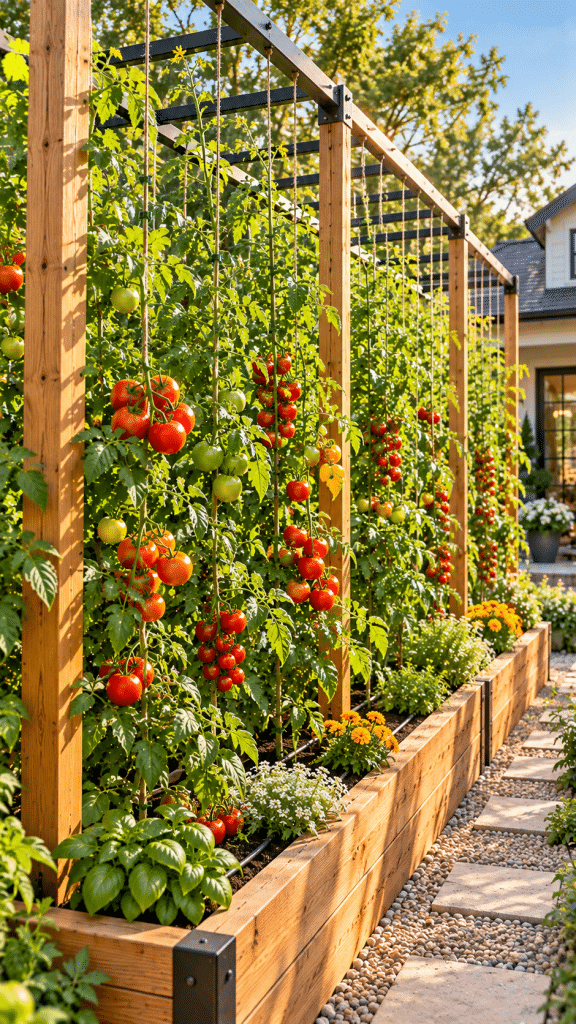
An overhead string trellis is one of the most visually refined ways to grow indeterminate tomatoes. This method combines a sturdy overhead framework with vertical strings that guide individual tomato plants upward, creating beautiful columns of green foliage and colorful fruit.
The overall appearance is clean, organized, and architectural. Instead of bulky supports surrounding each plant, delicate vertical lines form a rhythmic arrangement that makes the entire vegetable garden feel thoughtfully designed.
This method is especially appealing for gardeners who enjoy contemporary landscaping, minimalist raised beds, and highly organized planting spaces.
Creating a Luxury Raised Bed Tomato Trellis With a Beautiful Overhead Frame
The foundation of this design is a strong rectangular framework positioned above a raised vegetable bed.
Natural cedar, suitably protected structural timber, or galvanized steel can create an attractive overhead structure. Cedar provides warm, organic character, while powder-coated metal introduces a sleek contemporary appearance.
Picture a long raised bed bordered with rich natural timber. Above it, a dark bronze metal framework supports a series of evenly spaced vertical strings. Each string leads down toward an individual tomato plant, allowing the vines to grow upward in elegant green columns.
As the season progresses, the once-simple structure develops into a lush wall of greenery decorated with clusters of tomatoes.
The contrast between the structured framework and the organic movement of growing foliage makes this design particularly striking.
For many backyard indeterminate tomatoes, a support approximately 6–8 feet above the soil can be useful, provided the framework is appropriately engineered and gardeners have a practical plan for plants that eventually exceed the support height.
In long-season growing environments, vigorous vines may require additional training, topping, or a lowering system.
✨ Design inspiration: Combine warm cedar raised beds, matte charcoal posts, fine vertical trellis lines, and pale gravel pathways to create a sophisticated kitchen garden with a professional landscape appearance.
How to Build an Overhead String Trellis for Tomato Plants
Begin by selecting a sunny location with convenient access to water and enough room to move around the raised bed.
Tomatoes generally perform best when they receive at least six to eight hours of direct sunlight, although very hot climates may benefit from some protection during extreme afternoon heat.
Install the main support posts securely before the tomato plants establish extensive root systems. Structural anchoring is especially important because mature vines, fruit clusters, and strong winds can place substantial pressure on the frame.
Connect the posts with an overhead crossbeam or suitable tensioned support. The finished framework should resist sideways movement and remain stable when loaded.
Attach strong horticultural twine or appropriate tomato-support string to the overhead structure, positioning one line above each plant.
The lower end can be secured to a ground anchor or supported with purpose-made plant clips. Avoid tying a thin, tensioned string tightly around the tomato stem, because it may constrict the plant as the stem thickens.
When the plants begin growing, guide their main stems upward with gentle support clips. Continue adjusting the stems as they develop.
For gardeners using a single-leader system, small side shoots growing between the main stem and leaf branches can be selectively removed. However, this training method requires regular maintenance and may reduce the total yield per plant compared with a less heavily pruned plant.
A two-leader system can provide a useful compromise when the frame has enough space and strength.
The main objective is to maintain a manageable structure without unnecessarily stripping away the foliage that protects fruit from harsh sunlight.
Choosing the Best Tomato Varieties for an Overhead Trellis
Indeterminate tomatoes are the most natural candidates for overhead string systems.
Varieties such as Sungold, Sweet 100, Brandywine, and many indeterminate beefsteak tomatoes produce vigorous stems that respond well to intentional vertical training.
Cherry tomatoes are particularly beautiful when grown this way. Their abundant small fruit clusters add bright touches of red, orange, or yellow throughout the foliage.
Large-fruited varieties also work well, although their heavy stems and fruit clusters may require stronger clips and additional branch support.
Plant spacing should be determined by the specific variety and training method. A closely managed single-leader system may permit tighter spacing than a multi-stem plant, but crowding still increases the difficulty of watering, pruning, and harvesting.
The final arrangement should allow the gardener to comfortably reach stems and fruit without forcing neighboring plants together.
Making the Overhead Tomato Garden Look Expensive and Beautiful
The most appealing overhead trellis gardens use a restrained combination of materials.
A raised bed built from natural timber creates warmth, while a sleek upper framework introduces visual order. Repeating the same structural design across multiple beds creates an even more polished appearance.
Consider surrounding the beds with light-colored gravel, weather-resistant stepping stones, or neatly edged paths. These details make the garden look complete rather than improvised.
A narrow planting strip of low-growing flowers can soften the space around the trellis, provided the flowers do not compete excessively with the tomatoes for light and water.
Compact marigolds, sweet alyssum, or other locally suitable flowering plants can contribute seasonal color and visual interest.
To create a beautiful evening atmosphere, use restrained pathway lighting around the garden rather than attaching heavy decorative objects to the trellis.
The resulting space can feel like an elegant outdoor growing room, where vegetables become part of the overall landscape.
Maintaining a Vertical String Tomato Trellis Throughout the Growing Season
An overhead trellis requires regular but relatively straightforward attention.
Check plant clips frequently, particularly during periods of rapid growth. Stems should remain supported without being compressed, twisted sharply, or forced into unnatural positions.
Inspect the overhead connections and anchor points after strong winds or heavy rain. Replace fraying strings before they fail under the weight of mature plants.
Water the root zone consistently, preferably with a drip irrigation system or soaker hose. Keeping irrigation focused on the soil can reduce unnecessary wetting of foliage.
Apply suitable organic mulch to help conserve soil moisture and reduce soil splash.
As the plants grow taller, remove damaged or diseased leaves and selectively thin excessive growth when needed. Avoid heavy pruning during extreme heat, as exposed fruit can suffer from sunscald.
For particularly vigorous plants, establish a clear end-of-season height strategy. This may involve carefully topping the leader, allowing additional growth along a supported horizontal section, or using a properly designed lowering technique.
With attentive management, an overhead trellis can become one of the most beautiful and organized features in a productive backyard garden.
🥈 Top 2 Tomato Plant Trellis Ideas With Sculptural Metal Panels and a Stunning Vertical Garden Wall
A metal-panel tomato trellis transforms a practical growing support into a bold garden design feature.
Instead of using individual stakes or strings as the primary visual element, this approach uses a sturdy vertical grid that functions like an architectural wall within the landscape.
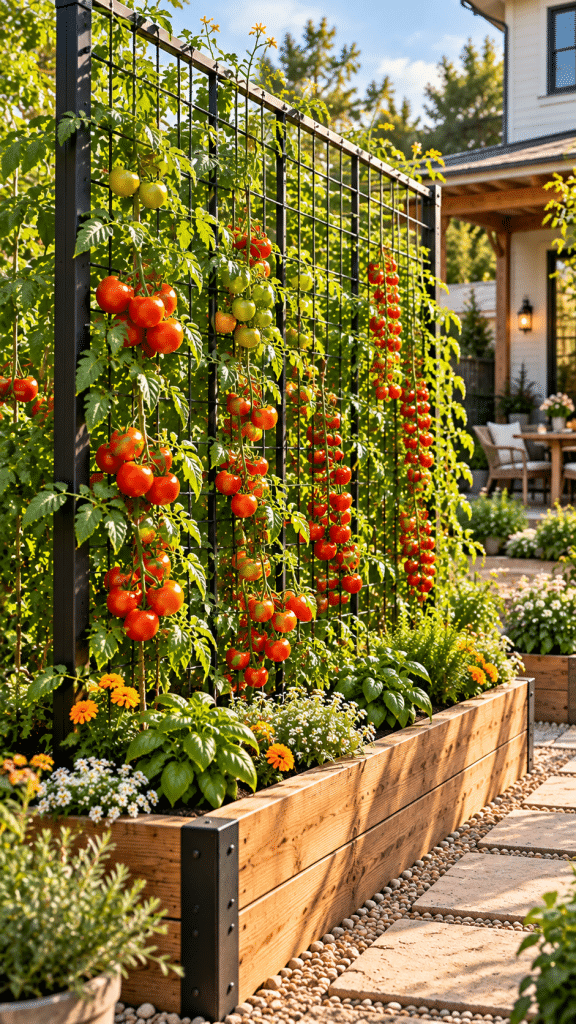
The result is dramatic yet natural. Straight metal lines form a refined framework, while tomato vines gradually introduce soft foliage, colorful fruit, and organic movement.
This idea is especially suitable for raised-bed gardens, narrow rectangular planting spaces, and backyard landscapes where the vegetable garden is clearly visible from a patio or outdoor seating area.
Designing a Modern Tomato Trellis With a Strong Metal Grid
The beauty of this design begins with proportion.
A tall rectangular metal panel, positioned securely within or immediately beside a planting bed, gives the tomatoes a clearly defined growing area. As vines spread along the grid, they produce a textured green surface that contrasts beautifully with the rigid structure.
Galvanized livestock panels or other sufficiently strong, corrosion-resistant garden grids are practical material choices.
A commonly available cattle panel measures approximately 16 feet long and 50 inches high, although dimensions and specifications vary. A panel may be installed horizontally for a broad support wall, or a suitably sized section can be mounted vertically to create greater height.
If a low panel is used for a vigorous indeterminate tomato, the gardener must plan for additional support or stem training once the vines reach the top.
Support posts should be selected according to the panel dimensions, anticipated plant weight, soil conditions, and local wind exposure.
For an elegant appearance, dark metal posts can frame the trellis, creating a strong visual outline around the growing tomatoes.
The design becomes particularly beautiful when repeated along a series of raised beds.
Imagine three matching beds separated by pale gravel walkways, each featuring a clean-lined metal grid covered in lush tomato foliage. The entire garden begins to resemble a professionally planned edible landscape.
How to Install a Beautiful Tomato Trellis Panel in a Raised Garden Bed
Start with the planting layout rather than the metal panel itself.
Determine how many tomato plants will occupy the bed, how wide they are expected to grow, and whether fruit will be harvested from one or both sides.
A freestanding panel that can be accessed from both sides generally makes maintenance easier than a grid placed directly against a solid wall.
Set sturdy support posts at appropriate intervals and anchor them securely. For a tall or heavily loaded panel, use a post system suitable for local soil and weather conditions rather than relying on short stakes attached only to the raised-bed boards.
Attach the grid to the posts using appropriately rated clamps, fasteners, or wire-panel hardware.
Check the panel for sharp edges and protruding cut wires. Any exposed ends should be safely covered or finished to prevent injuries during harvesting.
After planting, guide the tomato stems toward the support.
Use soft garden ties, flexible plant clips, or other nonabrasive fasteners to attach growing stems to the grid.
The goal is not to pull the tomato plant flat against the metal. Instead, allow the foliage to develop naturally while providing enough guidance to distribute the branches across the available surface.
Regularly inspect the stems as they thicken. Adjust ties before they become restrictive.
For larger indeterminate plants, selectively managing side shoots can help prevent the panel from becoming excessively crowded.
A stronger frame and more open training pattern will usually perform better than a narrow panel overloaded with dense, unsupported vines.
Adding Architectural Beauty to the Metal Tomato Trellis
Metal panels can look surprisingly luxurious when paired with the right materials.
A dark charcoal framework against cedar raised beds produces a timeless combination of contemporary and natural elements.
Weathered galvanized metal can also complement rustic gardens, particularly when surrounded by reclaimed wood, gravel paths, and classic terracotta containers.
For a more elegant European-inspired appearance, combine black metal grids with neatly edged rectangular beds, pale stone pathways, and understated planting borders.
The panel itself should remain visually simple.
Decorative scrollwork, complicated wire patterns, and excessive ornamentation may interfere with tying, pruning, and harvesting. A strong rectangular grid is often more attractive because its clean geometry contrasts with the irregular forms of the tomato vines.
🍅 Visual highlight: When bright cherry tomatoes ripen against a dark metal grid, the contrasting colors create an eye-catching living wall that becomes even more beautiful throughout the harvest season.
This structure can also serve as a subtle garden divider.
A series of planted panels may visually separate a vegetable-growing area from a patio, potting station, or other outdoor feature without requiring a solid fence.
However, the panels should remain positioned where tomato plants receive sufficient sunlight and airflow.
Training Tomato Vines to Create an Attractive Living Wall
Training is what makes the difference between a beautiful garden wall and a tangled mass of stems.
Begin when the tomato plants are young and their branches remain flexible.
Choose a few well-positioned stems according to the plant variety and the available panel area. Guide these stems upward and, where appropriate, slightly outward along the grid.
Allow enough open space between major branches for air movement and access during harvesting.
Avoid bending thick, mature stems sharply around the panel. Tomatoes can be brittle, and sudden changes in direction may cause them to snap.
When stems become heavy with developing fruit, add soft ties at suitable points to prevent branches from pulling away from the grid.
Large tomato clusters may also benefit from individual support when they place excessive strain on a branch.
Pruning should be selective rather than purely decorative. The aim is to maintain a productive plant, not to expose every fruit to uninterrupted sunlight.
In hot climates, retaining a healthy leaf canopy is especially important because direct exposure can damage tomato skins.
A well-managed panel trellis produces a layered appearance, with foliage covering much of the structural grid while still allowing glimpses of the attractive metal lines behind it.
Using a Metal Trellis for Small Backyards and Narrow Gardens
A metal-panel design is particularly effective when horizontal space is limited.
Instead of allowing tomato branches to spread into the walking area, the structure provides a defined vertical plane that keeps the bed easier to access.
This approach works well beside a sunny garden path, along the edge of a raised vegetable bed, or within a compact urban backyard.
If the panel is positioned near a fence, leave sufficient clearance for air circulation and maintenance. Solid walls and dense barriers can trap humidity and make the back of the plants difficult to inspect.
For a narrow layout, consider training fewer tomato stems rather than overcrowding the structure.
A single vigorous indeterminate plant, properly supported and managed, can occupy a surprisingly large section of a panel during a long growing season.
The resulting garden feels more spacious because the crop is organized vertically rather than spilling into adjacent planting areas.
When planned carefully, this trellis design combines the visual appeal of an architectural feature with the satisfaction of harvesting tomatoes from a beautifully maintained edible wall.
🥉 Top 3 Tomato Plant Trellis Ideas With a Rustic Farmhouse Florida Weave and Charming Harvest Rows
The Florida weave trellis brings a completely different atmosphere to a tomato garden. Instead of dramatic metal walls or tall overhead frameworks, this traditional support system uses a sequence of sturdy posts and horizontal garden twine to create beautiful, orderly rows of tomato plants.
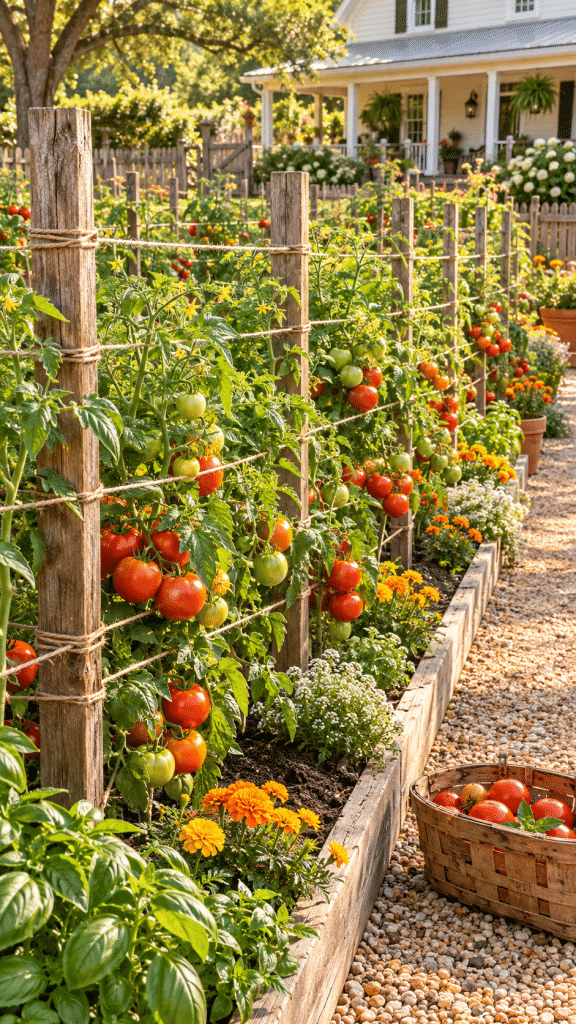
Its appeal lies in the simplicity of the structure. Wooden stakes, neatly arranged planting rows, and natural-looking support lines produce an inviting farmhouse atmosphere that feels both practical and timeless.
The Florida weave is especially well suited to determinate tomato varieties planted in rows. Rather than training every tomato into a single vertical stem, the method uses horizontal strands to hold the plants upright as their branches spread and fruit develops.
For gardeners who appreciate classic kitchen gardens, rustic landscaping, and productive vegetable beds, this method offers an attractive combination of efficiency and traditional charm.
Creating Beautiful Farmhouse Tomato Rows With Natural Wooden Posts
The foundation of a Florida weave garden is a straight planting row with strong stakes placed at regular intervals.
Weather-resistant wooden posts can provide a warm, rustic appearance. Their natural texture works especially well with raised beds made from timber, brick edging, or traditional garden borders.
Metal T-posts are another practical choice, particularly where durability and structural strength are priorities.
Imagine a sunny garden with three long rows of healthy tomato plants. Natural wooden stakes stand between the plants, while horizontal twine forms subtle lines that hold the foliage in place.
As the tomatoes mature, the green leaves soften the structural elements, and clusters of ripening fruit create vibrant highlights throughout the rows.
The result resembles a charming countryside vegetable garden, where every plant has its place but the landscape still feels abundant and natural.
🌿 Design inspiration: Surround the tomato rows with crushed-stone pathways, rustic timber edging, and a few traditional terracotta pots filled with culinary herbs. The combination creates a welcoming farmhouse garden that feels carefully maintained without appearing overly formal.
How to Build a Florida Weave Trellis for Tomato Plants
Begin by planting tomatoes in a straight row, following the spacing recommended for the chosen variety.
Install a strong post at each end of the row and additional stakes between groups of plants. Depending on the support design and expected crop weight, stakes may be positioned approximately every two or three plants.
End posts must be particularly secure because the horizontal strings place tension on them.
For many determinate tomato varieties, sturdy posts approximately four to five feet long can be suitable, provided enough length is anchored in the soil and sufficient support height remains aboveground.
Taller or more vigorous varieties may require longer stakes and a stronger arrangement.
Once the tomato plants have established themselves, tie durable horticultural twine to the first post at a height appropriate for the developing stems.
Pass the twine along one side of the first plant and around the opposite side of the next plant. Continue weaving between the plants, wrapping the string around intermediate stakes to maintain support.
At the end of the row, reverse direction, creating a supporting strand on the opposite side of each plant.
The finished arrangement holds the plants between horizontal twine lines.
As the tomatoes grow, install additional levels of twine approximately six to eight inches above the previous support, adjusting the spacing according to plant development.
This creates a series of supportive horizontal layers without requiring individual cages around every tomato.
The method is efficient because several plants share the same supporting framework, reducing the number of individual structures needed in a larger vegetable garden.
Why the Florida Weave Works Beautifully for Determinate Tomatoes
Determinate tomatoes generally develop a more compact growth pattern than indeterminate varieties.
Many produce much of their crop within a relatively concentrated period, making them well suited to support systems that accommodate a bushier plant structure.
The Florida weave supports several stems simultaneously rather than requiring gardeners to select only one main leader.
This allows the plants to retain more of their natural branching habit, which can be important for preserving productive foliage.
Varieties such as Roma and many other determinate paste or slicing tomatoes may perform well with this approach, although the exact support requirements depend on the cultivar.
One of the greatest advantages is that the plants remain accessible for harvesting.
Instead of reaching into a narrow wire cage, gardeners can inspect fruit along the sides of each row and gently move foliage when necessary.
The design is particularly convenient when growing multiple tomato plants for sauces, preserving, or regular household use.
It also provides a lovely seasonal progression. Young plants begin as evenly spaced green seedlings, gradually develop into compact fruiting bushes, and eventually create rich rows of foliage and ripening tomatoes.
Adding Cottage Garden Charm Without Overcrowding the Tomato Plants
A farmhouse-style tomato garden can feel beautiful without elaborate decoration.
The most effective visual improvements come from thoughtful spacing, attractive edging, and a consistent arrangement of natural materials.
Use the same style of posts throughout the garden to create a unified appearance.
If wooden stakes are selected, choose pieces with similar dimensions and finishes. If metal stakes are preferred, keeping them in a consistent color can make the rows look more intentional.
A neat pathway between tomato rows helps create visual order while making harvesting and maintenance more convenient.
Compact flowering plants can be positioned near the garden edges to soften the straight lines of the stakes and planting beds.
Calendula, dwarf marigolds, and locally appropriate pollinator-friendly flowers can add cheerful color.
However, avoid planting flowers so close that they crowd tomato stems or interfere with air circulation.
A small herb planting area beside the vegetable garden can further reinforce the traditional kitchen garden atmosphere.
The combination of vegetables, herbs, flowers, and natural materials makes the space feel welcoming and productive.
Keeping the Farmhouse Trellis Strong During Heavy Harvests
The Florida weave needs additional attention as tomato plants become heavier.
Check the horizontal twine regularly, especially after windy weather or strong rain.
Strings may gradually loosen under the pressure of expanding foliage and developing fruit clusters. Add additional support levels before branches begin bending outward.
Inspect end posts for signs of movement. If they start leaning, reinforce the anchoring system before the row becomes unstable.
Remove broken, diseased, or badly damaged leaves as needed, but avoid removing excessive healthy foliage from determinate plants.
These varieties generally require less aggressive pruning than single-leader indeterminate systems.
Mulch the soil to help regulate moisture and reduce the amount of soil splashed onto lower leaves during rainfall or irrigation.
Consistent watering is particularly important when fruit begins developing.
At the end of the season, remove old twine and plant debris. Reusable stakes can be cleaned, inspected, and stored for the following growing season.
With proper maintenance, this charming support system offers an excellent balance of traditional garden beauty, accessibility, and reliable tomato support.
Comparing the Best 3 Tomato Plant Trellis Ideas for Different Garden Styles
Choosing between these three designs depends on more than appearance. The growth habit of the tomato plants, garden dimensions, available materials, and desired maintenance level all influence which support system will work best.
An overhead string trellis creates a highly organized garden, but it generally requires frequent training and pruning. A metal-panel trellis offers a durable and attractive framework for vertical growth. The Florida weave provides efficient row support with a more relaxed, traditional appearance.
The following comparison highlights the main differences.
| Garden feature | 🥇 Overhead string trellis | 🥈 Metal-panel trellis | 🥉 Florida weave trellis |
|---|---|---|---|
| Best visual style | Modern and minimalist | Architectural and contemporary | Rustic and farmhouse |
| Ideal tomato growth habit | Indeterminate | Indeterminate or suitably trained bush varieties | Primarily determinate |
| Suitable garden layout | Raised beds and organized rows | Narrow beds and vertical garden walls | Straight garden rows |
| Main materials | Strong posts, overhead frame, horticultural string | Metal grid, support posts, plant ties | Wooden or metal stakes, garden twine |
| Typical maintenance | High | Moderate | Low to moderate |
| Pruning approach | Regular leader management | Selective branch management | Usually minimal |
| Harvest access | Excellent with proper spacing | Excellent when both sides are accessible | Good along open rows |
| Main advantage | Precise vertical training | Attractive permanent structure | Efficient support for multiple plants |
| Main consideration | Requires frequent training | Must be securely anchored | Needs additional twine as plants grow |
The overhead string system is particularly appealing for gardeners who enjoy regularly working with individual plants.
The metal-panel design suits anyone seeking a visually prominent structure that can become a permanent part of the garden.
The Florida weave is an attractive choice for gardeners growing several determinate tomatoes and wanting a traditional, efficient support system.
No single design is universally superior. The best choice is the one that accommodates the tomato variety, supports the expected plant weight, and allows convenient maintenance throughout the growing season.
How to Choose the Right Tomato Plant Trellis Ideas Before Planting
Selecting a trellis before transplanting tomatoes can prevent many common gardening problems.
Once tomato roots have spread throughout the soil, driving large stakes or support posts into the planting area becomes more difficult and may damage the root system.
Planning early also allows the structure to be coordinated with irrigation, pathways, sunlight, and the overall garden layout.
Understand the Difference Between Determinate and Indeterminate Tomato Plants
Tomato growth habit is one of the most important considerations.
Determinate tomatoes generally develop a more limited plant structure and produce much of their harvest over a relatively concentrated period.
These plants often benefit from sturdy cages, shorter support panels, or a Florida weave system.
Indeterminate tomatoes continue growing and flowering throughout favorable conditions until limited by weather, disease, or management.
They are commonly better suited to tall trellises, overhead string systems, or strong panels that can accommodate prolonged growth.
Choosing the wrong structure can create unnecessary maintenance. A vigorous indeterminate tomato may quickly overwhelm a short, lightweight cage, while a compact determinate tomato may not benefit from elaborate single-leader training.
Consider Sunlight and the Direction of the Trellis
The position of a tomato trellis influences the amount of sunlight reaching the plants.
Tomatoes generally need abundant direct sunlight for healthy growth and productive fruiting.
In many Northern Hemisphere gardens, positioning taller supports toward the northern side of a growing area can help reduce unwanted shading of shorter crops. However, the ideal arrangement varies with latitude, seasonal sun angle, and nearby structures.
A trellis positioned beside a tall fence or building may receive less sunlight than expected.
Observe how shadows move through the garden before installing permanent supports.
Leave enough room around the structure to access all sides that require pruning, tying, watering, and harvesting.
A beautiful garden is much easier to maintain when its layout supports everyday movement.
Select Materials That Can Support Mature Tomato Plants
Lightweight decorative materials may look attractive when tomato seedlings are small, but mature plants can become surprisingly heavy.
A trellis must support not only stems and leaves but also fruit clusters, rain-soaked foliage, and wind pressure.
Use appropriately sized posts, strong connectors, and durable plant-support materials.
Avoid thin untreated wood that deteriorates quickly in consistently damp soil.
Likewise, avoid sharp wires or narrow rigid ties placed directly against growing stems.
Soft plant ties, reusable clips, or purpose-made horticultural fasteners help distribute pressure more gently.
Permanent structures should be inspected at the beginning of each growing season, while temporary systems should be reinforced whenever the plants become heavier.
Important Note: 🍅 Tomato plants do not naturally climb trellises like pole beans. Their stems must be guided, tied, clipped, or otherwise supported as they grow. Always match the support system to the tomato variety, anchor the structure securely, and avoid tying stems too tightly. Excessive pruning can reduce the total harvest or expose tomatoes to sunscald, particularly in hot climates.
Common Mistakes That Can Ruin Beautiful Tomato Trellis Ideas
Even a thoughtfully designed tomato garden can become difficult to manage when a few basic mistakes are overlooked.
The most common problems involve undersized structures, late installation, overcrowding, and insufficient support during peak fruit production.
Understanding these issues makes it easier to build a garden that remains attractive from planting through harvest.
Installing the Trellis Too Late
Waiting until tomato plants are large before installing support can make the process unnecessarily complicated.
Young tomato stems are flexible, and their roots have not yet occupied the entire planting area.
Once the plants are mature, pushing stakes into the soil may damage roots, while lifting heavy branches onto a new support can cause stems to break.
Install major trellis components before planting or shortly after transplanting.
This allows the tomatoes to establish themselves around a support system that is already in place.
Allowing Too Many Branches to Crowd the Structure
A tomato trellis can become overloaded when plants are allowed to spread beyond the intended growing area.
Crowded foliage makes harvesting more difficult and can create conditions that favor certain fungal and bacterial diseases, especially when leaves remain wet for extended periods.
However, aggressive pruning is not always the solution.
Determinate tomatoes generally benefit from retaining more of their natural branching structure, while carefully managed indeterminate plants can tolerate more selective shoot removal.
The goal is to create enough space for maintenance and air circulation without unnecessarily sacrificing productive foliage.
Choosing Decorative Supports That Are Too Weak
A decorative trellis may look perfect in a newly planted garden but fail after the tomato plants begin producing heavy fruit clusters.
Thin ornamental wire, loosely connected wooden frames, and poorly anchored posts can bend or collapse.
A stronger structure usually provides better long-term value, particularly for indeterminate varieties.
Choose materials based on the mature size of the plants rather than their appearance during the first few weeks.
Forgetting to Adjust Plant Ties
Tomato stems expand as they grow.
A tie that fits comfortably around a young stem may eventually become restrictive.
Inspect plant clips and ties regularly and loosen or reposition them when necessary.
Use flexible materials whenever possible, and support heavy branches at multiple points rather than forcing all their weight onto one connection.
This simple habit can prevent stem injuries while keeping the trellis neat and attractive.
How to Make Tomato Plant Trellis Ideas Look Beautiful Throughout the Entire Growing Season
A tomato trellis is most visually impressive when the surrounding garden is maintained with the same care as the plants themselves.
Clean pathways, consistent edging, and attractive structural materials create a strong design foundation before the first tomatoes begin ripening.
As the growing season progresses, the plants provide the changing colors, textures, and shapes that make the garden feel alive.
Create a Balanced Color Palette Around Tomato Plants
Tomato foliage provides a naturally rich green backdrop, while ripening fruit introduces shades of red, orange, yellow, and even deep purple-brown depending on the variety.
These colors look particularly striking against understated materials.
Warm cedar and weathered timber create a rustic atmosphere.
Charcoal metal and pale gravel produce a contemporary appearance.
Terracotta containers and natural stone introduce a softer Mediterranean-inspired character.
Choose a limited number of complementary materials rather than combining many competing finishes.
This visual restraint allows the tomato plants to become the main attraction.
Use Garden Pathways to Frame the Trellis
Pathways are an important part of productive garden design.
A trellis surrounded by accessible walkways is easier to maintain and more enjoyable to use.
Gravel is a practical option because it provides an attractive surface while allowing rainwater to drain.
Brick paths create a traditional appearance, particularly in farmhouse and cottage gardens.
Large stepping stones can introduce modern simplicity when paired with clean-lined raised beds.
Keep paths wide enough for comfortable harvesting and routine garden maintenance.
The overall garden should feel welcoming rather than crowded.
Maintain Healthy Foliage and Attractive Growing Lines
Healthy tomato plants are naturally beautiful.
Their deep green leaves, branching stems, yellow blossoms, and colorful fruit clusters create a rich seasonal display.
Regularly remove dead or diseased plant material and keep pathways free from fallen debris.
Guide vigorous stems back toward their intended support areas before they become tangled.
Inspect the trellis after storms and repair loose connections promptly.
The goal is not to make every plant perfectly symmetrical. A little natural variation adds charm and character.
A successful tomato trellis garden combines structured support with the lively appearance of healthy, productive plants.
Frequently Asked Questions About Tomato Plant Trellis Ideas
What Is the Best Trellis for Tomato Plants?
The best trellis depends on the tomato growth habit and the available growing space.
For vigorous indeterminate tomatoes, a properly anchored overhead string system or tall metal-panel trellis can provide effective vertical support.
For determinate varieties grown in rows, the Florida weave offers a practical and relatively economical solution.
Gardeners should prioritize structural strength, ease of harvesting, and manageable maintenance over appearance alone.
A beautiful trellis becomes truly successful when it supports healthy plants throughout the entire growing season.
How Tall Should a Tomato Trellis Be?
Trellis height varies according to the tomato variety and training method.
Compact determinate plants may grow successfully with supports around three to five feet tall, depending on the cultivar.
Indeterminate tomatoes often require much taller support systems, commonly six to eight feet or more.
In climates with long growing seasons, some indeterminate plants can continue growing well beyond these heights.
Rather than relying on height alone, gardeners should consider the overall strength of the structure and how excess growth will be managed.
Can Tomato Plants Grow on a Flat Trellis?
Yes. Tomato plants can be trained along flat metal grids, strong wooden lattice structures, or suitable wire panels.
However, tomatoes do not attach themselves naturally to a support.
Stems must be guided and secured as they grow.
A flat trellis can be particularly useful in narrow gardens, provided the structure is strong enough and the plants remain accessible for harvesting.
Soft ties and regular inspection help prevent stems from bending or becoming damaged.
Is a Tomato Trellis Better Than a Tomato Cage?
Both support systems can work well when matched to the plant.
Strong cages are convenient for bushier determinate tomatoes because they allow relatively natural branching with less frequent tying.
Trellises can offer better control over tall indeterminate plants and may make individual stems easier to inspect.
The difference often comes down to maintenance preferences, available space, and plant growth habit.
A reinforced cage may be more practical for a gardener who wants minimal pruning, while a tall trellis may be more attractive for someone who enjoys carefully training vertical plants.
Can Tomato Trellises Be Used in Raised Beds?
Yes. Raised beds can accommodate overhead string frames, metal panels, and suitable stake-and-twine systems.
The most important consideration is anchoring.
A tall trellis should not depend entirely on thin raised-bed boards for structural support.
Posts may need to extend into stable ground, use properly engineered exterior mounting hardware, or be secured through an independent support system.
Raised beds also make it easier to coordinate irrigation, mulch, pathways, and planting arrangements.
When combined with a strong trellis, they create an organized and attractive growing environment.
What Is the Easiest Tomato Trellis for Beginners?
For beginners growing multiple determinate tomatoes in a row, the Florida weave can be a straightforward option.
It uses relatively simple materials and supports several plants with a shared system.
However, gardeners must continue adding twine as the plants grow.
A sturdy metal panel can also be beginner-friendly because its basic structure remains in place throughout the season, although stems still need regular guidance.
The overhead string method usually requires more frequent pruning and training, making it better suited to gardeners who enjoy hands-on plant management.
Final Thoughts on the Best Tomato Plant Trellis Ideas for a Stunning Backyard Harvest
The best Tomato Plant Trellis Ideas combine beautiful garden design with dependable support for healthy, productive plants.
An elegant overhead string trellis creates a modern growing space filled with neatly trained vertical tomato vines. A sculptural metal-panel trellis turns an ordinary vegetable bed into an architectural feature covered in lush foliage and colorful fruit. A farmhouse Florida weave brings traditional charm to the garden while efficiently supporting rows of bushier tomatoes.
Each approach offers a distinctive aesthetic, but all three share the same essential purpose: helping tomato plants grow in an organized, accessible, and properly supported environment.
The most beautiful tomato gardens are not necessarily the largest or most expensive. They are the ones where planting arrangements, structural materials, pathways, and growing habits work together.
A small raised bed with a thoughtfully designed trellis can be just as inviting as a large countryside vegetable garden. Carefully positioned supports, healthy plants, attractive edging, and convenient harvesting access can transform even a modest backyard into a productive outdoor sanctuary.
🍅🌿 Whether the goal is a sophisticated modern kitchen garden, a stunning vertical tomato wall, or a charming farmhouse harvest area, these three trellis designs offer a practical starting point for creating a growing space that looks beautiful from the first seedlings to the final harvest.
With the right structure and consistent care, tomato plants can become more than a source of fresh vegetables. They can become one of the most visually rewarding and satisfying features in the entire garden.