Huernia Succulents have quietly become some of the most fascinating plants among collectors and indoor gardening enthusiasts. While many people fill their homes with common succulents like Echeveria, Haworthia, or Jade Plants, Huernia Succulents offer something completely different. Their unusual stems, exotic appearance, and spectacular star-shaped flowers create a conversation piece unlike almost any other houseplant.
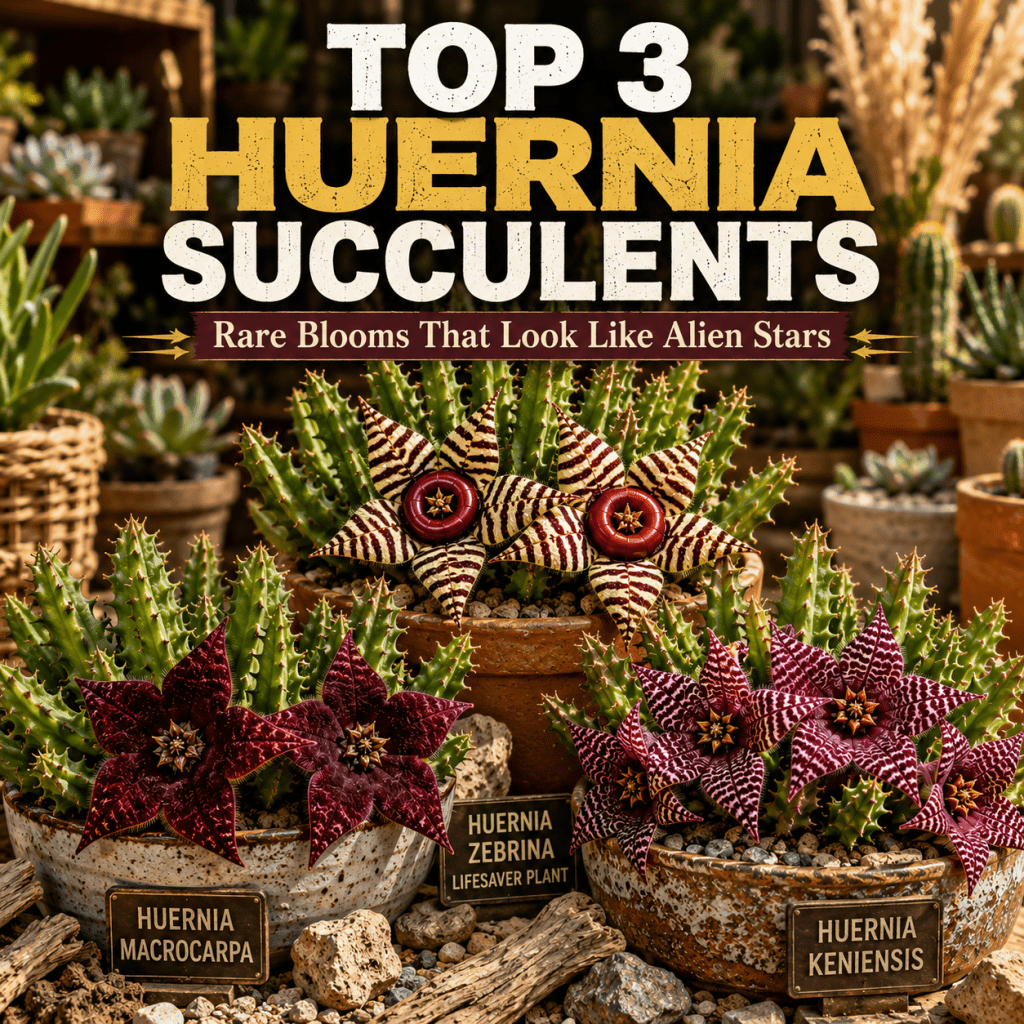
Native to arid regions of Africa and the Arabian Peninsula, these remarkable succulents belong to the Apocynaceae family and are closely related to Stapelia and Orbea. Their flowers often resemble sea stars, intricate sculptures, or even alien creations, making them highly desirable among collectors searching for rare and unusual specimens.
The appeal of Huernia Succulents goes beyond their appearance. They are relatively easy to maintain, tolerate drought conditions exceptionally well, and can thrive in containers, windowsills, greenhouses, and succulent gardens. Whether someone is just beginning their succulent journey or already owns an extensive collection, Huernia plants provide a unique opportunity to grow something truly extraordinary.
In this guide, discover the best Huernia varieties, how to care for them, common growing mistakes, and why these captivating succulents deserve a place in every plant lover’s collection.
What Makes Huernia Succulents So Special
Many succulents are admired for their colorful rosettes or architectural shapes. Huernia Succulents stand out because they combine unusual stem structures with some of the most fascinating flowers in the plant kingdom.
The stems are typically fleshy, ribbed, and covered with soft tooth-like projections. Their appearance often resembles miniature cacti, although they are not actually members of the cactus family. The stems store water efficiently, allowing the plant to survive extended dry periods.
The real attraction, however, is the bloom. Depending on the species, flowers can feature vibrant shades of yellow, red, burgundy, cream, pink, orange, and purple. Many blooms display intricate patterns, rings, spots, or textures that resemble velvet.
Some flowers have evolved unique scents to attract pollinators in their natural habitat. While certain species may produce a mild odor, many cultivated varieties have little to no noticeable scent when grown indoors.
Their combination of exotic beauty, easy care requirements, and unusual flowering habits makes Huernia Succulents a favorite among collectors worldwide.
Best 3 Huernia Succulents Every Collector Should Own
Not all Huernia species are equally popular. Some varieties have become highly sought after because of their striking flowers and reliable growth habits.
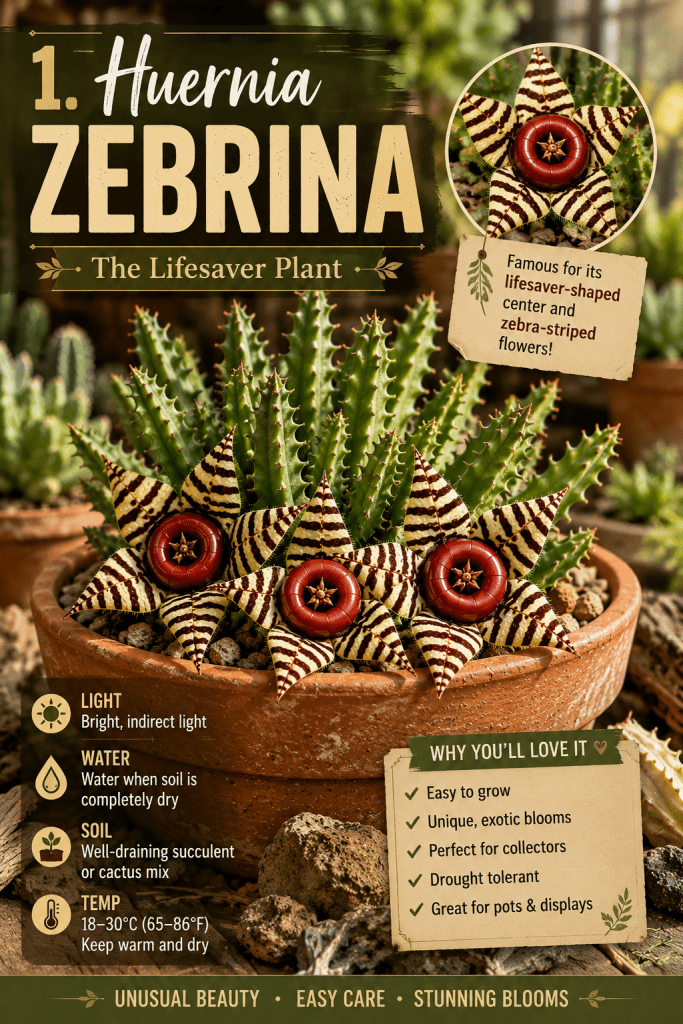
1. Huernia Zebrina
Huernia Zebrina is often considered the superstar of the genus.
Its nickname, “Lifesaver Plant,” comes from the distinctive circular ring found in the center of the flower. The bloom resembles a colorful lifesaver candy, featuring cream and maroon striped petals surrounding a glossy red center.
The flowers appear dramatically against the plant’s green stems and can bloom repeatedly during warm growing seasons. The compact growth habit makes it ideal for windowsills, desktops, and small succulent arrangements.
For beginners, Huernia Zebrina is often the easiest introduction to the fascinating world of Huernia cultivation.
2. Huernia Macrocarpa
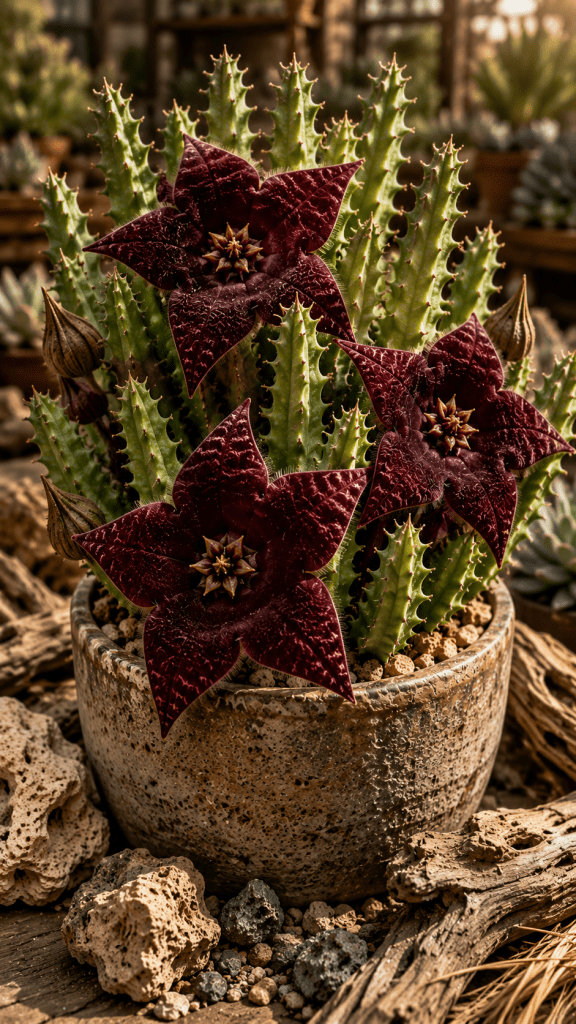
Huernia Macrocarpa offers a more dramatic floral display.
Its flowers are larger than many other Huernia species and showcase deep burgundy, purple, and dark red tones. The velvety texture creates an almost luxurious appearance that immediately draws attention.
This species tends to form dense clumps over time, creating an attractive mound of fleshy stems. When multiple flowers open simultaneously, the visual impact becomes truly impressive.
Collectors appreciate this variety because it balances exotic beauty with relatively straightforward care requirements.
3. Huernia Keniensis
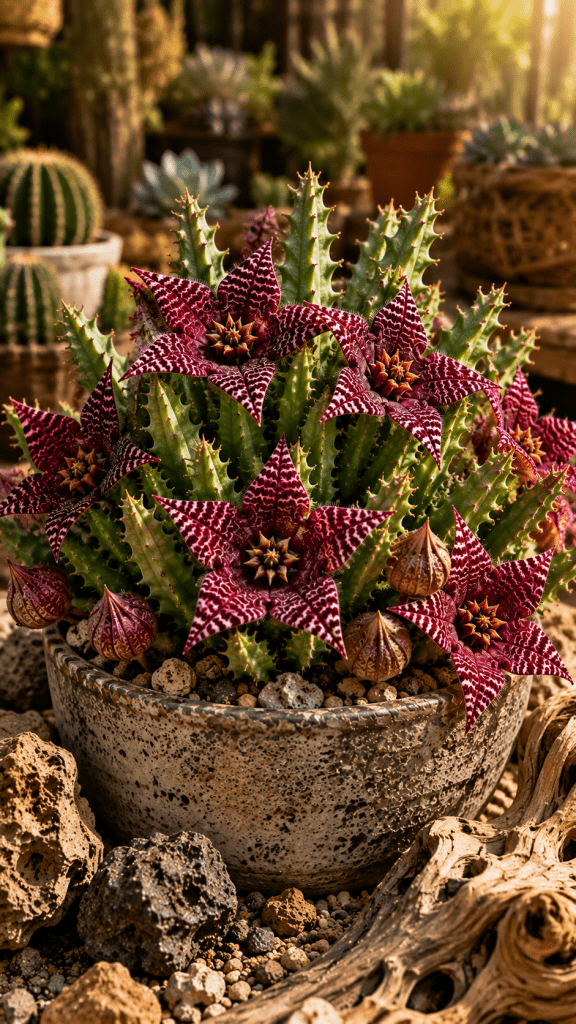
Huernia Keniensis is prized for its vibrant coloration and unique floral structure.
The blooms often feature rich crimson, maroon, and purple shades arranged in star-shaped patterns. The flowers can appear almost otherworldly, resembling exotic marine creatures or decorative ornaments.
Its compact growth habit makes it perfect for container cultivation. Over time, healthy plants produce offsets that gradually expand into beautiful clusters.
For those seeking a truly eye-catching specimen, Huernia Keniensis remains one of the most rewarding options available.
Understanding the Natural Habitat of Huernia Succulents
To successfully grow Huernia Succulents, it helps to understand where they naturally occur.
Most species originate in dry regions characterized by rocky soils, sparse vegetation, and seasonal rainfall. These environments experience intense sunlight, warm temperatures, and excellent drainage.
In nature, many Huernia plants grow beneath shrubs or rocks that provide partial protection from extreme midday heat. This explains why they often perform better in bright indirect light rather than harsh all-day sun.
Replicating these conditions at home greatly increases the chances of healthy growth and abundant flowering.
By understanding their native environment, gardeners can avoid many common cultivation mistakes.
How to Plant Huernia Succulents Successfully
Proper planting is one of the most important factors in maintaining healthy Huernia plants.
Choosing the right container is the first step. Pots with drainage holes are essential because excess moisture can quickly lead to root rot. Terracotta pots are particularly useful since they allow soil to dry faster.
The soil mix should prioritize drainage above all else. A combination of cactus soil, pumice, coarse sand, and perlite often works exceptionally well.
When planting, place the stems slightly above the soil surface. Avoid burying them too deeply because excess moisture around the stem base can cause decay.
After planting, allow the plant a few days before watering to help any damaged roots heal properly.
Light Requirements for Healthy Huernia Succulents
Light plays a crucial role in the overall health and flowering performance of Huernia Succulents.
These plants generally prefer bright, filtered light. Morning sun combined with afternoon shade often produces excellent results. Indoors, an east-facing or bright south-facing window can provide ideal conditions.
Too little light may cause stretched growth, weak stems, and reduced flowering. Plants may become pale and lose their compact form.
Conversely, excessive direct sunlight can scorch the stems and damage the plant. Signs of sun stress include discoloration, bleaching, and shriveled tissue.
Finding the right balance is essential for long-term success.
Watering Huernia Succulents the Right Way
Watering mistakes represent the most common reason Huernia plants fail.
Like many drought-adapted succulents, Huernia species prefer periods of dryness between waterings. The soil should dry thoroughly before additional water is applied.
During active growth in spring and summer, watering every one to two weeks may be sufficient depending on climate conditions.
During cooler months, growth slows significantly and watering should be reduced accordingly.
“Overwatering is far more dangerous to Huernia Succulents than underwatering.”
This simple principle can prevent the majority of problems associated with root rot and fungal infections.
Whenever uncertain, waiting an extra few days before watering is usually the safer choice.
Best Soil Mix for Huernia Succulents
The ideal soil mix drains rapidly while still providing adequate root support.
A high-quality succulent mix forms a good foundation, but many growers improve drainage by adding extra mineral components.
An effective recipe might include:
| Ingredient | Percentage |
|---|---|
| Cactus Soil | 40% |
| Pumice | 30% |
| Perlite | 20% |
| Coarse Sand | 10% |
This type of mixture minimizes moisture retention and encourages healthy root development.
Well-draining soil significantly reduces the risk of root diseases and helps maintain vigorous growth.
Temperature and Humidity Preferences
Huernia Succulents generally thrive in warm environments.
Ideal temperatures range between 18°C and 30°C (65°F to 86°F). Most species appreciate stable warmth throughout the growing season.
Cold temperatures can be problematic. Prolonged exposure below 10°C (50°F) may damage sensitive stems and roots.
Humidity requirements are relatively modest. These plants usually perform best in environments with good air circulation and moderate humidity levels.
Avoid placing them in excessively damp locations where moisture remains trapped around the stems.
How to Encourage More Flowers
Many gardeners purchase Huernia plants specifically for their extraordinary blooms.
To maximize flowering potential, focus on several key factors.
First, provide sufficient light. Plants receiving adequate brightness are far more likely to produce flower buds.
Second, maintain proper watering practices. Consistent overwatering can suppress blooming.
Third, avoid excessive fertilization. Too much nitrogen often encourages stem growth at the expense of flowers.
A diluted succulent fertilizer applied occasionally during active growth can support healthy flowering without overwhelming the plant.
Patience is also important. Mature plants generally bloom more reliably than young specimens.
Common Problems and Solutions
Even experienced growers occasionally encounter issues.
Root Rot
Root rot is usually caused by excessive watering or poorly draining soil.
Affected plants may become soft, discolored, and collapse unexpectedly. Immediate intervention is necessary.
Removing damaged roots and replanting in fresh dry soil often provides the best chance of recovery.
Mealybugs
These small pests frequently hide between stems and crevices.
Regular inspections help identify infestations early. Cotton swabs dipped in alcohol can remove individual insects effectively.
Lack of Flowers
Insufficient light remains the most common cause of poor flowering performance.
Evaluating the plant’s lighting conditions often resolves the issue.
Stem Shriveling
Mild shriveling may simply indicate thirst. However, severe shriveling can also signal root problems.
Careful observation helps determine the appropriate response.
Propagating Huernia Succulents at Home
One of the most enjoyable aspects of growing Huernia Succulents is propagation.
Most species produce offsets naturally as they mature. These offsets can be separated and rooted to create new plants.
After removing an offset, allow the cut surface to dry and callus for several days before planting.
Once planted in well-draining soil, roots typically develop within a few weeks under favorable conditions.
Propagation not only expands a collection but also provides an opportunity to share these remarkable plants with fellow enthusiasts.
Why Huernia Succulents Are Becoming More Popular
Interest in unusual houseplants continues to grow worldwide.
Collectors increasingly seek plants that offer something beyond traditional foliage. Huernia Succulents satisfy this demand perfectly by combining low-maintenance care with extraordinary visual appeal.
Social media platforms have also contributed to their popularity. Their unique flowers photograph exceptionally well and often attract attention from people unfamiliar with the genus.
As more gardeners discover these fascinating plants, demand for rare Huernia varieties continues to increase.
Their unusual appearance, manageable care requirements, and remarkable flowers make them ideal additions to modern plant collections.
Final Thoughts on Growing Huernia Succulents
Huernia Succulents represent some of the most intriguing and rewarding plants available to collectors today. Their sculptural stems, extraordinary flowers, and drought-tolerant nature make them stand apart from more common succulent varieties.
Whether choosing the iconic Huernia Zebrina, the dramatic Huernia Macrocarpa, or the stunning Huernia Keniensis, each variety offers its own unique charm. With proper light, excellent drainage, careful watering, and a little patience, these remarkable plants can thrive for many years.
For gardeners seeking something truly different, Huernia Succulents deliver an unforgettable combination of beauty, rarity, and fascination that few other houseplants can match. Once a plant begins producing its spectacular star-shaped flowers, it quickly becomes clear why so many collectors consider Huernia one of the hidden gems of the succulent world.