Pothos climbing ideas have become one of the most popular indoor plant trends because they transform ordinary rooms into vibrant, living spaces with very little effort. While many people let pothos trail from shelves or hanging baskets, this adaptable houseplant naturally wants to climb. In the wild, pothos vines attach themselves to tree trunks, producing larger leaves and healthier growth as they reach upward.
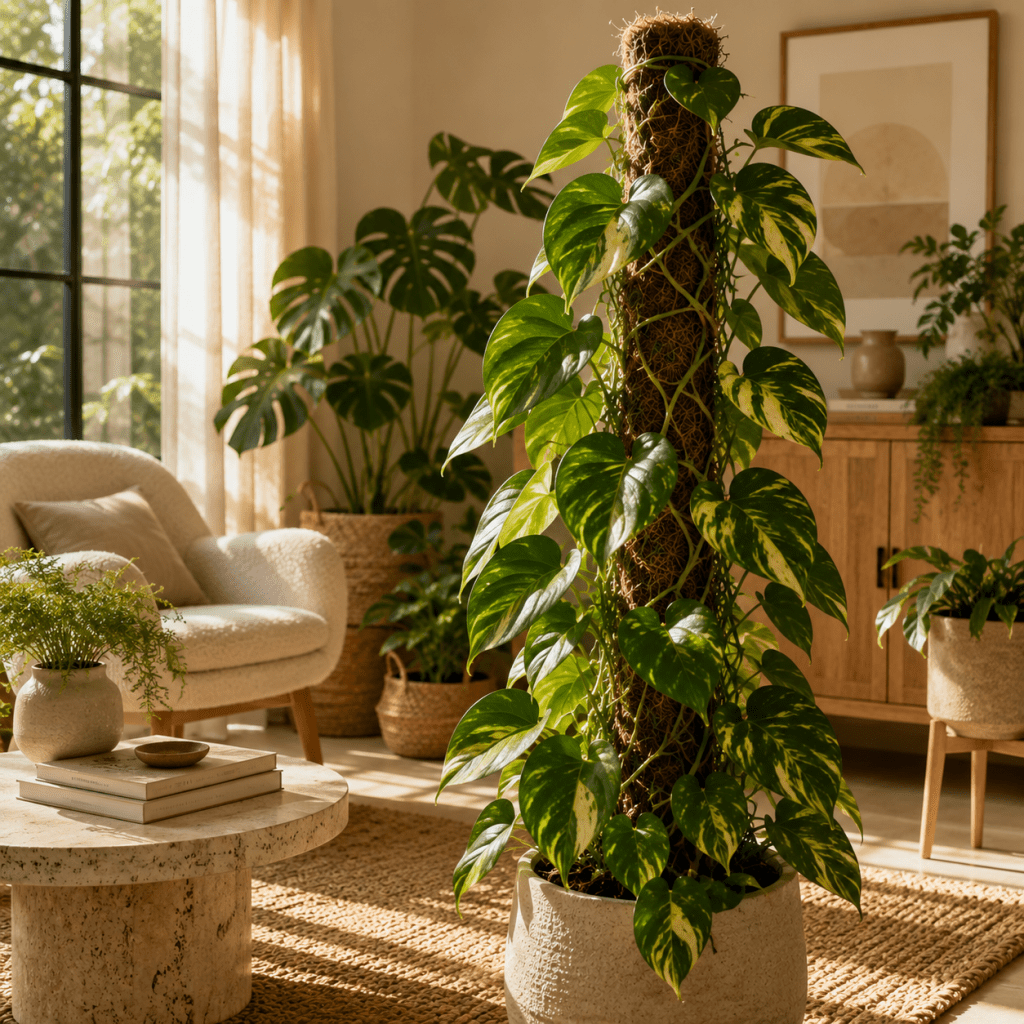
If you’ve ever wondered why your pothos seems smaller than the breathtaking specimens featured on Pinterest or in botanical gardens, the answer is surprisingly simple—it probably needs something to climb. Choosing the right climbing support not only creates a stunning decorative feature but also encourages stronger stems, fuller foliage, and dramatically larger leaves.
Whether you’re decorating a cozy apartment, a modern home office, or an indoor jungle-inspired living room, these Best 3 pothos climbing ideas will help you create a healthier plant while elevating your interior design.
Why Pothos Naturally Loves to Climb 🌿
Before exploring the best pothos climbing ideas, it’s helpful to understand how this remarkable tropical plant grows in nature.
Pothos (Epipremnum aureum) originates from tropical forests where it spends its early life creeping across the forest floor before finding a tree to climb. Once aerial roots attach to bark, the plant begins directing more energy into vertical growth. The leaves gradually become larger, thicker, and often develop more dramatic variegation.
Indoor pothos behaves exactly the same way. Without vertical support, the plant continues trailing but usually produces smaller leaves over time. Providing a climbing structure mimics its natural environment and unlocks its full potential.
Some benefits of encouraging pothos to climb include:
- 🌱 Larger and healthier leaves
- 🌱 Stronger stems
- 🌱 More compact and fuller appearance
- 🌱 Faster vertical growth
- 🌱 More impressive indoor décor
Important Note: Allowing pothos to climb usually results in larger foliage, but growth speed and leaf size also depend on sufficient light, consistent watering, proper fertilization, and healthy root development.
Comparison of the Best Pothos Climbing Ideas
| Feature | Moss Pole | Wooden Trellis | Wall Climbing System |
|---|---|---|---|
| Beginner Friendly | ⭐⭐⭐⭐⭐ | ⭐⭐⭐⭐ | ⭐⭐⭐ |
| Encourages Large Leaves | ⭐⭐⭐⭐⭐ | ⭐⭐⭐ | ⭐⭐⭐⭐ |
| Decorative Appeal | ⭐⭐⭐⭐ | ⭐⭐⭐⭐⭐ | ⭐⭐⭐⭐⭐ |
| Space Saving | ⭐⭐⭐⭐ | ⭐⭐⭐⭐ | ⭐⭐⭐⭐⭐ |
| Easy Maintenance | ⭐⭐⭐⭐ | ⭐⭐⭐⭐⭐ | ⭐⭐⭐ |
| Best For | Large foliage | Stylish displays | Living walls |
🥇 1. Moss Pole Climbing System
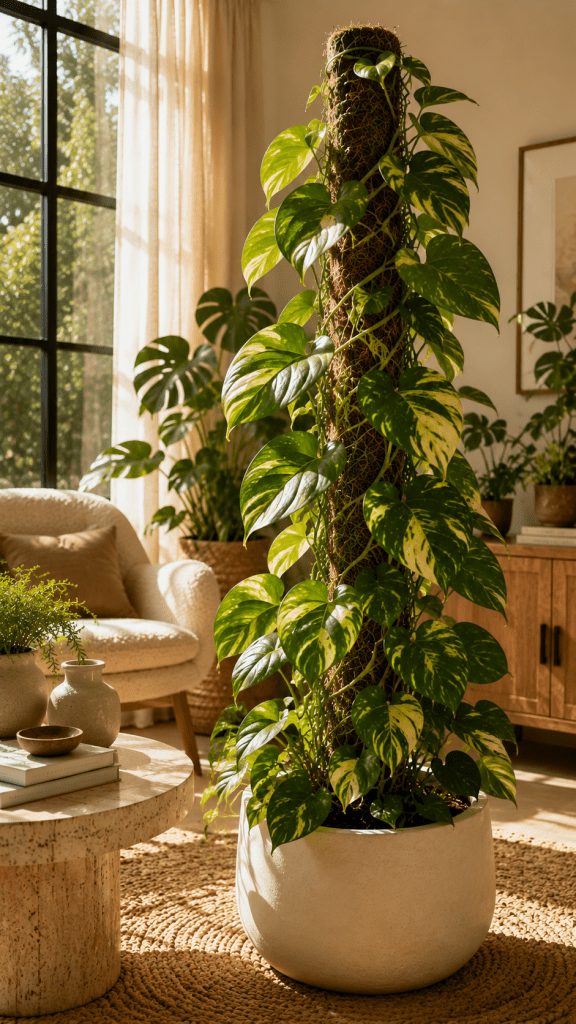
Among all pothos climbing ideas, the moss pole remains the gold standard. It closely replicates the rough, moisture-retaining bark that pothos climbs in tropical forests.
Instead of simply leaning against a support, aerial roots actually grow into the moist moss, allowing the plant to anchor itself naturally. This creates healthier vines and significantly larger foliage over time.
One of the biggest misconceptions among beginners is that moss poles are only decorative accessories. In reality, they function as extensions of the root system. Moist sphagnum moss provides additional humidity directly where aerial roots develop, creating ideal growing conditions.
As the plant matures, every new leaf often becomes larger than the previous one. Mature golden pothos, marble queen pothos, and Cebu blue pothos all respond exceptionally well to moss poles.
Why This Idea Works So Well 🌿
A moss pole encourages upward growth instead of endless trailing vines.
Because the plant expends less energy searching for support, it can invest more resources into leaf production. The result is a fuller appearance with tighter node spacing and stronger stems.
Many indoor gardeners notice dramatic improvements within only a few months after attaching vines securely using soft plant ties.
Design Inspiration
A moss pole works beautifully in:
- Modern Scandinavian interiors
- Minimalist apartments
- Home offices
- Reading corners
- Indoor jungle collections
- Bright living rooms
Tall moss poles paired with white ceramic planters create an elegant botanical statement that complements nearly every decorating style.
🥈 2. Decorative Wooden Trellis
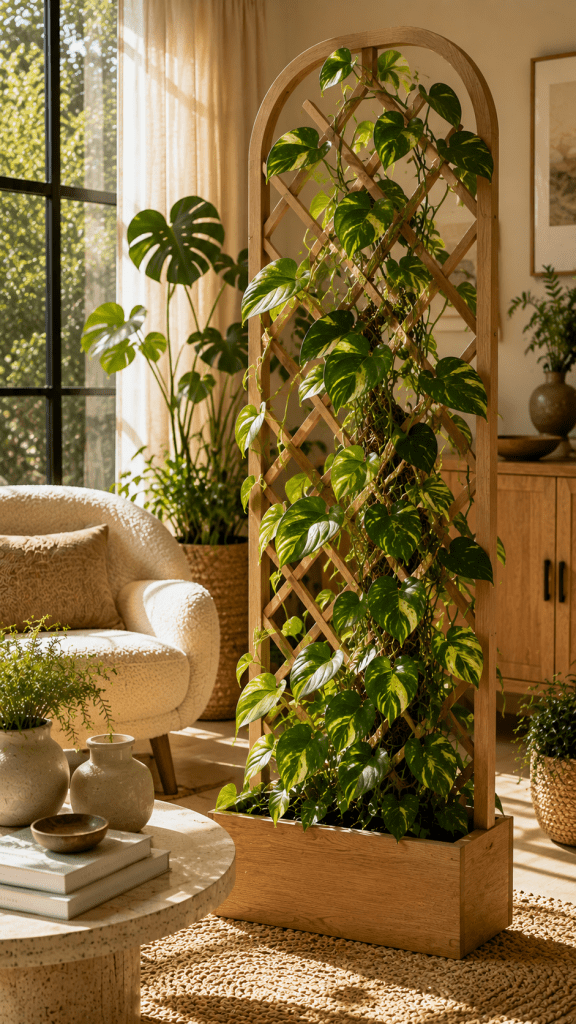
If you’re searching for pothos climbing ideas that blend gardening with interior design, a decorative wooden trellis offers the perfect balance.
Unlike moss poles, trellises emphasize artistic shapes and architectural interest. They transform pothos into living sculptures rather than simple trailing plants.
Wooden arches, fan-shaped trellises, geometric frames, and ladder designs all create unique visual effects while supporting healthy climbing growth.
Natural oak, bamboo, cedar, and walnut finishes work especially well with contemporary interiors because they introduce warm organic textures.
Advantages of Using a Trellis 🌱
One reason homeowners love trellises is flexibility.
Instead of growing in one straight vertical line, vines can be trained into decorative patterns.
Popular arrangements include:
- Heart shapes ❤️
- Circular frames
- Diamond grids
- Spiral designs
- Fan patterns
- Minimalist ladders
These arrangements instantly create conversation pieces while remaining surprisingly easy to maintain.
Styling Tips
Pair a wooden trellis with:
- Woven baskets
- Ceramic pots
- Neutral walls
- Floating shelves
- Wooden furniture
- Linen curtains
The combination creates an inviting natural atmosphere inspired by boutique hotels and Scandinavian interiors.
🥉 3. Indoor Living Wall Using Wall Mounted Supports
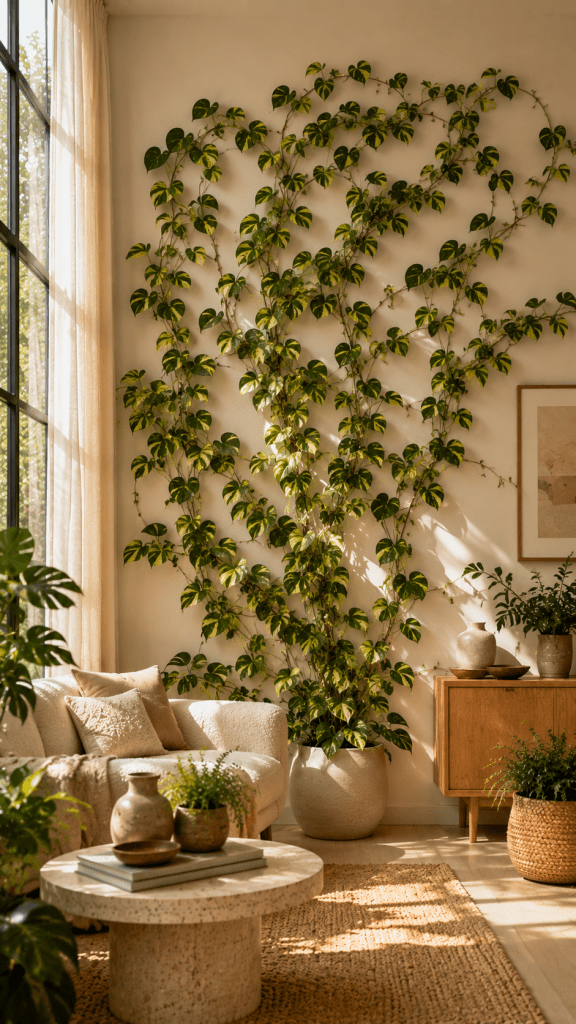
Perhaps the most dramatic of all pothos climbing ideas is creating an indoor living wall.
Instead of confining the plant to a single pole or trellis, vines are guided across walls using discreet clips, adhesive hooks, or cable systems.
This technique transforms an ordinary wall into a lush botanical feature that looks professionally designed.
With proper planning, one pothos plant can eventually cover an impressive portion of a room while maintaining an elegant, organized appearance.
Creating a Natural Wall Design 🌿
Rather than allowing vines to wander randomly, consider designing intentional patterns.
Popular layouts include:
- Vertical columns
- Organic branching vines
- Symmetrical grids
- Ceiling corner climbs
- Window framing
- Abstract botanical artwork
Using transparent wall clips helps keep the focus on the foliage instead of the mounting hardware.
Rooms That Benefit Most
Living wall pothos installations work especially well in:
- Bedrooms
- Living rooms
- Home offices
- Hallways
- Reading nooks
- Creative studios
They soften hard architectural lines while introducing calming greenery into everyday spaces.
Choosing the Right Pothos Variety for Climbing 🌱
Although nearly every pothos variety enjoys climbing, some cultivars respond more dramatically than others.
Golden Pothos
Golden pothos is the classic choice for beginners.
Its vigorous growth, bright variegation, and forgiving nature make it ideal for moss poles and living walls.
Marble Queen Pothos
Marble Queen grows slightly slower but rewards patience with striking white marbled foliage.
Providing a climbing support often helps maintain healthier growth despite the reduced chlorophyll.
Cebu Blue
Cebu Blue develops elongated blue-green leaves that become increasingly beautiful as the plant matures.
Climbing encourages larger foliage and a more tropical appearance.
Neon Pothos
The vibrant lime-green leaves create eye-catching vertical displays, especially against dark walls or black furniture.
Jade Pothos
Simple, elegant, and richly green, Jade pothos excels in minimalist interiors where texture becomes the primary design feature.
Essential Care Tips for Every Pothos Climbing Setup 🌿
Supporting the vines is only part of the equation. Proper care ensures the climbing display remains lush and healthy.
Bright Indirect Light ☀️
Pothos thrives in bright indirect sunlight.
Too little light slows growth and reduces variegation, while harsh afternoon sun may scorch delicate leaves.
Water Consistently 💧
Allow the top inch of soil to dry before watering again.
Overwatering remains one of the most common causes of unhealthy pothos plants.
Increase Humidity 🌫️
Although pothos tolerates average household humidity, higher humidity encourages healthier aerial roots and larger foliage.
Misting moss poles occasionally can also help climbing roots establish themselves.
Fertilize During Active Growth 🌱
A balanced liquid fertilizer every four to six weeks during spring and summer supports vigorous climbing growth.
Avoid excessive fertilization during winter when growth naturally slows.
Rotate the Pot 🔄
Rotating the planter every couple of weeks encourages even growth and prevents vines from leaning excessively toward the light source.
Common Mistakes to Avoid When Trying Pothos Climbing Ideas 🚫
Many plant owners become discouraged simply because they unknowingly make a few preventable mistakes.
Choosing a Support That Is Too Small
A short support quickly becomes inadequate as vines mature.
Selecting a taller structure from the beginning reduces future disturbance.
Ignoring Aerial Roots
Those tiny brown roots are meant to grip surfaces.
Gently positioning them against moss or wood greatly improves climbing success.
Using Tight Plant Ties
Stems continue expanding as they grow.
Always use soft, flexible ties that won’t damage the vine.
Placing Plants in Dark Corners
While pothos survives low light, thriving requires brighter conditions.
Insufficient light leads to longer internodes and smaller leaves.
Forgetting Regular Pruning
Occasional trimming encourages branching, resulting in a fuller climbing display instead of sparse vines.
Creative Decorating Ideas Using Climbing Pothos 🌿
The beauty of pothos extends beyond gardening—it becomes an integral part of interior design.
A moss pole beside a reading chair creates a peaceful relaxation corner.
A wall-mounted climbing system behind a sofa acts as living artwork.
A wooden trellis beside a large window introduces architectural interest without overwhelming the room.
Combining several climbing methods throughout a home creates visual continuity while allowing each plant to develop its own personality.
For those embracing the popular indoor jungle aesthetic, mixing pothos with monstera, philodendron, syngonium, and ferns creates multiple layers of greenery that feel lush yet organized.
Even compact apartments can enjoy dramatic vertical gardens by utilizing unused wall space instead of valuable floor space.
Frequently Asked Questions About Pothos Climbing Ideas
Should pothos climb or trail?
Both methods work, but climbing generally produces larger leaves, stronger stems, and a fuller appearance.
Can pothos damage walls?
When attached using removable clips or dedicated support systems, pothos usually does not damage painted walls. Avoid allowing aerial roots to attach directly to porous surfaces for extended periods.
Do pothos aerial roots need moisture?
They appreciate moisture, especially on moss poles, but can still function in average indoor humidity.
How fast does pothos climb?
Growth depends on light, temperature, humidity, and care, but healthy pothos can produce substantial vertical growth during the active growing season.
Can multiple pothos share one support?
Yes. Several compatible varieties can climb a larger moss pole or decorative trellis together, creating a fuller and more colorful display.
Final Thoughts on the Best Pothos Climbing Ideas
The most impressive indoor pothos displays almost always have one thing in common—they grow upward rather than simply hanging downward. By working with the plant’s natural climbing instinct, it’s possible to achieve larger foliage, healthier vines, and a far more dramatic visual impact.
Among the many pothos climbing ideas available, the moss pole remains the best option for encouraging oversized leaves and vigorous growth, making it ideal for plant lovers who want a lush tropical look. A decorative wooden trellis offers exceptional flexibility while blending beautifully with modern interiors, and a wall-mounted climbing system creates a breathtaking living feature that maximizes vertical space.
Whichever approach is chosen, the combination of proper lighting, consistent care, and thoughtful training will reward patience with a thriving plant that continues to grow more spectacular over time. A simple pothos can become the centerpiece of an indoor jungle, proving that one of the easiest houseplants is also one of the most transformative.