If you’re searching for concrete block garden beds, you’re probably looking for something that’s durable, affordable, and stylish at the same time. And honestly? You’re on the right track. 🌿✨ Concrete block garden beds are one of those rare DIY solutions that check all the boxes—strong, customizable, budget-friendly, and surprisingly aesthetic.
In this guide, we’ll dive deep into the best 3 concrete block garden beds ideas that can completely transform your outdoor space. Whether your backyard is tiny, sloped, or just plain boring, these ideas will help you turn it into a functional and beautiful garden paradise. 🌸
Why Concrete Block Garden Beds Are So Popular Right Now 🌱
Concrete blocks (also called cinder blocks) have quietly become a favorite in modern garden design—and for good reason.
First, they’re incredibly durable. Unlike wood, which can rot or attract pests over time, concrete blocks can last for years with minimal maintenance. This makes them perfect for long-term gardening projects.
Second, they’re versatile. You can stack them, shape them, paint them, or even use the holes for planting herbs or flowers. It’s like having LEGO for your garden—but way more useful. 😄
And finally, they’re budget-friendly. Compared to stone or custom-built beds, concrete blocks are much cheaper while still giving that clean, modern look.
Best 3 Concrete Block Garden Beds Ideas You Need to Try 🌿
Let’s get into the real inspiration. These are the Top 3 concrete block garden beds ideas that stand out in both function and style.
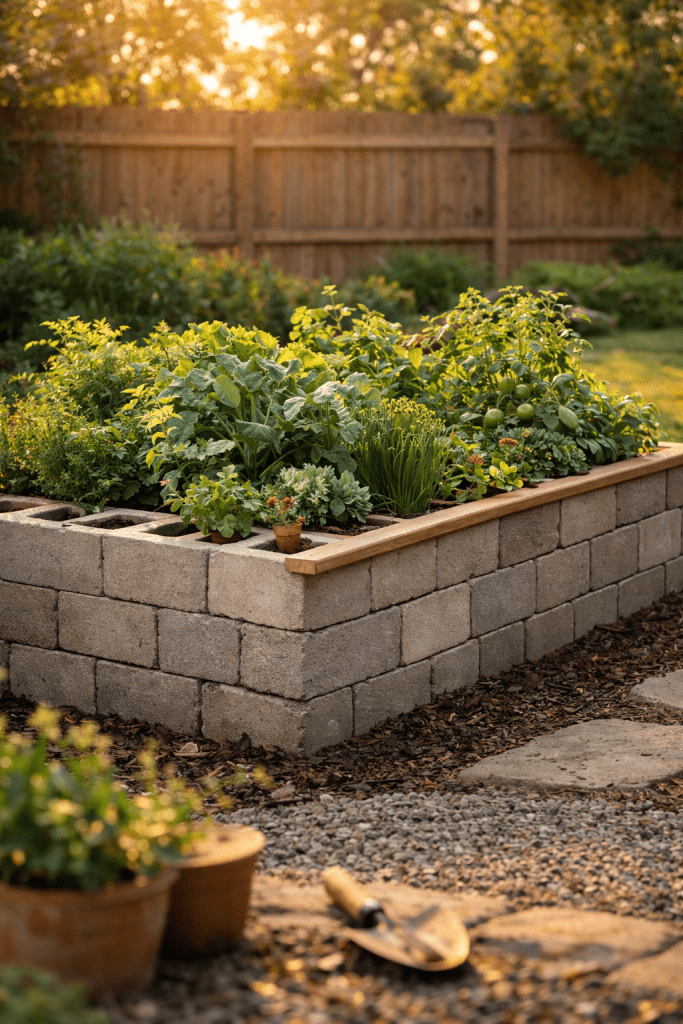
1. Raised Concrete Block Garden Beds for Easy Gardening 🧱🌼
Raised beds are probably the most popular use of concrete blocks—and for good reason.
Why Raised Concrete Block Garden Beds Work So Well
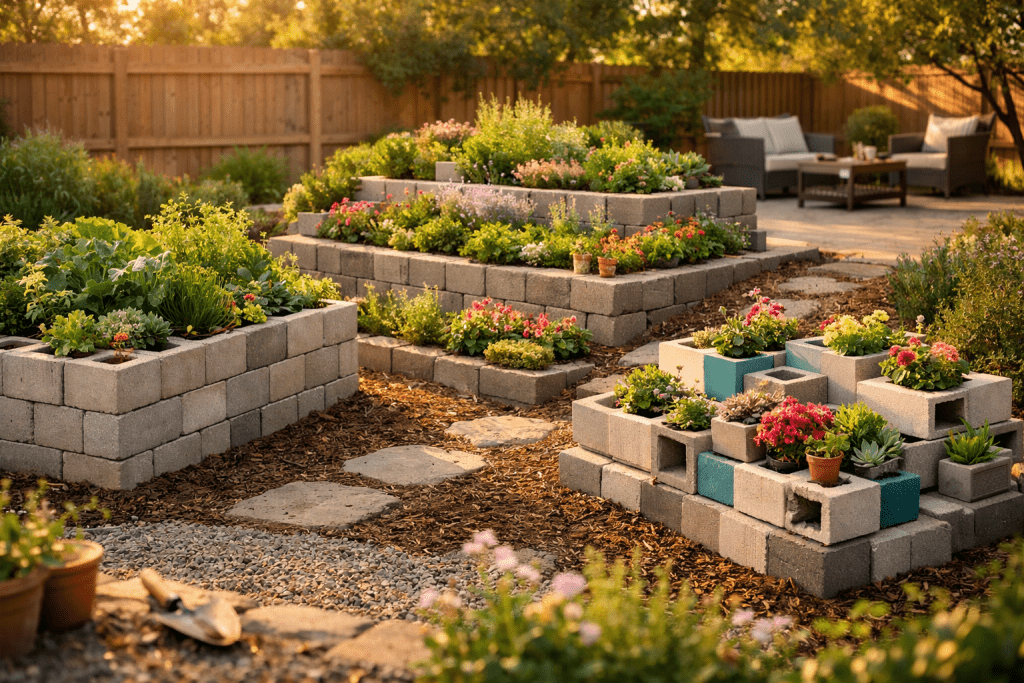
Raised garden beds bring your plants closer to you, which means less bending, less strain, and a much more enjoyable gardening experience. This is especially helpful for beginners or anyone who wants low-maintenance gardening.
Concrete blocks make raised beds even better because they provide strong, stable walls that won’t shift easily over time.
Design Ideas for Raised Beds
You can keep it simple with a rectangular layout, or get creative with L-shapes and U-shapes. The hollow sections of the blocks can even be used to grow herbs like basil, thyme, or small flowers. 🌿
For a more polished look, consider:
- Painting the blocks in neutral tones (white, grey, beige)
- Adding wooden planks on top as seating edges
- Mixing plants of different heights for depth
Soil and Drainage Tips
One of the biggest advantages of raised beds is control over soil quality. You can create the perfect mix for your plants.
A simple mix:
- 40% garden soil
- 30% compost
- 30% sand or perlite
This ensures proper drainage and nutrient balance.
2. Tiered Concrete Block Garden Beds for Sloped Yards 🌄🌸
If your yard isn’t flat, don’t fight it—use it.
Why Tiered Concrete Block Garden Beds Are a Game Changer
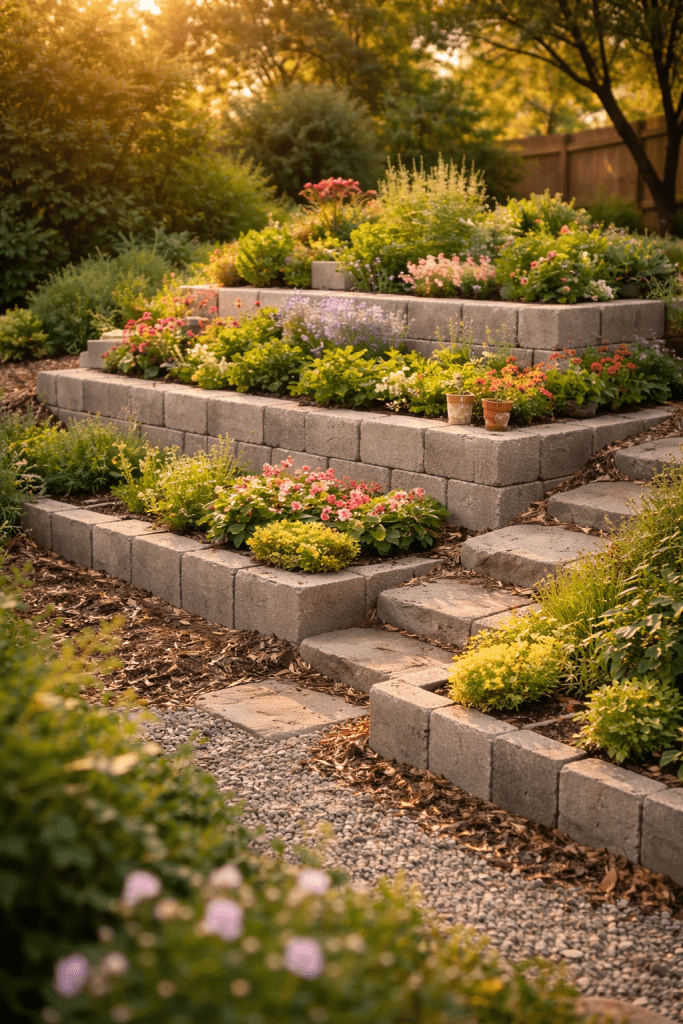
Sloped yards can be tricky, but tiered garden beds turn that challenge into an advantage. Instead of one flat area, you get multiple levels of planting space, which looks stunning and increases functionality.
Concrete blocks are perfect for this because they can hold soil securely and create clean, defined levels.
How to Build a Tiered Layout
Start from the bottom and work your way up. Each level should be slightly set back from the one below it.
Tips:
- Keep each tier around 20–40 cm high
- Use gravel behind blocks for drainage
- Make sure each level is compact and stable
Visual Impact and Plant Choices
Tiered beds naturally create a layered look, so take advantage of it.
Planting ideas:
- Bottom tier: leafy greens or ground cover 🌱
- Middle tier: flowers or herbs 🌸
- Top tier: taller plants or small shrubs 🌿
This creates a cascading effect that looks amazing from every angle.
3. Decorative Concrete Block Garden Beds with Built-In Planters 🎨🌺
This is where things get really fun.
Turning Concrete Blocks into Decorative Features
Instead of hiding the blocks, why not make them part of the design?
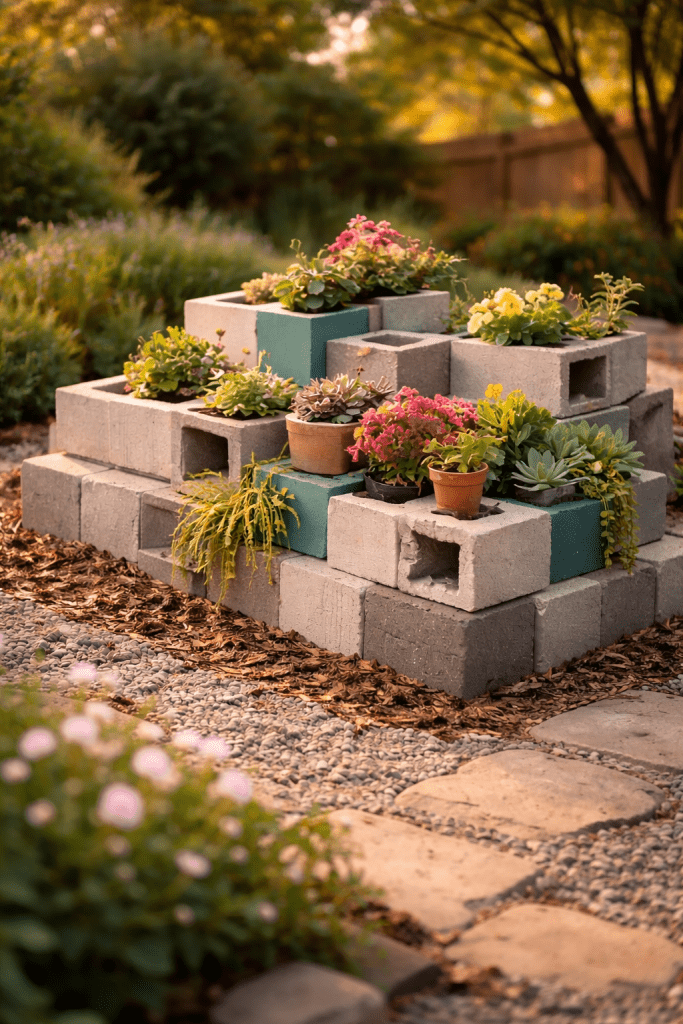
Concrete block holes can act as mini planters. You can fill them with colorful flowers, succulents, or trailing plants to add personality and texture.
Creative Styling Ideas
Here are some ideas to elevate your design:
- Paint blocks in bold colors for a playful look 🎨
- Alternate block directions for visual patterns
- Combine with gravel, pebbles, or mulch for contrast
You can even create shapes like circles, zig-zags, or curved beds for a more artistic garden layout.
Perfect for Small Spaces
Decorative concrete block beds are especially useful for small gardens or patios. They allow you to maximize space while still adding visual interest.
Concrete Block Garden Beds Comparison Table 📊
Here’s a quick breakdown to help you decide which style fits your needs best:
| Feature | Raised Beds 🧱 | Tiered Beds 🌄 | Decorative Beds 🎨 |
|---|---|---|---|
| Difficulty Level | Easy | Medium | Easy–Medium |
| Best For | Beginners | Sloped yards | Small spaces |
| Visual Impact | Clean & neat | Dramatic | Creative & unique |
| Maintenance | Low | Medium | Low |
| Customization | Medium | High | Very High |
Cost Breakdown of Concrete Block Garden Beds 💰
Budget matters, so here’s a rough idea of what you might spend:
- Concrete blocks: $1–$3 per piece
- Soil and compost: $50–$150 depending on size
- Optional paint or finish: $20–$50
Compared to wood or stone beds, this is incredibly affordable.
Step-by-Step Basic Setup Guide 🛠️
Even though designs vary, the basic process is similar.
1. Choose Your Location
Pick a spot with good sunlight—most plants need at least 6–8 hours per day.
2. Prepare the Ground
Clear grass, level the soil, and add a layer of gravel if needed for drainage.
3. Lay the First Layer of Blocks
This is the most important step. Make sure it’s level and stable.
4. Stack and Secure
Add more layers depending on your design. You can use adhesive if you want extra stability.
5. Fill with Soil
Use a high-quality soil mix for best results.
Common Mistakes to Avoid 🚫
Even simple projects can go wrong if you’re not careful.
Skipping Drainage
Water needs somewhere to go. Without proper drainage, plants can rot.
Not Leveling the Base
If the first layer isn’t level, everything else will be off.
Using Poor Soil
Don’t cut corners here—soil quality directly affects plant health.
Maintenance Tips for Long-Lasting Garden Beds 🌿
The good news? Concrete block garden beds require very little maintenance.
Still, a few habits can keep them looking great:
- Check for weeds regularly 🌱
- Refresh soil every season
- Clean blocks occasionally to remove dirt or algae
Important Note: Always check the type of concrete blocks you use. Some older or industrial blocks may contain materials not suitable for edible plants, so choose safe, garden-friendly options.
Final Thoughts on Concrete Block Garden Beds 🌼
Concrete block garden beds are one of the smartest DIY upgrades you can make. They’re strong, flexible, and adaptable to almost any garden style.
Whether you go for raised beds, tiered designs, or decorative layouts, each option offers its own unique benefits. The best part? You don’t need a huge budget or professional skills to get started.
So if your garden feels a bit dull or underused, these best 3 concrete block garden beds ideas might be exactly what you need to turn things around. 🌿✨
If you want, the next step could be creating Pinterest pin text + image prompts for this topic—just say the word 👍