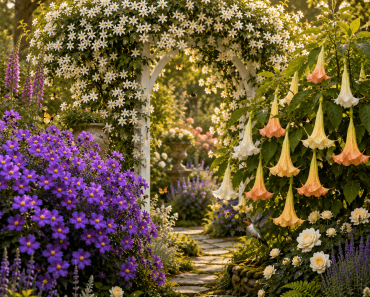
Poinsettia Garden Ideas can transform an ordinary outdoor space into a breathtaking display of vibrant colors, elegant foliage, and unforgettable seasonal beauty. While poinsettias are traditionally associated with Christmas decorations and indoor holiday arrangements, these spectacular tropical plants have incredible potential in outdoor garden designs. Their brilliant red, creamy white, delicate pink, and beautifully marbled bracts can create a luxurious garden atmosphere that feels both festive and naturally sophisticated.
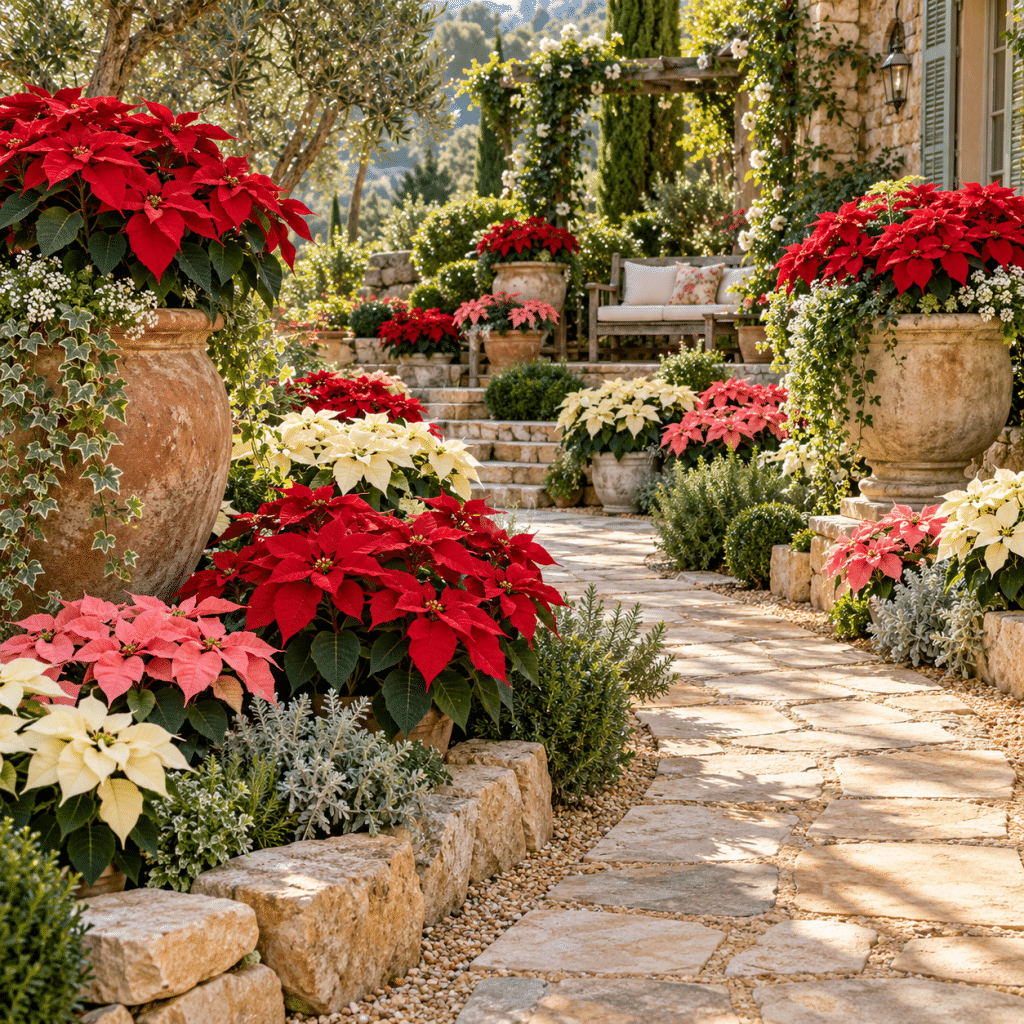
Imagine stepping into a garden where magnificent red poinsettias frame a winding stone pathway, soft white varieties brighten an elegant courtyard, or beautifully arranged containers create a welcoming outdoor retreat. These stunning plants offer more than temporary holiday decorations. In suitable warm climates, poinsettias can develop into impressive perennial shrubs, while gardeners in colder regions can enjoy their beauty through carefully designed seasonal containers.
The secret to creating an extraordinary poinsettia garden is choosing a design that complements your outdoor space, provides suitable growing conditions, and allows the plants’ striking colors to become the main attraction. Whether you love romantic cottage gardens, modern minimalist landscapes, or charming small-space retreats, there is a beautiful way to incorporate poinsettias into your outdoor surroundings.
🌺 The following Best 3 Poinsettia Garden Ideas combine eye-catching landscape design, thoughtful plant combinations, and practical gardening techniques to create outdoor spaces that feel elegant, welcoming, and visually spectacular.
Why Poinsettia Garden Ideas Are Perfect for Creating a Stunning Outdoor Landscape
Poinsettias possess a distinctive beauty that few ornamental plants can replicate. Their broad green foliage provides a lush foundation, while their colorful bracts create an extraordinary visual effect during the flowering season. The contrast between brilliant red and deep green naturally captures attention, making these plants excellent candidates for focal points, decorative borders, and coordinated garden arrangements.
One of the most fascinating characteristics of poinsettias is that their colorful displays are created by modified leaves called bracts rather than conventional flower petals. Their actual flowers are the tiny structures clustered near the center of the colorful bracts. This botanical feature gives poinsettias their characteristic appearance and makes them especially attractive in ornamental garden arrangements.
Poinsettias are native to Mexico and belong to the species Euphorbia pulcherrima. Under suitable conditions, they can grow as woody shrubs, displaying a completely different character from the compact potted plants commonly sold during the holiday season. Their natural growth habit makes them particularly interesting for tropical gardens, warm-climate landscapes, and spacious outdoor planting schemes.
Another important advantage is their growing diversity of colors. Modern varieties offer creamy white, soft pink, peach, deep burgundy, and multicolored combinations alongside the classic Christmas red. This variety makes it possible to design a poinsettia garden around almost any preferred decorative atmosphere.
✨ The real design opportunity is to use poinsettias as intentional elements of a landscape rather than simply placing a few holiday plants outside.
A carefully designed garden can incorporate their beautiful foliage even before the colorful bracts develop. When their seasonal display eventually appears, the entire landscape gains a dramatic new focal point.
Understanding the Best Conditions for Outdoor Poinsettias
Before choosing a garden design, understanding the environmental requirements of poinsettias is essential. These tropical plants are sensitive to frost and freezing temperatures, so permanent outdoor planting is most practical in warm, frost-free or nearly frost-free climates.
Gardeners in colder areas can still enjoy spectacular poinsettia arrangements by growing the plants in containers and moving them indoors before damaging cold weather arrives. This approach provides greater flexibility while allowing the garden to benefit from seasonal color.
Poinsettias generally prefer bright conditions, fertile soil, consistent but moderate moisture, and excellent drainage. Established landscape plants can thrive in sunny locations, although recently purchased indoor-grown plants should be gradually acclimated to stronger outdoor sunlight.
Another fascinating requirement involves darkness. Poinsettias are short-day plants, meaning that sufficiently long, uninterrupted nights help trigger their flowering and colorful bract development. Artificial lighting from nearby streetlights, security lamps, or illuminated windows may interfere with this process.
For successful landscape planting, selecting an appropriate location is just as important as choosing beautiful colors. A well-positioned poinsettia can become an extraordinary feature during its natural flowering season.
🥇 1 Poinsettia Garden Ideas With a Romantic Curved Pathway and Layered Flower Borders
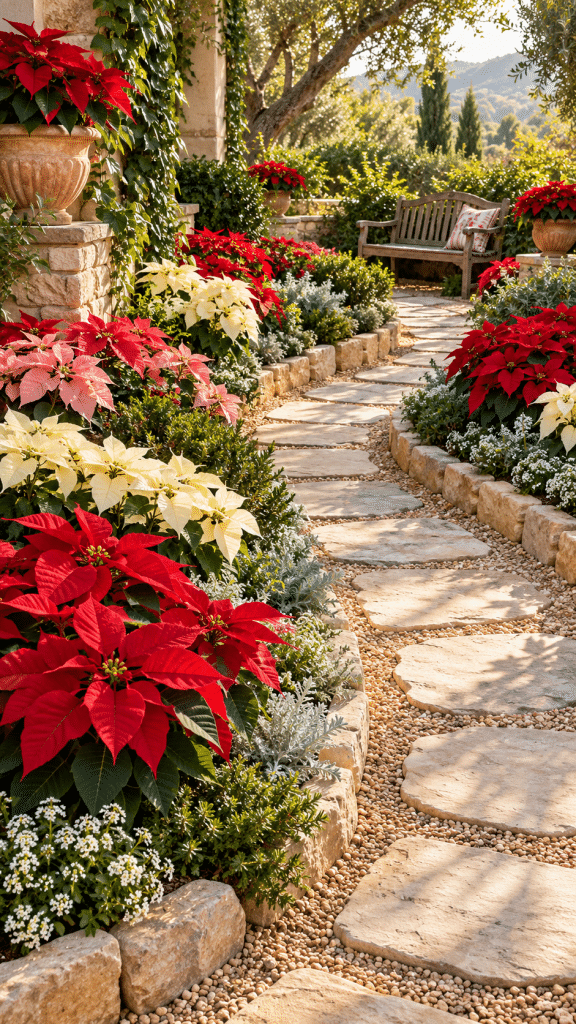
A romantic poinsettia garden built around a gently curved pathway creates one of the most visually captivating outdoor landscapes imaginable. This design combines rich seasonal color, beautifully layered planting beds, natural stone textures, and a sense of discovery that invites visitors to explore the garden.
Instead of arranging poinsettias in a simple straight line, this concept celebrates organic movement. A softly winding pathway becomes the central feature, while spectacular poinsettia plants create colorful borders on both sides. The overall atmosphere feels lush, welcoming, timeless, and reminiscent of a beautifully maintained countryside garden.
The most appealing quality of this arrangement is its balance between structure and natural beauty. The pathway provides a clear visual direction, while the surrounding plants create a soft, abundant landscape that feels effortlessly elegant.
Designing a Beautiful Curved Garden Pathway
Begin with a gently winding garden path constructed from natural flagstone, pale limestone, weathered stepping stones, or warm-toned gravel. The pathway should feature relaxed curves rather than sharp angles, creating a natural movement through the surrounding planting beds.
Pale stone materials are particularly effective because they contrast beautifully with the deep green foliage and vibrant red bracts of poinsettias. Their soft neutral tones keep the design visually sophisticated without competing with the plants.
Position larger poinsettias near the outer curves of the pathway, where their colorful displays can create visually appealing focal points. Smaller specimens or compact varieties can be arranged closer to the edges, provided sufficient room remains for mature growth.
In warm climates where poinsettias grow permanently in the ground, account for their eventual shrub-like size. Many landscape plants can become considerably larger than the compact greenhouse varieties sold in stores.
The resulting pathway should feel like a natural journey through a beautiful flowering landscape rather than a rigid arrangement of ornamental plants.
Creating Layered Poinsettia Borders With Complementary Plants
Layered planting is one of the most effective techniques for producing a professional-looking garden. Instead of creating a single row of poinsettias, arrange plants at different heights and depths to develop visual richness.
Use taller poinsettia shrubs toward the back of the planting beds, medium-sized plants in the middle, and low-growing companion plants along the pathway edges.
Suitable companions depend on the local climate and the amount of sunlight the site receives. In warm gardens, carefully selected liriope, dwarf ornamental grasses, and compact foliage plants can help create a soft visual transition between the path and the poinsettias.
Dark green foliage provides an excellent background for red bracts. Meanwhile, silver-green foliage or muted cream-colored accents can brighten the composition without overpowering the primary plants.
For a romantic appearance, avoid filling every available space with contrasting colors. Instead, repeat a restrained palette of deep green, crimson red, warm cream, and natural stone.
🌿 Garden design tip: Repeating groups of the same poinsettia color creates a stronger visual rhythm than scattering individual plants randomly throughout the border.
A harmonious planting arrangement allows visitors to appreciate the shape of the pathway, the contrast of the materials, and the exceptional seasonal beauty of the poinsettias.
Choosing Colors for an Elegant Romantic Garden
Classic red poinsettias are especially beautiful in romantic landscape designs because their rich color contrasts naturally with surrounding greenery.
However, an entirely red planting scheme can sometimes feel visually overwhelming in a small garden. Introducing carefully selected white or blush-pink varieties can create a more refined arrangement.
For example, consider placing groups of deep red poinsettias along the principal curves of the pathway and using creamy white specimens near a seating area or decorative garden entrance.
Soft pink varieties can introduce a delicate romantic quality, particularly when combined with warm stone surfaces and natural wooden details.
A beautiful color composition might include approximately 60 percent red poinsettias, 25 percent creamy white poinsettias, and 15 percent soft pink varieties. These proportions are a visual planning suggestion rather than a horticultural requirement.
The goal is to create a coordinated landscape in which every plant contributes to the overall atmosphere.
Adding Natural Decorative Features
Small decorative details can make a poinsettia pathway feel especially memorable.
A weathered wooden garden bench positioned at the end of the pathway creates an inviting destination. A rustic stone planter, simple water bowl, or natural wooden arbor can provide another carefully considered focal point.
Choose materials that complement the plants rather than competing with their vibrant colors.
Natural stone, aged terracotta, untreated-looking wood, and subtle bronze finishes are particularly suitable for this romantic garden style.
Lighting should also be planned carefully. While decorative lighting can enhance the garden after sunset, strong nighttime illumination near poinsettias may interfere with their seasonal flowering cycle.
Consider positioning pathway lights away from the plants or using lighting only occasionally, rather than exposing the poinsettias to continuous artificial light during their flower-induction period.
The final result is a romantic landscape that offers beautiful structure throughout the growing season and becomes especially spectacular when colorful poinsettia bracts develop.
🥈 2 Poinsettia Garden Ideas With an Elegant Modern Courtyard and Sculptural Planting Beds
For homeowners who prefer contemporary garden design, poinsettias can become surprisingly sophisticated architectural plants.
An elegant modern courtyard uses clean lines, carefully arranged planting beds, minimal decoration, and a restrained color palette to create a luxurious outdoor environment.
Unlike a romantic garden filled with soft curves and abundant planting, this design emphasizes clarity, symmetry, and intentional simplicity.
The visual attraction comes from combining the naturally expressive foliage of poinsettias with the geometric character of modern landscaping.
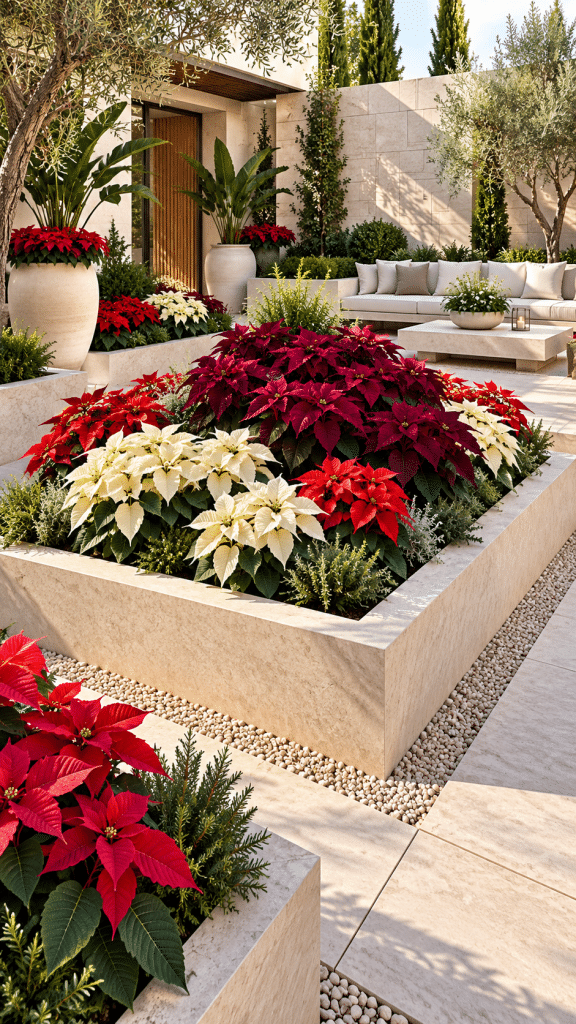
Imagine deep burgundy and creamy white poinsettias growing in structured beds surrounded by pale gravel, smooth concrete paving, elegant stone walls, and sculptural greenery.
The combination feels contemporary, refined, and visually striking.
Creating Architectural Garden Beds
The foundation of a modern poinsettia courtyard is a clearly organized planting layout.
Raised rectangular beds, square planters, or long linear garden borders can be used to create a strong architectural framework.
These geometric elements provide a beautiful contrast to the rounded foliage and colorful bracts of poinsettias.
For a spacious courtyard, consider placing a large central planting bed within an arrangement of pale stone paving. Several poinsettias can be grouped together to create a coordinated seasonal display.
Alternatively, two symmetrical beds can frame an outdoor seating area or garden entrance.
The key is to maintain generous visual space around the plants. Rather than filling every corner with decorations, allow the poinsettias to become the primary ornamental feature.
Pale limestone, warm gray concrete, natural sandstone, and muted beige gravel provide excellent background materials.
Avoid excessive decorative patterns that distract from the plants’ naturally striking appearance.
✨ Modern design secret: Strong architectural lines make the soft organic shapes of poinsettias appear even more dramatic.
Combining White and Burgundy Poinsettias for a Luxury Look
While traditional red poinsettias are instantly recognizable, modern landscapes can benefit from a more unusual color combination.
Creamy white and deep burgundy varieties create a particularly elegant composition.
White poinsettias bring brightness and softness, while burgundy selections introduce dramatic contrast and visual depth.
Place darker varieties toward the center or back of the planting arrangement, with lighter-colored specimens positioned where they can catch natural daylight.
This creates a layered effect without requiring a large number of different plant species.
For a warmer and more welcoming appearance, combine creamy white poinsettias with muted peach or blush-pink varieties.
These gentle colors work beautifully with beige stone, light oak furniture, and handmade ceramic containers.
The best choice depends on the atmosphere of the courtyard. Deep burgundy creates a dramatic luxury aesthetic, while cream and blush tones produce a more relaxed contemporary setting.
Remember that poinsettia varieties differ in vigor, growth habit, and flowering schedule. Choose plants with compatible mature sizes when creating formal arrangements.
Incorporating Sculptural Greenery and Natural Materials
A modern garden benefits from a carefully selected supporting plant palette.
Architectural foliage plants can complement poinsettias without overwhelming their seasonal displays.
Depending on the climate, suitable companions may include compact ornamental grasses, dwarf evergreen shrubs, or well-maintained foliage plants with simple silhouettes.
Choose species that tolerate similar growing conditions and will not compete aggressively with poinsettia roots.
Avoid planting large, fast-growing companions too close to the poinsettias. Overcrowding can reduce air circulation and make maintenance more difficult.
Natural materials are equally important.
A pale gravel surface surrounding the planting beds gives the courtyard a clean appearance. Smooth stone stepping pads can connect different areas, while a low modern bench provides a practical place to enjoy the garden.
A few oversized ceramic containers can introduce additional height and structure.
For the most elegant effect, select containers in cream, warm gray, charcoal, or natural terracotta.
These understated finishes complement both colorful poinsettia varieties and modern architectural surroundings.
Designing a Beautiful Courtyard Seating Area
A modern poinsettia garden becomes more enjoyable when it includes a comfortable outdoor seating space.
Position a simple bench, pair of lounge chairs, or compact dining set where the planting beds can be appreciated from multiple angles.
Neutral outdoor furniture is ideal because it allows the poinsettias to provide the main color accents.
Cream cushions, textured linen-look fabrics, natural wood furniture, and subtle woven accessories can create a welcoming atmosphere without compromising the minimalist design.
An attractive arrangement might feature two rectangular poinsettia beds positioned on either side of a central seating area.
The seating space becomes visually framed by the plants, creating a balanced and intimate courtyard.
For smaller spaces, a single oversized planter filled with coordinated poinsettias may be sufficient to establish an impressive focal point.
Choose a location with adequate daylight and protect the plants from frost, cold drafts, and poor drainage.
The completed courtyard should feel like an elegant outdoor room where architecture and botanical beauty work together harmoniously.
🥉 3 Poinsettia Garden Ideas With a Cozy Container Garden and Charming Outdoor Retreat
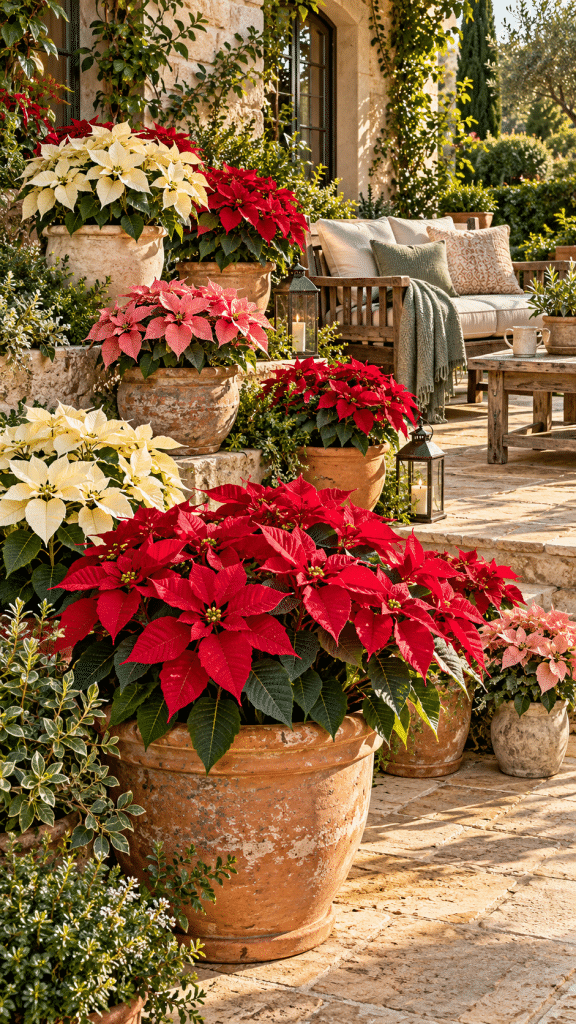
A container-based poinsettia garden is one of the most flexible and accessible ways to decorate an outdoor space.
This design is particularly attractive for small gardens, patios, balconies, porches, and compact courtyard corners.
Instead of relying on permanent in-ground planting, the arrangement uses beautiful containers of different sizes to create an inviting botanical retreat.
The main advantage is flexibility. Containers can be rearranged throughout the season, moved into more sheltered positions when necessary, and brought indoors when temperatures become unsuitable.
This makes container gardening especially valuable in regions where outdoor poinsettias cannot survive winter conditions.
With thoughtful styling, even a small collection of plants can create an exceptionally beautiful garden display.
Selecting Beautiful Containers for Poinsettias
Container choice strongly influences the overall appearance of a poinsettia garden.
Terracotta pots are particularly attractive because their warm earthy color complements red, pink, and cream poinsettias.
Their natural texture also creates a welcoming Mediterranean-inspired or cottage-garden atmosphere.
For a more contemporary arrangement, consider matte ceramic planters in warm beige, muted charcoal, soft gray, or creamy white.
Woven-look decorative containers can add softness, but the plant itself should remain in a properly drained growing pot or liner.
Poinsettias do not tolerate permanently waterlogged roots, so every functional planting container should have adequate drainage.
Choose pots that suit the plant’s existing root system rather than placing small poinsettias into excessively large containers.
When repotting, move up gradually to a slightly larger pot using a suitable well-draining growing medium.
A container that is much too large can retain excessive moisture around the roots, increasing the risk of root problems.
🌺 For an attractive display, combine several container sizes while maintaining a consistent material or color palette.
This creates an intentional, professionally styled appearance without making the arrangement feel repetitive.
Building a Layered Display With Different Heights
One of the secrets to a beautiful container garden is varying the height of the plants.
Instead of placing every pot directly on the ground, arrange them on carefully selected levels.
A large poinsettia can occupy the central position, while medium-sized plants surround it. Smaller pots can be placed along the front edge to create a gradual visual transition.
Low wooden platforms, sturdy stone steps, and weather-resistant plant stands can introduce additional height.
The arrangement should feel layered but never cluttered.
Leave enough room between pots for foliage growth and air circulation. Overcrowded plants can trap moisture and make watering and inspection more difficult.
For a balanced design, consider placing the largest container slightly off-center. Surround it with smaller pots arranged in a relaxed triangular composition.
This technique produces a more natural appearance than positioning every container in a perfectly straight line.
If the display is intended for a narrow patio, arrange the tallest plants toward the back and the smallest toward the front.
For a garden corner visible from several directions, a central focal plant surrounded by lower containers may be more effective.
Creating a Soft Christmas Inspired Garden Without Excessive Decorations
Poinsettias naturally evoke the beauty of the holiday season, making them ideal for a subtle Christmas-inspired outdoor arrangement.
However, a sophisticated poinsettia container garden does not require excessive ornaments, glitter, or brightly colored accessories.
The plants themselves already provide dramatic seasonal beauty.
Use deep red poinsettias as the main feature, then introduce a small number of creamy white varieties to soften the arrangement.
Add natural decorative elements such as pinecones, seasonal branches, weather-resistant woven baskets, or simple wooden accents.
In warm climates where poinsettias remain outdoors, local evergreen foliage can create a beautiful botanical background.
A neutral outdoor lantern or rustic wooden bench can provide an additional decorative element.
If lighting is included, avoid positioning bright lamps where they will illuminate poinsettias throughout the night during their flower-induction period.
The goal is to create a cozy seasonal retreat that feels elegant and natural rather than overly decorated.
Arranging a Small Poinsettia Garden on a Porch or Balcony
Limited space does not prevent the creation of a beautiful poinsettia garden.
A small porch or balcony can accommodate an attractive arrangement using only a few carefully selected containers.
Start with one larger poinsettia in a prominent location, such as beside a garden chair or near the entrance.
Add two smaller plants in matching or complementary containers to create a cohesive display.
A compact wooden stool can provide additional height, while a narrow plant stand can make better use of vertical space.
Choose furniture and accessories that are proportional to the available area.
A small wicker chair with cream cushions, a simple wooden side table, and several terracotta pots can create a charming outdoor corner.
If the balcony receives intense afternoon sunlight, newly purchased poinsettias may need temporary protection while adjusting to outdoor conditions.
Shelter the plants from strong winds, which can damage their leaves and dry their potting mix more quickly.
In colder regions, treat the display as a temporary seasonal arrangement and bring the plants indoors before temperatures fall too low.
The finished space can become a comfortable garden-inspired retreat where natural greenery and warm seasonal colors make even a compact outdoor area feel inviting.
Comparing the Best 3 Poinsettia Garden Ideas
Choosing the most suitable garden design depends on the available space, climate, preferred aesthetic, and level of maintenance.
The following comparison highlights the main characteristics of each design.
| Garden Design | Ideal Space | Main Colors | Overall Style | Best Feature |
|---|---|---|---|---|
| 🥇 Romantic Curved Pathway | Medium to large gardens | Red, cream, soft pink | Romantic cottage garden | Flowing borders and layered planting |
| 🥈 Elegant Modern Courtyard | Courtyards and contemporary landscapes | Burgundy, white, blush | Modern minimalist luxury | Geometric beds and architectural contrast |
| 🥉 Cozy Container Garden | Patios, porches, balconies, small gardens | Red, cream, peach | Cozy seasonal retreat | Flexible arrangements and movable containers |
The romantic curved pathway is particularly suitable for gardeners who want a lush and immersive landscape.
The modern courtyard is ideal for homeowners who appreciate minimalist architecture, deliberate planting patterns, and sophisticated color combinations.
Meanwhile, the container garden provides the greatest flexibility and is often the most practical option for smaller spaces or climates with cold winters.
All three designs can be adapted to different budgets and garden sizes.
How to Choose the Best Poinsettia Varieties for Your Garden
Selecting suitable poinsettia varieties is an important part of creating a successful garden design.
Different cultivars can vary considerably in color, size, branching habit, and seasonal development.
Some varieties are bred primarily for indoor holiday production, while others are better suited to landscape cultivation.
When purchasing poinsettias, consider more than the immediate appearance of their colorful bracts.
Look for healthy plants with strong stems, well-developed foliage, and no obvious signs of disease or insect infestation.
Classic Red Poinsettias for Dramatic Garden Color
Red poinsettias remain the most recognizable and visually powerful option for outdoor garden arrangements.
Their rich color creates a beautiful contrast with green foliage, pale stone pathways, cream-colored walls, and natural wooden features.
They work especially well in large planting groups because their vivid bracts create an impressive unified display.
For a romantic garden, red varieties can serve as the primary seasonal color.
In a modern courtyard, a smaller number of carefully positioned red plants can create striking focal points.
Look for cultivars with suitable growth habits and reliable seasonal performance in your climate.
White and Cream Poinsettias for Elegant Landscapes
Creamy white poinsettias provide a softer and more sophisticated alternative to traditional red varieties.
Their pale bracts beautifully complement natural stone, warm beige gravel, light-colored ceramic pots, and green foliage.
White varieties are particularly effective in minimalist gardens where restrained colors are essential to the design.
They can also brighten shaded-looking corners, although the plants still require sufficient daylight to grow properly.
Combine white poinsettias with burgundy or soft pink varieties for a refined and coordinated landscape.
Pink Peach and Marbled Poinsettias for Unique Garden Designs
Poinsettias are also available in delicate pink, warm peach, and beautifully patterned varieties.
These colors can introduce a more unusual appearance, especially in romantic cottage gardens or decorative container displays.
Pink poinsettias pair beautifully with cream-colored stone and light wooden accessories.
Peach varieties complement warm terracotta pots and sandy beige materials.
Marbled varieties can create an interesting focal point, but their intricate patterns are often most effective when used sparingly.
Too many different patterned plants can make a landscape appear visually busy.
For the most harmonious composition, choose one dominant color and one or two supporting colors.
How to Plant Poinsettias Outdoors for Healthy Growth
Beautiful garden design depends on healthy, well-established plants.
Even the most impressive landscape arrangement can lose its appeal if the poinsettias suffer from poor soil conditions, excessive moisture, or unsuitable temperatures.
Proper planting provides the foundation for strong foliage growth and reliable seasonal displays.
Preparing the Soil and Planting Location
Poinsettias prefer fertile, moist but well-drained soil. A slightly acidic soil pH of approximately 5.5 to 6.5 is recommended for landscape cultivation by the University of Florida’s horticultural guidance.
Before planting, examine the drainage conditions of the chosen location.
If water remains standing after rainfall, consider improving drainage or selecting another planting site.
In-ground poinsettias should not be placed in constantly saturated soil.
Organic matter can help improve the structure of many garden soils, but additions should be appropriate to the existing soil type.
Avoid burying the plants deeper than their original growing depth.
After planting, water thoroughly to settle the surrounding soil and help establish contact between the root system and the planting bed.
Mulch can help conserve moisture and moderate soil temperatures, but keep it slightly away from the main stems.
Choosing the Right Time for Planting
The ideal planting period depends on the local climate.
In warm regions where frost is uncommon, poinsettias can often become permanent outdoor landscape plants.
In regions with occasional winter freezing temperatures, planting should take place after the danger of frost has passed.
Plants that have been grown indoors or in protected greenhouses need gradual acclimation before exposure to stronger sunlight and outdoor wind.
Begin by placing them in a sheltered location with gentle light, then progressively increase their exposure according to their response.
This process reduces the risk of leaf scorch and environmental stress.
For gardeners in colder regions, container growing is usually more practical than permanent landscape planting.
Bring the plants back indoors when cold nighttime conditions threaten their health.
Understanding Poinsettia Flowering and Natural Darkness
One of the most important aspects of poinsettia cultivation is understanding how these plants develop their colorful bracts.
Poinsettias require sufficiently long nights to initiate flowering.
For many cultivars, approximately 13 to 14 hours of uninterrupted darkness are used in controlled flowering programs, although exact requirements depend on the variety and growing conditions.
This is why poinsettias naturally develop their familiar holiday colors during the shorter days and longer nights of the appropriate season.
Artificial nighttime lighting can interrupt the required dark period and delay flower development.
Gardeners who want reliable seasonal color should avoid planting poinsettias beside continuously illuminated security lights or streetlights.
In tropical locations closer to the equator, natural day lengths differ from those in temperate regions. Flowering dates and results may therefore vary by cultivar and location.
⚠️ Important Note: Poinsettias are frost-sensitive tropical plants, and their colorful bracts depend on suitable flowering conditions, including uninterrupted nighttime darkness. In cold climates, grow them in movable containers rather than assuming they will survive outdoors throughout winter. Their milky sap can also irritate skin and eyes, and chewing the plants may cause mouth or stomach irritation in pets. Wear gloves when pruning and keep plants away from pets that chew foliage.
Essential Poinsettia Garden Care for Long Lasting Beauty
Once poinsettias are established, consistent maintenance helps preserve their healthy foliage and attractive form.
The goal is not to provide excessive care but to maintain the correct balance of sunlight, water, nutrients, and pruning.
Watering Poinsettias Without Damaging the Roots
Poinsettias need sufficient moisture to support healthy growth, but overly wet conditions can damage their roots.
For container plants, check the surface of the potting mix regularly and water when it begins to feel dry.
Water thoroughly so excess moisture drains through the bottom of the container.
Never allow pots to remain standing in water-filled decorative sleeves or saucers.
In-ground poinsettias generally require more frequent watering during establishment.
Once the root system develops, irrigation should be adjusted according to rainfall, soil conditions, temperatures, and plant growth.
Avoid using a rigid watering schedule without checking the soil.
🌿 Healthy poinsettias generally perform better with consistent moisture and good drainage than with repeated cycles of extreme dryness and waterlogging.
Fertilizing for Strong Foliage and Beautiful Bracts
Poinsettias benefit from appropriate fertilization during active growth.
Landscape plants may be fertilized periodically with a balanced product suitable for ornamental shrubs.
However, nutrient requirements vary according to soil fertility, plant size, and local growing conditions.
Excessive fertilization is unnecessary and may encourage unwanted growth or cause root damage.
Use fertilizer according to the product instructions and avoid applying excessive quantities.
Recently purchased holiday poinsettias generally do not require heavy feeding while displaying their colorful bracts.
For established garden plants, the main fertilization period should correspond to their active growing season.
Reducing unnecessary late-season fertilization can also help maintain a more controlled growth habit.
Pruning Poinsettias Into Beautiful Garden Shapes
Pruning is particularly important for maintaining attractive poinsettia shrubs.
Without regular shaping, landscape poinsettias can become tall, open, and uneven.
Pruning after the colorful display has faded and the danger of frost has passed encourages branching and helps produce a fuller appearance.
During active growth, selective pinching can encourage multiple stems and a denser plant.
However, avoid pruning too late in the season, because removing developing shoots can interfere with the following flowering display.
The appropriate final pruning date depends on the climate and cultivar.
For a formal courtyard, maintain rounded or compact shapes that complement the architectural design.
For a romantic pathway garden, allow the shrubs to develop a softer natural outline while preventing overcrowding.
For container displays, remove damaged stems and maintain balanced growth without excessive cutting.
Creative Landscaping Details That Make Poinsettia Gardens Look More Expensive
An impressive garden does not necessarily require expensive decorative features.
Often, the most beautiful results come from thoughtful proportions, repeated materials, and well-coordinated colors.
A few carefully selected details can elevate the entire appearance of a poinsettia garden.
Use Natural Stone and Gravel for Beautiful Contrast
Natural stone is particularly effective in poinsettia landscaping because its neutral colors emphasize the brilliance of the plants.
Pale gravel provides a clean background for deep red or burgundy bracts.
Warm limestone creates an elegant contrast with creamy white poinsettias.
Weathered flagstones introduce texture and character to romantic garden pathways.
Choose one primary stone material and repeat it throughout the design.
Using too many contrasting materials can make a garden appear fragmented.
When combining gravel with planting beds, ensure that the underlying soil maintains suitable drainage and moisture conditions.
Decorative gravel should enhance the landscape without creating excessive root-zone heat in hot climates.
Create a Strong Focal Point With Grouped Planting
A common garden design mistake is distributing individual ornamental plants too evenly across a large area.
This can weaken their visual impact.
Instead, group poinsettias in coordinated clusters.
Three or five compact containers can create a balanced focal arrangement, while larger landscapes may benefit from substantial planting groups.
The ideal quantity depends on plant size, available space, and desired effect.
Repeating one dominant color usually creates a more cohesive appearance than mixing many varieties randomly.
In a large garden, clusters of red poinsettias can guide the eye toward a pathway or seating area.
In a modern courtyard, a symmetrical arrangement can emphasize architectural balance.
In a small container garden, one magnificent central poinsettia surrounded by smaller specimens can create a beautifully layered composition.
Combine Poinsettias With Warm Neutral Outdoor Decor
Warm-neutral decorative materials provide an attractive backdrop for colorful poinsettias.
Cream, beige, sand, taupe, natural wood, and muted terracotta all complement their foliage.
These colors also help create an inviting garden that feels sophisticated rather than excessively seasonal.
Consider adding a wooden garden bench, a natural woven outdoor rug, or a simple ceramic planter.
For a romantic arrangement, choose weathered finishes with organic textures.
For a modern courtyard, use smooth surfaces and clean geometric shapes.
For a cozy container garden, combine textured terracotta pots with comfortable neutral outdoor furniture.
Consistency in materials creates visual harmony and allows the plants to remain the central attraction.
Common Mistakes to Avoid When Creating Poinsettia Garden Ideas
Even experienced gardeners can encounter problems when growing poinsettias outdoors.
Understanding the most common mistakes makes it easier to maintain a healthy and attractive garden.
One frequent mistake is planting poinsettias outdoors without considering the local climate. While they may thrive as permanent shrubs in warm regions, freezing temperatures can severely damage them.
Another common issue is excessive watering. Poinsettias require adequate moisture, but poor drainage and continuously saturated soil can lead to root problems.
Insufficient daylight can also weaken plant growth, particularly when poinsettias are positioned in excessively dark garden corners.
At the same time, greenhouse-grown plants should not be exposed abruptly to intense outdoor sunlight.
A gradual transition is important.
Nighttime artificial lighting presents another challenge. A poinsettia planted beside a continuously illuminated porch may remain healthy and green but fail to develop the expected seasonal display.
Overcrowding is also worth avoiding. Plants need adequate space for their mature foliage and proper air circulation.
Finally, excessive late-season pruning may remove shoots that would otherwise contribute to the flowering display.
By addressing these issues during the design stage, gardeners can create more reliable and beautiful planting arrangements.
Frequently Asked Questions About Poinsettia Garden Ideas
Can Poinsettias Grow Outside All Year?
Poinsettias can grow outdoors year-round in suitable warm climates where they are protected from damaging frost.
They may develop into substantial shrubs when provided with appropriate light, soil, moisture, and growing conditions.
In colder regions, they are better grown in containers that can be moved into protected indoor environments during winter.
Permanent outdoor planting should always be based on local temperature patterns rather than appearance alone.
Do Poinsettias Prefer Full Sun or Shade?
Established outdoor poinsettias generally perform well in sunny locations with suitable moisture and drainage.
However, newly purchased indoor-grown plants may be sensitive to sudden exposure to strong sunlight.
Gradually acclimating plants to outdoor conditions helps reduce stress.
In particularly hot environments, some protection from intense afternoon sunlight may be beneficial, especially for container-grown plants.
How Long Do Poinsettias Stay Colorful Outdoors?
The duration of poinsettia color depends on the cultivar, environmental conditions, plant health, and temperature.
Under favorable conditions, colorful bracts may remain attractive for several weeks or even months.
Cold weather, excessive moisture, poor light, and environmental stress can shorten the display.
Healthy plants maintained under suitable conditions generally provide the most attractive seasonal results.
Can Poinsettias Be Planted Directly in Garden Soil?
Yes. Poinsettias can be planted directly into garden soil in climates where outdoor conditions support their survival.
Choose a sunny location with fertile, well-drained soil.
Plant at the original container depth and water thoroughly after transplanting.
Allow sufficient space for mature growth, particularly if the plants will remain in the landscape for several years.
Are Poinsettias Suitable for Small Gardens?
Poinsettias are excellent choices for small decorative garden arrangements when grown in appropriately sized containers.
Compact varieties can be displayed on patios, balconies, porches, and courtyard corners.
Using containers of different heights helps create a visually rich arrangement without requiring extensive ground space.
Container planting also makes it easier to move the plants when weather conditions change.
Can Poinsettias Become Large Garden Shrubs?
Yes. Under favorable tropical or subtropical conditions, poinsettias can develop into large woody shrubs and may become much taller than typical holiday potted plants.
Their ultimate size depends on the cultivar, climate, maintenance, and pruning practices.
For permanent landscape designs, selecting plants with suitable mature dimensions is essential.
Regular shaping can help maintain a more compact form.
What Colors Work Best in a Poinsettia Garden?
The most suitable colors depend on the desired garden style.
Deep red poinsettias are ideal for dramatic seasonal displays and romantic garden borders.
Creamy white varieties complement minimalist landscapes and elegant stone courtyards.
Soft pink and peach poinsettias create a gentle, welcoming atmosphere suitable for cottage-inspired arrangements.
Burgundy varieties can add depth and sophistication to modern outdoor designs.
A coordinated palette of two or three colors is often more visually effective than combining too many contrasting varieties.
Final Thoughts on Creating a Beautiful Poinsettia Garden
The best Poinsettia Garden Ideas demonstrate how one extraordinary ornamental plant can inspire completely different outdoor landscapes.
A romantic curved pathway surrounded by vibrant poinsettia borders creates an immersive garden filled with color and natural beauty. An elegant modern courtyard transforms the plants into sophisticated architectural features, while a cozy container garden brings their spectacular seasonal charm to smaller outdoor spaces.
Each design offers a different interpretation of poinsettia beauty, but all three share the same essential principle: allow the plants’ distinctive foliage and colorful bracts to remain the focal point.
The most successful gardens also respect the plants’ growing requirements. Appropriate temperatures, well-drained soil, suitable daylight, careful watering, and protection from disruptive nighttime lighting all contribute to healthier growth and more reliable seasonal displays.
🌺 Whether the goal is to create a luxurious landscape, a romantic garden retreat, or a charming festive patio, thoughtfully arranged poinsettias can bring exceptional warmth, color, and elegance to the outdoor environment.
With the right combination of plant varieties, natural materials, and thoughtful garden design, poinsettias can become much more than traditional holiday decorations. They can create an unforgettable outdoor setting that celebrates the beauty of nature in a truly spectacular way.