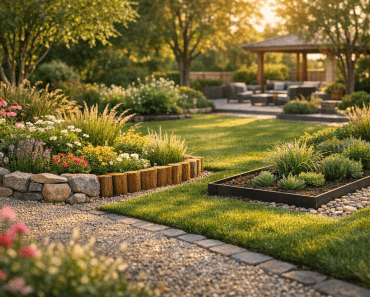
The best tree bark garden ideas prove that beautiful landscaping does not always require expensive stone, complicated structures, or perfectly manicured flower beds. Sometimes one of the most interesting materials is already lying beneath the trees. Bark, fallen branches, weathered logs, bark-covered wood pieces, and naturally textured timber can add warmth, character, and a wonderfully organic feeling to almost any outdoor space.
Tree bark has a visual quality that manufactured garden decorations often struggle to reproduce. Its irregular cracks, ridges, muted colors, mossy surfaces, and naturally aged appearance immediately connect a garden to the surrounding landscape. Whether your outdoor style leans rustic, woodland-inspired, cottage-like, contemporary, or somewhere in between, bark can introduce texture without making the garden feel overly decorated.
🌿 Even better, bark-based features can often evolve naturally over time. Rain may deepen the color of the wood, moss may gradually appear in shaded areas, and nearby plants can soften the edges. Instead of looking worse as they age, thoughtfully chosen natural materials often become more visually interesting.
Among the many possibilities, three approaches stand out because they combine strong visual impact with realistic garden functionality. These Top 3 tree bark garden ideas focus on creating a bark-covered woodland feature, designing a natural garden pathway, and transforming bark-covered logs into sculptural planting displays.
Why Tree Bark Works So Beautifully in Garden Design
Before exploring the Top 3 ideas, it helps to understand why bark can be such an effective landscaping material.
Most gardens contain a mixture of visually soft elements and visually hard elements. Flowers, grasses, ground covers, and leafy plants create softness, while paving, walls, pots, fences, and structures create definition. Tree bark occupies an interesting position between the two.
It is structurally solid like stone or timber, yet its texture feels completely natural.
A piece of bark-covered wood can therefore create structure without making the space feel rigid. This is particularly useful in naturalistic gardens where overly polished materials can sometimes look disconnected from the planting.
Tree bark is also remarkably versatile in color. Depending on the species and age of the wood, bark can contain shades of charcoal, silver gray, chestnut brown, warm cinnamon, deep espresso, muted beige, olive, and even reddish undertones.
These earthy shades work exceptionally well beside foliage.
Deep green ferns become more dramatic against dark bark. Silver foliage appears brighter beside warm brown wood. Soft grasses create movement around rugged trunks and logs. White flowers can look particularly luminous when positioned beside heavily textured dark timber.
🍃 The result is a garden that feels layered rather than simply decorated.
How to Choose Tree Bark for Garden Projects
Not every piece of fallen wood needs to become a garden feature. Choosing the right materials helps create a result that looks intentional rather than messy.
Look for bark with interesting visual character. Deep ridges, layered textures, naturally peeling sections, unusual curves, patches of lichen, and areas of subtle weathering can all become design features.
Large bark-covered logs can work beautifully as focal points, while smaller pieces may be better suited to edging, decorative ground layers, or miniature woodland arrangements.
Whenever possible, think about the garden as a composition rather than a collection of individual objects.
One dramatic log positioned among ferns may have more impact than twenty small pieces scattered randomly across the garden.
The surrounding plants matter as well. Tree bark tends to look particularly convincing beside plants that already have a woodland or naturalistic character.
Ferns, hostas, ornamental grasses, heuchera, sedges, creeping ground covers, mosses, small flowering perennials, and shade-tolerant foliage plants can all complement bark beautifully.
Quick Comparison of the Best 3 Tree Bark Garden Ideas
| Tree Bark Garden Idea | Best Location | Overall Style | Difficulty | Main Visual Effect |
|---|---|---|---|---|
| 🥇 Bark Covered Woodland Garden Feature | Shaded borders beneath trees | Natural woodland | Easy to Moderate | Rich texture and layered forest atmosphere |
| 🥈 Rustic Bark Garden Pathway | Side gardens and informal paths | Rustic naturalistic | Moderate | Strong direction and organic structure |
| 🥉 Bark Covered Log Planter Display | Patio edges borders and focal areas | Sculptural rustic | Moderate | Artistic planting feature with natural character |
Each idea can work independently, but they can also be combined throughout a larger garden to create a consistent natural design language.
Tree Bark Garden Ideas Number 1 Create a Bark Covered Woodland Garden Feature
🥇 The first of the Top 3 tree bark garden ideas is also one of the easiest ways to make natural bark look intentional: create a woodland-inspired feature using bark-covered wood, shade plants, moss, stones, and layered ground textures.
This concept works particularly well beneath mature trees, beside hedges, in partially shaded corners, or along garden boundaries where conventional flower displays may struggle.
Instead of attempting to make the area look formal, embrace its natural character.
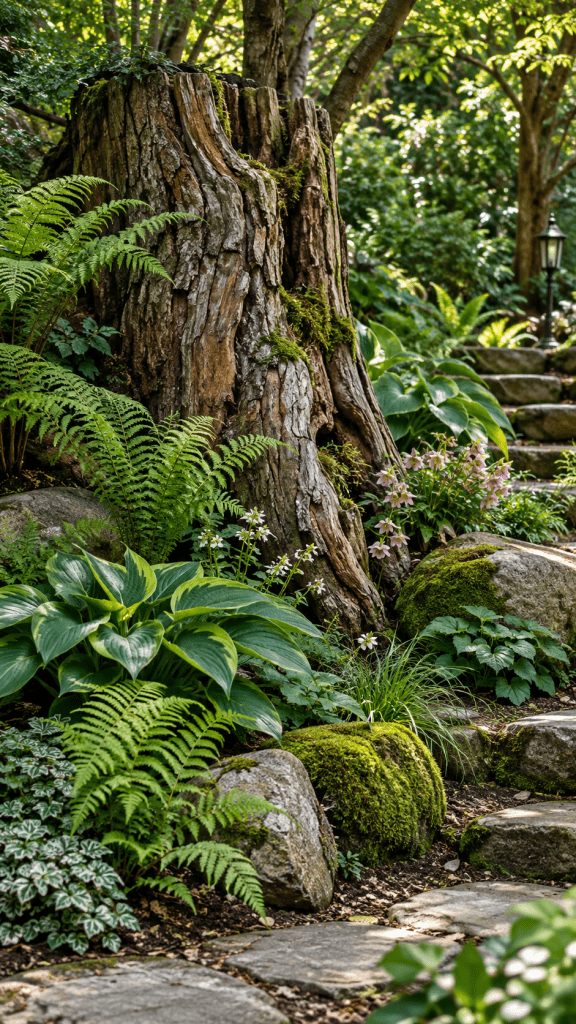
Imagine a large weathered piece of bark-covered timber positioned slightly diagonally through a bed. Around it, clusters of ferns rise at different heights while low ground covers spread toward the edges. A few irregular stones appear partially buried rather than placed perfectly on the surface.
The entire arrangement should look as though it could have developed naturally over many years.
Build the Design Around One Hero Piece of Bark
The strongest woodland displays often begin with one dominant piece rather than many small decorations.
A thick section of old trunk, an interesting fallen branch, or a beautifully textured bark-covered log can become the visual anchor.
Position it asymmetrically.
Perfect centering usually makes natural materials feel staged. Instead, place the log slightly toward one side and allow planting to balance the composition.
Part of the wood can disappear behind foliage while another section remains clearly visible. This partial concealment creates depth and makes the garden feel larger.
🌿 Avoid removing every imperfection.
Cracks, knots, worn sections, natural curves, and variations in bark color are exactly what make the feature appealing.
Surround the Bark With Layered Woodland Plants
Plant selection determines whether the feature looks like random dead wood or a sophisticated natural landscape.
Start with plants of several heights.
Tall ferns can form the background. Medium-height foliage plants can soften the middle layer, while creeping plants or moss-like ground covers can fill gaps near the soil.
Hostas can introduce broader leaves, although their suitability depends on local growing conditions. Heuchera can provide rich foliage colors. Ornamental sedges can add fine texture and movement.
Small seasonal flowers may then be added sparingly.
The key word is sparingly.
A woodland bark feature generally looks more convincing when foliage dominates and flowers act as accents rather than becoming the main attraction.
Try repeating similar plants around the wood instead of using a completely different species in every available space.
Repetition creates rhythm.
Add Moss and Stone for Extra Texture
A beautiful woodland corner rarely contains wood alone.
Stone creates an excellent contrast because it provides a cooler, harder texture beside the warmer bark.
Use stones with irregular shapes and muted colors. Rather than arranging them in a perfectly visible row, partially bury several stones so they appear integrated into the landscape.
Moss can provide an even softer transition.
In naturally damp and shaded environments, existing moss may gradually spread across suitable surfaces. Where moss already grows successfully in the garden, designing around it can create extraordinary detail.
The visual combination of dark bark, green moss, pale stone, and fern foliage can make even a relatively small garden corner feel immersive.
Important Note: Never strip healthy bark from a living tree simply to create garden decorations. Removing substantial bark can seriously damage the tree. Use naturally fallen material, responsibly sourced timber, pruning waste, or bark products obtained for landscaping purposes.
Let the Woodland Feature Age Naturally
One of the biggest mistakes with rustic garden features is trying to keep them permanently looking new.
Natural wood changes.
That change can be part of the design.
Fresh brown bark may gradually become gray. Small cracks can develop. Lichen may appear. Surfaces exposed to moisture can darken after rainfall.
These changes help the feature blend into the garden.
🍂 Instead of treating every sign of weathering as damage, evaluate whether it adds character.
Of course, severely unstable or dangerously rotten wood should be removed when necessary. But purely cosmetic aging often improves this type of design.
Tree Bark Garden Ideas Number 2 Build a Rustic Bark and Wood Garden Pathway
🥈 The second idea turns tree bark from a decorative detail into part of the garden structure.
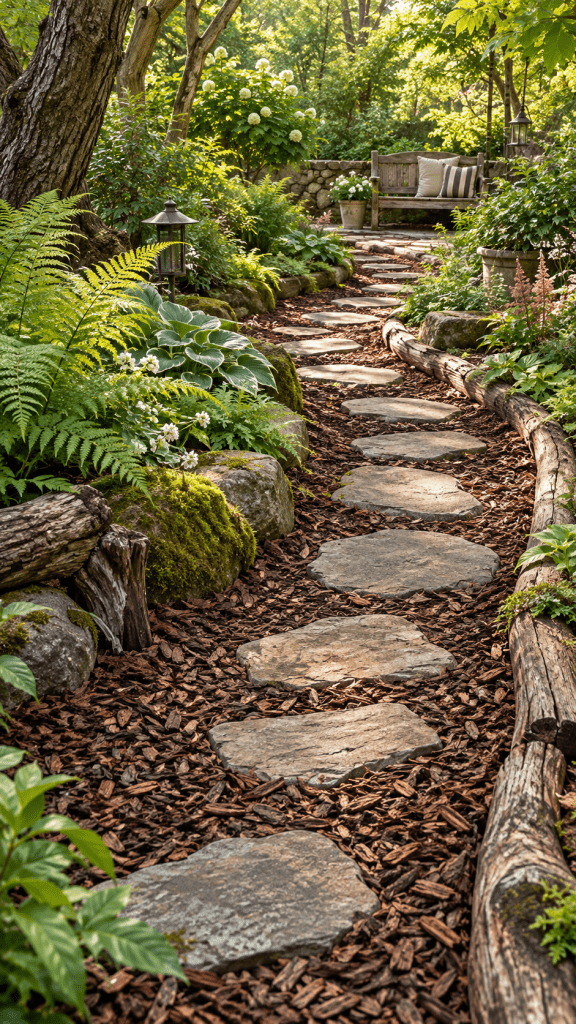
A rustic woodland pathway framed by bark-covered branches, wood rounds, shredded bark, or small logs can guide visitors through planting while reinforcing the natural atmosphere of the landscape.
Paths are powerful design tools because they influence how people experience a garden.
A straight path directs attention toward a destination. A gently curved path creates curiosity. A narrow path through dense planting can make even a modest garden feel more adventurous.
When bark and wood are introduced around that path, the effect becomes warmer and less formal.
Use Bark Mulch to Create the Path Surface
One of the simplest versions uses bark mulch or wood chips as the walking surface.
The soil should first be prepared so the path has a clear shape and reasonably stable base. Depending on conditions and intended use, suitable edging or a landscape layer may be added before spreading the bark material.
Use enough material to visually define the route.
A thin scattered layer may quickly disappear into surrounding soil, while a generous layer produces stronger color and texture.
Dark brown or reddish bark can create striking contrast beside green foliage.
Fresh bark often looks particularly rich after rainfall, when moisture intensifies the natural color.
As the material gradually decomposes, additional bark can be introduced when needed.
This makes bark pathways especially suitable for informal garden areas where some seasonal maintenance is acceptable.
Define the Edges With Bark Covered Branches
For additional character, line portions of the path with bark-covered branches or small logs.
However, avoid creating two perfectly symmetrical wooden rails.
That can make the design appear artificial.
Instead, use varied lengths and allow occasional breaks where plants spill slightly toward the path.
Some sections can be bordered with wood while others transition into stone or planting.
🌱 Small ground covers growing around the edges can make the transition even softer.
Curved branches are particularly useful because their natural shape can reinforce gentle changes in the direction of the path.
Mix Tree Bark With Stepping Stones
If a completely bark-covered path feels too rustic, combine bark with stepping stones.
Large flat stones can provide stable walking surfaces while bark fills the surrounding gaps.
This approach offers an attractive combination of practicality and natural texture.
Place the stones with comfortable spacing rather than forcing them into a rigid geometric grid.
Irregular stone shapes generally complement bark more successfully than highly polished tiles.
For a modern rustic garden, larger rectangular stepping slabs can also work if the surrounding bark and planting are kept restrained.
This combination creates an interesting tension between clean structure and organic materials.
Create a Destination at the End of the Path
A path becomes far more compelling when it appears to lead somewhere.
That destination does not need to be complicated.
It might be a small bench beneath a tree, a large planter, a decorative urn, a birdbath, a secluded reading chair, or simply one dramatic specimen plant.
The destination provides visual purpose.
If the entire path can be seen immediately, introduce a gentle curve or tall planting to partially conceal the end.
This creates mystery.
🌿 From the entrance of the garden, visitors should see enough of the path to understand where to walk but not necessarily enough to reveal everything waiting beyond it.
Bark-covered edging strengthens this woodland narrative beautifully.
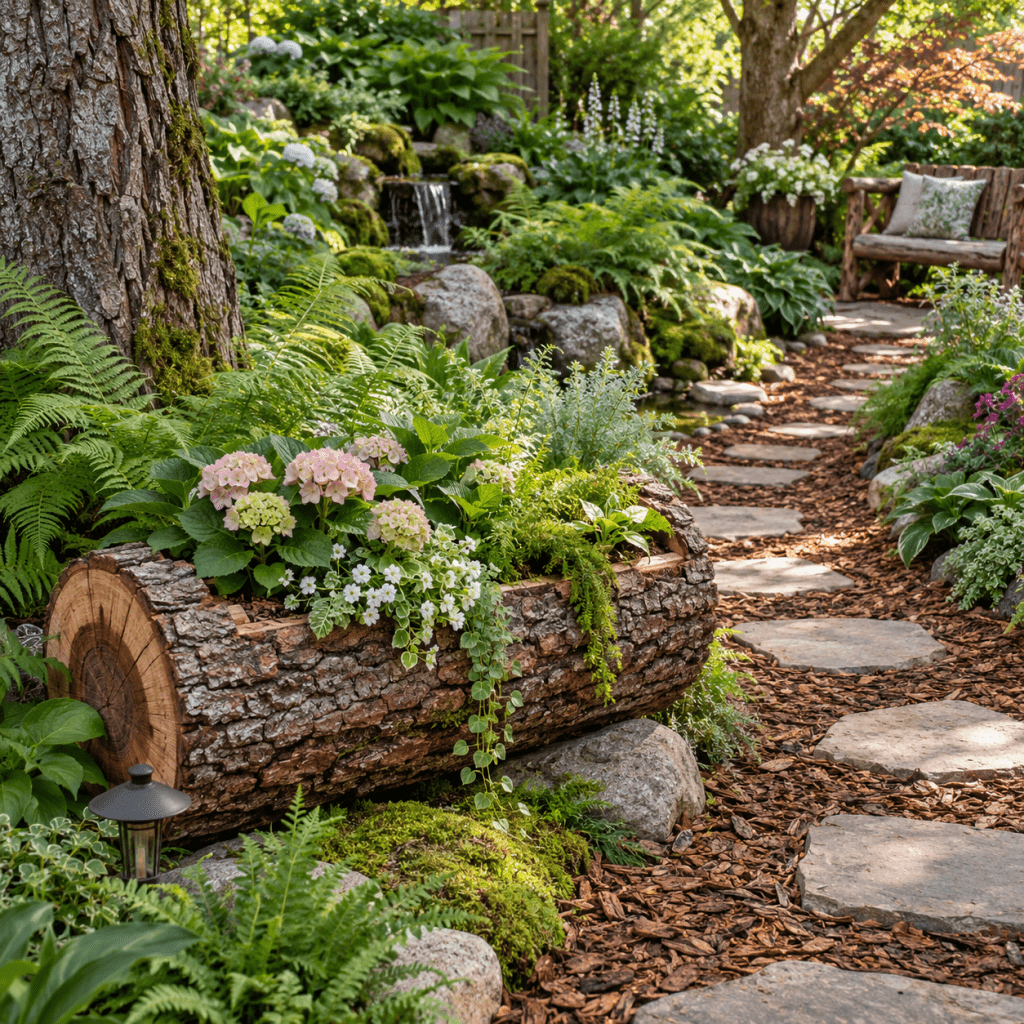
Tree Bark Garden Ideas Number 3 Turn Bark Covered Logs Into Sculptural Planters
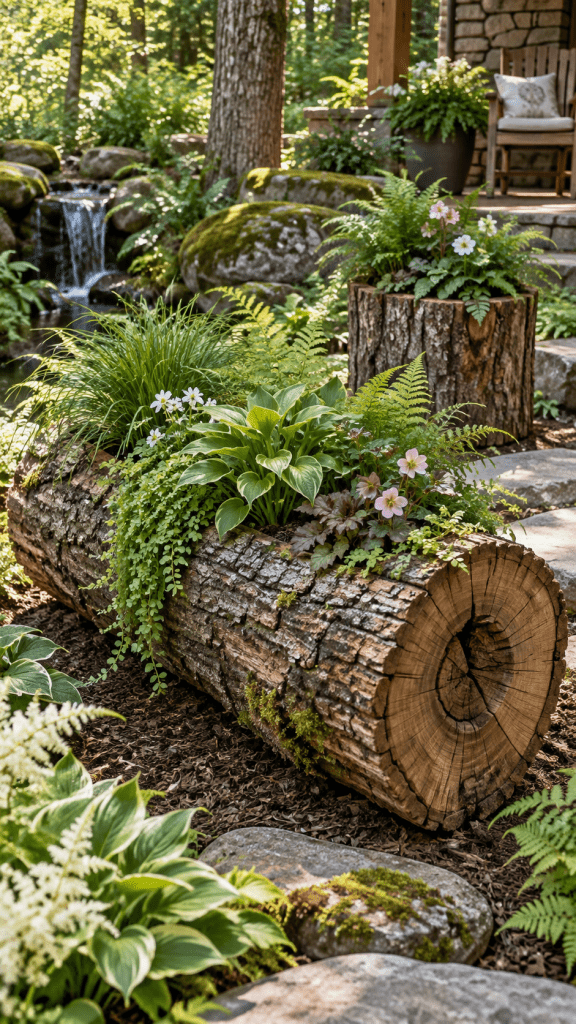
🥉 The third of the Best 3 tree bark garden ideas transforms naturally textured wood into a garden focal point.
Instead of treating a fallen log as waste, it can sometimes become a planting feature when its condition and structure are suitable.
The contrast is visually powerful.
Rough bark provides a dark, rugged surface while delicate plants appear to emerge from the wood.
This can work in woodland gardens, rustic cottage spaces, natural borders, patios, or even contemporary gardens where a single organic object is used as sculptural contrast.
Create a Hollow Log Planter
A substantial log can sometimes be adapted into a long natural planter.
A planting cavity is formed along the upper portion while enough of the exterior bark remains visible to preserve the character of the wood.
Once filled with an appropriate growing medium, the log can support a carefully selected planting combination.
Choose plants based on the location.
A shady log might feature ferns and foliage plants. A sunnier position could support drought-tolerant plants or seasonal flowers appropriate for the local climate.
The most visually interesting combinations usually include varied heights.
For example, one slightly taller architectural plant can provide structure, medium plants can create volume, and trailing plants can spill gently over the bark.
The greenery should appear to interact with the wood rather than simply sitting on top of it.
Make the Log Look Like Part of the Landscape
Placement makes an enormous difference.
A log planter positioned randomly in the middle of a lawn may look disconnected.
The same planter partially integrated into a border can appear completely natural.
Nestle one end among ornamental grasses or shrubs. Allow ground-cover plants to grow around the base. Position a few natural stones nearby.
You can even angle the log slightly rather than aligning it perfectly with a fence.
This helps remove the appearance of a manufactured container.
🌼 Flowers can certainly be included, but foliage should remain an important part of the composition.
Too many bright flower colors can overwhelm the subtle beauty of the bark.
Try a Vertical Bark Planter Feature
Logs do not always need to lie horizontally.
Sections of bark-covered trunks can be positioned vertically to create sculptural garden elements.
Using several different heights can produce a particularly dramatic arrangement.
Imagine three sections standing together: one tall, one medium, and one shorter piece. Their uneven tops and rugged surfaces immediately provide structure.
Small planting pockets or containers can then be incorporated depending on the construction.
Alternatively, the trunks themselves can remain purely sculptural while plants are positioned around the base.
This is often the safer visual choice when preserving the wood is more important than modifying it.
Vertical logs look especially striking beside fine-textured ornamental grasses because the grasses move in the wind while the wood remains visually solid.
Create a Bark and Succulent Composition
In suitable climates and growing conditions, bark and succulents can produce a completely different aesthetic.
Instead of lush woodland greenery, the design becomes more sculptural and drought-inspired.
Muted green, dusty blue-green, burgundy, and silver foliage can look beautiful beside gray-brown wood.
Use restraint.
A few carefully positioned plant clusters often create a stronger result than completely covering the log.
Leave large sections of bark visible.
After all, the texture of the wood is one of the main reasons for creating the feature.
Smaller Tree Bark Garden Ideas for Extra Detail
The Top 3 concepts can establish the major features of the garden, but smaller bark details can help connect different spaces.
For example, short bark-covered branches can be incorporated around the edges of natural borders. Small bark pieces can add texture around container displays. A weathered stump can become a pedestal for a pot.
These details work best when repeated subtly.
If the garden already contains a large woodland feature, introducing a similar bark texture elsewhere creates continuity.
Visitors may not consciously notice the repetition, but the landscape often feels more cohesive because of it.
Tree Bark Edging Around Natural Flower Beds
Tree bark and small logs can make attractive edging materials for informal beds.
Instead of creating a perfectly straight boundary, follow a gentle organic curve.
Place similarly sized log sections along the edge, or use longer branches where appropriate.
Allow plants to soften the boundary.
Trailing foliage, ornamental grasses, or low flowering plants can occasionally overlap the wood.
This prevents the edging from looking too rigid.
Remember that untreated organic wood will gradually decompose when constantly exposed to soil and moisture.
For some gardens, that gradual weathering is part of the charm. For others, longer-lasting edging materials may be more practical.
Decorative Bark Around Garden Containers
Large ceramic pots can sometimes look isolated when placed directly on paving.
Natural materials can help integrate them.
Position a few textured bark pieces, stones, or small branches around a grouped container display.
The goal is not to cover the entire ground.
Instead, create a small visual landscape.
For example, a tall charcoal planter might stand behind two smaller neutral containers. A weathered bark-covered branch lies diagonally nearby, while a tuft of ornamental grass softens one side.
Suddenly the containers feel like part of a designed composition rather than separate objects.
A Tree Stump as a Natural Garden Pedestal
Old tree stumps can also become surprisingly effective display surfaces.
A stable stump may support a planter, lantern, shallow bird dish, or simple decorative object.
Different stump heights can create layers.
The beauty comes from the contrast between the horizontal cut surface and the rugged bark around the sides.
Annual growth rings can become an additional decorative detail.
Avoid hiding them unnecessarily.
🪵 In some gardens, leaving the stump completely undecorated may actually be the most attractive choice.
Surround it with planting and allow the texture of the timber to become the sculpture.
How to Make Tree Bark Garden Ideas Look Expensive
Natural garden decor can sometimes become visually chaotic because people assume rustic styling means everything should look random.
Good naturalistic design is usually carefully controlled.
The first principle is restraint.
Instead of using bark everywhere, decide which areas deserve attention.
One major bark feature per visual zone is often sufficient.
The second principle is repetition.
Repeat a small selection of plants, stones, or wood tones throughout the space.
This creates continuity.
The third principle is contrast.
Rough bark becomes more noticeable when positioned beside something softer or simpler.
A rugged log beside fine ornamental grass looks dramatic. A heavily textured stump beside a smooth ceramic planter creates balance.
Finally, consider negative space.
Not every patch of soil needs decoration.
An uncluttered area gives the eye somewhere to rest and makes important features appear stronger.
Best Plants to Combine With Tree Bark
The ideal plants depend on climate, sunlight, moisture levels, and soil conditions, but the visual principle remains consistent.
Choose plants that complement rather than compete with the bark.
🌿 Fern-like foliage works beautifully because its finely divided leaves contrast with coarse wood texture.
🌱 Ornamental grasses introduce movement.
🍃 Broad-leaved plants provide visual weight.
🌼 Small flowers add controlled seasonal color.
Ground covers are especially valuable because they visually connect bark-covered features to the soil.
Instead of seeing a log sitting on bare ground, the viewer sees leaves gradually surrounding the base.
This small detail can completely change the quality of the design.
Color Palettes That Work Beautifully With Tree Bark
Tree bark naturally supports earthy garden color schemes.
For a calming woodland garden, combine bark brown, moss green, fern green, stone gray, cream, and small touches of white.
For a warmer cottage-inspired space, introduce muted terracotta, burgundy foliage, dusty rose flowers, and soft yellow accents.
A contemporary garden can use a more restrained palette.
Combine charcoal bark, deep green foliage, pale gray stone, black containers, and architectural grasses.
The fewer colors used, the more important texture becomes.
This is where bark truly excels.
Its surface can contain dozens of subtle tonal variations even when the overall color appears simple.
Common Mistakes to Avoid With Tree Bark Garden Decor
One common mistake is collecting too many small pieces and spreading them throughout the garden without a clear purpose.
The result can feel cluttered.
Larger intentional compositions usually look more sophisticated.
Another problem is mixing too many unrelated rustic materials.
Bark, rope, brightly painted signs, decorative wheels, miniature ornaments, multiple sculptures, and numerous containers can quickly compete with one another.
Choose a visual direction and edit ruthlessly.
Safety should also remain important.
Large logs and heavy branches must be positioned securely, particularly in gardens visited by children or pets.
Avoid unstable vertical pieces or branches that could easily roll or fall.
Wood placed near walking areas should not create hidden trip hazards.
How the Best Tree Bark Garden Ideas Change Through the Seasons
One reason natural materials are so appealing is their ability to look different throughout the year.
In spring, fresh foliage creates vibrant contrast against weathered brown bark.
During summer, dense plants may partially conceal logs, making the garden feel lush and established.
Autumn can be especially beautiful.
Fallen leaves collect around wood features, introducing copper, gold, orange, and burgundy tones that naturally complement bark.
During winter, the garden structure becomes more visible again.
Logs, trunks, stones, paths, and ornamental grasses may become the primary visual elements once flowers and foliage recede.
🍂 This seasonal transformation gives bark-based garden features long-term value.
They do not depend entirely on flowers to remain attractive.
Final Thoughts on the Best 3 Tree Bark Garden Ideas
The most successful tree bark garden ideas do more than place pieces of wood around the landscape. They use bark as part of a larger garden composition where texture, planting, pathways, stone, and natural aging all work together.
🥇 A bark-covered woodland garden feature is the ideal starting point for shady or naturalistic spaces. One striking log surrounded by ferns, stones, ground covers, and moss can transform an overlooked corner into a richly layered landscape.
🥈 A rustic bark garden pathway adds both structure and atmosphere. Bark mulch, irregular stepping stones, branch edging, and softly spilling plants can turn a practical route through the garden into part of the visual experience.
🥉 A bark-covered log planter creates the strongest sculptural statement. Whether horizontal, vertical, densely planted, or minimally styled, it combines living plants with the rugged character of naturally weathered timber.
The secret is not to make the bark look decorative.
Let it look natural.
Allow cracks to remain visible. Preserve interesting textures. Surround the wood with plants that appear comfortable in the setting. Give the feature enough space to become noticeable without overwhelming the landscape.
When handled thoughtfully, something as ordinary as a fallen piece of tree bark can become one of the most distinctive elements in the entire garden.
🌿 And as the wood slowly changes color, plants grow around it, moss develops, and seasons pass, the garden can become even more beautiful than it was on the day the project was finished.