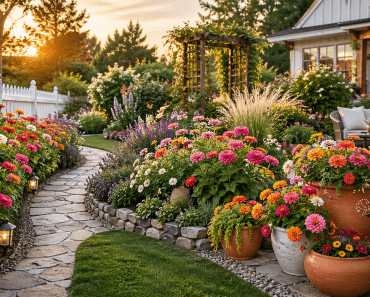
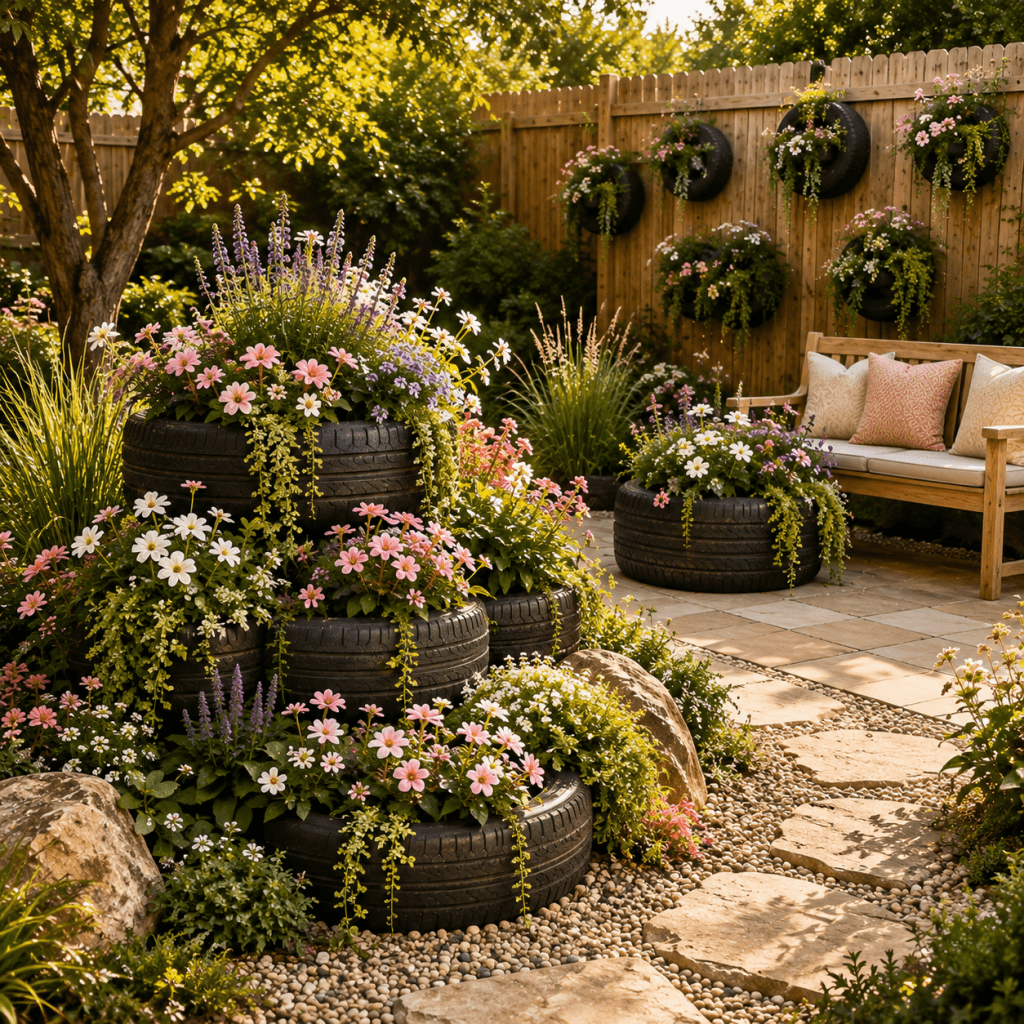
A backyard is one of the easiest places to experiment with recycled garden design because it offers room for creativity, layering, and personalization. Old tires can become part of that transformation when they are used with intention rather than simply scattered around the yard. The strongest Backyard Tire Garden Ideas treat tires as part of a complete outdoor composition, combining flowers, greenery, pathways, seating areas, fences, gravel, and natural materials into one coherent landscape.
That broader approach is important.
A single tire planter may be attractive, but a backyard tire garden should feel like a space. It should have a focal point, supporting planting, visual movement, and enough consistency that every recycled element appears to belong.
Some backyards benefit from one dramatic tire garden feature. Others look better when several smaller tire planters are distributed carefully through the landscape. In compact yards, a vertical approach can preserve valuable ground space. In larger gardens, layered planting can make old tires almost disappear beneath abundant flowers.
For this guide, the three ideas take distinctly different directions. The first creates a lush backyard focal garden using several tire planters arranged as one unified composition. The second builds a relaxed tire garden around a seating area for a stronger outdoor-living feel. The third transforms an overlooked backyard edge or fence into a compact vertical tire garden.
Here are the 3 best Backyard Tire Garden Ideas for giving old tires a beautiful new life.
| Rank | Backyard Tire Garden Idea | Main Visual Effect | Best For |
|---|---|---|---|
| 🥇 | Layered Backyard Tire Flower Oasis | Lush immersive garden focal point | Medium and large backyards |
| 🥈 | Tire Garden Patio Retreat | Flowers integrated with outdoor living | Patios and seating areas |
| 🥉 | Backyard Fence Tire Garden | Space-saving vertical transformation | Small and narrow backyards |
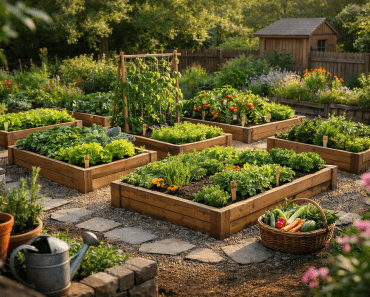
Important Note: Reused tires are most straightforward for ornamental planting. If you plan to grow edible crops, purpose-made food-safe containers avoid uncertainty about a tire’s material history and previous exposure. Always consider drainage, stability, access, and the mature size of plants when integrating tires into a backyard.
🥇 Platz 1 Layered Backyard Tire Flower Oasis
The most impressive backyard tire garden does not look like a collection of individual planters.
It feels like a miniature landscape.
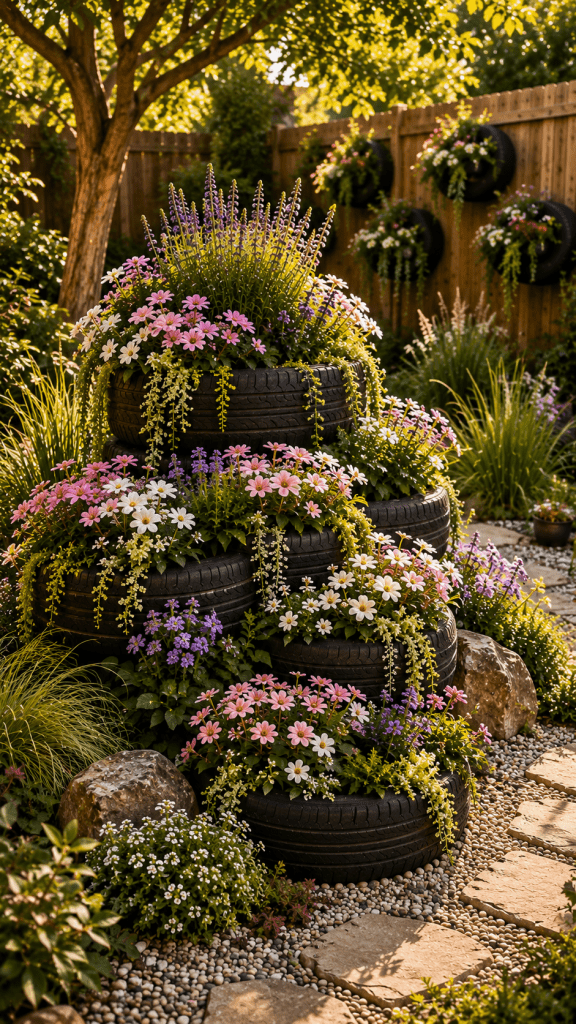
The Layered Backyard Tire Flower Oasis combines several tire planters at different heights with conventional flower beds, ornamental grasses, gravel, groundcover, and natural materials.
The tires become only one part of the scene.
That is what gives the idea its strength.
Start With One Defined Garden Zone
Rather than spreading tires across the entire backyard, choose one area and make it special.
An empty corner can work beautifully.
So can a wide section beside a fence.
You could also use the space at the end of a lawn or near a garden path.
Define the zone visually with something simple:
- gravel,
- mulch,
- low planting,
- natural stone,
- or a subtle edging material.
This immediately tells the eye that the tire garden is intentional.
Create Three Levels of Height
A layered garden needs vertical variation.
Think of the composition in three zones.
Foreground: low groundcover and compact flowers.
Middle ground: individual tire planters and fuller mounding plants.
Background: taller tire arrangements, ornamental grasses, shrubs, or vertical foliage.
This creates depth.
Even a relatively small backyard area can feel more substantial when the eye moves through several planting layers.
Use One Hero Tire Feature
Do not make every tire equally important.
Choose one arrangement as the main focal point.
A staggered stack of two or three tires can work.
A large statement tire planter can also become the hero.
Around it, position lower tire planters that support the composition.
This hierarchy prevents the garden from becoming visually chaotic.
Let the Planting Flow Beyond the Tires
A backyard oasis should feel abundant.
Allow flowers growing inside the tires to overlap with plants growing directly in the soil.
Trailing foliage can spill over the rubber.
Groundcovers can move toward the planter edges.
Ornamental grasses can sit between the tires.
This blending is extremely effective because it prevents the recycled containers from appearing isolated.
The more the planting connects, the more the garden feels like one continuous landscape.
Choose a Cohesive Flower Palette
For a lush garden, it can be tempting to use every possible flower color.
A limited palette usually creates a stronger result.
For a romantic backyard:
soft pink + white + lavender + green
For a warm garden:
apricot + cream + muted yellow + deep green
For something calmer:
white + pale blue + silver-green foliage
For more drama:
white + burgundy + deep green
Repeat these colors throughout the entire area.
The repetition is what visually ties together multiple tire planters.
Keep Tire Colors Restrained
Because this concept is driven by flowers and landscape, the tires should usually play a supporting role.
Dark charcoal works well.
Muted sage can blend into foliage.
Warm gray, earthy brown, or muted terracotta can also integrate beautifully.
If several tires are painted, keep them in the same color family.
Too many unrelated shades can compete with the garden.
Add Ornamental Grasses
Grasses are especially useful in backyard tire gardens because they add movement and softness.
The strong geometric circle of a tire contrasts beautifully with fine grass blades.
Place grasses between tire planters or behind the main feature.
Their movement in the wind helps the whole arrangement feel more natural.
Use Gravel to Create Breathing Room
A lush garden does not have to be completely filled with plants.
Small gravel areas can create visual pauses.
Pale gravel around dark tire planters can produce attractive contrast.
A narrow gravel path can also make the garden easier to access for watering and maintenance.
This combination of dense planting and open texture prevents the space from feeling overcrowded.
Add a Simple Path
If the tire garden occupies a larger backyard corner, a narrow path can make it feel like a destination.
The path does not need to be elaborate.
Stepping stones through gravel can be enough.
A curved route is especially attractive because it reveals the garden gradually.
The path gives the viewer a reason to move toward the feature.
Create a Strong Backdrop
The background can dramatically improve the composition.
Natural timber fencing works beautifully.
So does a hedge.
A simple masonry wall can create contrast.
Climbing plants can soften an otherwise plain surface.
The backdrop should support the tire garden without becoming more visually complicated than the planting itself.
Why This Idea Takes First Place
The Layered Backyard Tire Flower Oasis earns 🥇 because it transforms old tires into part of a complete landscape rather than presenting them as separate DIY objects.
It creates depth, abundance, and a clear garden destination.
Once the flowers mature and the foliage begins covering the tire edges, the recycled material can become surprisingly subtle.
🥈 Platz 2 Tire Garden Patio Retreat
A backyard is not only for planting.
It is also a place to sit, eat, relax, and spend time outdoors.
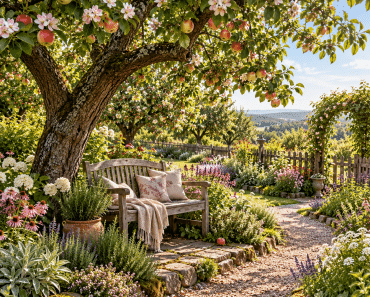
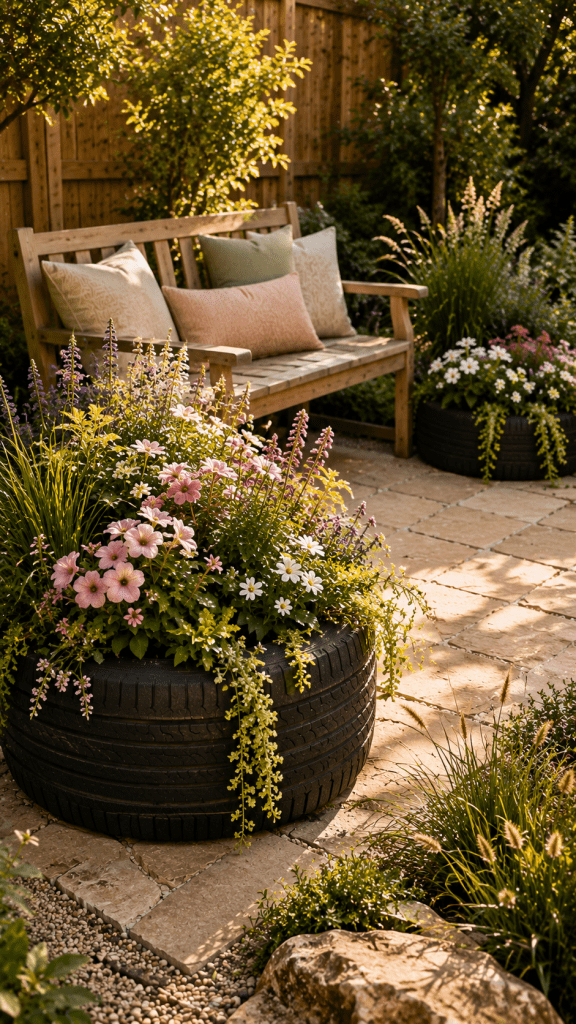
The Tire Garden Patio Retreat integrates tire planters around a seating or patio area so the recycled garden becomes part of everyday outdoor living.
This approach feels more intimate than a large flower oasis.
The planters are experienced up close.
Start With the Seating Area
Instead of designing the tire garden first, begin with the patio.
Where do people sit?
What direction do they face?
Where is there unused space around the furniture?
Which corners feel bare?
These questions reveal where tire planters can add value.
A large tire planter may work beside a bench.
A smaller planter can soften a patio corner.
A pair of coordinated tires may frame the transition between paving and lawn.
Use Fewer Better Planters
A seating area needs breathing room.
Too many tire planters can make the patio feel cluttered.
Use a small number of carefully designed features.
For example:
one large statement planter,
one lower tire planter,
and one vertical planter against the nearby fence.
This creates variety without overwhelming the space.
Coordinate With the Furniture
This is one of the easiest ways to make recycled planters look intentional.
If the patio furniture is natural timber, use warm botanical tire colors.
If the seating includes charcoal metal, a dark tire can echo that detail.
If cushions contain sage, cream, or terracotta, repeat one of those shades on the tire planters.
The garden and furniture then speak the same visual language.
Use Softer Flowers Near Seating
Because these planters are viewed from close range, texture matters.
Use flowers and foliage with delicate detail.
Trailing plants can soften the edges.
Small blooms can create a romantic look.
Fine ornamental grasses can add movement without becoming visually heavy.
Strongly scented ornamentals may also add atmosphere where locally suitable, but choose species appropriate for your climate and the preferences of people using the patio.
Keep the Color Palette Calm
Outdoor seating areas often look better with a slightly more restrained palette.
Try:
cream + sage + soft pink
or:
white + lavender + natural timber
or:
terracotta + apricot + olive green
You can still use colorful flowers, but the overall composition should feel relaxing rather than chaotic.
Use Tires to Mark Patio Edges
A tire planter can help define the transition between hard paving and soft garden.
Place one or two planters along the outer edge of the patio.
Behind them, continue with conventional planting.
This creates a gradual transition.
The patio does not simply stop and the garden begin.
Instead, the two zones blend together.
Include One Vertical Element
A patio retreat becomes more interesting when all the plants are not at ground level.
A vertical tire planter on a nearby fence can introduce height.
A hanging tire planter can also work if the support structure is suitable and the location is safe.
This upward planting helps surround the seating area with greenery.
Add Warm Natural Materials
Natural timber, gravel, linen-textured outdoor fabrics, stone, and terracotta all work beautifully around tire planters.
These materials visually soften the rubber.
They also help the patio feel more established.
A small gravel strip around a planter can be enough to create separation from paving.
Use Lighting Carefully
If the patio is used in the evening, subtle outdoor lighting can make the planters more attractive after sunset.
Rather than placing lights inside the tire itself, use landscape lighting to illuminate the flowers or nearby foliage.
This keeps the feature visually refined.
Any electrical installation should of course be appropriate for outdoor conditions.
Why This Idea Takes Second Place
The Tire Garden Patio Retreat earns 🥈 because it makes recycled planting part of everyday outdoor life.
Instead of being a distant garden feature, the flowers become part of the seating experience.
The concept works especially well for homeowners who want creativity without turning the entire backyard into a tire-themed landscape.
🥉 Platz 3 Backyard Fence Tire Garden
Many backyards have one underused feature in common:
the fence.
A plain timber or masonry boundary can occupy a large visual area without contributing much beauty.
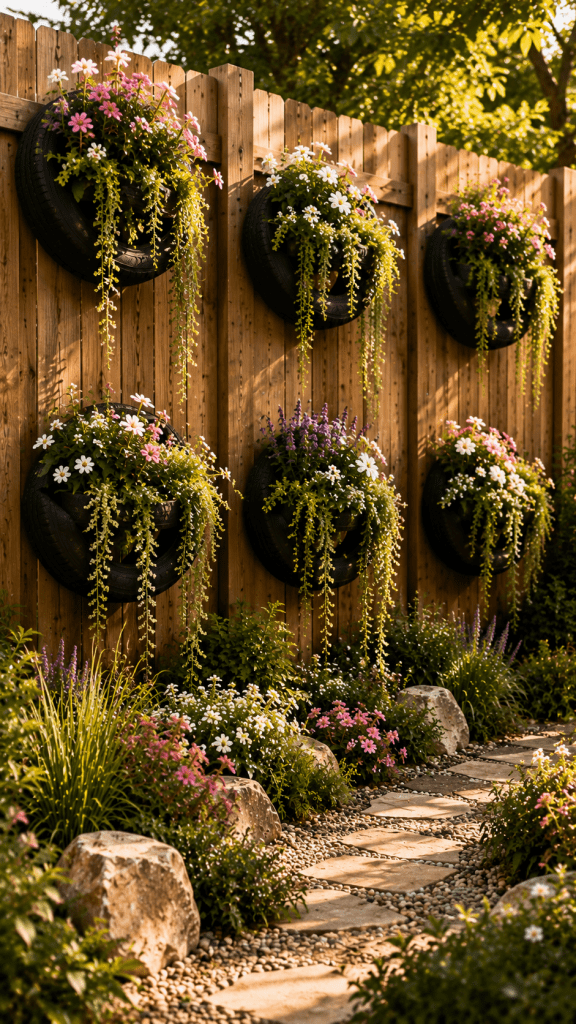
The Backyard Fence Tire Garden turns that vertical surface into a compact planting display.
This is particularly valuable in small or narrow yards.
Use the Fence as a Garden Wall
Think of the fence as a vertical planting surface.
Several tires can be positioned at different heights to create rhythm.
Do not simply line them up.
A staggered arrangement usually looks more natural.
One tire might sit high.
Two could occupy the middle.
Another can sit lower.
This creates movement across the fence.
Keep the Ground Open
One of the biggest advantages is space efficiency.
The planters occupy the vertical zone, leaving the ground available for:
- pathways,
- lawn,
- seating,
- children’s play space,
- or conventional flower beds.
This makes the idea particularly useful when every square meter matters.
Use Cascading Plants
Higher tires need plants that look attractive from below.
Trailing foliage is especially useful.
Flowers can spill downward.
Vines can move sideways.
This softens the strong circles and connects the separate planters visually.
Let Some Fence Remain Visible
Do not cover the entire boundary.
Negative space is important.
A beautiful natural-oak fence can become part of the design.
Dark tires against pale timber create one type of contrast.
Muted sage tires against weathered wood create another.
The visible background helps each planter remain readable.
Repeat One Flower Across the Wall
Several tire planters can quickly feel unrelated.
Choose one common element.
White trailing flowers are an easy option.
Or use the same pale pink bloom in several planters.
You can also repeat one foliage plant.
That repetition creates cohesion.
Add Ground Planting Below
A narrow bed at the base of the fence helps connect the vertical display to the backyard.
Use low ornamental grasses, flowers, or groundcover.
The garden then appears to rise naturally from the soil toward the wall.
This is much more integrated than tires floating above an empty ground surface.
Use the Fence Garden to Hide Problem Areas
Vertical tire planters can draw attention away from:
- plain fencing,
- unattractive corners,
- utility areas,
- or visually empty sections of the backyard.
The goal is not necessarily to cover everything.
A strong composition can redirect the eye.
Pay Attention to Structural Capacity
This concept needs practical care.
A planted tire can become very heavy.
Several tires create a substantial combined load.
Do not assume an ordinary lightweight fence is capable of supporting them.
A purpose-built frame or structurally appropriate wall may be necessary.
The display should be designed around actual support capacity rather than appearance alone.
Why This Idea Takes Third Place
The Backyard Fence Tire Garden earns 🥉 because it creates significant planting impact while using very little ground space.
It is one of the strongest options for compact backyards, especially when a plain fence already dominates the view.
How to Design a Backyard Tire Garden as One Complete Space
The easiest way to improve the overall result is to stop thinking about tires individually.
Instead, identify the major elements of the backyard:
house
patio
lawn
fence
garden beds
paths
seating
tire planters
Then ask how these elements relate to one another.
The tires should support the existing layout rather than interrupt it.
A planter beside the patio can connect the hardscape to the garden.
A tire feature at the end of a path can create a focal point.
A vertical tire garden can soften a fence.
Placement should always have a reason.
Create One Main Focal Point
Every backyard benefits from hierarchy.
If everything is visually important, nothing is.
Choose one primary tire garden feature.
That might be:
- a stacked flower display,
- a layered garden corner,
- a statement planter,
- or a tire living wall.
The other recycled elements should support it.
This prevents the backyard from feeling like a collection of unrelated projects.
How Many Tires Should You Use in a Backyard
There is no ideal number.
A small yard may look best with only two or three.
A larger backyard may accommodate more.
The important question is whether each tire adds something to the composition.
Before adding another planter, ask:
Does it create height?
Does it repeat a color?
Does it define a zone?
Does it solve an empty area?
If the answer is no, the garden may be stronger without it.
The Best Backyard Tire Garden Color Palettes
A cohesive palette can make recycled materials feel much more polished.
| Tire Palette | Flower Palette | Surrounding Materials | Overall Mood |
|---|---|---|---|
| Charcoal | White + burgundy + green | Pale gravel + oak | Modern natural |
| Sage | Pink + white + green | Timber + limestone | Soft botanical |
| Terracotta | Apricot + cream + yellow | Gravel + clay pots | Warm Mediterranean |
| Warm gray | Lavender + white | Stone + weathered wood | Calm cottage |
| Deep brown | White + green grasses | Mulch + natural stone | Rustic |
| Dusty blue | Pale pink + white | Timber + cream masonry | Romantic |
You do not need to copy these combinations exactly.
Use the existing colors of your home and patio as a starting point.
How to Make Old Tires Less Visually Obvious
If you like the recycling idea but do not want tires to dominate the backyard, there are several ways to soften them.
Use abundant trailing plants.
Surround the lower edges with groundcover.
Keep the tire color dark or earthy.
Place planters among conventional flower beds.
Repeat nearby plants inside the tire.
Avoid isolating the planter in an empty area.
The more visual connections you create, the less the tire feels like a separate object.
Use Flowers and Foliage Together
Flowers provide seasonal excitement.
Foliage provides structure.
A strong backyard tire garden needs both.
Mix:
- upright foliage,
- mounding flowers,
- trailing greenery,
- fine ornamental grasses,
- and selective dark or silver leaves.
This creates depth even when not every plant is blooming.
Should Backyard Tire Gardens Be Colorful
They can be.
But color should have a system.
Bright tire planters can work in cheerful family gardens.
Muted colors may suit sophisticated patios.
Dark tires can almost disappear within naturalistic planting.
There is no single correct style.
The important thing is consistency.
Random bright colors across unrelated planters are much harder to integrate than one controlled palette.
Connect the Tire Garden to the House
A backyard rarely exists visually apart from the home.
Look at the exterior materials.
If the house has warm brick, terracotta tones may work naturally.
If the exterior is cream with timber details, sage or charcoal can be attractive.
If the house has dark modern frames, repeating charcoal in the tire planters can create continuity.
Even subtle color repetition can make the garden feel more intentional.
Use Pathways to Lead Toward Tire Garden Features
A focal garden becomes stronger when the layout guides people toward it.
A gravel path can curve toward the feature.
Stepping stones can create a visual route.
Even the edge of a lawn can point toward the garden.
This creates anticipation.
Instead of seeing all the tires at once, the viewer discovers them gradually.
Backyard Tire Gardens for Small Spaces
Small gardens require editing.
Do not simply scale down a large tire garden.
Use fewer elements.
A strong combination might be:
one vertical fence garden + one low tire planter + one small groundcover bed
That may be enough.
Use height instead of width.
Keep furniture circulation clear.
Choose a restrained palette.
And avoid placing large planters in every corner.
Backyard Tire Gardens for Larger Spaces
Larger gardens allow more layering.
You can create:
a dedicated tire garden zone,
a path leading toward it,
multiple planting heights,
and conventional flower beds surrounding the recycled elements.
But avoid spreading tires randomly simply because there is more room.
A larger garden still benefits from concentration and hierarchy.
Drainage and Watering
Every tire planter needs a way for excess water to escape.
Standing water can create poor growing conditions and unnecessary weight.
Containerized plants may also dry differently from plants growing directly in the ground.
Monitor each location.
A planter in full sun beside paving may dry faster than one positioned under partial shade.
Use growing media and watering practices appropriate for the plants you select.
Consider Heat in Sunny Backyards
Dark rubber can absorb significant heat.
This matters when a tire planter receives intense sun for much of the day.
Consider the local climate, reflected heat from walls or paving, and the tolerance of the selected plants.
In very hot exposures, a lighter exterior color, partial shade, or a different location may be more suitable.
Plant health should guide the design.
Keep Backyard Tire Gardens Easy to Maintain
A complicated garden that cannot be easily watered, pruned, or cleaned will quickly lose its appeal.
Leave access to every planter.
Do not create unstable stacks.
Keep paths open.
Position high planters within safe reach.
Remember that mature trailing plants may extend much farther than they do when first planted.
Design for the garden several months later, not only on planting day.
Common Backyard Tire Garden Mistakes
One of the biggest mistakes is scattering tires everywhere.
Another is using too many unrelated colors.
Some gardens also become cluttered because each tire receives different decorative patterns, flowers, and accessories.
Poor placement can interfere with walking routes.
Overcrowded planting can cause maintenance problems.
Ignoring the house, fence, patio, and existing landscape creates another issue: the tire garden feels detached from everything else.
The best backyard projects are connected.
Which Backyard Tire Garden Idea Is Best
Choose the 🥇 Layered Backyard Tire Flower Oasis if you have enough room for a dedicated garden feature and want the most dramatic transformation.
It creates the richest sense of depth and gives recycled tires a genuine role within the landscape.
Choose the 🥈 Tire Garden Patio Retreat if you want flowers and recycled planters to become part of your outdoor living area.
It is intimate, practical, and easy to integrate with furniture and existing hardscape.
Choose the 🥉 Backyard Fence Tire Garden if ground space is limited.
It transforms a vertical boundary into a lush planting display while preserving the usable area below.
Final Thoughts on Backyard Tire Garden Ideas
The best Backyard Tire Garden Ideas do not begin with the tires.
They begin with the backyard.
The 🥇 Layered Backyard Tire Flower Oasis uses tires as part of a lush multi-level garden filled with flowers, grasses, texture, and natural materials.
The 🥈 Tire Garden Patio Retreat brings recycled planters closer to everyday outdoor life by integrating them around a seating area.
And the 🥉 Backyard Fence Tire Garden moves planting upward, transforming a plain boundary while saving valuable ground space.
The shared principle behind all three ideas is integration.
Connect the tire color to the house or garden.
Repeat flowers.
Use conventional planting around the recycled containers.
Create one clear focal point.
Leave enough breathing room.
And make sure every tire has a reason to be where it is.
When the backyard is designed as one complete composition, old tires stop looking like leftover materials.
They become part of the garden’s character.