Red Jasmine Garden Ideas can transform an ordinary backyard into a breathtaking romantic retreat filled with delicate flowers, lush greenery, charming pathways, and beautiful outdoor seating areas. Imagine walking beneath a flowering jasmine arch, relaxing beside a vine-covered pergola, or enjoying a peaceful evening surrounded by soft floral colors and warm garden lighting. With thoughtful landscaping, red jasmine can become the centerpiece of an outdoor space that feels intimate, elegant, and wonderfully inviting. 🌹
Creating a romantic garden does not require a sprawling estate or an expensive landscape renovation. Even a compact backyard, small courtyard, or narrow side garden can become an enchanting destination when beautiful climbing plants are combined with natural materials, complementary flowers, and carefully arranged architectural details.
Red jasmine, botanically known as Jasminum beesianum, is particularly attractive for romantic garden designs because of its delicate pink to rose-red blossoms, slender climbing stems, and subtle fragrance. Unlike the familiar white-flowering jasmine varieties, this climbing plant introduces warmer floral tones that complement cottage gardens, vintage-inspired landscapes, and intimate outdoor retreats.
Its naturally climbing habit makes it especially useful for decorating trellises, garden arches, pergolas, and decorative screens. Depending on the growing conditions, it can develop into a substantial vine that brings height, texture, and seasonal beauty to the landscape.
The secret to creating a truly beautiful jasmine garden is not simply planting attractive flowers. It involves designing an outdoor environment where every element works together, from the arrangement of plants and walkways to the selection of furniture, decorative accents, and lighting.
These Best 3 Red Jasmine Garden Ideas explore three distinctive approaches to romantic landscaping: an enchanting floral entrance, an elegant pergola retreat, and a secluded cottage-style garden sanctuary.
Each idea offers an opportunity to combine natural beauty with practical garden design while creating an outdoor space that feels personal, peaceful, and unforgettable.
🌸 Why Red Jasmine Garden Ideas Are Perfect for Romantic Outdoor Landscaping
Romantic gardens are defined by softness, natural movement, layered vegetation, and a sense of quiet discovery. Rather than relying entirely on rigid geometric arrangements, they often incorporate gently curving pathways, climbing flowers, weathered materials, and comfortable spaces for relaxation.
Red jasmine fits beautifully into this design philosophy. Its delicate flowers and flexible climbing growth can soften hard architectural features while introducing subtle color and texture.
A plain wooden fence can become an attractive flowering backdrop. A simple metal arch can develop into an elegant garden entrance. Even a modest seating area can feel more intimate when surrounded by carefully trained climbing vines.
The Unique Beauty of Red Jasmine Flowers
One of the most appealing characteristics of red jasmine is its unusual flower color.
While many jasmine varieties are associated with white or pale yellow blossoms, Jasminum beesianum produces small flowers that range from pink to rose-red. These blossoms introduce a romantic touch without overwhelming the surrounding landscape.
The flowers typically appear from late spring into summer, depending on the local climate and growing conditions.
Their delicate appearance makes them especially attractive when combined with muted greenery, pale flowering perennials, and natural garden materials.
Unlike large, dramatic flowers that dominate a planting arrangement, red jasmine creates beauty through smaller blossoms, graceful stems, and a softly layered appearance.
This makes it suitable for gardeners who prefer romantic landscapes that feel natural rather than excessively formal.
Beautiful Vertical Growth for Small and Large Gardens
Another advantage of red jasmine is its climbing habit.
Vertical gardening allows flowers and greenery to occupy fences, walls, arches, and pergolas without using as much ground space as large shrubs or extensive flower borders.
This is particularly useful in compact gardens where every square foot matters.
A climbing jasmine plant can draw the eye upward, helping a small outdoor space feel more spacious and visually interesting.
In larger gardens, vertical structures covered with flowers can create separate outdoor rooms, decorative entrances, and beautiful transitions between different landscaped areas.
Because red jasmine develops woody, twining stems, it benefits from a sturdy support and occasional training to guide its growth.
A Romantic Atmosphere With Natural Fragrance
Fragrance is an often-overlooked element of garden design.
Beautiful flowers provide visual enjoyment, but scented plants add another sensory dimension that makes an outdoor environment feel more memorable.
Red jasmine produces fragrant blossoms, although the strength of its scent can vary.
Positioning the plant near a seating area, garden path, or entrance allows visitors to appreciate its seasonal fragrance at close range.
For an especially inviting atmosphere, fragrant climbing plants can be combined with comfortable outdoor furniture, natural stone, and gentle evening lighting.
The result is an outdoor retreat that appeals to several senses rather than relying on appearance alone.
🌹 Best 3 Red Jasmine Garden Ideas for a Beautiful Romantic Outdoor Space
The three garden designs below each offer a different interpretation of romantic outdoor living.
The first emphasizes a beautiful floral entrance, the second focuses on comfortable outdoor relaxation, and the third creates a charming cottage-style sanctuary.
| Garden idea | Main design feature | Ideal location | Romantic atmosphere | Best complementary elements |
|---|---|---|---|---|
| 🥇 Romantic Jasmine Garden Archway | Flowering arch with a winding path | Garden entrance or backyard walkway | Fairytale-inspired and enchanting | Natural stone, pale roses, lavender |
| 🥈 Elegant Jasmine Pergola Retreat | Climbing jasmine surrounding an outdoor lounge | Patio or backyard seating area | Intimate, elegant, and relaxing | Wooden pergola, linen cushions, warm lighting |
| 🥉 Secret Cottage Jasmine Garden | Layered flowers and a hidden garden bench | Small backyard or secluded garden corner | Nostalgic, peaceful, and charming | Vintage bench, cottage perennials, rustic pathways |
Each concept can be adapted to different garden sizes and personal preferences. The important consideration is choosing a design that works with the available sunlight, existing landscaping, and desired outdoor activities.
🥇 Best 1 Red Jasmine Garden Ideas With a Romantic Flowering Archway
A romantic flowering archway is one of the most visually captivating ways to introduce red jasmine into a garden.
This design transforms an ordinary pathway into an enchanting entrance surrounded by climbing greenery and delicate blossoms.
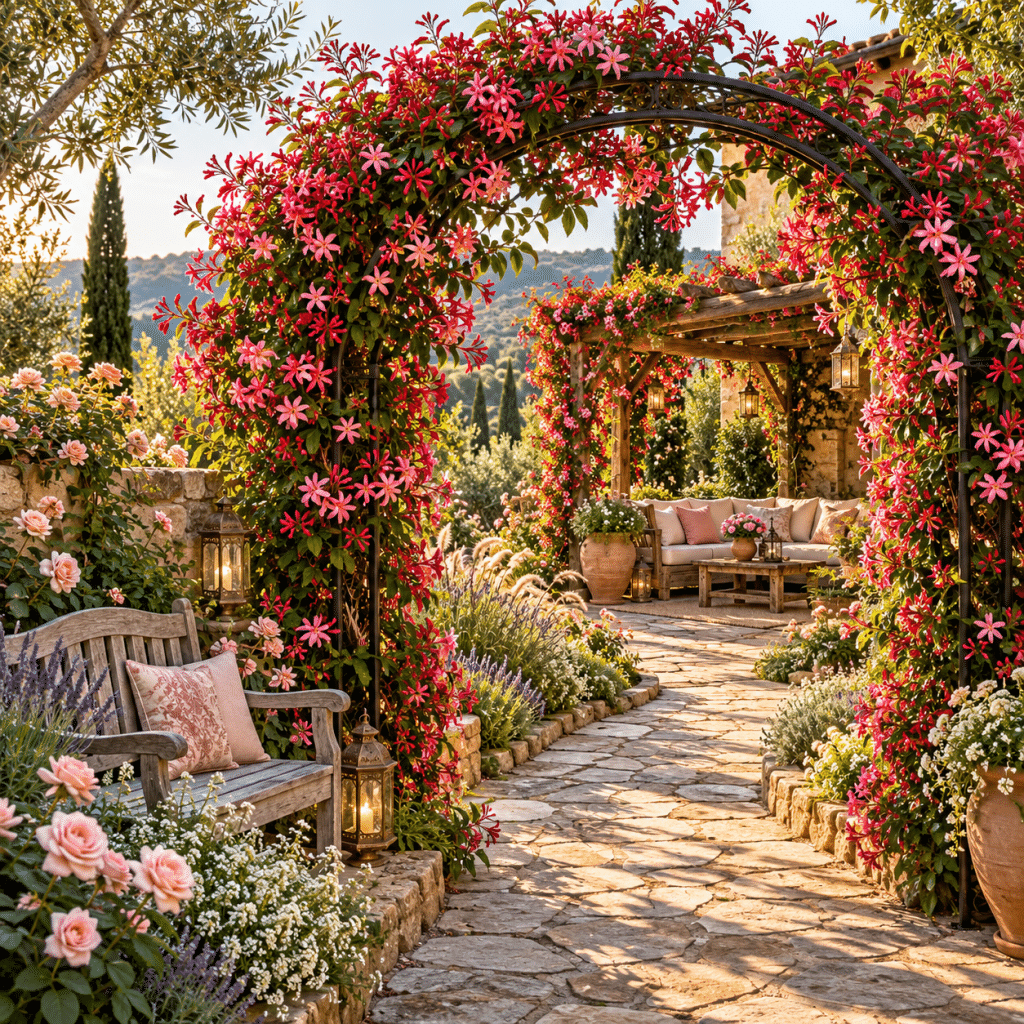
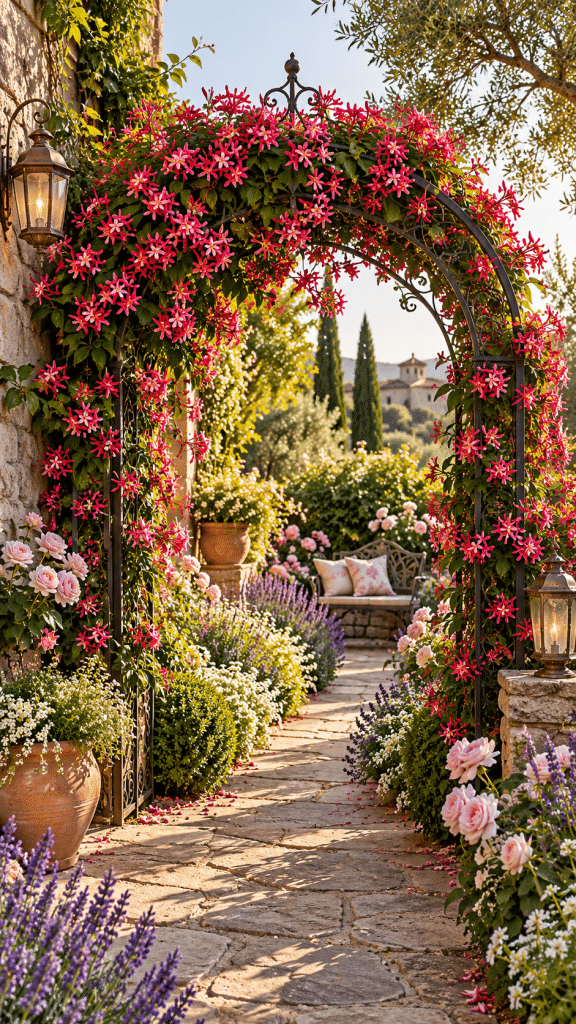
Imagine a gracefully curved arch covered with red jasmine vines, positioned at the beginning of a winding stone path. Soft pink and rose-red flowers appear among the green foliage, while complementary flowering plants create colorful borders on both sides.
Beyond the arch, a glimpse of a garden bench, decorative fountain, or secluded sitting area encourages visitors to explore further.
The design creates a sense of anticipation and discovery, two qualities that make romantic gardens feel especially magical.
🌿 Choose a Beautiful Garden Arch as the Main Focal Point
The garden arch forms the architectural foundation of this design.
A curved wrought-iron arch can introduce a timeless English garden aesthetic, especially when finished in matte black, weathered bronze, or muted antique green.
Natural wooden arches offer a softer rustic appearance and work beautifully in cottage gardens surrounded by flowering plants.
For a more architectural landscape, a simple rectangular metal structure can create an elegant contrast with the delicate movement of jasmine vines.
Whichever material is selected, the structure should be strong enough to support a mature climbing plant.
Red jasmine can grow several meters tall under favorable conditions, so lightweight decorative arches may not provide sufficient long-term support.
The arch should also offer comfortable clearance for walking underneath, even after vines have developed.
Positioning the structure at a natural transition point, such as between a patio and lawn or at the entrance to a flower garden, gives it a clear purpose within the overall landscape.
🌸 Create a Layered Romantic Flower Border
A flowering arch becomes even more beautiful when it is surrounded by complementary plants.
Rather than planting red jasmine in isolation, create a soft garden border filled with different heights, textures, and seasonal colors.
Low-growing plants can define the edges of the pathway, while taller flowering perennials add fullness closer to the arch.
Romantic garden combinations might include lavender, pale pink roses, white salvia, catmint, and delicate ornamental grasses.
These plants provide attractive contrasts with the rose-red tones of jasmine flowers.
Lavender and catmint can introduce cool purple-blue shades, while pale roses contribute larger blooms and a classic garden atmosphere.
The most successful arrangements avoid excessive color competition.
A restrained palette of blush pink, ivory, dusty lavender, muted burgundy, and natural green creates a sophisticated appearance that feels harmonious rather than crowded.
Plant selections should always suit the garden’s local climate, soil, and sunlight conditions.
🪨 Design a Gently Curving Natural Stone Pathway
A romantic garden entrance becomes more interesting when the pathway beneath it feels organic.
Instead of creating a perfectly straight walkway, consider a gently curving path made from natural stone or rustic paving materials.
Irregular flagstones can introduce a timeless character, while pale limestone or warm sandstone can create a brighter, more refined appearance.
Small planting pockets between stepping stones may be filled with suitable low-growing groundcovers.
These details help the pathway blend naturally into the surrounding vegetation.
The curve should remain gentle enough to provide comfortable access, especially in areas used frequently.
For nighttime enjoyment, discreet low-voltage path lighting can illuminate the walkway without overwhelming the surrounding flowers.
Soft, warm lighting is particularly effective because it highlights the shapes of climbing stems and leaves while maintaining an intimate atmosphere.
✨ Add Romantic Decorative Details Without Overcrowding
A few carefully chosen decorative elements can transform a flowering archway into a memorable garden feature.
An aged terracotta pot near the entrance can introduce warmth and rustic character.
A small stone ornament or vintage-inspired lantern may provide additional visual interest.
A bench positioned beyond the arch creates a natural destination and encourages visitors to appreciate the garden from a different perspective.
However, romantic design does not require filling every available space with decorations.
Too many ornaments can distract attention from the jasmine flowers and beautiful landscape structure.
Instead, choose a small collection of materials that share a consistent aesthetic.
Weathered wood, natural stone, aged metal, and handmade ceramics are especially suitable for this style.
Why this idea works: A jasmine-covered archway turns a functional garden entrance into an emotional experience. It creates an inviting transition between outdoor spaces while providing a striking vertical focal point and beautiful seasonal flowers.
🥈 Best 2 Red Jasmine Garden Ideas With an Elegant Pergola Retreat
An elegant pergola retreat combines the natural beauty of climbing jasmine with the comfort of an outdoor living room.
Rather than treating the garden as something to admire from a distance, this design encourages people to spend time outdoors, surrounded by flowers, greenery, and relaxing textures.
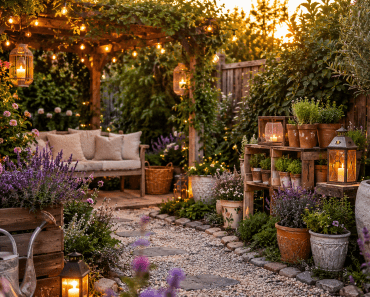
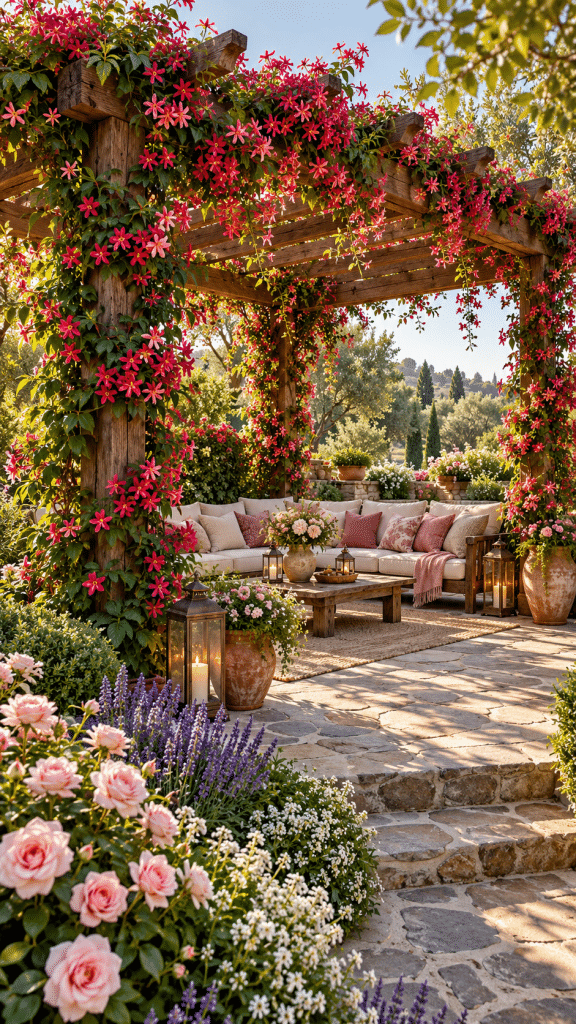
Imagine a warm wooden pergola standing over a small stone patio.
Red jasmine climbs along selected posts and decorative trellises, creating flowering accents around a comfortable seating arrangement.
A cozy outdoor sofa, textured cushions, and a low coffee table establish a welcoming atmosphere.
During the day, natural sunlight illuminates the pale materials and delicate blooms.
In the evening, warm architectural lighting transforms the space into an intimate garden retreat.
🪵 Build a Pergola That Complements the Garden
A pergola provides a strong architectural framework for this romantic landscaping concept.
Natural wood is particularly attractive because it introduces warmth and works beautifully with climbing plants.
Light oak tones, weathered cedar, and soft brown timber finishes create a relaxed, timeless appearance.
For a more contemporary aesthetic, a dark metal pergola can offer a sophisticated contrast against green foliage and rose-red flowers.
The size of the structure should suit the available outdoor space.
A compact pergola can accommodate a small loveseat and side table, while a larger structure may provide room for an outdoor dining arrangement or lounge furniture.
Red jasmine should be planted in locations where its stems can be guided toward trellises or supporting posts.
Additional horizontal wires or lattice panels may be necessary to encourage controlled climbing.
Because a mature vine can become substantial, the structure must be securely installed and capable of supporting the plant as it grows.
Avoid allowing heavy vegetation to accumulate around vulnerable roof connections, gutters, or other architectural components.
🛋️ Create a Cozy Outdoor Lounge With Romantic Textures
Comfortable furniture is essential for turning a pergola into a genuine outdoor retreat.
Choose seating that encourages relaxation rather than emphasizing appearance alone.
A compact outdoor sofa with weather-resistant cushions can create a welcoming central feature.
Pair it with a natural wood or stone coffee table and one or two comfortable accent chairs, depending on the available space.
A romantic color palette might include warm ivory, oatmeal, soft beige, muted olive, dusty rose, and gentle terracotta.
These shades complement jasmine foliage without competing with the flowers.
Outdoor cushions made from durable fabrics can add softness, while woven baskets and ceramic planters introduce natural texture.
A weather-resistant rug can visually define the seating area and make the pergola feel more like an outdoor room.
For additional comfort, include lightweight throws that can be brought indoors when not in use.
The goal is to create a setting that feels elegant but never too formal to enjoy.
🌹 Surround the Pergola With Beautiful Flowering Plants
Red jasmine provides vertical beauty, but the surrounding planting design is equally important.
Low borders of flowering perennials can soften the edges of the patio.
Ornamental grasses introduce movement, while compact shrubs create structure throughout the year.
For a romantic English garden influence, consider pairing jasmine with pale roses, lavender, and airy flowering perennials such as gaura in suitable climates.
For a warmer Mediterranean-inspired design, terracotta containers, rosemary, and drought-tolerant plants may be more appropriate.
The key is selecting plants with compatible growing requirements.
Red jasmine prefers well-drained soil and a position with full sun or partial shade. Neighboring plants should be arranged so they do not create excessive competition for moisture, nutrients, and root space.
Container plants can introduce additional seasonal flowers without requiring major changes to the permanent garden layout.
This makes it possible to refresh the pergola’s appearance throughout the year.
🕯️ Introduce Soft Lighting for Romantic Evenings
Lighting can dramatically change the atmosphere of an outdoor space.
During daylight hours, climbing jasmine and natural materials provide much of the visual interest.
After sunset, carefully placed lights can create a warm, peaceful environment.
Small warm-white string lights may be arranged along pergola beams, provided the electrical installation is suitable for outdoor conditions.
Weather-rated wall lights, concealed LED strips, and portable rechargeable lanterns can offer additional illumination.
For a particularly elegant effect, position subtle uplights near architectural posts to emphasize the surrounding foliage.
The lighting should remain gentle rather than excessively bright.
A layered arrangement of several low-intensity light sources usually creates a more welcoming atmosphere than a single harsh overhead fixture.
Any electrical equipment should be properly rated for outdoor exposure, and lights should be positioned away from dense foliage where heat could become a concern.
🌿 Make the Pergola Feel Private and Intimate
Privacy is another important element of romantic garden design.
An outdoor seating area often feels more relaxing when it is partially separated from neighboring properties or busy parts of the backyard.
Decorative trellis screens can provide support for climbing plants while creating a sense of enclosure.
Tall container plants or layered shrub borders can help define the space without completely blocking sunlight.
A pergola can also be positioned beside an existing garden wall or fence, using the architecture to establish privacy.
However, avoid enclosing every side with dense vegetation.
A combination of open views and selective screening usually creates a more comfortable environment while allowing better airflow.
Why this idea works: A jasmine pergola combines ornamental planting with everyday functionality. It creates a comfortable destination for morning coffee, quiet afternoons, outdoor conversations, and memorable evenings surrounded by natural beauty.
🥉 Best 3 Red Jasmine Garden Ideas With a Secret Romantic Cottage Garden
A secret cottage garden offers a different interpretation of romantic outdoor landscaping.
Instead of emphasizing a single large architectural feature, this concept creates beauty through layered flowers, charming details, gently winding paths, and a secluded place to relax.
The design should feel as though it has developed naturally over time, even when every element has been carefully planned.
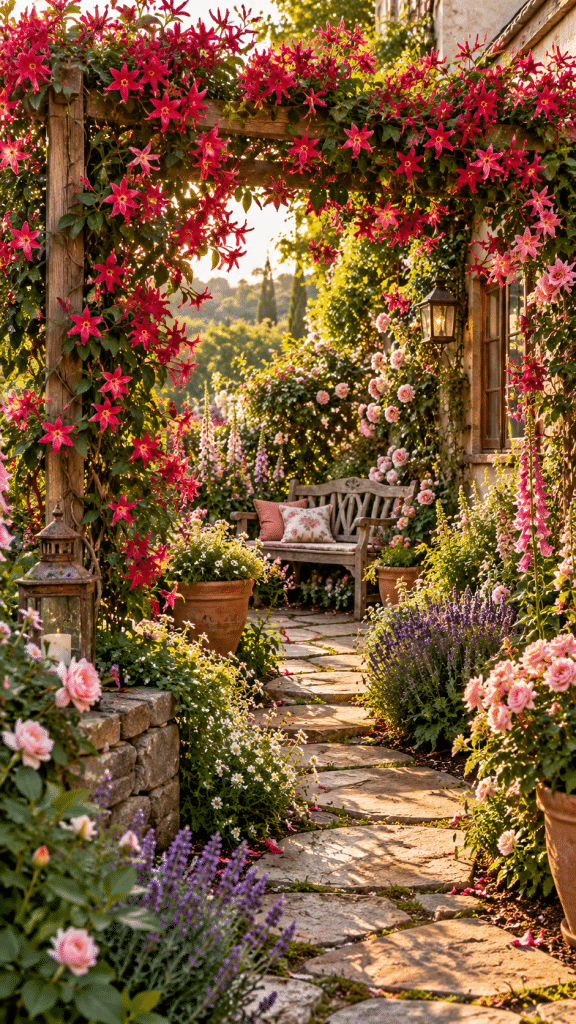
Imagine a small garden corner enclosed by lush planting and a rustic wooden trellis.
Red jasmine climbs against the trellis, introducing delicate seasonal flowers above a collection of softly textured plants.
A weathered wooden bench sits beneath the surrounding greenery.
An irregular stepping-stone path leads toward the seating area, partially framed by flowering borders.
The result is a peaceful sanctuary that feels hidden from the outside world.
🌺 Combine Red Jasmine With Classic Cottage Garden Flowers
Cottage gardens are celebrated for their layered planting arrangements and abundance of flowers.
Rather than relying on large blocks of a single species, they often combine plants with different heights, flowering periods, and growth habits.
Red jasmine can form the vertical backdrop while lower-growing plants establish depth and fullness.
Suitable companion selections may include hardy geraniums, foxgloves, salvias, roses, campanulas, and other cottage-style perennials appropriate to the region.
Soft pink and white flowers complement red jasmine particularly well.
For additional contrast, introduce small amounts of violet, dusty blue, or muted burgundy.
These cooler shades can make the warmer jasmine blossoms more visually noticeable.
The arrangement should look abundant without becoming unmanageable.
Allow enough space between individual plants for healthy development and airflow.
This also reduces competition and makes seasonal maintenance easier.
🪑 Add a Charming Vintage Garden Bench
A secluded bench is one of the defining features of a romantic cottage garden.
It creates a quiet destination where visitors can sit, read, reflect, or simply enjoy the surrounding flowers.
A weathered wooden bench offers natural warmth, while an antique-inspired metal bench can introduce a more traditional English garden appearance.
Consider finishes such as muted sage green, soft cream, weathered gray, or aged bronze.
These colors blend beautifully with the surrounding vegetation.
Position the bench so it overlooks the most attractive part of the garden.
A view toward a flowering border, small fountain, or climbing jasmine screen can make the seating area feel especially rewarding.
Avoid placing the bench directly against dense climbing vegetation.
Leaving a little space between the seating and the plants improves airflow, simplifies maintenance, and provides a more comfortable experience.
For additional coziness, use removable outdoor cushions in neutral or softly patterned fabrics.
🌿 Create a Hidden Garden Corner With Layered Greenery
A secret garden should create a feeling of enclosure without appearing dark or overcrowded.
One effective approach is to position red jasmine against a trellis near the back of the planting arrangement.
Compact shrubs or tall perennials can occupy the middle layer, while low-growing flowers and groundcovers define the front.
This layered composition creates depth and visual softness.
A small decorative screen may be used to conceal neighboring structures or less attractive garden features.
Alternatively, a narrow arch or trellis opening can create the impression that the space is tucked away behind a natural curtain of greenery.
The best designs reveal the seating area gradually rather than displaying everything immediately.
This sense of discovery makes a relatively small garden feel more interesting.
It also encourages visitors to slow down and appreciate details that might otherwise go unnoticed.
🪨 Use Rustic Materials and Natural Garden Accessories
Materials play an important role in establishing cottage garden character.
Weathered brick, natural stone, aged terracotta, and unfinished-looking wood create a timeless atmosphere.
A pathway made from reclaimed-style brick or irregular stepping stones can contribute to the impression of an established garden.
Terracotta containers filled with seasonal flowers introduce warmth and charm.
A small birdbath or simple water feature may add another focal point while supporting a peaceful atmosphere.
Natural materials should be selected for durability as well as appearance.
Pathways need stable footing, and decorative elements should not obstruct routine garden maintenance.
For a more harmonious design, repeat the same materials in several locations.
For example, terracotta planters placed beside the bench can echo similar containers near the garden entrance.
This repetition helps the landscape feel thoughtfully connected.
🦋 Create a Garden That Feels Alive Throughout the Seasons
Romantic gardens become especially memorable when they change naturally throughout the year.
Red jasmine contributes seasonal flowering beauty, but additional plants can extend the garden’s ornamental interest.
Spring-flowering bulbs may introduce early color in appropriate climates.
Summer perennials can continue the floral display after jasmine’s main flowering period.
Autumn foliage, ornamental grasses, and seed heads can provide texture later in the year.
Evergreen shrubs may maintain structure during colder months.
A small birdbath, pollinator-friendly flowering plants, and varied vegetation can also make the garden more welcoming to wildlife.
The exact plants should be chosen according to regional conditions and local ecological guidance.
Why this idea works: A secret cottage jasmine garden creates a deeply personal outdoor sanctuary. Its beauty comes from natural layering, nostalgic materials, secluded seating, and the peaceful experience of being surrounded by flowers.
🌱 How to Grow Red Jasmine Successfully in a Romantic Garden
A beautiful landscape design needs healthy plants to maintain its appearance.
Red jasmine is an attractive climbing species, but its long-term success depends on appropriate positioning, drainage, watering, and maintenance.
Understanding these requirements helps ensure that a flowering arch, pergola, or cottage garden continues to look beautiful as the plant matures.
Choose the Right Sunlight and Garden Location
Red jasmine generally performs well in full sun to partial shade.
A position receiving several hours of sunlight can encourage healthy development and seasonal flowering.
Sheltered locations are particularly useful, especially where strong winds or severe winter conditions are common.
A warm garden wall or protected courtyard may provide a favorable microclimate.
However, the plant should not be placed in an area where reflected heat and insufficient moisture regularly cause excessive stress.
Climate suitability is important.
Red jasmine can tolerate some winter cold, but its performance varies according to local conditions. Its foliage may become deciduous in colder climates.
The botanical species has been described as suitable for USDA hardiness zones 7a through 9b by North Carolina State Extension, while the Royal Horticultural Society assigns it an H5 hardiness rating under its UK classification.
Because these systems measure growing conditions differently, gardeners should evaluate local winter temperatures, drainage, and exposure rather than relying on a hardiness label alone.
Prepare Well Drained Soil Before Planting
Healthy roots are essential for vigorous climbing growth.
Red jasmine prefers soil that drains well while retaining sufficient moisture to support active growth.
Before planting, inspect the soil to determine whether water drains freely or remains trapped after rainfall.
Heavy, compacted soil may need improvement through appropriate soil preparation.
Organic matter can improve soil structure in many garden situations, but amendments should be selected according to existing conditions.
Dig a planting hole wide enough to accommodate the root system without forcing or bending the roots.
Position the plant at approximately the same depth it occupied in its nursery container.
Backfill carefully, firm the soil gently, and water thoroughly after planting.
When growing jasmine near a wall, avoid positioning the roots immediately against the foundation.
A planting distance of approximately 30 to 60 centimeters from a wall is often recommended for climbers, depending on site conditions, so the roots have access to sufficient soil and moisture.
Water Consistently Without Creating Waterlogged Conditions
Newly planted jasmine requires regular attention while its roots establish.
Water deeply enough to moisten the surrounding root zone, then allow excess water to drain away.
Avoid keeping the soil constantly saturated.
Excessively wet conditions can interfere with healthy root function and increase the risk of root problems.
Established plants may require less frequent watering, although their needs vary with temperature, rainfall, soil texture, and growing conditions.
During extended dry periods, check the soil before watering.
A layer of organic mulch can help reduce moisture loss and moderate soil temperature.
Keep mulch away from direct contact with the plant’s main stems to reduce the risk of excessive moisture around the crown.
Train Climbing Stems Along Garden Structures
Red jasmine grows through twining stems, making it suitable for trellises, decorative supports, and other climbing structures.
Young stems can be guided gently toward their intended supports.
Soft garden ties may be used temporarily where necessary, provided they do not restrict stem growth.
Avoid wrapping ties too tightly around developing branches.
For an archway, guide new growth upward along the sides before allowing it to extend over the top.
For a pergola, direct selected stems along the posts and horizontal supports to develop an attractive arrangement.
For a cottage garden screen, distribute stems across the available trellis area rather than allowing all the growth to accumulate in one section.
Regular training produces a neater appearance and reduces the need for aggressive corrective pruning later.
Prune Red Jasmine After Flowering
Pruning helps maintain the size, shape, and health of climbing jasmine.
Remove dead, damaged, or overcrowded stems when necessary.
After the main flowering period, thin older growth and shorten shoots that extend beyond the intended garden structure.
Avoid removing excessive healthy growth unnecessarily.
Heavy pruning at the wrong time may reduce flowering or temporarily leave the structure looking bare.
Because mature plants can become vigorous, periodic maintenance is particularly important when jasmine is grown near entrances, seating areas, and narrow walkways.
Always use clean, sharp pruning tools and make cuts carefully to avoid damaging retained stems.
🌿 Important Note: The name red jasmine is sometimes used loosely in gardening and online plant listings. The designs in this article focus specifically on Jasminum beesianum, a true climbing jasmine with small pink to rose-red flowers. Confirm the botanical name before purchasing, because other plants marketed under similar common names may have very different growth habits, flower colors, climate requirements, and maintenance needs.
🎨 Best Color Combinations for Romantic Red Jasmine Garden Ideas
Color selection strongly influences the emotional character of a landscape.
The same red jasmine plant can feel traditional, luxurious, rustic, or contemporary depending on the surrounding materials and complementary flowers.
A carefully chosen palette helps create visual harmony while keeping the garden’s natural beauty at the center of attention.
Soft Blush Pink and Cream for Timeless Romance
Blush pink and cream create a delicate, classic atmosphere.
The rose-red jasmine blossoms provide a slightly stronger accent against pale companion flowers.
Cream-colored garden furniture, light natural stone, and soft green foliage complete the composition.
This palette works especially well for flowering archways and traditional cottage gardens.
It feels bright, peaceful, and romantic without becoming excessively decorative.
Burgundy and Antique Bronze for Elegant Drama
For a more sophisticated garden, combine rose-red jasmine with touches of burgundy and antique bronze.
Dark-leaved plants can provide contrast, while aged metal furniture introduces richness.
Warm stone paving and subtle garden lighting help prevent the design from appearing too dark.
This combination is particularly attractive around pergolas and intimate outdoor seating areas.
The overall atmosphere feels mature, elegant, and slightly dramatic.
Sage Green and Natural Wood for Rustic Charm
Muted sage green and natural wood create a relaxed garden aesthetic.
The soft green tones complement jasmine foliage, while rustic timber introduces warmth.
Terracotta containers, woven furniture, and pale flowering plants provide additional texture.
This palette is especially suitable for smaller backyards and cottage-inspired spaces.
It offers romantic character without requiring elaborate decorations.
🏡 How to Adapt Red Jasmine Garden Ideas for Small Backyards
A limited outdoor area does not prevent the creation of a beautiful romantic landscape.
In fact, compact spaces often benefit from carefully chosen climbing plants because vertical growth introduces greenery without occupying large areas of ground.
The key is to focus on a limited number of strong design features instead of attempting to include every possible decorative element.
Use Vertical Structures to Save Space
A narrow trellis installed beside a patio can provide a climbing framework for red jasmine.
This approach creates height and seasonal color while preserving ground space for circulation and furniture.
Choose a structure that suits the scale of the garden.
An oversized pergola may overwhelm a tiny backyard, while a lightweight decorative trellis might not support a mature vine adequately.
A well-proportioned structure creates the best balance between beauty and practicality.
Select Compact Garden Furniture
Small gardens benefit from furniture that serves a clear purpose.
A narrow bench, two comfortable chairs, or a compact bistro table may provide sufficient seating without overcrowding the space.
Foldable furniture can offer additional flexibility.
Materials such as natural wood, powder-coated metal, and weather-resistant wicker work well with romantic landscaping.
Avoid using too many furniture styles or contrasting finishes.
A consistent design makes the garden feel more cohesive and spacious.
Create Depth With Layered Planting
Layered planting can make a compact garden feel more expansive.
Place climbing jasmine toward the rear or side boundary, then arrange shorter plants in front.
Include plants with different leaf shapes and flowering periods to maintain visual interest.
A gently curving pathway can also create the illusion of greater depth.
Even a small stepping-stone route leading toward a bench can make the garden feel like a sequence of connected spaces rather than a single open area.
🌷 Common Mistakes to Avoid When Designing a Red Jasmine Garden
A romantic jasmine garden should feel naturally beautiful, but careless planning can lead to overcrowding, maintenance problems, and disappointing growth.
Avoiding a few common mistakes makes it easier to achieve a landscape that remains attractive over time.
Planting Jasmine Without a Suitable Support
Red jasmine is a climbing plant that benefits from structural guidance.
Without an appropriate support, it may develop into a sprawling mass of stems rather than the attractive vertical feature originally intended.
Choose a sturdy trellis, arch, or pergola before planting.
Planning the support at the beginning also helps protect roots from unnecessary disturbance later.
Choosing Too Many Competing Flower Colors
An abundance of colorful flowers does not automatically create a romantic garden.
Too many strong colors can make a small planting arrangement feel visually chaotic.
Instead, choose one primary floral palette supported by a few complementary shades.
Rose-red jasmine can serve as the warm accent, while softer flowers and greenery create balance.
This simple approach produces a more refined result.
Ignoring Mature Plant Size
A young climbing jasmine may appear small, but it can eventually develop into a substantial vine.
Planting too close to other shrubs or narrow walkways may create maintenance difficulties as growth increases.
Allow enough space for mature stems and provide access for pruning.
An attractive garden should remain comfortable and functional even after its plants have reached their intended size.
Overdecorating the Outdoor Space
Romantic landscaping often includes lanterns, ornaments, vintage furniture, and decorative containers.
However, an excessive number of accessories can distract from the natural beauty of the plants.
Choose meaningful focal points rather than filling every corner.
A flowering arch, a beautiful bench, and a few carefully positioned planters may create more impact than dozens of unrelated decorations.
The most memorable gardens often combine visual richness with thoughtful restraint.
❓ Frequently Asked Questions About Red Jasmine Garden Ideas
Is Red Jasmine a Good Plant for a Romantic Garden?
Yes. Jasminum beesianum is suitable for romantic garden designs because it combines delicate pink to rose-red flowers with attractive climbing growth and fragrance.
It can soften architectural features such as trellises, archways, and pergolas.
Its appearance works especially well with natural materials, softly colored flowering plants, and intimate outdoor seating areas.
Can Red Jasmine Grow on a Pergola?
Yes. Red jasmine can be trained onto a sturdy pergola with suitable climbing supports.
Young stems should be guided along posts and horizontal structures to encourage balanced growth.
Occasional pruning helps prevent excessive crowding and maintains the desired appearance.
The pergola should be designed to accommodate the plant’s mature size and weight.
Does Red Jasmine Need Full Sun?
Red jasmine generally grows well in full sun or partial shade.
A sheltered location with suitable light and well-drained soil is often ideal.
Flowering performance can vary according to growing conditions, climate, and plant health.
Deep shade is usually less suitable for producing a vigorous flowering display.
Is Red Jasmine Suitable for Small Gardens?
Yes, provided there is sufficient room for its roots and a suitable support system.
A narrow trellis or carefully positioned arch can make attractive use of vertical space.
Regular training and pruning can help manage the plant’s size.
Gardeners should still account for its mature growth rather than treating it as a permanently compact plant.
When Does Red Jasmine Bloom?
Red jasmine generally flowers in late spring to summer, depending on climate and growing conditions.
Its small, fragrant blossoms provide seasonal interest rather than a guaranteed year-round display.
Combining it with plants that flower at different times can extend the overall garden’s colorful appearance.
Can Red Jasmine Be Grown in Containers?
Red jasmine can be grown in a sufficiently large container with suitable drainage and a sturdy climbing support.
Container-grown plants require closer attention to watering and nutrition because their roots occupy a limited volume of soil.
The container should be stable enough to support both the vine and its framework.
In colder areas, container cultivation may offer more flexibility for winter protection, although moving a mature supported vine can be difficult.
What Flowers Look Beautiful With Red Jasmine?
Pale roses, lavender, catmint, white salvia, hardy geraniums, and selected cottage garden perennials can create beautiful combinations.
The best companions depend on local growing conditions and the intended landscape style.
For an especially romantic appearance, combine soft pink and ivory flowers with small accents of purple or burgundy.
Different plant heights and leaf textures also help create visual depth.
🌹 Final Thoughts on the Best 3 Red Jasmine Garden Ideas
The most beautiful romantic gardens are not necessarily the largest or most expensive. They are spaces designed to inspire relaxation, encourage exploration, and create memorable moments surrounded by nature.
Red jasmine offers a wonderful opportunity to introduce delicate flowers, attractive climbing greenery, and an intimate atmosphere into outdoor landscaping.
The 🥇 Romantic Flowering Archway is ideal for creating a fairytale-inspired garden entrance. Its combination of climbing flowers, natural stone pathways, and softly layered planting creates an unforgettable first impression.
The 🥈 Elegant Jasmine Pergola Retreat is perfect for anyone who dreams of an outdoor living area surrounded by greenery. Comfortable furniture, climbing vines, and gentle lighting transform a simple patio into a peaceful destination for relaxation and entertaining.
The 🥉 Secret Romantic Cottage Garden offers a quieter, more nostalgic experience. A secluded bench, rustic materials, and abundant flowering plants establish an intimate sanctuary that feels personal and timeless.
Whichever approach is selected, successful garden design begins with understanding the space, choosing appropriate plants, and allowing the natural beauty of red jasmine to shine.
A thoughtfully designed jasmine garden can become much more than a decorative outdoor feature. It can be a peaceful morning retreat, a welcoming place for meaningful conversations, and a beautiful setting for enjoying the changing seasons.
With the right combination of flowering vines, comfortable seating, harmonious colors, and natural textures, even the simplest backyard can become a romantic paradise worth visiting every day. 🌸