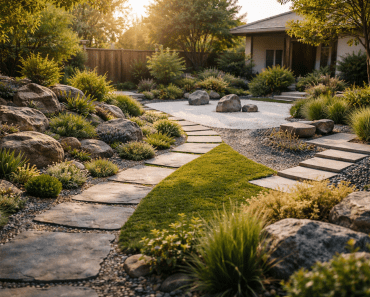
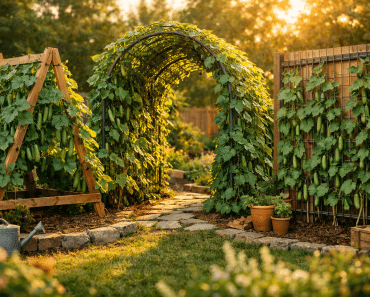
Small Kitchen Garden Ideas can completely transform the way a compact outdoor space is used. A tiny backyard, narrow side yard, balcony, patio, courtyard, or even a sunny corner beside the kitchen can become a productive garden filled with fresh herbs, leafy greens, vegetables, edible flowers, and compact fruit plants. The secret is not having more land. It is learning how to make every available inch work harder.
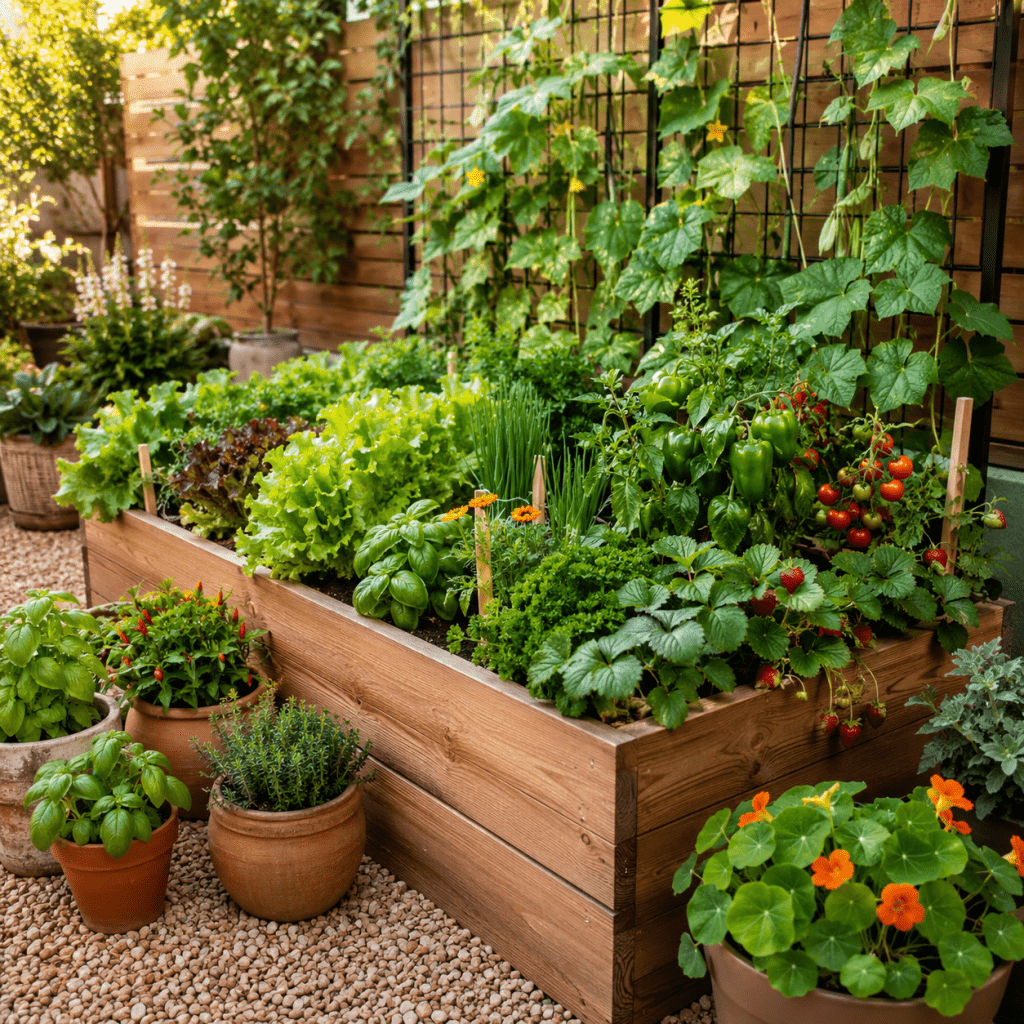
A small kitchen garden can also be surprisingly beautiful. Instead of looking like a purely functional vegetable patch, it can become an attractive extension of the home with terracotta pots, raised beds, climbing plants, gravel paths, wooden trellises, and carefully arranged herbs. 🌿 When edible plants are combined thoughtfully, the result can feel more like a stylish garden than a traditional vegetable plot.
For homeowners with limited space, the best strategy is usually to focus on productivity, accessibility, and clever vertical growing. Plants that are harvested frequently should be positioned close to the kitchen, while taller vegetables can grow upward rather than spreading across valuable ground space.
Among the many possibilities, three approaches stand out because they are adaptable, attractive, and realistic for small homes. These Top 3 Small Kitchen Garden Ideas include a compact raised bed garden, a vertical edible garden, and a container kitchen garden designed around herbs and frequently harvested vegetables.
Why Small Kitchen Gardens Are Perfect for Modern Homes
Large vegetable gardens can produce impressive harvests, but they also require significant maintenance. Rows need weeding, pathways need managing, and large planting areas can demand regular watering and soil improvement.
A small kitchen garden works differently.
Because everything is concentrated into a compact area, plants are easier to observe and maintain. A gardener can quickly notice dry soil, damaged leaves, pests, or vegetables that are ready to harvest. This close relationship with the garden often makes small spaces surprisingly productive.
Small gardens are also ideal for growing ingredients that are expensive or inconvenient to buy repeatedly. Fresh basil, parsley, chives, mint, lettuce, arugula, spinach, cherry tomatoes, chilies, and green onions can all be harvested in small quantities whenever they are needed.
Instead of buying a large bunch of herbs and using only part of it, the gardener simply walks outside and cuts exactly what the recipe requires. 🥬
Another advantage is flexibility. A small kitchen garden does not necessarily need permanent landscaping. Containers can be moved, raised beds can be repositioned, and vertical structures can be adjusted according to changing sunlight conditions.
This makes compact edible gardening suitable for renters, apartment dwellers, and homeowners who are still developing their landscape.
How to Choose the Best Small Kitchen Garden Ideas
Before choosing a layout, consider how the space functions throughout the day.
Sunlight is one of the most important factors. Most fruiting vegetables such as tomatoes, peppers, cucumbers, beans, and eggplants perform best with generous sunlight. Leafy vegetables and many herbs can tolerate slightly less.
Spend a day observing the proposed garden location. Notice which areas receive morning sunlight, afternoon sunlight, and shade from walls, fences, trees, or neighboring buildings.
Water access is equally important.
A garden located close to a faucet is easier to maintain than one requiring a long hose or repeated trips with a watering can. Because container gardens dry quickly, convenient watering becomes especially valuable during hot weather.
The following comparison can help determine which small kitchen garden style is most suitable.
| Garden Style | Best For | Space Required | Maintenance | Ideal Plants |
|---|---|---|---|---|
| Compact Raised Beds | Small yards and patios | Small to medium | Moderate | Lettuce tomatoes carrots herbs peppers |
| Vertical Kitchen Garden | Balconies walls and narrow spaces | Very small | Low to moderate | Herbs strawberries lettuce beans peas |
| Container Herb and Vegetable Garden | Patios balconies entrances | Very small | Easy | Basil mint parsley chilies tomatoes greens |
Each approach can work independently, but combining two or even all three often produces the most efficient design.
A raised bed might occupy the sunniest section of a courtyard, while herbs grow in containers near the kitchen door and climbing vegetables cover a nearby trellis.
The result is a layered edible landscape rather than a single vegetable bed.
🥇 Top 1 Small Kitchen Garden Ideas With Compact Raised Beds
Raised beds are among the most practical solutions for small edible gardens because they create clearly defined growing zones while improving accessibility and soil control.
A compact raised bed can fit into a surprisingly small footprint. Even a narrow rectangular bed positioned beside a fence can produce vegetables throughout the growing season.
The key is designing the bed around reach rather than maximum size.
If the gardener can comfortably reach the center without stepping into the soil, planting and harvesting become much easier.
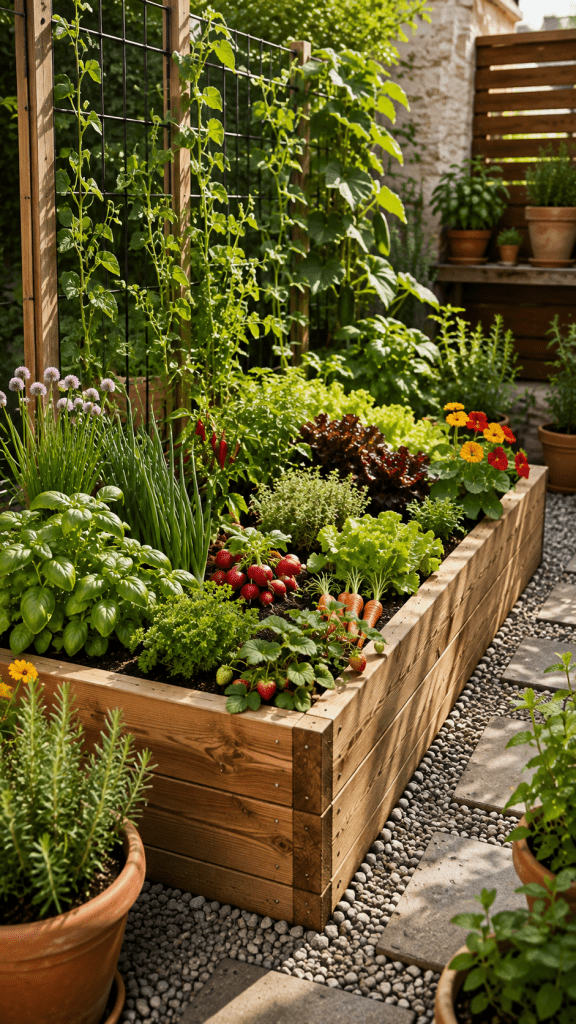
Create One Highly Productive Raised Bed
Instead of installing several large beds, begin with one carefully planned structure.
A simple raised bed measuring approximately 90 to 120 centimeters across provides enough room for multiple crops while remaining easy to maintain from either side.
The length can be adapted to the available space.
Wood is a popular choice because it creates a warm natural appearance, especially when combined with gravel, brick, stone, or terracotta. Metal raised beds can create a more contemporary aesthetic and are often durable.
For a softer garden look, surround the structure with herbs or edible flowers.
Calendula, nasturtiums, chives, thyme, and compact lavender can help visually connect the productive garden with the surrounding landscape. 🌼
Rather than planting vegetables in traditional rows, use intensive spacing.
Small kitchen gardens benefit from grouping compatible plants closely enough to shade exposed soil while still allowing adequate airflow.
Leaf lettuce can grow around taller peppers. Radishes can occupy spaces before slower vegetables mature. Basil can grow near tomatoes. Green onions can fill narrow gaps around other crops.
This layered planting approach allows the bed to produce more food without becoming overcrowded.
Divide the Raised Bed Into Simple Growing Zones
Small spaces become easier to manage when the garden is mentally divided into sections.
One section might contain quick-growing salad vegetables.
Another might contain taller fruiting plants.
A third section can hold herbs that are harvested repeatedly.
For example, one corner might contain cherry tomatoes supported by vertical stakes. Beneath them, basil can provide a second edible layer. Along the front edge, lettuce and green onions can create a low-growing border.
The opposite side could contain carrots, radishes, spinach, or arugula.
This arrangement creates diversity while keeping harvesting convenient.
Succession planting can make the system even more productive.
After radishes are harvested, another crop can replace them. When cool-season lettuce begins to decline, warm-season herbs or compact peppers can take its place.
Instead of thinking about one planting season, think of the raised bed as continuously changing productive space.
Add a Trellis to Increase Growing Space
The easiest way to expand a small kitchen garden is often to stop thinking horizontally.
A trellis installed along the back edge of a raised bed can support climbing beans, peas, cucumbers, and other vines.
Vertical vegetables occupy relatively little soil surface while producing considerable foliage and harvests above the garden.
A trellis can also become an attractive architectural feature.
Wooden lattice provides a relaxed cottage-garden feeling, while slim black metal structures can create a modern look.
If the raised bed is positioned near a wall, climbing plants can soften the architecture and make the kitchen garden feel integrated into the landscape.
The important consideration is plant placement.
Tall crops should generally be positioned where they will not heavily shade shorter vegetables.
In many garden layouts, placing tall trellised plants toward the back or northern side of the growing area helps maintain better light distribution.
Important Note: Avoid filling a small raised bed with too many large vegetables at once. Plants such as zucchini, pumpkins, sprawling squash, and full-size tomatoes can quickly dominate compact spaces. Choose dwarf varieties, patio cultivars, or vegetables that naturally grow vertically whenever possible.
Make the Raised Bed Beautiful Enough to Become Part of the Landscape
A productive garden does not need to look utilitarian.
Small raised beds are especially attractive when their materials repeat elements already used around the home.
A wooden bed can coordinate with a timber fence or deck.
Stone edging can connect visually with a patio.
Black metal can complement modern windows and outdoor furniture.
Adding a narrow gravel pathway around the bed helps keep the area clean and improves drainage. A small watering can, ceramic herb pots, or simple wooden plant markers can add visual character without making the garden cluttered.
When designed this way, the vegetable garden becomes part of the outdoor living area rather than something hidden at the back of the property.
🥈 Top 2 Vertical Small Kitchen Garden Ideas for Walls and Narrow Spaces
When ground space is limited, walls, fences, railings, and trellises become valuable gardening surfaces.
Vertical gardening is particularly effective for balconies, narrow patios, side yards, and tiny urban courtyards where there may be only a few square meters of usable floor space.
Instead of placing every plant on the ground, the garden expands upward.
This creates more planting opportunities while preserving valuable walking and seating areas.
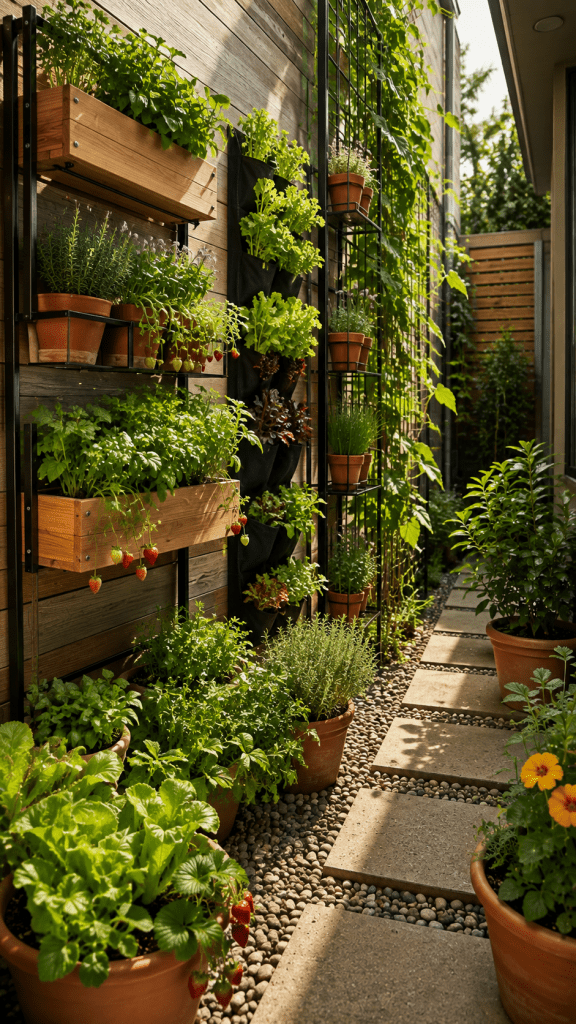
Build a Simple Wall Herb Garden
Herbs are some of the best plants for vertical kitchen gardens because many have relatively compact root systems and are frequently harvested.
Parsley, thyme, oregano, chives, basil, cilantro, mint, sage, and smaller rosemary varieties can all become part of a wall-based herb display.
Several systems can work.
Wall-mounted planter boxes create a structured appearance.
Hanging pots offer flexibility.
Wooden shelves provide space for individual containers.
Pocket planters can create a lush living-wall effect.
The design should allow plants to receive enough light and air while remaining easy to water.
Position herbs according to their water needs whenever possible.
Mediterranean herbs such as rosemary, thyme, oregano, and sage generally prefer good drainage and relatively dry conditions.
Basil, parsley, cilantro, and mint usually appreciate more consistent moisture.
Grouping plants with similar requirements makes maintenance easier.
Use Climbing Vegetables as Living Green Screens
Vertical vegetables can serve two purposes simultaneously.
They provide food while also creating privacy.
Climbing beans, peas, cucumbers, and some compact vine tomatoes can grow against trellises or mesh panels.
On balconies and patios, these plants can create a green screen between neighboring spaces.
The effect can be particularly attractive when edible climbers are mixed with flowering plants.
Scarlet runner beans, for example, can produce decorative flowers while also creating edible pods.
Peas provide delicate foliage and tendrils.
Cucumbers create lush leaves that can quickly cover a trellis during warm weather.
Growing upward also helps improve airflow around many crops.
Fruit becomes easier to see and harvest, and plants remain more organized than vines spreading across the ground.
Create a Tiered Kitchen Garden
Tiered planters are another useful option.
A three-level wooden planter can hold several different crops without occupying much floor space.
Place taller plants on the highest or rear level.
Medium-height herbs can occupy the middle tier.
Trailing herbs, strawberries, or leafy greens can grow along the lowest or front section.
This layered composition can resemble an ornamental container display while remaining almost completely edible.
Strawberries are particularly effective in tiered gardens because their foliage can spill softly over the edges.
Trailing thyme can provide a similar effect.
Lettuce varieties with different leaf colors can create attractive contrast.
Deep red lettuce combined with green herbs, silver sage, and bright strawberries can create a surprisingly decorative arrangement. 🍓
Use Railings and Hanging Planters
Balcony railings are often overlooked gardening areas.
Slim railing planters can provide enough growing space for lettuce, herbs, strawberries, radishes, and green onions.
Hanging baskets can add another layer.
Cherry tomatoes bred for hanging containers can cascade from elevated pots. Strawberries can also grow successfully in hanging systems.
However, hanging containers dry faster than many ground-level pots.
During warm weather, they may require frequent watering.
Lightweight potting mixtures with good moisture retention can help reduce stress, but drainage holes remain essential.
A practical vertical garden should never become so complicated that watering becomes difficult.
Accessibility is more important than fitting the maximum possible number of plants onto a wall.
🥉 Top 3 Small Kitchen Garden Ideas With Containers and Herbs
Container gardening may be the easiest way to create a kitchen garden without changing the landscape permanently.
Pots can be arranged on balconies, patios, stairs, decks, courtyards, or even beside a sunny kitchen door.
Containers are also highly flexible.
Plants can be moved as the seasons change or when different areas receive better sunlight.
This flexibility makes container gardening especially suitable for beginners.
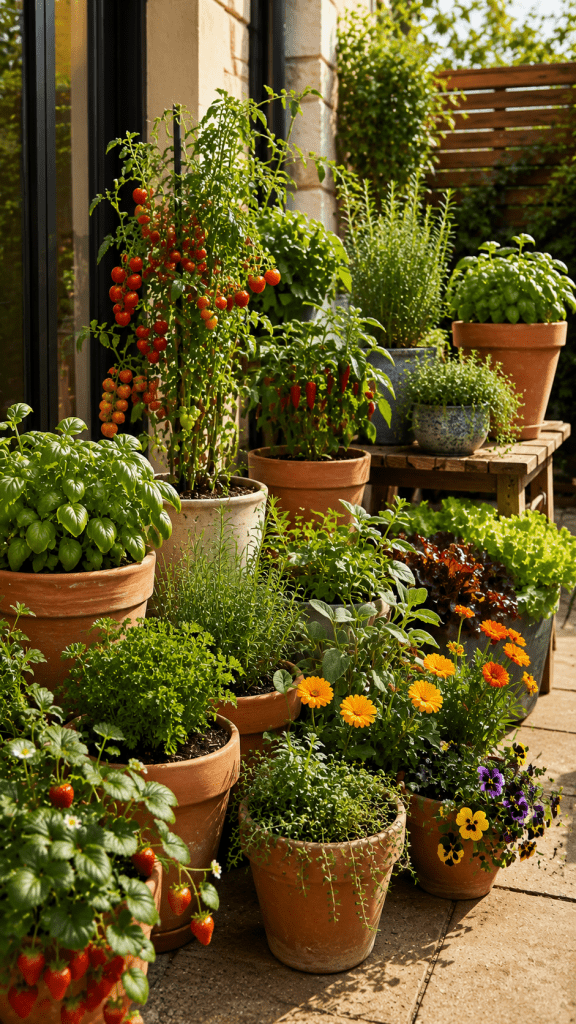
Start With the Herbs You Actually Cook With
A kitchen garden is most useful when it produces ingredients that are regularly used.
There is little reason to dedicate valuable space to herbs that rarely appear in meals.
Start by identifying the flavors most commonly used in the kitchen.
For Italian-inspired cooking, basil, oregano, parsley, thyme, rosemary, and sage may be useful.
For Asian-inspired dishes, cilantro, Thai basil, green onions, mint, and chilies may be more valuable.
Different culinary traditions naturally lead to different garden combinations.
Position frequently harvested herbs closest to the kitchen entrance.
The easier they are to reach, the more likely they are to be used.
A beautiful ceramic pot of basil beside the door can provide dozens of small harvests throughout the season.
Grow Compact Vegetables in Larger Pots
Containers are not limited to herbs.
Many vegetables perform extremely well in pots when given adequate soil volume.
Cherry tomatoes are among the most popular choices.
Compact peppers and chilies also adapt well.
Eggplants can grow successfully in larger containers.
Lettuce, arugula, spinach, radishes, and green onions require less soil depth and can be grown in wide shallow planters.
Carrots can also grow in containers if the pot is deep enough for the variety selected.
Look for cultivars described as dwarf, patio, compact, bush, baby, or container varieties.
Plant breeders have developed many vegetables specifically for gardeners with limited space.
These smaller cultivars often produce full-sized harvests on plants that remain much more manageable.
Create a Beautiful Cluster of Mixed Containers
Instead of arranging pots in a straight line, group several container sizes together.
A large pot containing a cherry tomato can become the tallest element.
A medium container with basil or parsley can sit nearby.
Smaller pots of thyme, oregano, chives, or strawberries can fill the foreground.
Varying the height of containers creates depth and prevents the garden from looking flat.
Terracotta is particularly attractive in edible gardens because its warm earthy color complements green foliage.
Glazed ceramic containers can introduce subtle color.
Galvanized metal planters can create a farmhouse atmosphere.
Minimalist black or gray pots work well with contemporary architecture.
Keeping the container materials relatively consistent will make the small garden look intentional rather than cluttered.
Combine Edible and Ornamental Plants
An edible garden does not need to contain vegetables exclusively.
Flowers can improve the visual appearance while also attracting pollinators.
Nasturtiums are especially useful because both their flowers and leaves are edible.
Calendula petals can be used decoratively.
Violas can add delicate color.
Marigolds are commonly grown alongside vegetables and provide bright seasonal flowers.
Flowers also help a container kitchen garden blend naturally into a patio or outdoor living area.
Instead of separating ornamental and edible gardening, the two can become one cohesive landscape.
🌸 A pot containing purple basil, green parsley, golden calendula, and trailing thyme can be as attractive as many conventional flower arrangements.
Smart Plants for Small Kitchen Gardens
Choosing the right crops has a greater impact on productivity than simply planting more.
Fast-growing vegetables are particularly valuable because they can be harvested repeatedly or replaced throughout the season.
Leaf lettuce is one of the easiest examples.
Rather than harvesting the entire plant, gardeners can often remove outer leaves while allowing the center to continue producing.
Arugula can be managed similarly.
Herbs such as basil and parsley also benefit from regular harvesting.
Frequent pruning encourages fresh growth and prevents some plants from becoming overly tall or leggy.
Green onions occupy very little space and can grow between larger vegetables.
Radishes mature quickly and work well as temporary crops while slower plants are establishing.
Cherry tomatoes take more space but provide long harvest periods.
Chilies and compact peppers are similarly valuable because a relatively small plant can produce fruit repeatedly.
Use Companion Planting Without Making the Garden Complicated
Companion planting is often presented as a complicated system, but small kitchen gardens benefit most from simple combinations.
The primary goal is efficient use of space.
Tall plants can provide vertical structure.
Medium plants occupy the central layer.
Low-growing herbs and greens fill exposed soil around them.
A tomato growing upward can share a large container with basil.
A trellis of climbing beans can rise behind lettuce.
Green onions can occupy the edges of a raised bed.
Strawberries can trail from an elevated planter while herbs grow above them.
Think in terms of plant shape and growth habit rather than strict rules.
Plants should have enough light, root space, airflow, and water.
If one plant begins overwhelming the others, pruning or repositioning may be necessary.
Make Watering Easier in a Small Kitchen Garden
Compact gardens can sometimes require more frequent watering than large traditional vegetable plots.
Containers in particular lose moisture quickly because their soil is exposed to air on several sides.
Large containers generally retain moisture better than tiny pots.
Mulching can also help.
A thin layer of organic mulch over raised beds reduces evaporation and protects the soil surface.
Containers can benefit from similar treatment.
Watering early in the day is often practical because plants have access to moisture before temperatures rise.
Drip irrigation can be extremely useful if the garden contains many containers.
Simple irrigation tubing can connect several pots and deliver water directly to the root zone.
For a very small collection, however, a watering can may be easier and more economical.
The best system is the one that can be maintained consistently.
Add a Small Composting System
Kitchen gardens naturally create opportunities for composting.
Vegetable peelings, fruit scraps, coffee grounds, crushed eggshells, and garden trimmings can become useful organic material instead of household waste.
Large compost piles are unnecessary for tiny gardens.
Compact compost bins and worm composting systems can work in small courtyards or patios.
Finished compost can eventually be mixed into raised beds or containers to improve soil structure.
However, compost should be viewed as part of a long-term soil improvement strategy rather than instant fertilizer.
For apartment balconies where traditional composting is impractical, commercially prepared compost can still be incorporated into the potting mixture when containers are refreshed.
Keep Paths and Harvesting Areas Comfortable
One of the biggest mistakes in small gardens is filling every available space with plants.
Some empty space is necessary.
Paths allow gardeners to reach vegetables without damaging leaves or compacting soil.
Even narrow walkways can dramatically improve functionality.
Gravel is a popular choice around raised beds because it provides drainage and creates a tidy appearance.
Brick or stone pavers can make the area feel more architectural.
Balcony gardens should preserve enough floor space for safe movement and comfortable access to containers.
Every plant should be reachable.
If harvesting lettuce requires climbing around several pots, the layout is too crowded.
A successful kitchen garden should make daily interaction easy.
Small Kitchen Garden Ideas for Different Types of Homes
Every home presents different opportunities.
For a townhouse with a narrow courtyard, one long raised bed against the boundary wall may provide the most efficient solution.
Install a vertical trellis behind it and use the remaining floor area as a simple gravel pathway.
For an apartment balcony, railing planters and compact containers may be more appropriate.
Use the brightest corner for tomatoes or chilies and partially shaded areas for herbs and leafy greens.
A suburban home with a small backyard might combine all three Top 3 approaches.
One raised bed can become the main vegetable growing area.
A nearby wall can support climbing beans or cucumbers.
Containers beside the kitchen door can provide herbs.
This mixed strategy distributes plants according to their size and harvesting frequency.
Seasonal Planning for a Productive Small Kitchen Garden
The most productive gardens change throughout the year.
Instead of planting everything once and waiting until the end of the season, replace crops as space becomes available.
Cooler conditions often suit lettuce, spinach, peas, radishes, and many leafy greens.
Warmer conditions favor basil, tomatoes, peppers, beans, and cucumbers.
Local climate will determine the exact schedule.
In tropical or subtropical regions, rainfall and heat may be more important than traditional spring and autumn distinctions.
Shade cloth may help protect delicate leafy vegetables during intense heat.
Containers can also be moved to locations with gentler afternoon conditions.
When one crop finishes, clear old roots and foliage, refresh the soil if needed, and plant something new.
This succession approach can turn a tiny garden into a surprisingly continuous source of food.
Common Mistakes to Avoid
The first common mistake is planting too much.
Tiny seedlings create the illusion that a container or raised bed has enormous unused space.
Within several weeks, however, tomatoes, cucumbers, peppers, and herbs may become significantly larger.
Follow realistic mature spacing rather than the appearance of newly planted seedlings.
Another mistake is using poor-quality soil.
Garden soil dug directly from the ground is usually unsuitable for containers because it can become dense and poorly drained.
Use a suitable potting mix designed for containers.
Raised beds can be filled with a balanced mixture of quality soil, compost, and other appropriate organic materials.
Poor sunlight is another frequent problem.
Vegetables cannot compensate indefinitely for deep shade.
If the available area receives limited sunlight, prioritize leafy greens and shade-tolerant herbs rather than forcing sun-loving fruiting crops into unsuitable conditions.
Finally, avoid choosing plants simply because they look exciting in a seed catalog.
Space is valuable.
Every plant should earn its place through flavor, productivity, beauty, or usefulness.
How to Make Small Kitchen Garden Ideas Look More Stylish
Visual consistency can turn a group of edible plants into an intentional garden design.
Choose two or three primary materials.
For example, use terracotta containers, natural wood, and black metal.
Repeating these materials throughout the space creates cohesion.
Add plant labels with a consistent style.
Wooden markers provide a relaxed rustic appearance.
Minimal black labels create a modern aesthetic.
Avoid excessive decorative accessories because plants themselves should remain the focus.
Lighting can also improve the space.
Small outdoor lanterns or subtle warm lighting around a patio can make the kitchen garden enjoyable during evenings.
However, functional lighting should not interfere with plant health or become unnecessarily bright.
The best kitchen gardens feel practical during the day and inviting when viewed from inside the home.
Creating a Kitchen Garden Close to the House
Location can determine how frequently the garden is used.
A herb garden positioned far from the kitchen may eventually be ignored.
A garden directly outside the kitchen door becomes part of daily cooking.
Imagine preparing pasta and stepping outside for basil.
Fresh salad greens can be cut immediately before dinner.
Mint can be harvested for drinks.
Chilies can be selected according to ripeness.
This direct connection between garden and kitchen is the essence of kitchen gardening.
Even if the main vegetable beds are farther away, keep frequently used herbs nearby.
A small collection of five or six pots can dramatically improve everyday convenience.
Final Thoughts on the Top 3 Small Kitchen Garden Ideas
The best Small Kitchen Garden Ideas are not necessarily the designs containing the greatest number of plants. The strongest gardens balance productivity, accessibility, beauty, and realistic maintenance.
🥇 Compact raised beds provide the best overall structure for gardeners with a small yard, patio, or courtyard. They create excellent soil conditions, organized planting areas, and enough flexibility for vegetables, herbs, and flowers.
🥈 Vertical kitchen gardens make walls, fences, railings, and trellises productive. They are particularly valuable where floor space is extremely limited and can transform an empty wall into a lush edible feature.
🥉 Container herb and vegetable gardens provide maximum flexibility. They require little permanent landscaping and can be adapted to balconies, patios, entrances, and rental properties.
The most successful small garden may combine all three.
A raised bed can produce leafy greens and vegetables. A vertical trellis can support cucumbers or beans. Pots beside the kitchen door can provide fresh herbs throughout the season.
Together, these simple strategies create a garden that feels abundant without requiring a large property.
A few square meters can provide fresh ingredients, seasonal color, pollinator-friendly flowers, and a more meaningful connection with food. 🌱 With smart plant choices and thoughtful use of vertical space, even the smallest corner of a home can become a beautiful and productive kitchen garden.