When warm weather arrives, outdoor spaces should feel relaxing—not like a danger zone buzzing with angry insects. If you are searching for how to get rid of wasps outside, the good news is that there are smart, safe, and effective ways to handle the problem without turning your yard into a battlefield. Wasps can build nests under eaves, hide inside wall gaps, gather near trash bins, or hover around patios where food and drinks are present.
The trick is not just removing the wasps you see, but stopping the reasons they keep coming back. With the right approach, you can reclaim your garden, porch, deck, or backyard and enjoy fresh air again. This guide covers the Best 3 methods, prevention tips, mistakes to avoid, and long-term strategies that truly make a difference. 🐝🚫
Why Wasps Keep Showing Up Outside
Before learning how to get rid of wasps outside, it helps to understand why they are there in the first place. Wasps are attracted by three major things: food, shelter, and water.
During warmer months, sugary drinks, fruit, meat, garbage, pet food, and even flowers can attract them. If your yard offers easy access to these, wasps may treat your outdoor space like an all-you-can-eat buffet.
They also look for protected nesting areas. Roof edges, sheds, fences, deck rails, attics, mailboxes, outdoor furniture, and wall cavities are common nesting spots. If they find a quiet and dry location, they may stay for the season.
Water is another attraction. Birdbaths, puddles, dripping hoses, and pet bowls can draw wasps, especially in hot weather when hydration matters.
Understanding these triggers helps remove the cause—not just the symptom.
Best 3 How to Get Rid of Wasps Outside Methods
These are the most effective ways to reduce and remove outdoor wasp problems.
1 Remove Food Sources and Attractions First 🍉🗑️
The fastest way to reduce wasp activity is removing what attracts them. Many people try sprays immediately, but if food remains available, more wasps often return.
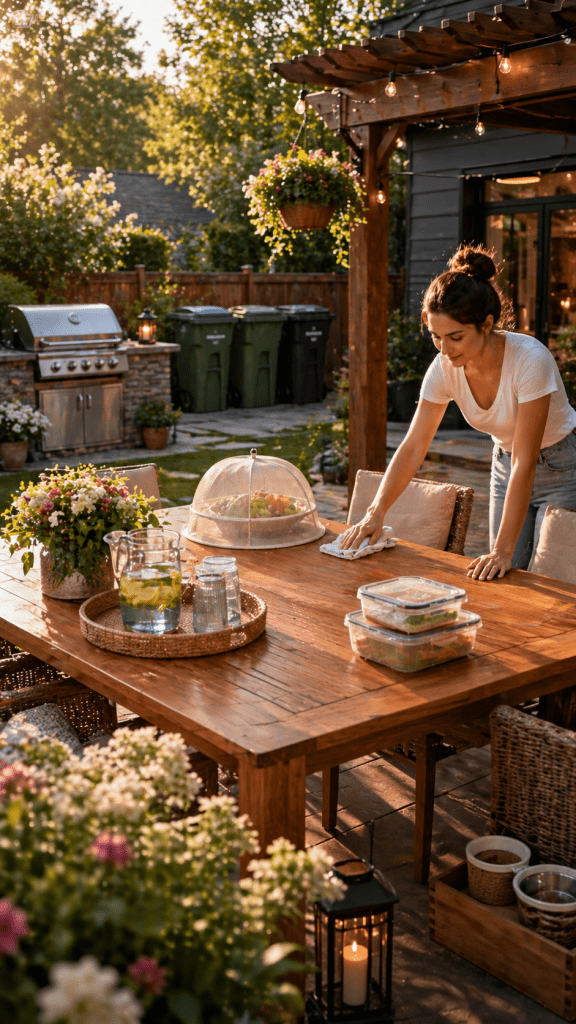
Clean outdoor dining areas after every meal. Wipe tables, chairs, grills, and counters. Sugary residue from soda, juice, fruit, or desserts can attract wasps surprisingly fast.
Seal garbage bins tightly. If possible, wash bins regularly because sticky odors remain even after trash is removed. Compost bins should also stay covered.
Pick up fallen fruit from trees. Overripe apples, pears, mangos, and other fruit are magnets for wasps.
Bring pet food indoors after feeding time. Wet food and meat scraps are especially attractive.
If hosting guests outdoors, keep drinks covered. Wasps often crawl into cans unnoticed, which can lead to painful stings.
Quick Attraction Checklist
| Attraction Source | Why Wasps Love It | What to Do |
|---|---|---|
| Soda and juice | Sugar source | Cover drinks and wipe spills |
| Trash bins | Food smell | Use sealed lids |
| Fallen fruit | Sweet fermentation | Remove daily |
| BBQ grills | Grease and meat scent | Clean after use |
| Pet food | Protein source | Remove leftovers |
| Standing water | Hydration | Empty or refresh water |
Removing attractions often reduces visible wasps within days.
2 Use Smart Wasp Traps in the Right Places 🎯
Traps can work well when used correctly. The mistake many people make is placing traps too close to seating areas. That can attract wasps directly where people gather.
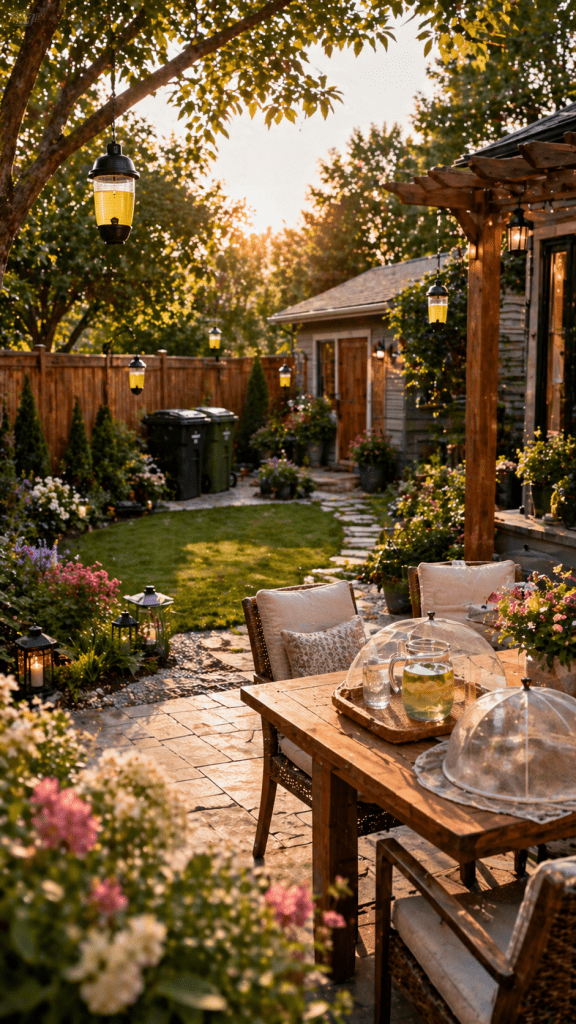
Instead, place traps at the far edge of the yard, near fences, trees, or problem zones. This pulls wasps away from patios and doors.
Commercial traps are effective, but homemade traps can also help. A simple bottle trap with sweet bait can catch many scouting wasps.
Good bait options include:
- Sugary juice
- Fruit juice
- Jam mixed with water
- Small bits of ripe fruit
In late summer, some wasps seek protein more than sugar, so tuna or meat scraps may work better.
Check traps regularly and empty safely.
Important Note: Never place wasp traps beside doors, patios, pools, or dining tables, or you may invite more wasps into the exact area you want to protect.
Best Trap Placement Zones
- 20–30 feet away from seating areas
- Near garbage zones
- Fence corners
- Tree lines
- Shed edges
- Places where wasps frequently fly
Used correctly, traps reduce numbers over time.
3 Remove Nests Safely and Early 🏠🚫
If you want real results for how to get rid of wasps outside, nest removal is often necessary. A nest means a colony nearby, and activity usually grows larger over time.
Small early-season nests are easier to deal with than large summer nests. Always inspect carefully under rooflines, deck edges, sheds, mailboxes, gutters, and wall openings.
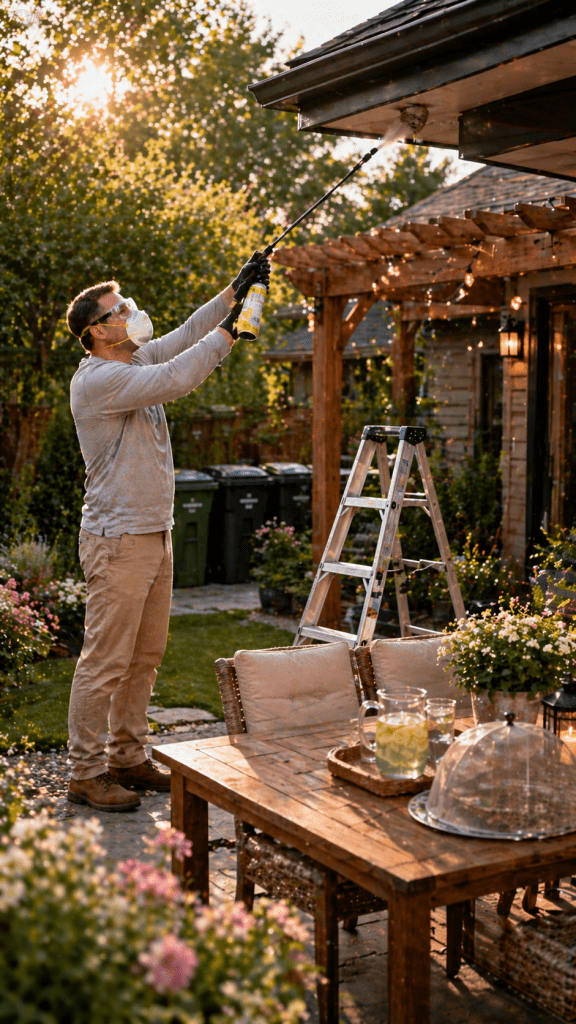
The safest time to treat a nest is early morning or late evening when wasps are less active.
Use a long-range wasp spray designed for outdoor nest treatment. Stand at a safe distance and follow label instructions exactly.
After treatment, wait at least 24 hours before checking the nest. If activity continues, retreat if the product allows.
Once fully inactive, remove the nest and dispose of it in a sealed bag.
When to Call Professionals Instead
Some nests should not be DIY jobs. Call pest control if:
- Nest is inside walls
- Nest is very large
- Nest is high on rooflines
- Aggressive species present
- Family members have sting allergies
- Multiple nests appear at once
Professional removal is often worth it when risk is high.
How to Get Rid of Wasps Outside Naturally 🌿
Some people prefer chemical-free options. Natural strategies may not instantly wipe out a colony, but they help discourage wasps and reduce activity.
Peppermint Oil Spray
Wasps dislike strong minty scents. Mix water with peppermint essential oil and spray around common nesting areas like eaves, patio furniture, sheds, and corners.
Vinegar and Water Spray
A light vinegar spray can help repel some wasps from surfaces. Avoid spraying flowering plants because it may affect pollinators too.
Decoy Nests
Wasps can be territorial. Hanging a fake nest may discourage some species from building nearby. Best used early in spring before nesting begins.
Strong Airflow
Fans on patios can help. Wasps dislike flying in steady wind, making outdoor meals more comfortable.
Natural methods work best when combined with sanitation and prevention.
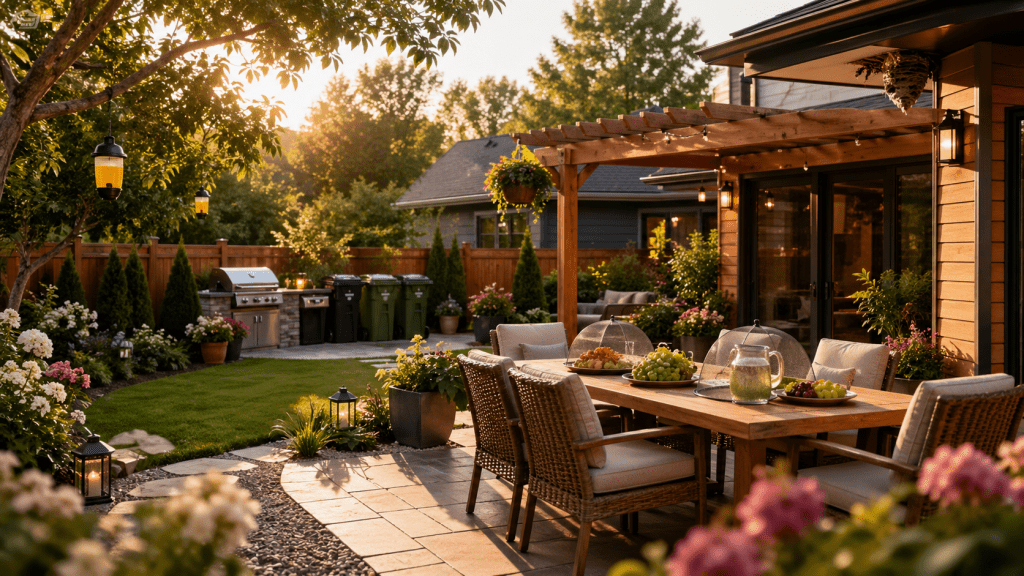
How to Get Rid of Wasps Outside on Patio Areas 🍽️
Patios are prime targets because they combine food, drinks, shade, and people.
First, keep surfaces clean. Even invisible sticky residue matters.
Second, use lidded cups and covered serving trays.
Third, run one or two fans during meals.
Fourth, place traps away from the patio perimeter.
Fifth, inspect nearby roof edges and furniture for early nests.
Citronella candles may help slightly, but cleanliness and airflow usually work better.
A wasp-free patio is mostly about reducing temptation.
How to Get Rid of Wasps Outside Near the House 🏡
If wasps stay close to doors, windows, or siding, inspect for entry points and shelter zones.
Check these areas:
- Under gutters
- Roof soffits
- Porch ceilings
- Shutters
- Wall cracks
- Window frames
- Utility boxes
Seal small gaps after confirming no active nest inside. Replace damaged screens and repair loose siding.
Keep porch lights clean. Dead bugs near lights may attract hunting wasps.
Trim shrubs touching walls, since dense foliage near the house creates hidden nesting spots.
Seasonal Strategy for Long Term Control 📅
Wasps behave differently through the year, so timing matters.
Spring
Queens search for nest sites. This is the best time for prevention. Inspect and remove tiny starter nests immediately.
Summer
Colonies expand quickly. Worker wasps become more visible. Use traps, remove food sources, and monitor nests closely.
Late Summer to Fall
Wasps often become more aggressive because colonies peak and food competition rises. Sugar-seeking behavior increases. Stay extra careful around drinks and outdoor meals.
Winter
Most colonies die off in colder climates. Use this season to repair structures, seal gaps, and prepare for next year.
Mistakes That Make Wasp Problems Worse ❌
Many people accidentally increase wasp activity.
Swatting at Wasps
Sudden movements can trigger defensive behavior. Stay calm and move away slowly.
Leaving Sweet Drinks Open
This is one of the most common causes of stings.
Spraying Randomly Midday
Active wasps may swarm. Treatment timing matters.
Ignoring Tiny Nests
Small nests become large nests surprisingly fast.
Crushing a Wasp Near Others
Some species release alarm pheromones, attracting more aggression.
Avoiding these mistakes makes control easier and safer.
How to Protect Kids and Pets Outside 👨👩👧👦🐶
If children or pets use the yard often, extra caution matters.
Keep play areas far from trash bins and compost. Inspect swing sets, toys, playhouses, and dog houses for hidden nests.
Teach children not to swat at buzzing insects. Calm movement is safer.
Keep pet bowls indoors when possible. Outdoor water bowls should be refreshed and placed away from seating areas.
If a pet is stung multiple times or shows swelling, seek veterinary care quickly.
What to Do If You Get Stung ⚠️
Even when learning how to get rid of wasps outside, stings can happen.
- Move away from the area immediately.
- Wash the sting with soap and water.
- Apply a cold pack for swelling.
- Use antihistamines if appropriate.
- Monitor symptoms.
Seek urgent medical help if there is trouble breathing, dizziness, widespread swelling, vomiting, or signs of allergic reaction.
Best 3 Prevention Habits That Keep Wasps Away for Good
1 Weekly Yard Inspection
Walk around your property once a week and look for nest beginnings.
2 Clean Outdoor Eating Zones Fast
Never leave spills, crumbs, or open cans outside.
3 Seal Shelter Spots
Repair cracks, gaps, loose boards, and damaged vents.
Simple habits often prevent major infestations later.
How to Get Rid of Wasps Outside Without Constant Work
If you are tired of repeating the same battle every summer, combine these systems:
- Clean food sources daily
- Use traps in smart zones
- Remove nests early
- Seal nesting spaces
- Keep water controlled
- Inspect weekly
This layered strategy works better than relying on one spray or one trap.
Final Verdict on How to Get Rid of Wasps Outside
The best answer to how to get rid of wasps outside is not one magic trick—it is a combination of prevention, smart trapping, and early nest control. Start by removing food and water sources, then place traps away from living areas, and inspect for nests before they grow larger.
If the colony is large or located in risky places, professional help is the safest move. But for many homes, consistent habits can dramatically reduce wasp activity and make outdoor spaces enjoyable again.
With the right plan, your yard can go from buzzing stress zone to peaceful summer retreat. 🌞