🍂 Fall Container Garden Ideas can transform even the smallest outdoor space into a productive autumn garden filled with colorful vegetables, fragrant herbs, and fresh seasonal harvests. As summer temperatures begin to cool, ordinary pots, raised containers, and compact growing boxes become wonderful opportunities to grow delicious food while creating an inviting garden atmosphere. Whether you have a tiny balcony, a narrow backyard, or a sunny patio, the right fall container garden can make your outdoor space feel abundant, refreshing, and surprisingly productive.
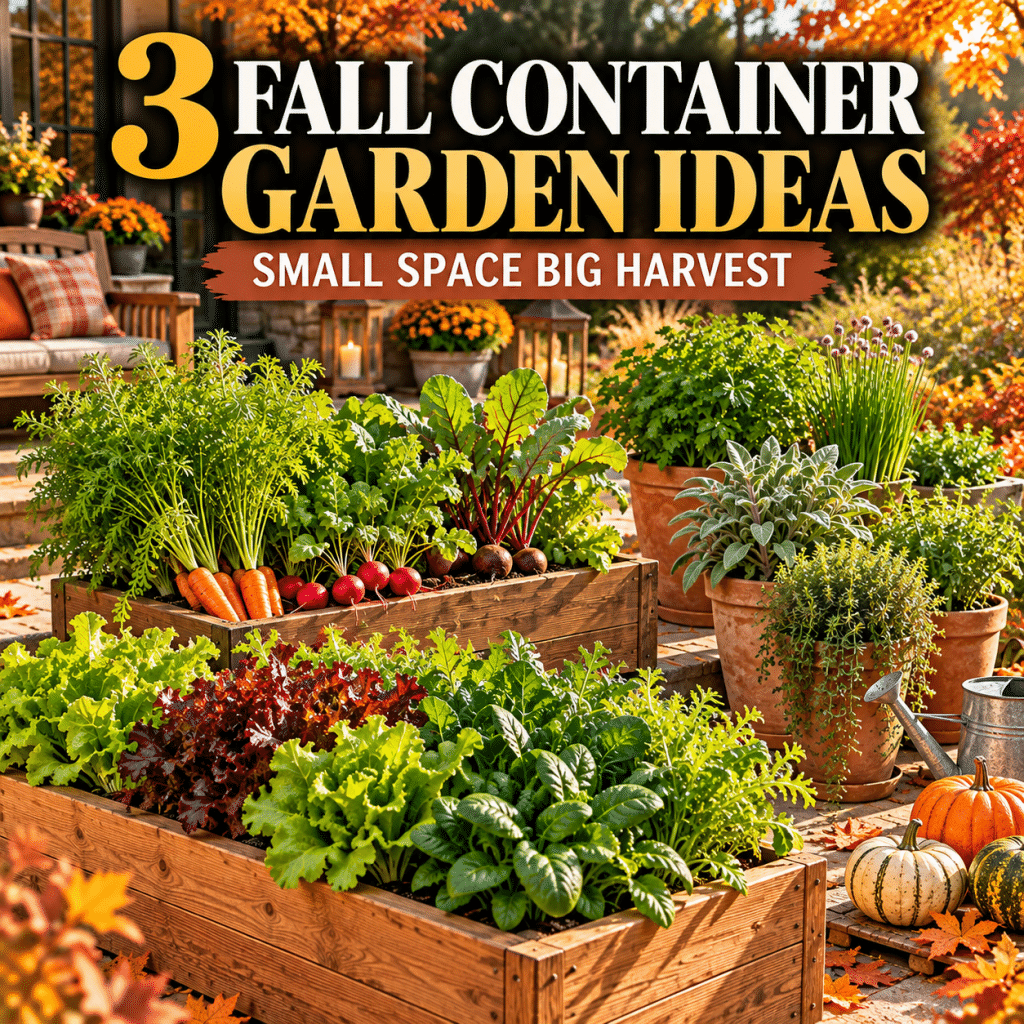
Autumn is an especially rewarding season for growing vegetables in containers. Many leafy greens, root vegetables, and culinary herbs prefer the cooler conditions of fall over the intense heat of midsummer. Instead of struggling with exhausted summer plants, gardeners can replace tired annuals with productive seasonal crops that offer beautiful foliage and practical benefits.
🌿 The secret to a successful fall container garden is choosing the right combination of plants, containers, and growing conditions. A thoughtfully arranged container garden can become a miniature edible landscape, where every pot contributes something useful while maintaining a beautiful seasonal appearance.
The Best 3 Fall Container Garden Ideas focus on three distinctive approaches: a lush autumn salad garden, a colorful root vegetable container garden, and a sophisticated culinary herb garden. Each concept offers a different way to celebrate the growing season while making the most of limited outdoor space.
🍁 Why Fall Container Garden Ideas Are Perfect for Small Outdoor Spaces
Fall container gardening provides a wonderful opportunity to continue growing fresh plants after the traditional summer gardening season begins to slow down.
Unlike permanent garden beds, containers allow gardeners to control soil quality, adjust plant placement, and experiment with seasonal combinations without extensive landscaping work.
This flexibility is particularly valuable during autumn, when daylight hours gradually decrease and temperatures can change quickly.
Containers can be repositioned to capture additional sunlight or moved closer to sheltered areas when cold weather approaches. Smaller pots are especially convenient because they allow individual crops to receive different levels of protection.
Cooler Temperatures Create Better Growing Conditions for Many Vegetables
Many vegetables commonly associated with spring also perform beautifully during autumn.
Lettuce, spinach, kale, arugula, radishes, and several culinary herbs grow well under cool conditions when they receive sufficient light and moisture.
For certain crops, cooler temperatures help reduce the bitterness, premature flowering, and heat stress that can occur during summer.
🥬 This makes autumn an excellent opportunity to grow tender salad greens and other vegetables that may struggle during hot weather.
However, fall gardening is not identical everywhere. Gardeners in colder regions must consider their first expected frost date, while those in mild southern climates may enjoy a considerably longer growing season.
The most successful fall container garden always begins with an understanding of local weather conditions.
Containers Make Seasonal Gardening More Manageable
Traditional vegetable gardens require permanent growing space, soil preparation, and regular maintenance across relatively large areas.
Container gardening allows a more focused approach.
A gardener might dedicate one rectangular planter to salad greens, another deep container to carrots, and several smaller pots to herbs.
Each growing area becomes easier to monitor and maintain.
The limited scale also encourages thoughtful planting. Rather than growing too many varieties, gardeners can concentrate on vegetables they genuinely enjoy eating.
✨ A small, productive container garden often provides greater satisfaction than a large planting area filled with crops that receive insufficient attention.
🌿 Best 3 Fall Container Garden Ideas at a Glance
The following comparison highlights three practical approaches to autumn container gardening.
| Fall Container Garden Idea | Best Location | Main Plants | Recommended Container | Main Advantage |
|---|---|---|---|---|
| 🥇 Autumn Salad Container Garden | Sunny balcony or patio | Lettuce, spinach, arugula, mizuna | Wide rectangular planter | Repeated leafy harvests |
| 🥈 Colorful Root Vegetable Container Garden | Sunny backyard or terrace | Radishes, baby carrots, beets | Deep growing box or large pot | Fresh roots and edible foliage |
| 🥉 Culinary Herb Container Garden | Patio near the kitchen | Parsley, chives, thyme, sage | Individual pots or grouped planters | Fresh herbs for seasonal cooking |
Each idea offers more than a decorative arrangement.
The goal is to create a living container garden that produces something valuable throughout the fall season.
For the best results, choose plants according to their sunlight requirements, mature sizes, and expected growing periods.
🥇 Best 1 Fall Container Garden Ideas With a Lush Autumn Salad Garden
A lush autumn salad garden is one of the most rewarding ways to transform an ordinary container into a productive growing space.
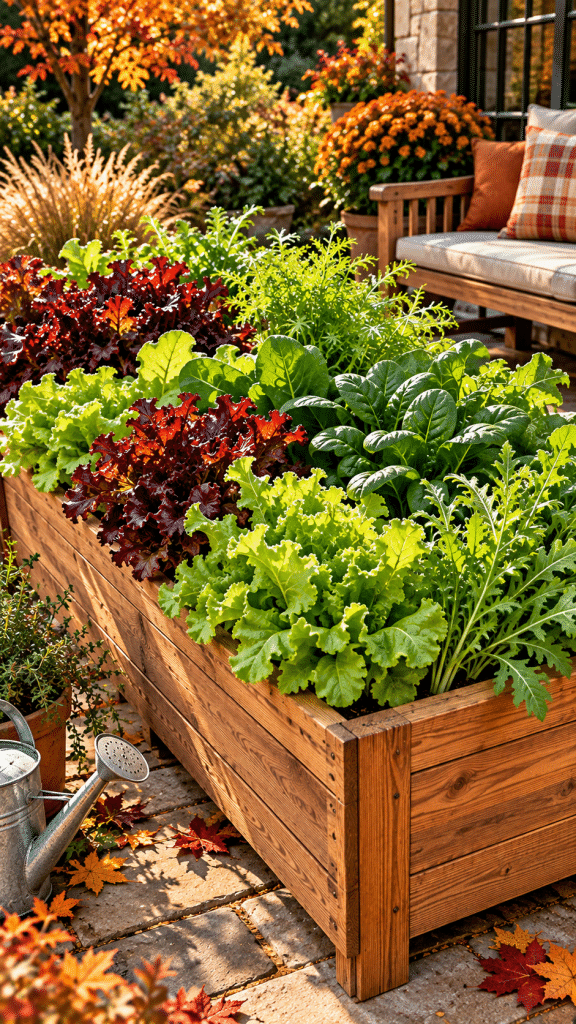
Imagine a wide rectangular planter overflowing with tender green lettuce, deep purple salad leaves, delicate arugula, and beautifully textured spinach.
The combination creates an attractive living tapestry of different leaf shapes, colors, and heights.
Unlike traditional seasonal decorations, this arrangement changes naturally as plants develop and leaves are harvested.
🥬 Every harvest creates an opportunity for new growth, allowing the container to remain useful over several weeks when growing conditions are favorable.
A salad container garden is particularly appealing for beginner gardeners because many leafy vegetables have relatively shallow root systems and can be grown successfully in modest spaces.
Choose a Wide Container for an Abundant Autumn Salad Garden
The foundation of a beautiful salad garden begins with selecting the right container.
A rectangular planter approximately 24–36 inches long offers useful growing space for several compact varieties of leafy vegetables.
For many salad greens, a container around 8–10 inches deep can provide adequate root space, although larger containers offer better moisture stability.
The planter should include drainage holes so excess water can escape freely.
Waterlogged soil can damage tender roots, particularly during cool autumn weather when evaporation becomes slower.
Choose a container made from durable plastic, weather-resistant composite, wood suitable for food gardening, or another food-safe material.
A natural cedar planter creates a charming cottage garden appearance, while a simple dark rectangular container works beautifully in a modern outdoor space.
🌱 Fill the planter with a quality potting mix formulated for container gardening rather than heavy soil taken directly from the garden.
Combine Different Lettuce Varieties for Beautiful Leaf Texture
Lettuce is an excellent starting point for a fall salad container.
Loose-leaf varieties offer particularly good flexibility because gardeners can harvest individual outer leaves while allowing the remaining plant to continue growing.
Try combining several types of lettuce with contrasting appearances.
Deep burgundy loose-leaf lettuce creates dramatic color, while bright green oakleaf lettuce provides a softer texture.
A compact butterhead lettuce can introduce a rounded shape, creating visual variety within the arrangement.
The goal is not to plant every variety as densely as possible.
Instead, distribute the plants according to their recommended mature spacing.
This allows adequate airflow and reduces unnecessary competition for light, moisture, and nutrients.
🥗 A mixture of leafy colors also makes homegrown salads more visually appealing.
Add Spinach and Arugula for a Productive Fall Harvest
Spinach and arugula are excellent companions in a cool-season salad garden, provided the container has sufficient room.
Spinach develops rich green leaves and generally performs best during relatively cool weather.
Arugula contributes a more delicate leaf shape and a distinctive peppery flavor.
Its rapid growth makes it particularly useful for gardeners who want harvests without waiting an entire season.
Plant spinach toward the back or middle of the container, depending on the expected mature height of the selected variety.
Place lower-growing lettuce and arugula where their leaves remain accessible.
For a more interesting arrangement, introduce mizuna or another suitable Asian salad green.
Mizuna produces finely divided leaves that add an airy, almost ornamental quality to the container.
The resulting combination feels like a miniature edible meadow rather than a conventional vegetable bed.
Create an Attractive Arrangement With Repeating Leaf Colors
Beautiful container gardens benefit from visual rhythm.
Instead of mixing all the seeds randomly, arrange compatible vegetables in small repeating sections.
For example, position a cluster of burgundy lettuce near one end, followed by bright green spinach and a section of finely textured mizuna.
Repeat a similar combination toward the opposite side when space allows.
The alternating colors create a natural pattern that remains visually interesting as the vegetables grow.
🍃 This approach is particularly attractive when the planter is positioned at eye level on a sturdy outdoor shelf or raised planting stand.
The garden becomes both a practical food source and a beautiful seasonal feature.
Plan Successive Plantings for Fresh Salad Leaves
One of the greatest advantages of a fall salad container is the possibility of successive harvesting.
Rather than sowing every seed at the same time, plant small amounts of fast-growing crops at intervals suited to the variety and the remaining growing season.
This approach helps avoid situations where everything reaches harvest size simultaneously.
For example, one section of arugula can be planted first, while another section is seeded approximately 10–14 days later.
Lettuce and spinach can also be planted in stages, provided there is enough time before growth becomes severely limited by cold weather and shorter daylight.
Always follow the seed packet’s recommended planting dates and spacing.
Early autumn planting generally gives seedlings a better opportunity to establish before cold temperatures slow their development.
Harvest Leaves Carefully to Encourage Continued Production
Loose-leaf lettuce, arugula, and suitable spinach varieties can often be harvested gradually.
Remove mature outer leaves while leaving the central growing point intact.
Avoid stripping plants of too much foliage at once because leaves are necessary for continued photosynthesis and growth.
Harvesting in the morning can be especially pleasant when leaves are cool and crisp.
Rinse harvested vegetables thoroughly before eating.
✨ A well-managed salad container may provide several harvests, although productivity eventually slows as temperatures fall and daylight decreases.
The exact duration depends on climate, crop variety, planting time, and weather conditions.
Make the Salad Garden Suitable for a Small Balcony
An autumn salad garden does not require an expansive backyard.
A single wide planter can fit comfortably against a sunny balcony wall or along a patio railing, provided the structure safely supports its weight.
Choose a location that receives as much useful autumn sunlight as possible, ideally around four to six hours or more for leafy vegetables.
In warmer areas, some afternoon protection may be beneficial during early fall.
In colder climates, however, capturing additional sunlight becomes increasingly important as winter approaches.
Position the planter where watering and harvesting remain convenient.
A container that is difficult to reach will often receive less consistent care.
🌿 Keeping the garden close to a frequently used outdoor area makes it easier to notice changes in plant health and harvest fresh leaves regularly.
🥈 Best 2 Fall Container Garden Ideas With Colorful Root Vegetables and Edible Foliage
A root vegetable container garden offers a completely different autumn gardening experience.
Instead of focusing primarily on leafy harvests, this concept celebrates the beauty of vegetables developing beneath the soil.
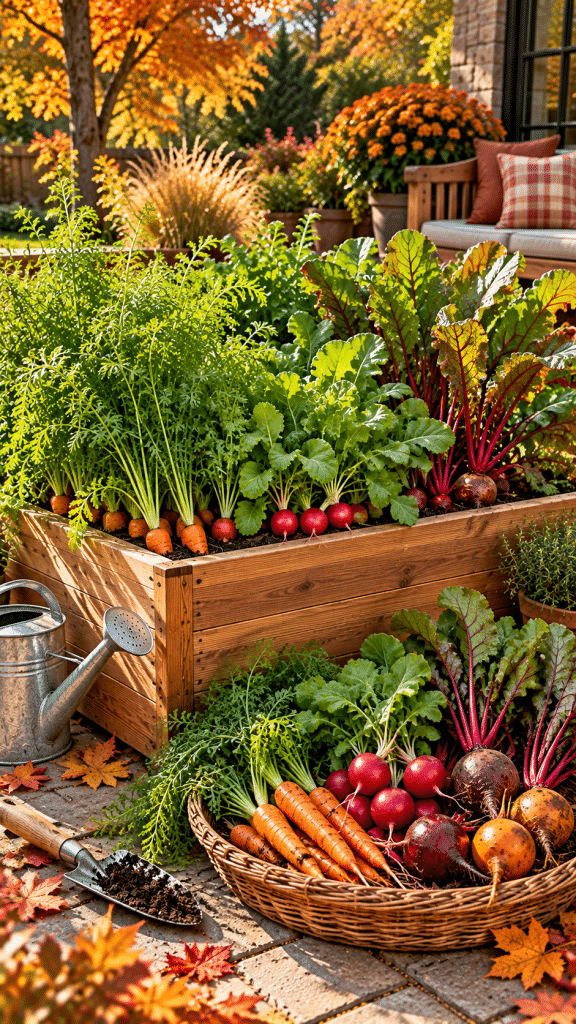
Radishes, baby carrots, and compact beet varieties can turn an ordinary growing box into a productive fall garden.
Their foliage contributes attractive textures above ground, while their roots provide colorful harvests for seasonal cooking.
🥕 This arrangement is especially rewarding because the most exciting part of the garden remains hidden until harvest time.
The result is a practical, engaging growing experience suitable for home gardeners who enjoy watching plants develop from seed.
Choose a Deep Container for Healthy Root Development
Root vegetables require containers that accommodate their expected root depth.
A large rectangular growing box approximately 12–16 inches deep can be suitable for many compact root vegetable varieties.
Short-rooted radishes require less depth than long carrots, so container selection should reflect the specific crops being grown.
For carrots, choose shorter cultivars intended for containers when working with limited soil depth.
Good drainage is essential.
Heavy, compacted soil can restrict root development and contribute to irregular shapes.
Fill the container with a loose, well-draining potting mixture that remains sufficiently moist without becoming waterlogged.
Remove large pieces of debris that could interfere with straight root growth.
Avoid adding excessive nitrogen-rich fertilizer because it may encourage leafy growth at the expense of developing roots.
Use Rectangular Growing Boxes for Organized Planting
A long rectangular planter makes it easier to divide root vegetables into separate planting zones.
Create distinct sections for radishes, carrots, and beets rather than scattering seeds without a plan.
This arrangement makes thinning, watering, and harvesting more manageable.
Each crop has different spacing and maturity requirements.
Maintaining separate sections allows individual vegetables to be harvested without disturbing neighboring roots unnecessarily.
For a charming kitchen garden appearance, use a wooden growing box with clearly defined planting rows.
A contemporary garden might feature a dark metal raised container or a clean-lined composite planter.
The container’s appearance can complement the surrounding outdoor area without distracting from its productive purpose.
Grow Fast Maturing Radishes for an Exciting Autumn Harvest
Radishes are among the most satisfying vegetables to grow in a fall container.
Many common spring radish varieties mature quickly under suitable conditions, making them useful for gardeners working with a relatively short autumn growing window.
Their compact size also makes them practical for limited container space.
Try growing a mixture of round red radishes, elongated varieties, or colorful cultivars where seeds are locally available.
The foliage creates a dense green surface above the soil, while the roots develop below.
🌱 Radishes are generally best direct-sown into their final growing location.
Follow the recommended seed spacing, then thin seedlings promptly if necessary.
Crowded plants may produce poorly developed roots.
Consistent soil moisture also matters because irregular watering can affect texture, flavor, and quality.
Create a Repeating Harvest With Small Radish Sections
Instead of planting an entire container with radishes at once, dedicate a smaller section to each sowing.
After the first planting has established, sow another section if seasonal conditions allow.
This staggered approach can provide fresh harvests over a longer period.
However, autumn growth slows as temperatures drop.
Later sowings may require considerably more time than the seed packet suggests under warm, favorable conditions.
Monitor local frost dates and choose quick-maturing cultivars when the growing season is limited.
The goal is to match planting time to realistic weather conditions rather than relying on a fixed calendar.
Add Baby Carrots for an Attractive and Practical Growing Combination
Carrots introduce delicate, fern-like foliage that looks beautiful beside the broader leaves of radishes and beets.
Their soft texture creates a visually appealing contrast, especially in rectangular containers viewed from above.
Choose compact or short-rooted carrot varieties that are appropriate for the depth of the container.
Round or shorter cylindrical cultivars may be particularly useful in modest growing spaces.
Carrots usually perform best when direct-sown because their developing taproots can be disturbed by transplanting.
Sow seeds carefully and keep the upper layer of soil consistently moist during germination.
Carrot seeds can germinate slowly, especially when conditions are not ideal.
Patience and consistent attention are important during this stage.
🥕 Once seedlings emerge, thin them according to the recommended spacing to allow individual roots sufficient room to develop.
Combine Fine Carrot Foliage With Colorful Beet Leaves
Beets provide a striking visual contrast in an edible autumn container.
Their leaves can display rich green surfaces with red or burgundy veins, depending on the variety.
This combination creates attractive foliage while the roots develop beneath the soil.
Young beet leaves are edible and may be used in appropriate culinary preparations, although excessive leaf harvesting can reduce the energy available for root development.
Plant beets in a sufficiently deep container and follow the recommended spacing.
Many beet seeds are actually seed clusters capable of producing multiple seedlings, making timely thinning especially important unless using monogerm varieties.
A mixture of green carrot foliage, red-veined beet leaves, and rounded radish foliage creates a lively, productive container.
Arrange Root Vegetables Around Their Different Harvest Times
A root vegetable container becomes more practical when planting decisions account for each crop’s expected maturity.
Radishes often provide the earliest harvest.
Baby carrots and beets generally require more time.
This creates an opportunity to harvest sections gradually rather than emptying the entire planter simultaneously.
| Root Vegetable | Approximate Harvest Time | Typical Container Depth | Main Growing Consideration |
|---|---|---|---|
| Small round radishes | 25–40 days | 6–8 inches or more | Thin seedlings promptly |
| Short carrot varieties | 55–75 days | 10–12 inches or more | Use loose soil and direct sow |
| Baby beets | 45–65 days | 10–12 inches or more | Maintain even moisture |
| Turnips grown for small roots | 40–60 days | 8–12 inches or more | Allow adequate root spacing |
These are approximate times under favorable growing conditions. Variety, temperature, sunlight, and seasonal growth rate can change actual harvest dates considerably.
Choose varieties based on the remaining number of suitable growing days in your area.
Avoid Overcrowding for Better Root Quality
A common mistake in container vegetable gardening is assuming that more seeds automatically produce a larger harvest.
Root vegetables need physical space to develop.
Crowded carrots may remain thin, while closely spaced beets may fail to reach their expected size.
Radishes can also produce disappointing results when overcrowded.
Read seed packet recommendations carefully and thin plants at the appropriate stage.
Although removing healthy seedlings may feel wasteful, adequate spacing usually improves the quality of the remaining crop.
🍂 A productive autumn root vegetable garden depends on healthy development below the soil, not simply the amount of foliage visible above it.
🥉 Best 3 Fall Container Garden Ideas With a Cozy Culinary Herb Garden
A culinary herb garden is a beautiful way to combine practical gardening with everyday cooking.
Instead of relying on ornamental flowers, this concept features fragrant leaves, contrasting foliage textures, and herbs that can enhance autumn meals.
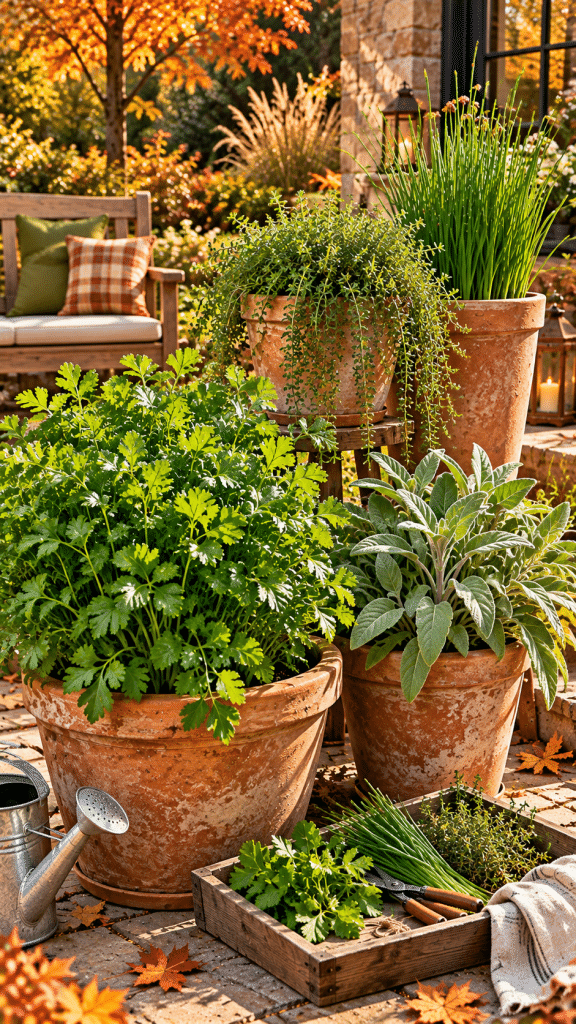
Imagine a collection of terracotta pots filled with bright green parsley, upright sage, compact thyme, and delicate chives.
The arrangement feels warm, natural, and welcoming.
It also makes fresh ingredients accessible whenever they are needed.
🌿 A thoughtfully planned herb container garden can become one of the most useful features of a small patio or outdoor kitchen area.
Create a Charming Collection of Individual Herb Pots
Although mixed herb containers can be attractive, individual pots often make maintenance easier.
Different herbs have different preferences for soil moisture, sunlight, and drainage.
Thyme and sage generally prefer well-drained soil and should not remain constantly wet.
Parsley and chives usually perform better with more consistent moisture.
Growing these plants separately allows watering routines to be adjusted without compromising neighboring plants.
Select several containers with similar materials or colors to create a coordinated appearance.
A collection of aged terracotta pots offers a traditional kitchen garden atmosphere.
For a modern design, choose matte charcoal, warm beige, or muted stone-colored containers.
Arrange the pots at different heights on a stable outdoor plant stand or a series of low shelves.
Use Parsley for Fresh Green Autumn Foliage
Parsley is a useful herb for cool-season container gardening.
Its dense foliage creates a lush appearance, while fresh leaves can be used in soups, roasted vegetable dishes, sauces, and other meals.
Flat-leaf parsley produces a more open leaf shape, while curly parsley develops a compact, finely textured appearance.
Both can contribute attractive greenery to an autumn herb collection.
Parsley generally appreciates fertile, well-draining soil and consistent moisture.
Give it enough sunlight for healthy growth, while adjusting placement according to local climate.
In areas with mild winters, parsley may remain productive for an extended period.
In colder regions, growth slows significantly and plants may require protection.
🌱 Harvest outer stems near their base while allowing younger central growth to continue developing.
Grow Sage for Soft Silvery Green Texture
Sage adds a completely different visual character to an autumn herb garden.
Its softly textured, gray-green leaves create an elegant contrast beside bright parsley and dark green chives.
The slightly woody structure also provides an architectural quality that makes sage visually interesting even when it is not being harvested.
Sage is particularly attractive in a rustic terracotta pot or natural stone-look container.
Choose a sunny location and well-draining growing medium.
Avoid keeping the soil continually saturated.
Because sage is a perennial herb in suitable climates, a healthy plant may remain useful beyond a single autumn season.
Its survival depends on local winter temperatures, cultivar, and container protection.
Add Thyme to Soften the Edges of the Herb Collection
Thyme is a wonderful herb for small containers because many varieties develop compact, spreading growth.
Its tiny leaves contrast beautifully with the broader foliage of sage.
Some thyme varieties create gently cascading growth that softens the edges of individual pots.
This makes thyme particularly effective in elevated containers where its foliage remains visible.
Like sage, thyme generally prefers strong sunlight and excellent drainage.
Allow the growing medium to dry somewhat between waterings, rather than maintaining constantly wet conditions.
A shallow-looking container may be visually attractive, but it must still provide sufficient root volume and drainage.
Choose a pot size appropriate for the mature plant.
🌿 Thyme also contributes a pleasant herbal fragrance that becomes noticeable when the foliage is gently brushed.
Introduce Chives for Elegant Upright Greenery
Chives contribute fine, vertical foliage that introduces movement and structure to the herb arrangement.
Their narrow leaves provide a distinct contrast to the rounded and textured foliage of other culinary herbs.
A pot of healthy chives can resemble a miniature ornamental grass while providing edible leaves for cooking.
Chives generally appreciate fertile soil, reliable moisture, and good light.
They are perennial in many temperate climates, although aboveground foliage may die back during cold winter conditions.
Harvest leaves with clean scissors, leaving sufficient growth for recovery.
Avoid repeatedly cutting the entire plant too severely when growth is slowing.
Position the Herb Garden Near the Kitchen
Convenience is one of the most important features of an effective culinary herb garden.
A beautifully arranged collection of herbs may receive less use if it is positioned in a distant or difficult-to-access corner.
Place containers near a kitchen door, patio entrance, or another frequently used location with adequate sunlight.
The arrangement should remain easy to water and harvest.
Keep walking surfaces clear and avoid positioning pots where they create tripping hazards.
✨ When herbs are accessible, they become part of everyday cooking rather than simply another decorative garden feature.
Combine Herb Containers Into a Beautiful Autumn Composition
A sophisticated herb garden does not need seasonal decorations to feel appropriate for autumn.
The plants themselves provide attractive colors and textures.
Use pale green sage foliage as a soft visual accent.
Pair it with deeper green thyme and parsley.
Add upright chives to create height.
Arrange the containers in an informal grouping, with taller pots positioned toward the back and smaller containers near the front.
Natural wood, stone, and weathered terracotta can reinforce the autumn atmosphere.
The result is a quiet, functional garden that feels organic rather than overly decorated.
🍂 How to Choose the Best Containers for Fall Gardening
The right container affects much more than appearance.
Its size, material, drainage, and placement influence root development, moisture availability, and temperature stability.
Fall gardening introduces additional considerations because shorter days and cooler temperatures change how quickly potting soil dries.
A container that performed beautifully during summer may require a different watering routine during autumn.
Choose Container Size According to the Crop
Small herbs may grow successfully in individual pots with appropriate root space.
Leafy greens often benefit from wider planters that provide room for multiple plants.
Root vegetables require sufficient depth for proper development.
Large containers also tend to experience less abrupt moisture changes than very small pots.
However, they become significantly heavier when filled with damp potting mix.
Consider the strength and weight limits of balconies, shelves, and raised stands before positioning large containers.
Understand Which Materials Work Best in Cool Weather
Different container materials offer different advantages.
| Container Material | Main Advantage | Potential Limitation |
|---|---|---|
| Terracotta | Natural appearance and porous walls | Dries faster and may crack during freezing weather |
| Food-safe plastic | Lightweight and affordable | Thin containers offer limited root insulation |
| Cedar or suitable wooden planters | Attractive natural appearance | Requires appropriate construction and drainage |
| Weather-resistant composite | Durable and relatively lightweight | Quality varies between products |
| Freeze-rated resin | Useful for cold-season planting | May need additional root protection in severe cold |
For containers remaining outdoors during freezing weather, choose materials specifically designed to tolerate freeze-thaw cycles.
Regardless of material, drainage holes remain essential.
🌱 Prepare the Soil Before Planting Your Autumn Containers
Healthy container gardening begins below the surface.
Garden soil taken directly from the ground is often too dense for reliable container use.
It may compact inside pots, reducing air spaces around developing roots.
A quality container potting mix generally provides a more suitable balance of drainage, aeration, and moisture retention.
When reusing a summer planter, remove exhausted plants and inspect the remaining medium.
If the soil is badly compacted, contaminated, or has persistent disease problems, replacing it may be the safest option.
Otherwise, suitable existing potting mix can sometimes be refreshed with additional clean medium and appropriate nutrients.
Avoid Excessive Fertilizer During Cooler Weather
Plants usually grow more slowly when temperatures and daylight decline.
As a result, their nutrient requirements may decrease.
Excessive fertilizer can create unnecessary salt accumulation or promote soft growth that is poorly suited to cold conditions.
Leafy vegetables and root crops still need sufficient nutrients, particularly in fresh or nutrient-poor potting mixes.
Follow fertilizer recommendations appropriate for the crop, container medium, and expected growing season.
Use measured applications rather than assuming that more fertilizer will automatically increase production.
💧 Water Fall Container Gardens Without Overwatering
Autumn watering requires a different mindset from summer watering.
During hot weather, many containers dry rapidly because of intense sunlight, high temperatures, and strong evaporation.
During fall, cooler conditions often reduce water loss.
However, wind, dry weather, plant size, and container material can still cause significant drying.
The best approach is to check soil moisture rather than follow a rigid daily schedule.
Insert a finger into the upper inch of potting mix.
If that layer feels dry, determine whether watering is needed based on the crop and moisture conditions farther down.
Water thoroughly when necessary, allowing excess water to drain away.
Avoid leaving containers permanently standing in water.
Adjust Watering for Different Vegetables and Herbs
Salad greens generally need consistent moisture to support tender leaf growth.
Root vegetables also benefit from relatively even moisture, particularly during germination and root development.
Parsley and chives usually prefer more regular watering than Mediterranean herbs such as thyme and sage.
This is another reason individual herb pots can be practical.
Each plant can receive moisture according to its needs.
🍃 The objective is healthy, evenly moist soil where appropriate, not constantly saturated growing conditions.
❄️ Protect Fall Container Garden Plants From Early Frost
Frost is one of the most important factors in autumn gardening.
Some cool-season vegetables tolerate light freezing temperatures, while others may become damaged when exposed to prolonged or severe cold.
Plants grown in containers can be particularly vulnerable because their roots are surrounded by air rather than insulated by a large volume of garden soil.
Even plants considered winter-hardy in the ground may need additional protection when grown in exposed pots.
🌟 Important Note: Cold tolerance depends on the plant variety, its level of acclimation, container size, soil moisture, and duration of freezing conditions. Never assume that a frost-tolerant vegetable will survive every winter temperature without protection. Check your local first-frost date and protect container roots as well as aboveground foliage.
Move Containers Into More Sheltered Locations
One advantage of container gardening is mobility.
Smaller pots can be moved closer to a sheltered exterior wall before particularly cold nights.
Temporary protection from strong wind can also reduce stress.
For larger containers, consider positioning them in a naturally protected growing area from the beginning.
Grouping pots together can provide some shelter, although it cannot guarantee protection against severe cold.
In regions where freezing conditions persist, insulating containers or using suitable cold-weather growing structures may help extend the growing season.
Use Row Covers for Additional Protection
Lightweight horticultural frost fabric can offer useful protection for suitable vegetables during cold nights.
Support the fabric over plants when necessary so delicate foliage is not crushed.
Secure the material against wind.
Remove or ventilate coverings when temperatures rise to prevent excessive heat buildup.
Cold frames and other protected growing structures can also help extend autumn production.
However, winter survival and continued harvests depend on regional conditions and the specific crops being grown.
☀️ Find the Best Autumn Sunlight for Your Container Garden
Sunlight becomes increasingly important as fall progresses.
The sun sits lower in the sky, and previously sunny areas may become shaded by buildings, fences, or nearby trees.
A container positioned perfectly during summer may no longer receive enough light in October or November.
Observe your outdoor space at different times of day.
Identify which areas continue receiving useful sunlight as the season changes.
Leafy vegetables may tolerate some shade, but they generally grow more vigorously with adequate light.
Root vegetables usually benefit from approximately six hours or more of direct sunlight when possible.
Many culinary herbs also need several hours of strong sunlight to remain healthy.
Reposition Containers as Seasonal Light Changes
Mobile containers offer an easy solution to shifting sunlight.
Move salad planters toward brighter locations when surrounding structures create additional shade.
Place root vegetable containers where they receive sufficient light for developing edible roots.
Position herbs according to their individual requirements.
Avoid unnecessary movement of large, established containers when doing so may damage plants or create safety risks.
The goal is to choose practical locations that balance sunlight, protection, and accessibility.
🗓️ When to Start a Fall Container Garden
Successful autumn gardening begins before temperatures become consistently cold.
In many temperate regions of the United States, gardeners start fall crops from late summer through early autumn.
However, exact planting dates vary considerably.
Northern gardeners often need to start earlier, while gardeners in mild southern regions may plant later.
The most useful reference is the local average first-frost date.
Calculate Planting Dates From the First Expected Frost
Begin by checking the days to maturity listed on the seed packet.
Then compare that period with the number of suitable growing days remaining before frost or severe cold.
Allow additional time because vegetables often mature more slowly as autumn daylight decreases.
Some gardeners use extra time allowances when planning fall sowings, especially for crops intended to mature before winter.
For example, a vegetable described as reaching maturity in 40 days may require longer when grown under declining light and cooler conditions.
Planting earlier improves the likelihood of harvest before growth slows dramatically.
Match Crop Selection to the Remaining Growing Season
Fast-growing salad greens and radishes can be especially useful when time is limited.
Carrots and beets generally need a longer growing window.
Perennial herbs may remain valuable even after active harvesting slows, provided they are suited to the local climate and receive proper protection.
🌱 Always prioritize realistic planting windows over the desire to grow every possible crop.
A small selection of appropriately timed plants can outperform a much larger collection planted too late.
🍁 Common Fall Container Gardening Mistakes to Avoid
Even a carefully designed container garden can struggle when basic growing conditions are overlooked.
One frequent mistake is starting too late.
Cool-season plants often grow best when they establish during relatively mild weather before short days and cold temperatures restrict development.
Another mistake is overcrowding.
Dense planting may initially create an attractive appearance, but excessive competition can reduce airflow and limit healthy growth.
Root crops are especially sensitive to inappropriate spacing.
Poor drainage is another common problem.
Cool, wet soil can remain saturated for extended periods, increasing the risk of root problems.
Gardeners should also avoid treating all plants as if they have identical water and sunlight requirements.
Thyme and parsley, for example, can both be useful autumn herbs, but their preferred moisture conditions are not exactly the same.
Finally, do not assume that every attractive container is suitable for freezing temperatures.
Material durability and root protection matter when a garden must remain outdoors through winter.
🌿 How to Make Your Fall Container Garden Look Naturally Beautiful
A productive garden can also be visually appealing.
The strongest edible container designs often rely on healthy foliage, repeating textures, and coordinated containers rather than elaborate seasonal decorations.
Create a unified appearance by repeating one or two container materials.
For example, terracotta herb pots can complement a cedar salad planter and a wooden root vegetable growing box.
The warm natural materials establish a consistent visual theme.
Arrange containers in groups that allow adequate light and access.
A tall herb planter can sit behind a lower salad box, while a separate root vegetable container occupies the sunniest part of the space.
Avoid positioning tall plants where they shade smaller crops unnecessarily.
Use Edible Plants as the Main Decorative Feature
Many food crops have surprisingly ornamental qualities.
Purple lettuce creates dramatic contrast with bright green spinach.
Carrot foliage introduces delicate texture.
Red-veined beet leaves add rich seasonal color.
Sage contributes soft silver-green tones.
Chives create clean vertical lines.
Together, these plants can produce an attractive autumn composition without relying on pumpkins, artificial decorations, or temporary flower arrangements.
✨ The beauty comes directly from the plants being grown.
Maintain a Clean and Organized Growing Space
Remove dead foliage and unwanted weeds regularly.
Keep container edges clean and prevent spilled soil from accumulating on walking surfaces.
Use simple plant labels where identification is necessary, particularly when growing several vegetable varieties.
Allow sufficient space between containers for watering, harvesting, and inspection.
An organized arrangement helps the garden feel intentional while making routine maintenance considerably easier.
🍂 How to Transition Fall Container Gardens Into Winter
As autumn approaches winter, the purpose of a container garden may gradually change.
Early in the season, the focus is often active growth and frequent harvesting.
Later, the priority may shift toward protecting established plants and preserving crops for future harvests.
Cold-hardy vegetables can sometimes remain outdoors into winter, particularly in mild climates or under appropriate protection.
However, their growth may slow substantially when daylight becomes limited.
Harvest mature crops before prolonged freezing weather threatens their quality.
Remove diseased plant material and dispose of it appropriately.
Clean empty containers before storing them or preparing them for another planting season.
Preserve Perennial Herbs Where Climate Allows
Perennial herbs such as thyme, sage, and chives may survive beyond autumn when grown under suitable conditions.
In colder climates, container-grown roots need particular attention.
Some plants benefit from being moved to a protected outdoor location or receiving additional insulation.
Do not assume that a heated indoor room is automatically the best environment for every herb.
Indoor survival depends on available light, temperature, humidity, and the species involved.
Choose overwintering methods appropriate for the individual plant.
Prepare Containers for the Next Growing Season
Empty planters can be inspected, cleaned, and stored when necessary.
Check for cracks, blocked drainage holes, or other damage.
Store frost-sensitive containers in a suitable protected location.
Reusable growing media should be assessed for quality and possible disease problems before another crop is planted.
By preparing the containers at the end of autumn, gardeners can begin the next growing season with less work and fewer unexpected problems.
❓ Frequently Asked Questions About Fall Container Garden Ideas
What are the easiest vegetables to grow in fall containers?
Loose-leaf lettuce, arugula, spinach, and small radishes are excellent options for many beginner gardeners.
They are relatively manageable in containers and can perform well during cool weather.
The easiest choice ultimately depends on the available sunlight, local temperatures, and remaining growing season.
Can fall container gardens grow on balconies?
Yes. Balconies can support productive fall container gardens when they receive sufficient sunlight and have appropriate structural capacity.
Rectangular salad planters, compact herb pots, and suitable growing boxes are practical options.
Always account for the weight of containers filled with wet soil, and secure planters safely.
What is the best soil for fall container vegetables?
A quality potting mix designed for containers is generally preferable to heavy garden soil.
The growing medium should provide drainage, sufficient air spaces, and appropriate moisture retention.
Choose a mix suitable for edible crops and maintain adequate nutrients throughout the growing period.
Can I grow lettuce and radishes together in one container?
Yes, provided the container is large enough and the plants receive appropriate spacing.
Both can perform well during cooler weather.
However, radish roots need sufficient room beneath the soil, while lettuce requires adequate space for developing leaves.
A divided planter can make the arrangement easier to manage.
Do fall container gardens need fertilizer?
Container vegetables require nutrients, but fertilizer needs vary according to the growing medium, crop, and length of the growing season.
Fresh potting mixes may already contain starter nutrients.
Avoid excessive fertilizer, particularly when temperatures and growth rates are declining.
Follow product directions and crop-specific guidance.
Can fall container gardens survive winter?
Some crops and perennial herbs can survive winter in suitable climates, especially when protected.
However, container roots are more exposed to freezing temperatures than roots growing in the ground.
Winter survival depends on the plant, climate, container material, and protection provided.
Survival also does not necessarily mean continuous growth or harvest through winter.
Which fall container garden idea is best for beginners?
An autumn salad container garden is often the most approachable starting point.
It requires relatively simple equipment, offers flexible plant combinations, and can provide satisfying harvests.
Gardeners who enjoy quick results may also appreciate a small radish container.
Those who cook frequently may find a collection of culinary herbs especially rewarding.
🍁 Final Thoughts on the Best 3 Fall Container Garden Ideas
The most rewarding Fall Container Garden Ideas combine seasonal beauty with practical gardening.
Instead of allowing outdoor containers to sit empty after summer, gardeners can transform them into productive growing spaces filled with colorful leaves, fresh vegetables, and fragrant herbs.
🥇 The Autumn Salad Container Garden is ideal for anyone who enjoys fresh leafy vegetables and wants a lush, productive planting arrangement that fits comfortably into a small space.
🥈 The Colorful Root Vegetable Container Garden offers a rewarding harvest experience with radishes, compact carrots, and beets growing beneath an attractive layer of edible foliage.
🥉 The Culinary Herb Container Garden creates a charming and useful collection of fragrant plants that can enhance everyday cooking while bringing natural greenery to patios and outdoor kitchen areas.
Each approach offers a different way to enjoy gardening during the cooler months.
A small balcony can support a beautiful salad garden. A sunny backyard corner can accommodate a productive root vegetable box. A patio near the kitchen can become an inviting collection of culinary herbs.
The key is to choose plants that suit the local climate, provide appropriate container sizes, and maintain consistent care as seasonal conditions change.
🌿 With thoughtful planning and a little attention, even a modest outdoor space can become a beautiful autumn garden that offers far more than decoration.
A wonderful fall garden does not have to be large to feel abundant. Sometimes a few carefully planted containers are all it takes to turn the changing season into something truly rewarding.
