Learning how to keep ground squirrels out of your garden naturally can make an enormous difference when these energetic little animals begin digging tunnels, disturbing delicate roots, and turning carefully cultivated vegetable beds into their personal feeding grounds. Although ground squirrels may look adorable as they stand upright in the sunshine, their burrowing activities can create frustrating problems for gardeners who want beautiful landscapes, healthy vegetables, and thriving ornamental plants.
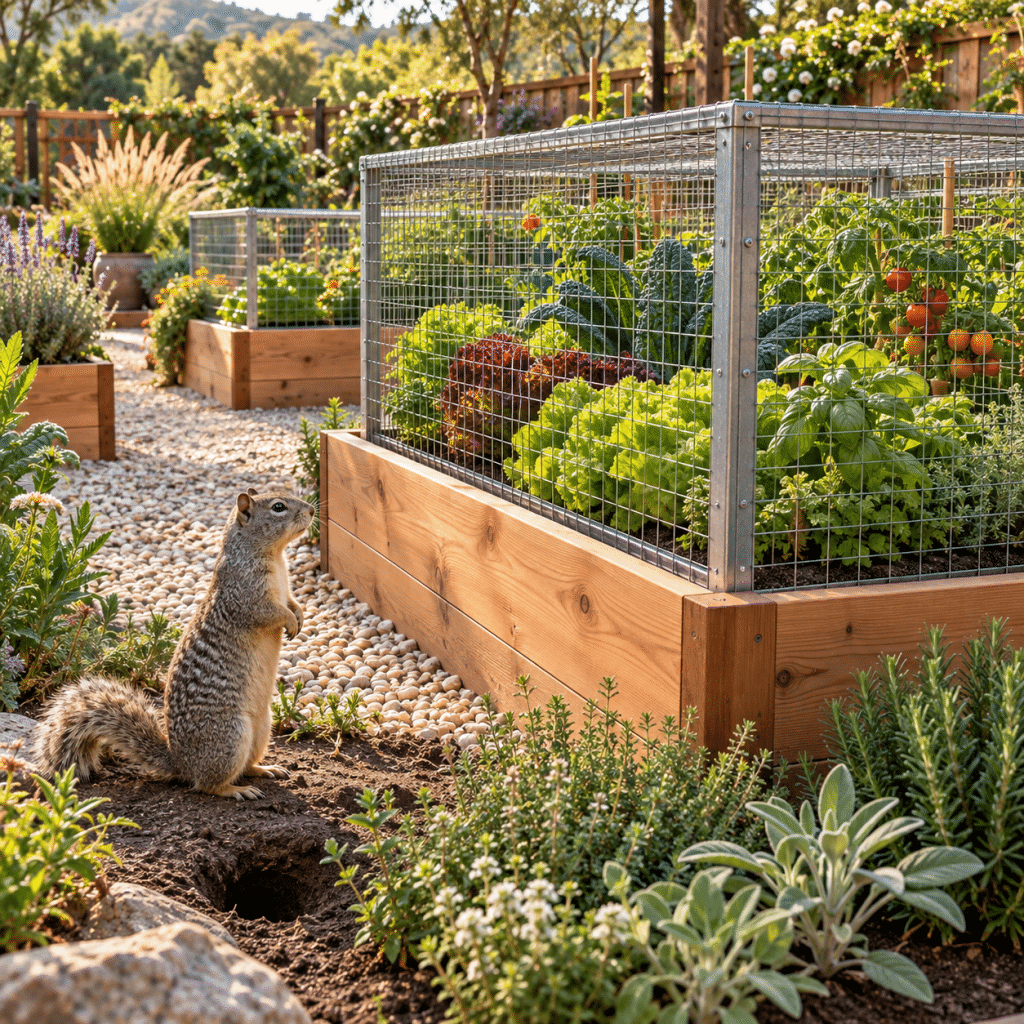
The good news is that protecting your garden does not always require harsh chemicals, poisonous substances, or aggressive wildlife control. A thoughtful combination of physical protection, garden maintenance, and strategic landscape design can help reduce unwanted squirrel activity while preserving the natural character of your outdoor space.
The most successful approach begins with understanding how ground squirrels behave. Unlike tree squirrels, which typically escape danger by climbing trees, ground squirrels spend much of their time on the ground and retreat into underground burrows. They often live in colonies, forage around their burrow entrances, and take advantage of easily accessible food and shelter.
Because these animals can dig beneath ordinary garden barriers, keeping them away requires more than simply placing a lightweight fence around vulnerable vegetables.
This guide explores three practical methods for creating a more protected, attractive, and manageable garden without relying on toxic treatments.
Why Ground Squirrels Can Become a Serious Garden Problem
Before exploring how to keep ground squirrels out of your garden naturally, it helps to understand why these animals are so attracted to residential landscapes.
Ground squirrels are opportunistic feeders. Depending on the species, location, and season, they consume seeds, grasses, tender vegetation, nuts, fruit, and various other available foods.
A productive backyard garden can therefore offer an unusually appealing collection of feeding opportunities.
Freshly planted seedlings are particularly vulnerable because their tender stems and leaves are easy to reach. Vegetable gardens containing peas, beans, leafy greens, and other developing plants can attract unwanted attention when local squirrels discover a reliable food source.
Ground squirrels may also damage irrigation components and young trees. Their burrows can disturb soil around roots, weaken garden edges, and create uneven surfaces that make walking or mowing more difficult.
However, not every hole in a garden is caused by a ground squirrel. Voles, chipmunks, rats, and other burrowing animals may create similar disturbances.
Identifying the actual visitor is an essential first step. Look for daytime activity, visible burrow entrances, and squirrels repeatedly returning to underground tunnels rather than climbing nearby trees.
When the problem involves ground squirrels, the following three approaches offer a practical starting point.
🥇 Top 1 How to Keep Ground Squirrels Out of Your Garden Naturally With Underground Wire Barriers and Protected Raised Beds
The first approach focuses on creating a physically protected growing area using durable wire mesh, thoughtfully designed raised beds, and carefully secured garden enclosures.
This is particularly useful for gardeners who repeatedly discover freshly planted seedlings disappearing overnight or notice ground squirrels entering vegetable beds through underground passages.
Unlike decorative fencing that protects only the visible portion of a garden, underground barriers address one of the main challenges associated with ground squirrels: their ability to dig.
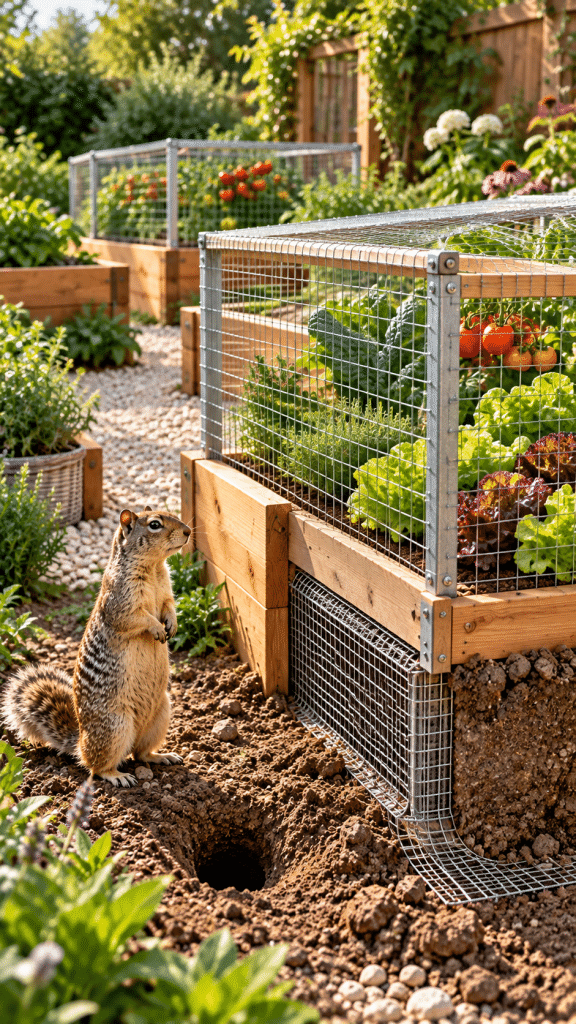
Build a Garden Boundary That Protects Above and Below the Soil
An effective barrier should address both surface access and underground movement.
Ground squirrels are capable diggers, and a fence resting directly on the soil may leave openings underneath. Even when the visible fence appears completely secure, an animal may exploit a small gap along its base.
Start by choosing a sturdy, galvanized hardware cloth with appropriately small openings. Mesh with approximately 1/2-inch openings is commonly used for protected garden enclosures, although the full design must account for other animals that may also enter.
For an in-ground garden, a buried barrier extending roughly 24 inches below the surface can provide a useful starting point for underground protection. Actual requirements depend on local ground squirrel species, soil conditions, and the surrounding landscape.
Connect the buried material firmly to the above-ground fence so there is no unprotected gap.
Remember that ground squirrels may also climb or move through openings above ground. In locations experiencing persistent problems, a fully enclosed growing space with sturdy mesh walls and a secure top may be more reliable than an ordinary open fence.
Every gate, corner, and joint should fit tightly.
The goal is not to injure wildlife but to create a clear physical boundary around valuable plants.
Design Beautiful Raised Beds With Hidden Protection
Raised beds offer another opportunity to combine practical pest prevention with attractive garden design.
Imagine a modern kitchen garden with deep cedar-colored wooden beds, narrow gravel paths, carefully arranged herbs, and rows of vibrant vegetables.
Beneath the polished appearance is an almost invisible protective system.
Before filling each raised bed with soil, attach a layer of durable galvanized hardware cloth across its open bottom. Secure the mesh to the bed frame, ensuring the edges are tightly connected and large gaps are eliminated.
This helps prevent burrowing animals from entering directly through the soil beneath the bed.
Where ground squirrels are highly persistent, bottom protection should be combined with secure above-ground mesh panels or a complete enclosure, rather than relying on the raised-bed walls alone.
For deeper-rooted plants, make sure the growing medium provides adequate space for healthy root development. The mesh should be installed at the bottom boundary of the growing area, not immediately beneath the plants’ shallow roots.
A protected raised bed can also include attractive design elements such as:
- Weather-resistant natural timber frames.
- Narrow limestone or gravel pathways.
- Black metal corner brackets.
- Removable mesh-covered access panels.
- Vertical trellises for climbing vegetables.
- Coordinated herb containers around the entrance.
The protective materials can remain visually discreet while allowing the growing space to retain a sophisticated appearance.
Add Protective Covers for Young and Vulnerable Plants
Seedlings are particularly vulnerable during their earliest stages of growth.
Even a well-designed garden may experience occasional wildlife visits when a gate is left open or a small enclosure develops a gap.
Removable plant covers provide another protective layer.
A lightweight wooden frame covered with sturdy metal mesh can create a small protective structure above an individual raised bed. The frame should be tall enough to accommodate growing plants and easy to open for watering, harvesting, and maintenance.
Unlike loose plastic bird netting, a rigid mesh cover is less likely to become tangled or torn by animals.
For plants requiring insect pollination, covers may need to be opened during flowering or designed to permit pollinator access while preventing squirrel entry.
This approach works especially well with lettuce, young beans, freshly transplanted vegetables, and other delicate crops.
Why Underground Protection Is Often the Strongest Long-Term Investment
Physical barriers require careful installation and an initial material investment, but they can provide dependable protection for selected garden areas.
They also avoid the uncertainty associated with scent-based repellents, homemade sprays, and frightening devices.
For gardeners who grow valuable vegetables year after year, investing in a secure enclosure may be more practical than repeatedly replacing damaged plants.
However, physical exclusion protects the enclosed area rather than removing an established ground squirrel colony from the surrounding property.
A thoughtfully protected garden can therefore coexist with wildlife elsewhere in the landscape.
🥈 Top 2 How to Keep Ground Squirrels Out of Your Garden Naturally With Smart Garden Cleanup and Food Source Management
The second approach focuses on making the garden less rewarding and convenient for visiting ground squirrels.
Instead of building a large protective enclosure around every planting area, this strategy reduces easily accessible food, removes unnecessary shelter near vulnerable beds, and improves everyday garden maintenance.
It is especially suitable for larger backyards where completely fencing the entire landscape would be expensive or impractical.
Remove Easy Food Sources That Encourage Repeat Visits
Ground squirrels often return to locations where food is consistently available.
One of the simplest preventative steps is to reduce unnecessary feeding opportunities.
Harvest ripe vegetables promptly rather than leaving mature produce exposed for extended periods. Remove fallen fruit from beneath trees, collect spilled seeds, and avoid leaving large quantities of edible garden scraps scattered around planting beds.
Bird feeders deserve particular attention.
Although bird feeders can add charm and activity to a backyard, fallen seeds may attract ground-feeding wildlife, including squirrels and other rodents.
Place feeders away from vulnerable vegetable beds, use designs that minimize spilled seed, and clean the surrounding area regularly.
If unwanted feeding activity continues, temporarily removing the feeder may help determine whether it contributes to the problem.
Outdoor pet food should also be stored securely instead of remaining exposed throughout the day.
These measures do not guarantee that squirrels will leave, but they reduce unnecessary food rewards that may encourage recurring visits.
Manage Brush Piles and Hidden Shelter Around Vegetable Beds
Ground squirrels commonly use underground burrows for shelter, but piles of garden debris can provide convenient cover around feeding areas.
Old boards, stacked branches, discarded planters, and dense piles of unused materials can make it harder to monitor activity near garden edges.
Clearing unnecessary clutter improves visibility and reduces certain sheltered approaches.
Begin with the most vulnerable areas, including the edges of vegetable beds, irrigation lines, and paths leading toward frequently damaged plants.
Move unused containers into organized storage, remove neglected piles of pruning waste, and keep planting entrances accessible for inspection.
However, avoid assuming that cutting every plant short will discourage ground squirrels.
Their response to vegetation cover varies, and some ground squirrels favor open areas where they can easily detect predators. Removing all surrounding vegetation can therefore be counterproductive.
The better strategy is targeted maintenance.
Keep the immediate growing area tidy while retaining thoughtfully designed ornamental planting elsewhere.
A garden can remain lush and natural without allowing clutter to accumulate directly against vulnerable beds.
Create a Beautiful and Practical Garden Maintenance Layout
An orderly garden does not need to look empty or sterile.
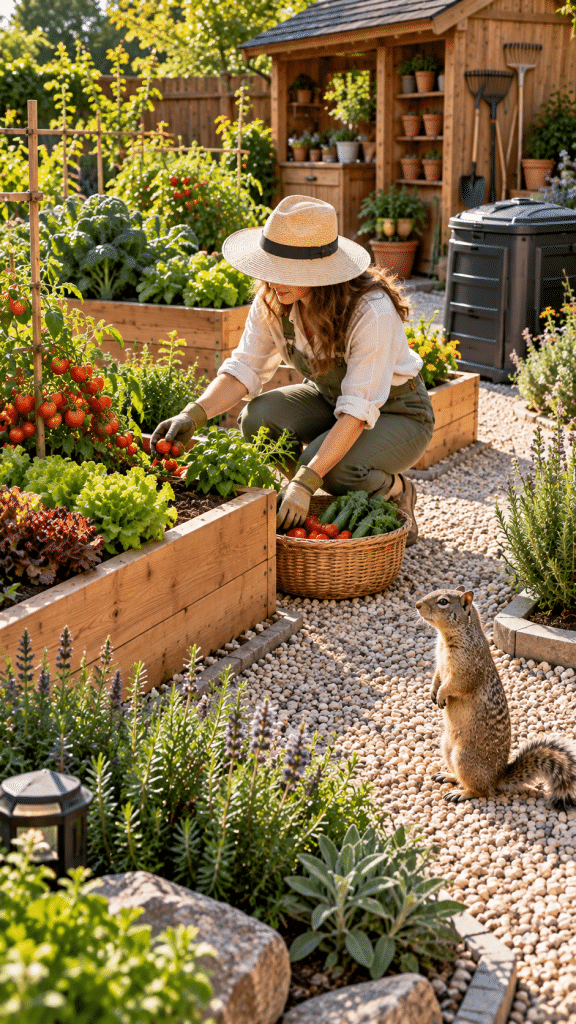
Consider a backyard vegetable area featuring rectangular raised beds arranged around a central gravel walkway.
Low-maintenance ornamental grasses soften the outer boundary, while neatly contained herbs add fragrance and texture.
A covered compost system sits away from the main growing space, and a discreet storage unit holds unused pots and gardening supplies.
The layout creates clear sightlines toward the vegetable beds, making new damage easier to notice.
Instead of attempting to make the entire property unattractive to wildlife, this design concentrates maintenance around the most valuable growing areas.
A practical weekly routine might involve checking fallen fruit, collecting loose seed, inspecting vegetable leaves, and looking for signs of new digging.
Monitoring is especially important in gardens bordering undeveloped land, where ground squirrels may enter repeatedly from surrounding habitat.
Keep Compost and Garden Waste Secure
Compost is an excellent resource for improving soil quality, but exposed kitchen scraps can attract unwanted wildlife.
Choose a well-managed composting system with a secure lid and a suitable base.
Avoid placing uncovered piles of fruit waste, bread, or other accessible food directly beside vegetable beds.
Follow appropriate composting practices for the materials being used, and make sure finished compost is incorporated into planting soil rather than scattered in tempting piles.
A secure composting station can be integrated beautifully into a modern backyard using timber screening, a dark-colored compost bin, and a stable pathway.
This creates a functional garden feature while reducing unnecessary access to edible waste.
Understand the Limits of Garden Cleanup
Garden maintenance is an important supporting strategy, but it is rarely sufficient to control an established ground squirrel population by itself.
Ground squirrels are adaptable and can continue foraging in otherwise tidy gardens.
An animal with an established burrow system nearby may return even after fallen seeds and fruit are removed.
For that reason, combine food source management with protection around particularly vulnerable crops.
Think of cleanup as a method for reducing unnecessary attraction, not a guaranteed solution for every squirrel problem.
Its greatest advantage is that it also improves general garden organization, reduces waste, and makes routine inspections easier.
🥉 Top 3 How to Keep Ground Squirrels Out of Your Garden Naturally With Strategic Garden Zoning and Wildlife-Friendly Landscape Design
The third approach uses landscape planning to protect the most valuable planting spaces while allowing the rest of the property to remain attractive, functional, and ecologically thoughtful.
Rather than trying to exclude every wild animal from an entire backyard, this method divides the landscape into areas with different levels of protection.
It works particularly well in spacious gardens, naturalistic landscapes, and properties located near open fields or undeveloped land.
Create a Protected Growing Zone Near the House
The most valuable crops should be placed where they can be monitored and protected conveniently.
A vegetable garden positioned close to the house is often easier to inspect than one hidden behind distant shrubs or at the far edge of a large property.
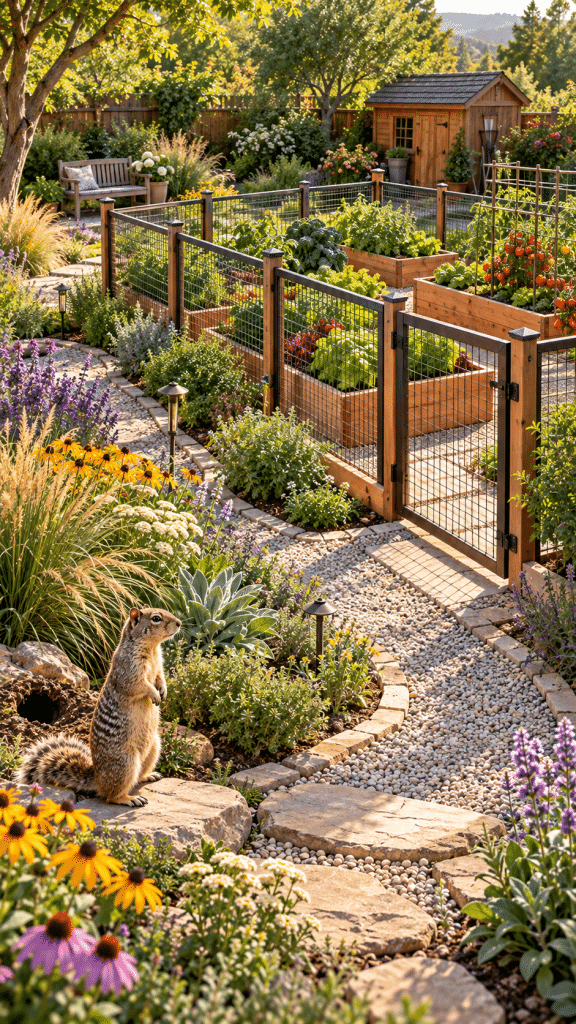
Consider creating a compact kitchen garden featuring several raised beds, a secure enclosure, and a comfortable walkway.
This protected area becomes the main growing zone for tender vegetables, herbs, and delicate seedlings.
Tall structures or climbing frames can be incorporated into the enclosure design, provided they do not create unprotected openings.
Outside the protected area, ornamental plantings can provide visual beauty without requiring the same level of intensive physical exclusion.
This zoning concept concentrates money, materials, and maintenance where protection is most valuable.
It can be particularly effective for gardeners who have experienced repeated damage but do not want their entire yard surrounded by metal fencing.
Use Open Access Paths to Make Garden Monitoring Easier
Clear pathways can improve access to vulnerable planting areas and make new digging activity easier to identify.
A well-defined route between the house and vegetable garden also helps gardeners notice damaged irrigation lines, disturbed soil, or gaps in fencing during everyday maintenance.
Natural stone pavers, compacted gravel, or carefully maintained stepping-stone paths can all work beautifully.
However, pathways alone do not repel ground squirrels.
Some species readily travel through open areas, so a broad gravel strip should never be considered a reliable protective barrier.
Its purpose is to improve inspection, access, and landscape organization.
For example, a narrow gravel path along a raised-bed enclosure allows a gardener to check the mesh foundation without stepping into planting soil.
This seemingly simple design decision makes long-term maintenance much easier.
Protect Individual Trees and Special Plants
Not every valuable plant can be moved into a fenced kitchen garden.
Young fruit trees, ornamental shrubs, and newly installed landscape specimens may require their own protection.
Ground squirrels can damage certain young trees by feeding on bark or disturbing soil around root systems.
Where appropriate, a sturdy, properly fitted trunk guard can help protect vulnerable bark.
Use a design that allows room for tree growth, provides ventilation, and does not trap moisture against the trunk.
Inspect the guard regularly and adjust or remove it as the tree develops.
For particularly vulnerable shrubs, a small protective mesh enclosure may be more useful than a trunk guard alone.
These structures should be designed so animals cannot become trapped inside them.
Avoid installing barriers directly across occupied burrow openings without first determining whether wildlife is present.
The objective is to protect the plant while preventing injury or accidental confinement.
Preserve Wildlife Value Without Inviting Damage Into the Vegetable Garden
Wildlife-friendly landscaping does not require allowing animals unrestricted access to every part of the property.
A garden can support native flowering plants, beneficial insects, birds, and local biodiversity while still maintaining secure vegetable-growing areas.
The key is thoughtful placement.
For example, native flowering borders may remain outside the protected vegetable enclosure, while culinary herbs and tender crops grow inside it.
A small seating terrace can overlook both spaces, creating a cohesive garden design rather than two disconnected landscapes.
It is important not to deliberately establish feeding areas for ground squirrels in an attempt to draw them away from vegetables. Supplemental feeding can increase wildlife activity and create additional problems.
Similarly, attracting predators should not be viewed as a dependable method for eliminating an existing squirrel population.
Hawks and other predators are part of a healthy ecosystem, but natural predation alone may not provide sufficient protection for a productive vegetable garden.
Wildlife-friendly design works best when combined with realistic expectations and secure physical protection.
Make the Garden Beautiful as Well as Practical
A thoughtfully zoned backyard can be exceptionally attractive.
Imagine a warm-toned wooden vegetable enclosure surrounded by carefully arranged gravel paths, natural stone edging, and soft ornamental planting.
Inside the enclosure, rows of deep-green vegetables create a lush, productive display.
Nearby, a small outdoor bench provides a peaceful place to enjoy the garden.
Beyond the protected area, native flowering plants create seasonal interest and a more natural transition toward the property boundary.
Instead of making pest management the dominant visual feature, the protective infrastructure becomes part of the garden’s architecture.
This design works particularly well for homeowners who value both practical gardening and refined outdoor aesthetics.
Comparing the 3 Best Natural Ground Squirrel Prevention Methods
Each method addresses a different aspect of ground squirrel activity.
Choosing the right strategy depends on the size of the garden, the severity of the problem, and the amount of protection required.
| Prevention Method | Main Advantage | Best Application | Important Limitation |
|---|---|---|---|
| 🥇 Underground Mesh and Raised-Bed Protection | Creates a durable physical boundary | Vegetable beds and valuable seedlings | Requires careful installation and secure above-ground protection |
| 🥈 Smart Garden Cleanup | Reduces unnecessary food and shelter opportunities | Medium and large residential gardens | Unlikely to resolve an established colony alone |
| 🥉 Strategic Garden Zoning | Concentrates protection where it matters most | Landscaped backyards and mixed-use gardens | Requires planning and may still need physical barriers |
For most homeowners, these strategies work best together.
An enclosed raised-bed garden provides the strongest direct protection for vegetables. Consistent maintenance reduces unnecessary attractions, while landscape zoning improves the overall organization and appearance of the property.
The result is a more resilient garden that requires less reactive intervention.
Common Mistakes When Trying to Keep Ground Squirrels Out of Your Garden Naturally
Even well-intentioned gardeners sometimes rely on methods that sound convincing but provide little lasting protection.
Understanding these mistakes can prevent wasted effort and unnecessary frustration.
Relying Entirely on Homemade Squirrel Repellents
Many gardening websites recommend spreading coffee grounds, garlic, peppermint oil, or spicy mixtures around plants.
Although strong odors may temporarily influence some animal behavior, there is insufficient reliable evidence that these homemade treatments provide dependable long-term control of ground squirrels.
University of California Integrated Pest Management guidance indicates that frightening devices and repellents are not effective solutions for making ground squirrels abandon their burrows or reliably avoid crops.
Avoid treating homemade scent mixtures as substitutes for physical protection.
Also, never apply concentrated essential oils or irritants directly to wildlife, and be cautious about using untested ingredients around edible crops, pets, and children.
Using Lightweight Fencing Without Underground Protection
A decorative fence may look attractive, but it can leave serious vulnerabilities.
Ground squirrels may dig underneath its lower edge or exploit existing gaps.
For valuable crops, choose strong materials and connect all protective components properly.
A small investment in thoughtful installation can prevent repeated repairs and replanting.
Assuming Every Small Burrow Belongs to a Ground Squirrel
Different animals require different management strategies.
A hole near a vegetable bed might belong to a ground squirrel, chipmunk, vole, or another burrowing species.
Observe from a safe distance before taking action.
If necessary, consult a local Cooperative Extension office or qualified wildlife professional for identification.
Correct identification helps prevent ineffective or inappropriate intervention.
Blocking Active Burrows Without Checking for Wildlife
Closing an occupied burrow without understanding its use can trap animals underground, including dependent young.
Simply filling a burrow with loose soil is also unlikely to stop an established ground squirrel from reopening it.
If burrows occur near building foundations, retaining walls, or other structures, seek qualified local advice rather than attempting improvised excavation or sealing.
Depending on Ultrasonic Devices or Predator Decoys
Electronic deterrents, imitation owls, reflective objects, and similar frightening products may be marketed as easy wildlife solutions.
However, ground squirrels can adapt to predictable disturbances, and such devices should not be relied upon for dependable garden protection.
Spend the available budget on proven physical barriers and ongoing inspection instead.
Important Note About Wildlife Safety and Local Regulations
Important Note: Ground squirrels are wild animals, and their management may be regulated differently depending on species and location. Never use poison, hazardous homemade chemicals, or improvised fumigation methods. Do not capture or relocate animals without checking applicable wildlife laws. When extensive burrowing threatens structures or ordinary exclusion is insufficient, consult a licensed wildlife-control professional or local Cooperative Extension service.
Some ground squirrel species or populations may have special conservation protections.
The identification, location, and applicable regulations should always be established before attempting animal removal.
This article focuses on nonlethal garden protection, rather than population control.
If unusual numbers of dead rodents are found on a property, avoid direct contact and seek guidance from local public health authorities.
How to Build a Long-Term Ground Squirrel Prevention Routine
Creating a beautiful, productive garden requires more than installing a protective feature once and forgetting about it.
The most effective nonlethal strategy includes regular inspection and seasonal maintenance.
Inspect the Garden Every Week
Walk around the vegetable beds and look for new signs of digging.
Pay particular attention to the base of fencing, the corners of raised beds, and areas where mesh meets gates or wooden frames.
Check for loose fasteners, displaced soil, damaged irrigation equipment, and openings that may allow entry.
A small repair completed early can prevent significant damage later.
Monitor Vulnerable Plants During the Growing Season
Newly planted vegetables deserve particular attention.
Inspect seedlings for missing leaves, damaged stems, and disturbed soil.
If damage continues despite careful garden cleanup, strengthen physical protection around the affected growing area.
Avoid repeatedly applying unproven repellents without addressing the actual access points.
Adapt Maintenance to Local Wildlife Activity
Ground squirrel behavior varies by species, region, and season.
Some populations become less active during colder periods, while others remain active for much of the year.
Do not assume that a quiet garden during one season means the problem has disappeared permanently.
Before the next planting season, inspect existing enclosures and repair any damaged materials.
Keep the Garden Attractive and Functional
Protective features should be integrated into the normal maintenance routine.
Clean gravel pathways, maintain neat bed edges, and inspect wooden frames for weather damage.
Remove unnecessary debris around growing areas while retaining appropriate habitat for beneficial wildlife elsewhere.
These simple habits support both garden health and long-term usability.
Frequently Asked Questions About How to Keep Ground Squirrels Out of Your Garden Naturally
What Is the Most Effective Natural Way to Keep Ground Squirrels Out of a Vegetable Garden?
A properly designed physical enclosure is one of the most dependable nonlethal options for protecting valuable vegetable crops.
For digging animals, the system should address underground access as well as gaps in above-ground fencing.
Raised beds with secured bottom mesh and strong protective covers can provide additional protection for seedlings.
Do Coffee Grounds Keep Ground Squirrels Away?
There is no strong scientific evidence that coffee grounds reliably prevent ground squirrels from entering gardens.
They should not be used as the primary method of protection.
Durable barriers and thoughtful maintenance are more practical options.
Can Ground Squirrels Dig Under Garden Fences?
Yes. Ground squirrels are capable burrowers and may exploit unprotected fence foundations.
A surface-level fence alone may not adequately protect vulnerable crops.
Buried mesh, secure connections, and careful maintenance are important considerations.
Will Ground Squirrels Leave If Their Food Sources Disappear?
Removing accessible food may reduce the attractiveness of a particular garden, but it does not guarantee that established squirrels will leave.
They may continue feeding on naturally available vegetation or travel to other nearby food sources.
Food management is best treated as a supporting measure.
Are Ground Squirrels Dangerous to Vegetable Gardens?
Ground squirrels can damage seedlings, feed on vegetables, disturb root systems, and gnaw certain irrigation components.
The seriousness of the problem depends on local population size, plant vulnerability, and the accessibility of the growing area.
Can Raised Garden Beds Stop Ground Squirrels?
Raised beds can help when designed with appropriate physical protection.
However, wooden sides alone are not necessarily squirrel-proof.
Burrowing animals may enter from below, while persistent squirrels may climb into an uncovered bed.
Bottom mesh and secure top or side protection offer a more complete approach.
Should Ground Squirrel Burrows Be Filled With Soil?
Simply filling burrow openings is generally ineffective because squirrels can reopen them.
Closing occupied burrows can also create animal welfare problems.
Consult local wildlife specialists when burrow activity requires direct intervention, especially near structures.
Can a Garden Stay Wildlife-Friendly While Keeping Ground Squirrels Away?
Yes. Protecting selected vegetable beds does not require eliminating wildlife habitat from the entire property.
A well-organized garden can combine secure growing enclosures, attractive ornamental planting, native flowers, and carefully maintained paths.
The objective is to reduce damage in sensitive areas while maintaining a balanced outdoor environment.
Final Thoughts on How to Keep Ground Squirrels Out of Your Garden Naturally
Understanding how to keep ground squirrels out of your garden naturally begins with recognizing that these animals are persistent, adaptable, and highly capable of exploiting unprotected growing spaces.
The most dependable nonlethal approach is to create strong physical boundaries around vulnerable plants, particularly valuable vegetable beds and newly planted seedlings.
Thoughtful garden cleanup can reduce unnecessary feeding opportunities, while strategic landscape zoning helps homeowners concentrate protective efforts where they provide the greatest benefit.
Rather than relying on unpredictable homemade repellents or ineffective frightening devices, focus on durable materials, carefully planned growing areas, and consistent maintenance.
A successful garden does not have to sacrifice beauty for protection.
With attractive raised beds, discreet wire barriers, organized pathways, and carefully arranged planting zones, homeowners can enjoy a sophisticated landscape that remains productive and easier to maintain.
By combining the right preventive measures, a garden can become a more secure, welcoming, and rewarding place to grow vegetables, cultivate flowers, and enjoy the outdoors.
The ultimate goal is simple: protect the plants, respect the wildlife, and create a garden designed to thrive.
References and Further Reading
- University of California Statewide Integrated Pest Management Program — Ground Squirrel: Home and Landscape Pest Management
https://ipm.ucanr.edu/home-and-landscape/ground-squirrel/ - National Center for Appropriate Technology — Squirrels: Vertebrate IPM Tip Sheet
https://www.ncat.org/publication/squirrels-vertebrate-ipm-tip-sheet/ - University of Florida IFAS Extension — How to Use Deterrents to Stop Damage Caused by Nuisance Wildlife in Your Yard
https://ask.ifas.ufl.edu/publication/UW371
