Winter Flower Garden Ideas can completely transform the way an outdoor space looks and feels during the coldest months of the year. While many homeowners assume that winter gardens must be dominated by bare branches, dormant lawns, and empty flower beds, thoughtful planting can create a breathtaking landscape filled with delicate blossoms, beautiful textures, elegant colors, and unexpected seasonal charm.
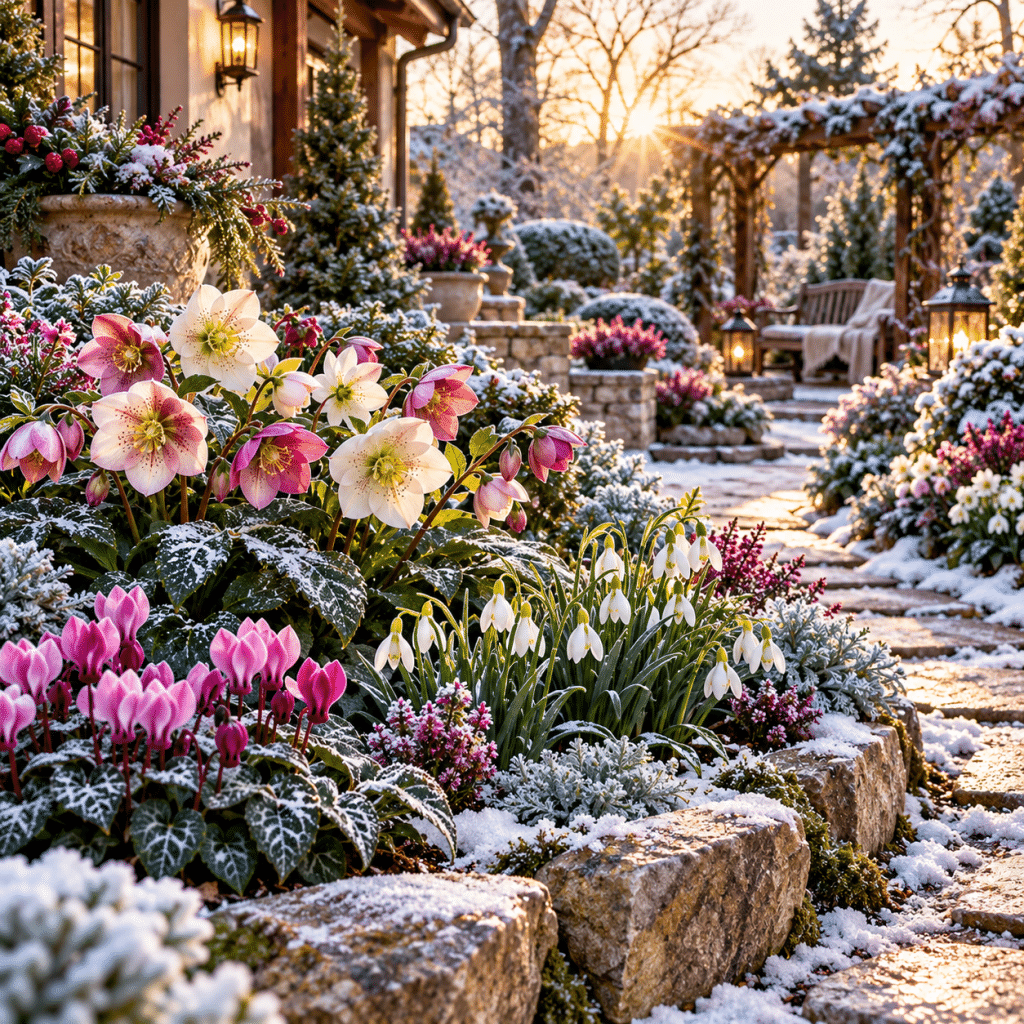
Imagine looking through your living room window on a frosty January morning and discovering a magnificent arrangement of creamy white hellebores, soft pink winter cyclamen, and delicate snowdrops emerging from a carefully designed flower garden. The surrounding foliage glistens with frost, decorative stones provide beautiful natural contrast, and every carefully positioned flower adds a touch of life to the peaceful winter scenery.
❄️ The secret to creating an extraordinary winter garden is not simply choosing flowers that tolerate cold weather. It is designing an outdoor landscape where winter-blooming plants, carefully considered viewing angles, seasonal textures, and beautiful structural details work together to create a harmonious visual experience.
Unlike traditional spring and summer gardens, winter flower gardens rely on subtle beauty. Individual blossoms become more noticeable against quiet backgrounds, evergreen foliage provides valuable contrast, and even small clusters of flowers can have a surprisingly dramatic impact.
The most captivating designs also celebrate the characteristics of winter rather than attempting to imitate a summer landscape. Frost-covered leaves, natural stone, soft seasonal sunlight, and carefully layered plants can create a sophisticated garden atmosphere that feels peaceful, romantic, and exceptionally beautiful.
Whether your backyard is spacious or compact, these Best 3 Winter Flower Garden Ideas offer three distinctive ways to create a remarkable seasonal landscape.
Each concept combines beautiful winter flowers with a different design philosophy, making it possible to create a garden that feels luxurious, natural, and visually interesting even when temperatures fall.
Why Winter Flower Garden Ideas Are Becoming an Essential Part of Beautiful Backyard Design
A beautifully planned garden should offer visual enjoyment throughout the year, rather than delivering its greatest beauty exclusively during spring and summer.
Winter landscapes create an opportunity to explore a completely different gardening aesthetic. During warmer months, abundant flowers and dense foliage often compete for attention. In winter, the reduced amount of greenery allows individual plants, delicate blossoms, architectural shapes, and contrasting materials to become much more prominent.
This seasonal simplicity can make a winter garden feel especially sophisticated.
Instead of filling every available space with colorful plants, successful winter garden design often emphasizes carefully selected combinations and intentional spacing.
A small collection of white flowers positioned against dark evergreen foliage may appear more striking than a much larger arrangement during summer.
Similarly, pale pink blossoms growing between silver-green leaves and weathered natural stones can create a beautifully balanced composition.
Understanding the Special Beauty of Winter Blooming Flowers
Winter flowers have remarkable ornamental value because they provide color during a season when many other plants are dormant.
Certain hellebores produce elegant blossoms from winter into early spring. Snowdrops often emerge in late winter, sometimes pushing through snow or cold soil. Hardy cyclamen can provide pink, magenta, or white flowers in appropriately sheltered garden locations.
These plants create opportunities for combinations that feel natural rather than overly decorative.
Their beauty is often enhanced by the surrounding winter conditions.
A deep burgundy hellebore looks particularly dramatic against pale gravel or frost-covered foliage. Snowdrops appear exceptionally delicate beneath deciduous shrubs, while pink cyclamen provide beautiful color close to the ground.
🌸 Another important advantage is that many suitable winter-flowering perennials can return year after year once established in favorable growing conditions.
Rather than constantly replacing seasonal decorations, gardeners can gradually establish long-lasting flowering communities that become more beautiful as the plants mature.
However, flowering periods vary according to local climate, cultivar, and weather. A plant described as winter-blooming in one region may flower later in a colder location or earlier in a mild climate.
This makes careful plant selection essential for creating a reliable seasonal display.
🥇 Top 1 Winter Flower Garden Ideas With a Frost Kissed Floral Viewing Island and Layered Winter Blooms
A frost-kissed floral viewing island is one of the most elegant approaches to winter garden design because it transforms an ordinary flower bed into a beautiful seasonal composition designed to be admired from inside the home.
Rather than creating a conventional flower border or large landscape installation, this idea focuses on a beautifully shaped planting island positioned within a clear viewing area.
The design resembles a living floral artwork, featuring carefully arranged winter blossoms, contrasting evergreen foliage, subtle natural stone details, and beautifully layered planting heights.
Imagine a softly curved oval flower island surrounded by a quiet winter lawn or a modest expanse of pale decorative gravel.
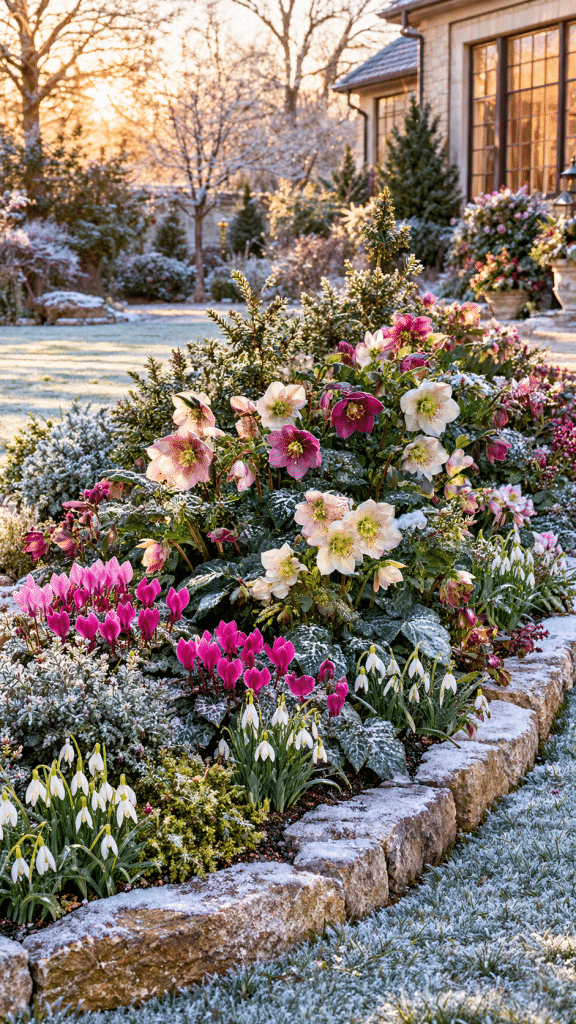
At the center, several groups of elegant hellebores rise above a carpet of lower-growing plants. Creamy white flowers create gentle highlights, muted pink blossoms introduce warmth, and deep plum varieties add sophisticated visual contrast.
Along the outer edge, small clusters of snowdrops and hardy cyclamen soften the transition between the planting bed and the surrounding landscape.
The entire arrangement looks intentional, polished, and effortlessly luxurious.
Designing a Winter Flower Garden That Looks Beautiful From Your Window
The most important feature of this design is its viewing perspective.
Many gardens are arranged primarily for people walking through them. However, during winter, homeowners often spend more time indoors.
A garden that looks beautiful through a large window can provide daily enjoyment even when the weather is too cold for extended outdoor activities.
Position the floral island where it can be clearly viewed from a frequently used room, such as a living room, dining room, or home office.
Before planting, consider the natural line of sight from the window.
The tallest plants should not completely conceal the smaller winter blossoms. Instead, create gently staggered layers that allow different flowers to remain visible.
For example, slightly taller hellebores can occupy the middle or rear portion of the island, while miniature bulbs and low-growing flowering plants create delicate details closer to the viewing side.
If the planting island can be seen from several directions, distribute the taller plants around the central area and gradually reduce plant height toward the edges.
This approach produces a beautiful three-dimensional garden composition.
Choosing Elegant Flowers for a Frost Kissed Floral Island
Hellebores are excellent candidates for this design because their beautiful winter and early-spring blossoms provide a sophisticated focal point.
Oriental hybrid hellebores are particularly valuable in many temperate gardens because they are generally hardy, relatively low maintenance, and available in an impressive range of colors.
Their flowers can be creamy white, blush pink, dusty rose, wine red, or almost blackish purple.
The combination of deeply colored blossoms and pale flowers can produce a dramatic effect without overwhelming the landscape.
Snowdrops are equally important for creating seasonal delicacy.
Their small white flowers appear especially attractive when planted in irregular groups rather than perfectly symmetrical rows.
Instead of placing individual bulbs at equal distances, arrange them in several natural-looking clusters.
When snowdrops emerge, they create the impression of tiny white lanterns scattered across the winter garden.
Hardy cyclamen, particularly Cyclamen coum, can introduce charming pink or magenta blossoms during the winter months in suitable climates.
Their rounded leaves, often decorated with beautiful silver patterns, provide additional ornamental interest.
A carefully balanced combination of these three flowering plants can create an exceptionally refined garden.
Creating a Luxurious Color Palette With Winter Flowers
The strongest visual results often come from limiting the overall color palette.
For this design, consider a combination of ivory white, dusty rose, soft plum, and deep evergreen green.
The white blossoms create brightness, pink flowers provide gentle warmth, and burgundy tones add depth.
Dark green leaves form the perfect background for the lighter colors.
Natural stone can also play an important role in the composition.
Use pale limestone, weathered sandstone, or small pieces of natural rock to provide contrast against the flowering plants.
Rather than outlining the entire island with a continuous row of decorative stones, position several stones irregularly around the planting area.
The goal is to make the landscape feel organic while maintaining a sophisticated visual structure.
✨ For an especially elegant winter appearance, introduce a few small areas of silver-toned foliage from climate-appropriate evergreen plants that share similar growing requirements.
Silver and gray-green leaves can reflect soft winter light and create a beautiful transition between pale flowers and darker greenery.
Building Beautiful Layers Without Overcrowding the Garden
Layering is essential when creating a winter flower garden that looks attractive from a distance.
However, a successful arrangement should also allow sufficient growing space for the individual plants.
Start by positioning the largest plants first.
Hellebores can form attractive clumps, making them suitable for the main body of the composition.
Leave adequate room for their mature spread rather than planting them too closely together.
Smaller flowers can then be arranged in natural groups around the larger plants.
Snowdrops work particularly well near the front, where their delicate blossoms can be seen more clearly.
Hardy cyclamen can occupy protected pockets between established plants, provided the soil conditions suit them.
Add a restrained selection of evergreen foliage to create structure when certain flowers are not blooming.
Avoid introducing too many different plant species.
A garden containing several beautiful repetitions of the same flowering plants often looks more unified than one filled with numerous unrelated varieties.
Maintaining the Floral Island Throughout the Winter
A winter floral island should be designed around healthy soil and suitable drainage.
Most commonly grown hellebores prefer fertile, evenly moist but well-drained soil and light or partial shade.
Hardy cyclamen also generally perform best in suitable shaded or partially shaded locations with good drainage.
Snowdrops appreciate moisture during their growing season but should not remain in persistently waterlogged soil.
An important consideration is the amount of winter sunlight reaching the planting area.
A site with gentle morning sunshine and protection from harsh afternoon exposure can work well for many woodland-edge flowering plants.
In regions with severe winter conditions, avoid attempting major planting operations when the soil is frozen or saturated.
Instead, establish the main design during an appropriate planting season before winter arrives.
Once established, these perennial plants can provide seasonal color with relatively modest maintenance.
The result is an extraordinarily beautiful flower island that transforms the winter view from your home.
🥈 Top 2 Winter Flower Garden Ideas With a Fragrant Winter Bloom Sanctuary and Intimate Garden Alcove
A fragrant winter bloom sanctuary introduces a completely different approach to seasonal landscape design.
Instead of focusing primarily on flowers viewed from a distance, this concept creates an intimate garden space designed to be experienced up close.
The central idea is to surround a small sheltered outdoor alcove with carefully selected winter-flowering plants that provide both beautiful blossoms and seasonal fragrance.
Imagine a quiet corner of the backyard enclosed by an existing garden wall or sheltered by mature planting.
Soft winter sunlight illuminates a cluster of beautifully flowering shrubs, while delicate ground-level flowers introduce gentle color.
On milder days, the air carries subtle floral fragrances that make the space feel surprisingly welcoming despite the cold season.
The overall atmosphere is romantic, peaceful, and sophisticated.
This design is particularly appealing for homeowners who want their winter garden to feel like a personal sanctuary rather than simply an ornamental planting display.
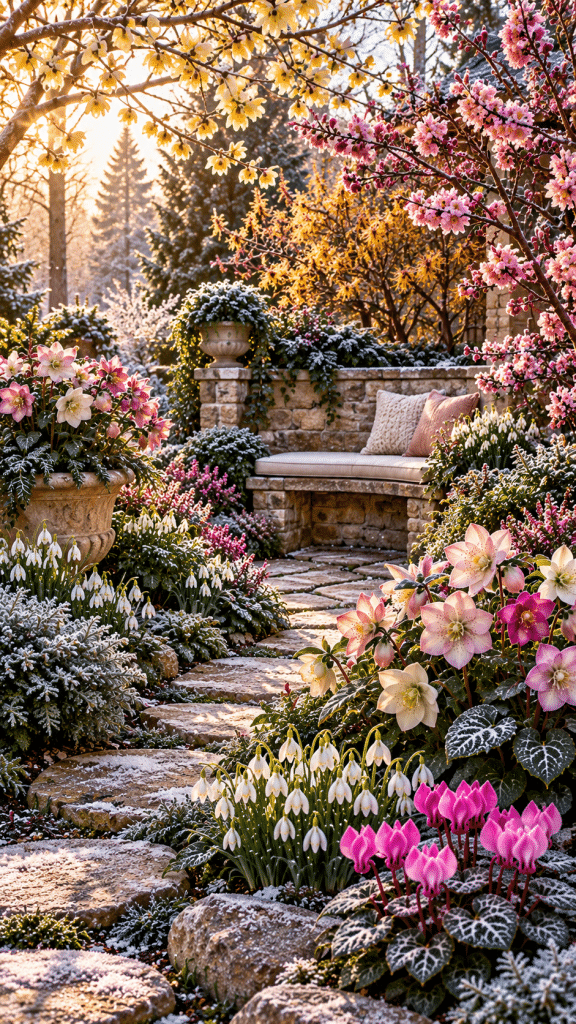
Creating an Intimate Winter Garden Alcove
The first step is selecting a location that offers some protection from strong winter winds.
An existing garden wall, mature evergreen planting, or sheltered corner of the property can provide a suitable starting point.
Avoid placing cold-sensitive plants in areas where frost pockets or persistent winter wet create unfavorable conditions.
The garden alcove does not need to be large.
Even a relatively compact area can feel luxurious when its plants are carefully arranged.
Consider a simple semicircular planting arrangement that partially embraces a small standing area or a weather-resistant garden seat.
Unlike a formal courtyard, the space should feel softly enclosed by vegetation.
The emphasis is on natural intimacy rather than architectural grandeur.
Choose a restrained selection of materials such as weathered timber, natural stone, or muted gravel for any necessary hardscape details.
These materials complement the winter flowers without distracting from them.
🌿 A particularly attractive approach is to allow evergreen foliage to create a dark botanical background behind the brighter winter blossoms.
This makes pale flowers more noticeable and adds depth to the overall arrangement.
Introducing Fragrant Winter Flowering Shrubs
Fragrance is the defining feature of this garden concept.
Several winter-flowering shrubs can provide delightful scents during periods when comparatively few plants are in bloom.
One beautiful option is winter sweet, Chimonanthus praecox, which can produce fragrant yellowish flowers on bare branches in suitable climates.
Its flowers have a delicate appearance, making it an attractive focal point for a sheltered winter garden.
Another option is fragrant winter viburnum, particularly Viburnum × bodnantense cultivars such as ‘Dawn’.
These plants can produce clusters of pink flowers on otherwise bare stems during mild periods in winter.
The combination of elegant branching patterns, delicate blossoms, and fragrance makes them valuable ornamental additions.
Witch hazel, particularly fragrant cultivars of Hamamelis, can also provide spectacular winter interest.
Its unusual ribbon-like petals create a distinctive visual effect.
Yellow, amber, orange, and reddish varieties can provide beautiful seasonal color.
Some witch hazels are notably fragrant, although scent strength varies by species and cultivar.
Because these shrubs can become relatively large, select varieties that suit the available space and their mature dimensions.
Position fragrant plants where their scent can be appreciated naturally, such as near a sheltered seating position.
Combining Fragrant Shrubs With Delicate Ground Level Flowers
A fragrant winter garden becomes especially beautiful when taller flowering shrubs are combined with low-growing flowers.
This creates an attractive vertical composition.
The upper level provides elegant branches and distinctive winter blossoms.
The middle level can feature carefully selected evergreen plants that provide visual continuity.
At ground level, delicate winter-flowering perennials add color and texture.
Hellebores are particularly suitable in many partially shaded garden environments.
Their nodding flowers introduce an understated romantic quality.
White and pale pink varieties complement the warmer colors of winter-flowering shrubs.
Hardy cyclamen can provide additional pink flowers close to the soil surface.
Snowdrops offer a gentle contrast with their beautifully simple white blossoms.
For the strongest visual effect, repeat a small number of flowering varieties rather than combining every available winter plant.
This repetition creates a sense of visual rhythm.
The finished alcove should feel like a carefully composed botanical retreat.
Using Seasonal Fragrance as a Garden Design Element
Fragrance is often overlooked when planning ornamental gardens.
During winter, however, it can become one of the most memorable features of an outdoor space.
Because colder weather often limits the amount of time spent outdoors, a pleasant scent encountered during a short garden visit can feel particularly special.
Consider how prevailing winter winds move through the garden.
A fragrant shrub positioned immediately beside a seating area may perform differently from one located several feet away.
Gentle airflow can help carry fragrance into the alcove, while strong winds may make the space uncomfortable.
Use existing walls or suitable evergreen planting to create shelter without completely blocking air movement.
It is also worth remembering that floral fragrance can be stronger during mild weather.
A garden that smells wonderful on a relatively warm winter afternoon may have a much more subtle scent during freezing conditions.
For this reason, the flowers and foliage should remain visually attractive even when fragrance is less noticeable.
Selecting the Perfect Winter Garden Color Scheme
A fragrant winter bloom sanctuary looks particularly beautiful with a warm, restrained color palette.
Soft butter yellow, pale apricot, antique pink, cream, and deep evergreen green create a sophisticated composition.
Yellow winter sweet blossoms can introduce gentle warmth.
Pink winter viburnum flowers add a romantic accent.
White hellebores provide brightness near the ground.
Dark green leaves create contrast and visual stability.
If witch hazel is included, choose a flower color that complements rather than competes with the existing plants.
Amber or pale yellow varieties can blend beautifully with cream and muted pink.
Avoid placing several highly saturated colors together unless a dramatic effect is intentionally desired.
The overall aesthetic should feel peaceful and inviting.
Making the Winter Sanctuary Comfortable and Practical
A beautiful garden sanctuary should also be practical to maintain.
Choose plants suited to the garden’s hardiness zone, available sunlight, soil moisture, and drainage.
Winter-flowering shrubs have different soil preferences, so avoid assuming that every species will thrive in identical conditions.
For example, many witch hazels prefer fertile, moist but well-drained soil and are unhappy in strongly alkaline conditions.
Some varieties also need a reasonable amount of sunlight to flower well.
Winter sweet generally performs best where it receives adequate sun and is sheltered from harsh conditions.
Smaller hellebores can be positioned in areas that receive partial shade.
By matching each plant to a suitable location, the garden becomes easier to maintain and more reliable over time.
A simple garden seat can complete the atmosphere, provided it does not obstruct plant growth or access for maintenance.
The result is a winter flowering sanctuary that stimulates multiple senses and makes the cold season feel unexpectedly enchanting.
🥉 Top 3 Winter Flower Garden Ideas With a Snow Pearl Rockery and Cascading Alpine Winter Blossoms
A snow pearl rockery offers an exceptionally distinctive way to create winter garden beauty.
Instead of a conventional flower bed, this design uses a carefully constructed collection of natural stones, raised planting pockets, and miniature winter-flowering plants to create a breathtaking low-growing floral landscape.
The visual inspiration comes from alpine environments, where delicate flowers often emerge between rugged rocks and resilient foliage.
Imagine an elegant miniature hillside formed from weathered limestone or sandstone.
Between the stones, tiny white blossoms emerge from pockets of dark soil.
Soft pink flowers create unexpected accents, while fine-textured foliage softens the hard edges of the rock formations.
The contrast between rugged natural stone and delicate winter flowers produces a sophisticated landscape with extraordinary texture.
This concept is especially attractive for homeowners who appreciate naturalistic planting, architectural detail, and low-growing ornamental gardens.
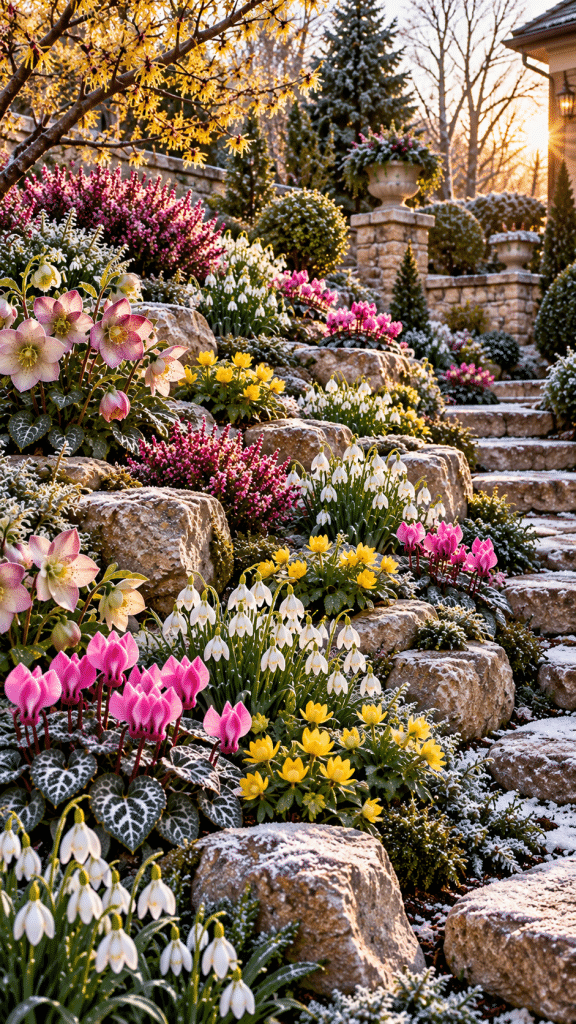
Designing a Beautiful Winter Flower Rockery
The foundation of a successful rockery is its structure.
Rather than scattering decorative stones randomly across the soil, arrange larger rocks to create the impression of a natural geological formation.
Choose stones with compatible colors and textures.
Weathered limestone, sandstone, and other locally suitable materials can produce beautiful results.
However, stone choice should also consider soil chemistry.
For example, limestone can increase alkalinity in the surrounding soil, making it unsuitable for some acid-loving plants.
Position the largest stones first, embedding a portion of each rock into the ground to create a natural appearance.
Arrange them at slightly different heights and angles while maintaining a consistent overall direction.
The objective is to create small terraces, sheltered planting pockets, and gentle changes in elevation.
These spaces can then accommodate winter-flowering plants that thrive in suitable conditions.
Avoid making the rockery excessively steep.
A modest rise with carefully arranged planting areas can create the desired visual interest while remaining easier to maintain.
Choosing Miniature Winter Flowers for a Rock Garden
The best plants for a winter rockery are relatively compact, visually distinctive, and suited to the growing conditions created between the stones.
Winter aconites, Eranthis hyemalis, can provide beautiful golden-yellow flowers in late winter.
Their small blossoms resemble tiny buttercups and can create an attractive contrast against weathered stone.
Snowdrops are another excellent option.
Their graceful white flowers introduce a delicate appearance.
Plant them in small groups rather than individual scattered positions.
This creates concentrated patches of brightness.
Hardy cyclamen can also be beautiful in cooler, partially shaded areas of the rockery where the soil remains suitable.
Cyclamen coum is especially attractive because its compact growth habit and colorful flowers are well suited to a miniature garden composition.
For brighter locations, winter-flowering heaths such as suitable cultivars of Erica carnea can provide attractive seasonal color.
However, the specific cultivar, soil requirements, local climate, and amount of sunlight must be considered before planting.
These selections should not automatically be combined in one identical soil pocket.
Instead, create distinct planting zones where each species can thrive.
Creating the Snow Pearl Effect With White Winter Flowers
The defining visual characteristic of this design is the appearance of small pearl-like flowers scattered between natural stones.
White snowdrops are especially effective for achieving this look.
Position groups of snowdrops near the edges of selected rocks, allowing their flowers to emerge above low foliage.
When viewed from a slight distance, the blossoms can resemble delicate white pearls scattered across the landscape.
White-flowering cultivars of suitable hardy cyclamen can reinforce this effect.
Their small blossoms add a different flower shape while maintaining the elegant monochromatic palette.
To prevent the design from becoming visually monotonous, introduce a restrained amount of green and silver-toned foliage.
Dark evergreen leaves provide contrast.
Small patches of suitable low-growing foliage can soften the transitions between stones and planting pockets.
The final composition should emphasize delicacy rather than abundance.
💎 The beauty of this winter rockery comes from the contrast between tiny flowers, rugged textures, and carefully preserved open spaces.
Introducing Cascading Flowers and Natural Planting Movement
Although many winter-flowering plants remain compact, an attractive rockery can still create a sense of movement.
The key is to arrange planting pockets along different elevations.
Some flowers should appear near the upper stones.
Others can emerge from sheltered crevices.
Additional groups can occupy the lower edges of the rockery.
This creates a gentle cascading visual effect even when the plants themselves do not trail extensively.
Avoid relying on tender trailing flowers that cannot tolerate the local winter climate.
Instead, create the impression of cascading color through the repeated placement of suitable hardy plants.
For example, several small groups of winter aconites can appear to descend gradually from one planting pocket to another.
White snowdrops can be repeated at different elevations to connect the composition visually.
The resulting pattern feels natural, delicate, and beautifully organized.
Improving Drainage and Protecting Winter Rockery Plants
Drainage is particularly important when designing a winter rock garden.
Many alpine and rock-garden plants tolerate cold temperatures better when their roots are not constantly saturated.
Excessive winter moisture can cause root and bulb problems, particularly in poorly drained soil.
However, good drainage does not mean every plant should be kept dry.
Snowdrops, hardy cyclamen, and winter aconites may require different moisture conditions from plants adapted to very dry alpine environments.
Creating separate planting pockets allows these requirements to be managed more effectively.
Use suitable soil amendments according to the needs of each plant and the existing soil structure.
Avoid filling every pocket with the same extremely gritty mixture.
For moisture-loving woodland-edge plants, include appropriate organic matter while maintaining good drainage.
For plants that require sharper drainage, provide a suitable mineral-rich growing medium.
The correct balance helps plants establish healthy roots and return in future seasons.
Making a Small Winter Rockery Look Luxurious
A winter rockery does not need to be large to feel expensive or professionally designed.
In fact, compact rockeries can be particularly impressive because every stone and plant becomes an important part of the composition.
Choose a consistent stone type.
Limit the number of flower colors.
Repeat suitable plants in carefully arranged groups.
Leave intentional negative space between selected features.
This combination produces a visually sophisticated result.
For a romantic appearance, combine pale stones with white flowers and gentle pink accents.
For a more dramatic design, use darker natural stones with bright white snowdrops and golden winter aconites.
For a minimalist interpretation, emphasize pale flowers, muted foliage, and beautifully weathered stone.
The finished garden becomes a miniature winter landscape that feels carefully composed and naturally elegant.
Comparing the Best 3 Winter Flower Garden Ideas
Each of these winter garden concepts offers a different aesthetic and practical advantage.
The frost-kissed floral viewing island focuses on visual beauty from inside the home.
The fragrant winter bloom sanctuary creates an intimate space that can be appreciated through both sight and scent.
The snow pearl rockery celebrates the contrast between delicate flowers and natural stone.
| Winter Garden Idea | Best Location | Featured Flowers | Design Style | Main Attraction |
|---|---|---|---|---|
| 🥇 Frost Kissed Floral Viewing Island | Open lawn areas or spaces visible from windows | Hellebores, snowdrops, hardy cyclamen | Romantic and elegant | Beautiful layered winter blossoms |
| 🥈 Fragrant Winter Bloom Sanctuary | Sheltered garden corners | Winter sweet, fragrant viburnum, witch hazel, hellebores | Intimate and luxurious | Winter fragrance and floral color |
| 🥉 Snow Pearl Rockery | Raised garden areas and compact slopes | Snowdrops, winter aconites, hardy cyclamen, winter heath | Naturalistic and artistic | Miniature flowers among natural stones |
The ideal choice depends on the garden’s available space, local climate, growing conditions, and intended purpose.
A floral viewing island is especially effective when the goal is to improve the winter appearance of a backyard.
A fragrant sanctuary is attractive for homeowners who enjoy spending time outdoors during milder winter weather.
A snow pearl rockery is particularly suitable for gardeners who appreciate fine botanical details and creative natural-stone compositions.
All three designs can provide beautiful seasonal interest when the plants are appropriately selected and maintained.
Best Winter Flowers for Creating a Beautiful Cold Season Garden
Choosing plants that naturally bloom during winter or very early spring is essential for creating a dependable seasonal garden.
Different species have different flowering periods, and the timing may change according to climate and weather.
The following flowers provide useful starting points for temperate winter gardens.
| Winter Flower | Typical Flowering Period | Preferred Conditions | Ornamental Feature |
|---|---|---|---|
| Hellebores | Winter to spring, depending on type | Partial shade and well-drained soil | Elegant flowers in multiple colors |
| Snowdrops | Late winter to early spring | Moist but well-drained soil | Delicate white bell-shaped flowers |
| Cyclamen coum | Midwinter to early spring | Partial shade and good drainage | Pink, magenta, or white flowers |
| Winter aconites | Late winter to early spring | Humus-rich, well-drained soil | Cheerful golden-yellow blossoms |
| Winter sweet | Winter | Sheltered, sunny locations | Fragrant pale yellow flowers |
| Witch hazel | Winter to early spring | Suitable well-drained soil and sun to light shade | Unusual ribbon-like flowers |
| Winter-flowering viburnum | Often late autumn through winter and early spring | Sun or partial shade | Fragrant clusters of pink flowers |
| Winter heath | Winter to early spring, depending on cultivar | Sunny positions and suitable drainage | Abundant small pink or white flowers |
The flowering times are approximate and are most relevant to climates with distinct cool winter seasons.
In warmer regions, these plants may not experience the temperatures or seasonal conditions necessary for their usual flowering patterns.
Some species may perform poorly in tropical climates regardless of the calendar month.
For a reliable garden, always choose species and cultivars known to perform well in the local growing environment.
How to Choose the Perfect Color Palette for Winter Flower Garden Ideas
Color plays an especially important role in winter garden design because the surrounding landscape often contains fewer competing colors.
During spring and summer, bright flower combinations may feel lively and natural.
During winter, however, a more restrained palette often produces a stronger visual effect.
White, blush pink, dusty rose, burgundy, muted yellow, and deep green are particularly attractive choices.
These colors complement the quiet atmosphere of the season.
Elegant White and Evergreen Green
A white and green winter flower garden creates a timeless aesthetic.
White hellebores, snowdrops, and suitable white-flowering hardy cyclamen can provide the main floral elements.
Dark evergreen foliage creates beautiful contrast.
The simplicity of this palette helps individual flowers stand out.
It also works well with natural stone, weathered timber, and muted architectural materials.
This combination is particularly attractive for homeowners who prefer minimalist garden design.
Romantic Blush Pink and Soft Burgundy
Blush pink and burgundy create a warmer, more romantic winter garden atmosphere.
Pink hellebores and hardy cyclamen provide gentle color.
Darker hellebore varieties can introduce dramatic accents.
The difference between pale pink and deep wine-colored flowers adds visual depth without requiring an excessive number of plants.
This palette is ideal for intimate garden spaces or floral arrangements visible from the home.
Golden Yellow and Frosted Cream
Yellow winter flowers can bring a welcome feeling of warmth to a cold landscape.
Winter aconites provide cheerful golden blossoms near the ground.
Suitable witch hazels can introduce additional yellow, amber, or copper tones.
Cream-colored hellebores help soften the overall composition.
The combination looks especially beautiful when surrounded by natural stone and subdued evergreen foliage.
It creates a garden that feels bright and optimistic during the darker months of the year.
How to Plan Winter Flower Garden Ideas for Continuous Seasonal Interest
A successful winter garden should not rely entirely on flowers that bloom for only a few weeks.
Instead, the planting design should provide overlapping periods of interest.
This creates a landscape that gradually changes throughout winter.
Some plants may begin flowering during late autumn.
Others become more noticeable during the middle of winter.
Additional flowers emerge as temperatures begin to rise toward spring.
The result is a continuously evolving garden.
Planning for Early Winter Flowers
Early winter can be a transitional period when many autumn flowers have faded but the latest winter-flowering plants have not yet reached their peak.
Certain winter-flowering viburnums can provide valuable interest during mild periods.
Winter sweet may also begin flowering during winter, depending on the local conditions.
In suitable climates, selected hellebores can add beautiful blossoms.
Evergreen foliage is particularly valuable during this period because it maintains structure even when flowers are limited.
Adding Midwinter Floral Highlights
Midwinter is often the most challenging period for flowering plants.
Cold temperatures, frozen soil, and limited sunlight can restrict growth.
However, suitable winter-flowering species can still provide beautiful displays.
Christmas rose hellebores, Helleborus niger, may flower during this period in appropriate conditions.
Certain witch hazels can also produce striking blossoms.
Hardy cyclamen may begin flowering in some temperate gardens.
The key is selecting plants with reliable local performance rather than assuming that all winter-flowering species bloom simultaneously.
Extending the Display Into Early Spring
Late winter and early spring often provide some of the most beautiful opportunities for seasonal flower gardens.
Snowdrops may appear as temperatures begin to moderate.
Winter aconites introduce cheerful yellow flowers.
Hardy cyclamen and hellebores can continue providing color.
This gradual increase in flowering creates a beautiful transition from winter into spring.
Instead of experiencing a sudden seasonal change, the garden develops naturally over several weeks.
Essential Soil and Planting Tips for Healthy Winter Flower Gardens
Even the most beautiful design will struggle if the growing conditions are unsuitable.
Winter garden success begins with healthy soil, appropriate drainage, sufficient light, and carefully selected plants.
These factors are particularly important because cold, wet conditions can damage plant roots.
Preparing Soil Before the Coldest Weather Arrives
Whenever possible, prepare the planting area during autumn or another appropriate planting season.
Remove persistent weeds and inspect the soil structure.
If the soil is heavily compacted, improve its condition before planting.
Suitable organic matter can help improve soil structure and support beneficial soil organisms.
However, soil improvement should be based on the plants being grown.
Woodland-edge plants such as many hellebores often benefit from fertile soil containing suitable organic matter.
Some rock-garden plants prefer mineral-rich soil with sharper drainage.
Avoid assuming that one soil mixture is ideal for every flowering species.
Understanding Winter Drainage
Waterlogged soil can be particularly problematic during winter.
When soil remains saturated for extended periods, plant roots may receive insufficient oxygen.
This can encourage root deterioration and disease.
Raised planting areas can help improve drainage in suitable circumstances.
However, raising a garden bed does not automatically solve every drainage problem.
The surrounding soil structure, water movement, and planting medium must also be considered.
For container-grown plants, drainage holes are essential.
For in-ground plants, avoid creating planting holes that simply collect water within impermeable clay.
Good drainage should allow excess water to move away while maintaining the moisture required by the chosen plants.
Protecting Plants From Severe Winter Weather
Some winter-flowering plants tolerate freezing temperatures remarkably well.
Others require protection from severe frost, drying winds, or excessive moisture.
Protection methods should match the specific plant and local climate.
In certain situations, a suitable organic mulch can help regulate soil temperature and retain moisture.
However, mulch should not be piled tightly around the crowns of plants that are sensitive to excess moisture.
Cold frames or sheltered locations may be useful for less hardy varieties.
Newly planted specimens can be more vulnerable than established plants because their root systems are still developing.
Where appropriate, establish perennial flowers before the most severe winter weather begins.
⚠️ Important Note: Winter-flowering plants are not universally hardy in every climate. Always verify the hardiness zone, minimum temperature tolerance, soil requirements, and flowering season of each species before planting. Hellebores and many other ornamental plants can also be harmful if eaten, so keep potentially toxic plants away from children and pets that may chew foliage or flowers. Wear gloves when handling plants known to cause skin irritation.
How to Make a Winter Flower Garden Look Expensive Without Overspending
A luxurious winter garden does not necessarily require a large budget.
Thoughtful design often produces a more impressive result than purchasing numerous expensive plants and decorative accessories.
The secret is to invest in a few important visual elements and use them effectively.
Focus on Repetition Rather Than Excessive Variety
A garden filled with many unrelated plants can appear visually chaotic.
Instead, select a limited number of species and repeat them in attractive groups.
For example, several clusters of the same white hellebore variety can create a more unified appearance than a random mixture of multiple flower colors.
Repeated plant forms establish rhythm.
They also help connect different parts of the garden.
This approach is particularly effective during winter, when individual plants are highly visible.
Invest in Long Lasting Perennial Flowers
Perennial flowers can provide excellent long-term value.
Suitable hellebores, snowdrops, and hardy cyclamen may establish and return for multiple seasons.
Some can gradually form larger groups under favorable conditions.
This allows a winter garden to mature naturally over time.
Rather than replacing an entire seasonal display every year, gardeners can concentrate on improving the existing planting arrangement.
Healthy established plants often develop a more natural appearance than newly installed seasonal displays.
Use Natural Materials Strategically
Natural stone, weathered timber, and simple gravel can complement winter flowers beautifully.
These materials do not need to be excessively elaborate.
A few carefully selected stones may provide enough visual contrast to make delicate flowers stand out.
Similarly, a simple natural edge can make a planting area feel organized.
Avoid adding excessive ornaments that compete with the flowers.
A sophisticated garden often benefits from a restrained design approach.
Allow Empty Space to Become Part of the Composition
One of the most overlooked principles of beautiful garden design is the importance of negative space.
Not every area needs to be filled with plants.
A small open section of gravel or a quiet patch of winter lawn can provide visual relief.
This allows the eye to focus on the most attractive flowering groups.
In a winter garden, spaciousness can create a sense of calm and elegance.
The result may appear more luxurious than a densely planted arrangement.
Common Mistakes to Avoid When Designing Winter Flower Gardens
A successful winter garden requires more than selecting attractive flowers.
Several common mistakes can reduce the health of the plants or weaken the overall design.
Choosing Flowers Without Checking Climate Suitability
One of the most frequent mistakes is purchasing plants based entirely on their appearance.
A flower described as suitable for winter may only perform well in certain climates.
Some plants require periods of winter chilling to flower normally.
Others tolerate light frost but struggle in severe freezing conditions.
Always confirm whether the chosen species is appropriate for the local hardiness zone.
Planting Too Many Different Flowers Together
Combining too many varieties can create an unbalanced appearance.
Winter gardens often look best when a few carefully selected plants provide the primary visual interest.
Choose a dominant flower color and one or two complementary shades.
Repeat the most important plants throughout the design.
This creates a more cohesive landscape.
Ignoring Mature Plant Size
Small nursery plants can be deceptive.
A shrub that looks compact when purchased may eventually grow several feet tall and wide.
Witch hazel, fragrant viburnum, and winter sweet should be selected with their mature dimensions in mind.
Allowing adequate space reduces the need for excessive pruning.
It also helps preserve the natural shape of the plants.
Overwatering During Cold Weather
Winter watering needs are often lower than during warm weather, but they depend on the plant, soil, rainfall, and local conditions.
Watering too frequently can contribute to waterlogged soil.
However, plants can also suffer from drought during dry winter periods.
Check soil moisture rather than following a rigid watering schedule.
Water when necessary and when conditions allow it to soak into unfrozen soil.
Forgetting About Winter Sunlight
The position of the sun changes throughout the year.
A planting area that receives generous sunlight in summer may become shaded during winter.
This can affect plant health and flowering.
Observe the garden during the colder months before finalizing the design.
Choose plants that match the actual winter light conditions.
Frequently Asked Questions About Winter Flower Garden Ideas
What Are the Best Flowers to Grow in a Winter Garden?
Some of the most attractive flowers for temperate winter gardens include hellebores, snowdrops, hardy cyclamen, winter aconites, and winter-flowering heaths.
Fragrant flowering shrubs such as witch hazel, winter sweet, and certain viburnums can also provide beautiful seasonal interest.
The best choices depend on the local climate, available sunlight, soil conditions, and desired flowering period.
A combination of low-growing flowers and carefully selected shrubs can create an attractive layered landscape.
Can a Winter Flower Garden Bloom During Snowy Weather?
Yes, certain winter-flowering plants can bloom during periods of snow and cold weather.
Snowdrops are especially well known for emerging during late winter, sometimes appearing through snow.
Some hellebores and other cold-tolerant flowers can also bloom during chilly weather.
However, extreme temperatures may damage exposed blossoms or temporarily interrupt flowering.
Plants that are well suited to the local conditions generally offer the most reliable results.
What Are the Best Winter Flower Garden Ideas for Small Backyards?
Compact floral islands and miniature winter rockeries are particularly attractive choices for small gardens.
Both designs concentrate ornamental interest within a limited area.
A small viewing island can provide beautiful flowers without requiring extensive landscaping.
A compact rockery can introduce changes in elevation, natural stone textures, and miniature flowering plants.
Careful plant selection is important to prevent overcrowding as the garden matures.
How Can a Winter Flower Garden Look Colorful Without Many Flowers?
Evergreen foliage, decorative seedheads, attractive stems, and natural materials can provide visual interest when flowers are limited.
Dark green leaves can create a beautiful background.
Silver-toned foliage introduces brightness.
Weathered stone adds texture.
Plants with colorful stems can provide additional seasonal interest where suitable.
Combining these elements helps create a complete winter garden composition.
Do Winter Flower Gardens Require a Lot of Maintenance?
Winter flower gardens can be relatively low maintenance when the plants are matched to suitable growing conditions.
Established perennial flowers often require less intervention than elaborate seasonal planting displays.
However, maintenance still includes monitoring soil moisture, removing damaged foliage when appropriate, checking drainage, and controlling weeds.
Shrubs may also require occasional pruning according to their species and flowering habits.
Thoughtful planning can significantly reduce ongoing maintenance.
When Is the Best Time to Start a Winter Flower Garden?
For many temperate gardens, autumn is an excellent time to establish suitable hardy perennial plants and prepare winter displays.
Some bulbs and tubers have specific planting periods.
Snowdrops, for example, are often successfully established when planted in active growth after flowering, commonly called planting in the green.
Hellebores can often be planted from autumn into spring when conditions are suitable.
Always follow species-specific planting guidance and avoid working frozen or waterlogged soil.
Final Thoughts on Creating a Breathtaking Winter Flower Garden
The most beautiful Winter Flower Garden Ideas demonstrate that an extraordinary landscape does not need to disappear when the growing season slows down.
With carefully selected flowers, thoughtful layering, suitable soil conditions, and a sophisticated design approach, winter can become one of the most visually interesting seasons in the garden.
The 🥇 Frost Kissed Floral Viewing Island is an exceptional choice for homeowners who want to enjoy beautiful winter flowers through their windows. Its layered arrangement of hellebores, snowdrops, and hardy cyclamen creates a romantic composition filled with delicate seasonal charm.
The 🥈 Fragrant Winter Bloom Sanctuary offers a more intimate experience, combining elegant flowering shrubs with beautiful ground-level blossoms to create a peaceful garden retreat filled with subtle fragrance.
The 🥉 Snow Pearl Rockery introduces a distinctive naturalistic approach, using miniature winter flowers, carefully arranged stones, and changing elevations to create an enchanting landscape inspired by alpine beauty.
Each design celebrates winter in its own way.
The most important principle is to work with the season rather than against it.
Instead of trying to reproduce the exuberant abundance of summer, embrace delicate blossoms, elegant foliage, beautiful natural textures, and carefully considered space.
When every plant and landscape detail has a purpose, even a modest backyard can become a spectacular winter garden.
🌸 A truly unforgettable winter flower garden is not defined by how many flowers it contains, but by how beautifully each blossom transforms the quiet landscape around it.