A small balcony does not need dozens of plants, oversized furniture, or complicated landscaping to feel beautiful. Some of the most impressive outdoor spaces are created with only a few carefully selected plants and a strong visual concept. Small Minimalist Cactus Balcony Garden Ideas are especially attractive because they combine sculptural plants, simple containers, clean lines, and low-maintenance gardening into one compact design.
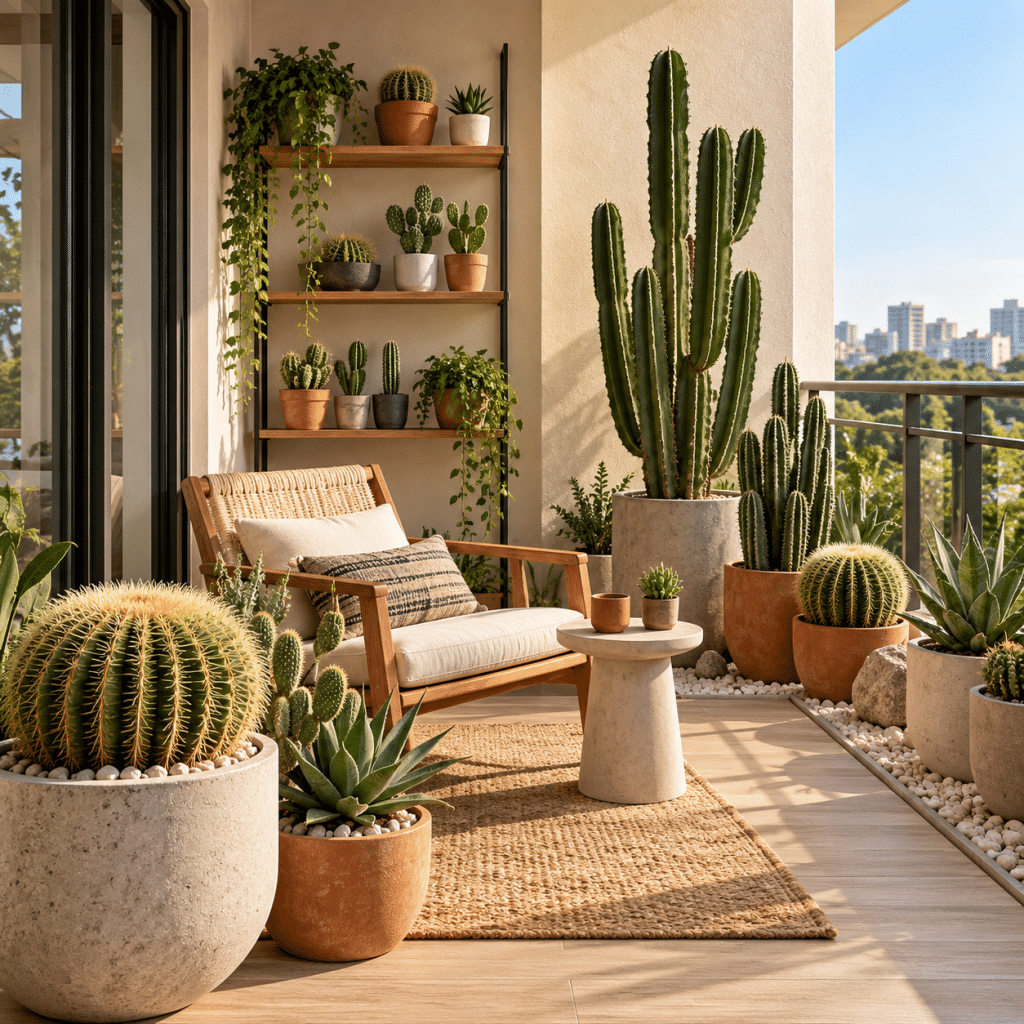
Cacti work beautifully on balconies because many varieties remain relatively compact, tolerate dry conditions, and provide architectural shapes that look decorative even when they are not flowering. Their upright stems, rounded forms, ribbed surfaces, and dramatic silhouettes can become living sculptures within a minimalist outdoor space. 🌵
Minimalist balcony gardening is also about restraint. Instead of filling every available corner with pots, the goal is to create visual breathing room. A few carefully positioned cactus plants can have far greater impact than an overcrowded collection.
The three ideas below approach cactus balcony design in very different ways. One emphasizes sculptural containers, another uses vertical space, while the third creates a cozy desert-inspired retreat. Each design can work on a small urban balcony while still feeling stylish, intentional, and highly photogenic.
Why Small Minimalist Cactus Balcony Garden Ideas Work So Well
Balconies often present several design challenges. Space is limited, sunlight can be intense, wind may be stronger than at ground level, and there is usually very little soil available. Traditional garden designs therefore do not always translate well to balconies.
Cacti naturally solve many of these problems.
Many cactus species prefer bright sunlight and dry conditions. Once properly established, they generally require less frequent watering than leafy tropical plants. This makes them particularly useful for balconies where maintaining dozens of moisture-loving plants would be difficult.
The minimalist style complements cactus plants because their shapes are already visually strong. A tall columnar cactus can function like a piece of sculpture. A round barrel cactus creates a compact architectural accent. Smaller clustering cacti add texture without creating visual clutter.
Another advantage is flexibility. Cacti can be grown in terracotta pots, concrete planters, ceramic containers, raised shelves, narrow plant stands, or wall-mounted systems.
For renters, this is particularly helpful because the entire garden can remain container-based. There is no need to permanently modify the balcony.
Minimalist design also helps the balcony feel larger. Leaving some empty floor space between planters prevents the area from appearing crowded. The eye can clearly see each plant, container, and decorative element.
🌵 The key principle is simple: fewer plants with stronger visual impact.
Best 3 Small Minimalist Cactus Balcony Garden Ideas at a Glance
| Rank | Balcony Garden Idea | Best Feature | Ideal For | Visual Style |
|---|---|---|---|---|
| 🥇 Best 1 | Sculptural Cactus Gallery | Statement cactus arrangements | Narrow modern balconies | Architectural and refined |
| 🥈 Best 2 | Vertical Cactus Balcony Wall | Maximum plants with minimal floor use | Very small balconies | Clean and space-saving |
| 🥉 Best 3 | Cozy Desert Balcony Retreat | Garden plus relaxing seating | Small lifestyle balconies | Warm and inviting |
Each design follows the same minimalist philosophy but uses space differently.
The first relies on carefully spaced sculptural plants. The second takes advantage of vertical walls. The third combines cactus planting with a comfortable seating corner.
🥇 Best 1 Small Minimalist Cactus Balcony Garden Ideas With a Sculptural Cactus Gallery
The strongest option for a modern balcony is a sculptural cactus gallery where each plant is treated almost like an outdoor art object.
Instead of collecting many tiny pots, select a small group of visually distinctive cactus varieties and place them in clean, coordinated containers.
The result can feel more like a curated design installation than a traditional container garden.
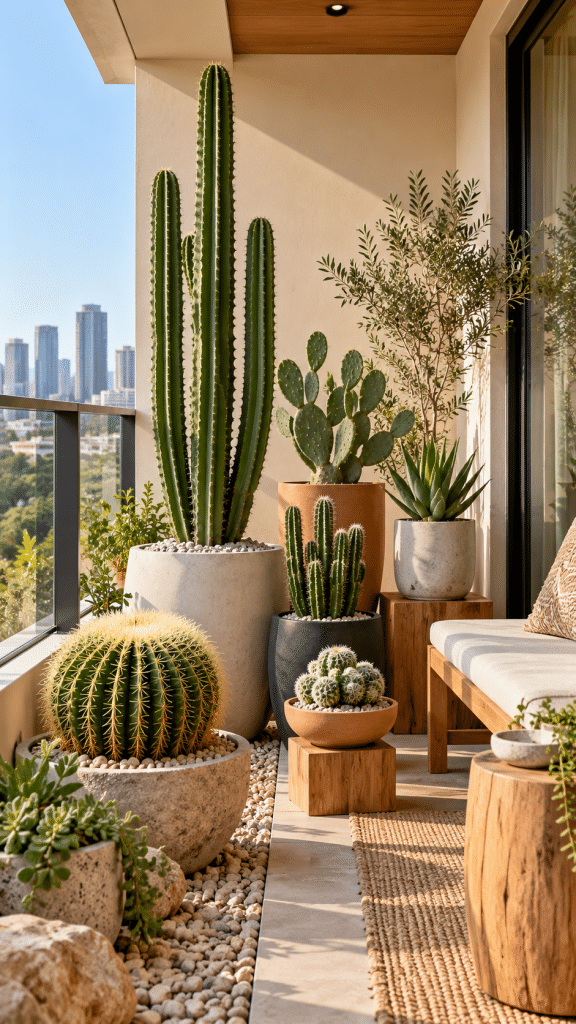
Build the Small Minimalist Cactus Balcony Garden Around Three Main Shapes
One of the easiest ways to make the garden visually interesting is to combine different cactus silhouettes.
A tall upright cactus creates vertical movement.
A rounded barrel cactus provides a strong low form.
A smaller branching or clustering cactus fills the middle layer.
Together, these shapes create a balanced composition without requiring many plants.
For example, one tall columnar cactus could become the focal point at the far end of the balcony. A medium barrel cactus could sit nearby in a low planter, while several compact cacti could be grouped closer to the seating area.
The arrangement should not be perfectly symmetrical. Slightly offsetting the pots makes the composition feel more natural while still remaining controlled.
Choose Minimalist Containers
Containers influence the appearance of a balcony garden almost as much as the plants themselves.
For a minimalist style, limit the container palette to one or two materials.
Good choices include:
- matte terracotta
- warm beige ceramic
- light concrete
- charcoal stoneware
- soft cream planters
Avoid mixing too many colors, patterns, and decorative styles.
A collection of five different colorful pots may be charming in a cottage garden, but it can make a minimalist balcony appear visually busy.
Instead, repeating similar tones creates a calm rhythm.
For example, several light concrete planters in different heights can create variation while still appearing coordinated.
Use Different Heights Instead of More Plants
Minimalist gardens become interesting through composition rather than quantity.
One effective technique is to vary planter height.
Place one cactus directly on the floor. Raise another on a simple wooden or metal stand. Position a third in a taller cylindrical planter.
This creates three visual levels without adding additional plants.
The same technique can make a narrow balcony appear deeper because the eye moves vertically rather than simply scanning across the floor.
A slim bench or plant pedestal can also support smaller pots while keeping the arrangement visually organized.
Leave Negative Space Between Planters
Empty space is an important part of minimalist design.
Avoid placing every cactus pot directly beside another. Instead, allow sections of the balcony floor to remain visible.
These gaps help each cactus silhouette stand out.
The result also makes the balcony appear larger.
A good rule is to create several small plant groups instead of one continuous row of pots.
For example:
one tall cactus near the corner,
two smaller cacti near the railing,
and one sculptural planter beside a chair.
The empty areas between these groups create visual calm.
Add a Neutral Balcony Floor
The flooring can reinforce the minimalist cactus theme.
Wooden deck tiles are one popular option because they add warmth without competing with the plants.
Light stone-look outdoor tiles also work well.
Another simple solution is a narrow outdoor rug in beige, sand, or muted gray.
Avoid highly patterned rugs if the cactus plants are intended to remain the primary visual feature.
Natural materials usually work best because cactus gardens already have a strong connection to desert landscapes.
Important Note: Always make sure cactus containers have proper drainage. Standing water around cactus roots can cause serious root problems, especially when pots are exposed to seasonal rain.
Create One Strong Focal Point
Every successful small garden benefits from one visual anchor.
For a cactus balcony, this could be the tallest plant.
A dramatic columnar cactus positioned near the balcony corner can immediately attract attention.
Surrounding plants should support the focal point rather than compete with it.
A simple wall behind the cactus can make the silhouette even stronger.
Cream, white, muted gray, or warm beige backgrounds work particularly well because the green cactus stands out clearly against them.
At night, a small warm outdoor light positioned near the base can create dramatic shadows on the wall.
The effect is subtle but highly atmospheric.
🥈 Best 2 Small Minimalist Cactus Balcony Garden Ideas With a Vertical Cactus Wall
When floor space is extremely limited, the balcony wall becomes one of the most valuable gardening surfaces.
A vertical cactus balcony garden allows several plants to be displayed while leaving most of the floor available for movement and seating.
This design works particularly well for narrow apartment balconies where traditional rows of pots would make the space difficult to use.
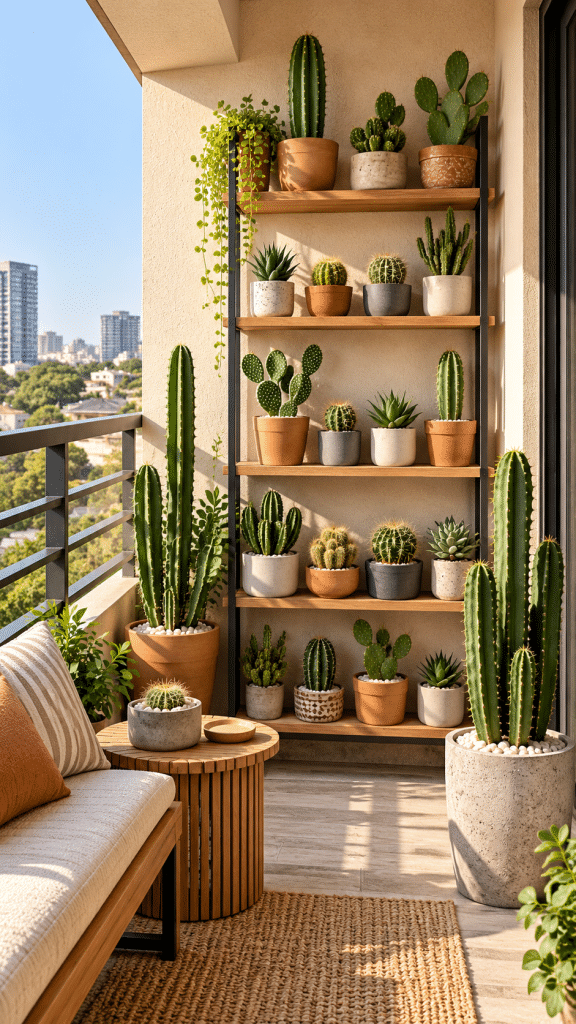
Use a Slim Vertical Plant Structure
A cactus wall does not need to cover the entire balcony.
A narrow vertical structure approximately the width of a small bookshelf can already create significant visual impact.
Possible structures include a metal plant rack, wooden ladder shelf, modular outdoor shelving system, or wall-mounted planter grid.
The goal is to keep the structure visually light.
Heavy shelves can make a small balcony feel enclosed.
Thin metal frames or narrow wooden shelves usually work better.
Place larger pots near the bottom where the structure is strongest and smaller cactus containers on the upper levels.
This creates natural visual balance.
Arrange Cacti Like a Living Gallery
Instead of filling every shelf, treat the display like a gallery wall.
Leave some shelves partly empty.
Use different cactus shapes to create contrast.
For example, one shelf might hold a single round cactus. Another could contain two small columnar varieties. A trailing succulent could soften one edge of the arrangement.
Although the focus is cactus, a few drought-tolerant companions can provide visual variety.
Good companions may include certain succulents, agave-like plants, or small drought-tolerant ornamental grasses, depending on climate and balcony conditions.
The overall palette should remain restrained.
Green plants combined with neutral containers usually create the strongest minimalist effect.
Keep the Containers Small and Consistent
A vertical cactus wall looks best when the containers have some visual relationship.
Using identical pots is one approach.
Another is to use containers in the same material but different shapes.
For example, all containers could be unglazed terracotta.
One may be cylindrical, another slightly tapered, and another bowl-shaped.
Because the material remains consistent, the arrangement still feels cohesive.
White ceramic pots can produce a more contemporary look, while dark charcoal containers create stronger contrast.
Add Gravel as a Finishing Detail
A thin layer of decorative gravel on top of the potting mix can immediately make cactus containers appear more refined.
Light beige gravel creates a soft desert appearance.
Gray stone looks more architectural.
Dark volcanic gravel produces dramatic contrast against green cactus stems.
Using the same gravel across several containers visually connects the entire arrangement.
This small detail can make inexpensive pots appear significantly more intentional.
Create a Narrow Maintenance Zone
One common mistake in vertical balcony gardening is placing plants where they become difficult to reach.
Every cactus should remain accessible for watering, pruning nearby plants, and occasional inspection.
Leave enough space in front of the vertical structure so that the plants can be safely handled.
This is especially important with spiny cactus varieties.
A long-spout watering can makes maintenance easier because water can be directed toward the soil without requiring hands to move between cactus stems.
Use the Balcony Railing Carefully
The railing can become an extension of the vertical garden.
However, it should remain visually simple.
Instead of attaching many small containers, consider using one or two long narrow railing planters.
Inside them, plant several compact cactus or succulent varieties with generous spacing.
The long horizontal line of the planter creates a pleasing contrast against the vertical shelving.
This combination can make the garden feel professionally designed.
Add Soft Lighting for Evening Atmosphere
A vertical cactus wall can become particularly attractive after sunset.
Warm LED lighting installed above or beside the display can create dramatic cactus shadows.
Avoid excessively bright lighting.
Minimalist spaces generally benefit from subtle illumination.
A small warm wall light or discreet LED strip can provide enough light to highlight the plants without turning the balcony into a brightly lit patio.
This makes the vertical garden visible from inside the apartment as well.
At night, the cactus arrangement can effectively become a living piece of wall art.
🥉 Best 3 Small Minimalist Cactus Balcony Garden Ideas With a Cozy Desert Retreat
The third design transforms the balcony into a small place for relaxation.
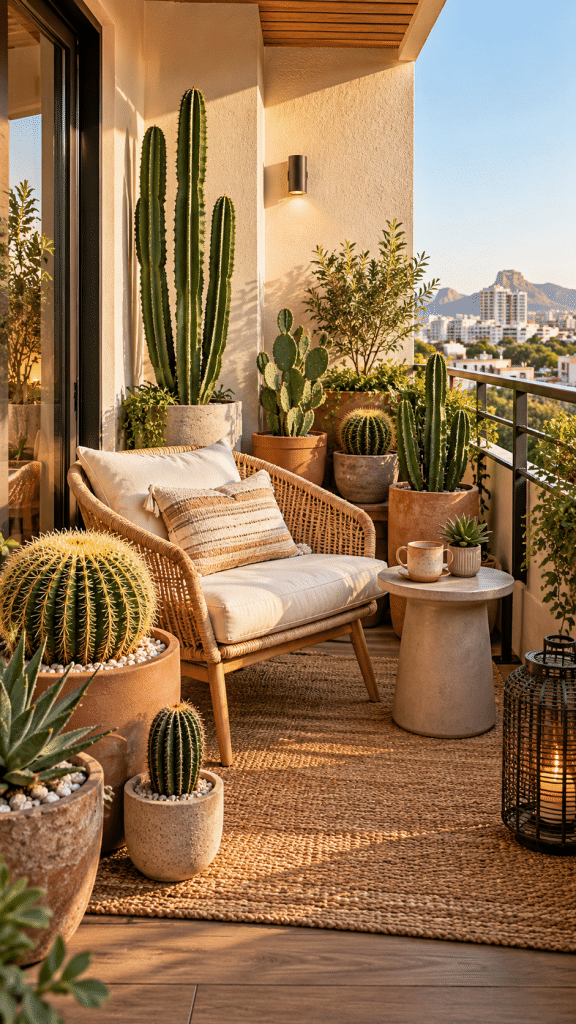
Instead of focusing entirely on plants, the cozy desert balcony retreat combines cactus gardening with compact outdoor furniture, warm materials, and a calm desert-inspired atmosphere.
This idea is ideal for anyone who wants the balcony to function as both a garden and a quiet place to sit.
Start With One Compact Seat
Furniture can quickly overwhelm a small balcony.
Rather than adding a full dining set, choose one compact chair or a narrow bench.
A simple wooden chair, woven outdoor chair, or slim metal lounge chair can work beautifully.
Position it near one side of the balcony rather than directly in the center.
This preserves circulation space.
A small side table can hold a drink, book, or candle while occupying very little floor area.
The cactus plants can then be arranged around the seating zone.
The result feels like a tiny outdoor room rather than simply a collection of pots.
Create a Desert Inspired Color Palette
Color plays an important role in this design.
A desert-inspired palette may include:
- sand
- terracotta
- warm beige
- cream
- olive green
- muted brown
- charcoal accents
These tones complement cactus plants naturally.
A beige outdoor cushion or warm woven throw can soften the seating area.
Terracotta containers can introduce earthy warmth.
Wood flooring or wooden furniture can prevent the garden from feeling too cold or architectural.
The combination creates a relaxed atmosphere without sacrificing minimalist simplicity.
Use Cactus Plants as Natural Architecture
Plants can define the seating zone.
Place a tall cactus behind or beside the chair to create vertical structure.
A medium barrel cactus can occupy the opposite corner.
Smaller pots can be grouped near the side table.
This arrangement creates a subtle enclosure around the seating area.
Instead of using large privacy screens, plants can provide a softer sense of separation.
Tall cactus silhouettes can also partially block neighboring views without completely closing the balcony.
Add One Natural Texture
Minimalism does not mean eliminating texture.
It means choosing texture carefully.
One strong natural material can make the entire balcony feel more comfortable.
A woven outdoor rug could provide texture underfoot.
Alternatively, a rattan-style chair could create visual warmth.
Another option is a lightweight wooden screen behind the plants.
Choose only one or two dominant textures rather than combining many competing materials.
This keeps the design calm.
Use Pebbles or Stone Details
Small amounts of stone can reinforce the desert garden theme.
A shallow decorative tray filled with gravel and several tiny cactus pots can become a tabletop feature.
Larger containers may be topped with pale stone.
A narrow strip of decorative gravel along one edge of the balcony can also visually separate the cactus zone from the seating area.
However, loose gravel should be contained so that it does not scatter across the balcony floor.
Shallow trays or planter boxes can provide a clean solution.
Introduce One Soft Plant for Contrast
A balcony composed entirely of sharp cactus silhouettes can sometimes feel visually rigid.
One softer plant can create contrast.
A small ornamental grass, trailing drought-tolerant plant, or compact succulent can soften the composition.
The key is restraint.
One contrasting plant is often enough.
Its flowing form will emphasize the strong cactus shapes rather than competing with them.
Create an Evening Balcony Experience
The cozy desert retreat becomes especially attractive in the evening.
Add one lantern, a small LED candle, or subtle warm string lighting.
Avoid excessive decoration.
One warm light source can create enough atmosphere.
Cactus plants cast particularly interesting shadows because their silhouettes are bold and recognizable.
The combination of warm lighting, neutral materials, and sculptural plants can make even a very small balcony feel like a private retreat.
How to Choose Cacti for a Small Minimalist Balcony Garden
Not every cactus will remain small forever.
Before purchasing a plant, consider its expected mature size.
Some columnar cactus species can eventually become very large, while others remain relatively manageable in containers.
For extremely small balconies, prioritize compact or slow-growing varieties.
Round barrel-shaped cacti are useful because they provide strong visual impact without occupying much horizontal space.
Smaller clustering cacti work well on shelves.
Columnar varieties are excellent for corners because they create height without requiring large planting areas.
It is also important to consider sunlight.
Balconies facing different directions can receive dramatically different light conditions.
A bright balcony may provide several hours of strong sunlight, while a shaded urban balcony may receive only indirect light.
Plants should therefore be selected according to the actual conditions rather than simply their appearance.
Newly purchased cacti may also require gradual adjustment to stronger sunlight.
Suddenly moving a plant from a shaded garden center into intense afternoon sun can cause stress.
How Many Plants Should a Small Cactus Balcony Garden Have
There is no fixed number, but minimalist design generally works best when the collection remains controlled.
A very small balcony may need only three to five significant plants.
A slightly larger balcony could support seven to ten plants if some are placed vertically.
The goal is not maximum plant density.
Instead, think about visual balance.
One large plant can sometimes create more impact than five tiny pots.
Grouping plants in odd numbers such as three or five often produces a natural composition.
For example, three pots in different heights can create an attractive corner arrangement.
Another group of two or three plants might sit near the railing.
The remaining floor should stay relatively open.
Best Containers for Small Minimalist Cactus Balcony Garden Ideas
Containers should support both plant health and visual style.
Terracotta remains one of the most popular materials for cactus gardening.
Its earthy appearance works naturally with desert plants, and the material can complement warm minimalist interiors.
Concrete-style pots create a more contemporary architectural appearance.
Cream ceramic planters soften the garden.
Black containers produce dramatic contrast.
Whichever material is selected, consistency matters.
Using three or four unrelated container styles can make the garden appear accidental.
Repeating a single material creates unity.
Drainage is equally important.
Containers should allow excess water to escape rather than trapping moisture around cactus roots.
Balcony gardeners should also consider weight.
Large concrete planters can become extremely heavy once filled with soil.
Lightweight containers with stone-like finishes may provide a similar appearance without unnecessary weight.
How to Make a Small Cactus Balcony Look Bigger
Visual simplicity is one of the most effective ways to make a compact balcony appear larger.
Keep the central walking area clear.
Move most plants toward edges and corners.
Use vertical shelving instead of spreading every pot across the floor.
Repeat similar colors throughout the space.
A consistent palette reduces visual fragmentation.
Mirrors can sometimes create additional visual depth, although outdoor mirrors should be positioned carefully according to local conditions and reflected sunlight.
Furniture should remain proportional to the space.
Large lounge furniture may look attractive in photographs but can quickly dominate a narrow balcony.
Slim furniture keeps the space functional.
The railing should also remain relatively open.
Completely covering it with plants can make the balcony feel smaller.
A few carefully positioned planters often create a better result.
Minimalist Decorations That Work With Cactus Gardens
Decorations should remain secondary to the plants.
A cactus garden already has strong shapes and textures.
Too many accessories can distract from them.
Suitable minimalist additions might include one small lantern, one outdoor cushion, a simple ceramic bowl, a neutral rug, or a small wooden side table.
Natural materials usually work best.
Avoid filling every surface with decorative objects.
One thoughtfully selected accessory often creates more visual impact than a collection of small ornaments.
The same principle applies to color.
If the cactus plants are vivid green and the containers are terracotta, additional colors may not be necessary.
A restrained palette allows the garden to feel calm and cohesive.
Maintaining Small Minimalist Cactus Balcony Garden Ideas
One of the greatest advantages of cactus balcony gardens is relatively simple maintenance.
However, low maintenance does not mean no maintenance.
Plants should still be checked regularly.
Observe the soil before watering.
Conditions can vary dramatically depending on season, pot size, sunlight, humidity, and airflow.
Plants exposed to strong summer heat may dry more quickly than those in mild conditions.
During rainy periods, containers may remain wet significantly longer.
Inspect plants occasionally for signs of stress or pests.
Remove dead material when necessary.
Clean dust from containers and balcony surfaces.
Minimalist gardens rely heavily on clean presentation, so small maintenance tasks can make a noticeable difference.
It is also useful to rotate certain container plants occasionally if they are leaning strongly toward the light.
This can encourage more balanced growth.
Turning a Tiny Balcony Into a Minimalist Cactus Garden
A dramatic balcony transformation does not require dozens of plants or a large budget.
Start with the basic structure.
Choose one focal cactus.
Add two or three supporting plants.
Select matching containers.
Create one comfortable place to stand or sit.
Then stop and evaluate the space before adding anything else.
Minimalist gardening often requires resisting the temptation to fill every empty area.
The empty spaces are part of the design.
They allow the plants to stand out and make the balcony feel calm.
Over time, additional plants can be introduced carefully.
However, each new element should contribute something different, whether that is height, texture, shape, or function.
If it simply duplicates what is already there, it may not be necessary.
Which of the Best 3 Small Minimalist Cactus Balcony Garden Ideas Is Right for You
The best design depends on how the balcony will be used.
The 🥇 sculptural cactus gallery is the strongest choice for people who love modern architecture and highly curated outdoor spaces.
It works beautifully when the balcony is visible from an indoor living room because the cactus silhouettes create an attractive view through the window.
The 🥈 vertical cactus wall is ideal when floor space is extremely limited.
It allows a relatively large collection of small plants to be displayed without sacrificing circulation.
This option is especially practical for narrow apartment balconies.
The 🥉 cozy desert balcony retreat is the most lifestyle-oriented option.
It combines plants with a comfortable place to sit, making the balcony useful for morning coffee, reading, or evening relaxation.
Each design can also be combined.
A balcony might feature one sculptural cactus near the railing, a small vertical shelf on the wall, and one compact chair.
The key is maintaining visual restraint.
Final Thoughts on Small Minimalist Cactus Balcony Garden Ideas
The most successful Small Minimalist Cactus Balcony Garden Ideas prove that limited outdoor space can still support impressive garden design.
Cacti are particularly well suited to this approach because their bold shapes create visual interest without requiring large planting areas. A single columnar cactus can provide height. A barrel cactus can become a sculptural focal point. Several smaller plants can add detail without overwhelming the balcony.
The 🥇 Sculptural Cactus Gallery offers the cleanest and most architectural appearance.
The 🥈 Vertical Cactus Balcony Wall makes excellent use of limited floor space.
The 🥉 Cozy Desert Balcony Retreat combines minimalist planting with comfortable outdoor living.
Regardless of the style, the most important principle remains the same: choose fewer elements and make every one of them intentional.
A handful of carefully positioned cactus plants, coordinated containers, neutral materials, and generous empty space can completely change the character of a tiny balcony.
Instead of seeing a small balcony as a limitation, treat it as an opportunity to create a compact garden where every detail matters. 🌵✨