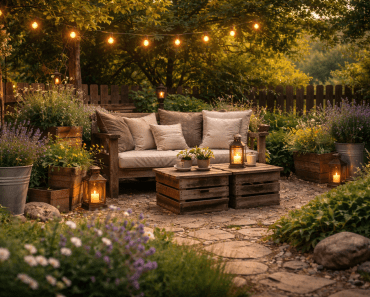
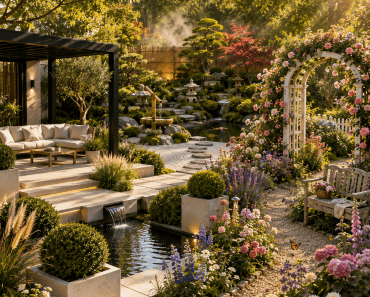
A Mexican backyard can transform even a simple outdoor area into a warm, colorful, and welcoming retreat filled with texture, character, plants, handcrafted details, and places designed for relaxed gatherings. Instead of relying on a single decorative theme, the most beautiful Mexican-inspired backyards usually combine architecture, nature, handmade materials, bold colors, shade, and comfortable seating into one cohesive outdoor environment.
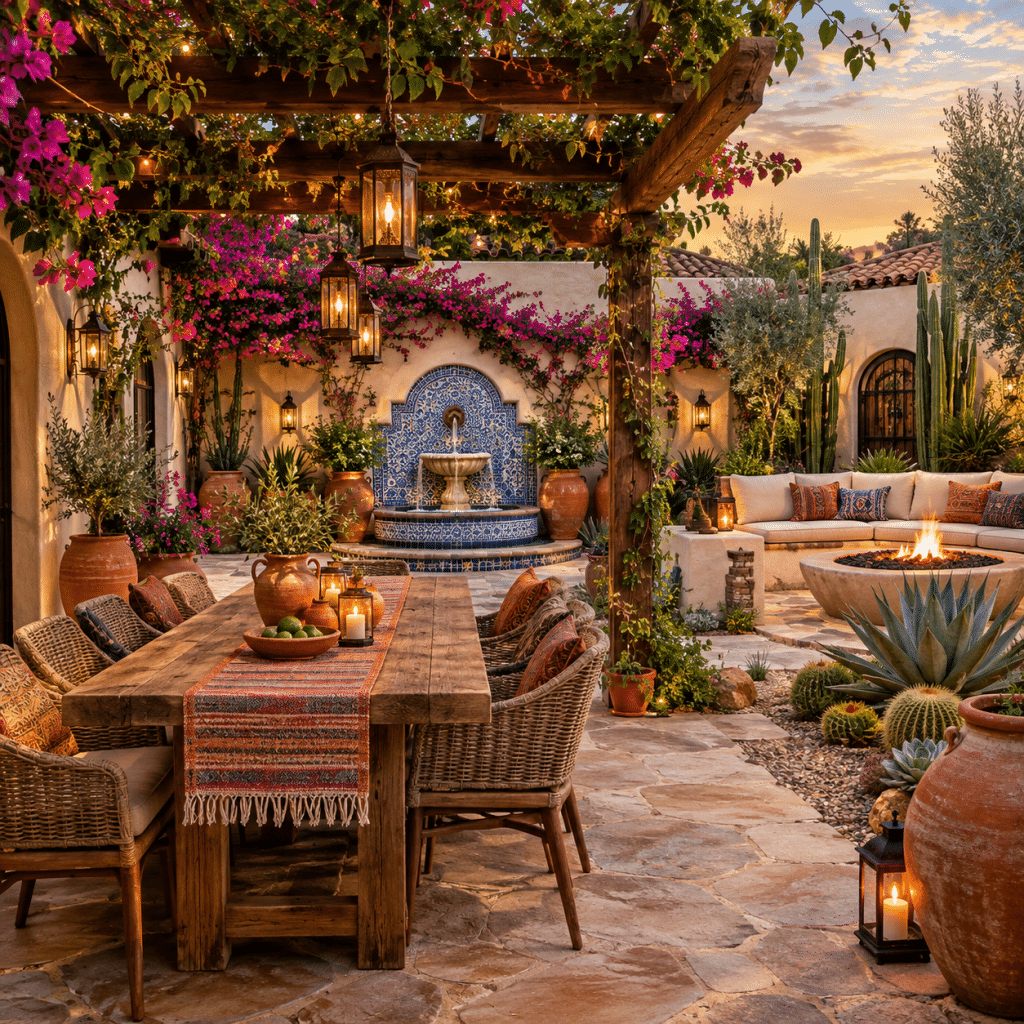
What makes this style especially appealing is its ability to feel both lively and peaceful at the same time. Terracotta pots, patterned tiles, stucco walls, rustic wood, colorful textiles, flowering plants, lanterns, and shaded corners can create an atmosphere that feels collected rather than overly designed. 🌵
A successful design also does not require a huge yard. A compact courtyard, small patio, narrow urban garden, or modest suburban backyard can all capture the same spirit when the right materials and visual layers are used.
The following Best 3 Mexican backyard ideas explore three different approaches: a colorful courtyard retreat, a rustic hacienda-inspired garden, and a lush desert oasis designed for evening entertaining.
Why Mexican Backyard Design Feels So Inviting
Mexican-inspired outdoor spaces are memorable because they often celebrate contrast.
A simple cream stucco wall may sit behind vibrant bougainvillea. Weathered wood may appear beside glossy patterned tiles. Rough stone can be softened with woven cushions and flowering plants. Deep green foliage may be framed by burnt orange terracotta pots.
These contrasts prevent the space from feeling flat.
Instead of decorating every corner equally, a strong Mexican backyard often has several focal areas. One corner may feature a tiled fountain. Another may contain a shaded dining table. A sunny wall may support flowering vines, while a quiet corner becomes a lounge with built-in seating.
This layered composition creates discovery.
The garden feels more interesting as people move through it because each area reveals a slightly different combination of color, texture, planting, and function.
There is also a strong connection between indoor and outdoor living. Doors, patios, courtyards, verandas, and garden rooms often visually blend together. This makes the backyard feel like an extension of the home rather than a completely separate landscape.
Best 3 Mexican Backyard Ideas at a Glance
Choosing the right direction becomes easier when each design concept is compared side by side.
| Mexican Backyard Idea | Best For | Main Materials | Color Palette | Key Feature |
|---|---|---|---|---|
| 🥇 Colorful Courtyard Retreat | Small to medium patios and enclosed yards | Talavera-style tile, stucco, terracotta, wrought iron | Cobalt blue, turquoise, burnt orange, cream | Tiled fountain and built-in seating |
| 🥈 Rustic Hacienda Garden | Medium to large family backyards | Stone, timber, clay tile, plaster, iron | Warm beige, rust, olive, charcoal | Outdoor dining and pergola |
| 🥉 Desert Oasis Entertaining Yard | Sunny modern backyards | Gravel, cactus, stone, timber, clay pots | Sand, sage, terracotta, deep green | Fire feature and cactus planting |
Each of these approaches can be adapted to different budgets and garden sizes.
The key is not copying every decorative element associated with Mexican style. Instead, choose a clear foundation and repeat a small number of materials and colors throughout the backyard.
🥇 Best 1 Mexican Backyard With a Colorful Courtyard Retreat
A colorful courtyard is one of the most recognizable ways to create a Mexican-inspired outdoor space.
This design works especially well when the backyard already has walls, fences, or buildings surrounding it. These boundaries create the feeling of an intimate courtyard and provide surfaces for color, plants, lighting, and decorative features.
The goal is to create a protected outdoor room rather than an open lawn.
A courtyard can feel dramatic without being large because the design focuses more on vertical surfaces and detailed focal points than on expansive space.
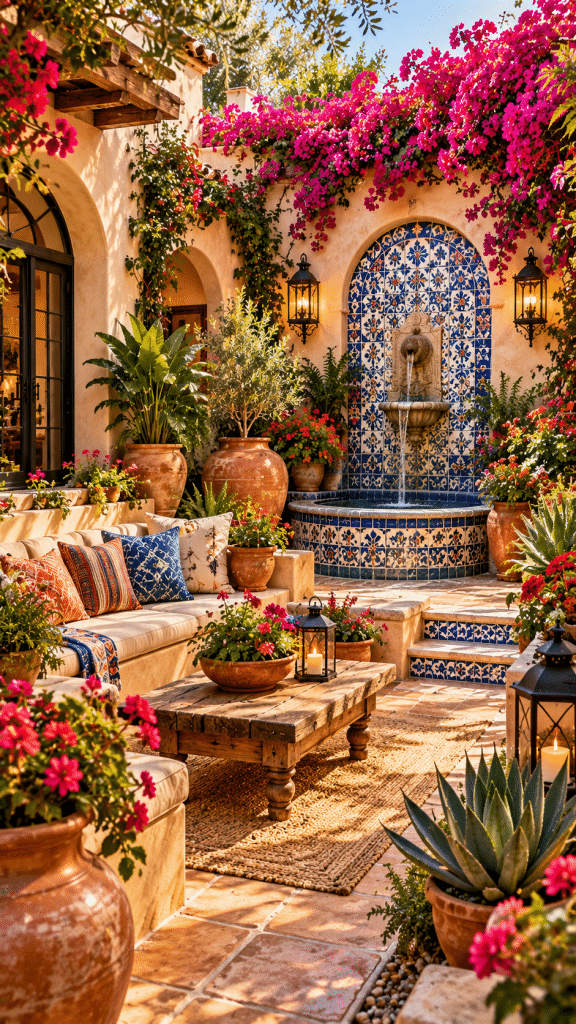
Start the Mexican Backyard With Warm Stucco Walls
Walls establish the atmosphere immediately.
Warm ivory, creamy white, sandy beige, faded peach, or earthy terracotta can create the ideal background for colorful garden details. A neutral wall also allows plants and tiles to become more visually prominent.
Perfectly smooth modern walls are not always necessary.
A slightly textured plaster finish can actually make the courtyard feel richer because subtle imperfections create natural shadows throughout the day.
One accent wall can also carry a deeper color.
Muted turquoise, ochre, burnt orange, dusty coral, or cobalt blue can work beautifully when surrounded by more neutral surfaces.
However, using intense color on every wall can overwhelm a small backyard.
A stronger result usually comes from balancing one bold area with several calmer surfaces.
Make Decorative Tile the Main Visual Feature
Patterned tile can instantly define the character of a Mexican courtyard.
Instead of covering the entire backyard with decorative tile, use it strategically.
A tiled fountain, stair riser, planter edge, outdoor counter, wall niche, or bench front can become an architectural focal point without making the space look overly busy.
Blue and white tile is a classic choice, but it is not the only option.
Patterns containing mustard yellow, terracotta, emerald, turquoise, rust, and deep cobalt can introduce even more visual energy.
Repeating one or two colors from the tile elsewhere creates cohesion.
For example, cobalt details in the tile could be echoed through ceramic pots or cushions. Terracotta tones might appear again in clay planters and floor pavers.
This repetition makes a colorful backyard feel intentional rather than random.
Add a Small Fountain as the Courtyard Hero
Water introduces movement, reflection, and relaxing sound.
A small wall fountain often works better than a huge centerpiece because it leaves more room for seating and planting.
Place the fountain against an accent wall where it can be seen from the main sitting area.
Surround it with potted plants or a narrow planting bed.
Fern-like greenery, trailing vines, flowering plants, and large leaves can soften the hard edges around the fountain.
A decorative tiled basin beneath a simple stone or metal spout can become enough of a statement on its own.
At night, one subtle wall light near the fountain can create beautiful reflections without requiring complicated landscape lighting.
💧 The sound of moving water can also help disguise distant traffic or neighborhood noise.
Create Built In Seating With Colorful Cushions
Built-in benches are particularly effective in smaller courtyards because they maximize usable seating while keeping the center of the patio open.
A stucco bench built against a wall can be topped with deep cushions in warm neutral colors.
Then add smaller accent pillows in patterns inspired by traditional woven textiles.
Consider combinations such as:
- burnt orange and cream
- cobalt and white
- mustard and terracotta
- olive and rust
- turquoise and faded coral
The furniture should feel comfortable rather than formal.
A low rustic coffee table or ceramic side table can complete the lounge area.
Avoid filling every available surface with patterns.
If the cushions are highly patterned, keep nearby planters or furniture comparatively simple.
This creates visual breathing room.
Use Terracotta Pots in Layered Heights
Terracotta is one of the easiest materials for introducing warmth.
Instead of using identical pots in a straight row, create clusters.
Combine tall floor planters, medium pots, shallow bowls, and smaller containers.
The slight variation in clay color and weathering adds character.
Large pots can anchor architectural plants such as agave, citrus, olive, yucca, or palm-like species appropriate for the local climate.
Smaller pots can hold herbs, geraniums, flowering annuals, succulents, or trailing plants.
Repeating terracotta throughout the courtyard naturally connects areas that otherwise contain different colors.
Let Bougainvillea or Flowering Vines Frame the Walls
Flowering vines can dramatically soften a courtyard.
Bougainvillea is particularly iconic because its vivid flowers contrast beautifully against pale walls.
However, suitable climbing plants should always be chosen according to local climate conditions.
A flowering vine can be trained across a simple wooden trellis, pergola beam, or metal support.
Allowing some branches to develop a slightly informal shape often creates a more romantic atmosphere than excessively rigid pruning.
The aim is controlled abundance.
Plants should soften the architecture without completely hiding it.
🥈 Best 2 Mexican Backyard With a Rustic Hacienda Garden
The second approach feels larger, earthier, and more architectural.
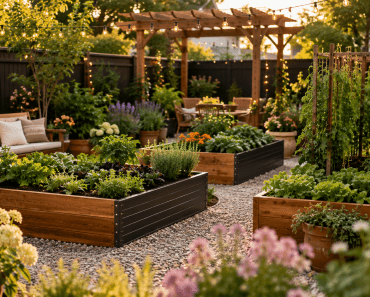
A rustic hacienda-inspired Mexican backyard works beautifully when the garden needs to support family meals, entertaining, and everyday outdoor living.
Instead of bright color being the dominant feature, this style relies heavily on natural materials.
Stone, heavy timber, clay roof tiles, plaster, aged metal, gravel, and terracotta work together to create a sense of permanence.
The backyard should look like it has gradually evolved over time.
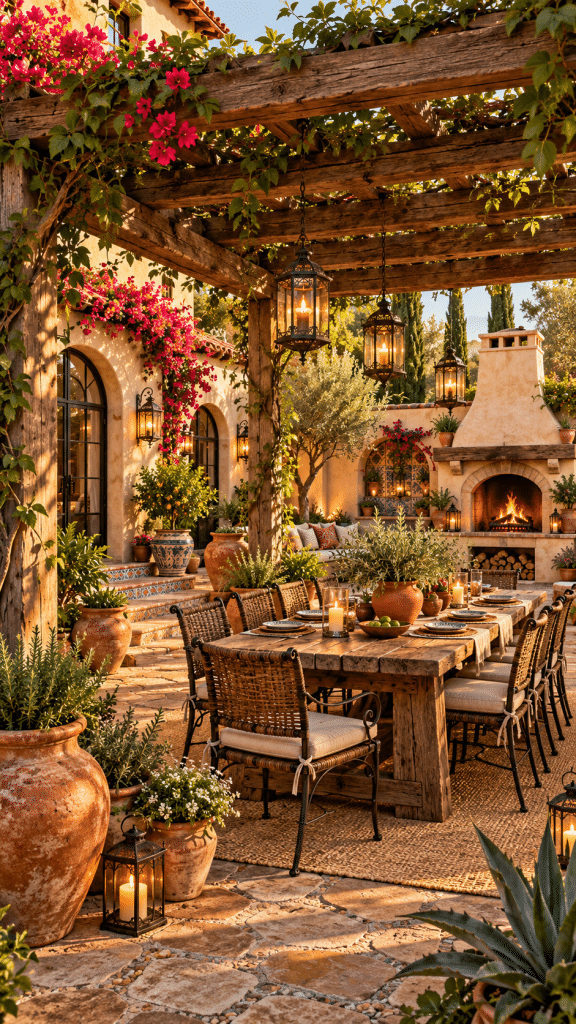
Build the Design Around a Shaded Pergola
Shade is one of the most important components of a comfortable outdoor living area.
A heavy timber pergola immediately establishes the rustic character of the backyard.
Thick wooden beams can remain natural, be lightly stained, or receive a weathered finish.
Climbing plants can be introduced gradually across the structure.
Grapevines, flowering climbers, or leafy vines can soften the pergola and create changing patterns of sunlight underneath.
For more reliable shade, woven reed panels, outdoor fabric, or another weather-appropriate material can be added above the beams.
The structure should ideally cover the main dining area.
This makes the pergola both beautiful and functional.
Make the Dining Table the Heart of the Mexican Backyard
Mexican-inspired outdoor spaces are naturally suited to gathering.
A large rustic dining table can become the central social feature.
Look for solid wood with visible grain rather than polished furniture that feels too formal.
Wrought iron chairs, timber chairs, or mixed seating can create an informal collected appearance.
A long table works particularly well beneath a pergola because it reinforces the architectural lines of the structure.
Simple decorative elements are often enough.
A few clay bowls, candles, woven placemats, or small flower arrangements can make the table inviting without creating clutter.
The surrounding setting should do most of the visual work.
Use Natural Stone Underfoot
Stone flooring can dramatically change the atmosphere of a garden.
Irregular stone, warm limestone, brick, clay pavers, or rustic concrete surfaces all work better than highly polished flooring for this style.
Subtle imperfections help the space feel grounded.
If replacing the entire patio is unrealistic, stone can be introduced selectively.
Create a stone dining terrace surrounded by gravel or planting.
Use pavers for a pathway.
Add a stone border around a garden bed.
Even small sections can make the backyard feel more established.
Earthy ground surfaces also coordinate naturally with terracotta pots and timber furniture.
Add a Rustic Outdoor Fireplace or Cooking Area
Fire can turn a simple patio into a memorable evening destination.
A stucco outdoor fireplace can become a dramatic focal wall.
Its shape does not need to be complicated.
A simple chimney form with a generous fire opening often feels more timeless than highly decorative architecture.
Terracotta pots and lanterns can be arranged nearby.
Another option is creating a rustic outdoor cooking station with a masonry counter and clay or tile details.
The cooking area should visually connect with the house while still feeling like part of the garden.
Important Note: Outdoor fireplaces, grills, fire pits, chimineas, and built-in cooking areas should always follow local fire regulations, required clearances, ventilation rules, and manufacturer guidance. Keep combustible furniture, dry plants, fabrics, timber structures, and overhanging branches at safe distances.
Introduce Iron Details Without Making the Yard Feel Heavy
Wrought iron is useful for adding contrast.
A black or dark bronze finish stands out against plaster and warm stone.
Iron can appear through chairs, lantern brackets, gates, trellises, small tables, or decorative window-style panels.
The key is moderation.
Too much iron can make an outdoor area feel visually cold.
Pair it with warm materials such as timber, terracotta, natural fiber, plaster, and plants.
For example, a dark iron chair becomes much more inviting when paired with a woven seat cushion and surrounded by flowering pots.
Use Earthy Colors Instead of Bright Colors Everywhere
A rustic hacienda-style garden does not need intense color across every surface.
Its palette can remain understated:
🤎 terracotta
🌿 olive green
🪨 warm beige
🧱 faded brick
🖤 charcoal
🤍 aged cream
Stronger colors can appear through small accents.
A cobalt ceramic pot or turquoise tile panel can become more dramatic when surrounded by neutral tones.
This approach also makes the backyard easier to update later because cushions and accessories can change without rebuilding the main design.
Create Small Destination Areas Around the Garden
Large yards often feel empty when all the furniture is placed directly beside the house.
Instead, create destinations.
A bench beneath a tree can form one destination.
A small fountain can create another.
A pair of chairs beside a flowering wall might form a quiet morning coffee area.
A raised planter or citrus tree can anchor another corner.
Paths can subtly connect these spaces.
The garden then becomes an experience rather than a single patio surrounded by unused lawn.
This layered arrangement is especially effective for hacienda-inspired design because it reinforces the feeling of an established property with multiple outdoor rooms.
🥉 Best 3 Mexican Backyard With a Desert Oasis for Evening Entertaining
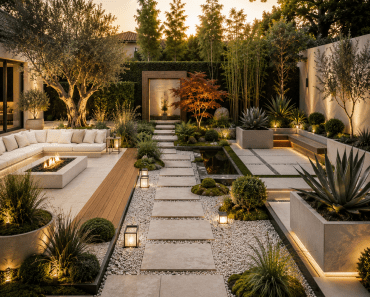
The third idea combines Mexican inspiration with a cleaner desert-garden aesthetic.
This is an excellent option for homeowners who prefer fewer decorative objects and stronger sculptural planting.
Rather than creating a densely planted garden, use negative space.
Gravel, stone, sandy surfaces, large clay planters, cactus forms, agave, timber, and warm lighting can produce an outdoor environment that feels dramatic but uncluttered.
🌵 The result can be particularly beautiful during sunset and evening gatherings.
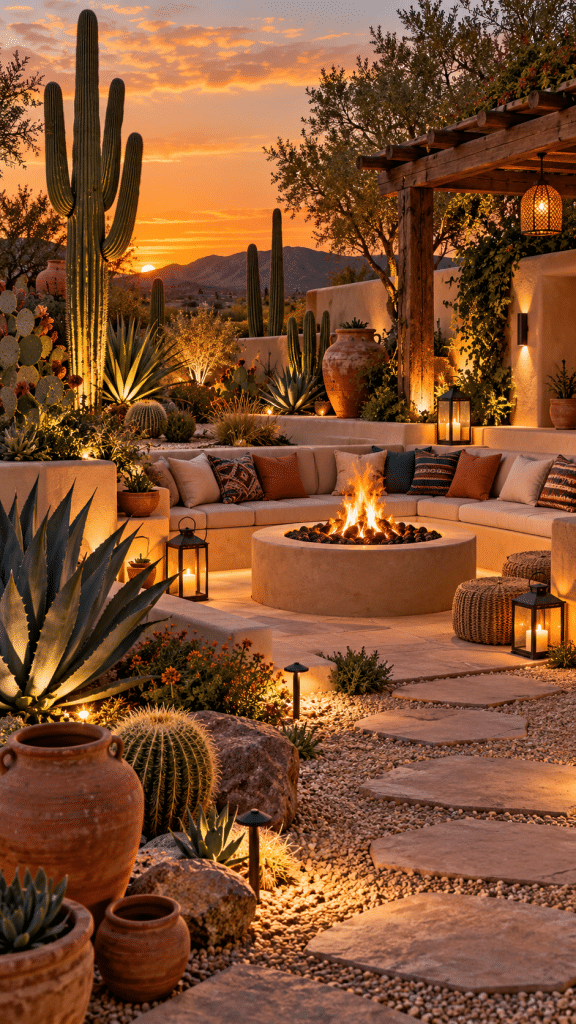
Make Sculptural Plants the Main Decoration
Plants with strong silhouettes become especially important in desert-inspired design.
Agave, yucca, cactus species, aloe, ornamental grasses, and other drought-tolerant plants can create architectural shapes.
Climate suitability matters.
Choose plants that perform well in local conditions rather than selecting species purely for appearance.
Grouping is also important.
One large agave surrounded by smaller plants often creates more impact than many unrelated specimens scattered throughout the yard.
Use repetition.
The same plant species can appear in several places at different sizes.
This creates rhythm and prevents the landscape from feeling chaotic.
Combine Gravel With Large Stone Pavers
A full lawn is not necessary.
Gravel can create attractive negative space around planting islands.
Large rectangular or irregular pavers can form paths through the gravel.
Warm gray, sand, beige, and muted brown surfaces work particularly well with terracotta and green plants.
Use changes in texture to define zones.
A lounge area might use large stone slabs, while nearby planting beds use gravel.
The variation becomes decorative even without additional ornaments.
A crisp edge between surfaces helps the design feel intentional.
Create a Sunken or Defined Lounge Area
An evening lounge should feel protected from the rest of the yard.
This can be achieved through a slightly sunken terrace, a low masonry wall, large planters, or carefully positioned planting.
Comfortable low seating can be arranged around a central table or fire feature.
Neutral upholstery works well because the surrounding plants and materials already provide texture.
Use cream, tan, muted rust, olive, or warm gray cushions.
A few patterned pillows can provide a subtle Mexican influence.
Keep the overall arrangement spacious enough that guests can move comfortably around the seating.
Add a Fire Feature as the Main Evening Focal Point
Few elements create atmosphere as quickly as fire.
A simple round fire bowl can work beautifully in a modern Mexican-inspired backyard.
Another option is a low masonry fire pit finished in stucco or stone.
The design should echo other materials already used in the yard.
For example, a warm plaster fire surround can coordinate with a garden wall.
A dark metal bowl can connect visually with black window frames or iron furniture.
The area around the fire should remain visually simple.
Let the movement of the flame become the main decorative feature after dark.
Use Warm Lighting Instead of Extremely Bright Lighting
Lighting can determine whether a backyard feels romantic or harsh at night.
Avoid relying on one powerful floodlight.
Instead, layer several softer sources.
Wall sconces can illuminate stucco surfaces.
Low landscape lights can highlight agave or cactus silhouettes.
Lanterns can define seating areas.
String lights can create a festive atmosphere beneath a pergola.
Warm light usually complements terracotta, timber, and beige stone better than cool blue-white light.
The objective is not to illuminate every corner.
Some areas should remain shadowed.
Those darker sections create depth and make highlighted plants or architectural elements appear more dramatic.
Bring in Clay Pottery and Handmade Details
Even a minimalist desert yard benefits from a few handcrafted elements.
A large clay urn can become a focal point.
A ceramic bowl can sit on an outdoor table.
A tiled side table can introduce pattern without dominating the composition.
Handmade objects are especially effective because minor variations in texture and shape add authenticity.
Do not spread dozens of accessories throughout the garden.
Instead, use fewer but larger pieces.
One substantial clay vessel beside an agave can create more impact than a collection of tiny decorative items.
How to Choose the Best Mexican Backyard Style for Your Space
The best design depends on architecture, available space, climate, maintenance preferences, and how the backyard will actually be used.
A small enclosed patio often benefits from the courtyard approach.
Vertical walls provide opportunities for tile, fountains, climbing plants, lanterns, and built-in seating.
A larger yard intended for frequent gatherings may benefit more from a rustic hacienda arrangement with a pergola and central dining table.
Meanwhile, an open sunny yard can suit a desert oasis particularly well.
The landscape becomes simpler to maintain while still feeling visually distinctive.
Think about daily routines before choosing decorative elements.
If the family regularly eats outdoors, dining deserves priority.
If the backyard is mainly used at night, invest more heavily in lighting and comfortable lounge seating.
If gardening is the main interest, allocate more room for planted borders and containers.
A beautiful backyard should support everyday life rather than only look good in photographs.
Essential Materials for a Mexican Backyard
A strong material palette can make the entire design feel cohesive.
Terracotta
Terracotta introduces natural warmth almost instantly.
It works in both colorful and minimalist settings.
Pots do not need to match perfectly.
Slight variation can actually increase charm.
Large weathered pots positioned near walls or entrances often provide greater visual impact than many small containers.
Decorative Tile
Tile should usually be treated as a highlight.
Use it where people will notice it.
A stair riser, fountain wall, bench edge, outdoor kitchen backsplash, or table surface can become enough.
Repetition is more important than quantity.
A small amount of the same tile appearing in two or three places can connect the entire backyard.
Rustic Timber
Wood adds softness to areas dominated by stucco and stone.
It can appear in pergolas, dining tables, gates, benches, shelving, or screens.
Natural grain helps the space feel relaxed.
Avoid using too many different wood tones.
Repeating a similar warm timber shade produces a more cohesive result.
Stucco and Plaster
Stucco is useful for walls, benches, raised planters, fireplaces, and outdoor counters.
Its simplicity allows decorative objects and plants to stand out.
Warm off-white tones are particularly versatile.
They create contrast with greenery while reflecting light around darker courtyards.
Wrought Iron
Iron provides strong visual lines.
Dark finishes work especially well beside pale plaster.
Use iron for details rather than covering the entire backyard with metal furniture.
When paired with plants and textiles, it adds elegance without becoming severe.
Mexican Backyard Planting Ideas
Plants play a major role in creating the atmosphere.
However, the ideal plant selection varies dramatically by climate.
Instead of attempting to reproduce a garden from a different region exactly, focus on plant shapes, colors, and functions.
Use Architectural Plants
Plants with bold forms work well near entrances and focal walls.
Agave-like rosettes, yucca forms, palms, large succulents, and sculptural shrubs can establish strong silhouettes.
They become living pieces of architecture.
Add Flowering Color
Mexican-inspired gardens often look especially beautiful when warm walls are contrasted with vivid flowers.
Consider flowering vines, container plants, shrubs, or seasonal flowers suited to the local climate.
Magenta, coral, yellow, orange, and red can create vibrant highlights.
Balance these colors with generous areas of green foliage.
Include Fragrant Plants
Scent adds another layer to the backyard experience.
Herbs and fragrant flowering plants near seating areas can make outdoor spaces more enjoyable.
Place aromatic plants where people naturally pass them.
A walkway, stair, dining area, or patio edge works well because foliage may release fragrance when brushed lightly.
Grow Citrus or Small Fruit Trees Where Appropriate
A potted citrus tree can bring height, greenery, and fruit into a courtyard.
Its glossy foliage also looks attractive beside terracotta.
Other compact edible trees may work depending on climate.
Place larger specimens strategically so they provide structure rather than blocking pathways.
A single beautiful tree can become a focal point.
How to Make a Small Mexican Backyard Feel Bigger
A small backyard should not contain miniature versions of dozens of features.
That usually makes the space feel even smaller.
Instead, choose a few substantial elements.
A large planter, one built-in bench, a decorative wall, and one beautiful table may be enough.
Large-scale pieces can actually make a compact area feel calmer.
Another useful technique is vertical planting.
Climbers, wall-mounted planters, tall pots, and narrow trees add greenery without occupying too much floor space.
Mirrors can occasionally work in protected outdoor locations, although they must be positioned carefully because reflected sunlight can become problematic.
Repeating the same flooring throughout the patio can also visually enlarge it.
Excessive changes in surface material divide small spaces into too many fragments.
How to Create Mexican Backyard Color Without Making It Look Busy
Color is one of the most exciting parts of this style, but restraint still matters.
Start with a dominant neutral.
Cream stucco, beige stone, warm concrete, or natural timber can provide a foundation.
Then choose two or three accent colors.
For example:
Palette One: cream + cobalt + terracotta
Palette Two: sand + turquoise + rust
Palette Three: warm white + olive + burnt orange
Palette Four: beige + mustard + faded coral
Repeat those colors in several areas.
If cobalt appears on a fountain, it might appear again in a planter and one cushion.
This creates visual rhythm.
Patterns should follow the same principle.
A heavily patterned tile wall may pair best with solid-colored cushions.
A simple stucco backdrop allows more elaborate textiles.
The goal is balance.
Budget Friendly Mexican Backyard Ideas
Creating the atmosphere does not require rebuilding the entire landscape.
Start with paint.
Updating one wall to a warm creamy color or terracotta tone can completely change the background.
Next, introduce several substantial terracotta pots.
Fill them with dramatic plants and group them together.
Replace a few cushions with woven or patterned textiles.
Add lanterns or warm outdoor lighting.
A small tiled tabletop can provide pattern without requiring expensive construction.
Even a plain concrete patio can become more interesting when softened with rugs, planters, furniture, and foliage.
Focus the budget on highly visible areas.
The main seating zone is more important than a distant corner rarely used.
Common Mexican Backyard Design Mistakes to Avoid
One common mistake is turning the backyard into a collection of themed decorations.
Mexican-inspired design becomes stronger when architecture, texture, landscape, and function lead the design.
Decorative objects should support the atmosphere rather than create it alone.
Another mistake is using too many intense colors.
Color needs quieter surfaces around it.
Without neutral areas, even beautiful tiles and textiles can compete with each other.
Plant overcrowding can also become a problem.
Allow mature plants enough room to develop.
A garden may look slightly sparse immediately after installation but become beautifully balanced later.
Finally, do not forget comfort.
Beautiful iron chairs are not useful if no one enjoys sitting in them.
Shade, cushions, circulation space, practical tables, lighting, and weather protection matter just as much as style.
Bringing the Best 3 Mexican Backyard Ideas Together
The strongest backyard may actually combine elements from all three ideas.
A courtyard could contain a rustic timber pergola.
A hacienda-style dining area could include a modern desert planting bed.
A minimalist cactus garden could feature one highly decorative tiled fountain.
The secret is maintaining consistency.
Choose a limited set of materials and repeat them.
Terracotta can appear in several areas.
One tile pattern can appear on both a fountain and table.
The same timber finish can connect the pergola with a bench.
Warm wall colors can continue from one outdoor room to another.
These repeated details make different ideas feel like part of one intentional landscape.
Final Thoughts on the Best 3 Mexican Backyard Ideas
A memorable Mexican backyard is not created by adding as many colorful objects as possible. Its character comes from the relationship between architecture, plants, shade, materials, craftsmanship, comfortable gathering areas, and carefully chosen decorative accents.
🥇 A colorful courtyard retreat is ideal for creating an intimate outdoor room filled with tile, terracotta, flowering vines, built-in seating, and a small fountain.
🥈 A rustic hacienda garden works beautifully for larger outdoor spaces where dining, pergolas, timber, stone, plaster, and warm earthy materials can establish a relaxed family gathering area.
🥉 A desert oasis entertaining yard offers a cleaner approach using sculptural plants, gravel, stone, warm lighting, clay pottery, and a dramatic fire feature.
Each design can look completely different while still capturing the warmth and expressive character associated with Mexican-inspired outdoor living.
The most effective approach is to begin with one strong focal feature and build outward gradually. A fountain, pergola, dining terrace, sculptural plant grouping, fireplace, or built-in bench can become the foundation.
From there, layered plants, lighting, handmade materials, warm colors, and comfortable furniture can turn an ordinary backyard into a vibrant outdoor escape that feels welcoming from morning until late evening. 🌵✨