Few flowering plants can transform an outdoor space as dramatically as roses. Their layered petals, rich fragrance, elegant stems, and incredible range of colors can make even a simple garden feel romantic and carefully designed. However, beautiful roses rarely happen by accident. Successful Rose Gardening and Care depends on understanding what roses need below the soil, how they respond to watering and feeding, and how regular pruning and maintenance influence the number and quality of their blooms.
The good news is that growing impressive roses does not have to be complicated. Instead of treating rose care as a long list of difficult gardening rules, it is much easier to focus on a few practices that deliver the biggest results. Healthy soil, consistent maintenance, and smart pruning can make an enormous difference in how vigorously roses grow throughout the season. 🌹
Whether the goal is to grow one beautiful rose beside a patio or create an entire border overflowing with flowers, the same basic principles apply. Roses perform best when their roots are supported, their foliage has enough light and airflow, and their growth is managed rather than ignored.
This guide focuses on the Best 3 Rose Gardening and Care ideas that can help create stronger plants, richer foliage, longer flowering periods, and a garden filled with beautiful roses season after season.
🌹 Why Rose Gardening and Care Makes Such a Big Difference
Roses are often described as demanding plants, but that reputation is only partly deserved. Many modern rose varieties are surprisingly resilient when planted in suitable conditions. Problems usually appear when several small issues combine, such as insufficient sunlight, poorly draining soil, irregular watering, overcrowded stems, or neglected pruning.
Good rose care is therefore less about constant attention and more about creating the right environment from the beginning.
A rose planted in fertile soil with adequate drainage can establish stronger roots. Stronger roots allow the plant to absorb water and nutrients more efficiently. Better nutrition supports healthier stems and foliage, while healthy foliage allows the plant to produce the energy needed for abundant flowers.
🌿 This creates a simple cycle:
Healthy soil supports healthy roots
Healthy roots support vigorous foliage
Healthy foliage supports abundant blooms
Understanding this relationship is one of the most valuable lessons in rose gardening.
It also explains why gardeners should avoid focusing only on the flowers. The most beautiful roses usually come from plants that have been cared for as complete living systems rather than decorative flowering objects.
Quick Rose Gardening and Care Guide
Different aspects of rose care work together throughout the growing season. This simple guide provides an overview of the main requirements.
| Rose Care Element | Best Practice | Why It Matters |
|---|---|---|
| ☀️ Sunlight | Around 6 or more hours of direct sunlight | Encourages strong growth and flowering |
| 🌱 Soil | Fertile well draining soil rich in organic matter | Supports healthy root development |
| 💧 Watering | Deep watering at the root zone | Encourages deeper and stronger roots |
| 🌿 Mulching | Apply organic mulch around the plant | Helps retain moisture and suppress weeds |
| ✂️ Pruning | Remove weak damaged and overcrowded stems | Improves airflow and encourages new growth |
| 🌸 Deadheading | Remove faded flowers regularly | Helps encourage repeat flowering |
| 🍃 Feeding | Use balanced rose fertilizer during active growth | Supports foliage and flower production |
| 🌬️ Airflow | Maintain space around stems and foliage | Helps reduce disease pressure |
These practices do not need to be performed every day. Instead, each one becomes part of a seasonal routine that gradually creates stronger and more productive rose plants.
🥇 Best 1 Rose Gardening and Care With Healthy Soil and Strong Roots
The most beautiful rose garden begins underground.
Before thinking about flower color, pruning techniques, or garden design, it is worth paying attention to the soil surrounding the roots. Roses are long-lived plants, and their ability to thrive for many years depends heavily on establishing a strong root system.
When the soil structure is right, rose roots can spread comfortably through the ground, accessing moisture, oxygen, and nutrients. When soil is compacted or constantly waterlogged, roots struggle to perform those essential functions.
Healthy soil should feel loose enough for roots to penetrate while still retaining enough moisture to prevent the plant from drying out too quickly.
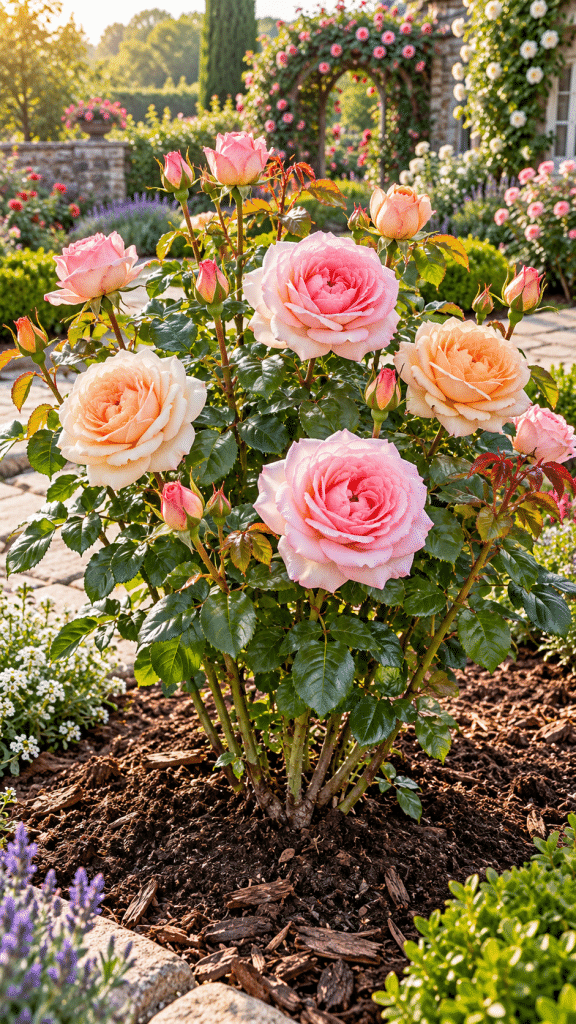
Choose the Right Location Before Planting Roses
Selecting the right planting position can prevent many problems before they begin.
Most roses prefer an open location receiving generous sunlight. Around six hours of direct sunlight is commonly considered a useful target, although requirements can vary depending on climate and rose variety.
Morning sunlight can be particularly valuable because it helps dry dew and moisture from the foliage. Leaves that remain wet for extended periods may become more vulnerable to fungal problems.
Air movement is also important.
A rose planted tightly between dense shrubs or directly against an enclosed wall may experience poor airflow. The plant might still grow, but humid air trapped around the leaves can create conditions that favor disease.
Instead, give roses enough breathing room to develop naturally.
🌹 A sunny position with good airflow can make rose maintenance significantly easier throughout the year.
Prepare Rich Well Draining Soil
Roses appreciate fertile soil, but fertility alone is not enough.
Drainage is equally important.
Heavy soil that remains saturated after rain can deprive roots of oxygen. Extremely sandy soil, on the other hand, may lose moisture and nutrients too quickly.
The ideal solution is usually to improve the existing soil rather than completely replace it.
Organic matter such as well-rotted compost can improve many soil types. In heavier soil, organic material helps create a more open texture. In lighter soil, it can improve moisture retention and nutrient availability.
When planting a new rose, loosen the surrounding soil rather than creating a small isolated hole filled only with rich planting mix. Roots should be encouraged to expand into the wider garden soil.
The ultimate goal is not simply to give the plant a good planting hole. It is to create an environment where its roots can continue expanding for years.
Give New Roses Time to Establish
Newly planted roses deserve extra attention during their first growing period.
Their roots have not yet spread widely enough to access moisture stored deeper in the soil, which means they are more vulnerable to dry conditions.
Regular deep watering is usually more valuable than frequent light sprinkling.
Deep watering encourages moisture to penetrate farther into the soil. This encourages roots to follow the moisture downward rather than remaining close to the surface.
Surface roots can dry quickly during hot weather.
Deeper roots usually give the plant greater resilience.
🌱 Think of the first year as an investment in the future architecture of the rose. The stronger the root structure becomes, the better the plant can perform later.
Mulch Around Roses for More Stable Growing Conditions
Mulching is one of the simplest ways to improve the environment around rose roots.
A layer of organic mulch can help slow evaporation, reduce weed growth, protect the soil surface from extreme temperature changes, and gradually contribute organic material as it breaks down.
Suitable materials may include composted bark, mature compost, leaf mold, or similar organic garden mulch.
Avoid piling mulch directly against the main stems. Leave a small gap around the base of the plant.
Mulch should protect the soil rather than bury the crown or lower stems.
This simple detail is often overlooked, yet it can help maintain a healthier growing environment throughout changing weather conditions.
Important Note: 🌹 Never assume that more water automatically means healthier roses. Constantly saturated soil can damage roots just as seriously as drought. The goal is evenly moist but well drained soil rather than permanently wet ground.
🥈 Best 2 Rose Gardening and Care With Smart Watering Feeding and Seasonal Maintenance
Once a rose develops healthy roots, the next priority is supporting vigorous growth above the ground.
Watering, feeding, deadheading, and routine observation may seem like separate gardening jobs, but they are closely connected. Together they determine whether a rose merely survives or produces repeated waves of healthy flowers.
Consistency is more important than intensity.
A gardener who follows a simple routine throughout the growing season will often achieve better results than someone who provides excessive attention occasionally and neglects the plants afterward.
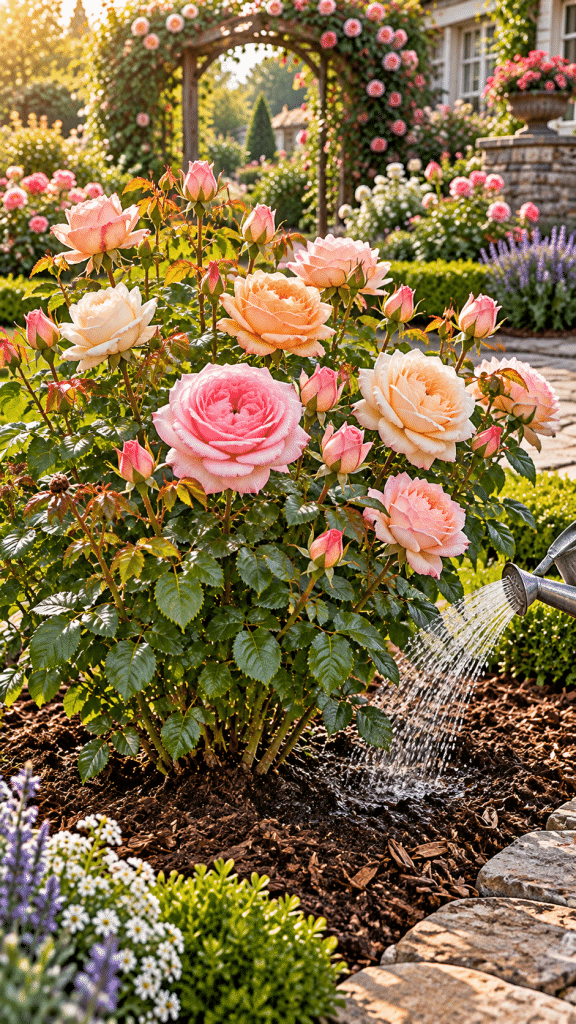
Water Roses Deeply Rather Than Lightly
One of the most common mistakes in rose gardening is shallow watering.
Spraying a small amount of water over the surface may make the soil appear wet, but very little moisture may reach the deeper root zone.
Deep watering is usually more effective.
Apply water slowly around the base of the plant, allowing it to penetrate the soil rather than running across the surface.
During cooler periods, established roses may require less frequent watering. During hot or dry weather, additional watering may become necessary.
Instead of following an inflexible schedule, check the soil.
🌿 Gardening conditions change constantly. Temperature, rainfall, soil type, wind, container size, and plant maturity all influence how quickly moisture disappears.
Observation is therefore one of the most useful rose-care skills.
Keep Rose Foliage as Dry as Practical
Roses need water around their roots rather than constantly across their leaves.
Whenever possible, direct irrigation toward the soil rather than spraying the foliage repeatedly.
Wet leaves are not automatically dangerous, but prolonged moisture can increase the likelihood of certain fungal diseases under favorable conditions.
Watering earlier in the day can also be useful because accidental moisture on foliage has more opportunity to dry.
This becomes particularly important when roses are growing densely or in climates where humidity remains high.
Good airflow, careful watering, and sensible spacing work together.
Feed Roses During Active Growth
Roses produce substantial amounts of new growth and flowers, which means they benefit from adequate nutrition.
A balanced rose fertilizer can help replenish nutrients used during active growth.
However, fertilizer should be treated as support rather than a substitute for healthy soil.
Adding excessive fertilizer does not guarantee additional flowers. Too much feeding can produce overly soft growth, cause nutrient imbalances, or stress the roots.
Follow product instructions rather than assuming that extra fertilizer will deliver extra results.
For many roses, feeding is most useful during periods of strong spring and summer growth. Fertilizer schedules should also be adapted to local climate and whether the rose continues growing year-round or enters seasonal dormancy.
🌸 The healthiest approach combines fertile soil, organic matter, appropriate fertilizer, and regular observation.
Deadhead Roses to Encourage Repeat Flowering
Deadheading means removing flowers after they fade.
For repeat-flowering rose varieties, this simple maintenance practice can encourage the plant to redirect energy toward producing additional growth and flower buds rather than developing seeds.
Use clean, sharp pruning tools and make neat cuts.
The exact deadheading method may vary depending on the type of rose, but the main goal remains the same: remove exhausted flowers while preserving healthy foliage and stems.
Deadheading also keeps the plant visually attractive.
Instead of allowing faded petals and browning flower heads to dominate the shrub, regular maintenance keeps the garden looking fresh.
🌹 Even a few minutes of deadheading each week can dramatically improve the appearance of a rose bed during peak flowering season.
Watch the Leaves for Early Warning Signs
Rose leaves often reveal problems before the entire plant begins to decline.
Healthy foliage should generally appear vigorous and appropriately colored for the variety.
Yellowing leaves, unusual spotting, curling, damaged edges, or sudden leaf drop can indicate several possibilities, including environmental stress, nutritional imbalance, insect activity, or disease.
The key is not to panic at the first imperfect leaf.
Gardens are living environments, and some leaf damage is normal.
Instead, look for patterns.
Is the problem affecting one old leaf or spreading across the entire plant?
Did the symptoms appear after heavy rainfall?
Is the soil extremely dry?
Are insects visible under the leaves?
Has fertilizer recently been applied?
🌿 Observation prevents unnecessary treatments and makes it easier to identify the true source of a problem.
🥉 Best 3 Rose Gardening and Care With Pruning Airflow and Beautiful Garden Structure
Pruning is often the part of rose care that intimidates new gardeners the most.
The plant may look healthy, and cutting away stems can feel counterproductive. In reality, thoughtful pruning can improve the overall structure of the rose, stimulate new growth, increase airflow, and help the plant direct energy toward stronger stems.
The key word is thoughtful.
Aggressive pruning without understanding the rose type can remove valuable flowering growth. Different rose classes may flower on different types of wood and can therefore require different pruning approaches.
However, several general principles apply to many garden roses.
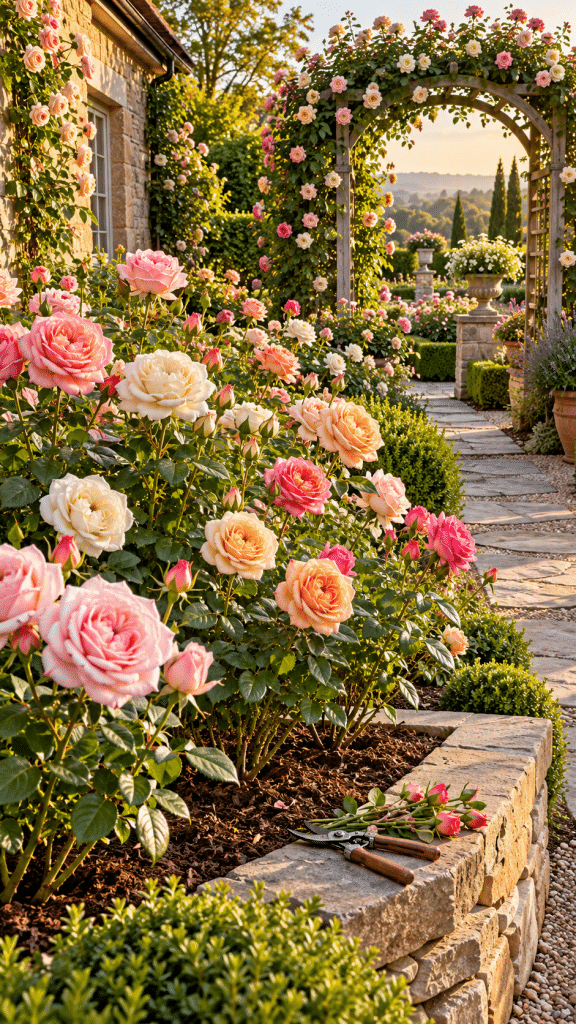
Remove Dead Damaged and Diseased Growth First
When approaching a rose with pruning shears, start with the obvious material.
Dead stems provide little value to the plant.
Damaged branches may break or create entry points for disease.
Diseased sections may sometimes need removal to prevent problems from spreading.
This means the first stage of pruning does not require complicated decisions.
✂️ Remove clearly unhealthy material before reshaping the plant.
Once those stems are gone, the structure of the rose becomes easier to evaluate.
Open the Center for Better Airflow
Crowded roses can create a dense network of crossing stems and leaves.
This may reduce airflow and make maintenance more difficult.
Removing selected inward-growing or crossing stems can help create a more open structure.
The goal is not to create an empty plant.
Instead, aim for balanced spacing that allows sunlight and air to reach different parts of the rose.
A more open structure can also make flowers more visible.
Instead of becoming trapped within a dense mass of foliage, blooms are displayed around the framework of the plant.
🌹 This is where rose care becomes closely connected with garden design. Good pruning can make a plant healthier while simultaneously improving its shape.
Use Clean Sharp Pruning Tools
Clean cuts heal more efficiently than crushed or ragged stems.
A good pair of sharp bypass pruners is one of the most useful tools for everyday rose gardening.
Larger stems may require stronger loppers or a pruning saw.
Tools should be kept clean, particularly when moving between unhealthy and healthy plants.
Blunt blades can damage stems, while dirty tools may transfer plant material or pathogens.
Pruning tools do not need to be expensive, but they should be sharp, comfortable to use, and appropriate for the thickness of the branch being removed.
Prune According to the Type of Rose
Not every rose should be pruned identically.
Hybrid teas, floribundas, shrub roses, climbers, ramblers, miniature roses, and old garden roses can behave differently.
Some bloom primarily on new growth, while others may produce flowers on older stems.
This difference matters greatly when timing major pruning.
For roses that flower on older growth, severe pruning at the wrong time could remove potential blooms.
That is why identifying the rose type is useful before performing major structural pruning.
Routine removal of dead or damaged material is usually straightforward, but significant pruning should respect the natural flowering habit of the plant.
Train Climbing Roses Instead of Simply Cutting Them Back
Climbing roses can create some of the most dramatic garden displays when trained across walls, arches, pergolas, or fences.
However, they should not be treated exactly like upright shrub roses.
Long structural stems can be carefully tied onto supports, allowing the plant to spread horizontally or diagonally.
This can create more opportunities for flowering side shoots to develop.
The result can be spectacular.
🌸 A mature climbing rose trained across a garden structure can transform an ordinary wall into one of the strongest visual features in the entire landscape.
Use soft garden ties rather than materials that may cut into expanding stems.
Support structures should also be strong enough to carry the weight of a mature plant.
Create a Rose Garden That Looks Beautiful Even Between Flowering Cycles
A sophisticated rose garden should not depend entirely on flowers.
Roses naturally experience periods when flowering is lighter. During those moments, garden structure becomes especially important.
Consider pairing roses with plants that provide attractive foliage, contrasting textures, or softer ground-level planting.
Lavender, catmint, ornamental grasses, hardy geraniums, salvia, and various perennial foliage plants are commonly used around roses, depending on climate and growing conditions.
Companion planting can soften bare lower stems while creating a layered garden composition.
The goal is not to overcrowd the roses.
Instead, create enough separation to maintain airflow while allowing neighboring plants to visually connect the planting scheme.
🎨 Think in layers:
Roses provide height and flowers
Perennials provide texture and seasonal color
Groundcovers soften the lower planting area
Garden structures create height and direction
This approach makes the entire garden more interesting even when individual roses are not at peak bloom.
🌸 How to Choose the Best Roses for Your Garden
Successful rose gardening becomes much easier when the variety matches the garden conditions.
It can be tempting to choose roses based only on flower photographs. Color and flower shape are certainly important, but several practical characteristics should also be considered.
Look at mature size, disease resistance, flowering pattern, growth habit, climate suitability, fragrance, and maintenance requirements.
A compact patio rose may be perfect beside a small seating area but completely disappear inside a large mixed border.
A vigorous climbing rose may look spectacular across a pergola but become difficult to manage in a small container.
🌹 Choosing the right rose is therefore part of long-term garden planning.
Consider Repeat Flowering Roses for Continuous Color
Many modern roses are capable of producing repeated flushes of flowers throughout the growing season.
These varieties can be especially useful in gardens where continuous color is important.
Regular deadheading and feeding can help support repeated bloom cycles.
However, once-flowering roses should not automatically be considered inferior.
Some old-fashioned varieties produce one extraordinary seasonal display followed by attractive foliage or hips.
The right choice depends on the desired garden atmosphere.
A cottage garden may benefit from romantic old roses, while a contemporary border may work beautifully with compact repeat-flowering shrubs.
Use Fragrant Roses Near Seating Areas
Fragrance becomes much more valuable when roses are planted where people can actually experience it.
Position highly scented varieties near patios, benches, garden paths, gates, or frequently opened windows.
This transforms fragrance into part of the garden design rather than simply another plant characteristic.
A rose covered in beautifully scented blooms beside a garden bench creates an experience that is difficult to achieve with visual design alone.
🌸 Gardens should appeal to more than the eyes.
Fragrance, texture, movement, and sound can all contribute to atmosphere.
🌿 Rose Gardening and Care Through the Seasons
Rose care changes as the year progresses.
Rather than treating every month the same way, adjust maintenance according to growth stage and local weather.
Spring Rose Care
Spring is often a period of rapid growth.
As roses begin producing fresh stems and foliage, inspect plants for winter damage or dead wood.
Major pruning may also be performed during the appropriate season for the specific rose type and climate.
Refresh mulch where necessary and begin feeding once active growth is underway.
Spring is also a useful time to install or repair plant supports before climbing roses become heavy with foliage.
🌱 Early preparation makes later maintenance easier.
Summer Rose Care
Summer often brings peak flowering along with increased water requirements.
Check soil moisture regularly during hot weather and water deeply when necessary.
Continue deadheading repeat-flowering varieties.
Watch for pest activity and signs of leaf disease, especially during humid conditions.
Mulch becomes especially valuable because it helps reduce moisture loss from exposed soil.
Summer is also the season to enjoy the results of earlier care.
Instead of constantly working in the garden, spend time observing which varieties perform best and which planting combinations are most attractive.
These observations can guide future improvements.
Autumn Rose Care
As temperatures begin to change, growth patterns may slow depending on the climate.
Allow plants to gradually prepare for the cooler season.
Avoid encouraging excessive soft growth with unnecessary late feeding where winter dormancy occurs.
Remove badly diseased fallen foliage from around plants rather than allowing infected material to accumulate.
Rose hips can be left on suitable varieties if they are desired for autumn and winter interest.
🍂 Roses do not always need to be perfectly tidy.
A few hips combined with autumn foliage can give the garden a beautiful seasonal character.
Winter Rose Care
Winter care depends heavily on climate.
In mild regions, roses may remain active for much of the year. In colder regions, plants may enter dormancy and require protection from extreme temperatures.
Avoid performing unnecessary maintenance simply because the garden looks quiet.
Dormancy is a natural part of the growth cycle.
This quieter period is an excellent time to clean tools, inspect supports, plan new beds, and evaluate which roses might be added during the next planting season.
🌹 Common Rose Gardening Mistakes to Avoid
Healthy roses are often created as much by avoiding mistakes as by performing complicated care techniques.
One common mistake is planting roses too close together.
Small young plants can make a border look empty initially, encouraging gardeners to plant more densely. However, mature roses may eventually overlap, restricting airflow and making pruning difficult.
Always consider mature size.
Another mistake is watering too lightly.
Frequent shallow watering encourages shallow root growth and may leave deeper soil dry.
Deep, thoughtful irrigation usually creates more resilient plants.
Excessive fertilizer is another issue.
Roses certainly require nutrients, but more fertilizer is not automatically better. Overfeeding can create soft growth and even damage roots.
Finally, avoid ignoring variety-specific pruning habits.
A pruning method that works beautifully for one rose class may reduce flowering on another.
🌿 Learning the natural growth pattern of each rose can prevent unnecessary frustration.
🌸 Designing an Elegant Rose Garden
A rose garden can be romantic without appearing chaotic.
Start by choosing a limited color palette.
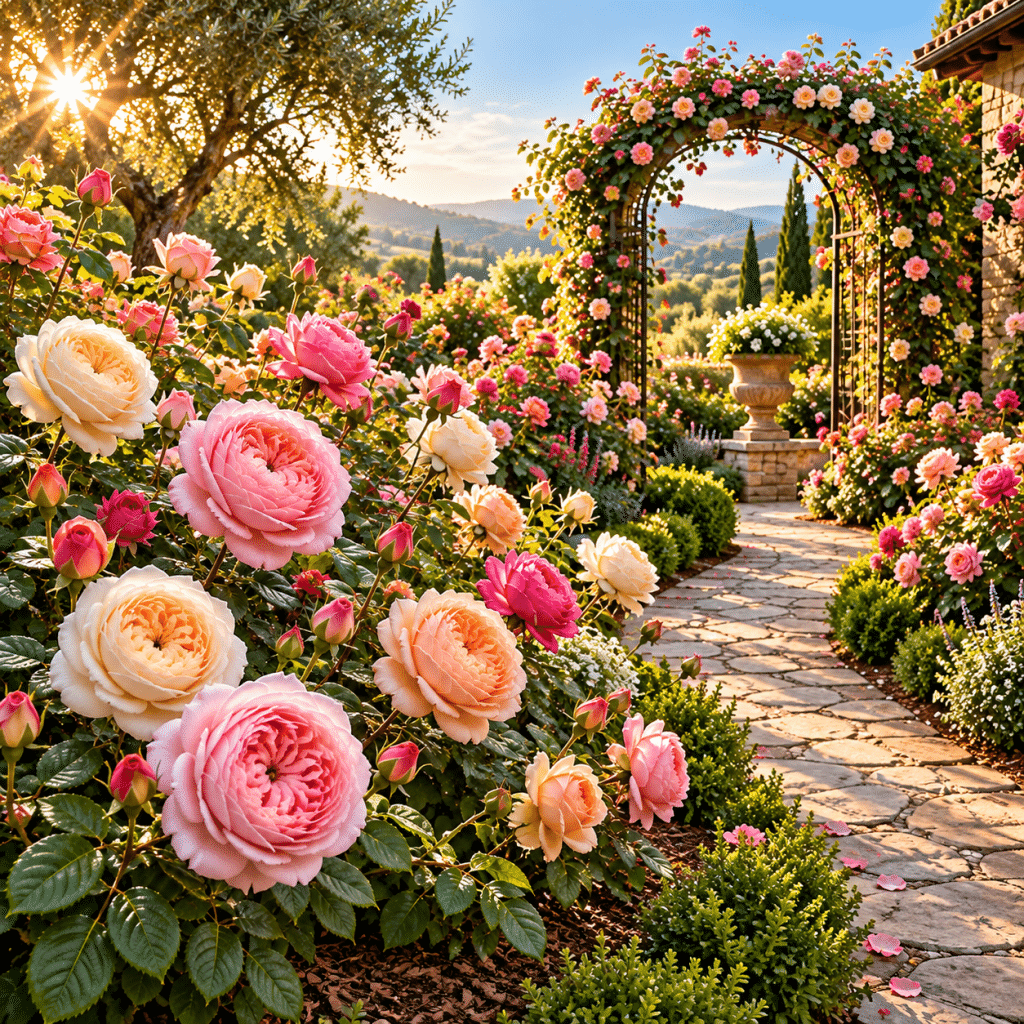
Soft blush, cream, ivory, peach, apricot, and pale pink can create a gentle cottage atmosphere.
Deep burgundy, crimson, plum, and rich pink can create a more dramatic garden.
White roses mixed with green foliage can produce a clean and elegant look.
Repeating similar colors throughout the planting scheme creates visual rhythm.
Instead of using one rose of every available color, group compatible shades.
Add Vertical Rose Features
Vertical roses can dramatically change the scale of a garden.
Train climbing roses across arches, fences, pergolas, gates, walls, or sturdy trellises.
Vertical planting draws the eye upward and can make small gardens feel more immersive.
An arch covered in roses can also divide the garden into different zones.
🌹 Walking through a rose-covered entrance creates a sense of transition, making the space beyond feel like a hidden garden.
Combine Roses With Soft Companion Planting
Roses look particularly beautiful when surrounded by contrasting foliage.
Fine ornamental grasses can soften the rigid shape of rose stems.
Silver foliage can complement pale pink and purple flowers.
Blue or violet perennials can create striking contrast beside peach, apricot, or cream roses.
The best companion plants should not compete aggressively with rose roots or crowd their foliage.
Spacing remains essential.
🌿 The goal is harmony rather than density.
🌹 Final Thoughts on the Best 3 Rose Gardening and Care Ideas
Creating beautiful roses becomes much easier when attention is focused on the fundamentals.
The first secret is healthy soil and strong roots. Roses need a stable underground environment with good drainage, organic matter, adequate moisture, and enough space for roots to develop.
The second secret is consistent watering feeding and seasonal maintenance. Deep watering, sensible fertilizing, regular deadheading, and careful observation help roses remain vigorous throughout the growing season.
The third secret is smart pruning airflow and garden structure. Removing unhealthy stems, preventing overcrowding, training climbing roses correctly, and designing companion planting around them can improve both plant health and the overall appearance of the garden.
🌹 Excellent Rose Gardening and Care is not about forcing roses to grow perfectly. It is about understanding what the plant needs and creating conditions that allow its natural beauty to emerge.
A well-established rose can reward that effort for years.
From romantic climbing roses covering a garden arch to compact shrubs beside a pathway, roses have an extraordinary ability to become focal points in almost any landscape.
With healthy soil beneath them, sunlight around them, thoughtful care throughout the seasons, and enough room to develop naturally, roses can become more than flowering plants.
They can become the defining feature of the entire garden. 🌸