Finding the right Halloween yard ideas can completely change the way your home feels during October. A few pumpkins beside the front steps may add seasonal color, but a thoughtfully designed yard can turn the entire property into an immersive Halloween scene that catches attention from the sidewalk and still looks stylish during daylight.
The most memorable Halloween yards are not necessarily the ones filled with the largest number of decorations. They usually succeed because they tell a visual story. Lighting, pathways, plants, props, architectural details, textures, and negative space all work together to create a setting that feels intentional rather than random.
🎃 For a more sophisticated result, it helps to choose one strong decorating direction and develop it across the entire yard.
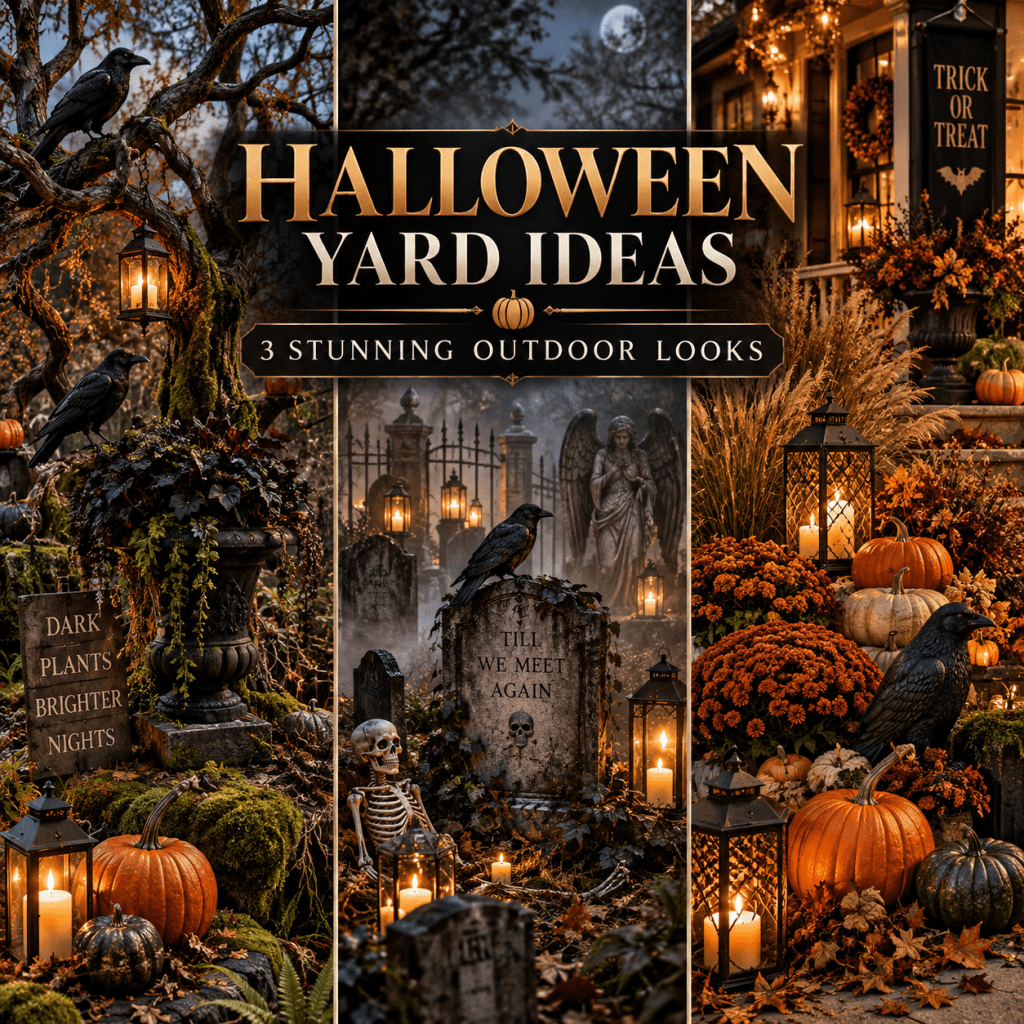
The three concepts below approach Halloween from very different angles. One creates a mysterious haunted woodland, another builds a dramatic old cemetery landscape, and the third uses pumpkins, lanterns, warm foliage, and subtle spooky accents for a more elegant harvest-inspired atmosphere.
Each idea can also be scaled according to the size of the property. A large lawn provides room for immersive scenes, but the same principles can work in a compact front garden by concentrating the strongest decorations near the entrance, path, trees, or porch.
Why The Best Halloween Yard Ideas Feel Designed Rather Than Decorated
Halloween decorating can quickly become visually chaotic because there are so many tempting elements available: skeletons, ghosts, pumpkins, gravestones, witches, bats, spiderwebs, lights, lanterns, signs, and animated props.
Using all of them at the same time rarely produces the strongest design.
A better approach is to think about the yard almost like an outdoor room. Start with the architecture and natural landscape that already exist, then add Halloween elements that reinforce those features.
A mature tree, for example, already has dramatic branches. Instead of hiding it behind decorations, emphasize it with subtle lighting, suspended lanterns, dark fabric, or a few carefully positioned ravens.
A long walkway naturally creates movement toward the entrance. Use pumpkins, grasses, lights, or cemetery markers to guide the eye gradually toward the front door.
🌙 This approach creates visual depth and makes even inexpensive decorations look more intentional.
Color also matters. Limiting the palette helps the yard feel cohesive. Black, charcoal, aged gray, dark green, burgundy, ivory, amber, rust, and muted orange generally work beautifully together without creating the bright novelty-store appearance that can sometimes overwhelm an outdoor display.
Before choosing the final concept, this quick comparison can help determine which atmosphere works best.
| Halloween Yard Style | Main Materials | Best Lighting | Overall Mood | Ideal For |
|---|---|---|---|---|
| Haunted Botanical Woodland | Branches, moss, vines, grasses, pumpkins, dark foliage | Amber uplighting and subtle warm lanterns | Mysterious, organic, atmospheric | Natural yards and homes with mature landscaping |
| Forgotten Cemetery | Gravestones, iron details, stone, skeletons, fog, bare branches | Low ground lights and moonlike cool lighting | Gothic, theatrical, dramatic | Larger lawns and traditional homes |
| Elegant Harvest Haunt | Pumpkins, mums, lanterns, hay, leaves, branches | Candlelight and warm white lights | Cozy, sophisticated, gently spooky | Family homes and smaller front yards |
Important Note: Outdoor Halloween decorations should never block walkways, stairs, visibility, electrical access, or emergency routes. Keep extension cords protected from moisture, secure lightweight decorations against wind, and use outdoor-rated lighting wherever decorations are exposed to weather.
🥇 Top 1 Halloween Yard Ideas With A Haunted Botanical Woodland
One of the most visually striking Halloween yard ideas is to make the garden appear as though it has slowly transformed into a mysterious enchanted forest.
Instead of relying on obvious plastic decorations, this concept uses natural materials to create atmosphere. Twisted branches, moss, dark foliage, dried grasses, vines, weathered wood, mushrooms, seed pods, pumpkins, and subtle gothic objects become the primary decorative language.
The result can feel eerie without becoming cartoonish.
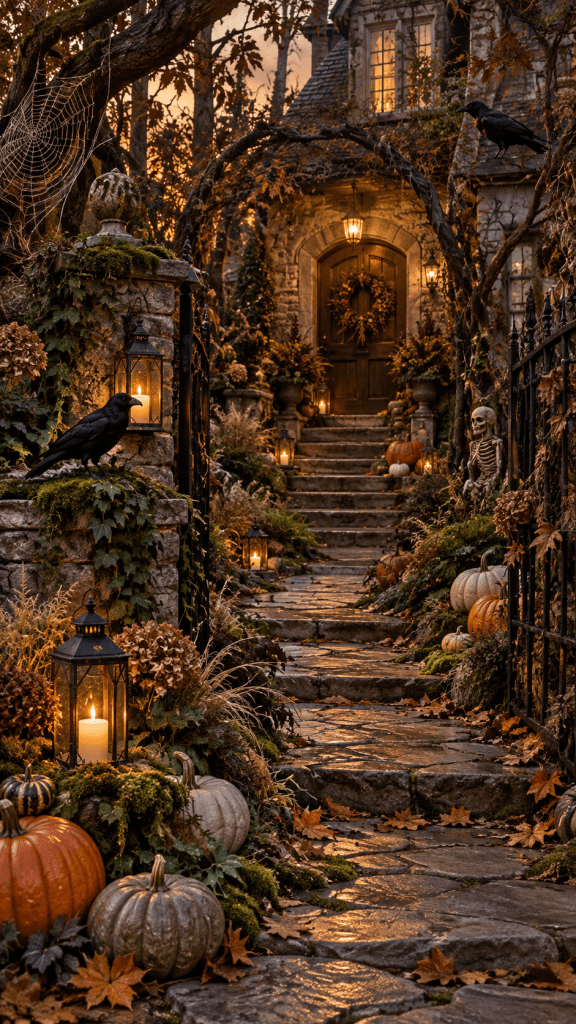
Imagine walking toward a house through a landscape that appears slightly more mysterious than nature should normally be. Bare branches lean toward the pathway. Moss-covered stones sit beneath ornamental grasses. Dark pumpkins emerge between fallen leaves. A few weathered lanterns glow beneath the trees.
Nothing necessarily jumps out or screams Halloween.
Yet the entire yard feels haunted.
Build The Woodland Around Existing Trees And Shrubs
Existing vegetation should become part of the display rather than disappearing behind Halloween props.
Large trees are especially valuable because they immediately provide height and structure. Their trunks can be softly illuminated from below, while their branches can hold restrained hanging decorations such as aged lanterns, black ribbons, small ravens, or delicate strands of warm lights.
Avoid covering every branch.
Leaving large areas undecorated creates shadow, and shadow is one of the most powerful ingredients in atmospheric Halloween design.
Shrubs can also be transformed with subtle additions. Drape a little natural-looking dark vine through the foliage or place weathered branches behind the plants to extend their silhouette upward.
🍂 The goal is to make the landscape appear naturally strange rather than obviously decorated.
If the yard lacks mature vegetation, large bare branches can be placed inside heavy outdoor planters. Surround the bases with moss, pinecones, stones, dried grasses, and dark pumpkins to create temporary woodland structures.
Create A Mysterious Halloween Pathway
The pathway should feel like the entrance into the scene.
Instead of lining both sides with identical pumpkins, create irregular clusters. Place three pumpkins near one section, leave a gap, then add grasses, branches, or lanterns farther along the path.
Variation creates a more natural appearance.
Choose pumpkins in muted colors such as deep orange, dark green, pale cream, dusty sage, brown, or nearly black. Mixing sizes also makes the arrangement feel more organic.
Low lanterns can be positioned between pumpkins and plants, but they should not be perfectly symmetrical.
Add a few weathered stones, bark pieces, moss patches, fallen leaves, and sculptural roots to connect everything visually.
The effect should resemble a mysterious woodland trail that happens to lead directly toward the house.
Add Subtle Creatures Instead Of Novelty Monsters
A botanical Halloween landscape benefits from restraint.
Instead of dozens of plastic monsters, introduce a few creatures that naturally belong within a dark woodland setting.
Black ravens are especially effective when positioned realistically. One might sit on a branch near the entrance while another appears on an old stump.
Small owl figures can hide among branches.
A few realistic-looking black butterflies or moths can appear near a lantern or door.
Even spiders can work beautifully when used selectively. Instead of covering the entire house in artificial webbing, stretch a small detailed web between two branches or across the corner of an old wooden structure.
🕷️ Small discoveries often make the scene more interesting than oversized props.
Visitors notice new details as they approach, creating an experience rather than a single visual statement.
Use Pumpkins As Sculptural Objects
Pumpkins do not need to be arranged only on stairs.
In a haunted woodland yard, pumpkins can appear partially hidden among grasses, under branches, beside stones, or beneath trees.
Group them in odd numbers such as three, five, or seven.
Use several varieties to create textural contrast. Smooth cream pumpkins look beautiful beside rough dark green gourds, while deep orange pumpkins bring warmth into areas dominated by brown branches and gray stone.
A few carved pumpkins can be included, but keep the faces simple.
Classic triangular features can work, although more understated carvings such as moons, stars, botanical patterns, twisted vines, or small openings may better support the sophisticated woodland theme.
Make Lighting Feel Like Moonlight And Firelight
Lighting determines whether this idea feels magical or artificial.
Start with low uplighting beneath trees or tall grasses. Warm amber illumination works particularly well near pumpkins and wood, while softer neutral light can emphasize branches and stone.
Avoid extremely bright floodlights.
Halloween atmosphere usually becomes more convincing when parts of the landscape remain in darkness.
Lanterns can provide smaller pools of warm light along the pathway. Battery-operated candles make it easier to place them among plants without worrying about open flames.
For additional drama, illuminate a large tree from behind so its branches create a strong silhouette against the house.
🌙 From the sidewalk, the shadow pattern alone can become one of the most memorable parts of the entire yard.
🥈 Top 2 Halloween Yard Ideas With A Forgotten Gothic Cemetery
For homeowners who want a more theatrical transformation, a forgotten cemetery creates one of the strongest Halloween landscapes.
The secret is making it look aged and believable rather than placing identical foam gravestones evenly across the lawn.
Real cemeteries develop irregularly over time. Stones lean. Plants grow around structures. Surfaces weather differently. Paths curve instead of forming perfect grids.
Borrowing those visual characteristics instantly improves a Halloween cemetery display.
Arrange Gravestones In Natural Irregular Groups
Avoid creating straight rows.
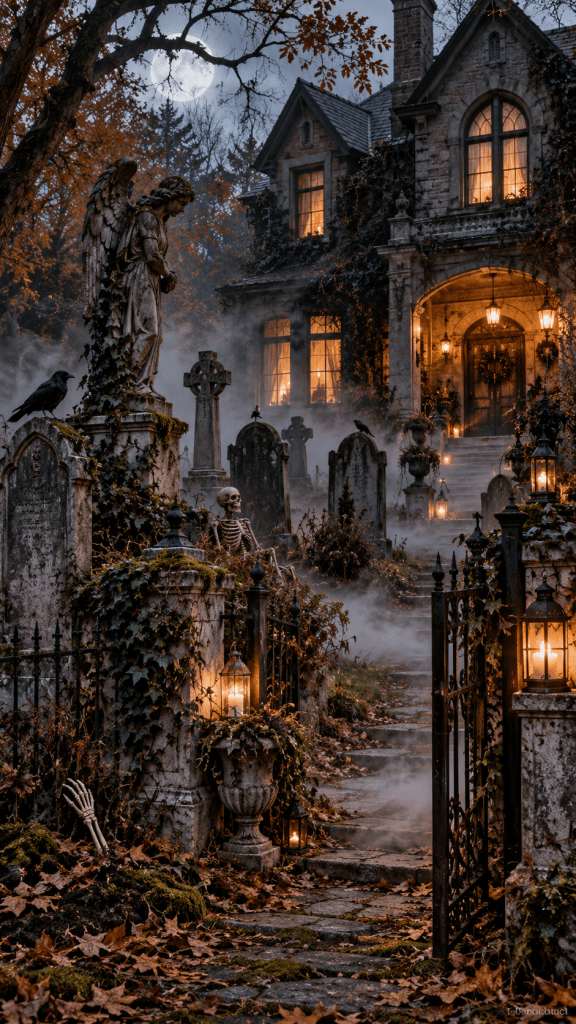
Instead, arrange tombstones in small groups with different distances between them. Some can face directly toward the street while others angle slightly toward the house.
Mix heights and shapes.
Tall gothic markers add vertical drama, while low rectangular stones help fill the landscape without creating visual clutter.
A few monuments can lean slightly to suggest age.
If using lightweight foam gravestones, adding texture dramatically improves realism. Subtle gray paint variation, darker recessed lettering, moss-like details, cracks, or weathered edges can make inexpensive props look surprisingly convincing.
Do not make every stone equally distressed.
Variation creates authenticity.
Create One Strong Cemetery Entrance
A defined entrance immediately tells visitors what kind of world they are entering.
Two weathered pillars positioned near the walkway can suggest old cemetery gates. Decorative iron-style fencing can extend slightly from either side without needing to enclose the entire lawn.
Add a small aged sign, lanterns, vines, or bare branches.
The structure does not need to be enormous.
Even a compact gateway creates visual hierarchy because it establishes the beginning of the scene.
🦇 Above the entrance, a few suspended bats can introduce movement without overwhelming the composition.
Continue the atmosphere beyond the gateway with gravestones, skeletal trees, lanterns, and low lighting.
Let Plants Grow Through The Cemetery
Plants make artificial structures feel connected to the landscape.
Ornamental grasses are especially useful because they provide movement and softness around hard cemetery props. Their seed heads also catch light beautifully at night.
Ivy can trail around the base of gravestones.
Dark-leaved plants add depth.
Moss can be used around stone surfaces.
Ferns help create a damp abandoned appearance, particularly in shaded gardens.
Even existing shrubs can become part of the cemetery if gravestones are positioned partially in front of them.
🌿 The strongest scenes look as though the cemetery existed before the house rather than appearing suddenly on October 1.
Use Skeletons As Storytelling Characters
Skeletons can easily become humorous, but they can also create a surprisingly elegant gothic scene when posed carefully.
Instead of placing many skeletons everywhere, use one or two as focal points.
One might sit against an old gravestone beneath a tree.
Another could partially emerge from behind an overgrown marker.
A skeletal hand could appear through ivy or fallen leaves.
Restraint makes each figure more noticeable.
If the goal is sophisticated horror rather than comedy, avoid excessively exaggerated poses and colorful accessories.
Keep costumes limited to weathered fabrics, dark cloaks, aged lace, or nothing at all.
The surrounding environment should create most of the drama.
Introduce Fog Only In Strategic Areas
Fog can transform a cemetery display, but more is not always better.
A thin layer drifting between gravestones is far more atmospheric than a dense cloud hiding the decorations.
Place the fog source behind stones or vegetation so the equipment remains concealed.
Low fog moving slowly across the ground can emphasize lighting and create depth.
💀 Position a warm lantern behind the fog and the light will become diffused, producing a cinematic glow.
For larger yards, use fog near one main cemetery zone rather than trying to cover the entire property.
Use Layered Lighting For A Cinematic Effect
Begin with the darkest areas first.
The cemetery should not be evenly illuminated.
Instead, highlight specific features.
A low spotlight can graze the surface of a tall gravestone.
Another light can illuminate the trunk of a tree.
Lanterns can provide warm pools near the path.
Cooler, moonlike lighting from one side of the yard can contrast with the warm lantern glow.
This warm and cool combination produces impressive depth.
Place some lights behind objects rather than directly in front of them. Backlighting skeletons, branches, or gravestones creates silhouettes and makes inexpensive decorations feel dramatically more sophisticated.
🥉 Top 3 Halloween Yard Ideas With Elegant Pumpkins Lanterns And Autumn Drama
Not every Halloween yard needs to look terrifying.
A beautiful alternative blends traditional autumn decorating with just enough mysterious detail to make the landscape unmistakably Halloween.
This style works especially well for homeowners who want decorations that can remain attractive throughout much of October.
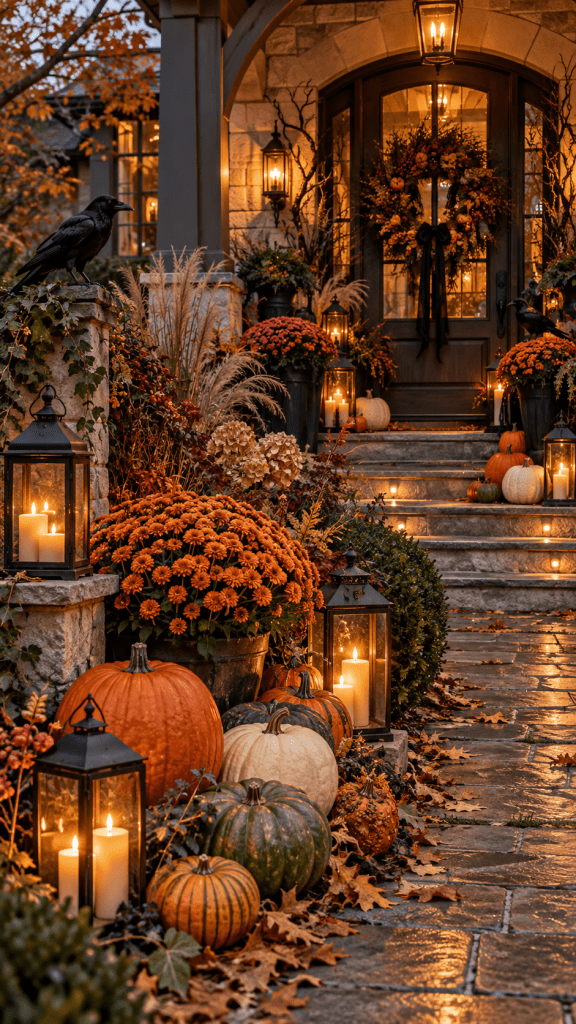
Pumpkins, mums, grasses, branches, lanterns, leaves, baskets, and warm lights create the foundation. Gothic accents such as black birds, dark candles, bats, or subtle skulls provide the Halloween layer.
🎃 The result feels festive during the day and atmospheric after sunset.
Build Large Pumpkin Collections Instead Of Small Scattered Groups
A few isolated pumpkins can disappear visually in a large yard.
Creating one or two generous clusters produces much more impact.
Start near the front steps, porch, or beginning of the walkway.
Use pumpkins in several colors and sizes. Traditional orange provides warmth, while cream, pale green, dusty blue, dark green, and muted brown varieties add sophistication.
Arrange the largest pumpkins first.
Then layer medium and smaller pumpkins around them.
Allow some pumpkins to sit slightly behind ornamental grasses or flower containers so the composition feels integrated.
Avoid arranging every pumpkin in a perfect line.
Instead, build gently flowing shapes that follow the architecture or path.
Combine Pumpkins With Tall Seasonal Plants
Height is essential in outdoor decorating.
Without taller elements, even a large pumpkin collection can appear flat when viewed from the street.
Use ornamental grasses, branches, corn stalks, tall chrysanthemums, or leafy stems to create vertical structure.
Large planters near the entrance can hold arrangements containing burgundy foliage, dried hydrangeas, grasses, branches, and dark berries.
Black-painted branches can create subtle gothic contrast.
However, natural weathered branches often produce an equally dramatic effect while keeping the design more organic.
🌾 Tall grasses are particularly effective because they move with the wind, bringing the yard to life.
Create Lantern Corridors Along The Walkway
Lanterns instantly add warmth and sophistication.
Instead of scattering them randomly, use them to emphasize movement through the landscape.
Place several lanterns at different distances along the walkway. Vary the sizes so they do not look like identical pathway lights.
Mix metal finishes carefully.
Black metal feels classic and slightly gothic.
Aged bronze works beautifully with orange and brown foliage.
Weathered brass brings a warmer, more luxurious character.
Inside, use warm battery-operated candles with a realistic flicker.
The glow should feel soft rather than extremely bright.
On wide walkways, alternate lanterns with pumpkin clusters so the path develops a visual rhythm.
Add Halloween Through Small Dark Accents
The difference between autumn décor and Halloween décor can be surprisingly small.
A beautiful fall yard filled with pumpkins and grasses may need only a few darker elements.
Place a black raven on top of a pumpkin.
Add several small bats climbing one section of the house wall.
Position a dark metal skull among flowers.
Hang a simple black wreath on the door.
Add one large spider to a branch.
These details immediately shift the mood.
🦇 Because the surrounding scene remains elegant, every spooky accent feels more deliberate.
The yard remains attractive for daytime visitors while transforming after sunset when lighting strengthens the darker details.
Make The Front Door The Final Visual Destination
The yard should guide attention toward the entrance.
If the lawn and walkway contain beautiful decorations but the doorway remains visually empty, the composition can feel unfinished.
Repeat materials from the yard near the front door.
If ornamental grasses appear along the path, place a smaller arrangement beside the entrance.
If the yard contains cream and green pumpkins, continue those colors onto the steps.
A wreath made from dried foliage, branches, black leaves, berries, or miniature pumpkins can connect the door to the broader design.
Lanterns positioned at different heights complete the scene.
The strongest front doors usually feature one clear focal element rather than multiple competing decorations.
Use Warm Light To Turn Autumn Into Halloween After Dark
During daylight, this style can feel mostly like an elegant harvest landscape.
After sunset, lighting changes everything.
Place small warm lights beneath grasses so their stems cast shadows.
Illuminate the underside of a branch arrangement.
Let lanterns glow along the path.
Hide a subtle light behind pumpkins to create depth.
A few dark branches projected against the house can introduce just enough mystery.
✨ This transformation makes the concept particularly versatile because the yard feels welcoming during daytime and dramatically more Halloween-inspired at night.
How To Choose The Right Halloween Yard Idea For Your Home
The best concept often depends on the architecture and existing landscaping.
Homes surrounded by mature trees and natural gardens are ideal for the haunted woodland style because much of the visual structure already exists.
Traditional houses with larger lawns naturally support cemetery scenes. Gravestones and gothic forms also complement brick, stone, wrought iron, and symmetrical architecture particularly well.
Contemporary homes or smaller suburban properties may benefit from the elegant pumpkin and lantern approach. Clean architecture provides a beautiful backdrop for controlled clusters of seasonal materials.
Budget can also influence the decision.
Natural woodland styling can be surprisingly affordable because branches, leaves, existing plants, logs, stones, and pumpkins provide much of the visual interest.
A cemetery display may require more fabricated props, although handmade gravestones can significantly reduce the cost.
Pumpkin-heavy landscapes can become expensive if dozens of real pumpkins are purchased, but combining real pumpkins near the entrance with reusable decorative pumpkins farther back can provide a similar visual effect.
How To Make Halloween Yard Decorations Look Expensive
Scale is one of the most important considerations.
A single tiny decoration placed in the middle of a large lawn will almost always look lost.
Grouping objects creates greater impact.
Three lanterns together usually appear stronger than three lanterns placed far apart. The same principle applies to pumpkins, gravestones, branches, or plants.
Texture is equally important.
Combining smooth pumpkins with rough bark, soft moss, wispy grasses, weathered metal, dried foliage, and stone makes a scene feel layered and sophisticated.
Avoid relying exclusively on smooth plastic surfaces.
Whenever possible, combine manufactured decorations with natural materials.
Color restraint also helps tremendously.
Choose approximately three to five dominant colors and repeat them around the yard.
For example:
🖤 Charcoal
🎃 Burnt orange
🌿 Deep green
🤎 Weathered brown
✨ Warm amber
Repeating those tones creates consistency even when different decorations are used.
Simple Halloween Yard Ideas For Small Front Gardens
Small spaces do not require small ideas.
In fact, compact yards can sometimes create stronger displays because decorations naturally appear closer together.
Instead of decorating every area, focus on one powerful route from the sidewalk to the front door.
Use the pathway as the central composition.
Place a few large pumpkin clusters near the entrance.
Add one dramatic branch arrangement.
Use two or three lantern groups.
Introduce a small amount of lighting.
A compact cemetery can also work beautifully if gravestones are layered vertically among plants rather than spread across the lawn.
Vertical decorating becomes especially important when horizontal space is limited.
Branches, tall grasses, hanging bats, wall decorations, climbing vines, and doorway arrangements provide visual drama without consuming precious ground area.
Daytime Halloween Yard Ideas Matter Too
Many Halloween decorations are designed primarily for nighttime.
That can be a missed opportunity.
A strong yard should also look interesting during daylight, especially because neighbors, delivery drivers, pedestrians, and visitors may see the property long before the lights turn on.
Natural materials perform particularly well during the day.
Pumpkins provide color.
Grasses create movement.
Weathered branches produce sculptural shapes.
Moss and stone add texture.
Autumn foliage introduces warmth.
Then lighting adds the second layer after sunset.
Designing for both conditions makes the decorating effort far more rewarding.
A useful approach is to inspect the yard twice: once during daylight and again after dark.
Some decorations that look prominent during the day may disappear at night. Others may suddenly dominate once illuminated.
Adjusting placement after testing both conditions usually improves the final result dramatically.
Create Depth With Foreground Middle Ground And Background Layers
Professional-looking outdoor displays rarely exist on a single visual plane.
They use layers.
The foreground is what visitors see closest to the sidewalk.
The middle ground often includes the pathway, garden beds, or lawn.
The background includes the house, porch, trees, and front door.
Place interesting elements in each zone.
A few pumpkins or grasses can occupy the foreground.
The pathway might contain lanterns and smaller scenes.
The doorway becomes the final background focal point.
🌙 Lighting can reinforce these layers by illuminating each area differently.
Perhaps the foreground remains relatively dark, the middle path glows softly, and the doorway receives the warmest light.
That creates visual movement and naturally pulls attention toward the house.
Final Thoughts On The Best Halloween Yard Ideas
The most impressive Halloween yards are not necessarily the biggest, darkest, or most expensive.
They are the ones with a clear visual identity.
🥇 A haunted botanical woodland works beautifully when the goal is mysterious, natural, immersive Halloween atmosphere. Twisted branches, moss, dark foliage, pumpkins, lanterns, and dramatic shadows create a scene that feels almost cinematic without depending heavily on novelty decorations.
🥈 A forgotten gothic cemetery delivers stronger theatrical impact. Irregular gravestones, old gates, subtle skeletons, grasses, fog, and layered lighting can transform an ordinary lawn into a dramatic Halloween landscape.
🥉 An elegant pumpkin and lantern yard offers a softer alternative. Layered pumpkins, seasonal plants, warm lights, lanterns, autumn textures, and small gothic accents create a display that remains stylish throughout October.
Whichever direction you choose, repetition and restraint matter more than quantity.
Choose a limited color palette.
Group decorations instead of scattering them.
Use existing landscaping whenever possible.
Think about how visitors move through the yard.
Most importantly, allow light and shadow to become part of the decoration.
The right combination can turn ordinary Halloween yard ideas into something far more memorable: an outdoor experience that begins at the sidewalk, builds curiosity along the path, and reaches its dramatic final moment at the front door.