Lily Flowers have a remarkable way of making an ordinary garden feel romantic, polished, and surprisingly luxurious. Their tall stems, sculptural blooms, elegant petals, and rich colors naturally attract attention, whether they are planted beside a pathway, layered into a perennial border, or grown in large decorative containers near a patio. Few summer flowers can create the same combination of height, fragrance, drama, and graceful movement.
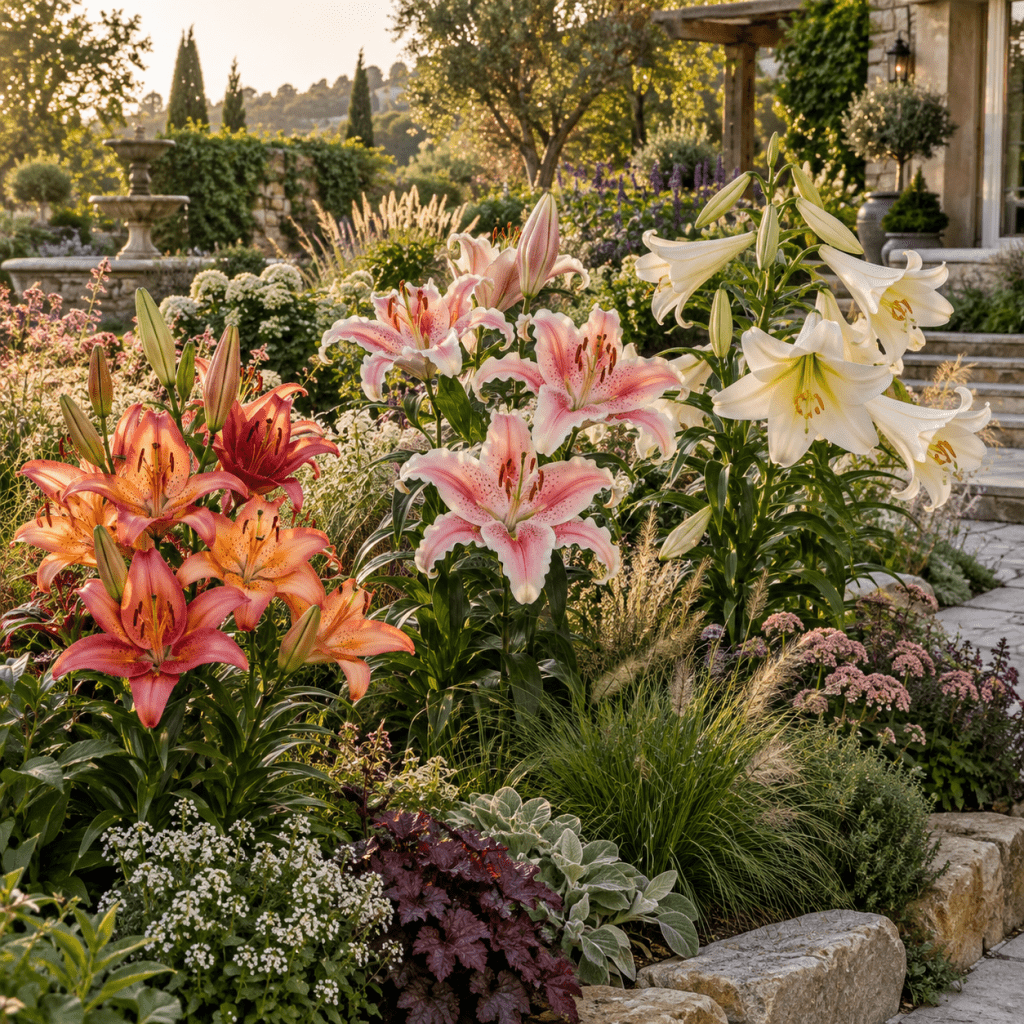
What makes lilies especially interesting is their enormous variety. Some produce compact clusters of bright blooms that work beautifully in smaller gardens, while others develop enormous fragrant flowers that can transform a quiet corner into a spectacular seasonal display. There are also tall architectural lilies capable of becoming living focal points within a landscape.
Choosing the right variety makes a major difference. Instead of planting lilies randomly, gardeners can use their different heights, colors, flowering periods, and growth habits strategically. 🌿 The result can feel less like a collection of individual plants and more like a carefully designed landscape.
Among the many possibilities, three groups stand out for their beauty, versatility, and ability to create memorable garden displays. These are Asiatic lilies, Oriental lilies, and Trumpet lilies.
Why Lily Flowers Can Completely Transform a Garden
Lilies have a natural architectural quality that many smaller flowering plants lack. Their upright stems rise vertically from garden beds, carrying large flowers well above surrounding foliage. This allows them to create visual height without requiring the space of a shrub or small tree.
That vertical structure becomes particularly useful in layered planting designs. Low-growing plants can cover the foreground, medium-height perennials can create fullness in the center, and lilies can emerge through the planting as dramatic accents. 🌸 Instead of appearing isolated, their flowers seem to float above the surrounding garden.
Color is another major advantage. Lily Flowers appear in shades ranging from creamy white and soft blush to orange, burgundy, yellow, pink, and deep red. Some varieties have contrasting throats, freckles, stripes, or darker centers that make each flower look almost hand-painted.
Certain lilies also contribute fragrance. Oriental and Trumpet types in particular can perfume patios, pathways, and seating areas during warm summer evenings. When fragrance is considered as part of the landscape design, the garden becomes an experience rather than simply something to look at.
Lilies are equally impressive when planted in groups. A single lily can look elegant, but several stems rising together create a much stronger visual impact. Repeating similar lilies in several locations can also visually connect different areas of the garden.
Best 3 Lily Flowers at a Glance
Before choosing a variety, it helps to understand how the three major garden groups differ. Each creates a different mood and works best in slightly different situations.
| Lily Type | Garden Style | Typical Character | Fragrance | Best Use |
|---|---|---|---|---|
| Asiatic Lilies | Colorful modern or cottage gardens | Bright compact blooms and strong color | Usually little or no fragrance | Borders containers and mass planting |
| Oriental Lilies | Romantic elegant gardens | Large dramatic flowers | Strong fragrance | Patios pathways and focal planting |
| Trumpet Lilies | Formal architectural landscapes | Tall stems and trumpet shaped flowers | Often fragrant | Background planting and statement displays |
The best option depends on the atmosphere you want to create. Asiatic lilies are excellent when strong color is the priority. Oriental lilies bring romance and perfume. Trumpet lilies provide height and architectural drama.
A sophisticated landscape can even combine all three, allowing different lily groups to take over the visual spotlight at different moments during the growing season.
🥇 Top 1 Asiatic Lily Flowers for Bold Effortless Color
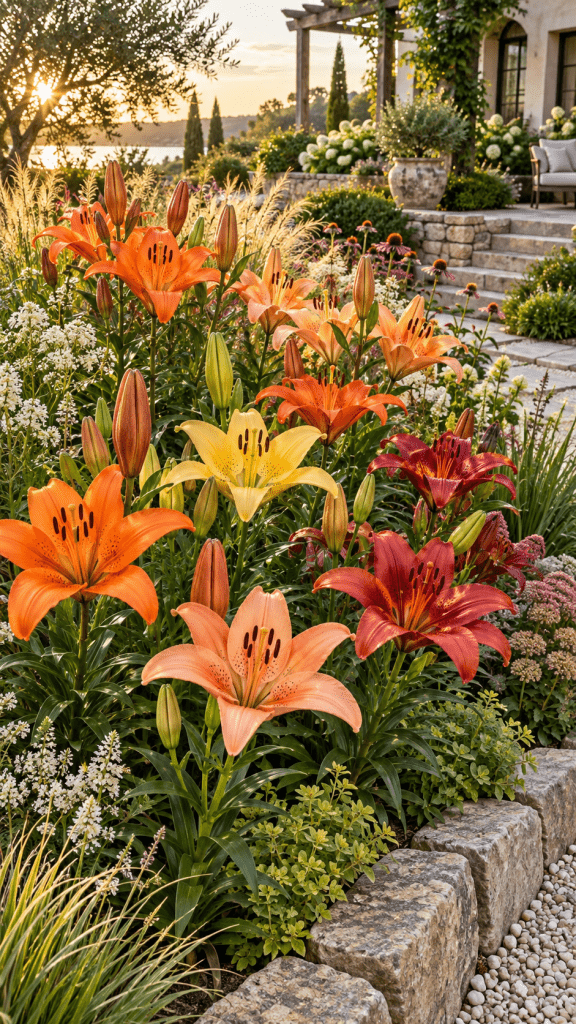
Asiatic lilies deserve the first position because they combine dramatic appearance with remarkable versatility. They tend to produce strong upright stems topped with clusters of upward-facing or outward-facing flowers, creating an immediate splash of color.
Their range of colors is one of their greatest strengths. Gardeners can find varieties in vivid orange, sunny yellow, scarlet red, creamy white, pink, burgundy, and numerous blended tones. Because many Asiatic lilies have relatively clean flower shapes without overwhelming fragrance, they fit comfortably into both traditional and contemporary landscapes.
They are especially effective in gardens where color needs to be visible from a distance. A cluster of brilliant orange or deep red lilies can become a natural focal point across a lawn, while pale cream and blush varieties can blend into sophisticated neutral planting schemes.
How to Use Asiatic Lily Flowers in a Designer Border
One of the easiest ways to make Asiatic lilies look intentional is to plant them in repeating groups instead of scattering individual bulbs everywhere. Three, five, or more lilies positioned together will create much greater impact than isolated stems.
Place them behind shorter plants such as hardy geraniums, compact ornamental grasses, low-growing herbs, or soft flowering perennials. The lower planting disguises the bases of the lily stems while allowing the flowers to remain clearly visible above the border.
Repeating the same lily color farther along the garden bed creates rhythm. For example, a group of creamy yellow lilies can appear near one end of the border and then reappear several meters away. This repetition makes the entire planting scheme feel more deliberate.
For a modern garden, keep the color palette restrained. White lilies paired with ornamental grasses and silvery foliage can look surprisingly contemporary. In a cottage garden, stronger combinations of orange, pink, purple, and yellow can create a cheerful layered effect.
Asiatic Lilies in Containers
Containers provide another excellent opportunity to use Asiatic lilies. Their upright growth naturally contrasts with rounded pots, making them especially attractive near entrances, patios, balconies, and garden steps.
Choose a container large enough to accommodate several bulbs rather than placing a single bulb in a tiny pot. A group creates a fuller display and gives the composition enough visual weight to compete with surrounding furniture or architecture.
The container itself can influence the overall style. Matte charcoal planters create a modern look, weathered terracotta adds warmth, and pale stone or ceramic containers feel softer and more elegant.
Planting companions can soften the edges of the pot. Small trailing plants, delicate grasses, or compact seasonal flowers can surround the lilies without competing with the main display.
🥈 Top 2 Oriental Lily Flowers for Fragrance and Luxury
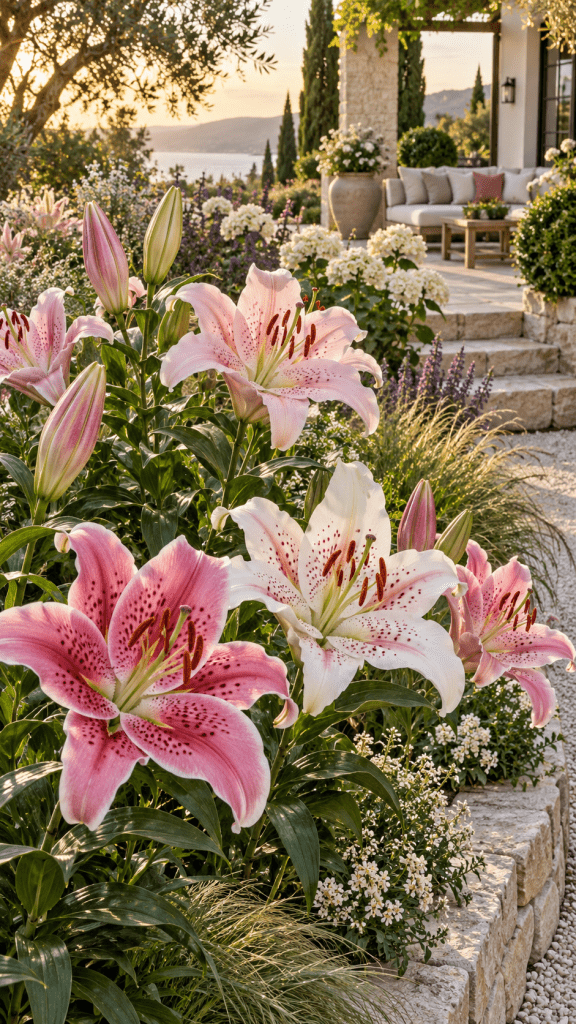
If Asiatic lilies are about bold color, Oriental lilies are about drama and atmosphere. Their enormous flowers often have broad petals, rich markings, contrasting throats, and powerful fragrance.
A mature Oriental lily in full bloom can become one of the most noticeable plants in the garden. The flowers may appear almost oversized compared with surrounding perennials, which gives them a glamorous quality that works beautifully in romantic and luxury-inspired landscapes.
Their fragrance makes them particularly valuable near places where people spend time. A lily planted beside a distant fence may look beautiful, but one positioned close to a terrace or seating area can provide both visual impact and perfume.
Creating a Romantic Garden With Oriental Lily Flowers
Oriental lilies are particularly effective when combined with softer plants. Their dramatic blooms benefit from surrounding textures that keep the garden from feeling too formal.
Consider pairing them with feathery ornamental grasses, airy perennial flowers, ferns, or plants with rounded foliage. The contrast between delicate surrounding plants and enormous lily flowers creates visual tension that feels natural yet sophisticated.
White Oriental lilies can be especially striking in partially shaded evening gardens. Their pale flowers remain visible as daylight fades, particularly when surrounded by darker foliage.
Pink varieties can create a more romantic atmosphere. Instead of combining them with every color in the garden, repeat similar dusty pink, burgundy, mauve, and cream tones nearby. The limited palette helps the planting feel cohesive.
A few carefully positioned lilies can sometimes create more impact than dozens of randomly mixed varieties.
Using Fragrance Strategically
Fragrant flowers are most valuable where people can actually experience them. That means Oriental lilies should ideally be planted close to patios, pathways, garden benches, terraces, or frequently opened windows.
A narrow path bordered with fragrant lilies can become particularly memorable during summer. Visitors experience the flowers gradually as they walk through the garden rather than seeing everything at once.
Fragrance can also enhance an outdoor dining area. Plant lilies several feet away from the table rather than directly beside seating, allowing their perfume to drift naturally through the space.
Important Note: Lilies can be extremely dangerous to cats, particularly true lilies in the Lilium genus. If cats have access to the garden or indoor flower arrangements, avoid situations where they could chew the plant or contact fallen petals, leaves, or pollen.
This consideration is particularly important when cut lilies are brought indoors. Their dramatic flowers make excellent arrangements, but pet safety should always come before decoration.
🥉 Top 3 Trumpet Lily Flowers for Architectural Garden Drama
Trumpet lilies offer a completely different visual effect. Their tall stems and elongated trumpet-shaped flowers introduce height and structure, making them perfect for gardens that need a strong vertical element.
Rather than behaving like small decorative flowers, they can function almost like temporary architectural features within a border. Their stems rise through surrounding planting and produce flowers well above lower foliage.
This makes them particularly useful toward the middle or back of deep flower beds. From there, their blooms remain visible without blocking smaller plants positioned in front.
Their shape also creates a more formal appearance. While Oriental lilies often feel romantic and lush, Trumpet lilies can look dramatic and statuesque.
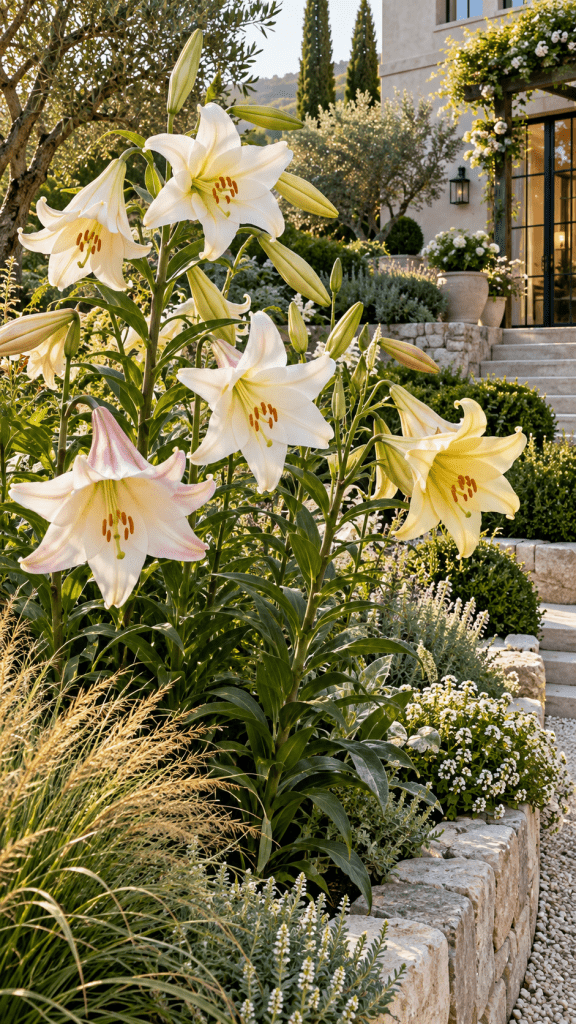
Building Height With Trumpet Lily Flowers
Tall gardens need vertical accents to keep planting from appearing flat. Trees and shrubs provide permanent height, but lilies can create seasonal vertical highlights without taking up much horizontal space.
Planting several Trumpet lilies together produces the strongest effect. Their stems can rise like floral columns from a mass of lower plants.
For a sophisticated design, surround them with ornamental grasses or perennials that have simpler flower shapes. The contrast allows the large trumpets to remain the main attraction.
Cream, white, or pale yellow varieties work particularly well against dark green foliage. Their flowers seem brighter because of the contrast.
Deep pink or warm apricot varieties can instead become part of a richer sunset-inspired garden palette containing bronze foliage, burgundy flowers, copper grasses, and warm stone.
Where Trumpet Lilies Look Best
Trumpet lilies work beautifully near architectural elements. They can soften the corners of a house, frame a garden gate, rise beside a wall, or provide height behind a low seating area.
They are also useful in long garden beds where the eye needs occasional vertical interruptions. Without taller plants, a border can become visually repetitive.
Positioning several groups at intervals creates a sequence of focal points. The eye moves from one group to another, making the garden feel larger and more layered.
In smaller gardens, one concentrated group can be enough. Place it where the lilies can be viewed from an important window, patio, or pathway.
How to Plant Lily Flowers for a More Professional Look
The difference between ordinary planting and landscape-style planting often comes down to composition.
Randomly distributing bulbs can produce flowers, but it rarely creates a polished design. Professional-looking gardens usually rely on repetition, grouping, layering, and controlled color palettes.
Begin by selecting one dominant lily color. This becomes the primary visual theme. A second color can then provide contrast, but avoid introducing too many unrelated shades unless the garden deliberately follows a wild cottage style.
Plant lilies in clusters. Odd-numbered groups often look natural, although larger masses can work equally well in formal gardens.
Then consider what will surround the stems. Lilies provide spectacular flowers, but the lower section of the plant is relatively narrow. Companion plants can fill that visual space.
Low mounding perennials, grasses, groundcovers, and foliage plants can create a dense base beneath the taller flowers.
Choosing the Right Location for Lily Flowers
Most lilies perform best when they receive good light while growing in soil that drains effectively. Constantly waterlogged conditions can create problems for bulbs, so soil structure matters as much as sunlight.
Before planting, observe the garden rather than choosing a location purely because it looks empty.
Watch how sunlight moves through the area during the day. Consider whether neighboring shrubs will become larger. Think about how rainwater behaves after heavy storms.
A suitable location should also make sense visually. Tall lilies hidden behind dense shrubs may never achieve their full decorative potential.
Instead, position them where the flowers can be appreciated from the most frequently used parts of the property.
That could mean the kitchen window, the terrace, the front walkway, or a favorite garden bench.
Creating Expensive Looking Color Combinations
Color selection is one of the simplest ways to make Lily Flowers look more sophisticated.
A luxury garden does not necessarily require expensive plants. Often, it simply requires restraint.
For a quiet modern look, combine creamy white lilies with pale grasses, silver foliage, soft green plants, and light stone.
For a romantic garden, combine blush pink lilies with mauve, burgundy, dusty purple, and creamy white flowers.
For a warmer Mediterranean-inspired palette, choose apricot, orange, cream, bronze, terracotta, and olive green.
A dramatic garden could combine dark burgundy lilies with deep green foliage and charcoal architectural materials.
The secret is repetition. When the same colors appear repeatedly through furniture, containers, foliage, flowers, and hard landscaping, the garden begins to feel connected.
Best Companion Plants for Lily Flowers
Companion planting can significantly improve how lilies appear within a landscape.
Lilies naturally create vertical lines, so rounded or spreading plants provide useful contrast. Ornamental grasses can soften the base while adding movement.
Low flowering perennials can create another layer of color beneath the lily blooms.
Foliage plants are equally important. Not every companion needs flowers.
Plants with silver, chartreuse, dark green, or burgundy leaves can create a stable background even before the lilies start blooming.
This approach also helps maintain interest after flowering finishes. When the garden depends entirely on lilies, the border can appear empty later in the season.
A mixed planting remains attractive because other plants gradually replace the lilies as the primary feature.
How to Make Lily Flowers Look Beautiful After Blooming
One of the biggest mistakes in seasonal gardening is designing only for peak flowering.
A garden should still look intentional before and after lilies bloom.
When flowers fade, remove spent blooms if desired, but allow healthy foliage to remain while the plant continues its natural seasonal cycle. Surrounding foliage from companion plants can help conceal the stems as the season progresses.
This is where grasses, hardy perennials, and leafy groundcovers become extremely useful.
Instead of seeing individual lily stems standing alone, the eye sees a complete layered planting.
By late summer, ornamental grasses can become the main feature. Later-blooming perennials can take over the color display.
The lilies become one chapter in a longer garden story rather than the entire story.
Using Lily Flowers Around Patios and Outdoor Living Spaces
Outdoor living areas are perfect locations for lilies because the flowers can be appreciated at close range.
Large containers can define the edges of a patio without requiring permanent construction. A pair of matching planters filled with lilies can frame steps or a doorway.
For a more relaxed look, use different container sizes but repeat the same material or color.
A large stone pot with tall lilies could be paired with smaller pots containing herbs, grasses, or foliage plants.
Lighting can make these displays even more dramatic after sunset.
Soft landscape lighting positioned nearby can illuminate pale flowers while leaving the surrounding garden darker. White and cream lilies are particularly effective in evening landscapes because they reflect available light.
Fragrant Oriental or Trumpet types add another sensory layer, making summer evenings feel more immersive.
Common Lily Flowers Design Mistakes to Avoid
One common mistake is using too many unrelated colors in a small space. Because lilies already have large dramatic flowers, excessive color can make the garden feel visually chaotic.
Another problem is planting individual lilies too far apart.
Scattered plants can look accidental, especially when surrounded by large areas of empty soil. Grouping usually creates a more convincing composition.
Scale is also important.
Very tall lilies positioned directly at the front of a narrow border can block smaller plants and make the design feel unbalanced. Use height gradually, placing lower plants in front and taller varieties farther back.
Ignoring the surrounding landscape is another mistake.
The lilies should complement nearby paving, walls, furniture, containers, and architecture. Warm apricot lilies might look beautiful beside natural timber and terracotta, while crisp white lilies can complement black steel and pale stone.
Think of the entire garden as one composition rather than treating every flower bed as an isolated project.
Best 3 Ways to Display Lily Flowers
There are countless possibilities, but three approaches consistently create strong visual results.
1 Layered Garden Borders
A layered perennial border provides the most natural setting for lilies.
Place shorter plants toward the front, medium-height foliage and flowers through the middle, and lilies slightly farther back.
This allows the blooms to rise above the surrounding planting while keeping the stems integrated into the design.
Repeating lilies across the border creates continuity.
2 Large Statement Containers
Containers allow gardeners to bring lilies directly into outdoor living spaces.
Choose generous pots with enough visual presence to complement the scale of the flowers.
A minimalist container can make vibrant lilies look modern, while weathered stone or terracotta can create a softer traditional atmosphere.
Several containers grouped together can create an instant seasonal display.
3 Garden Focal Points
Lilies can also be treated as temporary focal features.
A concentrated group beside a gate, bench, sculpture, pathway intersection, or entrance naturally attracts attention.
Surround the lilies with simpler plants so the flowers remain visually dominant.
This is particularly effective with Oriental and Trumpet varieties because their large blooms naturally command attention.
Designing a Garden Where Lily Flowers Return Every Year
A memorable garden should not depend on constant redesign.
Instead, create a permanent structure using shrubs, grasses, groundcovers, pathways, and perennial plants. Lilies can then appear seasonally within that framework.
This method creates consistency while still allowing the garden to change throughout the year.
Spring bulbs can provide early color. Lilies can dominate during summer. Ornamental grasses and seed heads can provide autumn texture.
Evergreen plants can maintain structure in winter.
The result is a garden that constantly evolves without losing its identity.
When choosing lily locations, think several seasons ahead. Ask what will occupy the same visual space after flowering ends.
A well-planned garden always has another layer waiting to become visible.
Which of the Top 3 Lily Flowers Should You Choose
For gardeners who want cheerful color with broad design flexibility, Asiatic lilies are an excellent starting point. Their clean shapes, strong colors, and versatility make them easy to integrate into borders and containers.
For those who want a more luxurious sensory experience, Oriental lilies provide enormous flowers and unforgettable fragrance. They are particularly valuable near terraces, pathways, and relaxation areas.
For height and dramatic architectural presence, Trumpet lilies create the strongest vertical statement. They can transform the background of a border or become focal plants beside architectural features.
There is no need to choose only one type.
A carefully designed garden can use several lily groups in different locations, allowing each to perform a specific role.
Final Thoughts on Lily Flowers
The greatest strength of Lily Flowers is not simply the beauty of individual blooms. It is their ability to change the scale, atmosphere, and structure of a garden.
🥇 Asiatic lilies provide bold, versatile color and work beautifully in borders and containers.
🥈 Oriental lilies bring oversized romantic flowers and powerful fragrance to patios, pathways, and elegant garden compositions.
🥉 Trumpet lilies introduce architectural height and dramatic vertical structure.
The most impressive results come from treating lilies as part of the overall landscape rather than isolated seasonal flowers. Group them generously, repeat colors intentionally, combine them with complementary foliage, and place them where their height and fragrance can be fully appreciated.
A garden does not need hundreds of rare plants to look sophisticated. Sometimes a few carefully positioned groups of lilies surrounded by simple grasses, layered foliage, natural stone, and restrained colors can create a far more powerful effect.
When Lily Flowers are given space to rise above surrounding plants, they become more than summer blooms. They become living focal points that bring elegance, movement, fragrance, and unmistakable seasonal drama to the garden.