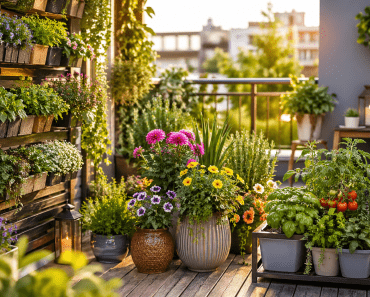
Fall flowers can completely transform a garden, porch, patio, or outdoor entrance at the exact moment when many summer plants are beginning to lose their color. Instead of allowing the landscape to fade into dull greens and browns, carefully chosen autumn blooms can introduce dramatic burgundy, glowing gold, dusty pink, burnt orange, creamy white, and deep purple tones that feel naturally connected to the season.
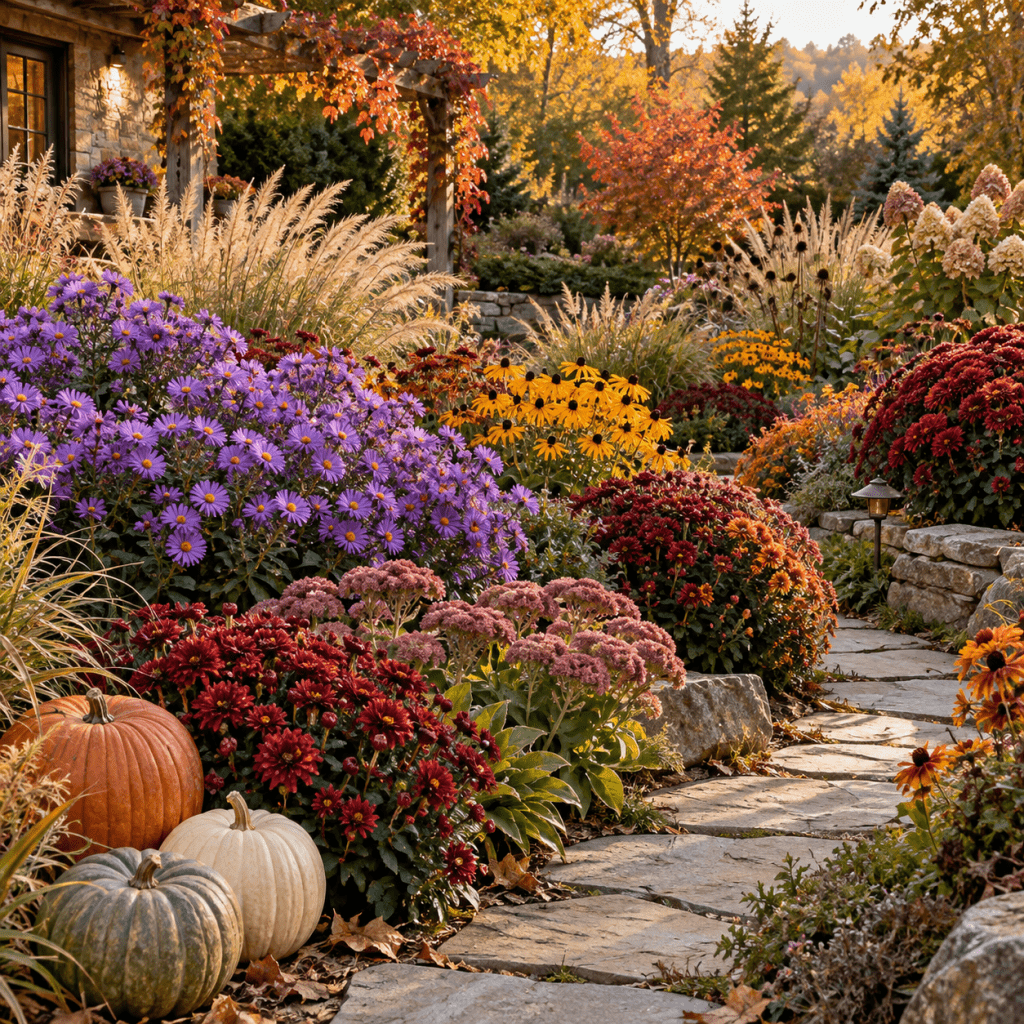
The most beautiful fall garden does not necessarily require dozens of different plants. In fact, some of the strongest autumn landscapes rely on a few carefully selected flowers combined with interesting foliage, ornamental grasses, textured seed heads, pumpkins, branches, and seasonal containers.
🍂 The secret is to think beyond individual flowers and design the entire autumn scene.
Some fall flowers create a romantic cottage atmosphere. Others produce bold architectural structure, while certain varieties are especially effective when used in containers near a front door or along a patio. Choosing the right combination makes the landscape look intentional instead of simply filled with seasonal plants.
These Top 3 fall flowers ideas explore three distinctive ways to create a memorable autumn garden: lush layered perennial borders, dramatic container displays, and sophisticated naturalistic planting with grasses and late-season blooms.
Why Fall Flowers Can Make an Autumn Garden More Beautiful
Autumn gardens have a visual advantage that spring and summer gardens do not always possess. The lower angle of seasonal sunlight creates warmer highlights, longer shadows, and stronger contrast between flower petals, leaves, grasses, and garden structures.
That warm light can make yellow flowers appear almost golden, burgundy petals look richer, and ornamental grasses glow beautifully around sunset.
Another advantage is texture.
A summer garden often depends heavily on flowers and fresh green foliage. During autumn, the landscape becomes more interesting because flowers can be combined with dried seed heads, changing leaves, grasses, branches, berries, pumpkins, weathered stone, terracotta pots, and wood.
🌾 This creates a layered landscape that feels deeper and more atmospheric.
Fall flowers can also extend the visual life of a garden. Instead of experiencing a sudden transition between colorful summer planting and a bare winter landscape, late-blooming plants create a gradual seasonal transformation.
The garden may begin with warm September flowers, move into richer October colors, and eventually transition toward dried grasses and seed heads as colder weather arrives.
The result is a garden that continues to feel alive even as the growing season slows down.
Top 3 Fall Flowers Ideas at a Glance
Choosing the best fall flower style depends on the location, amount of available space, and overall garden aesthetic.
| Fall Flower Idea | Best For | Main Colors | Overall Style | Key Plants |
|---|---|---|---|---|
| 🥇 Layered Autumn Perennial Border | Garden beds and pathways | Burgundy gold purple cream | Lush and sophisticated | Asters sedum chrysanthemums rudbeckia |
| 🥈 Statement Fall Flower Containers | Porches patios and entrances | Orange bronze cream deep red | Decorative and welcoming | Mums pansies ornamental kale asters |
| 🥉 Naturalistic Flowers and Grasses | Modern and relaxed gardens | Muted gold dusty purple brown | Organic and architectural | Asters helenium echinacea grasses |
Each concept can be adapted to small gardens, large landscapes, patios, front entrances, or even compact outdoor spaces.
The most successful approach is usually not to copy an arrangement exactly. Instead, use the planting strategy as inspiration and adjust the colors, plant varieties, and scale to suit the surrounding architecture and climate.
🥇 Top 1 Layered Fall Flowers for a Rich Autumn Garden
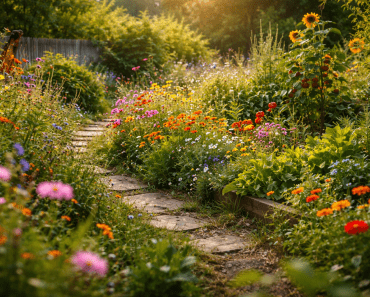
One of the most impressive ways to use fall flowers is to build a layered perennial border that looks full, colorful, and slightly wild while still feeling carefully designed.
This approach works especially well along garden paths, fences, patios, property boundaries, or large planting beds.
Instead of planting one flower variety in isolated groups, combine plants of different heights so that the flower border gradually rises from the front toward the back.
The result feels more natural and visually luxurious.
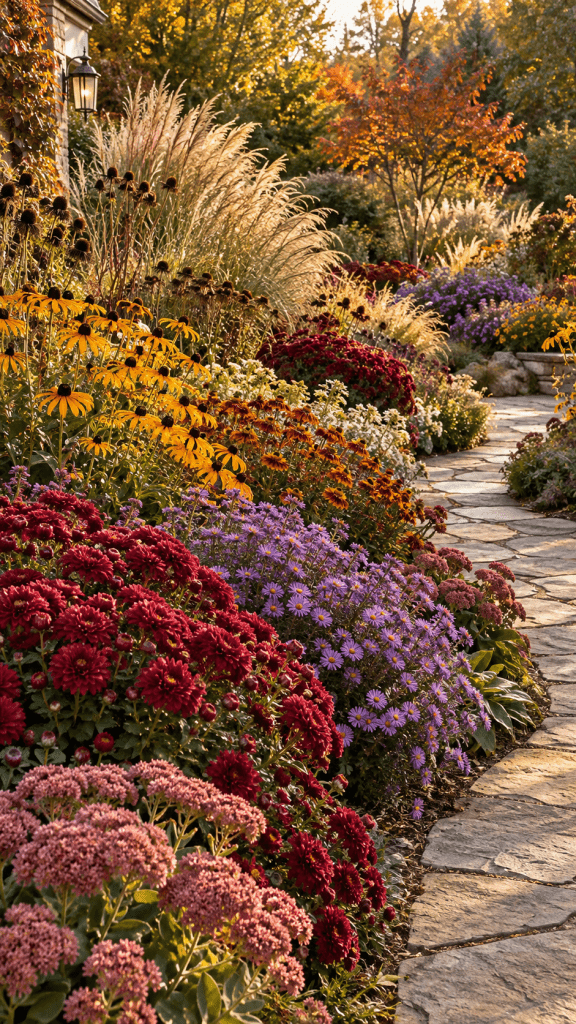
Imagine low-growing autumn flowers along the front edge, medium-height sedum and chrysanthemums through the center, and taller asters, rudbeckia, or ornamental grasses creating height in the background.
🍁 When these layers overlap slightly, the garden appears deeper and more established.
Use Warm Autumn Colors Without Making the Garden Too Orange
Orange may be strongly associated with fall, but an autumn garden composed entirely of orange flowers can quickly become visually overwhelming.
A more sophisticated approach is to use orange as one element within a broader seasonal palette.
For example, combine burnt orange flowers with:
- deep burgundy
- dusty purple
- muted gold
- rusty red
- creamy white
- warm pink
- chocolate brown foliage
- soft green grasses
These colors create a richer transition between summer and winter.
Purple asters are particularly useful because their cool flower color balances warm yellow and orange blooms.
Sedum can introduce dusty rose and wine tones, while yellow rudbeckia adds glowing autumn brightness.
The contrast keeps the garden energetic without becoming too themed.
Add Asters for Soft Purple Fall Flowers
Asters are among the most recognizable late-season flowering plants.
Their small daisy-shaped flowers can create clouds of purple, lavender, blue-violet, pink, or white across the garden.
They are especially beautiful when planted in generous groups rather than isolated individual plants.
A large drift of purple asters beside warm ornamental grasses can create a landscape that feels both romantic and natural.
💜 Purple also works beautifully with the golden tones commonly found in autumn foliage.
Try placing asters behind lower plants so their flowers appear to float above the front layer.
They also pair beautifully with sedum, rudbeckia, echinacea seed heads, and grasses.
Use Sedum for Structure and Deep Autumn Color
Sedum adds something different from traditional daisy-shaped fall flowers.
Its broad clusters of tiny flowers create substantial blocks of color rather than delicate individual blooms.
Depending on the variety and stage of the season, sedum flowers can appear pale green, blush pink, dusty rose, burgundy, or rusty brown.
This gradual change makes sedum especially valuable in fall planting.
Early in the season, it can provide fresh color. Later, the flower heads become deeper and more subdued, eventually creating attractive dried structure.
That means the plant continues contributing visual interest even after the brightest flowering period ends.
Bring in Chrysanthemums Carefully
Chrysanthemums are practically synonymous with autumn, but they are most attractive when integrated thoughtfully.
Instead of filling an entire flower bed with perfectly rounded mums, use them between other plants.
Choose colors that complement the surrounding landscape.
Cream, dusty pink, muted bronze, deep burgundy, soft yellow, and burnt orange can all work beautifully.
Avoid using too many strongly contrasting colors in one small area.
🌼 Three or four coordinated shades usually produce a more elegant result than a rainbow of unrelated colors.
Try repeating the same chrysanthemum color in several areas of the border. Repetition creates visual rhythm and makes the planting appear professionally planned.
Let Ornamental Grasses Frame the Flowers
Although grasses are not technically the flowering stars of the border, they can completely change how fall flowers look.
Tall ornamental grasses create movement, height, and softness.
When afternoon sunlight passes through their seed heads, the grasses can glow with golden highlights.
They also provide a neutral background that allows stronger flower colors to stand out.
Place taller grasses toward the back or occasionally within the middle of a large planting bed.
The goal is not to create a wall of grass but to introduce vertical movement between masses of flowers.
Important Note: Always choose fall flowers and ornamental grasses that are suitable for your local climate, sunlight conditions, soil, and growing zone. A beautiful planting design will perform much better when the plants naturally match the conditions of the garden.
🥈 Top 2 Fall Flowers for Stunning Porch and Container Displays
Not everyone has a large garden bed available for seasonal planting.
Fortunately, some of the most dramatic fall flowers can be grown in containers.
A carefully designed fall planter can make a front porch, patio, balcony, or entrance feel completely transformed without requiring permanent landscape changes.
The key is to avoid thinking of the container as simply a flowerpot.
Instead, treat it like a miniature landscape.
🌿 A successful container usually combines height, fullness, trailing elements, flowers, and interesting foliage.
Start With One Large Statement Planter
Small pots can be useful, but one substantial planter often creates more impact than several tiny containers.
Choose a container that visually matches the architecture around it.
For traditional homes, aged terracotta, stone-look planters, or dark urns can create a timeless appearance.
Modern homes may look better with simple charcoal, black, taupe, or warm concrete containers.
Cottage-style homes can support softer materials such as weathered ceramic or rustic terracotta.
The planter itself should act as a foundation rather than compete with the flowers.
Use Chrysanthemums as the Main Flower
For instant autumn color, chrysanthemums remain one of the easiest choices.
Rather than choosing a bright mixed-color plant, consider using one sophisticated color as the main floral mass.
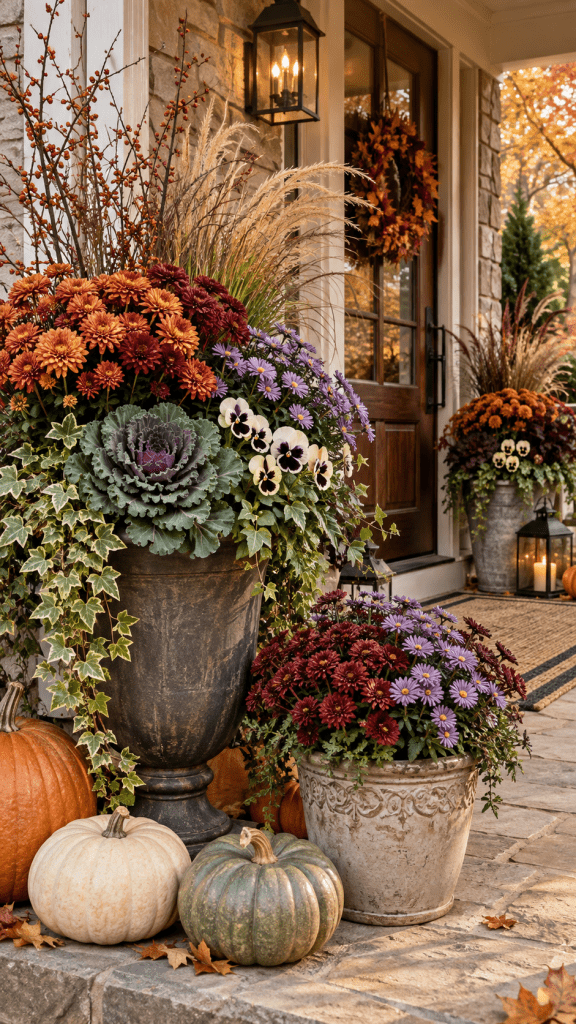
Deep wine-red mums can feel dramatic and elegant.
Cream chrysanthemums create a lighter farmhouse or cottage appearance.
Bronze and burnt orange varieties produce a classic autumn look.
Dusty pink varieties can create a softer transitional palette.
🍂 After selecting the main flower color, build the rest of the arrangement around it.
Add Ornamental Kale for Unexpected Texture
Ornamental kale is useful when a fall planter needs more structure and foliage variation.
Its layered leaves can create rosette-like shapes that almost resemble enormous flowers.
Depending on the variety, the foliage may contain combinations of green, cream, purple, pink, or burgundy.
This makes ornamental kale particularly attractive beside chrysanthemums and pansies.
It also provides a different shape from traditional flowers.
Where mums create rounded floral masses, kale introduces broad sculptural leaves.
That contrast prevents the planter from looking repetitive.
Add Pansies for Smaller Pops of Fall Color
Pansies can fill gaps around larger plants and add smaller flowers near the edge of the container.
Deep purple, wine, creamy yellow, rusty orange, and near-black varieties can work beautifully in autumn arrangements.
Instead of choosing extremely bright combinations, select colors that echo the main planter palette.
For example, a bronze chrysanthemum could be combined with dark purple pansies and green-purple ornamental kale.
A cream chrysanthemum might work with burgundy pansies and muted foliage.
The result feels coordinated rather than random.
Add Branches for Vertical Drama
One of the easiest ways to make a fall planter look larger and more expensive is to add height.
Natural branches can provide that height without requiring another large plant.
Place several interesting branches near the center or back of the planter.
Twisted branches, birch stems, red dogwood stems, or other decorative woody material can create a sculptural effect.
🌾 Tall grass plumes can accomplish something similar.
The combination of vertical branches and rounded flowers produces a strong visual hierarchy.
The viewer sees the tall feature first, then the main flowers, and finally the smaller details around the edge.
Add Mini Pumpkins Without Overcrowding the Flowers
Pumpkins can enhance fall containers when they remain supporting elements rather than becoming the entire arrangement.
Small white, green, orange, or muted heirloom-style pumpkins can be tucked between pots or placed around the base.
Consider grouping two or three varieties together rather than creating a perfectly symmetrical display.
Natural asymmetry often looks more relaxed and sophisticated.
A tall planter filled with bronze mums and grasses beside several muted green pumpkins can communicate autumn immediately without relying on excessive seasonal decoration.
Create a Layered Front Door Arrangement
For larger entrances, combine containers of different heights.
Place one tall planter near the door, a medium planter slightly forward, and a smaller decorative container or pumpkin grouping near the ground.
This creates visual depth.
Avoid lining everything up perfectly.
Instead, slightly overlap the objects so the arrangement feels layered.
🚪 If the front door is already visually strong, such as dark green, black, natural wood, or deep burgundy, use flower colors that complement rather than compete with it.
The entrance should feel like one complete scene.
🥉 Top 3 Naturalistic Fall Flowers With Ornamental Grasses
The third idea moves away from highly arranged seasonal displays and toward something more relaxed.
Naturalistic fall planting uses flowers, grasses, seed heads, and loose plant groupings to imitate the layered character of a meadow.
This style can look particularly beautiful in modern gardens because it provides contrast against clean architecture.
Straight pathways, simple walls, stone patios, black-framed windows, and minimalist buildings become softer when surrounded by informal autumn planting.
🌾 The effect feels natural but still intentional.
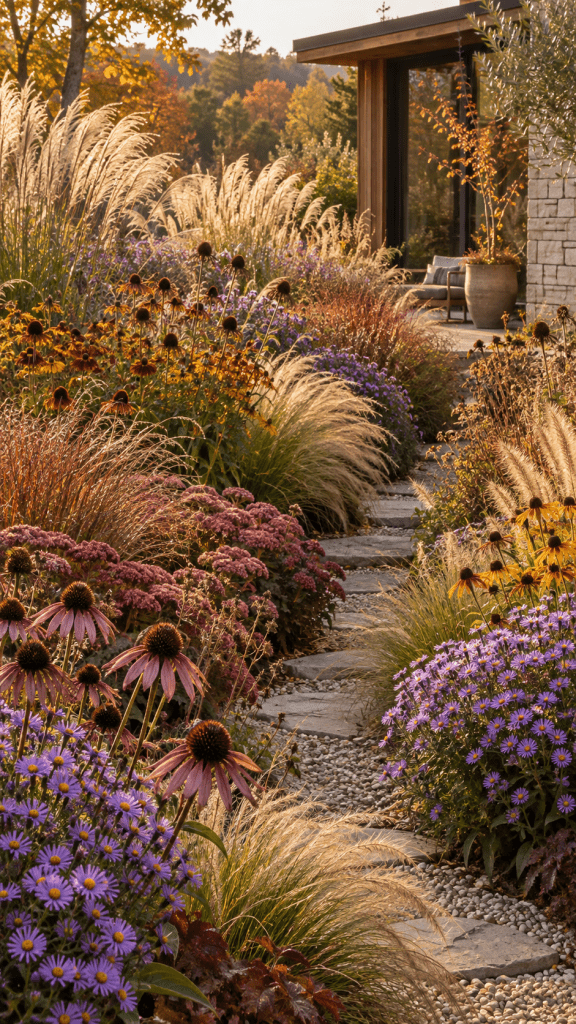
Use Fall Flowers in Large Repeating Drifts
One of the most common mistakes in naturalistic planting is using too many varieties in tiny quantities.
A more convincing approach is to repeat a limited number of plants in generous groups.
For example, instead of planting one purple aster, one yellow flower, one pink sedum, and one grass plant, create larger drifting sections.
Plant several asters together.
Repeat them farther down the border.
Place a grouping of sedum nearby.
Then repeat the same grass species through multiple sections.
This repetition creates continuity.
The planting may look spontaneous, but the repeated forms and colors hold the landscape together.
Combine Helenium With Deep Purple Flowers
Helenium can provide warm golden, bronze, orange, and reddish autumn tones.
Because its flowers often have strong central cones, it creates a lively textured appearance.
One particularly attractive combination is warm helenium paired with purple or blue-violet asters.
The colors sit in strong contrast while still feeling natural.
Add ornamental grasses around them and the border begins to resemble a stylized autumn meadow.
The flowers do not need to be arranged in rigid rows.
Allow their shapes to overlap slightly.
This creates depth and makes the planting feel more mature.
Keep Echinacea Seed Heads After Flowering
A beautiful autumn garden is not only about fresh flowers.
Spent flowers can also become part of the composition.
Echinacea is a good example.
After the petals fade, its distinctive central seed heads can remain upright.
These dark architectural forms contrast beautifully with softer grasses and colorful autumn flowers.
Instead of immediately removing every faded flower, consider which seed heads contribute interesting structure.
🍁 Selective tidiness often looks more natural than completely clearing the garden.
A border containing asters, sedum, ornamental grasses, and dark echinacea seed heads can remain visually interesting even as the season progresses.
Use Grasses as the Connecting Element
Naturalistic gardens become much more convincing when grasses weave between flowering plants.
The grasses visually connect separate flower groups and soften transitions.
Choose varieties that suit the scale of the garden.
Large grasses can become architectural features in spacious beds, while smaller grasses are usually more suitable for compact landscapes.
Seed heads are particularly important.
Feathery grass plumes catch autumn sunlight and introduce movement whenever the wind passes through the planting.
This movement prevents the landscape from feeling static.
How to Choose the Best Fall Flowers Color Palette
Color can determine whether a fall garden appears traditional, romantic, modern, rustic, or sophisticated.
Before purchasing plants, choose a general palette.
This does not mean every flower must be exactly the same color.
Instead, select a family of colors that naturally relate to each other.
Classic Warm Autumn Palette
A traditional fall garden can use:
🍁 burnt orange
🌼 golden yellow
🤎 bronze
❤️ deep rust
🌿 olive green
🤍 warm cream
This palette works especially well with natural wood, brick, terracotta, and stone.
Use orange and yellow flowers as the strongest visual accents while grounding them with darker foliage and grasses.
Romantic Fall Flowers Palette
For a softer aesthetic, consider:
💜 dusty purple
🌸 muted pink
🍷 burgundy
🤍 creamy white
🌿 sage green
🤎 soft brown
This palette is especially attractive in cottage gardens.
Purple asters, pink sedum, pale chrysanthemums, and burgundy foliage can produce a layered romantic appearance without looking overly bright.
Modern Moody Autumn Palette
Contemporary landscapes can handle darker combinations such as:
🖤 deep plum
🍷 wine red
🌿 dark green
🤎 chocolate brown
🤍 cream
🌾 muted bronze
Use these colors beside black planters, stone walls, dark exterior siding, or modern architecture.
The flowers should provide richness rather than intense brightness.
Fall Flowers for Small Gardens and Compact Outdoor Spaces
A limited amount of space does not prevent a beautiful fall display.
In fact, smaller gardens can sometimes be easier to style because every plant has a clear visual role.
The key is controlling scale.
Instead of using many tiny flowerpots, create one or two stronger compositions.
A large container filled with autumn flowers can become the main feature.
Then add a smaller supporting planter, decorative grass, or seasonal element nearby.
Use Vertical Space
Tall flowers and grasses allow compact gardens to feel fuller without consuming excessive ground space.
Place taller elements toward the back of the planting area.
Medium-height flowers can occupy the middle layer, while lower pansies or foliage plants define the front.
This creates the same layered appearance used in large gardens but on a smaller scale.
Vertical structure also draws the eye upward, making a compact area feel more substantial.
Repeat Colors Instead of Adding More Varieties
Small spaces can become visually chaotic quickly.
Limit the palette.
For example, a compact patio might use only cream chrysanthemums, purple asters, and bronze grasses.
Those three elements can be repeated in several containers.
The repetition makes the entire area feel coordinated.
✨ Simplicity often creates a more expensive appearance.
Fall Flowers for Front Yard Curb Appeal
The front garden is different from a backyard because it is often viewed from farther away.
Small details may disappear at that distance.
For this reason, stronger flower groupings are usually more effective.
Instead of spreading individual plants across the entire yard, group similar flowers into visible blocks.
A cluster of deep purple asters is much easier to notice than several individual plants separated across the landscape.
The same principle applies to chrysanthemums.
Three coordinated plants near an entrance may create more impact than six unrelated colors scattered across the yard.
Frame the Entrance With Flowers
The front door is naturally one of the strongest architectural focal points of a home.
Use fall flowers to guide attention toward it.
Plant or place containers on one or both sides of the walkway.
The arrangement does not need to be perfectly symmetrical.
In fact, slightly asymmetrical landscaping can appear more modern.
One side might contain a tall grass planter and chrysanthemums while the other contains a lower group of pumpkins and asters.
Both sides still relate through color.
Mixing Fall Flowers With Pumpkins and Seasonal Decor
Pumpkins and flowers naturally complement one another because they provide different shapes.
Flowers produce soft texture and smaller details, while pumpkins introduce large rounded forms.
Use the difference intentionally.
Place pumpkins lower than most flowers.
This grounds the composition visually.
Muted varieties such as creamy white, sage green, dusty orange, pale peach, or deep green often blend more easily with sophisticated flower palettes than extremely bright orange pumpkins.
Natural materials can enhance the scene further.
Try adding woven baskets, aged terracotta, wooden crates, stone containers, or simple lanterns.
The goal is to create layers without overwhelming the flowers.
How to Keep Fall Flower Displays Looking Intentional
Beautiful seasonal styling often depends more on editing than adding.
When every available space is filled with flowers, pumpkins, signs, lanterns, wreaths, baskets, and decorative accessories, individual features lose their impact.
Choose a hero element.
In a flower bed, the hero might be a large drift of purple asters.
In a porch arrangement, it could be a dramatic bronze chrysanthemum planter.
In a modern garden, tall glowing grasses might provide the dominant structure.
Everything else should support that feature.
Repeat Shapes and Materials
Repetition creates cohesion.
If terracotta is used for one major planter, consider repeating smaller amounts elsewhere.
If burgundy flowers appear near the entrance, introduce the same color farther along the pathway.
If ornamental grasses frame one side of a garden bed, use another group farther away.
These subtle connections make separate planting areas feel like parts of the same landscape.
Creating a Fall Flowers Garden That Still Looks Good Later in the Season
The best autumn garden should not collapse visually the moment a few flowers fade.
Include plants that provide lasting structure.
Ornamental grasses are extremely useful for this purpose.
Seed heads can also remain attractive.
Evergreen foliage, textured branches, stone features, and decorative containers continue contributing when flower color decreases.
Think of the landscape as a gradual transformation rather than a single moment.
September may contain more active flowering.
October might highlight stronger foliage color.
Later autumn may rely more heavily on grasses, dried seed heads, branches, and sculptural plant forms.
This evolving appearance is one of the most interesting characteristics of seasonal garden design.
Which of These Top 3 Fall Flowers Ideas Is Best
Each of the three approaches creates a different atmosphere.
🥇 Layered perennial fall flowers are the strongest choice for gardeners who want abundant seasonal color and a traditional flower-filled landscape.
Asters, sedum, chrysanthemums, and warm late-season blooms can create an impressive border that appears rich from early autumn through the cooler weeks of the season.
🥈 Fall flower container displays are ideal for porches, patios, balconies, and small spaces.
They offer immediate transformation and can be adjusted easily as plants change throughout the season.
Using one strong planter combined with smaller supporting elements often produces the most polished result.
🥉 Naturalistic fall flowers with ornamental grasses offer a more contemporary and relaxed direction.
Instead of depending entirely on bright flowers, this approach celebrates texture, seed heads, movement, warm sunlight, and changing plant forms.
It can remain beautiful even when some flowers begin to fade.
Final Thoughts on Creating Beautiful Fall Flowers Displays
The most memorable fall flowers arrangements are rarely the ones containing the greatest number of plants.
They are the gardens where every flower, color, texture, and seasonal element contributes to one clear visual story.
Asters can introduce clouds of autumn purple.
Sedum can provide dusty pink and burgundy structure.
Chrysanthemums deliver recognizable seasonal color.
Ornamental grasses add movement and golden texture.
Pumpkins, branches, seed heads, stone, wood, and terracotta can then complete the landscape without overpowering the flowers.
🍂 For maximum impact, start with a limited color palette and repeat it throughout the space.
🌾 Mix flowers with different heights and textures instead of using plants of equal size.
🏡 Connect the planting to the architecture of the home so the flowers feel like part of the property rather than temporary decorations.
And most importantly, allow the garden to look like autumn.
Not every leaf needs to be perfectly green. Not every fading flower needs to disappear immediately. Seed heads, bronze foliage, dried grasses, changing colors, and natural imperfections are part of what makes this season so visually distinctive.
Whether the goal is a lush cottage border, an elegant porch display, or a softly structured meadow-inspired garden, these Top 3 fall flowers ideas offer three very different ways to bring warmth, texture, and unforgettable seasonal color into the landscape.
A few thoughtful plant choices can turn the final months of the growing season into one of the most beautiful moments of the entire garden year.