The best fall outdoor planter ideas can completely change the way a porch, patio, front step, or garden entrance feels during autumn. Instead of relying only on traditional orange mums and a few pumpkins, a thoughtfully designed fall planter can introduce height, movement, texture, seasonal color, and an expensive designer look without requiring a complete outdoor makeover.

Autumn is especially suited to container styling because the season naturally offers an incredible range of textures. Ornamental grasses become feathery and architectural, foliage develops richer tones, chrysanthemums add dense color, ornamental kale creates sculptural rosettes, and dried branches introduce dramatic height. 🍂 When these elements are layered correctly, even one planter beside a front door can look intentional and luxurious.
The strongest fall containers also do more than simply display flowers. They create a miniature landscape. A successful arrangement usually contains something tall enough to establish structure, fuller plants to create volume, and softer or trailing material that connects the planting visually to the edge of the container.
These Top 3 ideas take three very different approaches to autumn decorating. The first is sophisticated and foliage-focused, the second embraces abundant harvest color, and the third uses branches and dried grasses for a minimalist look that can remain attractive late into the season.
Why Fall Outdoor Planter Ideas Can Transform an Entrance
Outdoor planters are one of the easiest ways to create a seasonal transition without changing permanent landscaping. A front garden may remain largely green throughout autumn, but containers near an entrance immediately communicate that the season has changed. 🍁 Their position close to the house also makes them visually important because they are often among the first decorative details visitors notice.
Scale plays a major role in the effect. One oversized planter filled with tall grasses and layered foliage can often create more visual impact than several tiny pots scattered around a porch. Large containers also provide enough room to create depth, allowing plants with different heights, shapes, and textures to be combined naturally.
Color is equally important, but beautiful autumn containers do not need to be overwhelmingly orange. Deep burgundy, dusty plum, olive green, bronze, caramel, cream, muted gold, dark chocolate, and silvery gray can all create a fall atmosphere. These quieter palettes often look particularly sophisticated beside neutral houses, natural stone, brick, wood, or black exterior doors.
Texture is another secret behind memorable fall arrangements. Soft grass plumes look more dramatic when placed beside broad leaves. Smooth pumpkins become more interesting next to feathery foliage. Glossy evergreen leaves provide contrast against matte dried stems. The combination makes a planter feel layered rather than flat.
Comparing the Top 3 Fall Outdoor Planter Ideas
Before choosing a design, consider the architecture of the house, the size of the container, the amount of sunlight available, and how long the arrangement should remain attractive. Some homeowners may prefer a lush living display, while others need something that survives beautifully after temperatures begin dropping.
The table below compares the three main styles and makes it easier to select the concept that fits the space.
| Fall Planter Style | Main Look | Best Materials and Plants | Ideal Location | Overall Mood |
|---|---|---|---|---|
| 🥇 Ornamental Grasses and Rich Foliage | Layered and architectural | Grasses, heuchera, sedge, kale, trailing foliage | Modern porch, patio, large entrance | Elegant and designer inspired |
| 🥈 Mums and Pumpkins Harvest Planter | Full and colorful | Mums, asters, ornamental kale, pumpkins, vines | Traditional porch, farmhouse entrance, front steps | Warm and welcoming |
| 🥉 Minimalist Branches and Dried Grasses | Sculptural and restrained | Branches, dried grasses, seed heads, evergreen accents | Contemporary homes, small porches, covered entrances | Minimalist and sophisticated |
There is no need for every container around the house to follow exactly the same formula. Repeating a few colors or materials is enough to create visual continuity. For example, one entrance planter might contain tall ornamental grass while smaller nearby containers repeat the same burgundy foliage or cream-colored pumpkins.
This approach keeps the display coordinated without making it feel overly symmetrical or staged. 🌾 Autumn landscapes naturally contain variation, and the most convincing seasonal planter arrangements often reflect that relaxed quality.
🥇 Top 1 Fall Outdoor Planter Ideas With Ornamental Grasses and Rich Foliage
The first of these fall outdoor planter ideas is ideal for anyone who wants an elevated autumn display without filling the porch with obvious seasonal decorations. Instead of making pumpkins or bright flowers the main feature, this concept relies on ornamental grasses, dramatic leaves, and subtle fall colors.
The visual centerpiece should be one tall grass or similarly architectural plant. Fountain grass, switchgrass, feather reed grass, or another locally suitable ornamental variety can provide movement and height. As autumn light passes through the grass plumes, the arrangement becomes especially beautiful during the morning or late afternoon.
Around the central grass, create a thick middle layer of foliage. Burgundy heuchera can introduce deep wine tones, ornamental kale can add sculptural blue-green or purple leaves, and sedges can provide softer movement. Depending on local conditions, ferns, euphorbia, dusty miller, or other foliage plants can also help create contrast.
The goal is not to include as many species as possible. Instead, concentrate on several plants with noticeably different leaf shapes. Broad leaves beside fine grass blades create visual tension. Rounded kale rosettes contrast beautifully with cascading foliage. These differences are what make the planter look professionally composed.

Building the Layered Designer Look
Start visually from the center or back of the planter, depending on where it will be viewed. A container positioned against a wall can have the tallest material toward the rear. A planter that can be viewed from several directions usually looks better when the tallest element sits close to the center.
The middle layer should be dense enough to hide exposed soil while still allowing each plant to retain its shape. Rich foliage plants in burgundy, bronze, dark green, and muted purple work exceptionally well because their colors suggest autumn without depending on flowers.
Near the rim, add one or two softer plants that lean slightly outward. Trailing ivy can work in some settings, as can creeping foliage or finely textured sedges. The purpose of this final layer is to soften the hard edge of the container and create a graceful transition from the planting to the pot.
A large matte planter makes this design particularly striking. Charcoal, warm gray, stone beige, weathered terracotta, or dark bronze containers allow foliage colors to become the main attraction. 🪴 For a contemporary entrance, matching oversized planters positioned on either side of a doorway can create a dramatic architectural frame.
Choosing an Autumn Color Palette
A successful foliage-heavy planter usually benefits from a controlled palette. Start with green as the foundation, then introduce two or three autumn colors rather than every traditional fall shade at once.
One sophisticated combination is olive green, burgundy, bronze, and cream. Another uses deep green, plum, dusty silver, and warm brown. For lighter homes, dark foliage can produce dramatic contrast. Against dark siding or black doors, pale grasses and silver foliage can help the planter stand out.
Small seasonal accents can still be added without taking over the composition. A miniature cream pumpkin tucked near the rim or several decorative seed heads can create an autumn reference while preserving the sophisticated botanical character.
As the season progresses, the arrangement may become even more interesting. Grass plumes dry naturally, foliage colors deepen, and seed heads develop more texture. Instead of expecting the planter to look identical for months, allow it to evolve with autumn.
🥈 Top 2 Fall Outdoor Planter Ideas With Mums and Pumpkins
For homeowners who love unmistakable autumn color, a harvest-inspired planter is difficult to beat. 🌻 This style uses chrysanthemums as the main flowering element and combines them with pumpkins, foliage, vines, and other seasonal textures.
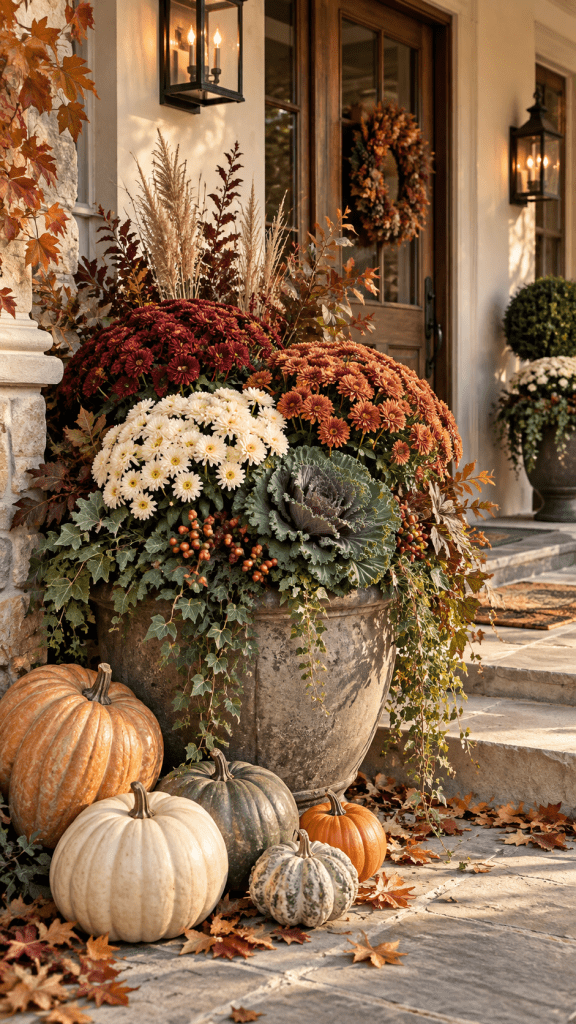
The mistake to avoid is placing one mum plant in the center of a pot and stopping there. While simple, that approach can look more like a temporary nursery container than a designed seasonal feature. A more interesting composition layers mums with materials of several heights and shapes.
Choose one dominant color family before planting. Burgundy mums mixed with cream pumpkins can feel refined and dramatic. Rust-colored flowers paired with sage foliage create a warm natural look. Soft yellow mums combined with dark green foliage can brighten a shaded porch.
Using too many bright colors in one small pot can make the arrangement feel chaotic. Limiting the palette allows the different textures to become more visible.
Creating a Lush Harvest Arrangement
Begin with one modest vertical element. This might be a narrow ornamental grass, a few decorative branches, or a tall foliage plant. The purpose is simply to prevent the container from appearing completely round and flat.
Mums can then form the main body of the arrangement. Instead of centering one perfect dome, position the flowers slightly off-center or combine plants at different heights. A slightly asymmetrical arrangement often feels more natural and contemporary.
Add ornamental kale or cabbage around the flowers. Their layered leaves bring a completely different shape into the composition while also reinforcing the cool-weather feeling. A few trailing vines can soften the planter rim and help make the arrangement appear fuller.
Pumpkins can be introduced around the planter rather than planted inside it. Place one or two beside the container, then continue the composition onto nearby steps. Vary the size but repeat the same general color family. Cream, muted sage, pale peach, dusty orange, and traditional orange pumpkins can all create different moods.
The result should look like the planting naturally expands into the surrounding porch instead of feeling trapped inside the container.
Making Traditional Fall Colors Look More Expensive
Traditional orange can still look sophisticated when it is balanced with quieter materials. Terracotta, warm wood, aged metal, natural stone, dark green foliage, and linen-colored textiles can all reduce the intensity of bright autumn flowers.
Instead of using five equally strong colors, choose one dominant seasonal hue and surround it with neutrals. 🍂 Burnt orange mums, for example, become more elegant beside creamy white pumpkins, olive leaves, and a weathered stone pot.
Container choice matters here as well. Classic urns are ideal for formal entrances, while aged terracotta suits cottage or farmhouse settings. Simple tapered planters create a cleaner contemporary effect. Wooden containers can work beautifully when the surrounding architecture already includes timber details.
A harvest arrangement also works particularly well in groups. One large floral planter can anchor the composition while smaller pots containing grasses, kale, or foliage create supporting layers around it.
Important Note: Outdoor planter plants have different tolerances for frost, moisture, sunlight, and cold temperatures. Always choose varieties suited to local conditions, keep containers properly drained, and protect or replace frost-sensitive plants when temperatures fall below their safe range.
🥉 Top 3 Fall Outdoor Planter Ideas With Minimalist Branches and Dried Grasses
The third concept takes a completely different approach. Instead of creating a lush floral arrangement, this style focuses on sculptural form. Tall branches, dried grasses, seed heads, and restrained greenery create a planter that feels artistic, modern, and surprisingly dramatic.
This is especially effective for contemporary houses where large quantities of traditional autumn decorations may clash with clean architecture. A minimalist planter can introduce seasonal warmth while preserving the simplicity of the exterior.
The container itself becomes an important part of the composition. Tall black planters, concrete pots, stone vessels, matte taupe containers, and weathered metal finishes all complement the architectural character of dried arrangements.
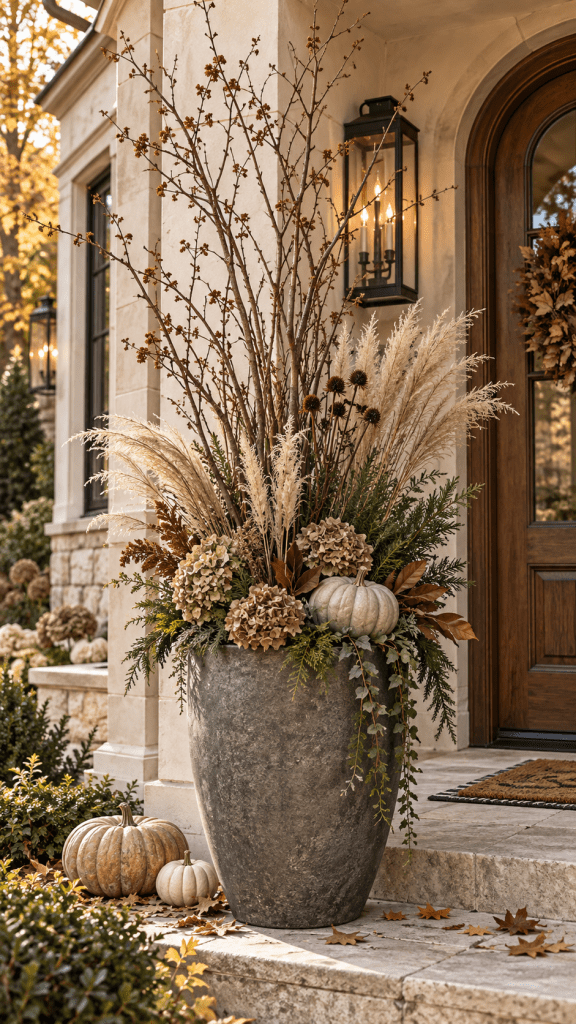
Branches should provide the main vertical structure. Their irregular silhouettes look beautiful against pale exterior walls and can frame doorways without blocking the entrance.
Designing With Height and Negative Space
One advantage of a branch-based planter is the ability to use negative space intentionally. A traditional floral container aims for fullness, but a sculptural arrangement can leave visible gaps between stems.
Those empty spaces make the shape of individual branches easier to appreciate. They also create shadows against the house, adding another visual layer throughout the day.
Begin with several tall branches rather than dozens of small twigs. Arrange them at slightly different angles so the result does not resemble a rigid bundle. Around the base, add dried ornamental grasses or preserved seed heads in varying heights.
A small amount of greenery can help connect the dry materials visually to the container. Evergreen clippings, dark leafy branches, or durable foliage may be suitable depending on local availability and conditions.
For a slightly softer interpretation, mix warm beige grasses with burgundy leaves or dark brown branches. The difference in value and texture keeps the arrangement from disappearing into a single neutral mass.
Extending the Display Into Late Autumn
One of the biggest advantages of dried material is longevity. Flowering containers can lose their impact after frost or heavy rain, while structural branches and dry grass heads may continue to look intentional much later in the season.
Once the early fall period passes, pumpkins can be removed while the branches and grasses remain. This allows the same container to transition naturally toward late autumn.
As colder weather approaches, evergreen stems can replace softer foliage. Pinecones or other natural seasonal elements can also be introduced subtly. The structure of the planter remains the same while the details evolve.
This makes minimalist planters especially practical for people who prefer decorating once and adjusting only a few components during the season. 🌾 The style can also bridge the visual gap between autumn and early winter more gracefully than a planter built entirely around flowering mums.
How to Choose the Best Fall Outdoor Planter Ideas for Your Home
The most beautiful arrangement is not necessarily the largest or most elaborate. It is the one that suits the proportions and architecture of the space.
A narrow porch may look cluttered with several oversized containers. In that situation, one tall planter beside the doorway can provide enough impact. A broad entrance with wide steps, however, may need several containers at different heights to avoid looking empty.
Pay attention to the shape of the doorway as well. Tall planters emphasize vertical architecture, while wide bowls or low pots can visually widen a small seating area. Repeating container shapes already present in the landscaping often creates a more unified design.
The home exterior should also guide the color palette. Modern white or greige houses provide a neutral background for burgundy foliage and golden grasses. Red brick often pairs beautifully with cream, dark green, plum, and muted rust. Black exteriors can support lighter foliage, silvery grasses, and pale pumpkins.
Natural wood porches work particularly well with earthy arrangements containing olive green, bronze, cream, caramel, and dried grasses. 🏡 These color relationships help the planter feel like part of the architecture instead of an unrelated seasonal accessory.
How to Make Fall Planters Look Fuller Without Overcrowding Them
Fullness comes from layering rather than simply adding more plants. A well-designed container can look abundant with relatively few elements when each plant performs a different visual role.
Height establishes the silhouette. Medium plants create body. Low or trailing foliage connects the arrangement to the container. Decorative seasonal objects can then extend the composition around the base.
Spacing also matters. Plants positioned too far apart can make a new container look unfinished, while excessive crowding may reduce airflow and make maintenance more difficult. Consider the mature size of living plants rather than judging spacing only by their appearance on planting day.
Another trick is to vary leaf scale dramatically. One large kale rosette placed beside fine grass blades can create more visual richness than several plants with similarly sized leaves. Contrast naturally makes each element easier to see.
Containers grouped together can also create fullness without forcing everything into one pot. Use one large hero planter accompanied by one or two simpler containers. For example, the largest vessel might contain mixed foliage while a smaller pot holds only ornamental grass.
This creates the layered Pinterest-style effect often seen at carefully designed front entrances while keeping individual containers relatively simple.
The Best Containers for Fall Outdoor Planter Ideas
The planter itself contributes almost as much to the final appearance as the plants. A beautiful arrangement in a container that feels too small or visually unrelated to the house can lose much of its impact.
Large stone-effect planters provide a timeless look and work especially well with ornamental grasses. Matte black containers create striking contrast and suit modern architecture. Terracotta introduces warmth and works naturally with harvest-inspired arrangements.
Weathered metal can bring character to farmhouse or rustic settings, while simple cream or taupe planters complement organic modern homes. The best choice usually repeats at least one material, color, or architectural detail already present around the entrance.
Scale should remain generous. A planter positioned beside a full-sized exterior door needs enough visual weight to compete with the architecture. Tiny pots can disappear when viewed from the driveway or street.
Depth matters for living plants too. Larger containers generally provide more room for roots and can hold moisture more consistently than very small pots, although drainage remains essential.
If existing containers are attractive but not tall enough visually, the plants themselves can create the necessary height. Branches and ornamental grasses can dramatically extend the silhouette without requiring a much larger footprint.
Styling Fall Outdoor Planter Ideas Around a Front Door
A planter becomes more powerful when it is treated as part of a wider entrance composition. Rather than decorating the pot in isolation, consider the doorway, doormat, steps, lighting, wall color, and nearby seating.
For symmetrical entrances, matching planters can create a polished formal look. Each container can use the same basic plant palette without being completely identical. Slight differences in branch direction or foliage placement prevent the arrangement from appearing artificial.
Asymmetrical entrances can be even more interesting. Place one large planter on the side with more open space, then balance it visually with a lantern, chair, bench, pumpkin grouping, or smaller container on the opposite side.
Autumn wreaths can also coordinate with planters when the materials relate to one another. A wreath containing dried grasses, for example, naturally connects with containers using similar grasses. A burgundy wreath can repeat dark foliage planted near the door.
The connection does not need to be exact. Repeating one or two colors is usually enough. ✨ Too much perfect matching can make an entrance feel like a retail display rather than an inviting home.
Easy Ways to Transition Fall Planters Through the Season
Autumn decorating does not need to happen all at once. In fact, seasonal containers often look more natural when they evolve gradually.
Early in the season, living foliage and flowering plants can dominate. Grasses may still be fresh and green, mums provide color, and trailing plants create softness.
As temperatures cool, pumpkins and gourds can be added around the base. The color palette can deepen by introducing burgundy foliage, dried seed heads, or warmer decorative materials.
Later, tired flowering plants can be removed while structural grasses, branches, kale, and other durable elements remain. Empty spaces can be filled with additional natural materials rather than rebuilding the entire container.
Near the end of autumn, the arrangement can move toward winter by reducing obvious harvest accessories and increasing evergreen texture. This gradual transformation creates a longer decorating season while reducing unnecessary work.
It also prevents the porch from suddenly feeling empty when pumpkins and chrysanthemums are removed.
Common Mistakes That Can Make Fall Planters Look Less Polished
One common problem is choosing plants that are all approximately the same height. Without variation, the planter can resemble a colorful mound instead of a designed composition.
Another issue is using too many unrelated colors. Autumn offers an enormous palette, but a container does not need to display all of it. Selecting a restrained color family generally produces a more elegant result.
Container scale is another frequent challenge. A very small pot beside a tall entrance door can look insignificant even when beautifully planted. Increasing the overall height and width usually creates better architectural balance.
It is also easy to rely too heavily on flowers. 🌿 Foliage is often what gives sophisticated containers their depth and longevity. Grasses, kale, heuchera, sedges, evergreen material, and trailing foliage provide texture even when blooms begin fading.
Finally, avoid ignoring the surroundings. The best planter should feel connected to the home. Repeating the color of the front door, exterior trim, nearby wood, stone, or metal details can make even an inexpensive arrangement appear carefully designed.
Which of These Top 3 Fall Outdoor Planter Ideas Is Best
The best option depends on the atmosphere the entrance needs.
For an elegant, contemporary, foliage-rich display, Top 1 Ornamental Grasses and Rich Foliage offers the greatest versatility. Its mix of movement, layered leaves, and restrained colors works with many architectural styles and can look sophisticated throughout much of the season.
For unmistakable autumn warmth, Top 2 Mums and Pumpkins provides the strongest seasonal impact. It is welcoming, colorful, and ideal for porches where a classic harvest look feels appropriate.
For a modern arrangement with less emphasis on flowers, Top 3 Minimalist Branches and Dried Grasses creates the most architectural result. It is especially attractive beside contemporary doors, neutral exteriors, stone walls, and minimalist landscaping.
There is also no rule preventing elements from the three concepts from being combined. A tall grass planter could include a few mums early in autumn, then transition into a branch-and-evergreen arrangement later.
The key is maintaining a clear visual hierarchy rather than adding every seasonal decoration at once.
Final Thoughts on Fall Outdoor Planter Ideas
Great fall outdoor planter ideas are less about buying enormous quantities of seasonal plants and more about combining the right shapes, textures, colors, and proportions. A planter becomes memorable when it has a clear focal point and enough contrast to reveal every layer.
🥇 Ornamental grasses and rich foliage create the most designer-inspired botanical look. Their muted color palette and strong texture make them especially effective for sophisticated porches and modern outdoor spaces.
🥈 Mums and pumpkins deliver classic autumn charm with plenty of welcoming color. When the palette is restrained and foliage is layered around the flowers, the traditional harvest look can feel surprisingly polished.
🥉 Minimalist branches and dried grasses provide a sculptural alternative that can remain attractive long after delicate flowers have faded. Their simple silhouettes are particularly effective when paired with contemporary architecture and oversized neutral containers.
Whichever style fits the home, focus on height, texture, proportion, and a limited seasonal palette. Add just enough autumn detail to establish the mood, then allow the plants and natural materials to become the real decoration.
With that approach, even a simple front step can become a beautiful seasonal focal point. 🍂 A few thoughtfully designed containers can make an ordinary entrance feel warmer, richer, and significantly more inviting throughout autumn.