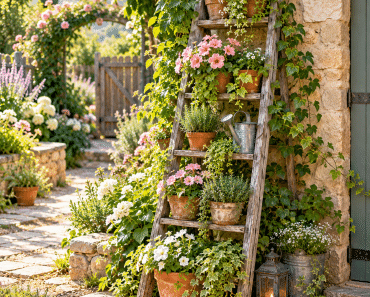
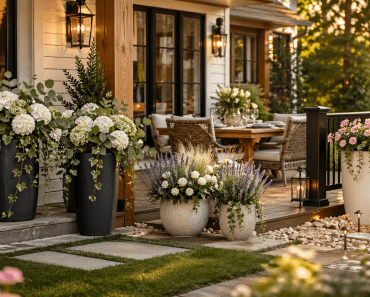
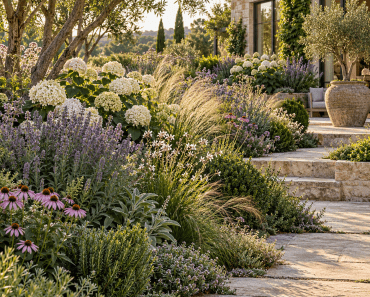
When autumn begins to cool the air and summer flowers start losing their energy, Mum Garden Ideas become one of the easiest ways to bring color, structure, and seasonal personality back into an outdoor space. Chrysanthemums, commonly called mums, are famous for their dense flowers, impressive range of colors, and ability to create an instant fall transformation without requiring an elaborate garden redesign.
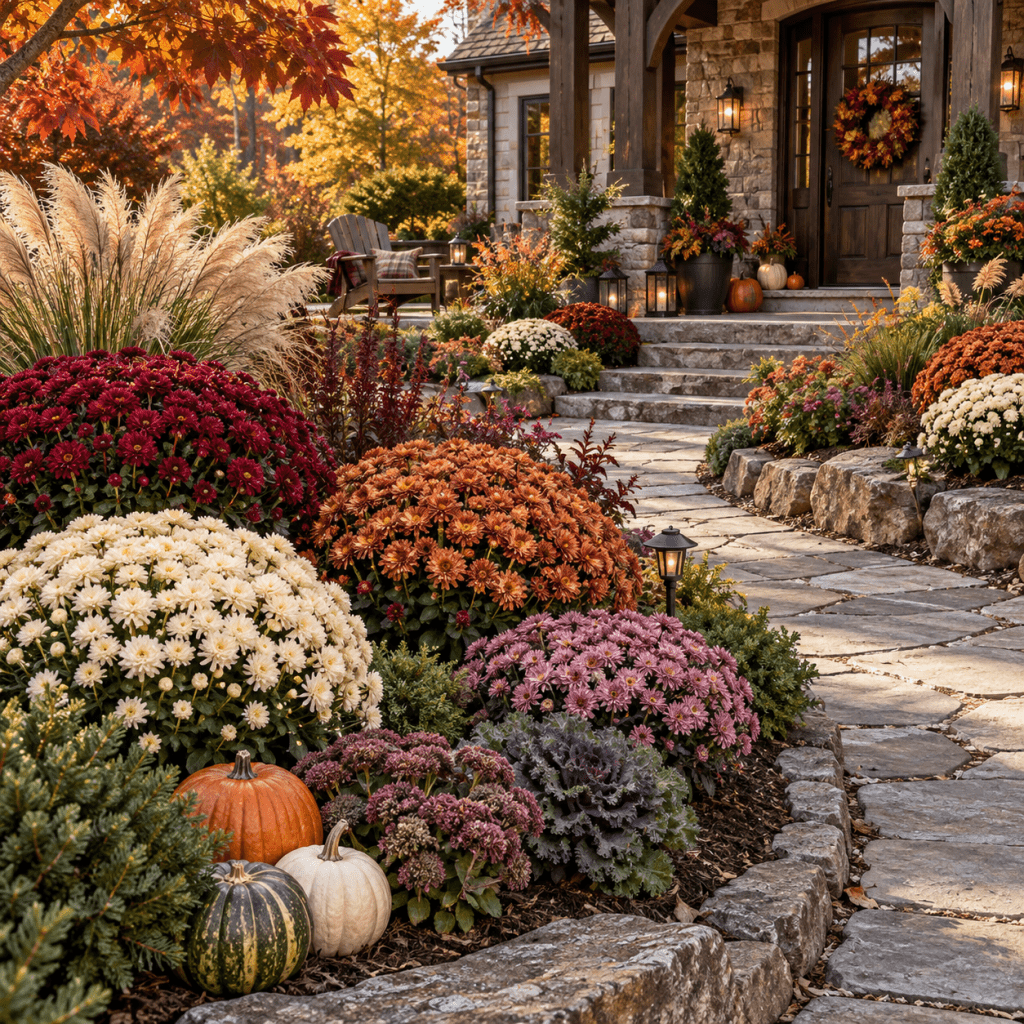
The most beautiful mum gardens, however, usually go beyond placing several pots beside the front door. Mums become far more impressive when they are treated as part of the overall landscape. They can soften pathways, fill gaps in perennial borders, surround patios, brighten porches, or become dramatic seasonal focal points.
🍂 The secret is choosing a design style first and then building the planting around it.
Instead of combining every color and variety available at the garden center, a more intentional approach produces a garden that looks polished and professionally designed. Repeating colors, varying plant heights, adding foliage plants, and allowing enough space between flowers can dramatically improve the finished result.
These Top 3 Mum Garden Ideas explore three different approaches: luxurious layered borders, welcoming pathway displays, and naturalistic autumn planting combinations. Each style can be adjusted for a large backyard, compact front garden, patio, porch, or even a small urban landscape.
Why Mum Garden Ideas Work So Well for Fall Landscaping
Mums have become strongly associated with autumn for good reason. Many varieties begin producing their best flowers as daylight becomes shorter, making them perfectly timed for the transition from late summer into fall.
Their rounded growth habit also creates instant visual fullness. A young perennial border may require years to develop mature volume, while several healthy mums can make an empty section of garden look established almost immediately.
🌼 Their versatility is another major advantage.
Mums are available in warm orange, golden yellow, creamy white, burgundy, bronze, pink, purple, red, and many blended shades. Because of this wide palette, they can fit both traditional harvest displays and sophisticated contemporary landscapes.
For a classic autumn atmosphere, orange and bronze mums can be paired with pumpkins, ornamental grasses, and weathered terracotta.
For something more elegant, creamy white chrysanthemums can be mixed with deep burgundy foliage, natural stone, and dark green evergreen plants.
Gardeners who prefer a softer romantic look can combine dusty pink, pale lavender, cream, and muted peach varieties.
The flowers are also extremely useful for solving seasonal design problems. Empty spaces created by declining summer annuals can quickly be refreshed with mums. Bare porch containers can be replanted. Pathways can be emphasized. Outdoor seating areas can gain color without permanent construction.
The result can feel completely different depending on how the same plant is used.
Top 3 Mum Garden Ideas at a Glance
| Mum Garden Style | Best Location | Main Color Direction | Companion Plants | Overall Look |
|---|---|---|---|---|
| 🥇 Layered Mum Border | Front garden or backyard border | Burgundy cream bronze | Ornamental grasses asters sedum | Luxurious and professionally landscaped |
| 🥈 Mum Garden Pathway | Walkway entrance or porch | Orange yellow deep red | Pumpkins grasses kale evergreen shrubs | Welcoming and highly seasonal |
| 🥉 Naturalistic Mum Garden | Cottage garden or relaxed landscape | Soft pink cream rust purple | Grasses asters goldenrod sedum | Organic romantic and effortless |
Each approach creates a distinctly different atmosphere, so the best choice depends on the architecture of the home, the size of the garden, and the amount of seasonal color desired.
🥇 Top 1 Mum Garden Ideas With Layered Perennial Borders
One of the most sophisticated ways to decorate with chrysanthemums is to integrate them into an existing perennial landscape instead of treating them as temporary decorations.
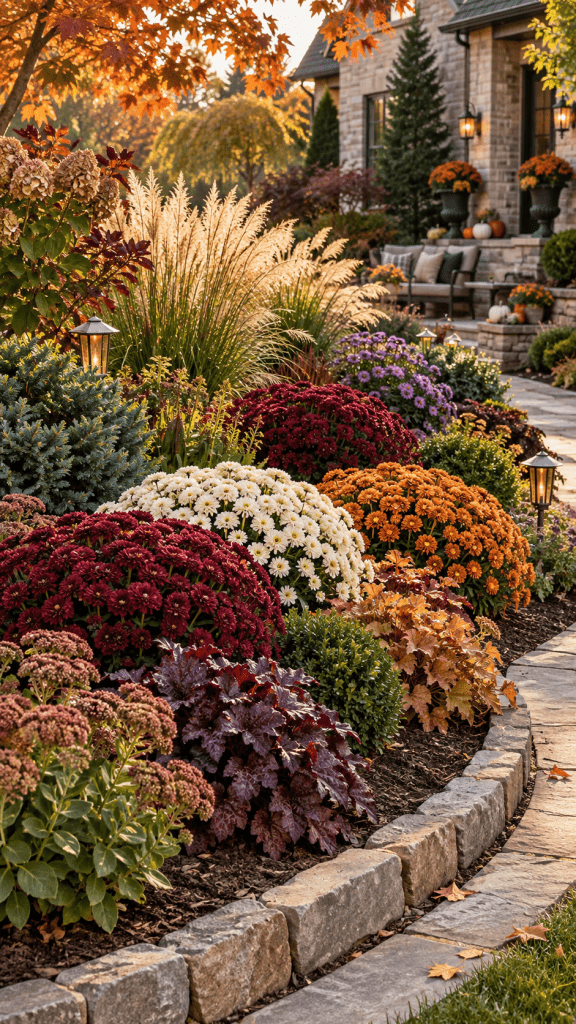
A layered mum border creates depth by arranging plants according to height, color, foliage texture, and flowering period. The finished garden looks fuller and more natural because chrysanthemums become part of a broader plant composition.
Begin with taller plants toward the back of the border.
Ornamental grasses are especially useful because they provide height without visually overwhelming the mums. Varieties with soft feathery seed heads introduce movement when autumn breezes pass through the garden.
Behind the chrysanthemums, grasses can create a delicate golden backdrop.
Medium-height mums should form the dominant flowering layer.
Rather than planting one isolated chrysanthemum every few feet, create generous groups of three, five, or seven plants. Repeated masses of color are usually more visually powerful than scattered individual flowers.
For example, several burgundy mums planted together can create a deep dramatic focal point.
Nearby, a second group of creamy white mums can brighten the composition.
Bronze or muted orange chrysanthemums can then connect the two colors and introduce a warm autumn transition.
Choosing a Sophisticated Color Palette
Color selection has a major influence on whether the garden looks casual or carefully designed.
A luxurious border does not necessarily require many colors. In fact, limiting the palette often creates a more elegant result.
Try combinations such as:
Burgundy mums with creamy white chrysanthemums and bronze accents.
Muted peach mums with soft yellow flowers and warm grasses.
Deep purple chrysanthemums with pale lavender asters and silver foliage.
Cream mums with dark evergreen shrubs and ornamental grasses.
🍁 Repetition is important.
If burgundy is introduced on one side of the border, repeat the same color elsewhere. This technique visually connects different sections of the landscape.
Avoid creating a rainbow effect unless the goal is intentionally playful.
Add Texture Around the Mums
Flowers provide color, but foliage and texture create sophistication.
Combine chrysanthemums with plants that look attractive even when they are not flowering.
Sedum is an excellent companion because its sturdy flower heads create architectural structure.
Heuchera can introduce burgundy, caramel, lime green, or nearly black foliage.
Ornamental grasses provide vertical movement.
Evergreen shrubs create a stable backdrop after the mums stop flowering.
A border composed entirely of chrysanthemums can become visually flat because all the plants have similar rounded shapes. Mixing contrasting forms prevents this problem.
🌿 Think about shape as much as color.
Rounded mums look particularly beautiful beside narrow grass blades, upright shrubs, trailing groundcovers, and broad textured leaves.
Create a Strong Garden Edge
Even colorful flowers can appear messy when the border lacks definition.
A clean landscape edge immediately makes the garden look more intentional.
Natural stone edging works beautifully in cottage or European-inspired gardens.
Slim metal edging suits modern landscapes.
Brick creates warmth and traditional character.
A simple sharply cut lawn edge can also look extremely elegant.
Finish the planting bed with mulch to create visual contrast and help retain soil moisture.
Dark brown mulch can make cream and golden mums appear especially vivid.
Fine gravel is another attractive option for dry contemporary gardens.
🥈 Top 2 Mum Garden Ideas for a Beautiful Fall Pathway
A garden path is naturally one of the strongest visual lines in a landscape, making it an ideal location for seasonal chrysanthemums.
Instead of decorating only the porch, extend the autumn display toward the street or garden gate. This creates a gradual sense of arrival and makes the entire entrance feel intentional.
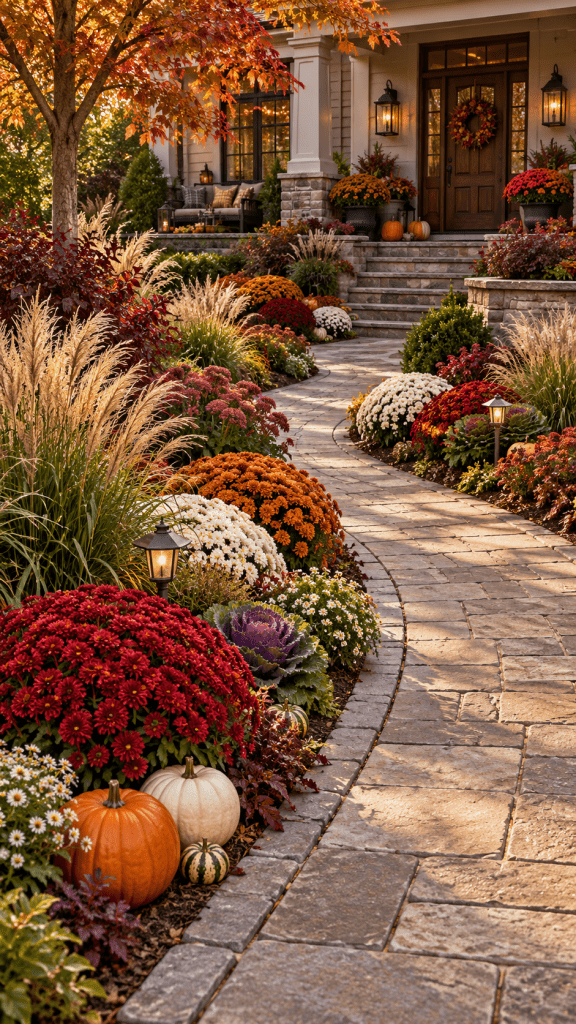
Imagine a stone or brick pathway lined with generous clusters of mums.
The flowers do not need to form a continuous border. Strategic groups placed at key points usually look more natural.
Start with larger arrangements near the entrance.
Then repeat smaller clusters along the path.
Finally, create another strong planting near the porch or front door.
This repetition leads the eye through the landscape.
Use Different Heights Along the Path
One of the most common mistakes in seasonal landscaping is keeping everything at exactly the same height.
A row of identical mums can look attractive but somewhat predictable.
Layering plants creates far more dimension.
Place low compact chrysanthemums close to the path.
Behind them, introduce slightly taller mums, ornamental kale, asters, or small grasses.
At selected points, add upright ornamental grasses or evergreen shrubs.
🎃 Pumpkins can also be used as temporary low-level accents.
Instead of lining dozens of pumpkins in a straight row, place them in small asymmetrical groups beside clusters of chrysanthemums.
Choose pumpkins in several sizes.
Traditional orange creates a cheerful harvest atmosphere, while white, pale green, dusty peach, and muted gray varieties create a more sophisticated look.
Create a Dramatic Entrance Moment
The strongest mum display should usually appear near the main destination of the pathway.
For a front garden, that destination is typically the entrance door.
Large containers filled with chrysanthemums can frame the doorway and visually connect the porch with the pathway planting.
Choose containers that match the style of the home.
Weathered terracotta looks beautiful with cottage architecture.
Dark charcoal planters complement contemporary homes.
Stone urns suit traditional houses.
Natural wood containers work well with rustic properties.
Instead of filling every pot only with chrysanthemums, create layered arrangements.
Use one large mum as the main flowering element and surround it with trailing ivy, ornamental grasses, heuchera, or evergreen branches.
The variation in foliage makes the container look designed rather than simply purchased.
Build a Color Journey
The pathway can gradually transition from one color to another.
For example, begin with golden yellow chrysanthemums near the outer garden.
Introduce bronze and orange toward the center.
Finish with burgundy mums near the front door.
This subtle progression creates visual movement.
Another approach is repeating the same limited palette throughout the entire pathway.
Cream, burgundy, and dark green can produce a refined autumn garden that feels elegant rather than overly festive.
Important Note: Nursery mums sold in full flower are often densely rooted and can dry out surprisingly quickly. Check the soil regularly after planting or placing them in containers, because repeated severe drying can shorten the flowering period dramatically.
Add Evening Lighting
A pathway garden should not disappear after sunset.
Soft lighting can transform mums into a beautiful evening feature.
Warm landscape lights positioned behind ornamental grasses create dramatic silhouettes.
Small pathway lights can highlight flower clusters.
Lanterns can add seasonal character near stairs or the porch.
Avoid extremely bright cool-white lighting.
Warm illumination usually works better with autumn shades such as orange, bronze, burgundy, cream, and brown.
✨ The goal is atmosphere rather than maximum brightness.
🥉 Top 3 Mum Garden Ideas With a Naturalistic Autumn Landscape
The third approach is ideal for gardeners who prefer landscapes that feel relaxed, abundant, and slightly wild.
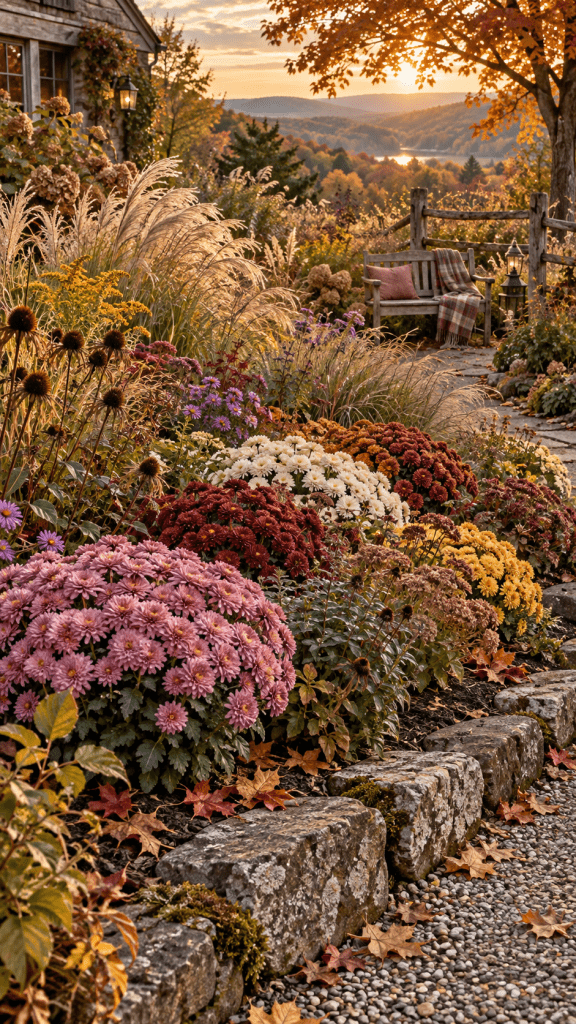
Instead of arranging chrysanthemums in clearly separated decorative groups, blend them with grasses and late-season perennials so the flowers appear to grow naturally through the garden.
This style works particularly well in cottage gardens, country landscapes, meadow-inspired gardens, and informal backyards.
Begin by avoiding perfectly symmetrical placement.
Plant mums in loose drifts.
Allow some groups to contain several plants while others contain only one or two.
Mix them among other autumn bloomers rather than separating every variety.
🌾 Ornamental grasses are especially important in this style.
Their airy flowers soften the dense rounded form of chrysanthemums and create movement.
Combine Mums With Late Season Perennials
A naturalistic garden becomes most attractive when multiple plants reach their seasonal peak together.
Asters are among the best companions.
Purple and lavender asters contrast beautifully with golden, orange, and bronze mums.
Sedum provides strong flower heads that remain decorative even as they begin drying.
Goldenrod introduces bright yellow vertical flowers.
Japanese anemones can add delicate white or pink blooms.
Coneflowers provide seed heads that contribute texture after their petals fall.
Salvia and late-blooming grasses can extend the display.
The goal is not to make every plant flower at exactly the same moment.
Instead, create overlapping waves of seasonal interest.
As one flower begins fading, another becomes prominent.
Use Softer Autumn Colors
Naturalistic landscapes often look best with colors that resemble the surrounding environment.
Instead of extremely bright artificial-looking combinations, consider muted tones.
Dusty pink chrysanthemums.
Rust orange.
Cream.
Antique yellow.
Soft burgundy.
Muted purple.
Bronze.
These colors blend naturally with dried grasses, fallen leaves, weathered wood, and stone.
A softer palette can make the garden feel romantic and established.
Allow Seed Heads to Remain
A garden does not need to be perfectly cleaned the moment a flower fades.
Dried seed heads can provide valuable autumn and winter texture.
Sedum heads become deep rusty brown.
Grasses turn golden.
Coneflower centers create dark architectural shapes.
When mixed with late chrysanthemums, these fading plants produce an attractive seasonal transition rather than an abrupt end to the garden.
They can also support wildlife by providing habitat and food sources.
🐦 Gardens often become more visually interesting when every sign of natural aging is not immediately removed.
How to Choose the Best Mums for Your Garden
Not every chrysanthemum behaves exactly the same way.
Some are grown primarily as short-term seasonal decorations, while others can become established garden perennials under suitable conditions.
Understanding the difference can help determine how they should be used.
Garden Mums
Garden mums are often selected for outdoor landscapes because many cultivars can survive winter in suitable climates when properly established.
They generally form dense mounds covered with flowers.
If long-term growth is desired, planting earlier in the growing season gives roots more time to develop before cold weather arrives.
Spring-planted mums generally have a better opportunity to establish a strong root system than plants installed very late in autumn.
Florist Mums
Florist chrysanthemums are commonly grown for indoor displays, gifts, or temporary decoration.
They may produce spectacular flowers but are not necessarily selected for winter survival outdoors.
When buying chrysanthemums, check the plant label if perennial performance is important.
Choose Plants With Plenty of Buds
A chrysanthemum completely covered in open flowers looks impressive at the nursery, but it may already be approaching the peak of its flowering period.
For a longer display, look for plants with a mixture of flowers and unopened buds.
🌼 More buds usually mean more future flowers.
Healthy leaves should appear green and vigorous rather than severely wilted or yellow.
Check beneath the foliage for signs of pests or damaged stems before purchasing.
Where to Plant Mums for the Best Results
Sunlight strongly affects flowering and plant shape.
Most garden chrysanthemums perform best with generous sunlight.
A sunny location generally encourages stronger growth and more abundant flowers.
Plants grown in excessive shade may stretch toward available light and become less compact.
Morning sunlight combined with good daytime exposure can be especially useful because foliage dries more quickly after overnight moisture.
Good air circulation also helps maintain healthier plants.
Avoid squeezing chrysanthemums into extremely crowded spaces where airflow is restricted.
Soil Matters Too
Mums prefer soil that drains reasonably well.
Constantly saturated soil can create root problems.
Before planting in heavy soil, improve drainage with organic material and proper bed preparation where appropriate.
Containers should always include drainage holes.
Decorative pots without drainage can trap water after heavy rain.
If a nursery pot is placed inside a decorative cachepot, check frequently to make sure water is not collecting around the roots.
How to Water a Mum Garden Correctly
Mums can contain an enormous amount of foliage and flowers for the size of their container.
This means they may use water quickly, particularly during sunny or windy weather.
Check the soil rather than relying on a rigid watering calendar.
Container chrysanthemums often require more frequent monitoring than plants growing directly in garden soil.
Water deeply enough to moisten the root zone.
Whenever possible, direct water toward the soil rather than repeatedly soaking the flowers.
🌧️ Overhead watering is not automatically disastrous, but constantly wet blooms may deteriorate more quickly and can become visually unattractive.
Mulch can help stabilize soil moisture in landscape beds.
Apply mulch around the root zone while keeping excessive material away from the central crown of the plant.
How to Make Mum Garden Ideas Look More Expensive
Expensive-looking landscapes usually rely more on design discipline than expensive materials.
Several techniques can dramatically improve a mum display.
Repeat Instead of Scatter
Repetition creates visual order.
If a garden contains ten chrysanthemums, placing them randomly throughout the property may reduce their impact.
Grouping them into two or three repeated clusters can create a stronger composition.
Use Larger Groups
One small mum may disappear visually in a large landscape.
Several plants of the same color placed together can appear like one impressive flowering mass.
Odd-numbered groupings often feel natural.
Three plants work well for compact areas.
Five or seven create stronger impact in larger beds.
Limit the Color Palette
A garden center filled with chrysanthemums can tempt gardeners to buy every available color.
But restraint often creates sophistication.
Choose two dominant colors and perhaps one accent shade.
Cream plus burgundy with small touches of bronze can look luxurious.
Soft pink plus purple with cream can create a romantic atmosphere.
Orange plus bronze with deep green foliage produces classic autumn warmth.
Add Permanent Structure
Temporary flowers become more convincing when combined with permanent landscape features.
Evergreen shrubs.
Stone edging.
Grasses.
Small ornamental trees.
Low hedges.
Garden benches.
Architectural containers.
These elements prevent the landscape from looking empty after the chrysanthemums fade.
Mum Garden Ideas for Small Spaces
A large yard is not required.
Compact gardens can actually showcase chrysanthemums extremely well because a few plants create immediate visual impact.
For a tiny front yard, create one strong mum planting near the entrance instead of spreading flowers everywhere.
Use three to five chrysanthemums in a coordinated color palette.
Add one vertical ornamental grass.
Finish with several small pumpkins or a decorative stone element.
For balconies or patios, rely on containers.
Vary container height using plant stands, stairs, or grouped pots.
A tall pot can hold ornamental grass.
A medium container can feature a large chrysanthemum.
A smaller pot can contain trailing foliage.
This layered arrangement makes a small area feel more abundant.
🏡 Even a narrow doorstep can become a complete autumn vignette when height and texture are used carefully.
Mum Garden Ideas for Modern Homes
Mums are sometimes associated with traditional harvest decorating, but they can look extremely contemporary.
The key is simplifying the design.
Use one or two flower colors.
Choose large architectural containers.
Avoid excessive decorative accessories.
Pair chrysanthemums with grasses and evergreen foliage rather than numerous seasonal ornaments.
Cream chrysanthemums in charcoal planters beside black-framed windows can look extremely modern.
Deep burgundy mums against pale stone or warm concrete create dramatic contrast.
A row of identical rectangular planters can also work well along a modern patio.
Instead of combining many small pots, fewer oversized containers often produce a cleaner architectural effect.
Mum Garden Ideas for Cottage Style Landscapes
Cottage gardens allow the opposite approach.
Abundance is welcome.
Mix mums with asters, herbs, ornamental grasses, roses, sedum, and other late-season perennials.
Allow plants to overlap slightly.
Use weathered terracotta, brick paths, wooden fences, and natural stone.
Soft colors such as cream, dusty pink, apricot, lavender, and antique yellow suit this style particularly well.
A cottage mum garden should appear generous rather than perfectly controlled.
🌸 Repeated flowers can weave through the border rather than forming rigid blocks.
Still, some intentional repetition helps prevent the garden from becoming chaotic.
Extend the Mum Garden Beyond Flowers
A memorable autumn garden combines multiple layers.
Flowers should be only one of them.
Consider foliage color.
Ornamental grasses may turn gold or copper.
Japanese maples can introduce brilliant red foliage.
Heuchera can contribute plum, caramel, or lime green leaves.
Evergreens create deep green contrast.
Then add seasonal materials.
Pumpkins.
Branches.
Pinecones.
Stone.
Weathered wood.
Outdoor lanterns.
Natural baskets.
The strongest arrangements usually include only a few of these elements rather than all of them.
🍂 Editing is just as important as decorating.
What to Do With Mums After Flowering
When flowers begin fading, remove damaged or unattractive blooms if a cleaner appearance is desired.
Established perennial chrysanthemums can remain part of the garden, depending on the variety and climate.
Gardeners hoping to keep mums long term should focus on protecting the root system rather than treating every plant like disposable seasonal décor.
Avoid making assumptions about winter survival based only on appearance.
Hardiness varies according to cultivar, location, planting time, soil drainage, and winter conditions.
Plants installed early enough to develop substantial roots generally have a stronger foundation than mums planted immediately before freezing temperatures.
Container plants are often more vulnerable because their roots are exposed to greater temperature fluctuations.
The Best Overall Mum Garden Idea
Among these three approaches, the layered perennial border offers the strongest balance between seasonal beauty and long-term landscape design.
🥇 Mums become part of the garden rather than temporary decorations.
Ornamental grasses provide height.
Sedum contributes texture.
Evergreen plants maintain structure.
Chrysanthemums supply spectacular seasonal color.
The result looks intentional before, during, and after the main autumn flowering period.
However, the pathway design may be better for homeowners who want maximum curb appeal.
The naturalistic approach may suit gardeners who prefer a relaxed landscape that supports the changing character of the seasons.
There is no need for every garden to follow the same formula.
The strongest design is the one that matches the architecture, available space, surrounding landscape, and desired level of maintenance.
Final Thoughts on Top 3 Mum Garden Ideas
Great Mum Garden Ideas are less about buying dozens of chrysanthemums and more about using them strategically. Color repetition, thoughtful plant combinations, varied heights, clean garden edges, and strong focal points can transform ordinary seasonal flowers into a sophisticated landscape feature.
🥇 A layered perennial border creates the most polished designer effect.
🥈 A mum-lined pathway produces dramatic fall curb appeal and a welcoming entrance.
🥉 A naturalistic planting scheme creates a softer, romantic garden filled with grasses and late-season flowers.
Whether the garden contains five mums or fifty, intentional placement makes the biggest difference.
Choose a limited color palette, combine flowers with interesting foliage, introduce plants of different heights, and leave enough breathing room for every element to remain visible.
Add permanent structure through grasses, shrubs, stone, wood, or architectural containers so the landscape continues to feel complete after autumn ends.
Most importantly, allow chrysanthemums to work with the garden rather than simply sitting on top of it as seasonal decoration.
🌼 With the right layout, even inexpensive mums can create a rich autumn atmosphere that feels layered, welcoming, and surprisingly luxurious.