An Indoor Staircase Gardens design is one of the most creative ways to bring nature inside while making use of a space that is often overlooked. Instead of treating the staircase as merely a functional pathway between floors, homeowners are increasingly transforming it into a breathtaking indoor landscape filled with lush greenery, elegant planters, and carefully layered foliage. The result is a home that feels brighter, healthier, more luxurious, and remarkably welcoming every single day.
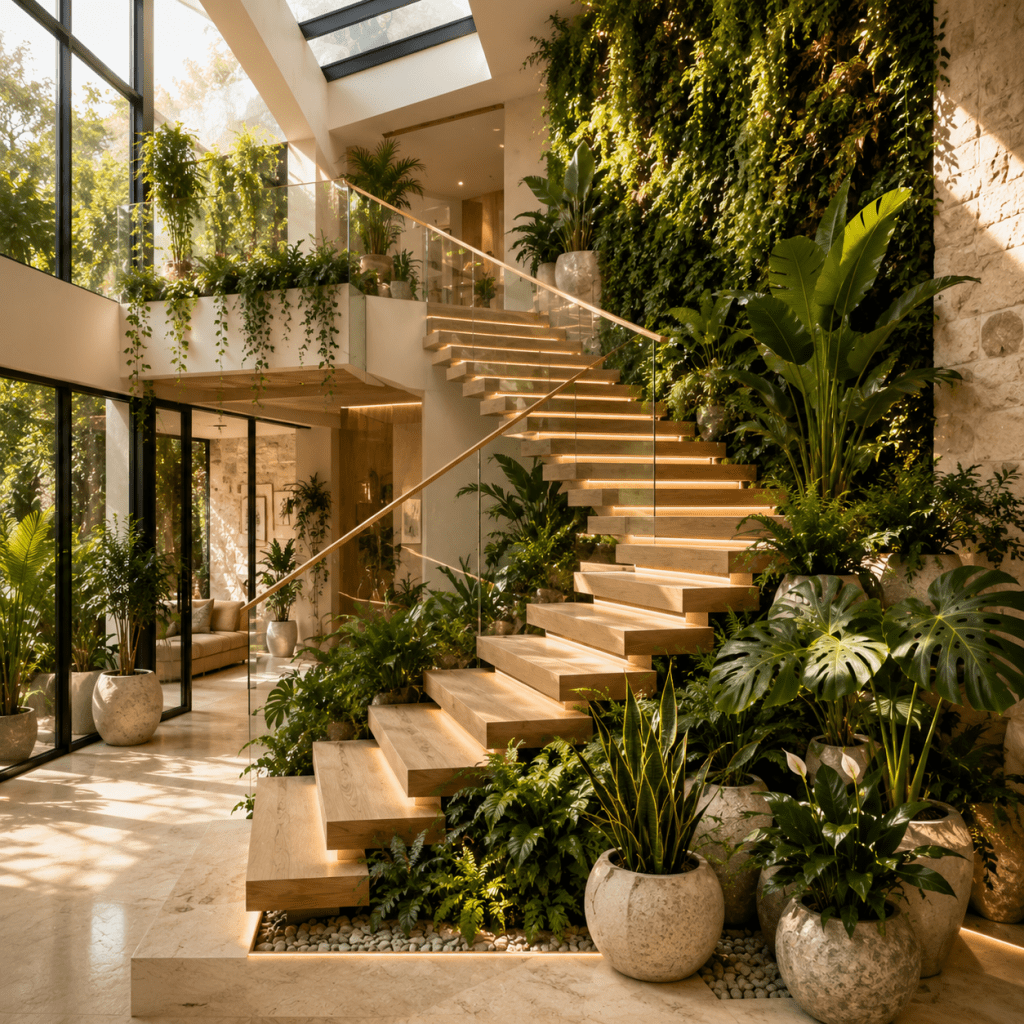
The popularity of Indoor Staircase Gardens has grown rapidly because modern homeowners want interiors that combine beauty, wellness, and practicality. Whether your home embraces Scandinavian simplicity, Japandi warmth, modern minimalism, industrial elegance, or classic architecture, a thoughtfully designed staircase garden instantly becomes a natural focal point. Better still, it helps improve indoor air quality, softens hard architectural lines, and creates a calming atmosphere that makes every journey up or down the stairs feel like a peaceful walk through nature.
In this guide, discover the Best 3 Indoor Staircase Gardens ideas that can elevate almost any home. From dramatic vertical jungles to minimalist green arrangements and luxurious botanical displays, these inspiring concepts prove that every staircase has the potential to become one of the most beautiful spaces in your house.
Why Indoor Staircase Gardens Are Becoming a Must Have Home Feature
Indoor plants have long been associated with healthier, happier homes, but staircases provide an especially unique opportunity. Unlike tables, shelves, or windowsills, staircases naturally create varying heights, multiple viewing angles, and dramatic vertical space.
This makes them ideal for displaying plants in ways that feel layered and dynamic rather than flat and repetitive. Every step offers a slightly different perspective, allowing visitors to discover new textures, shapes, and colors as they move throughout the home.
Beyond aesthetics, indoor greenery contributes to a more relaxing environment. Numerous studies suggest that exposure to plants may help reduce stress, improve concentration, and create a greater sense of wellbeing. While no indoor garden replaces proper ventilation or outdoor green spaces, thoughtfully arranged plants can significantly enhance the atmosphere of an interior.
Indoor staircase gardens also maximize spaces that frequently remain underutilized. Corners beneath staircases, open landings, floating stair structures, and even walls adjacent to stairs can all become beautiful growing environments when planned correctly.
Choosing Plants for Indoor Staircase Gardens
Not every plant performs equally well indoors. Before selecting greenery, it’s important to evaluate several environmental conditions.
| Consideration | Why It Matters | Best Choice |
|---|---|---|
| Natural Light | Determines plant health | Match plants to available sunlight |
| Stair Width | Prevents crowding | Compact plants for narrow stairs |
| Maintenance | Keeps garden attractive | Choose easy-care species |
| Humidity | Affects tropical plants | Increase humidity if necessary |
| Safety | Prevents accidents | Keep walkways completely clear |
| Ceiling Height | Supports larger plants | Use taller species in open spaces |
Popular indoor staircase plants include:
- 🌿 Snake Plant
- 🌿 ZZ Plant
- 🌿 Pothos
- 🌿 Philodendron
- 🌿 Monstera Deliciosa
- 🌿 Peace Lily
- 🌿 Chinese Evergreen
- 🌿 Rubber Plant
- 🌿 Boston Fern
- 🌿 Bird of Paradise (large spaces)
Combining various leaf shapes creates more visual interest than relying on a single species throughout the staircase.
Important Note: Always keep enough walking clearance on every step and landing. Decorative planters should never reduce safe foot traffic, block handrails, or create tripping hazards, especially in homes with children, elderly family members, or pets.
Best 3 Indoor Staircase Gardens Ideas
🥉 Best 3 Minimalist Indoor Staircase Gardens
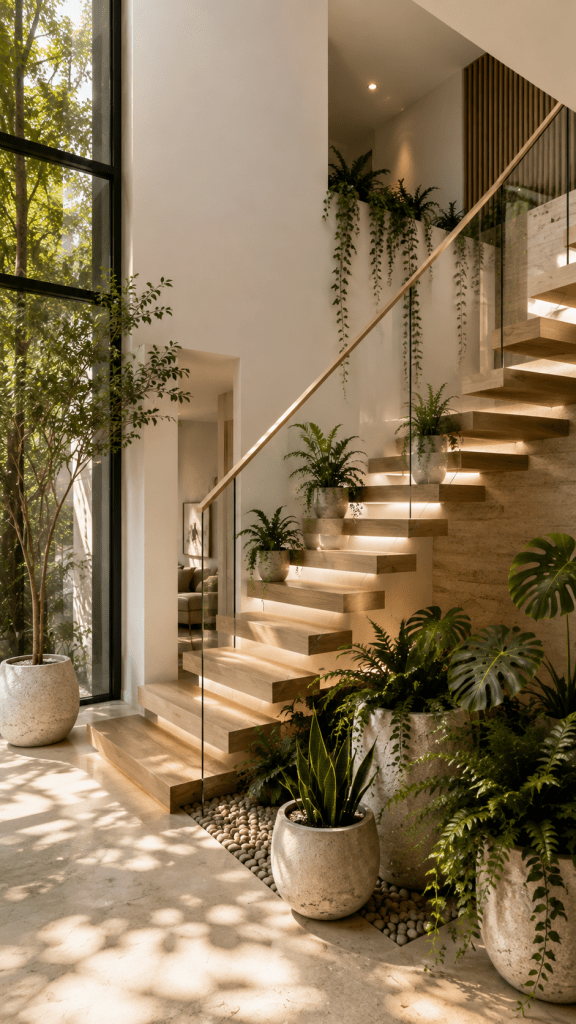
Minimalist Indoor Staircase Gardens celebrate simplicity through carefully selected greenery rather than overwhelming the space with dozens of plants. Every planter serves a purpose, every leaf contributes to balance, and every arrangement emphasizes clean architectural lines.
This design style works especially well in contemporary homes featuring white walls, natural oak flooring, black steel railings, floating staircases, and abundant natural light. Instead of creating visual clutter, the plants become sculptural elements that highlight the beauty of the staircase itself.
Snake plants are excellent choices because of their upright growth, architectural appearance, and remarkable tolerance for indoor conditions. Their vertical leaves naturally echo the direction of the staircase, reinforcing the clean geometry of the design.
Pothos provide graceful contrast by introducing soft cascading vines. Rather than placing them on every step, position them strategically on landings, floating shelves, or wall-mounted planters so the vines gently trail downward.
Ceramic pots in neutral shades such as ivory, charcoal, sandstone, or warm beige maintain the calm aesthetic while allowing the greenery to remain the primary visual attraction.
Lighting also plays a major role. Warm indirect lighting beneath stair treads or discreet wall sconces can softly illuminate foliage during the evening, producing elegant shadows that make the staircase feel luxurious without appearing extravagant.
The greatest strength of minimalist staircase gardens lies in their timelessness. Because they rely on balance instead of decoration, they rarely feel outdated and continue complementing evolving interior styles for many years.
🥈 Best 2 Vertical Living Wall Indoor Staircase Gardens
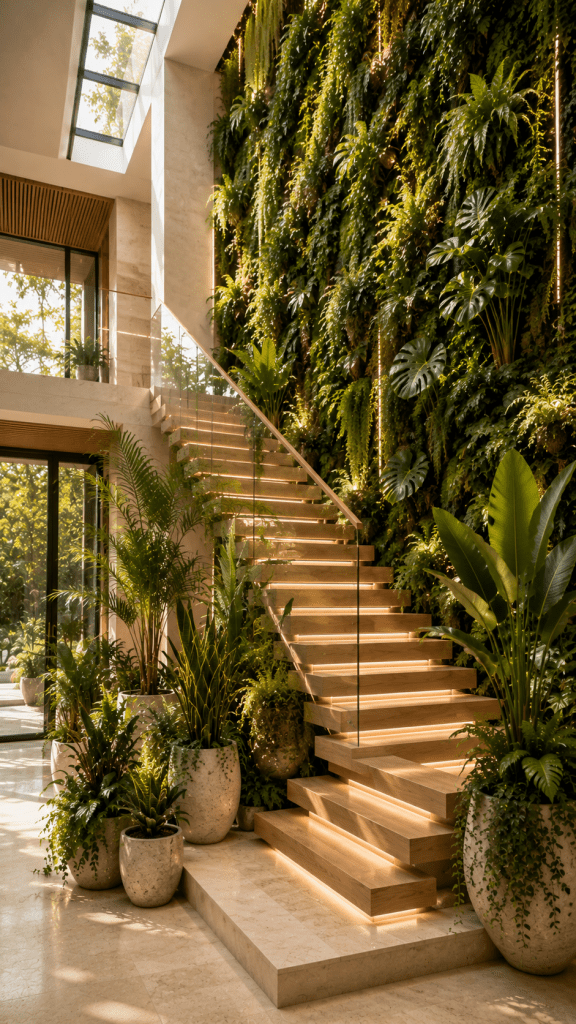
For homeowners seeking maximum visual impact, vertical living walls transform an ordinary staircase into an unforgettable indoor botanical experience.
Rather than displaying plants only on steps or landings, vertical gardens utilize the adjacent wall to create an impressive green feature extending from floor to ceiling. This dramatically increases planting space while leaving the staircase itself completely unobstructed.
Living walls are especially striking in homes with double-height ceilings, open-concept layouts, or floating staircases where the vertical dimension becomes a defining architectural feature.
A successful vertical garden relies on combining different plant forms. Upright foliage provides structure, trailing vines soften edges, and broad tropical leaves create bold focal points. Mixing textures prevents the wall from appearing monotonous.
Popular combinations include:
- 🌱 Philodendron
- 🌱 Pothos
- 🌱 Ferns
- 🌱 Peperomia
- 🌱 Spider Plants
- 🌱 Monstera
- 🌱 Calathea
Integrated irrigation systems simplify maintenance for larger installations, while modular planting panels make replacing individual plants much easier if necessary.
Lighting deserves special attention. If natural sunlight is limited, high-quality full-spectrum grow lights can provide supplemental illumination while remaining nearly invisible within the design.
The visual effect changes beautifully throughout the day. Morning sunlight highlights leaf textures, afternoon lighting enhances depth, and evening accent lights create dramatic botanical shadows that completely transform the mood of the home.
Beyond appearance, living walls also improve acoustic comfort by helping soften sound reflections commonly found in stairwells with hard flooring and painted walls.
🥇 Best 1 Luxury Botanical Indoor Staircase Gardens
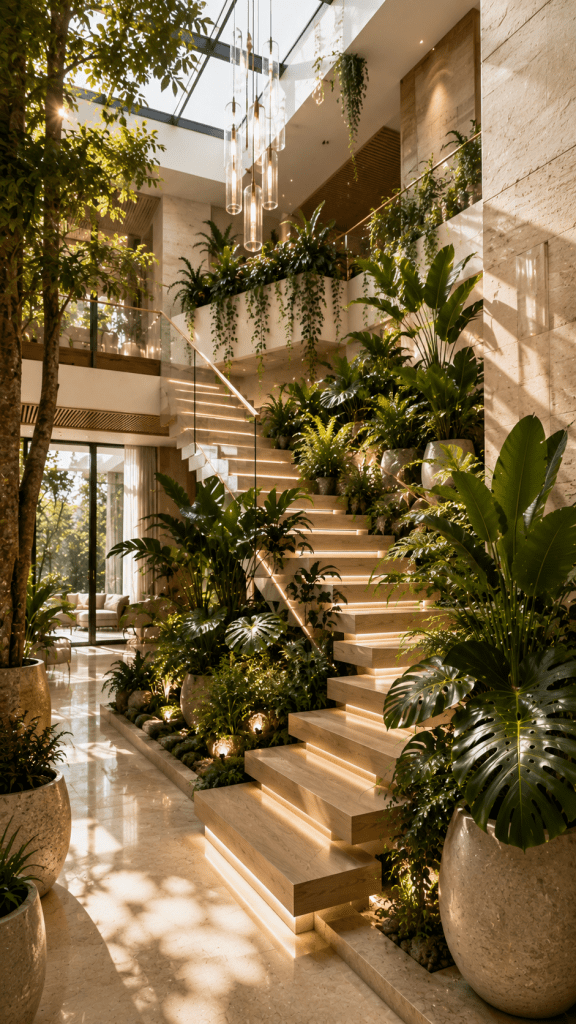
Luxury Indoor Staircase Gardens elevate greenery into an immersive architectural experience where plants become part of the home’s overall design language rather than simple decorative accessories.
This style emphasizes generous proportions, premium materials, dramatic focal plants, and expertly layered compositions. Every element contributes to a sophisticated atmosphere reminiscent of high-end hotels, boutique resorts, or luxury wellness retreats.
Large statement plants often anchor the composition beneath the staircase or at major landings. Bird of Paradise, mature Monstera, Kentia Palm, Rubber Tree, or Fiddle Leaf Fig provide impressive height while creating immediate visual presence.
Smaller plants fill surrounding layers using varying heights and textures. Ferns soften edges, trailing vines introduce movement, and sculptural foliage adds depth from every viewing angle.
Premium materials significantly enhance the presentation.
Consider incorporating:
- ✨ Natural travertine planters
- ✨ Handcrafted ceramic pots
- ✨ White oak display shelves
- ✨ Brushed brass accents
- ✨ Limestone features
- ✨ Matte black steel framing
- ✨ Decorative natural stones
- ✨ Integrated LED lighting
Lighting transforms luxury staircase gardens into evening masterpieces. Concealed LED strips beneath stair treads create floating effects while uplights emphasize large tropical leaves and produce elegant shadows across textured walls.
Water features can further enrich the atmosphere. A compact indoor fountain placed beneath the staircase introduces soothing sound while increasing humidity for tropical species. Even subtle movement from flowing water adds another sensory dimension to the experience.
Luxury staircase gardens also benefit from seasonal styling. Decorative branches, preserved moss arrangements, handcrafted sculptures, or tasteful ceramic accessories can be rotated throughout the year without overwhelming the greenery.
The overall objective is not simply displaying plants but creating a complete living environment where architecture, lighting, natural materials, and botanical beauty work together harmoniously.
How to Style Indoor Staircase Gardens Like an Interior Designer
Professional interior designers rarely rely on plant quantity alone. Instead, they focus on composition.
Layering creates depth by combining tall, medium, and low plants rather than placing everything at one height. This approach mimics natural landscapes where vegetation grows in multiple levels.
Repeating materials establishes visual consistency. If one planter uses matte ceramic, continue that finish throughout the arrangement rather than mixing numerous unrelated materials.
Odd-numbered groupings generally appear more balanced than even-numbered arrangements. Three or five coordinated planters often feel naturally harmonious.
Texture is equally important. Pair broad leaves with fine foliage, glossy surfaces with matte textures, and upright growth alongside cascading vines to maintain visual interest from every angle.
Leaving intentional empty space prevents overcrowding. Negative space allows each plant to stand out while preserving the elegance of the overall composition.
Common Mistakes to Avoid When Designing Indoor Staircase Gardens
Even beautiful plants can become problematic if the overall design ignores functionality.
Overcrowding is one of the most frequent mistakes. Too many planters make staircases feel cramped while increasing maintenance requirements.
Ignoring lighting conditions often results in weak growth, yellow leaves, and disappointing plant performance. Always match plant species with the available light instead of forcing unsuitable varieties into difficult locations.
Large containers placed directly on narrow stair treads reduce walking space and create unnecessary safety concerns.
Choosing plants solely because they are trendy may also lead to frustration if they require more humidity, sunlight, or maintenance than your home can realistically provide.
Finally, inconsistent watering routines frequently cause greater problems than occasional neglect. Developing a simple maintenance schedule keeps plants healthier while preventing root rot and pest issues.
Caring for Indoor Staircase Gardens Throughout the Year
Healthy staircase gardens require regular attention, but maintenance becomes manageable with consistent habits.
Inspect plants weekly for yellow leaves, pests, or dry soil. Early intervention prevents small issues from becoming significant problems.
Dust naturally accumulates on indoor foliage, especially near staircases where air movement is constant. Wiping leaves with a soft damp cloth helps maintain their appearance while improving photosynthesis.
Rotate containers every few weeks when practical so plants receive balanced light exposure, preventing uneven growth toward windows.
During winter, heating systems often reduce indoor humidity. Adding pebble trays, humidifiers, or grouping plants together helps tropical species remain healthy.
Spring is typically the best time for pruning, repotting, and introducing new plants as growth naturally accelerates.
Regular fertilization during the active growing season encourages vibrant foliage while avoiding excessive feeding during slower winter months.
Final Thoughts on Creating Beautiful Indoor Staircase Gardens
The best Indoor Staircase Gardens prove that extraordinary interior design doesn’t always require major renovations. By transforming an overlooked transitional space into a vibrant botanical feature, homeowners can dramatically improve both the beauty and atmosphere of their living environment.
Whether choosing the understated elegance of a minimalist arrangement, the dramatic impact of a vertical living wall, or the breathtaking sophistication of a luxury botanical display, each approach offers unique advantages while bringing nature closer to everyday life.
The most successful staircase gardens balance aesthetics with practicality. Safe walkways, appropriate plant selection, thoughtful lighting, and cohesive styling ensure that the garden remains beautiful for years rather than months.
Ultimately, an indoor staircase filled with healthy greenery becomes far more than a route between floors. It becomes a living centerpiece that welcomes guests, enriches daily routines, and reminds everyone who passes by that even the simplest architectural spaces can be transformed into something truly extraordinary.