Clematis Varieties and Care is one of the most rewarding gardening topics for anyone who dreams of covering fences, trellises, pergolas, and garden arches with breathtaking flowers. Known as the “Queen of Climbers,” clematis offers an extraordinary range of colors, flower shapes, bloom times, and growth habits that can instantly elevate the beauty of any outdoor space.
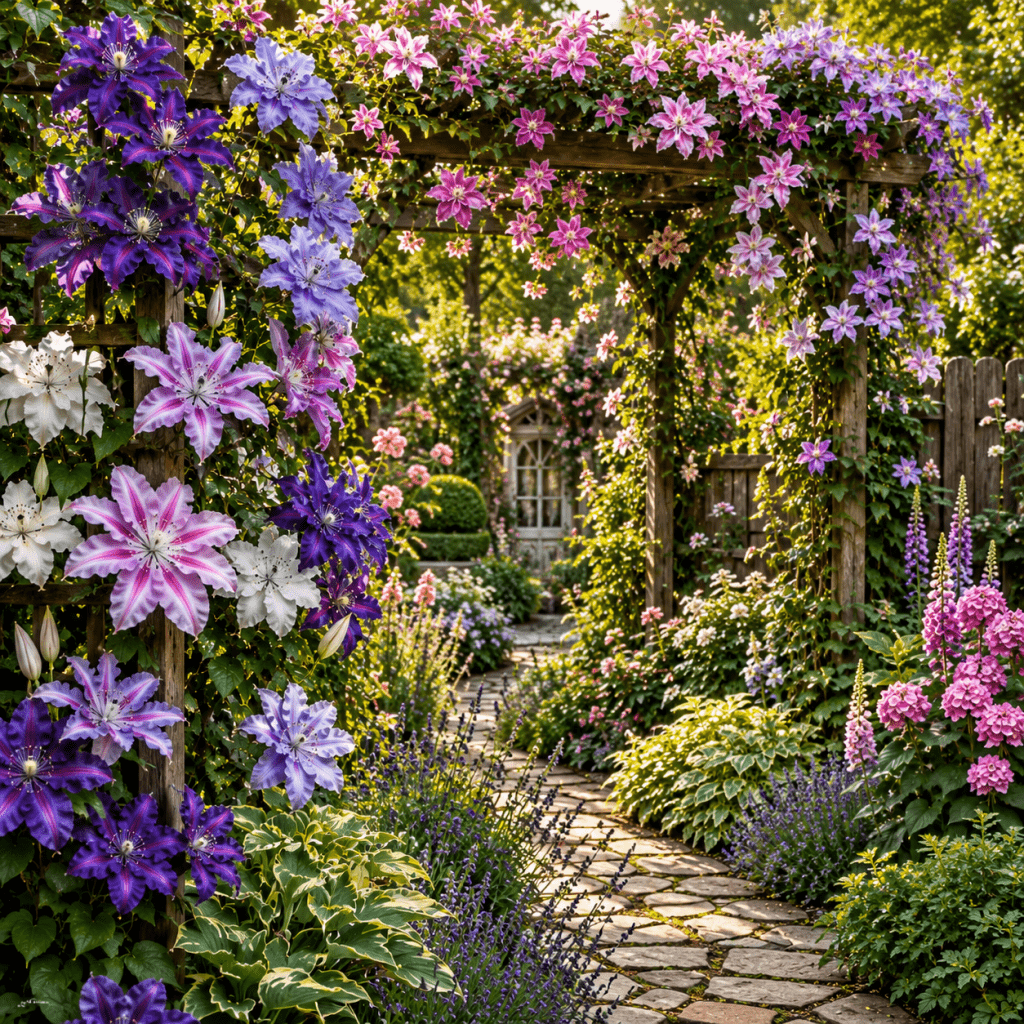
Whether you are a beginner gardener looking for an easy flowering vine or an experienced landscape enthusiast searching for spectacular garden focal points, understanding Clematis Varieties and Care is the key to success. With the right selection and proper maintenance, these stunning climbers can provide months of colorful blooms and become one of the most admired plants in your garden.
In this guide, discover the best clematis varieties, essential care techniques, planting secrets, pruning methods, and expert tips that will help your clematis thrive year after year.
Why Clematis Is One of the Most Popular Flowering Climbers
Clematis has earned worldwide popularity because few climbing plants offer such diversity and beauty. Some varieties produce dinner-plate-sized blooms, while others create clouds of smaller flowers that completely cover their support structures.
Gardeners love clematis because it can adapt to many garden styles. Cottage gardens, modern landscapes, formal gardens, and wildlife-friendly spaces all benefit from the elegant presence of these flowering vines.
Another major advantage is the extended blooming season. By selecting different clematis varieties, gardeners can enjoy flowers from spring through autumn. Some even provide decorative seed heads that add winter interest after flowering has ended.
The incredible color range is another reason for its popularity. Clematis flowers appear in shades of:
🌸 Pink
💜 Purple
🤍 White
❤️ Red
💙 Blue
💛 Yellow
🌿 Green
Many varieties also feature contrasting centers, striped petals, or unique color gradients that make them stand out from other garden plants.
Understanding Clematis Varieties and Care Before You Plant
Before choosing a clematis, it is important to understand that not all varieties grow the same way. Different species vary significantly in size, bloom time, pruning requirements, and overall maintenance needs.
Some clematis remain compact enough for containers, while others can climb more than 20 feet high. Knowing the mature size helps gardeners avoid overcrowding and ensures proper placement.
Blooming periods also differ. Some varieties flower on old wood, others bloom on new growth, and some flower twice per year. Understanding these differences prevents accidental pruning mistakes that can reduce flowering.
Proper variety selection is often the biggest factor determining long-term success. Choosing a clematis suited to your climate, available space, and gardening experience will lead to healthier growth and more abundant blooms.
Best 7 Clematis Varieties and Care Tips for Spectacular Blooms
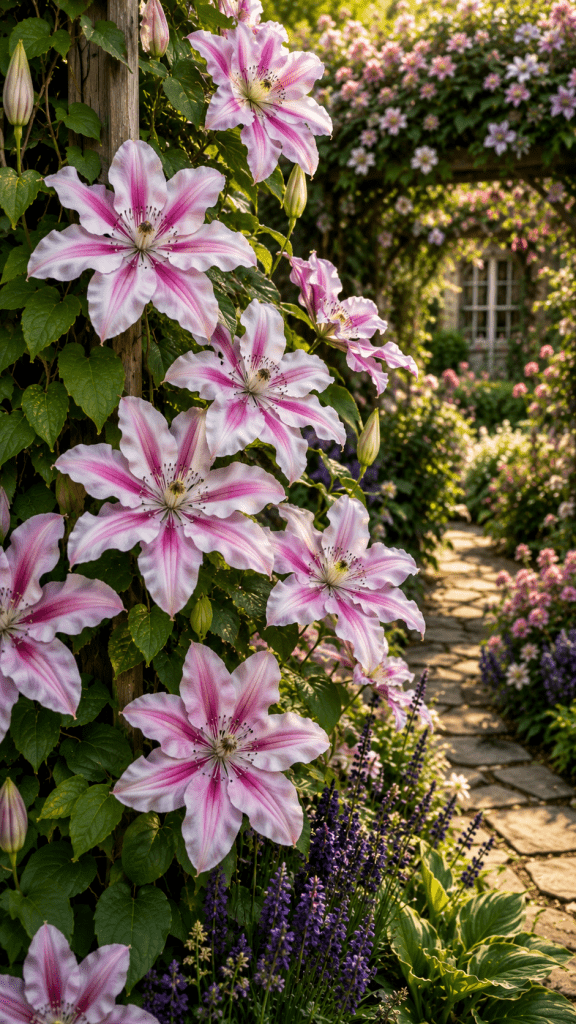
1. Clematis Nelly Moser
Nelly Moser remains one of the most recognizable clematis varieties in the world.
Its large pale pink flowers feature distinctive rosy stripes running down each petal. The blooms can reach up to eight inches across, creating a dramatic visual display.
This variety thrives in partial shade and performs especially well where intense afternoon sunlight is avoided. Excessive sun can fade the delicate coloring.
Care Tips:
✅ Keep roots cool and shaded
✅ Water deeply during dry periods
✅ Provide sturdy climbing support
✅ Prune lightly after flowering
Nelly Moser is ideal for gardeners seeking elegance and classic charm.
2. Clematis Jackmanii
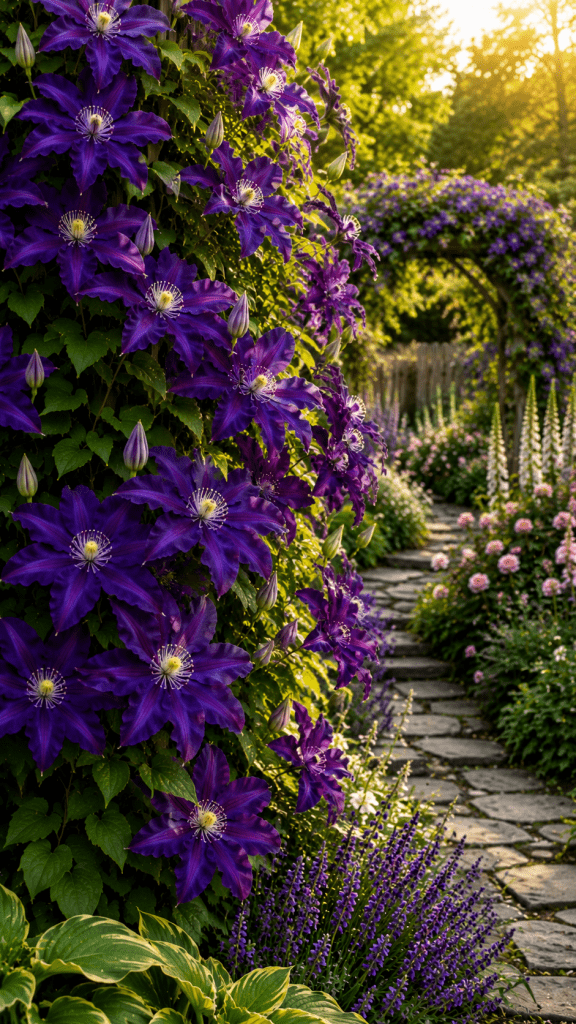
Jackmanii is often considered the ultimate beginner-friendly clematis.
Its rich purple flowers appear in abundance throughout summer and create a stunning contrast against green foliage.
This variety is highly reliable and tolerant of various growing conditions, making it one of the easiest choices for new gardeners.
Care Tips:
✅ Full sun to partial shade
✅ Consistent moisture
✅ Annual hard pruning
✅ Regular mulching
Jackmanii is famous for producing hundreds of blooms when properly maintained.
3. Clematis The President
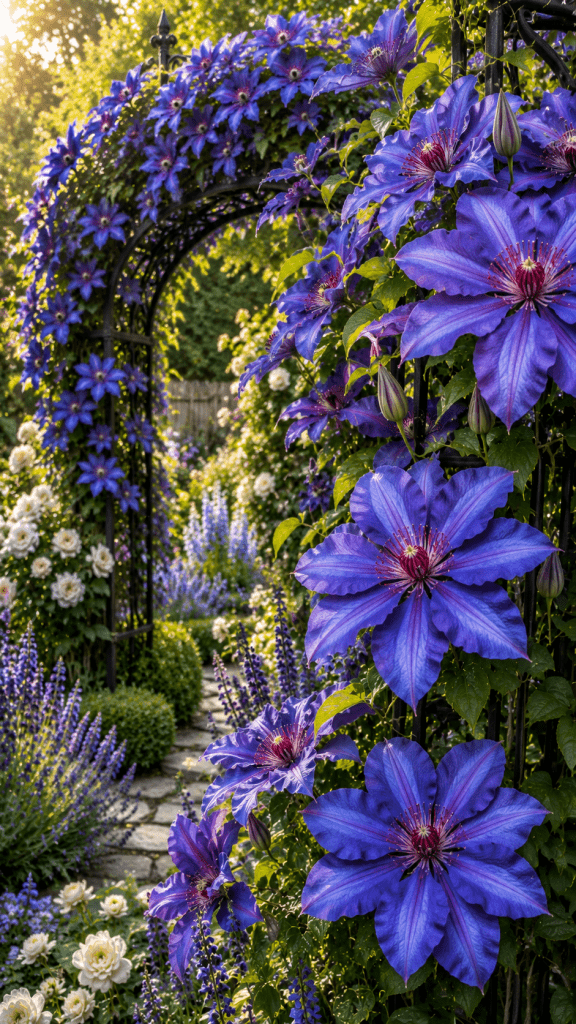
The President features striking deep blue-purple flowers that command attention in any garden setting.
Its large blossoms can measure up to seven inches wide and often bloom twice per season under favorable conditions.
This variety grows vigorously and quickly covers trellises, fences, and arbors.
Care Tips:
✅ Fertilize during active growth
✅ Avoid waterlogged soil
✅ Provide vertical climbing support
✅ Remove faded flowers
The President offers impressive color and strong garden performance.
4. Clematis Sweet Autumn
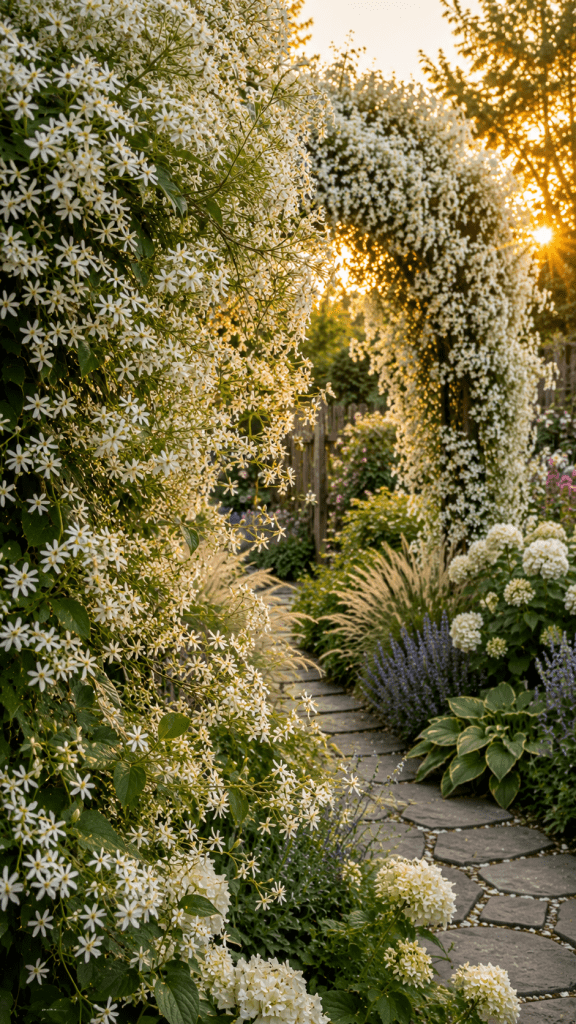
Unlike large-flowered varieties, Sweet Autumn Clematis produces thousands of tiny white flowers.
The sweet fragrance can fill an entire garden during late summer and early autumn.
This variety grows rapidly and creates an incredible floral blanket over structures.
Care Tips:
✅ Allow plenty of growing space
✅ Prune aggressively in late winter
✅ Water regularly during establishment
✅ Train growth early
Its fragrance alone makes it worth planting.
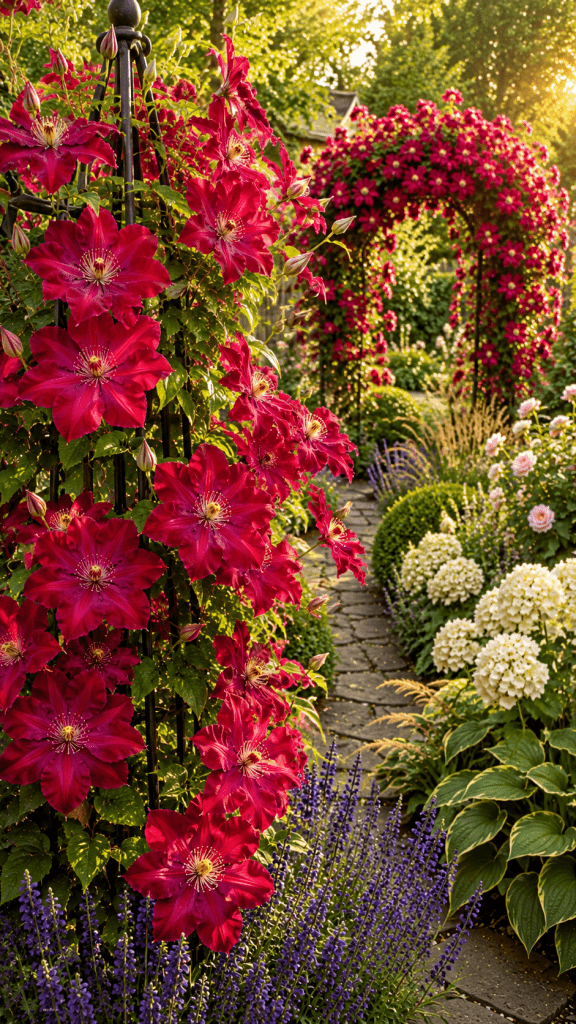
5. Clematis Ville de Lyon
Ville de Lyon delivers vibrant red-pink flowers that provide bold garden color.
The blooms continue for an extended period and remain highly visible from a distance.
This variety performs exceptionally well in warm climates and resists fading better than many red clematis selections.
Care Tips:
✅ Ensure good air circulation
✅ Feed monthly during growing season
✅ Mulch around roots
✅ Maintain even soil moisture
The vivid coloring creates a dramatic focal point.
6. Clematis Henryi
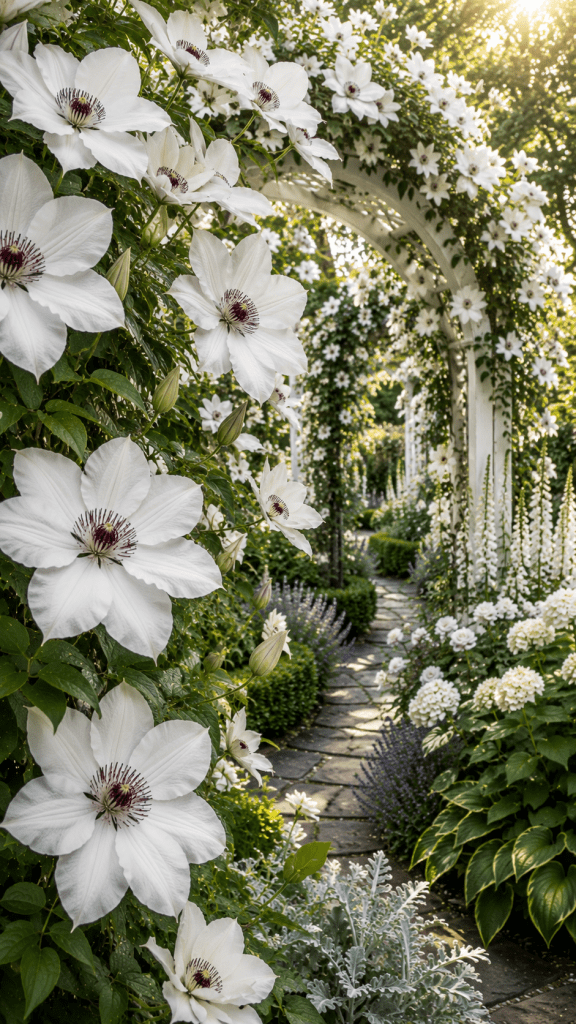
Henryi is one of the finest white-flowering clematis varieties available.
Large pure-white blooms create a sophisticated and timeless appearance in gardens.
The flowers glow beautifully in evening light and pair exceptionally well with dark foliage plants.
Care Tips:
✅ Plant in fertile soil
✅ Protect roots from extreme heat
✅ Water consistently
✅ Prune according to flowering group
Henryi brings elegance and brightness to vertical garden spaces.
7. Clematis Montana
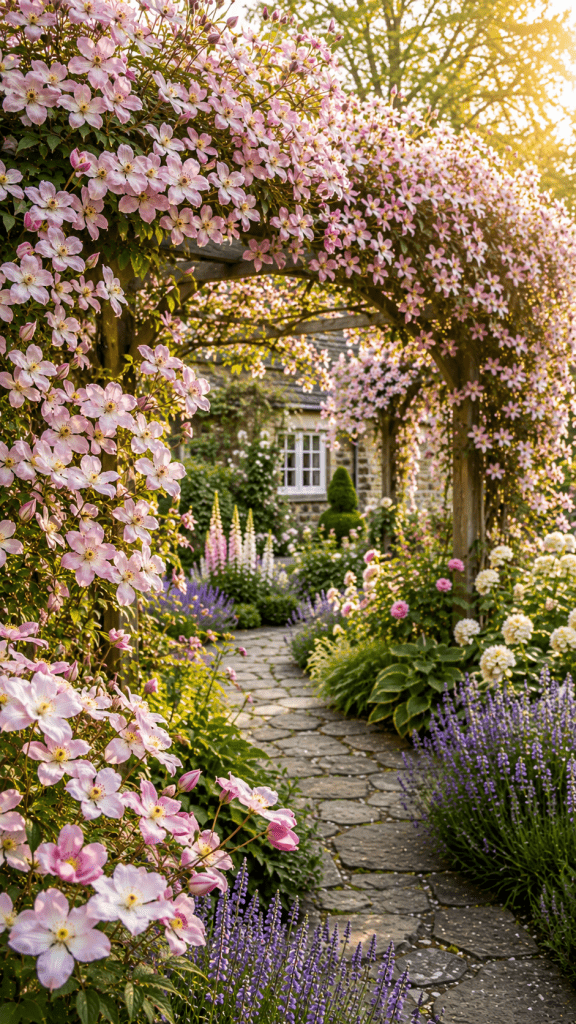
Clematis Montana is famous for its vigorous growth and incredible spring display.
During flowering season, the plant can become completely covered in blossoms, creating a breathtaking wall of color.
Its rapid growth makes it perfect for large structures.
Care Tips:
✅ Plant where ample space exists
✅ Minimal pruning required
✅ Support strong stems
✅ Water during dry spells
Montana is ideal for gardeners seeking dramatic coverage.
Comparing the Best Clematis Varieties
| Variety | Flower Color | Bloom Season | Growth Rate | Beginner Friendly |
|---|---|---|---|---|
| Nelly Moser | Pink with stripes | Spring & Summer | Moderate | Yes |
| Jackmanii | Purple | Summer | Fast | Excellent |
| The President | Blue-Purple | Spring & Summer | Fast | Yes |
| Sweet Autumn | White | Late Summer | Very Fast | Excellent |
| Ville de Lyon | Red-Pink | Summer | Moderate | Yes |
| Henryi | White | Summer | Moderate | Yes |
| Montana | Pink/White | Spring | Very Fast | Excellent |
This comparison helps gardeners choose the ideal clematis based on bloom color, growth habit, and maintenance requirements.
The Perfect Location for Clematis Varieties and Care Success
One of the oldest gardening sayings regarding clematis is:
“Head in the sun, feet in the shade.”
This simple phrase perfectly describes the plant’s preferences.
The upper portions of the vine benefit from sunlight, while the roots prefer cooler conditions. Exposed roots can become stressed during hot weather, reducing flowering performance.
Many gardeners achieve this balance by planting low-growing perennials around the base. Hostas, lavender, heuchera, and ornamental grasses work especially well.
Proper air circulation is equally important. Good airflow helps reduce fungal issues and keeps foliage healthy throughout the season.
Soil Requirements for Healthy Clematis Growth
Healthy soil is the foundation of successful clematis cultivation.
These plants thrive in fertile, moisture-retentive, yet well-draining soil. Heavy clay can lead to root problems, while excessively sandy soil dries out too quickly.
The ideal soil should contain:
🌱 Organic compost
🌱 Aged manure
🌱 Leaf mold
🌱 Rich garden loam
Adding organic matter before planting improves structure, moisture retention, and nutrient availability.
A soil pH between 6.5 and 7.0 generally provides optimal growing conditions.
Important Note: Clematis hates standing water. Even the healthiest variety can decline quickly if roots remain constantly wet. Always ensure excellent drainage before planting.
How to Plant Clematis Correctly
Planting depth plays a major role in long-term clematis success.
Unlike many garden plants, clematis often benefits from being planted slightly deeper than it was growing in its nursery container.
Burying the stem several inches below soil level encourages additional shoots to develop from below the surface.
This provides multiple benefits:
✅ Stronger root systems
✅ Improved drought resistance
✅ Better recovery from damage
✅ Increased flowering potential
After planting, water thoroughly and apply mulch around the base.
Avoid placing mulch directly against the stems to prevent rot.
Watering Strategies for Clematis Varieties and Care
Consistent moisture supports vigorous growth and abundant flowering.
Newly planted clematis require regular watering during their first growing season. Established plants become more drought tolerant but still appreciate deep watering during prolonged dry periods.
Rather than frequent shallow watering, gardeners should focus on occasional deep irrigation.
Deep watering encourages roots to grow downward, creating stronger and more resilient plants.
Morning watering is generally preferred because it allows foliage to dry throughout the day.
Fertilizing Clematis for Bigger Flowers
Clematis are relatively heavy feeders.
Regular fertilization supports healthy foliage, stronger stems, and larger blooms.
A balanced fertilizer applied in spring provides the nutrients needed for vigorous growth.
As flower buds begin developing, switching to a fertilizer slightly higher in phosphorus can encourage more blooms.
Avoid excessive nitrogen applications.
Too much nitrogen often results in lush foliage growth at the expense of flowering.
The goal is balanced growth that supports both leaves and blossoms.
Understanding Clematis Pruning Groups
Pruning is often the most confusing aspect of clematis care.
Fortunately, most varieties belong to one of three pruning groups.
Group 1
These varieties bloom on old wood.
Pruning should occur immediately after flowering.
Examples include many Montana clematis selections.
Group 2
These varieties bloom on both old and new growth.
Light pruning is typically recommended.
Many large-flowered hybrids belong to this category.
Group 3
These varieties bloom on new growth.
They benefit from hard pruning in late winter or early spring.
Jackmanii is a classic example.
Understanding your variety’s pruning group prevents accidental removal of flower buds.
Common Clematis Problems and Solutions
Even healthy plants occasionally encounter issues.
Wilt
Clematis wilt causes sudden stem collapse.
Removing affected stems quickly often allows healthy regrowth from below.
Powdery Mildew
This fungal disease appears as a white coating on leaves.
Improving airflow and avoiding overhead watering can reduce outbreaks.
Aphids
These pests feed on tender growth.
Strong water sprays or beneficial insects often provide effective control.
Poor Flowering
Insufficient sunlight, incorrect pruning, or excessive nitrogen are common causes.
Identifying the underlying issue usually restores flowering performance.
Companion Plants That Enhance Clematis Beauty
Clematis pairs beautifully with numerous garden plants.
Popular companions include:
🌹 Roses
💜 Lavender
🌿 Hostas
🌸 Peonies
🌾 Ornamental grasses
🌺 Hydrangeas
Roses and clematis are especially beloved combinations. Their flowering periods often overlap, creating spectacular displays of color and texture.
The contrasting growth habits also add visual depth to garden designs.
Creating a Four Season Garden With Clematis
Strategic planning allows clematis to contribute beauty throughout much of the year.
Spring-flowering varieties provide early color.
Summer bloomers continue the display.
Autumn-flowering selections extend interest well into fall.
Many varieties also produce attractive seed heads that remain decorative during winter.
By combining different types, gardeners can enjoy nearly continuous visual appeal from a single plant family.
Final Thoughts on Clematis Varieties and Care
Learning the essentials of Clematis Varieties and Care opens the door to one of gardening’s most rewarding experiences. These remarkable flowering climbers offer unmatched versatility, breathtaking blooms, and the ability to transform ordinary garden structures into extraordinary focal points.
From the elegant beauty of Nelly Moser to the vigorous flowering power of Jackmanii and the sweet fragrance of Sweet Autumn Clematis, there is a perfect variety for every garden style and skill level.
With proper planting, consistent watering, thoughtful pruning, and healthy soil, clematis can thrive for decades while producing spectacular displays year after year. Choose the right variety, follow proven care practices, and watch your garden become a stunning showcase of vertical floral beauty.