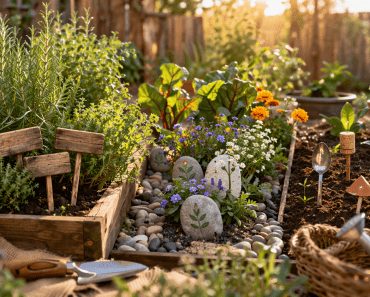
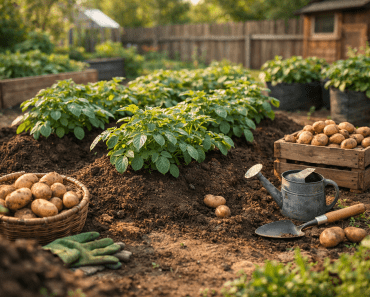
Bucket gardening has become one of the most exciting ways to grow plants in small spaces. Whether someone lives in a small apartment, a compact house with limited yard space, or simply wants an easy and affordable way to garden, bucket gardening offers an incredibly flexible solution. 🌱
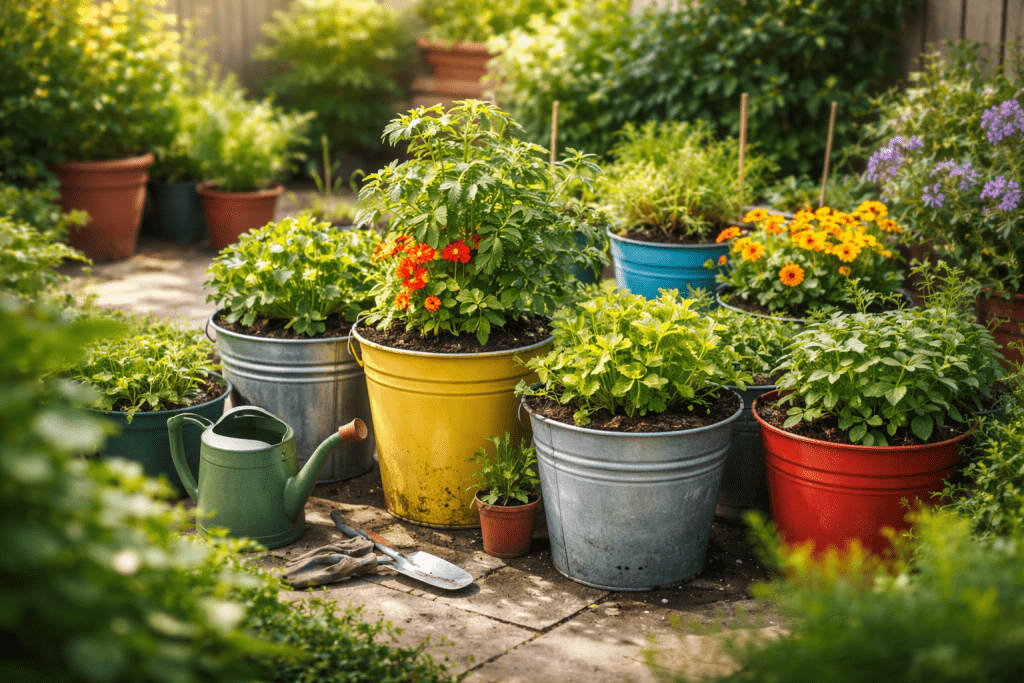
With just a few buckets, some soil, and the right plants, anyone can create a thriving mini garden that produces vegetables, herbs, or flowers. The beauty of bucket gardening lies in its simplicity. Buckets are inexpensive, easy to move, and perfect for controlling soil quality and plant health.
Another reason many people love bucket gardening is its accessibility. You do not need a large backyard or complicated garden beds to start growing food. A sunny balcony, patio, porch, rooftop, or even a driveway corner can become a productive growing space.
This guide explores the Best 3 bucket gardening ideas that can transform simple containers into beautiful and productive gardens. Each idea focuses on practicality, creativity, and maximizing plant growth while keeping the setup easy and beginner-friendly.
Why Bucket Gardening Is Becoming So Popular
Before exploring the best bucket gardening ideas, it is helpful to understand why this method has become increasingly popular among both beginner and experienced gardeners.
Bucket Gardening Is Perfect for Small Spaces
One of the biggest advantages of bucket gardening is the ability to grow plants almost anywhere. Traditional gardening often requires large beds or open soil areas, but buckets remove that limitation completely.
People living in apartments, townhouses, or homes with limited yard space can still enjoy gardening without needing a full garden plot.
Buckets can be placed on balconies, patios, decks, stair landings, or small backyard corners. This flexibility makes it possible to build a garden even in urban environments.
Another benefit is the ability to rearrange the garden layout easily. Since buckets are portable, they can be moved to follow sunlight, protect plants from harsh weather, or redesign the space whenever needed.
Better Soil Control and Healthier Plants
In traditional gardens, soil quality can vary significantly. Poor soil conditions can affect plant growth, nutrient absorption, and overall productivity.
With bucket gardening, gardeners have complete control over the soil mix. This allows the use of high-quality compost, organic soil blends, and nutrient-rich materials that help plants thrive.
Healthy soil also improves drainage and reduces the risk of diseases caused by waterlogged ground.
Because each bucket acts as its own small ecosystem, plants often grow stronger and produce higher yields.
Budget Friendly Gardening Method
Starting a garden can sometimes be expensive, especially when purchasing raised beds, irrigation systems, or specialized equipment.
Bucket gardening offers an affordable alternative. Buckets are widely available, inexpensive, and often reusable.
Many gardeners even recycle food-grade buckets from bakeries, restaurants, or construction sites.
With minimal investment, it is possible to build a fully functioning container garden capable of producing fresh vegetables and herbs.
Essential Basics of Bucket Gardening
Before diving into the best bucket gardening ideas, it is important to understand a few key basics that help ensure success.
Choosing the Right Bucket
Not every bucket is ideal for growing plants. The best options are sturdy containers that can hold soil without cracking or degrading.
Food-grade plastic buckets are highly recommended because they are safe for growing edible plants.
Five-gallon buckets are particularly popular since they provide enough space for root growth while remaining easy to move.
Larger buckets may be used for bigger plants like tomatoes or peppers.
Drainage Is Critical
One of the most important aspects of bucket gardening is proper drainage. Plants cannot survive if their roots sit in water for too long.
Drilling several drainage holes in the bottom of each bucket allows excess water to escape.
Adding a thin layer of gravel or small stones at the bottom can also help improve drainage.
Ideal Soil Mix for Bucket Gardening
Regular garden soil often becomes too compact inside containers. Instead, a loose and nutrient-rich soil mix works much better.
A good bucket gardening soil mix typically contains:
- compost
- peat moss or coco coir
- perlite or vermiculite
- organic fertilizer
This combination improves water retention, aeration, and nutrient availability.
Best 3 Bucket Gardening Ideas for Productive and Beautiful Container Gardens
Now that the basics are clear, let’s explore the Best 3 bucket gardening ideas that can transform ordinary buckets into thriving garden systems.
Best 1 Bucket Gardening Idea A Thriving Vegetable Bucket Garden
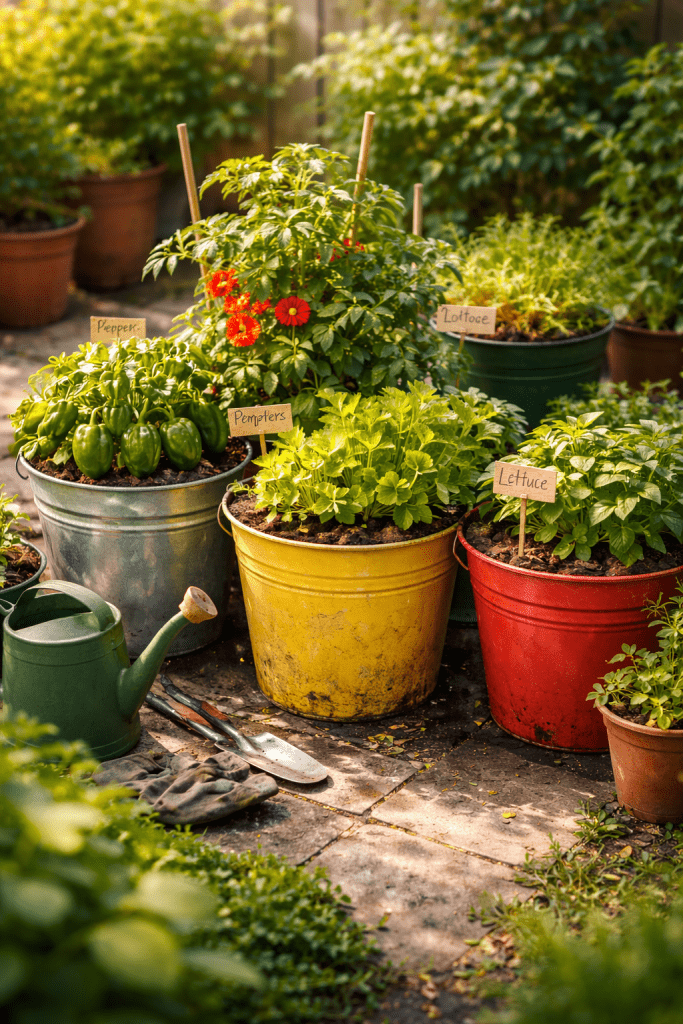
Growing vegetables is one of the most rewarding uses of bucket gardening. Many common vegetables adapt extremely well to containers and can produce impressive harvests when grown in buckets.
Why Vegetable Bucket Gardening Works So Well
Vegetables grown in buckets benefit from controlled soil conditions, which allows gardeners to provide the exact nutrients plants need.
This controlled environment also reduces competition from weeds, which is common in traditional gardens.
Another major advantage is pest management. Buckets can be placed in locations that reduce exposure to pests or elevated slightly off the ground.
Vegetable bucket gardening also makes harvesting easier because plants are more accessible and organized.
Best Vegetables for Bucket Gardening
Some vegetables perform particularly well in bucket gardening systems.
Below is a helpful overview of popular options.
| Vegetable | Recommended Bucket Size | Growing Notes |
|---|---|---|
| Tomatoes | 5 gallon bucket | Needs strong sunlight and support stake |
| Peppers | 3–5 gallon bucket | Thrives in warm conditions |
| Lettuce | 2–3 gallon bucket | Fast growing and perfect for small containers |
| Spinach | 2–3 gallon bucket | Prefers cooler temperatures |
| Cucumbers | 5 gallon bucket | Requires vertical trellis support |
| Green onions | 1–2 gallon bucket | Extremely easy to grow |
These vegetables are beginner-friendly and produce excellent results in bucket gardening setups.
Designing a Vegetable Bucket Garden Layout
A well-organized layout helps maximize sunlight exposure and airflow between plants.
Buckets can be arranged in rows, clusters, or creative patterns depending on the available space.
For example, placing taller plants like tomatoes at the back and shorter plants like lettuce in the front ensures every plant receives sufficient sunlight.
Using vertical supports such as stakes or trellises also helps climbing vegetables grow upward rather than spreading out.
Important note: Always make sure every bucket receives at least 6 hours of sunlight daily because most vegetables require strong sunlight to produce healthy harvests.
Maintaining a Healthy Vegetable Bucket Garden
Vegetable bucket gardens require consistent watering because containers tend to dry out faster than traditional garden beds.
Checking soil moisture daily helps prevent plants from becoming stressed.
Fertilizing every two to three weeks with organic fertilizer can also significantly improve plant growth and yield.
Regular pruning of tomato plants or trimming herbs helps encourage new growth and increases productivity.
With proper care, a simple bucket vegetable garden can provide fresh food throughout the growing season.
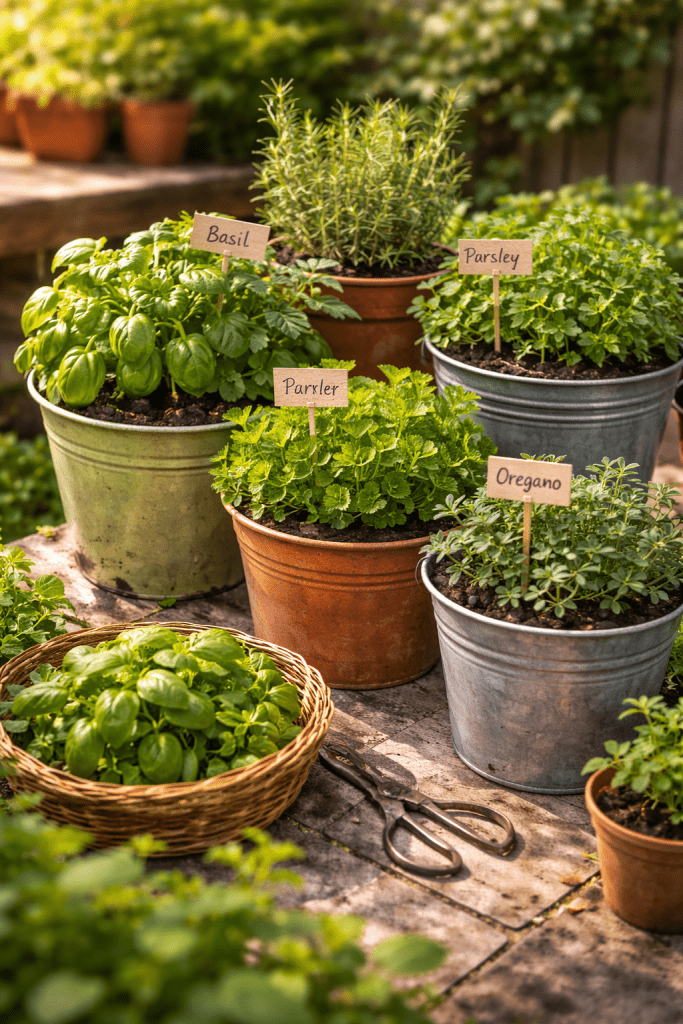
Best 2 Bucket Gardening Idea A Flavorful Herb Bucket Garden
Herbs are among the easiest and most rewarding plants to grow using bucket gardening techniques.
An herb bucket garden not only produces fresh ingredients for cooking but also adds fragrance and beauty to outdoor spaces.
Why Herbs Thrive in Bucket Gardening
Herbs generally require less space than vegetables and adapt extremely well to container environments.
Because buckets allow precise control over soil and watering conditions, herbs can grow quickly and remain healthy throughout the season.
Many herbs also prefer slightly drier soil conditions, which are easier to manage in containers than in traditional garden beds.
Another advantage is accessibility. Having herbs close to the kitchen makes cooking more convenient.
Best Herbs for Bucket Gardening
Several herbs perform exceptionally well in buckets and containers.
Popular choices include:
- basil 🌿
- mint
- parsley
- cilantro
- oregano
- thyme
- rosemary
Each of these herbs offers unique flavors and culinary uses.
Mint grows vigorously and benefits from being contained in buckets to prevent spreading uncontrollably.
Basil and parsley thrive in sunny environments and produce abundant leaves throughout the season.
Creating a Multi Herb Bucket Garden
Instead of dedicating one bucket to a single herb, gardeners can also create mixed herb containers.
For example, Mediterranean herbs such as rosemary, thyme, and oregano can grow together because they share similar watering and sunlight requirements.
Grouping compatible herbs together makes the garden more efficient and visually appealing.
Herb bucket gardens can also be placed near patios, outdoor dining spaces, or kitchen doors for easy harvesting.
Maintaining Healthy Herbs in Bucket Gardening
Herbs generally require moderate watering and well-drained soil.
Overwatering is one of the most common mistakes when growing herbs in containers.
Regular trimming encourages bushier growth and prevents plants from becoming leggy.
Harvesting herbs frequently also stimulates new leaves and keeps plants productive for longer periods.
With minimal effort, a small herb bucket garden can supply fresh ingredients for countless meals.
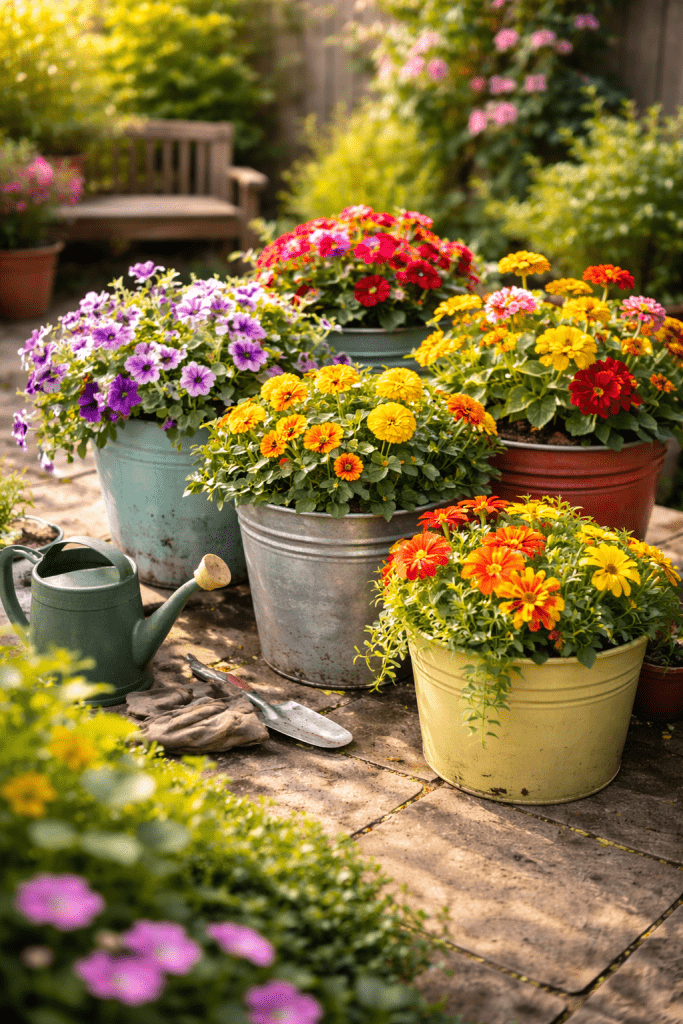
Best 3 Bucket Gardening Idea A Colorful Flower Bucket Garden
While many people focus on vegetables and herbs, bucket gardening can also create stunning ornamental flower displays.
A flower bucket garden adds color, beauty, and pollinator attraction to patios, balconies, and small yards.
Why Flower Bucket Gardening Is So Beautiful
Flowers grown in buckets can be arranged creatively to form vibrant displays that brighten outdoor spaces.
Different flower colors, heights, and textures can be combined to create layered visual interest.
Container flowers also allow gardeners to experiment with seasonal plantings, changing flowers throughout the year.
Another benefit is pollinator support. Flower bucket gardens attract bees, butterflies, and beneficial insects.
Best Flowers for Bucket Gardening
Several flower varieties adapt exceptionally well to bucket containers.
Popular options include:
- petunias 🌸
- marigolds
- geraniums
- zinnias
- pansies
- nasturtiums
These flowers are hardy, colorful, and relatively easy to grow.
Marigolds also help deter certain pests, making them a great companion plant in mixed bucket gardens.
Designing a Flower Bucket Garden Arrangement
Creating an attractive flower display involves balancing colors and plant heights.
A common technique is the thriller filler spiller method.
The thriller plant is tall and dramatic, the filler plants provide fullness, and the spiller plants cascade over the bucket edges.
For example:
- thriller: geranium
- filler: petunia
- spiller: trailing nasturtium
This layering technique creates visually rich arrangements even in simple buckets.
Caring for Flower Bucket Gardens
Flower containers require regular watering, especially during hot weather.
Deadheading spent blooms encourages new flowers and keeps the plants looking fresh.
Using slow-release fertilizer can also support continuous flowering throughout the season.
With proper care, a bucket flower garden can transform any outdoor space into a vibrant and welcoming environment.
Creative Tips to Improve Bucket Gardening Success
While bucket gardening is simple, a few creative techniques can dramatically improve results.
Use Vertical Structures
Adding trellises, poles, or vertical frames helps climbing plants grow upward rather than spreading outward.
This technique maximizes space and allows gardeners to grow more plants in small areas.
Label Each Bucket
Garden markers help identify plants and track different varieties.
This is especially useful when growing multiple herbs or vegetables.
Rotate Buckets for Sunlight
If sunlight conditions change throughout the day, rotating buckets occasionally ensures all plants receive balanced light exposure.
Collect Rainwater
Using rainwater for irrigation is environmentally friendly and often healthier for plants than treated tap water.
Final Thoughts on Bucket Gardening
Bucket gardening proves that growing plants does not require a large garden or complicated setup. With just a few containers, quality soil, and the right plant choices, anyone can create a productive and beautiful garden.
Whether focusing on vegetables, herbs, or flowers, bucket gardening offers flexibility, affordability, and creative freedom. It allows gardeners to experiment with different plants and layouts while adapting to small spaces and changing environments.
The Best 3 bucket gardening ideas presented in this guide show how versatile container gardening can be. A vegetable bucket garden can provide fresh produce, an herb bucket garden adds flavor to everyday meals, and a flower bucket garden transforms spaces with color and life.
With a little creativity and care, simple buckets can become thriving mini ecosystems filled with healthy plants and abundant harvests. 🌱🌼🌿