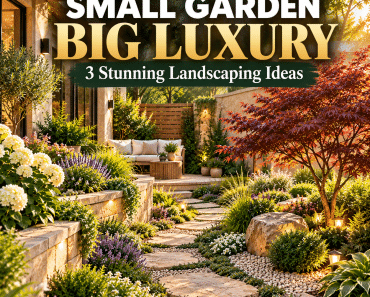
English Garden Landscaping transforms ordinary outdoor spaces into enchanting retreats filled with romantic flowers, graceful pathways, architectural greenery, and timeless countryside charm. Imagine stepping through an elegant garden arch, following a winding stone pathway surrounded by blooming roses, and discovering a secluded seating area beneath a beautifully weathered wooden pergola. This dreamy atmosphere captures the irresistible appeal of traditional English gardens while offering endless possibilities for modern American homes.
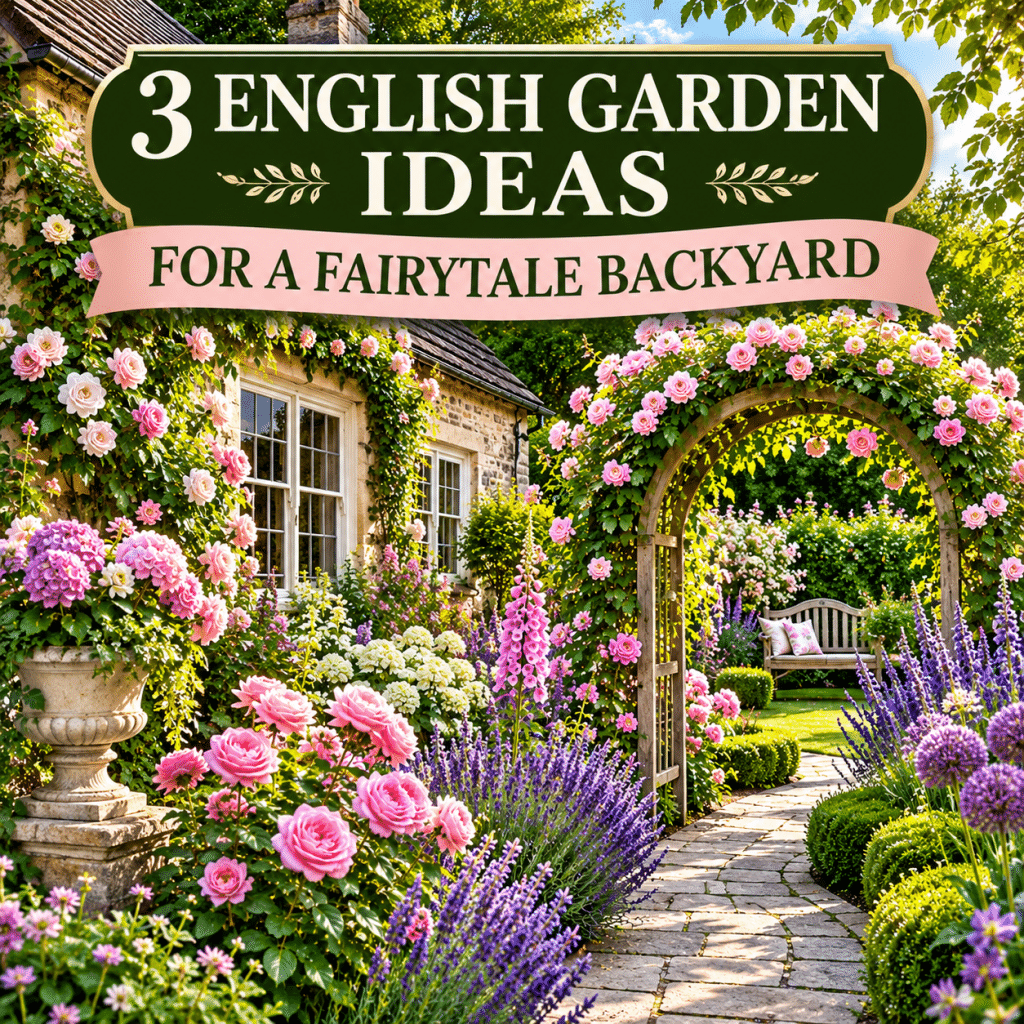
Unlike conventional backyard landscaping that often prioritizes perfectly maintained lawns and symmetrical planting beds, English-inspired landscapes celebrate an enchanting balance between natural beauty and thoughtful design. Flowering perennials mingle with ornamental shrubs, garden paths invite exploration, and carefully positioned architectural features create charming destinations throughout the landscape.
The most captivating English gardens may look effortlessly romantic, but their beauty comes from deliberate planning. Every curved pathway, flowering border, clipped hedge, and secluded garden bench contributes to an outdoor environment that feels welcoming, intimate, and wonderfully connected to nature.
Whether your property features a spacious suburban backyard, a compact urban garden, or an established landscape awaiting transformation, the right design strategy can introduce authentic English countryside character without sacrificing modern comfort.
Three particularly inspiring approaches stand out for their visual impact, versatility, and timeless appeal: romantic garden rooms connected by winding pathways, sophisticated architectural landscapes with layered perennial borders, and enchanting woodland retreats featuring intimate garden destinations.
Each interpretation offers a distinctive way to create a breathtaking outdoor environment that becomes more beautiful as its plantings mature.
🌿 Why English Garden Landscaping Creates Such an Enchanting Outdoor Atmosphere
The enduring popularity of English gardens comes from their extraordinary ability to blend structure with apparent spontaneity. Rather than presenting every feature at once, traditional English-inspired landscapes encourage visitors to discover different views, textures, fragrances, and garden experiences as they move through the space.
A carefully positioned hedge might conceal a romantic rose garden. A gently curving pathway could reveal an unexpected stone fountain, while a rustic wooden bench beneath an ornamental tree creates a peaceful destination for enjoying the surrounding flowers.
This sense of discovery transforms a backyard from a simple collection of plants into an immersive landscape experience.
Traditional English garden design encompasses several historical influences. Grand eighteenth-century landscape gardens emphasized naturalistic scenery, expansive views, and flowing landforms. Later Arts and Crafts gardens introduced more intimate outdoor rooms, pergolas, handcrafted materials, and richly planted borders. Cottage gardens developed their own recognizable character through abundant flowers, practical planting, and informal charm.
The Royal Horticultural Society identifies these approaches as related but distinct traditions, each offering design elements that can inspire contemporary residential landscapes. RHS
For modern homeowners, the magic lies in combining these traditions intelligently rather than trying to reproduce a historical estate.
A small garden might borrow the romantic planting of an English cottage garden while introducing the architectural organization of an Arts and Crafts landscape. A larger property could combine sweeping lawn views with hidden garden rooms and dramatic flowering borders.
The result feels natural and personal rather than overly formal or artificial.
🌸 The Essential Characteristics of a Beautiful English Garden
Several elements help establish an immediately recognizable English garden atmosphere.
Layered planting creates abundance through a combination of flowering perennials, shrubs, climbing plants, ornamental trees, and evergreen structure. Different heights and textures produce visual richness without requiring every plant to flower simultaneously.
Natural materials such as weathered brick, gravel, reclaimed stone, timber, and traditional ironwork reinforce an established countryside aesthetic. These materials develop character over time and complement the softness of surrounding vegetation.
Thoughtful circulation introduces movement through curved pathways, subtle changes in direction, and carefully framed views. Even a compact backyard can feel larger when every corner is not immediately visible.
Architectural focal points give the landscape memorable features. A rose-covered arbor, antique-style urn, stone birdbath, or elegant garden bench provides a destination and establishes visual hierarchy.
Finally, seasonal continuity ensures the garden remains attractive beyond its peak flowering period. Evergreen hedges, ornamental seedheads, textured bark, and persistent foliage contribute beauty when flowers become less abundant.
Together, these characteristics create outdoor spaces that feel sophisticated without becoming rigid.
🥇 Best 1 English Garden Landscaping With Romantic Garden Rooms and Secret Winding Pathways
The first and most enchanting approach transforms a conventional backyard into a sequence of intimate garden rooms connected by softly curving pathways.
Instead of treating the entire property as one uninterrupted space, this design introduces distinct outdoor destinations, each offering a different atmosphere.
Imagine an elegant entrance framed by climbing roses, followed by a narrow gravel pathway bordered with lavender, foxgloves, and flowering perennials. Beyond a gently clipped hedge, a secluded seating area appears beneath a rustic oak pergola.
Farther along the path, another opening reveals a quiet garden retreat surrounded by lush foliage and fragrant blossoms.
The experience feels like exploring a romantic English country estate, even when the available landscape is relatively modest.
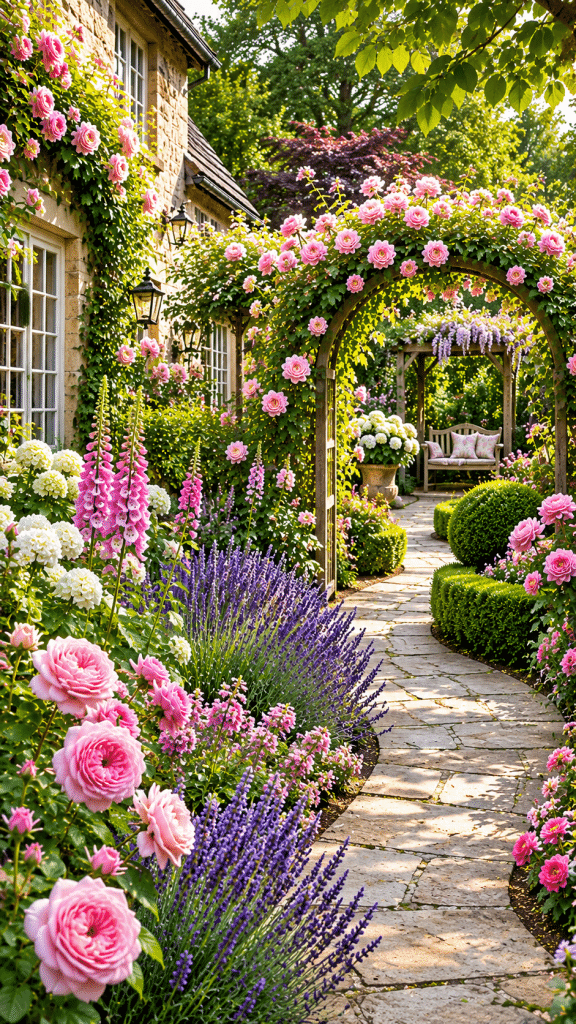
🌹 Create a Magical Entrance With a Rose Covered Garden Arch
A decorative garden arch establishes the first memorable moment within this landscaping concept.
Positioning the arch at the beginning of a pathway, between two garden spaces, or near a change in direction creates an architectural transition that immediately introduces a sense of romance.
Traditional wooden arches offer rustic charm, while black wrought-iron structures create an elegant contrast against delicate flowers and green foliage.
Climbing roses are especially appropriate for this feature. Their graceful flowering branches soften the structure and create the impression of a garden that has developed naturally over many years.
For a romantic palette, consider pale blush, creamy white, apricot, or soft pink flowers. These colors complement weathered stone and natural timber particularly well.
Where growing conditions permit, fragrant climbing roses can be paired with clematis to extend floral interest and introduce contrasting flower shapes.
However, the plants must have enough growing space and compatible pruning requirements. Crowding several vigorous climbers onto a small structure can make maintenance difficult and eventually overwhelm the arch.
A properly anchored structure should also be strong enough to support mature plants and withstand local wind conditions.
The most beautiful entrance is not necessarily the most heavily decorated one. A simple architectural frame covered by healthy, well-trained climbing plants often creates a stronger impression than a complicated arrangement of ornaments.
🪨 Design Curving Stone Pathways That Encourage Exploration
Winding pathways are among the most effective elements for transforming an ordinary backyard into a romantic landscape.
Their purpose extends beyond connecting locations. Carefully positioned curves control the pace of exploration and create the impression that something beautiful awaits around the next bend.
Natural stone stepping paths work particularly well in relaxed garden settings. Irregular flagstones provide organic shapes, while aged brick pathways introduce traditional English countryside character.
Fine gravel offers another attractive option, especially when paired with simple stone or brick edging.
For a realistic residential design, the path should follow a comfortable walking route rather than introducing exaggerated curves simply for decoration.
A gentle bend around a flowering border, ornamental tree, or evergreen shrub can create visual mystery without wasting valuable space.
Pathways should remain wide enough for comfortable passage, with stable and slip-resistant surfaces. Main routes intended for two people walking together generally benefit from more generous dimensions than secondary garden trails.
Allow low-growing flowers to soften the pathway edges while keeping the actual walking surface unobstructed.
Creeping thyme, compact geraniums, and other suitable edging plants can introduce softness where climate and foot traffic allow.
The RHS also highlights the value of connected, easily navigated paths that provide changing viewpoints and opportunities for peaceful garden exploration. RHS
🪑 Introduce Secret Seating Areas Behind Flowering Borders
A hidden seating area gives the garden an emotional destination.
Instead of positioning every outdoor chair directly beside the house, place a smaller seating space farther into the landscape.
This might be a traditional wooden bench beneath an ornamental tree, a pair of wrought-iron chairs beside a small fountain, or an intimate bistro table surrounded by flowers.
Partial concealment creates a sense of discovery. A low hedge, flowering shrub, or timber trellis can separate the seating area from the main lawn without completely enclosing it.
For a particularly romantic effect, position the seating area where visitors can enjoy fragrant flowers, filtered sunlight, or a carefully framed view of the garden.
A natural stone pad beneath the furniture prevents muddy conditions while introducing another attractive landscaping texture.
Avoid placing furniture directly beneath plants that regularly drop heavy fruit, sticky sap, or large quantities of debris.
The best garden retreat should feel inviting throughout the seasons, not only during a brief period of perfect spring weather.
🌿 Use Living Green Walls to Define Individual Garden Rooms
Garden rooms become more convincing when they have recognizable boundaries.
These boundaries need not be solid fences. Evergreen hedges, layered shrubs, espaliered trees, and climbing plants can separate areas while maintaining a natural atmosphere.
Low hedges establish formal outlines without blocking views. Taller shrub borders offer privacy and create intimate spaces.
A combination of both can be especially effective.
For example, a low evergreen hedge might outline a rose garden, while a taller mixed planting screen conceals a quiet reading area beyond it.
Openings between garden rooms should feel intentional. A narrow gateway, a gap framed by two shrubs, or a decorative arbor can establish an elegant transition.
Different planting combinations can also distinguish the individual rooms.
One area might feature pastel flowers and silver foliage, while another emphasizes deep greens, pale hydrangeas, and shade-tolerant plants.
Despite these differences, repeating materials and selected plants throughout the landscape creates a cohesive overall design.
The result is a romantic garden that feels larger, more immersive, and considerably more interesting than a conventional open lawn.
🥈 Best 2 English Garden Landscaping With Elegant Architectural Hedges and Luxurious Perennial Borders
The second approach introduces a more sophisticated interpretation of English garden design by combining carefully organized architectural features with abundant flowering borders.
This style is particularly suitable for homeowners who appreciate romantic gardens but also want a polished, visually balanced landscape.
Imagine an expansive green lawn framed by deep perennial borders, low clipped hedges, and elegant natural-stone edging.
Tall flowering plants rise behind generous clusters of roses, salvias, and hardy geraniums. Carefully positioned ornamental trees establish vertical structure, while a classical stone urn creates a graceful focal point.
Every feature feels connected through repetition, proportion, and carefully selected planting colors.
The result resembles a refined English country garden with the comfort and practicality of a contemporary residential landscape.
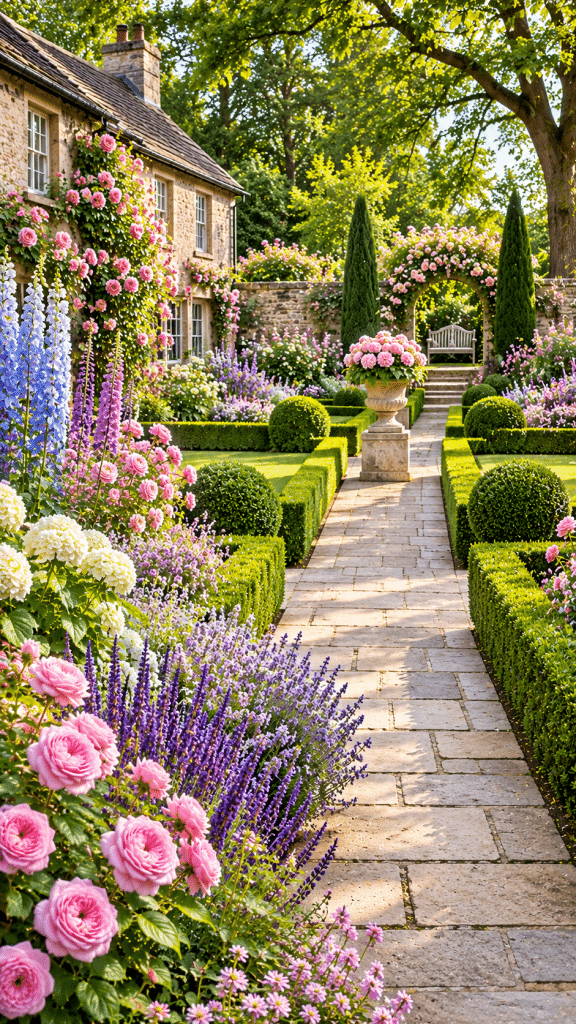
🌷 Build Deep Flower Borders With Dramatic Layered Planting
One of the defining characteristics of sophisticated English gardens is the generously planted mixed border.
Instead of arranging flowers in narrow strips along a fence, this design creates substantial planting areas with enough depth for several layers of vegetation.
Tall plants form the background, medium-height perennials occupy the middle, and compact flowering or foliage plants soften the front edge.
This arrangement creates depth and allows individual flowers to remain visible without forcing every plant into a rigid row.
For a classic romantic palette, combine soft pink roses, purple salvias, lavender-blue catmint, white flowering perennials, and graceful ornamental grasses.
Plants such as delphiniums, foxgloves, peonies, and hollyhocks can reinforce traditional English character where the local climate supports them.
In hotter regions, suitable alternatives might include garden phlox, coneflowers, salvias, and heat-tolerant flowering shrubs.
Plant selection should always reflect actual sunlight, soil drainage, winter temperatures, summer heat, and local water availability.
The Royal Horticultural Society recommends planning borders around site conditions, mature plant size, seasonal interest, and repeated planting groups. This approach helps create visually coherent landscapes that are also easier to establish successfully. RHS Advice
For particularly impressive results, avoid using dozens of unrelated flower varieties in equal quantities.
Instead, select a limited group of reliable plants and repeat them in generous clusters.
Repeated masses create stronger visual rhythm and help the entire border feel professionally designed.
🌳 Establish Timeless Structure With Clipped Evergreen Hedges
English garden landscaping often becomes most beautiful when soft flowers contrast with strong architectural shapes.
Evergreen hedges provide that contrast.
A low, carefully maintained hedge can define a planting border, organize a garden entrance, or introduce a graceful geometric framework around an informal collection of flowers.
Traditional English gardens frequently use boxwood for these purposes, although local disease pressure and growing conditions may make alternative shrubs more appropriate.
The RHS identifies yew, holly, beech, and other hedge plants as potential structural choices, while also noting problems that can affect box hedges. RHS
In North American gardens, suitable alternatives may include selected hollies, compact inkberry, or other regionally adapted evergreen species.
Choose varieties according to their mature size rather than assuming frequent pruning can keep any shrub indefinitely compact.
Low hedges are particularly attractive when used sparingly.
They can define the edge of a rose border, outline a decorative planting island, or frame an entrance without making the garden feel excessively formal.
For a more luxurious appearance, repeat the same hedge species throughout the property.
This repetition introduces visual consistency and allows colorful flowers to become the main attraction.
The contrast between disciplined greenery and romantic flowering plants creates an especially memorable English garden aesthetic.
🏛️ Add a Classical Stone Focal Point Without Overdecorating
A sophisticated English landscape often benefits from a single memorable architectural centerpiece.
An aged stone urn, traditional garden sundial, modest fountain, or beautifully proportioned birdbath can provide visual focus.
The key is thoughtful placement.
A decorative urn might sit at the end of a straight pathway, where it becomes visible from the house.
A low fountain could occupy the center of a small circular garden, surrounded by symmetrical planting.
Alternatively, a classical sculpture might emerge between two flowering borders, creating a subtle moment of discovery.
Materials should complement the surrounding landscape.
Weathered limestone, cast stone, antique-style terracotta, and naturally aged brick harmonize particularly well with English-inspired garden planting.
Avoid filling every corner with decorative objects.
Too many statues, containers, arches, and fountains can make the landscape feel cluttered and distract from the plants themselves.
A carefully positioned focal point often appears more luxurious than several competing ornaments.
🌼 Create a Harmonious Flower Color Story
Color selection plays a major role in the elegance of English garden landscaping.
Although traditional gardens can feature exuberant combinations, a carefully controlled palette often creates a more sophisticated result.
One beautiful approach uses blush pink, lavender, soft violet, creamy white, and silver-green foliage.
These shades blend naturally and produce a romantic atmosphere, especially during the softer light of morning and evening.
Another approach combines ivory, pale yellow, dusty peach, and delicate blue.
This warmer palette complements weathered brick, natural timber, and honey-colored stone.
For a more dramatic interpretation, combine deep burgundy foliage with mauve, plum, soft pink, and white flowers.
The darker tones introduce contrast while maintaining the softness associated with English planting traditions.
Remember that green is not simply background color.
Different shades of green, from silvery sage to glossy dark evergreen foliage, contribute depth and help connect flowering plants throughout the landscape.
Selecting plants with complementary leaf textures is often just as important as coordinating their blossoms.
✨ Combine Formal Lines With Informal Planting
The real secret of this design is balance.
If every hedge is clipped, every pathway is straight, and every flower is arranged symmetrically, the result can feel overly rigid.
If everything grows without visual organization, the garden may feel chaotic.
A successful English-inspired landscape occupies the space between these extremes.
Use straight lines for important structural elements, then allow flowers and perennials to soften their edges.
A formal gravel pathway can be bordered with abundant catmint and roses.
A rectangular lawn can be surrounded by naturally flowing perennial borders.
An elegant stone terrace can transition into loose planting filled with ornamental grasses and seasonal flowers.
This contrast produces a refined yet inviting landscape that feels beautifully established.
🥉 Best 3 English Garden Landscaping With Enchanted Woodland Retreats and Romantic Hidden Courtyards
The third approach creates an immersive garden inspired by the quieter, more mysterious corners of historic English estates.
Rather than emphasizing wide-open lawns or elaborate floral displays, this design focuses on layered woodland planting, natural stone features, secluded courtyards, and enchanting transitions between sunlight and shade.
Imagine walking along an irregular stepping-stone pathway beneath the graceful branches of ornamental trees.
Ferns, shade-loving perennials, and textured foliage create a peaceful green backdrop.
Beyond a curved planting bed, a small courtyard appears with an antique-style bench, climbing plants, and a simple water feature.
The atmosphere feels intimate, established, and wonderfully secluded.
This approach is particularly attractive for properties with mature trees, shaded corners, or irregularly shaped outdoor spaces.
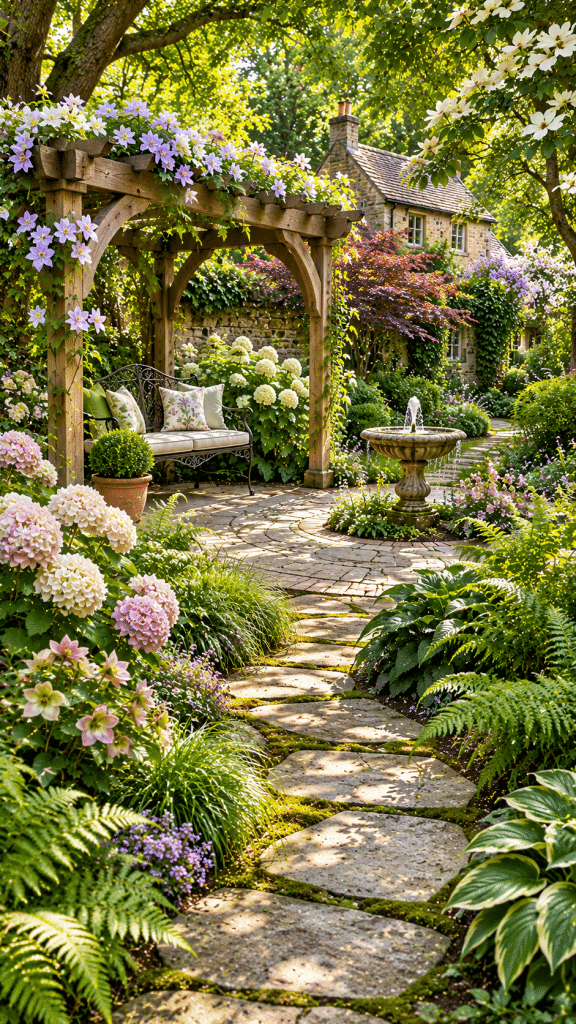
🌳 Design a Romantic Woodland Edge With Layered Greenery
A woodland-inspired English garden begins with thoughtful plant layering.
Rather than relying entirely on flowering plants, the design introduces multiple levels of foliage that create visual depth.
Small ornamental trees establish the upper canopy.
Flowering shrubs and compact evergreens fill the middle layer.
Ferns, groundcovers, and shade-adapted perennials provide texture near the soil surface.
Where growing conditions are suitable, Japanese maples, serviceberries, dogwoods, and small flowering trees can offer attractive structure.
Hydrangeas, hellebores, hardy geraniums, and selected ferns can contribute additional interest in appropriate climates and light conditions.
However, not all woodland plants tolerate the same amount of shade or moisture.
Some hydrangeas prefer morning sun, while certain ferns require consistently moist soil.
Careful plant selection helps the garden appear lush without creating unnecessary irrigation demands.
Consider planting in overlapping groups rather than isolated individual specimens.
A broad cluster of ferns beside a curved path creates a more convincing woodland atmosphere than a single fern surrounded by unrelated plants.
Likewise, repeating a reliable groundcover beneath several trees creates continuity.
The goal is to develop a landscape that feels naturally layered rather than artificially assembled.
🪨 Introduce an Old World Stone Courtyard
A small stone courtyard creates a distinctive focal destination within a woodland garden.
Its charm comes from the contrast between solid paving and the soft vegetation surrounding it.
Natural flagstone, reclaimed brick, or appropriately textured paving materials can establish an aged countryside character.
A circular or irregularly shaped courtyard often works especially well when approached by a curved pathway.
Position a traditional wooden or wrought-iron bench along one edge, leaving the center open enough for comfortable movement.
A modest stone planter filled with shade-tolerant flowers can create a focal point without overwhelming the area.
For a more intimate atmosphere, allow shrubs and climbing plants to partially enclose the courtyard.
A rustic wooden trellis can support appropriate climbers while providing a sense of privacy.
Lighting should remain subtle.
Small, downward-directed fixtures can illuminate steps or seating areas without creating excessive glare or disturbing the garden’s peaceful atmosphere.
The courtyard should feel like a natural destination within the landscape rather than a separate patio inserted into unused space.
💧 Create a Peaceful Water Feature Surrounded by Natural Planting
Water introduces another sensory dimension to English garden landscaping.
The gentle movement of a fountain, a reflective basin, or a small naturalistic pond can make a secluded retreat feel more peaceful.
For compact gardens, a simple recirculating fountain may provide enough movement and sound without requiring a large water installation.
A shallow stone basin can also complement the traditional aesthetic, provided it is maintained safely and cleaned regularly.
Position the feature where it can be enjoyed from nearby seating or viewed along an approaching pathway.
Naturalistic planting helps connect the water feature to the surrounding landscape.
Ferns, moisture-tolerant perennials, and ornamental grasses can soften the edges where soil and light conditions are suitable.
Choose water features that match the scale of the garden.
An oversized fountain may dominate a small woodland courtyard, while a modest water bowl can look beautifully integrated.
For homes with young children, water safety deserves particular attention. Even shallow water requires appropriate supervision and preventive measures.
🌿 Build an Intimate Garden Sanctuary Beneath a Timber Pergola
A timber pergola provides architectural definition and transforms an ordinary garden corner into a destination.
Its open framework allows filtered light to reach the seating area, while climbing plants gradually soften the structure.
Natural oak, cedar, or properly treated timber can complement a woodland-inspired landscape.
A simple rectangular design often looks more timeless than an elaborate structure with excessive decorative details.
For a romantic interpretation, train suitable climbing roses, clematis, or other locally adapted vines along the posts.
Where shade is substantial, select climbing plants that can genuinely perform under those conditions rather than forcing sun-loving roses into unsuitable locations.
Beneath the pergola, create a comfortable seating arrangement using weather-resistant furniture, neutral cushions, and subtle natural textures.
A gravel or paved surface improves accessibility and reduces maintenance.
Surrounding planting should frame the structure rather than completely conceal it.
The pergola becomes especially attractive when its geometry remains visible through a veil of flowering or leafy climbers.
Over time, the combination of architectural timber, established vegetation, and softly filtered light produces an atmosphere reminiscent of a secluded English countryside retreat.
🌸 Comparing the Best 3 English Garden Landscaping Styles
Each of these landscaping approaches offers a different balance of structure, romance, maintenance, and spatial requirements.
| Design feature | 🥇 Romantic Garden Rooms | 🥈 Elegant Perennial Landscape | 🥉 Enchanted Woodland Retreat |
|---|---|---|---|
| Main attraction | Hidden destinations and winding paths | Sophisticated borders and architectural hedges | Layered greenery and secluded courtyards |
| Overall atmosphere | Romantic and whimsical | Refined and timeless | Peaceful and mysterious |
| Ideal setting | Small to large backyards | Medium to large gardens | Shaded or partly shaded properties |
| Signature plants | Climbing roses, lavender, clematis | Roses, salvias, perennials, evergreens | Ferns, hydrangeas, woodland perennials |
| Key structures | Garden arches and pergolas | Hedges, stone urns, formal pathways | Stone courtyards and timber pergolas |
| Typical maintenance | Moderate to high | Moderate to high | Moderate, depending on plant selection |
| Main design priority | Discovery and privacy | Balance and seasonal color | Texture and natural atmosphere |
| Relative initial investment | Moderate to high | Moderate to high | Moderate to high, especially with hardscaping |
These descriptions are general planning comparisons rather than fixed design rules. Actual maintenance and investment depend on garden size, plant selection, construction materials, and local conditions.
A small garden with existing mature planting may achieve a remarkable transformation through relatively modest improvements.
A large property requiring extensive drainage work, retaining structures, elaborate paving, or new irrigation systems will naturally involve more complex planning.
The strongest choice is the one that complements the property rather than competing with its natural characteristics.
🌱 How to Plan English Garden Landscaping for a Beautiful and Sustainable Backyard
Successful garden design begins long before the first rose is planted or the first stone pathway is installed.
The planning stage establishes how the landscape will function, how it will appear from different viewpoints, and how its planting will develop over time.
Although English gardens often look spontaneous, careful preparation makes them more comfortable, attractive, and manageable.
📐 Study the Existing Landscape Before Creating a Design
Begin by observing the property throughout the day.
Identify areas receiving full sunlight, morning sunshine, afternoon shade, and persistent deep shade.
Pay attention to wind exposure, water accumulation, natural slopes, existing trees, and the location of important views.
These observations influence which garden style will work best.
A sunny backyard with a broad central lawn may be ideal for dramatic perennial borders.
An irregular property with mature trees may naturally support a woodland retreat.
A relatively compact garden surrounded by neighboring homes may benefit from intimate garden rooms and strategic planting screens.
Sketch a simple plan showing the house, existing planting, boundaries, and desired outdoor destinations.
Mark the locations of pathways, seating spaces, focal points, and potential garden structures.
Prioritize practical circulation before introducing decorative details.
The most romantic pathway will quickly become frustrating if it forces people to take an unnecessarily long route between frequently used spaces.
🌹 Choose Plants According to Climate Rather Than Appearance Alone
Beautiful English garden photographs frequently feature plants associated with cool or temperate climates.
Peonies, delphiniums, certain climbing roses, and traditional cottage garden perennials can be spectacular under favorable conditions.
However, the same plant combinations may struggle in regions with intense summer heat, high humidity, insufficient winter chilling, or incompatible soil conditions.
The most successful English-inspired garden recreates the design language of traditional English landscapes while using plants suited to the local environment.
This may mean selecting heat-tolerant rose varieties, substituting appropriate salvias for less adaptable flowering perennials, or choosing regionally suitable evergreen shrubs instead of conventional English hedging plants.
Planting design should also consider local ecological effects.
Prefer noninvasive species, include appropriate native plants where possible, and avoid introducing ornamental plants known to escape cultivation.
Important Note: The most beautiful English garden is not necessarily the one containing the most traditional English plants. A successful landscape preserves the romantic structure, layered planting, and timeless atmosphere of English garden design while selecting plants that thrive in the property’s actual climate, soil, and growing conditions.
This approach protects the investment in new planting while supporting a healthier, more resilient landscape.
🪴 Establish a Strong Planting Framework Before Adding Seasonal Flowers
A garden filled entirely with flowering annuals can look spectacular for a few months but may lack structure during the rest of the year.
A more sustainable approach begins with permanent plants.
Small ornamental trees, evergreen shrubs, structural grasses, and dependable perennial groups provide the framework.
Seasonal flowers can then introduce additional color without becoming responsible for the entire garden’s appearance.
Consider how each plant contributes during different seasons.
Some species provide spring blossoms.
Others offer summer fragrance, attractive autumn foliage, winter berries, or elegant seedheads.
Evergreen shrubs maintain important visual boundaries when deciduous plants lose their leaves.
This layered strategy helps the landscape remain visually connected throughout the year.
🪨 Select Landscaping Materials That Become More Beautiful With Age
Material selection has an enormous influence on the authenticity of English garden landscaping.
Traditional materials often improve visually as they weather.
Natural stone develops subtle tonal variations.
Reclaimed bricks introduce warmth and historical character.
Timber gradually acquires a softer appearance, while quality metalwork can retain its elegance for decades when maintained appropriately.
For pathways, prioritize stability, drainage, and slip resistance as well as appearance.
For retaining walls and raised structures, use construction methods suited to local soil conditions and applicable building requirements.
When mixing different materials, establish a restrained palette.
A garden combining natural stone, weathered timber, and muted gravel generally feels more harmonious than one containing many unrelated paving styles.
Repeat selected materials throughout the property to make individual garden spaces feel connected.
The RHS emphasizes the importance of preparing a design plan before undertaking major landscaping work, including decisions about paths, patios, pergolas, planting, and other garden features. RHS Advice
💐 The Most Beautiful Plant Combinations for English Garden Landscaping
Choosing the right plant combinations creates the romantic texture that makes this landscaping style so recognizable.
Instead of selecting flowers individually, organize plants into coordinated communities based on their sunlight requirements, mature dimensions, water needs, and seasonal characteristics.
🌷 Romantic Rose and Lavender Inspired Borders
Roses and lavender represent one of the most recognizable English garden combinations.
Soft rose blossoms provide larger floral forms, while lavender introduces fine-textured foliage and delicate flowering spikes.
A particularly elegant arrangement combines pale pink shrub roses with purple lavender and silver-green foliage.
However, the plants require compatible growing conditions.
Many roses appreciate fertile soil with adequate moisture, while lavender generally performs best in excellent drainage and relatively lean conditions.
In humid regions, lavender may struggle even when roses thrive.
One solution is to use catmint, selected salvias, or other appropriate flowering plants to create a similar purple-and-pink aesthetic.
The visual relationship matters more than reproducing a particular historical planting combination.
🌼 Delicate White Gardens With Soft Green Foliage
An all-white or predominantly white garden creates an atmosphere of serenity and understated luxury.
Combine white flowering shrubs with pale perennials, ornamental grasses, and foliage in several shades of green.
Hydrangeas, white roses, flowering salvias, and suitable white-flowered groundcovers can contribute to this effect where site conditions allow.
The key to a successful white garden is variation in texture.
Large flowers, delicate blossoms, glossy leaves, and fine ornamental foliage prevent the design from becoming visually flat.
For added architectural character, introduce a restrained natural-stone pathway or traditional stone urn.
A small shaded seating area can become especially enchanting when surrounded by pale flowers and rich green foliage.
🌸 Dreamy Pastel Borders With Cottage Garden Charm
Pastel planting provides a softer, more colorful interpretation of the traditional English garden.
Combine blush pink, powder blue, lavender, apricot, and creamy white in repeating groups.
A sunny border might feature roses, salvias, garden phlox, catmint, and selected ornamental grasses.
In cooler climates, traditional cottage garden favorites such as foxgloves, delphiniums, and peonies can introduce distinctive vertical accents.
For a more natural appearance, vary the heights and flower forms.
Place rounded blossoms beside narrow flowering spikes.
Combine upright plants with softer mounding forms.
Allow carefully chosen plants to overlap slightly while maintaining enough spacing for healthy air circulation.
This creates a romantic meadow-like effect without sacrificing overall design.
🏡 English Garden Landscaping Ideas for Small Backyards
A compact backyard can capture the charm of an English garden without needing an extensive lawn or large collection of ornamental trees.
In fact, smaller spaces can become particularly enchanting because intimate proportions naturally support the idea of a secluded garden retreat.
The key is to focus on a few strong design elements rather than trying to include every possible feature.
🌿 Use Vertical Gardening to Create Romantic Depth
Climbing plants are especially valuable in small landscapes.
A narrow trellis can introduce flowering height without occupying much ground space.
A decorative arch establishes a striking focal point and can divide two small garden areas.
An appropriately sized pergola provides overhead structure and helps define a seating space.
Choose compact or manageable climbing varieties suited to the structure and location.
Avoid vigorous plants that require constant pruning or have the potential to damage nearby structures.
Vertical greenery creates lushness while preserving valuable space for circulation.
🪑 Create One Beautiful Garden Destination
A small backyard often benefits from a single memorable destination.
This might be a curved wooden bench surrounded by fragrant plants or a compact bistro table placed on a natural-stone patio.
Instead of adding several different seating areas, devote attention to the quality of one space.
Frame the destination with layered planting, provide a pleasant view, and introduce a small focal feature nearby.
A carefully positioned birdbath or flowering container may be all the decoration required.
The result feels intentional and peaceful rather than crowded.
🌸 Repeat a Limited Selection of Flowering Plants
Small gardens can appear visually chaotic when too many unrelated plants compete for attention.
Choose a limited number of reliable species and repeat them.
For example, a compact English-inspired garden could combine one climbing rose, several flowering shrubs, repeated clusters of salvias, and a restrained groundcover.
Even if the total number of plant varieties is small, generous repetition can create abundant visual impact.
A simple planting palette also makes maintenance more predictable.
Instead of managing dozens of plants with different requirements, gardeners can establish consistent care routines for a smaller collection of dependable favorites.
🌦️ How to Keep an English Garden Beautiful Throughout the Seasons
English garden landscaping achieves its greatest charm when it evolves gracefully throughout the year.
Rather than expecting every plant to remain in flower continuously, design the landscape around complementary seasonal displays.
🌷 Spring Brings Fresh Flowers and Romantic Color
Spring often marks the beginning of the most dramatic floral displays in temperate English-inspired gardens.
Flowering bulbs, ornamental trees, early perennials, and emerging foliage create a sense of renewal.
Tulips, daffodils, and other spring bulbs can provide vibrant color where winter conditions suit their chilling requirements.
Early-flowering shrubs and perennial combinations add structure as the garden begins to fill out.
Spring is also an important time to assess winter damage, refresh mulch, and support young plants preparing for active growth.
🌹 Summer Creates the Classic English Garden Experience
Summer often delivers the abundant flowering displays most associated with romantic English gardens.
Roses, salvias, garden phlox, hydrangeas, and other suitable flowering plants can provide layers of color.
During this period, prioritize consistent watering, appropriate mulching, and selective pruning.
Remove spent flowers where recommended to encourage further blooming.
Monitor plants for disease, especially in dense borders where poor airflow can create problems.
A healthy garden with thoughtfully spaced planting often looks more beautiful than an overcrowded landscape.
🍂 Autumn Introduces Texture and Subtle Elegance
Autumn reveals another dimension of English garden design.
Seedheads, ornamental grasses, changing foliage colors, and late-blooming perennials contribute a softer visual atmosphere.
Instead of removing every fading flower immediately, allow selected ornamental seedheads to remain where appropriate.
These provide seasonal texture and can support wildlife.
Autumn is also an important period for evaluating planting combinations and making adjustments in climates where fall planting is suitable.
A well-planned English-inspired garden retains its structure even as its floral palette changes.
❄️ Winter Reveals the Beauty of Garden Architecture
Winter showcases the structural framework that supports the landscape.
Clipped hedges, evergreen shrubs, stone pathways, pergolas, and ornamental tree silhouettes become especially important when flowering plants are dormant.
A traditional garden arch can remain beautiful without blossoms.
Weathered brick and natural stone retain their charm beneath winter light.
Evergreen planting provides essential color, while ornamental grasses and persistent seedheads contribute texture.
In climates without a cold winter, the same structural principles help the garden remain attractive during rainy seasons, dry periods, or temporary reductions in flowering.
✨ Common English Garden Landscaping Mistakes That Can Ruin the Romantic Effect
Even carefully selected plants and beautiful materials may fail to create an appealing landscape when the overall design lacks consistency.
One common mistake is introducing too many decorative features.
A rose arch, fountain, stone urn, garden sculpture, birdbath, and multiple pergolas may all be attractive individually, but combining them in a small area can create unnecessary visual competition.
Select the features that contribute most strongly to the intended garden atmosphere.
Another mistake is underestimating mature plant dimensions.
A compact shrub purchased from a nursery may eventually occupy several feet of garden space.
A vigorous climbing rose can outgrow a small arch, while a poorly positioned ornamental tree may shade previously sunny flower borders.
Allowing adequate space for mature growth preserves the landscape’s structure and reduces future maintenance problems.
Ignoring drainage is equally problematic.
English garden aesthetics frequently incorporate gravel pathways, stone terraces, and richly planted borders. However, these elements must be designed around local soil and rainfall conditions.
Poor drainage can damage plant roots, destabilize paving, and create uncomfortable walking surfaces.
Finally, avoid making every plant and feature equally important.
An effective landscape needs quiet areas as well as dramatic ones.
Simple green hedges, open spaces, and restrained paving allow impressive flowering borders and architectural focal points to receive the attention they deserve.
🌿 Creating a Timeless English Garden That Becomes More Beautiful Every Year
The greatest appeal of English garden landscaping lies in its ability to create a landscape that feels increasingly established and personal over time.
Newly planted borders gradually mature into rich layers of color and texture.
Climbing plants soften garden arches and pergolas.
Natural stone develops subtle character, while ornamental shrubs create stronger spatial definition.
A landscape that initially feels carefully designed may eventually appear wonderfully effortless.
Among the three featured approaches, romantic garden rooms offer the strongest sense of exploration and privacy. Elegant perennial landscapes provide sophisticated structure and abundant seasonal color, while enchanted woodland retreats create peaceful outdoor sanctuaries filled with texture and natural beauty.
These approaches need not remain completely separate.
A large backyard might combine an elegant perennial border near the house with winding pathways leading toward a shaded woodland courtyard.
A smaller garden could feature one romantic arch, a compact flowering border, and a carefully positioned seating destination.
The most successful design emerges from understanding the property’s natural features, selecting climate-appropriate plants, and establishing a clear relationship between architecture and planting.
The ultimate goal is not simply to recreate a traditional English garden. It is to capture the romance, elegance, and timeless beauty of English landscape design in an outdoor space that feels perfectly suited to everyday life.
With thoughtful planning, carefully layered flowers, graceful paths, and distinctive garden destinations, even an ordinary backyard can become an extraordinary countryside-inspired retreat.