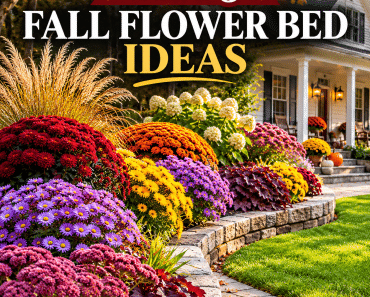
Fall Window Box Ideas can completely transform an ordinary house into a breathtaking autumn retreat, bringing rich seasonal colors, charming botanical textures, and irresistible curb appeal directly beneath your windows. While many homeowners focus on decorating their front porches or planting elaborate autumn gardens, beautifully designed window boxes offer an unexpectedly powerful way to celebrate the season without requiring a large outdoor space or an expensive landscaping project.
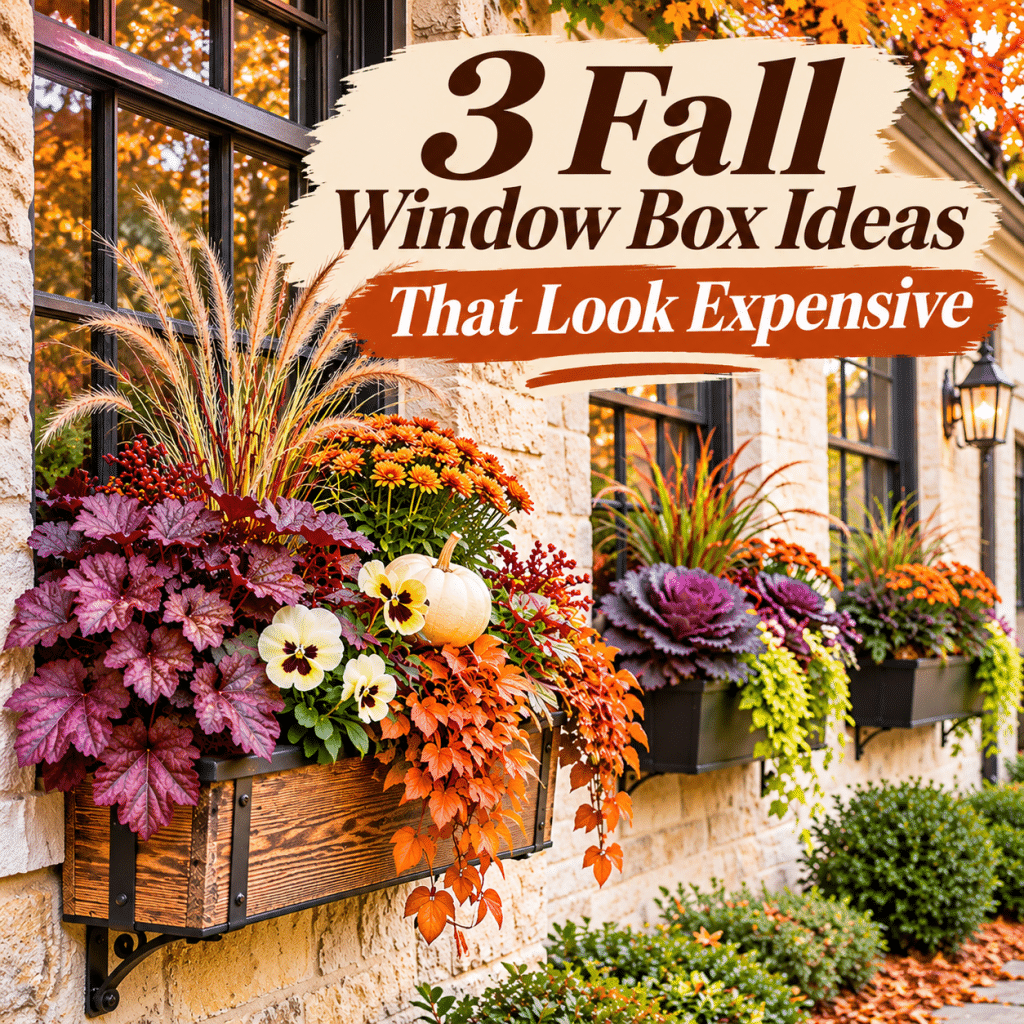
Imagine opening your curtains on a crisp autumn morning and discovering cascading copper foliage, romantic burgundy flowers, delicate ornamental grasses, and miniature pumpkins arranged in a spectacular display just outside your window. The combination of warm seasonal colors and natural textures creates an inviting atmosphere that makes even the simplest home exterior feel carefully designed.
🍂 The secret to extraordinary autumn window boxes is not simply filling them with seasonal flowers. The most memorable arrangements combine architectural balance, unexpected plant combinations, contrasting textures, and carefully coordinated colors that complement the surrounding house.
Whether your home features traditional white siding, rustic brick walls, contemporary black window frames, or romantic cottage architecture, there is a fall window box design capable of making your exterior look dramatically more sophisticated.
The following three exceptional designs explore completely different interpretations of autumn beauty. From romantic countryside charm to modern architectural elegance and enchanting woodland-inspired compositions, these ideas offer practical planting guidance alongside creative design inspiration.
🍁 Why Fall Window Box Ideas Are the Secret to Beautiful Autumn Curb Appeal
Autumn offers an extraordinary opportunity to reconsider how exterior windows contribute to the overall appearance of a home.
During spring and summer, flowering window boxes often rely on abundant blossoms and bright colors. Autumn arrangements introduce an entirely different visual language, emphasizing foliage, layered silhouettes, warm contrasts, and botanical structures that remain beautiful as the weather changes.
A thoughtfully planted window box functions almost like a miniature landscape suspended against the exterior wall. Its horizontal shape naturally emphasizes the architecture of a window, while cascading plants soften rigid lines and upright foliage creates additional dimension.
This makes window boxes particularly effective for homes with limited front yards, narrow walkways, urban facades, or simple architectural designs that benefit from decorative detail.
The Unexpected Beauty of Decorating at Window Level
Traditional garden beds attract attention at ground level. Window boxes position seasonal arrangements closer to the viewer’s natural line of sight, allowing their colors and textures to become prominent architectural features.
A dark green window box filled with copper-colored heuchera and cream pansies can transform an ordinary white exterior into a charming countryside composition.
Similarly, a sleek charcoal planter positioned beneath a black-framed window can become a striking contemporary feature when planted with ornamental kale, bronze grasses, and cascading foliage.
The relationship between the arrangement and the window itself is especially important.
Beautiful fall window boxes should appear intentionally connected to the surrounding architecture rather than resembling unrelated containers attached to a wall.
Matching the planter’s proportions, material, and color to the house creates a more harmonious result.
How Autumn Colors Create a More Luxurious Appearance
Autumn provides a naturally sophisticated palette that extends far beyond bright orange pumpkins and yellow chrysanthemums.
Deep burgundy, antique copper, muted olive, dusty lavender, chocolate brown, soft ivory, and weathered gold create combinations that feel remarkably refined.
These colors become especially beautiful when repeated through different botanical textures.
For example, burgundy heuchera leaves can complement wine-colored violas, while copper sedge foliage echoes the warm tones of weathered wooden window boxes.
A restrained selection of colors often produces a more impressive result than combining every available autumn shade.
The three designs below demonstrate how distinct palettes and planting structures can create beautiful results without overwhelming the house.
🥇 Best 1 Fall Window Box Ideas With Romantic Cottage Flowers and Cascading Copper Foliage
Few autumn decorating styles feel as welcoming as a romantic countryside window box filled with rich seasonal foliage, delicate flowers, and naturally cascading greenery.
This design captures the timeless beauty of an English cottage garden while adapting its relaxed charm to a compact window planter.
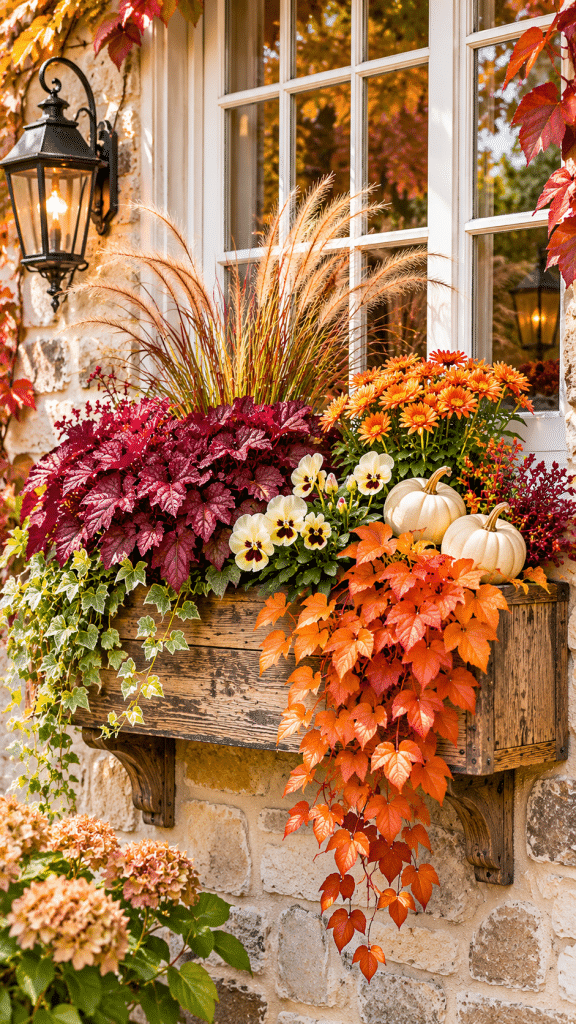
Imagine a weathered wooden window box overflowing with burgundy heuchera, copper-colored ornamental sedges, creamy white pansies, and soft trailing greenery.
Small decorative pumpkins and carefully positioned botanical accents introduce unmistakable autumn character without making the arrangement appear crowded.
The result is an elegant composition that feels simultaneously abundant, romantic, and effortlessly natural.
🍂 Creating a Rich Copper and Burgundy Color Palette
The foundation of this arrangement is a sophisticated combination of copper, burgundy, and warm cream.
These shades work particularly well because they create visual warmth without relying heavily on traditional bright orange decorations.
Burgundy foliage adds depth and sophistication, while copper-toned leaves introduce movement and seasonal character.
Cream-colored flowers provide essential contrast, preventing the arrangement from becoming too dark or visually heavy.
Consider using the following plants:
- Burgundy heuchera: Creates dramatic foliage with beautifully ruffled leaves.
- Bronze or copper Carex: Introduces fine-textured, arching foliage and gentle movement.
- Cream pansies: Add delicate flowers that brighten the darker foliage.
- Trailing ivy alternatives or golden creeping Jenny: Soften the front edge with cascading greenery.
- Compact chrysanthemums: Provide optional seasonal blossoms where adequate space is available.
Choose plants according to the window’s sunlight exposure and local climate. Golden creeping Jenny, for example, performs differently in deep shade and full sun, while some ornamental grasses tolerate cold better than others.
The most beautiful arrangements use each plant for a particular visual purpose rather than simply collecting attractive varieties.
Choosing the Perfect Rustic Window Box
A wooden planter with a naturally weathered finish offers an especially beautiful foundation for this romantic design.
Weathered oak tones, muted brown finishes, and softly distressed gray wood all complement the warm colors of autumn foliage.
However, untreated wood can deteriorate quickly when exposed to constant moisture.
Selecting an exterior-rated wooden window box with a suitable liner and proper drainage helps maintain its appearance.
Another attractive possibility is a dark metal hayrack-style window box fitted with a coconut coir liner.
The visible liner introduces a rustic texture that perfectly complements cottage-inspired architecture.
For a balanced composition, choose a box approximately as wide as the window whenever installation space permits.
A planter that is dramatically narrower than the window may appear visually disconnected, while an excessively wide planter can overwhelm smaller architectural details.
Layering Plants for an Abundant Cottage Appearance
The defining feature of this design is its seemingly effortless abundance.
However, the arrangement should be constructed with careful consideration of height, density, and direction.
Begin by positioning compact copper sedges toward the back of the planter. Their fine leaves will establish an attractive background without forming a heavy visual barrier.
Next, place burgundy heuchera plants throughout the central planting area.
Their rounded foliage creates generous volume and provides an appealing contrast against the delicate sedge leaves.
Introduce cream pansies between the heuchera plants, allowing the flowers to appear naturally scattered.
Finally, position trailing greenery near the front corners and edges, where it can cascade over the planter.
This layered structure creates a pleasing transition from upright foliage to rounded plants and finally to flowing greenery.
✨ Designer detail: Allow some foliage to extend beyond the front edge rather than trimming everything into a perfectly symmetrical shape. Gentle irregularity makes a cottage window box feel more natural and established.
Adding Miniature Pumpkins Without Overcrowding the Arrangement
Miniature pumpkins can be charming decorative accents, but their placement requires restraint.
Rather than arranging a continuous row of pumpkins across the planter, consider using two or three small decorative gourds in complementary colors.
White, pale sage, and muted peach pumpkins are particularly attractive beside burgundy foliage.
Position them where they remain visible without covering the crowns of living plants or pressing heavily against delicate stems.
Lightweight artificial pumpkins can work well when securely attached to discreet supports.
Natural pumpkins should be inspected regularly and removed if they begin to soften or decay.
A simple cluster near one corner often creates a more sophisticated result than distributing decorative objects throughout the entire arrangement.
Making the Cottage Window Box Beautiful Through Late Autumn
The lasting beauty of this arrangement depends largely on choosing plants that tolerate cooler conditions.
Heuchera provides dependable foliage interest in many temperate climates, although the hardiness of individual cultivars varies.
Pansies may continue flowering during cool autumn weather and can persist into winter in suitable regions.
Ornamental sedges contribute structure even when seasonal flowers begin to fade.
Keep the planting mix moderately moist without allowing the roots to remain waterlogged.
Remove damaged leaves and spent blossoms regularly.
As the season progresses, the composition may become increasingly foliage-focused, creating a quieter appearance that still complements the house beautifully.
This design is particularly suitable for traditional cottages, white farmhouse exteriors, vintage brick houses, and romantic countryside residences.
🥈 Best 2 Fall Window Box Ideas With Modern Black Planters and Dramatic Architectural Foliage
Autumn decorating does not have to involve rustic pumpkins, country-style baskets, or traditional harvest decorations.
A sophisticated modern window box can celebrate the season through sculptural foliage, controlled color contrasts, and beautiful architectural simplicity.
This second design is ideal for homeowners who prefer contemporary landscaping, minimalist exterior styling, and refined botanical compositions.
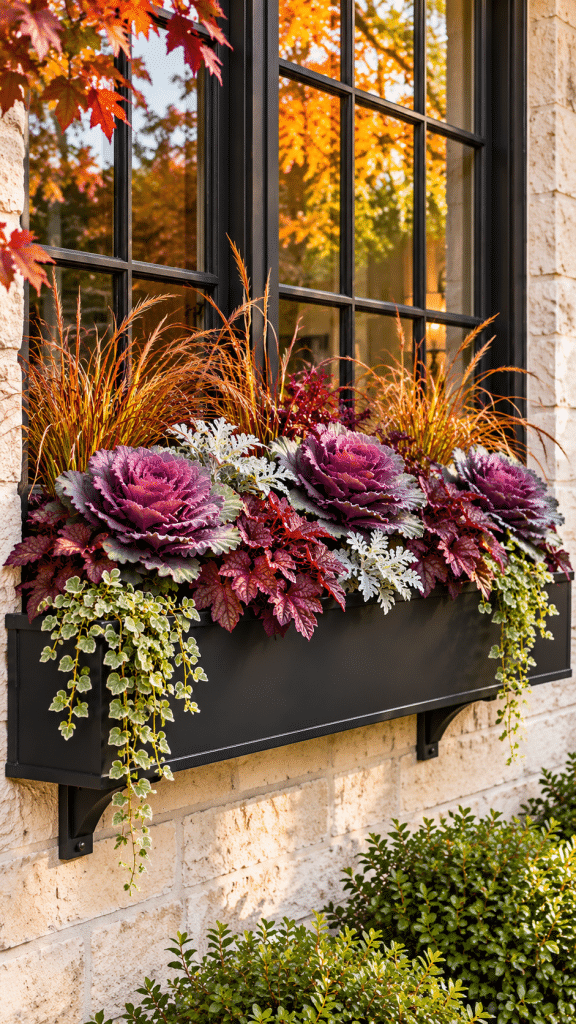
Imagine a long matte-black planter positioned beneath a tall contemporary window.
Inside, sculptural purple ornamental kale creates dramatic focal points, surrounded by deep burgundy heuchera, slender bronze sedges, and softly cascading silver-green foliage.
The finished arrangement resembles a miniature contemporary garden designed specifically for the architecture of the house.
🖤 Why Black Window Boxes Make Autumn Colors Look More Expensive
A matte-black window box offers an exceptionally effective backdrop for autumn foliage.
Unlike brighter decorative containers, black visually recedes, allowing the plants to become the main attraction.
Copper, burgundy, silver, and purple foliage appear especially rich against a dark planter.
The contrast also works beautifully with contemporary exterior materials such as concrete, black-framed glass, pale natural stone, and vertical wooden siding.
A charcoal or dark bronze planter can provide a slightly softer alternative while maintaining the same sophisticated aesthetic.
For the most cohesive appearance, repeat the planter color through other architectural elements.
Black window frames, dark door hardware, or metal exterior lighting fixtures can visually connect the planting arrangement to the rest of the house.
Selecting Sculptural Plants With Strong Silhouettes
The greatest strength of this window box is its emphasis on interesting plant shapes.
Instead of relying on numerous different flowers, choose a limited number of foliage plants with contrasting forms.
Ornamental cabbage or kale is particularly effective because its tightly arranged leaves create a dramatic sculptural appearance.
Purple-centered varieties offer beautiful color transitions between deep violet, muted green, and pale silver.
Heuchera adds rounded foliage, creating a softer contrast against the geometric structure of ornamental kale.
Compact Carex cultivars provide fine, grasslike leaves that introduce vertical and arching movement.
For a silver accent, consider a suitable compact dusty miller variety where growing conditions allow.
These plants create visual interest through their shapes even when flowers are absent.
The combination feels architectural rather than conventionally floral.
Designing a Minimalist Arrangement With Intentional Repetition
Minimalist window boxes benefit from deliberate spacing and repetition.
A simple three-part structure can be particularly effective in a long rectangular planter.
Place a compact ornamental kale toward the center, then establish groups of similarly colored foliage on either side.
Use matching plants to create visual rhythm rather than filling every gap with a different species.
For example, three compact purple ornamental kale plants distributed evenly across a sufficiently long planter can establish a strong horizontal pattern.
Burgundy heuchera can provide supporting volume, while slender grasses introduce movement between the larger foliage forms.
The arrangement should remain low enough to preserve an attractive view through the window.
Avoid choosing tall grasses that will eventually obstruct the glass or dominate the architecture.
🌿 Styling secret: A limited palette of three foliage colors can make an arrangement appear more intentional and sophisticated than a crowded collection of unrelated plants.
Introducing a Subtle Metallic Autumn Accent
A contemporary autumn window box can include decorative elements without appearing overly festive.
Consider introducing a single weather-resistant bronze accent, a compact sculptural branch, or a muted metallic botanical ornament.
The decorative object should be secondary to the plants.
A matte bronze finish works especially well because it harmonizes with copper foliage and darker architectural materials.
Avoid placing reflective decorations where they may cause distracting glare through the window.
Similarly, keep decorative accents securely attached so they cannot fall during windy weather.
For a particularly refined appearance, leave the arrangement entirely botanical and allow the textures of the plants to create seasonal interest naturally.
Using Negative Space to Create a High End Look
One of the most overlooked principles in window box design is the importance of visual breathing room.
Although plants generally need sufficient density to create an attractive display, overcrowding can make the composition appear chaotic.
A more sophisticated approach balances foliage volume with clearly defined shapes.
Allow ornamental kale rosettes to remain visible rather than completely surrounding them with competing plants.
Use trailing foliage selectively at the edges instead of covering the entire front of the planter.
Choose plants with compatible growth rates so that one species does not quickly overwhelm the others.
As the plants establish, their leaves will gradually soften the original spacing.
The goal is not to expose large areas of bare soil, but to preserve enough visual separation for each important plant form to remain recognizable.
Protecting Modern Window Boxes From Cold Weather
Contemporary planters are often manufactured from metal, fiberglass, resin, or composite materials.
Each material responds differently to temperature changes.
Metal can become very cold during freezing weather, while certain low-quality containers may crack when wet growing media freezes.
Choose a planter specifically designed for exterior seasonal conditions.
Good drainage is especially important because waterlogged soil can damage roots and increase the risk of frost-related problems.
In colder regions, a sheltered window location may provide some protection from wind, but it does not guarantee that the plants or roots will remain above freezing.
Consider the mature size and cold tolerance of every selected plant before installation.
This modern design works particularly well with contemporary townhouses, Scandinavian-inspired homes, minimalist architecture, and modern farmhouse exteriors.
🥉 Best 3 Fall Window Box Ideas With Enchanted Woodland Textures and a Magical Autumn Forest Atmosphere
For homeowners who love the mysterious beauty of an autumn forest, a woodland-inspired window box offers an entirely different approach to seasonal decorating.
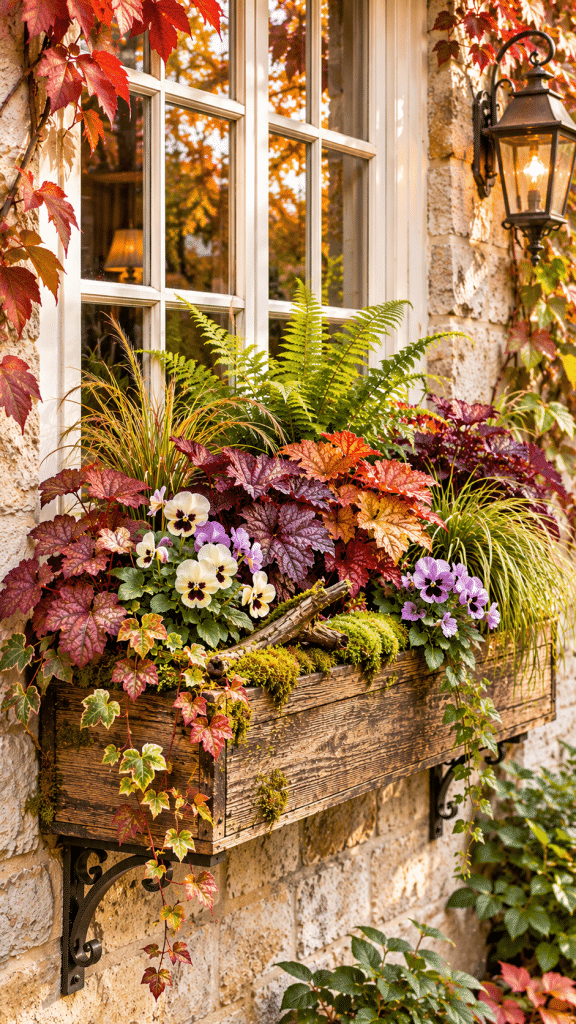
Rather than emphasizing conventional harvest colors, this design captures the atmosphere of a quiet woodland filled with mossy textures, softly arching greenery, delicate flowers, and weathered botanical elements.
Imagine a long window box beneath a cozy cottage window, filled with miniature ferns, copper and plum heuchera, subtle woodland flowers, and naturally textured branches.
Touches of soft green contrast beautifully with earthy brown, muted gold, and deep forest tones.
The result feels like a tiny woodland landscape growing directly beneath the window.
🌲 Building a Woodland Color Palette Inspired by Nature
The most important feature of this arrangement is its organic color harmony.
Instead of combining vivid orange and yellow flowers, begin with muted botanical tones inspired by an autumn forest floor.
Deep green provides the foundation.
Copper and russet foliage introduce warmth, while burgundy leaves create shadow and depth.
Soft lavender or ivory flowers can introduce delicate highlights without disrupting the natural appearance.
Consider combining:
- Copper heuchera: Adds richly colored woodland-style foliage.
- Compact shade-tolerant ferns: Create delicate botanical structure.
- Small violas: Introduce subtle flowers in purple, cream, or soft yellow.
- Suitable evergreen sedges: Provide fine-textured foliage.
- Natural bark accents: Reinforce the woodland character when securely positioned.
Because woodland plantings often favor shade or partial shade, this design can be especially attractive beneath north-facing windows or other locations with limited direct sunlight, provided the specific plants are suited to those conditions.
Creating the Impression of a Miniature Forest Landscape
A woodland window box should feel less formal than a minimalist architectural arrangement.
Instead of arranging plants in perfectly symmetrical rows, create small botanical groupings that resemble natural forest vegetation.
Position a compact fern slightly off-center to establish a focal point.
Surround it with copper and burgundy heuchera, allowing the leaf shapes to overlap naturally.
Introduce low-growing violas near the front, where their flowers remain visible.
A few slender, securely anchored branches can add height and suggest the appearance of miniature woodland trees.
However, avoid heavy branches or decorations that could interfere with plant growth or destabilize the planter.
The arrangement should have a gentle variation in height rather than forming a uniformly level surface.
This creates the impression of a carefully composed miniature landscape.
Choosing Natural Materials for an Authentic Forest Feeling
The container itself contributes significantly to the woodland atmosphere.
Dark-stained wood, weathered composite materials, and natural-looking textured planters work particularly well.
A moss-lined metal hayrack can also create a charming appearance, provided the liner securely retains the planting medium and does not dry excessively.
Small pieces of decorative bark may be positioned on the soil surface to create woodland texture.
Use clean, suitable materials, and avoid introducing decaying wood that may harbor pests.
Natural moss can be attractive, but it should not be assumed to thrive indefinitely in every exposed window box.
For installations where living moss is unsuitable, carefully selected decorative moss or a thin organic mulch can provide a similar visual effect.
Do not allow decorative material to smother plant crowns or block drainage.
Adding Woodland Details Without Making the Display Look Artificial
The enchanting appearance of this design comes from subtle botanical storytelling.
A small collection of interesting branches, a naturally shaped piece of bark, or a few carefully positioned seed heads can suggest the atmosphere of an autumn forest.
However, restraint remains essential.
Avoid overcrowding the arrangement with miniature woodland figurines, oversized artificial mushrooms, or numerous decorative accessories.
These objects can easily distract from the natural beauty of the plants.
Instead, select one or two botanical details that reinforce the woodland theme.
A beautifully curved branch, for example, can provide more visual interest than several unrelated decorative ornaments.
Weathered natural textures also create a pleasant contrast against smooth window glass and painted exterior walls.
Making a Woodland Window Box Feel Beautiful From Inside the House
Unlike garden beds that are primarily viewed outdoors, a window box can also be appreciated from inside the home.
This creates an opportunity to design the arrangement from two perspectives.
From the street, the plants should complement the house and create a welcoming appearance.
From indoors, the planting should provide interesting foliage and delicate movement without blocking natural light.
Low-growing ferns, compact heuchera, and gently arching sedges are especially useful when chosen appropriately for the box.
Keep taller decorative branches away from the central viewing area.
If the window opens outward, verify that the arrangement does not obstruct its operation.
A woodland composition that looks beautiful from both directions creates a stronger connection between the interior and exterior of the home.
Extending Woodland Beauty Into the Colder Months
A successful woodland arrangement does not need to depend heavily on seasonal flowers.
Foliage plants can provide lasting structure even as autumn progresses.
Certain heuchera cultivars retain attractive leaves through cool weather, while appropriate evergreen ferns and sedges can contribute winter interest in suitable climates.
However, not every fern or heuchera variety is equally winter-hardy, especially when grown in a shallow exposed container.
Choose plants based on local conditions and the limitations of the planter.
When delicate seasonal plants begin to deteriorate, replace them with suitable cold-tolerant foliage rather than dismantling the entire arrangement.
The evolving composition can remain attractive as its autumn colors transition toward quieter winter greens.
This design is an excellent choice for woodland cottages, natural stone houses, rustic cabins, shaded windows, and homes surrounded by mature trees.
🌿 Fall Window Box Ideas Plant Selection Guide for Every Autumn Style
Choosing beautiful plants is only one part of creating a successful autumn window box.
Sunlight, available root space, drainage, temperature, and mature plant size all influence how well an arrangement performs.
The following comparison makes it easier to select plants for different design styles.
| Plant | Decorative feature | Typical light preference | Best design role |
|---|---|---|---|
| Heuchera | Burgundy, copper, amber, or purple foliage | Partial shade; varies by cultivar | Rich foliage filler |
| Pansies | Colorful cool-season flowers | Full sun to partial shade | Seasonal flower accent |
| Ornamental kale | Sculptural purple, pink, or cream rosettes | Full sun | Architectural focal point |
| Compact Carex | Fine, arching grasslike foliage | Sun to partial shade, depending on species | Texture and movement |
| Sweet alyssum | Delicate trailing flowers | Full sun to partial shade | Soft cascading edge |
| Compact chrysanthemums | Rounded clusters of autumn blooms | Full sun | Short-term floral focal point |
| Golden creeping Jenny | Cascading chartreuse foliage | Sun to partial shade | Trailing color contrast |
| Hardy ferns | Delicate woodland foliage | Partial to full shade | Woodland texture |
| Dusty miller | Soft silver-gray foliage | Full sun | Contrasting silver accent |
| Violas | Small, abundant cool-season flowers | Full sun to partial shade | Natural cottage-style detail |
These are general growing preferences. Actual performance varies by species, cultivar, climate, and exposure.
For example, ornamental kale develops especially attractive cool-season foliage, while pansies and violas are valued for their autumn and winter flowering potential in appropriate climates. Home & Garden Information Center+2
How to Choose Plants That Work Together
Plant combinations should be based on more than visual appearance.
Although a sun-loving ornamental kale and a shade-preferring fern may look beautiful together in a photograph, they may not perform well in the same location.
Select plants with similar light and moisture requirements whenever possible.
A sunny window box might combine ornamental kale, pansies, and compact sun-tolerant foliage plants.
A partially shaded box could feature heuchera, violas, and suitable sedges.
For deeper shade, focus more heavily on attractive foliage rather than expecting abundant flowering from plants that require direct sunlight.
The depth of the planter is another important consideration.
Shallow window boxes restrict root development, making compact plants more appropriate than large perennials or vigorous ornamental grasses.
Careful plant selection creates a healthier arrangement and reduces the amount of maintenance required as the season progresses.
🍂 How to Design Fall Window Boxes That Look Professionally Styled
Creating an extraordinary window box requires a thoughtful balance between architecture, planting structure, and practical maintenance.
Even inexpensive plants can produce an elegant result when arranged with a clear design concept.
Measure the Window Before Choosing the Planter
Start by measuring the width of the window and examining the surrounding architectural details.
A planter approximately matching the window width often produces the most balanced appearance.
However, shutters, decorative trim, downpipes, and nearby walls may influence the appropriate dimensions.
Also consider how far the planter projects from the building.
A very deep box can look visually heavy beneath a narrow window, while a shallow one may provide insufficient growing space.
Choose dimensions that accommodate both the planting design and the structural limitations of the installation.
Remember that soil, water, plants, and decorative materials can create substantial weight.
The mounting system must be rated for the full loaded weight and installed into appropriate structural support.
Build the Arrangement Around One Dominant Feature
Many disappointing window boxes suffer from an excess of competing focal points.
A stronger design begins with one prominent feature and allows supporting plants to enhance it.
In a romantic cottage arrangement, the dominant feature might be richly colored heuchera foliage.
For a modern design, sculptural ornamental kale could establish the main visual rhythm.
In a woodland arrangement, a delicately arching fern might become the focal point.
Once the central feature is established, choose complementary plants with contrasting leaf shapes and colors.
This approach makes the arrangement feel designed rather than randomly assembled.
Use the Thriller Filler and Spiller Principle Carefully
A traditional container design technique involves combining three plant roles.
The thriller creates height or a distinctive visual focal point.
The filler provides volume and connects the surrounding plants.
The spiller softens the container edge with trailing foliage or flowers.
However, window boxes require a slightly different interpretation because they are positioned immediately beneath windows.
Excessively tall thrillers can obstruct the view, so compact architectural foliage is usually preferable.
Fillers should create attractive density without completely hiding the focal plants.
Spillers should cascade gracefully without becoming so long that they obscure the entire box or surrounding wall.
The objective is controlled abundance rather than uncontrolled growth.
Coordinate Window Box Colors With the Exterior Wall
The appearance of the surrounding wall can dramatically change how an autumn arrangement looks.
A white exterior creates strong contrast against burgundy, copper, and deep green foliage.
Red brick often looks especially beautiful with soft ivory flowers, muted olive foliage, and warm bronze details.
Charcoal siding can support silver, pale cream, and copper-colored plants.
Natural wood exteriors pair beautifully with forest green, dusty gold, and muted purple foliage.
Before purchasing plants, consider holding color samples or plant pots against the exterior wall.
This simple step can reveal whether a combination looks harmonious in the home’s actual lighting conditions.
🛠️ How to Plant Fall Window Boxes for Healthy Growth and Long Lasting Beauty
A spectacular arrangement depends on practical planting techniques just as much as attractive design.
Because window boxes contain relatively small volumes of growing medium, they can experience moisture and temperature fluctuations more quickly than garden beds.
Proper preparation helps protect the plants and preserve their seasonal appearance.
Prepare a Container With Reliable Drainage
Choose a window box with sufficient drainage holes and a stable mounting system.
Fill it with a lightweight, high-quality container potting mix rather than heavy garden soil.
Container potting mixes are designed to provide a useful balance of moisture retention and air circulation around the roots.
Avoid adding a thick layer of gravel to the bottom in an attempt to improve drainage. Research-based horticultural guidance explains that gravel layers do not solve drainage problems and may reduce the effective space available for roots. Home & Garden Information Center+1
Place taller plants toward the back and trailing plants near the front.
Arrange the plants in their nursery pots first, allowing you to experiment with spacing and color combinations before transplanting.
Once satisfied, remove each plant carefully and position it at approximately the same growing depth as it occupied in its nursery pot.
Fill gaps with potting mix and water thoroughly to settle the roots.
⚠️ Important Note: Never install a fully planted window box using decorative brackets that are not rated for its loaded weight. Moist potting mix, established plants, and seasonal decorations can make even a modest planter surprisingly heavy. Use secure, suitable mounting hardware, maintain unobstructed drainage, and ensure excess water cannot damage the wall or window structure.
Establish a Simple Autumn Watering Routine
Cooler weather typically reduces water consumption compared with hot summer conditions, but window boxes still require regular monitoring.
Do not assume that autumn rainfall will always reach the plants.
Roof overhangs, shutters, and other architectural features may prevent sufficient rainwater from entering the planter.
Check the growing medium by gently inserting a finger beneath the surface.
Water when the root zone begins to dry according to the needs of the selected plants.
Avoid maintaining constantly saturated soil.
During freezing conditions, watering should be adjusted to temperature and local horticultural guidance.
Where containers remain outdoors through winter, drainage becomes especially important because excess moisture and freezing temperatures can be a damaging combination.
Keep Seasonal Decorations Secure and Plant Friendly
Natural materials can make autumn window boxes beautiful, but they should never interfere with healthy plant growth.
Avoid placing pumpkins directly against delicate stems for extended periods.
Keep decorative branches away from window hardware.
Do not cover plant crowns with heavy objects or thick layers of decorative material.
Lightweight accessories should be securely anchored to prevent them from being dislodged by wind.
If using string lights, choose products rated for outdoor use and follow the manufacturer’s electrical safety guidance.
A well-designed arrangement should remain safe and attractive throughout the season.
💰 Beautiful Fall Window Box Ideas on a Budget
An impressive autumn window box does not require a large collection of expensive plants.
Some of the most sophisticated designs use surprisingly few varieties.
The key is selecting plants that provide substantial visual impact and repeating them thoughtfully.
Choose Foliage That Does More Than Flowers
Flowering plants can produce spectacular seasonal displays, but they may require replacement when their blooms fade.
Attractive foliage often provides longer-lasting visual interest.
A richly colored heuchera, for example, contributes texture and color even when it is not flowering.
Similarly, compact sedges can introduce movement and structure throughout the arrangement.
Using foliage as the primary feature can reduce dependence on continuously blooming plants.
It also makes the arrangement look more natural as autumn progresses.
Refresh Existing Window Boxes Instead of Replacing Everything
A summer window box may already contain reusable components.
The planter, liner, and mounting hardware may remain suitable for autumn use after inspection.
Some healthy foliage plants may also be appropriate to retain, depending on their seasonal tolerance.
Remove declining summer annuals and replace them with autumn performers rather than automatically rebuilding the entire arrangement.
Inspect the growing medium for compaction, poor drainage, or signs of disease.
Refresh or replace it as needed.
This approach can reduce costs while making the seasonal transition easier.
Create Impact Through Repetition
Instead of purchasing ten different plant varieties, choose three or four compatible plants and repeat them.
A combination of burgundy heuchera, cream pansies, and trailing greenery can create a beautiful romantic arrangement.
Likewise, ornamental kale, bronze sedge, and silver foliage can establish a striking modern composition.
Repeated plants create a coherent visual rhythm.
They also simplify purchasing, watering, and maintenance because fewer species must be managed.
The overall effect can appear more luxurious despite the relatively modest plant selection.
🍁 Common Fall Window Box Mistakes That Can Ruin the Final Appearance
Even an attractive plant combination can become disappointing when basic design and care principles are overlooked.
Understanding common mistakes makes it easier to create an arrangement that looks beautiful throughout autumn.
Overloading the Planter With Too Many Colors
Autumn gardens naturally contain a remarkable variety of colors.
However, attempting to reproduce every seasonal shade in one small planter can create visual confusion.
A more successful approach involves selecting one dominant color family, one supporting shade, and one contrasting accent.
Copper and burgundy might become the primary colors, with cream flowers providing contrast.
Alternatively, forest green and muted silver could establish the foundation, accented by soft violet flowers.
Limiting the palette creates a more intentional appearance.
Choosing Plants That Grow Too Tall
A window box should complement the window, not conceal it.
Tall ornamental grasses, oversized chrysanthemums, and vigorous foliage plants may eventually block natural light or interfere with opening windows.
Check the mature height and spread of every plant before purchasing.
Compact cultivars are generally more practical for narrow window planters.
If vertical interest is needed, introduce it sparingly and position it where it will not interrupt important sightlines.
Ignoring Sunlight and Seasonal Exposure
A window box positioned beneath a south-facing window may experience very different conditions from one installed on the shaded side of the house.
Sunlight influences flowering performance, foliage color, moisture requirements, and plant survival.
Wind exposure also matters because elevated containers may dry more quickly or experience greater cold stress.
Observe the installation area before choosing plants.
Selecting species suited to the actual site is more effective than trying to force an attractive but incompatible planting combination to succeed.
Forgetting That Autumn Plants Need Space
Newly purchased plants may appear small, encouraging homeowners to pack them tightly together.
However, excessive crowding restricts airflow and can increase competition for moisture and nutrients.
Allow reasonable growing space based on the size and vigor of each species.
Temporary seasonal displays can sometimes be planted more densely than permanent arrangements, but they still require adequate root space and maintenance.
A window box should look full without compromising plant health.
❄️ How to Transition Fall Window Box Ideas Toward Winter
One of the greatest advantages of a foliage-focused autumn arrangement is the possibility of extending its decorative value into colder weather.
Rather than removing everything when November ends, preserve suitable plants and gradually simplify the seasonal accessories.
Replace Bright Autumn Accents With Quieter Winter Textures
As temperatures decline, bright orange pumpkins and warm harvest decorations may begin to feel less appropriate.
Replace temporary seasonal ornaments with subtle natural accents such as weather-resistant branches or carefully secured evergreen cuttings.
Deep burgundy foliage can continue to complement winter greens.
Silver-colored plants also create attractive contrasts against darker foliage.
This gradual transition produces a refined winter appearance without requiring a completely different planter.
Keep the Strongest Cold Tolerant Plants
Some cool-season plants can remain attractive well beyond autumn.
Ornamental kale and cabbage are particularly valued for their cold-season color and sculptural foliage.
Pansies and violas may continue flowering during suitable winter conditions, especially in milder regions.
Certain heuchera, sedges, and evergreen foliage plants can also offer winter interest, depending on cultivar hardiness and climate.
Remember that roots growing in exposed containers generally experience more severe temperature fluctuations than roots growing in the ground.
Plants that are hardy in a garden bed may require additional protection when planted in window boxes.
Plan the Next Seasonal Display Before Winter Ends
A thoughtfully designed autumn window box can also become the starting point for the following year’s planting.
Observe which plants perform especially well in the available sunlight and wind exposure.
Record which color combinations complement the exterior architecture most successfully.
Consider whether the planter would benefit from additional depth, improved drainage, or a different arrangement of focal plants.
These observations can guide future spring, summer, and autumn designs.
Over time, the window box can become a permanent architectural feature that changes beautifully with the seasons.
🍂 Final Thoughts on the Best 3 Fall Window Box Ideas
Beautiful autumn window boxes offer far more than temporary seasonal decoration. They create a connection between architecture and nature, transforming ordinary windows into captivating botanical displays that celebrate the changing seasons.
The romantic cottage window box is perfect for homeowners who love cascading copper foliage, burgundy leaves, delicate flowers, and welcoming countryside charm. Its softly layered structure creates a warm, abundant appearance that complements traditional houses and rustic exteriors.
The modern architectural window box offers a completely different interpretation of autumn beauty. With matte-black planters, sculptural ornamental kale, sophisticated foliage contrasts, and carefully controlled repetition, it delivers a striking contemporary aesthetic without relying on excessive seasonal decorations.
The enchanted woodland window box brings the quiet magic of an autumn forest directly beneath the window. Its combination of miniature ferns, copper foliage, delicate flowers, and natural botanical textures creates a romantic landscape that feels wonderfully organic.
Each design demonstrates that extraordinary results begin with thoughtful plant selection, careful color coordination, and an understanding of the surrounding architecture.
Whether decorating a small cottage window, a contemporary townhouse, or a shaded countryside residence, the best Fall Window Box Ideas combine beauty with practical growing conditions and reliable construction.
With the right balance of foliage, flowers, texture, and seasonal accents, even a single window box can become one of the most memorable features of a home’s autumn exterior.
And sometimes, the smallest garden is the one that creates the most unforgettable impression.