Fall Garden Border Ideas can completely transform an ordinary backyard into a breathtaking autumn landscape filled with sophisticated colors, graceful textures, and beautiful seasonal details. While many homeowners focus on decorating their porches or replacing summer flowers, the most impressive autumn transformations often begin at the edges of the garden, where carefully designed borders create definition, visual harmony, and a sense of effortless luxury.
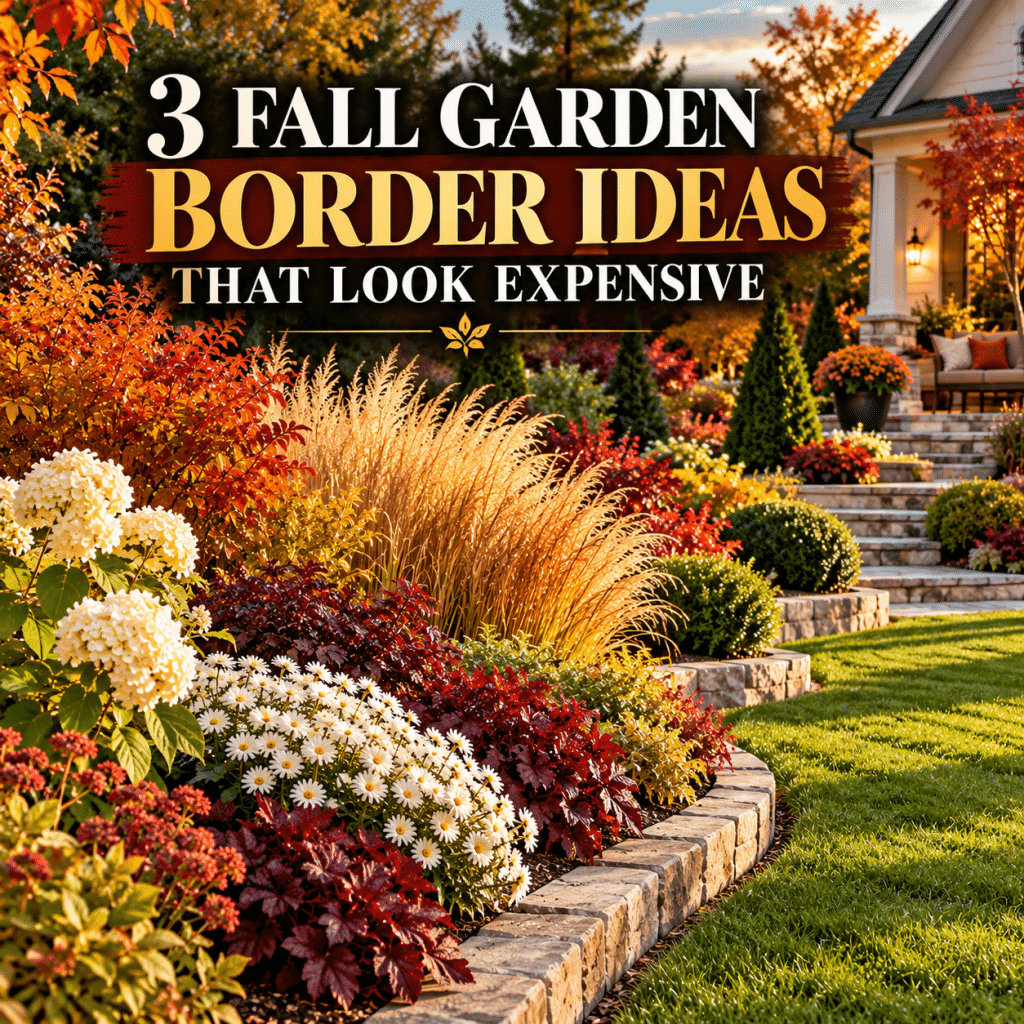
A beautifully designed fall garden border does much more than separate the lawn from surrounding plants. It creates a visual framework that connects pathways, garden fences, patios, ornamental grasses, and seasonal foliage into one cohesive outdoor design.
Imagine walking through a peaceful autumn garden where copper-colored grasses gently sway beside a perfectly defined lawn edge, rich plum foliage contrasts with delicate ivory flowers, and elegant evergreen structures provide a stunning backdrop for the changing season.
🍁 The secret to achieving this expensive-looking garden atmosphere is not necessarily buying more plants or installing elaborate landscaping features. It is choosing the right border design, repeating complementary textures, and creating deliberate transitions between different parts of the landscape.
Some of the most successful autumn borders rely on simple design principles: strong lines, coordinated planting, restrained colors, and materials that age beautifully throughout the colder months.
Whether you have a spacious suburban backyard, a narrow garden beside a fence, or a small outdoor retreat, the following three fall garden border ideas offer completely different ways to create an elegant seasonal landscape.
From contemporary ornamental grass ribbons to romantic twilight planting and timeless evergreen garden boundaries, each idea combines practical landscaping principles with breathtaking autumn beauty.
Why Fall Garden Border Ideas Can Make an Ordinary Backyard Look More Expensive
The difference between an ordinary garden and a professionally designed landscape often comes down to how the various elements connect.
A beautiful collection of flowers can still look disorganized when there is no clear transition between the lawn, pathways, planting areas, and surrounding structures.
Garden borders solve this problem by establishing intentional boundaries.
They guide the eye through the landscape, frame important focal points, and help individual planting combinations feel like parts of a complete outdoor design.
During autumn, these boundaries become especially important.
As summer flowers gradually fade and deciduous foliage begins changing color, the structure of the garden becomes more visible. A thoughtful border can maintain visual interest even when fewer plants are flowering.
According to the Royal Horticultural Society guide to planning garden borders, successful border design involves understanding growing conditions, selecting plants for different seasons, and repeating complementary plant groupings to create unity throughout the landscape.
The Beauty of Defined Garden Edges
A clearly defined garden edge creates immediate visual order.
Even an established backyard can appear more polished when the transition between grass and planting areas is consistent.
Clean edges emphasize the shape of the garden, while soft foliage introduces natural movement and prevents the design from appearing overly rigid.
For autumn landscapes, this combination is particularly attractive because colorful foliage stands out more dramatically against simple, well-maintained boundaries.
A dark green lawn beside golden ornamental grasses, for example, creates a striking contrast without requiring elaborate decorations.
Why Texture Matters More Than Extra Decorations
Many autumn gardens become visually cluttered because too many decorative objects compete for attention.
Pumpkins, lanterns, ornamental signs, colorful containers, and seasonal ornaments can be beautiful individually, but using everything together often overwhelms the natural landscape.
A more sophisticated approach emphasizes botanical texture.
Fine grass blades, glossy evergreen leaves, rounded foliage, delicate seedheads, and sculptural branches create depth without visual chaos.
These materials also provide interest beyond the peak autumn decorating season.
🌾 The most beautiful fall garden borders often rely on the plants themselves to create the seasonal atmosphere.
Best 3 Fall Garden Border Ideas at a Glance
| Ranking | Fall Garden Border Idea | Signature Design Feature | Best Location | Overall Style |
|---|---|---|---|---|
| 🥇 Best 1 | Copper Grass Ribbon Border | Repeating ornamental grasses beside a crisp lawn edge | Open lawns and contemporary backyards | Modern organic luxury |
| 🥈 Best 2 | Moonlit Plum and Ivory Border | Deep foliage paired with pale flowers and natural pathway materials | Garden walkways and patio edges | Romantic twilight elegance |
| 🥉 Best 3 | Evergreen Tapestry Boundary | Structured evergreen shrubs with contrasting seasonal foliage | Fences and property boundaries | Timeless architectural sophistication |
These three designs offer different experiences.
The first emphasizes movement, repetition, and warm autumn light.
The second creates an intimate garden atmosphere through carefully controlled colors and textures.
The third establishes permanent landscape structure that remains attractive long after the colorful autumn leaves have fallen.
Each can be adapted to different garden sizes, but the most successful choice will depend on the available sunlight, soil conditions, maintenance requirements, and architectural style of the home.
🥇 Best 1 Fall Garden Border Ideas With Copper Ornamental Grass Ribbons and Perfectly Defined Lawn Edges
BEST FOR MODERN ORGANIC LANDSCAPING
One of the most beautiful ways to create a luxurious autumn garden border is to combine flowing ornamental grasses with a crisp, continuous lawn edge.
This approach transforms a simple strip of planting into a sophisticated landscape feature that looks carefully planned without appearing overly formal.
Instead of filling the border with dozens of flowering plants, the design relies on the natural movement and seasonal color of ornamental grasses.
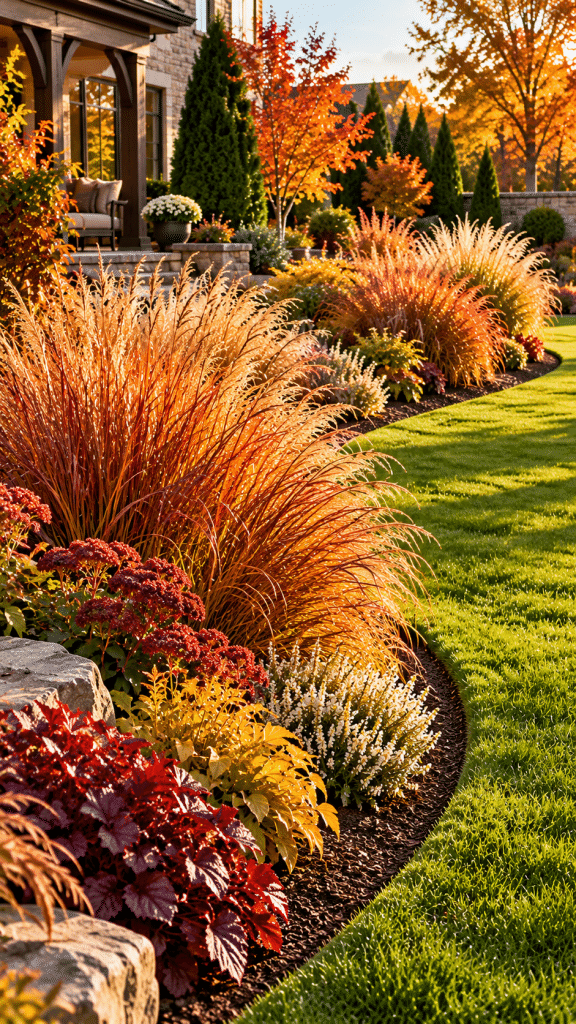
Picture an elegant backyard where clusters of copper-toned grasses stretch along a gently sweeping lawn boundary.
Their delicate seedheads catch the afternoon sunlight, creating soft golden highlights above slender foliage.
A narrow, precisely maintained edge separates the grasses from the surrounding lawn, making the entire planting arrangement appear intentional and refined.
The beauty comes from the contrast between two very different forms.
The lawn provides a smooth, quiet surface.
The grasses introduce movement, vertical texture, and autumn warmth.
Together, they create a beautifully balanced composition that feels both modern and natural.
Create Fall Garden Border Ideas With a Flowing Ribbon Effect
The defining feature of this design is repetition.
Rather than placing individual ornamental grasses randomly along the garden, arrange them in a continuous sequence that visually connects one part of the landscape to another.
Choose a dominant grass species and repeat it through the border.
For example, a grouping of little bluestem can create attractive upright foliage that develops beautiful copper, orange, and reddish tones during autumn.
Little bluestem is especially suitable for sunny locations with well-drained soil, and its relatively compact form makes it useful in residential landscaping.
For a softer, more flowing appearance, suitable cultivars of switchgrass can create graceful vertical movement and delicate seedhead displays.
In smaller gardens, compact grasses may be preferable because they maintain a controlled scale without overwhelming the surrounding space.
The planting should appear rhythmic rather than perfectly mechanical.
Allow individual clumps to develop their natural silhouettes while maintaining enough consistency to create a recognizable visual pattern.
🌾 A repeated grass selection can make a relatively inexpensive garden border look like a custom-designed landscape installation.
Use a Crisp Lawn Edge to Create Professional Definition
An elegant grass border becomes even more impressive when the edge separating it from the lawn is carefully maintained.
A traditional spade-cut edge creates a clean visual boundary without introducing a visible edging material.
The narrow separation highlights the contrast between the manicured lawn and the softer planting beyond it.
For homeowners who prefer a more permanent solution, low-profile metal edging can help maintain the desired boundary.
Dark steel or aluminum edging may be particularly effective in contemporary landscapes because it can remain visually subtle.
The goal is not to make the edging material the focal point.
Instead, the edging should quietly support the planting design.
Avoid excessive decorative patterns or multiple competing border materials.
A simple continuous line generally looks more sophisticated than an elaborate collection of unrelated elements.
Choose Copper and Bronze Foliage for Autumn Warmth
Color selection plays an important role in creating the luxurious appearance of this design.
Copper, bronze, muted gold, and warm amber are especially attractive when paired with dark green grass or evergreen foliage.
These tones create warmth without relying on bright orange decorations.
Little bluestem can provide reddish copper color, while some switchgrass cultivars offer golden or burgundy seasonal tones.
The exact color intensity will vary depending on the species, cultivar, weather, and growing conditions.
A few low-growing plants with complementary foliage may be added near the front of the border, but they should not compete with the ornamental grasses.
For example, selected hardy sedges can provide a softer transition where their climate and soil requirements are appropriate.
In a well-balanced composition, the eye should recognize the ornamental grass ribbon first.
The surrounding plants should enhance that primary feature rather than distract from it.
Design the Border for Beautiful Afternoon Sunlight
One of the most overlooked elements in garden design is the direction of sunlight.
Ornamental grasses become particularly beautiful when illuminated from behind or from the side.
Their delicate seedheads can appear almost luminous as warm afternoon light passes through them.
This creates a naturally cinematic atmosphere without artificial decorations.
When planning the border, consider the position from which it will most often be viewed.
A grass ribbon along the western side of a backyard, for example, may catch attractive low-angle light when viewed from an appropriately positioned patio.
The effect depends on the surrounding buildings, trees, and seasonal sun angle.
Try observing the garden at different times of day before choosing the final planting position.
A thoughtfully positioned border can become a beautiful focal point during the hours when the outdoor space is most frequently enjoyed.
Add Subtle Ground Materials Without Overdecorating
Although plants should remain the main visual feature, carefully selected ground materials can reinforce the design.
A natural mulch in dark brown or muted earthy tones helps visually connect the grasses while protecting the soil.
Fine gravel may be appropriate in well-drained, dry-adapted planting schemes, although it should not be used indiscriminately around plants that require consistently moist soil.
The material should complement the existing landscape.
For a modern home with neutral exterior finishes, dark mulch and restrained metal edging may create an especially cohesive appearance.
For a softer organic garden, natural bark mulch can feel more appropriate.
Avoid combining too many materials within one narrow border.
A simple design becomes more convincing when every visible element has a clear purpose.
Why This Fall Garden Border Idea Takes First Place
The Copper Ornamental Grass Ribbon Border earns 🥇 because it delivers exceptional visual impact through a remarkably restrained design.
It creates movement without clutter, warmth without excessive decorations, and structure without feeling rigid.
It can also remain visually interesting as the seasons change.
Depending on the selected grass species and local conditions, dried seedheads and standing stems may continue contributing texture during winter.
For homeowners seeking a contemporary autumn garden that looks sophisticated rather than heavily decorated, this is an outstanding choice.
The most successful version feels effortless.
The grass moves naturally.
The lawn edge remains crisp.
The colors glow in the afternoon sunlight.
And the entire backyard appears more carefully designed.
🥈 Best 2 Fall Garden Border Ideas With Romantic Plum Foliage and Moonlit Ivory Flowers
BEST FOR ROMANTIC GARDEN WALKWAYS
For homeowners who love romantic outdoor spaces, a plum-and-ivory border creates a completely different autumn atmosphere.
Instead of emphasizing warm copper grasses and clean contemporary lines, this design focuses on rich foliage colors, soft pale flowers, and delicate contrasts that become especially beautiful in the gentle light of late afternoon.
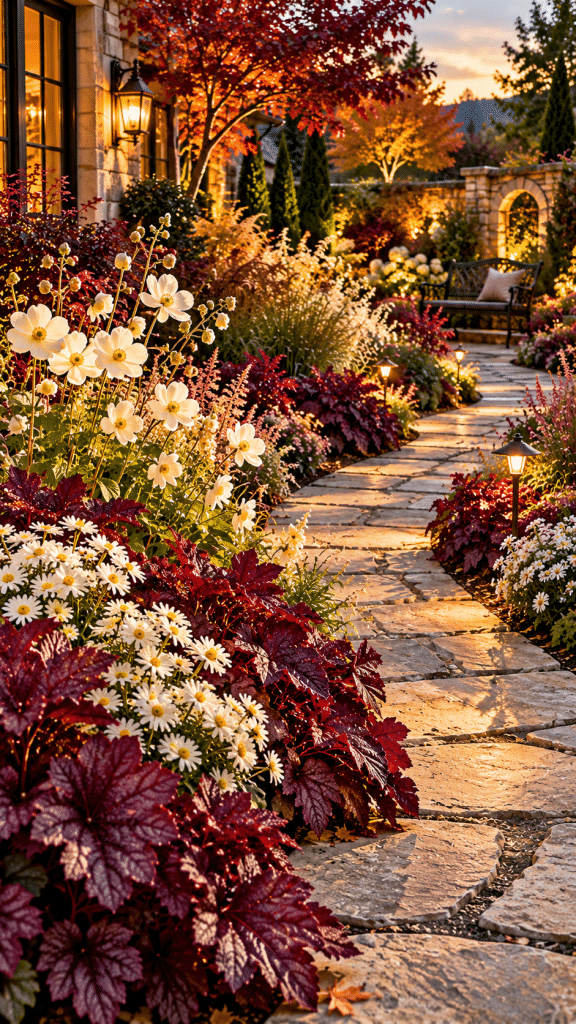
Imagine a garden pathway bordered by deep burgundy leaves, muted purple foliage, and elegant ivory blooms.
The darker planting creates an intimate atmosphere, while the pale flowers appear brighter against their surroundings.
Natural stone or gravel beneath the planting introduces subtle texture without competing with the botanical display.
As daylight fades, the pale flowers continue to stand out visually, creating a graceful twilight effect.
This type of border feels romantic, sophisticated, and slightly mysterious.
It is particularly attractive beside garden seating areas, small courtyards, and pathways connecting different outdoor spaces.
Develop a Sophisticated Plum and Ivory Color Palette
The key to this border is controlling the color palette.
Rather than combining every familiar autumn shade, concentrate on a limited range of deep plum, burgundy, charcoal-purple, ivory, and soft green.
Deep-colored foliage provides a rich background.
Ivory flowers introduce contrast.
Green foliage serves as a visual transition between the two.
Heuchera cultivars with dark purple or burgundy leaves can provide attractive low-growing foliage in suitable climates.
Their rounded leaves introduce a softer texture that contrasts beautifully with narrow grass blades or upright flower stems.
For pale autumn flowers, white-flowering Japanese anemones may be a beautiful option in climates where they grow successfully.
The cultivar ‘Honorine Jobert’ is particularly admired for its elegant white flowers and refined appearance.
White-flowering asters can also contribute late-season brightness when selected for the garden’s climate and growing conditions.
The result should feel coordinated rather than overly decorative.
Deep plum creates the atmosphere.
Ivory adds light.
The surrounding foliage provides balance.
Use Flower Shapes to Add Delicate Contrast
Flower shape matters just as much as color.
Large, heavy blossoms can make a narrow border feel crowded, particularly when surrounded by dark foliage.
Smaller or more delicate blooms often produce a more graceful effect.
Single-flowered asters, airy Japanese anemones, and other suitable late-season perennials can introduce visual lightness.
Their flowers appear to float above the darker foliage beneath them.
This contrast creates depth without requiring an excessive number of plants.
A low layer of rounded leaves near the pathway can be complemented by a few taller flowering stems farther inside the planting.
The objective is not to construct a broad, densely packed flower bed.
Instead, create a controlled botanical transition that enhances the pathway and encourages visitors to appreciate the surrounding plants.
The Royal Horticultural Society also identifies asters, Japanese anemones, rudbeckias, and Hylotelephium among the plants that can provide useful late-season garden interest. RHS
Frame the Border With Natural Gravel or Stone
The pathway material is an important part of this design.
Pale gravel, weathered limestone, natural flagstone, or muted stone pavers can complement the plum-and-ivory palette.
A light-colored walking surface creates an attractive contrast with darker foliage.
It also helps visually separate the pathway from the planting.
For a romantic garden, irregular natural stone may feel softer than highly polished contemporary paving.
However, the final material should suit the architecture of the home.
A historic cottage might look beautiful with weathered stone, while a modern residence may benefit from more uniform pale pavers.
The transition between the pathway and planting should remain carefully defined.
Allowing a few delicate leaves or flower stems to extend naturally toward the edge can create softness, but the actual walking surface should remain clear.
The combination of restrained planting and practical circulation makes the border both beautiful and comfortable to use.
Introduce Fragrance for a More Memorable Garden Experience
A romantic garden should appeal to more than one sense.
Where climate and growing conditions allow, adding fragrant plants can make the pathway more inviting.
Late-season flowering plants with subtle fragrance may be incorporated without changing the overall design concept.
Sweet autumn clematis, for example, is known for its fragrant flowers, but it is invasive in some regions and should not be planted where it threatens local ecosystems.
Safer, regionally appropriate fragrant alternatives should be selected according to local horticultural guidance.
Fragrance can also come from aromatic foliage rather than flowers.
Certain herbs release pleasant scents when their leaves are gently brushed, although many require sunny, well-drained positions that may not suit every romantic border.
Choose plants based on actual site conditions rather than fragrance alone.
A small amount of fragrance near an outdoor seating area can be more effective than filling the entire landscape with heavily scented plants.
Create an Elegant Twilight Atmosphere With Soft Lighting
This border is especially attractive in the evening, making discreet landscape lighting a useful optional addition.
Warm, low-intensity lighting can highlight pale flowers and reveal the texture of dark foliage.
A few carefully positioned fixtures are generally more effective than numerous bright lights.
Consider low-glare pathway lighting that illuminates the walking surface without shining directly into the eyes.
Avoid placing strong uplights directly beneath delicate flowers or using excessively bright lighting throughout the garden.
The goal is a gentle atmosphere rather than a dramatic commercial lighting display.
Warm white light can enhance ivory flowers and natural stone while preserving the richness of plum-colored foliage.
For wildlife-sensitive gardens, use lighting only when needed, direct it downward, and minimize unnecessary overnight illumination.
🌙 The most romantic evening borders are often those that retain natural shadows instead of eliminating them.
Adapt the Design for Shady Garden Areas
Not every backyard receives full sunlight.
Fortunately, a plum-and-ivory border can be adapted to certain partially shaded locations.
In sheltered gardens, dark-leaved heuchera varieties may provide beautiful foliage, provided the cultivar is suitable for the site’s climate.
Some Japanese anemones can grow in partial shade, particularly where the soil remains reasonably moist but drains well.
However, flower production, plant vigor, and foliage color may vary depending on light levels.
For a border with deeper shade, foliage-focused planting may be more reliable than depending heavily on autumn blooms.
Consider using contrasting leaf shapes, restrained pale foliage accents, and appropriate evergreen groundcovers.
The Royal Horticultural Society notes that carefully selected plants can produce attractive autumn interest even in partially shaded borders. RHS Advice
The important consideration is matching each plant to the actual growing environment.
A beautiful photograph should serve as inspiration, not as a substitute for understanding sunlight, drainage, and climate.
Why This Fall Garden Border Idea Takes Second Place
The Moonlit Plum and Ivory Border earns 🥈 because it creates an exceptionally elegant atmosphere through subtle contrast.
It is less focused on traditional orange and yellow autumn colors.
Instead, it uses burgundy foliage, delicate ivory flowers, and natural materials to establish a sophisticated seasonal mood.
This makes it particularly appealing to homeowners who want their autumn garden to feel romantic rather than overtly festive.
The design works beautifully beside pathways, patios, and small outdoor seating areas where visitors can appreciate the plants from a short distance.
Its greatest strength is atmosphere.
During the day, the colors feel rich and refined.
During the evening, the pale flowers introduce a gentle sense of light.
And throughout autumn, the border helps transform an ordinary walkway into a memorable garden experience.
🥉 Best 3 Fall Garden Border Ideas With Evergreen Tapestry Boundaries and Sculptural Seasonal Foliage
BEST FOR TIMELESS YEAR ROUND STRUCTURE
The third fall garden border idea combines permanent evergreen structure with carefully selected plants that change throughout the seasons.
This approach is ideal for homeowners who want a beautiful autumn garden without redesigning the entire border every year.
Instead of relying exclusively on seasonal flowers, the design establishes a stable architectural framework.
Compact evergreen shrubs, contrasting foliage shapes, and occasional autumn color accents create a sophisticated boundary that continues looking intentional when temperatures become colder.
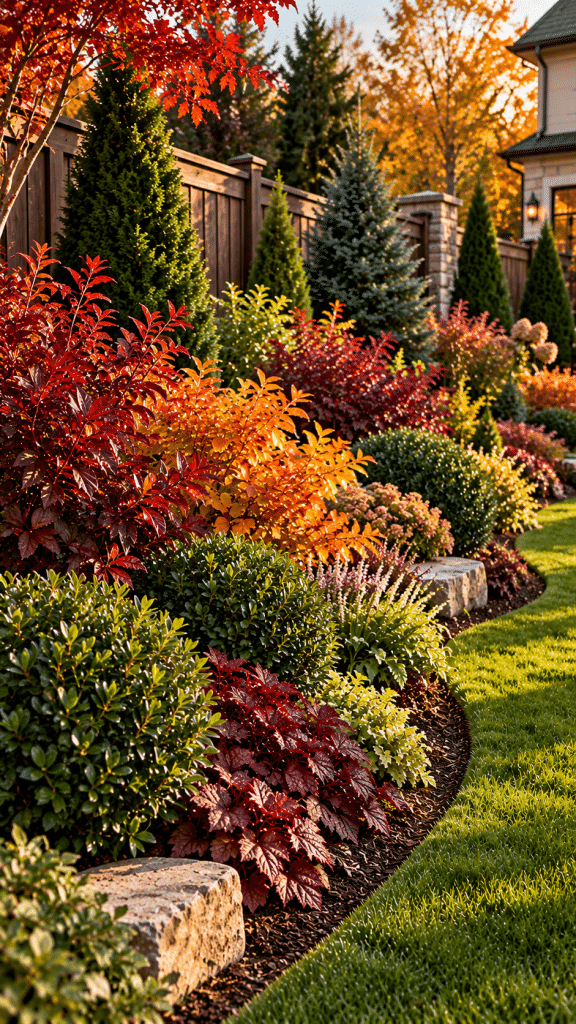
Imagine a beautifully maintained backyard fence with a narrow planting strip in front of it.
Elegant evergreen shrubs create repeated dark green forms.
Between them, selected deciduous plants display rich crimson, amber, or golden autumn foliage.
Low-growing plants soften the ground, while the repeated evergreen structure keeps the composition unified.
The result feels timeless.
It looks beautiful in autumn but does not lose its purpose once the season ends.
Establish a Permanent Evergreen Framework
The foundation of this border is a consistent evergreen structure.
Rather than planting many unrelated shrubs, choose a small number of species that complement one another.
Depending on the climate, suitable options may include compact inkberry holly cultivars, selected dwarf conifers, or other locally appropriate evergreen shrubs.
Boxwood is another traditional option in certain regions, although boxwood blight and insect pests may make alternatives more practical.
The best selection depends on mature plant size, sunlight, soil drainage, cold hardiness, and local pest pressure.
Arrange the evergreen plants at measured intervals to create rhythm along the boundary.
The spacing should allow them to reach their mature dimensions without becoming overcrowded.
A repeated evergreen form can make even a simple fence line appear more structured and sophisticated.
The plants provide continuity, while the seasonal accents introduce changing color.
Add Autumn Foliage Without Overwhelming the Structure
Once the evergreen framework is established, introduce a restrained number of deciduous plants with attractive fall foliage.
Dwarf or compact shrubs can be useful where the border has enough space to accommodate their mature spread.
Some cultivars of Virginia sweetspire develop beautiful red, purple, or burgundy autumn foliage in suitable growing conditions.
Compact fothergilla selections can offer attractive combinations of yellow, orange, and red.
Both should be chosen only where their hardiness, soil moisture requirements, and eventual size suit the planting site.
The objective is not to create a dense collection of colorful shrubs.
Instead, position a few seasonal accents where they can stand out against the darker evergreen background.
This creates intentional contrast.
The evergreen shapes remain visually stable.
The deciduous foliage provides seasonal drama.
Together, they establish a landscape that feels designed rather than randomly planted.
Use Contrasting Leaf Shapes to Create a Tapestry Effect
A tapestry border is especially attractive when different foliage forms complement one another.
Glossy oval leaves can contrast with delicate needles.
Rounded shrubs can balance upright stems.
Fine textured groundcovers can soften the bases of larger plants.
This variation makes a relatively limited color palette feel visually rich.
For example, the dense appearance of compact evergreen shrubs may be complemented by the lighter texture of selected perennial foliage.
The exact combination should be adjusted to the available sunlight and moisture conditions.
Avoid choosing plants simply because they have attractive individual leaves.
Consider how they will look together from the main viewing position.
A successful tapestry border has a clear hierarchy.
The evergreen structure provides the foundation.
Seasonal foliage creates focal points.
Lower-growing plants unify the composition.
Every plant should contribute to the overall design.
Connect the Garden Border to an Existing Fence
Fence lines are natural locations for architectural borders because they already establish a strong landscape boundary.
However, planting directly against a fence requires careful planning.
Leave adequate space for mature shrub growth, airflow, maintenance access, and the long-term condition of the fence.
Plants should not be forced into narrow gaps where their growth will eventually create problems.
A dark fence can provide an attractive backdrop for golden autumn foliage.
A natural timber fence may complement burgundy shrubs and rich green evergreens.
A pale fence can create a softer contrast with dark foliage, particularly in gardens with traditional or cottage-inspired architecture.
The fence and planting should appear visually connected.
This does not require matching their colors.
Instead, the relationship should feel intentional.
A simple background often makes the plant textures appear more elegant.
Create a Refined Border With Subtle Seasonal Accents
One advantage of an evergreen tapestry border is that it requires relatively little additional decoration.
Seasonal interest is already built into the planting.
However, carefully selected accents may enhance the atmosphere.
Natural stone positioned near a focal shrub can reinforce the garden’s organic character.
A restrained mulch color can unify the planting surface.
A single understated garden ornament may add personality without creating clutter.
Avoid filling every available gap with temporary decorations.
The strength of this design lies in the relationship between permanent structure and changing foliage.
🍂 An evergreen border should still feel complete when the seasonal accents disappear.
This approach encourages homeowners to invest in a landscape that becomes more established over time instead of relying on an entirely new decorative arrangement every autumn.
Plan for Winter Interest From the Beginning
A successful year-round border should remain attractive after the deciduous leaves fall.
The evergreen framework makes this possible.
In regions with cold winters, selected evergreen shrubs and conifers can maintain strong silhouettes through snow and frost.
Persistent seedheads, ornamental stems, and suitable winter-interest plants may provide additional texture.
In milder climates, different evergreen species may be more appropriate.
Consider how the border will look when viewed from the house during winter.
Will the repeated evergreen shapes remain visible?
Will there be enough variation in height and texture?
Will the design still feel balanced without autumn foliage?
These questions help prevent a border from looking impressive in October but empty in January.
The most successful landscapes are designed for changing conditions rather than a single moment of seasonal beauty.
Why This Fall Garden Border Idea Takes Third Place
The Evergreen Tapestry Boundary earns 🥉 because it combines autumn beauty with long-term practicality.
It may require more initial planning than a simple ornamental grass ribbon, but its permanent structure offers lasting value.
The evergreen framework creates visual consistency.
Seasonal shrubs introduce beautiful changes in foliage color.
And carefully selected textures provide interest beyond autumn.
This is an excellent option for homeowners who appreciate traditional landscape architecture, refined garden boundaries, and a relatively timeless appearance.
The finished border should look as though it belongs naturally to the property.
Rather than competing with the house or garden, it strengthens the overall composition.
How to Choose the Right Fall Garden Border Ideas for Your Backyard
Selecting the best autumn border requires more than choosing a beautiful design.
The ideal solution should respond to the existing shape of the landscape, available space, growing conditions, and desired maintenance level.
A narrow walkway may benefit from the controlled colors of a romantic foliage border.
A wide lawn may provide the perfect setting for repeated ornamental grasses.
A long fence line may be better suited to a permanent evergreen framework.
The key is selecting a concept that enhances the existing garden rather than forcing an unrelated design into the space.
Match the Border to the Architecture of Your Home
Modern homes often benefit from simple lines and restrained planting palettes.
Ornamental grasses, dark edging, and clean transitions can complement contemporary architecture.
Traditional homes may look especially attractive with romantic flowering borders, natural stone, and soft foliage combinations.
Properties with classic fences, mature trees, or substantial landscaping may benefit from structured evergreen boundaries.
These are design guidelines rather than strict rules.
A contemporary home can include romantic planting, and a traditional home can feature modern ornamental grasses.
The most important principle is visual harmony.
Repeat materials, colors, or forms already present in the surrounding property.
Consider Sunlight Before Choosing Plants
Sun exposure has a major influence on border performance.
Some ornamental grasses require full sunlight to maintain strong growth and achieve their best seasonal colors.
Other foliage plants prefer partial shade, particularly in regions with hot summers.
Observe the intended border location throughout the day.
Consider whether nearby trees, fences, or buildings create shade.
Remember that light patterns can change during autumn as the sun becomes lower in the sky.
Avoid placing a sun-loving border in deep shade simply because the plants look attractive in a photograph.
Healthy plants will create a more beautiful landscape than an ambitious design filled with unsuitable species.
Choose a Border Width That Supports Mature Plant Growth
A narrow border can be beautiful, but it must provide enough room for the selected plants.
The required width depends on the mature spread of shrubs, grasses, and perennials.
Compact foliage plants may work in relatively narrow spaces.
Larger ornamental grasses and evergreen shrubs require more generous dimensions.
Avoid planting too close to fences, pathways, building foundations, or lawn edges.
Allowing for mature plant size can reduce future overcrowding and maintenance problems.
A border with fewer healthy plants usually looks better than an overfilled strip where everything competes for space.
Fall Garden Border Plant Comparison
The following table provides a practical starting point for selecting plants that support the three design concepts.
| Plant | Main Autumn Feature | Typical Light Preference | Suitable Design |
|---|---|---|---|
| Little bluestem | Copper and reddish seasonal foliage | Full sun | 🥇 Copper Grass Ribbon |
| Switchgrass | Graceful stems and airy seedheads | Full sun | 🥇 Copper Grass Ribbon |
| Dark-leaved heuchera | Rich purple or burgundy foliage | Partial shade to sun depending on cultivar and climate | 🥈 Plum and Ivory Border |
| White Japanese anemone | Elegant late-season flowers | Sun to partial shade | 🥈 Plum and Ivory Border |
| White-flowering asters | Delicate pale autumn blooms | Usually full sun, depending on species | 🥈 Plum and Ivory Border |
| Compact inkberry holly | Evergreen architectural structure | Sun to partial shade | 🥉 Evergreen Tapestry |
| Virginia sweetspire | Rich red and burgundy fall foliage | Sun to partial shade | 🥉 Evergreen Tapestry |
| Compact fothergilla | Yellow, orange, and red seasonal foliage | Sun to partial shade | 🥉 Evergreen Tapestry |
The information represents general growing preferences, not guarantees for every cultivar or climate.
Check local plant suitability, hardiness zones, soil requirements, and invasive species guidance before purchasing.
How to Prepare the Soil Before Creating a Fall Garden Border
A beautiful border begins beneath the surface.
Even the most carefully selected plants may struggle if the soil is poorly drained, excessively compacted, or unsuitable for their root systems.
Before planting, evaluate the existing ground conditions.
Remove persistent weeds and unwanted vegetation from the planned area.
Inspect the soil for drainage problems and avoid working it when excessively wet.
For many garden soils, incorporating appropriate organic matter can improve structure and support healthy root development.
However, specific soil amendments should reflect the existing soil and the requirements of the selected plants.
Dry-adapted native grasses, for example, may not benefit from the same preparation as moisture-loving woodland perennials.
The Royal Horticultural Society recommends planning border position, improving soil where appropriate, positioning plants before planting, and watering thoroughly after installation. RHS Advice
Mark the Border Before Planting
Use a garden hose, rope, or string to visualize the desired outline.
A hose is particularly useful for testing flowing curves.
String can help establish straight boundaries.
Observe the proposed shape from several important viewpoints, including the house, patio, and main garden entrance.
The border should connect naturally with existing landscape features.
Avoid sharp, accidental changes in direction unless they serve a specific design purpose.
A consistent outline provides the foundation for a polished result.
Test Plant Placement Before Digging
Once the ground is prepared, position container-grown plants in their intended locations.
Stand back and study the arrangement.
Check the spacing, potential mature size, and relationship between different foliage forms.
This is an opportunity to make adjustments before committing to the planting scheme.
A repeated ornamental grass border should feel rhythmic.
A romantic border should maintain a balanced color composition.
An evergreen boundary should show consistent structural spacing.
Small changes at this stage can dramatically improve the final result.
🍁 Important Note: Autumn planting is generally most successful when plants have enough time to establish roots before the ground freezes. In colder climates, plant early enough for local conditions, water appropriately until establishment, and avoid planting into frozen or waterlogged soil. Always choose plants suited to the local hardiness zone and expected mature size.
How to Make Fall Garden Border Ideas Look More Luxurious on a Budget
Creating an elegant garden does not always require expensive materials or extensive landscaping.
In many cases, careful editing produces a greater improvement than purchasing additional plants.
The goal is to establish a simple visual concept and execute it consistently.
Repeat Plants Instead of Buying Too Many Varieties
A large selection of unrelated plants can make a border appear fragmented.
Repeated plant groupings create visual continuity.
For a grass ribbon, repeating one primary species is often more effective than combining several grasses with completely different growth habits.
For a romantic border, a limited number of dark foliage and pale flower selections can create a stronger effect than a complicated mixture.
For an evergreen boundary, consistent structural shrubs establish a clear foundation.
Repetition makes the garden feel organized and can simplify maintenance.
Focus on One Beautiful Border Instead of Redesigning Everything
A single well-designed garden edge can create a significant visual improvement.
Choose the area that has the strongest impact from the house or primary outdoor seating position.
This may be a lawn edge, patio border, or fence boundary.
Complete that section carefully before expanding the project.
A finished border with healthy plants, clean edges, and consistent materials often looks more impressive than several partially completed landscaping projects.
Use Mulch to Create a Cohesive Finished Appearance
Mulch performs both practical and aesthetic functions.
Suitable organic mulch can help moderate soil temperature, reduce evaporation, and suppress some weed growth.
Visually, a consistent mulch layer makes separate plants appear connected.
Choose a material that complements the garden’s overall color scheme.
Dark brown mulch may work beautifully beneath ornamental grasses or evergreen shrubs.
Natural bark can create a softer appearance in romantic planting schemes.
Keep mulch away from direct contact with plant crowns, trunks, and woody stems.
A neat planting surface contributes significantly to the finished appearance of the border.
Common Mistakes That Make Fall Garden Borders Look Messy
Even attractive plants can create an unsuccessful landscape when basic design principles are overlooked.
One common mistake is choosing too many competing colors.
A limited palette generally creates a more sophisticated impression, particularly in small gardens.
Another mistake is ignoring mature plant size.
Overcrowded grasses, shrubs, and perennials can gradually obscure the intended border structure.
Poorly maintained lawn edges also weaken the design because the boundary between planting areas becomes difficult to recognize.
Excessive seasonal decorations can be another problem.
When pumpkins, signs, lanterns, ornaments, and multiple container styles all compete for attention, the underlying landscape may lose its visual clarity.
Finally, homeowners sometimes choose plants based on appearance without checking their growing requirements.
An elegant design cannot remain attractive when its plants consistently struggle.
The best autumn borders combine aesthetic restraint with sound horticultural planning.
How to Maintain Your Fall Garden Border Through the Changing Seasons
Maintaining a beautiful autumn border becomes easier when the original design includes appropriate plants and enough growing space.
However, seasonal care remains important.
During dry autumn weather, newly installed plants may require supplemental watering.
Established plants will have different needs depending on species, soil conditions, and rainfall.
Remove invasive weeds before they spread throughout the border.
Inspect edging materials and repair any sections that have shifted or become damaged.
Trim vegetation that obstructs walkways, but avoid unnecessary cutting of healthy foliage simply to create an artificially perfect appearance.
Preserve Attractive Winter Seedheads
Many ornamental grasses and perennials develop beautiful dried forms after flowering.
These seedheads can contribute valuable winter texture and may provide shelter or food resources for wildlife.
Where practical, allow appropriate plants to remain standing through winter.
Remove damaged or diseased material when necessary, and schedule routine cutting according to the needs of each species.
A border does not need to be completely cleared to look maintained.
Sometimes the most beautiful winter gardens are those that retain selected natural forms.
Review the Border Before the Next Growing Season
Garden borders evolve as plants mature.
Some species become larger than expected.
Others may spread into nearby areas or develop gaps.
Review the planting arrangement periodically.
Consider whether the original design remains visible.
Is the ornamental grass ribbon still consistent?
Does the romantic border maintain its color balance?
Are the evergreen shrubs developing the intended architectural rhythm?
Make small adjustments rather than redesigning everything.
Over time, this thoughtful approach helps the border become more established and visually cohesive.
Frequently Asked Questions About Fall Garden Border Ideas
What Are the Best Plants for Fall Garden Borders?
The best plants depend on climate, sunlight, soil conditions, and the desired style.
Ornamental grasses such as little bluestem and suitable switchgrass cultivars can provide attractive autumn texture.
Late-flowering asters, Japanese anemones, and selected heuchera cultivars can contribute flowers or foliage in appropriate conditions.
Evergreen shrubs and deciduous plants with colorful fall leaves can provide longer-lasting structural interest.
The strongest designs combine plants with complementary forms rather than choosing plants solely for their autumn colors.
How Can I Make a Small Fall Garden Border Look Expensive?
Use a restrained color palette, repeat a few carefully selected plants, and maintain a clean boundary.
Avoid overcrowding the planting area.
Choose plants that remain proportionate to the available space.
A short border with consistent materials and healthy foliage can appear more luxurious than a larger border filled with unrelated decorations.
Should Fall Garden Borders Be Straight or Curved?
Both can be effective.
Straight borders often complement contemporary architecture, narrow spaces, and formal landscapes.
Curved borders can introduce gentle movement and create a more relaxed appearance.
The best shape depends on the surrounding garden.
A border should reinforce the overall layout instead of introducing unnecessary complexity.
Can I Create a Fall Garden Border Without Using Pumpkins?
Absolutely.
Ornamental grasses, dark foliage, autumn flowers, evergreen shrubs, and natural materials can create a beautiful seasonal garden without decorative pumpkins.
In fact, botanical designs often provide a more timeless appearance and require fewer seasonal changes.
What Is the Best Fall Garden Border for Low Maintenance?
An appropriately selected evergreen boundary or ornamental grass border may offer relatively low maintenance after establishment.
However, maintenance depends heavily on plant selection, local growing conditions, weeds, watering needs, and the level of visual precision desired.
For the simplest long-term care, choose plants adapted to the region and avoid species that require frequent pruning, division, or replacement.
Final Thoughts on the Best 3 Fall Garden Border Ideas
The most beautiful Fall Garden Border Ideas prove that sophisticated autumn landscaping does not have to depend on elaborate decorations or expensive outdoor renovations.
A thoughtful border can transform the entire atmosphere of a backyard by creating structure, highlighting natural colors, and connecting different landscape elements.
The 🥇 Copper Ornamental Grass Ribbon Border is the strongest choice for homeowners who appreciate modern organic landscaping. Its repeated grasses, warm autumn tones, and clean lawn edges create a dramatic yet beautifully restrained appearance.
The 🥈 Moonlit Plum and Ivory Border offers a romantic alternative. Deep foliage, delicate pale flowers, and natural pathway materials create an intimate garden atmosphere that feels especially elegant during the softer light of autumn evenings.
The 🥉 Evergreen Tapestry Boundary provides the most enduring architectural framework. Its structured evergreen forms and carefully selected seasonal foliage deliver a landscape that remains purposeful throughout the changing seasons.
Each design offers a different interpretation of autumn beauty.
One celebrates movement and golden light.
Another emphasizes romance and elegant contrast.
The third combines permanence with seasonal transformation.
Ultimately, the most impressive garden border is not necessarily the one with the greatest number of flowers, shrubs, or decorative features.
It is the one where every element feels intentional.
Choose plants that thrive in the available conditions, establish a clear visual rhythm, repeat harmonious textures, and allow the natural beauty of autumn to become the centerpiece.
With these simple principles, an ordinary backyard boundary can become one of the most beautiful and memorable features of the entire garden.