A small garden does not have to feel cramped, ordinary, or difficult to decorate. With the right Small Garden Landscaping Ideas, even the tiniest outdoor space can become a breathtaking retreat filled with beautiful architectural details, lush greenery, and sophisticated design elements. The secret is not having more square footage but knowing how to use every inch thoughtfully.
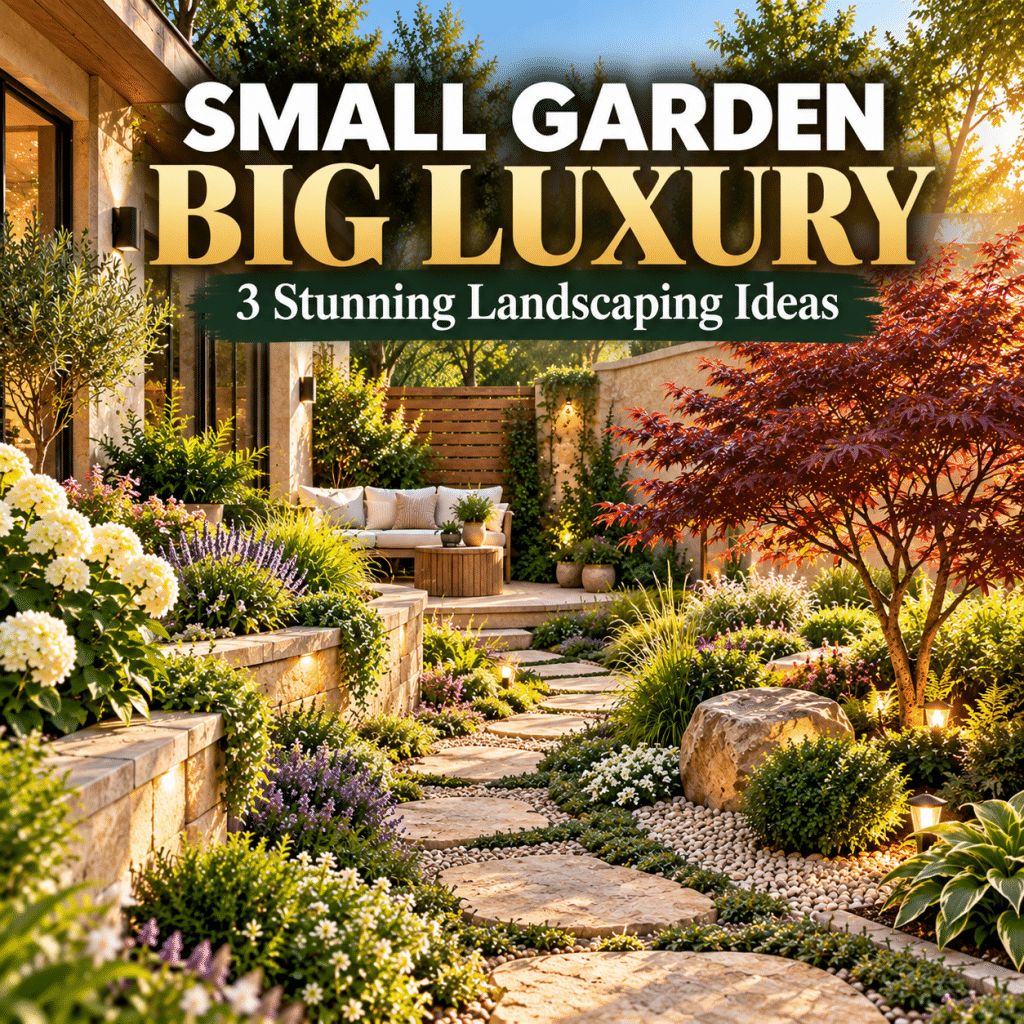
Many homeowners assume that creating a luxurious garden requires an expansive backyard, expensive landscaping services, or an elaborate collection of plants. In reality, some of the most impressive outdoor transformations happen in compact spaces where carefully selected materials, clever layouts, and beautiful planting combinations create a sense of elegance far beyond the garden’s actual size.
From gracefully curved stone pathways to sophisticated raised planting beds and sculptural ornamental trees, there are countless ways to make a modest garden feel professionally designed. The most successful landscaping projects combine natural textures, thoughtful proportions, and a strong visual focal point to establish an outdoor environment that feels both welcoming and refined.
Whether you have a narrow backyard, a tiny courtyard, or a modest garden behind your home, these three landscaping concepts offer practical inspiration for transforming your outdoor space into something extraordinary.
The following Small Garden Landscaping Ideas focus on permanent landscape features, beautiful planting structures, and timeless design techniques rather than temporary decorations. Each approach offers a distinctive way to create depth, organization, and visual interest without overwhelming a small outdoor area.
🥇 Best 1 Small Garden Landscaping Ideas With Curved Stone Pathways and Layered Planting Beds
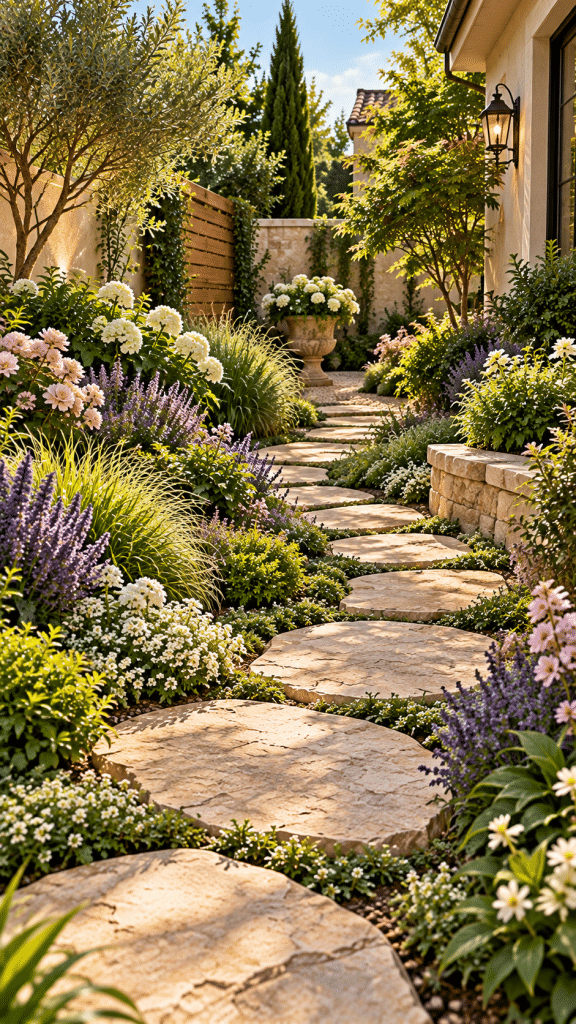
One of the most effective ways to make a small garden appear larger and more luxurious is to introduce a beautifully designed curved stone pathway surrounded by layered planting beds.
Unlike straight pathways that reveal the entire length of a small garden immediately, gently curved paths encourage the eye to travel gradually through the landscape. This creates a subtle sense of mystery and makes the outdoor environment feel more expansive than its actual dimensions.
When combined with carefully arranged plants of different heights, colors, and textures, the result resembles a professionally landscaped garden found in elegant countryside homes or sophisticated European residences.
Why Curved Pathways Make Small Gardens Look Bigger
A straight pathway can be practical, but in a compact rectangular garden, it often emphasizes the limited length of the property.
A softly curved pathway changes that perception.
Instead of looking directly toward the back fence, visitors naturally follow the movement of the path. This visual journey introduces different perspectives, helping the garden feel more dynamic and interesting.
The pathway does not need to include dramatic curves. In fact, exaggerated winding designs can make tiny gardens feel artificial and unnecessarily complicated.
A single graceful curve or a subtle offset is often enough to create an elegant landscape composition.
Natural stone stepping slabs are particularly beautiful for this approach because they introduce organic shapes and refined textures without dominating the surrounding greenery.
Limestone, sandstone, slate, and irregularly shaped natural stone pavers can all work beautifully depending on your preferred garden aesthetic.
For a warm, contemporary appearance, choose light beige limestone or softly textured sandstone.
For a more traditional garden, weathered gray stepping stones surrounded by delicate groundcover plants create a charming, established appearance.
The key is choosing one primary pathway material and maintaining visual consistency throughout the space.
Create Beautiful Layered Planting Beds
The planting beds surrounding the pathway are equally important.
A luxurious small garden should feature deliberate planting arrangements rather than random collections of flowers and shrubs.
Professional landscape designers often use layered planting to create depth and visual balance.
This technique involves positioning plants according to their mature height, growth habit, and seasonal appearance.
Along the pathway edges, begin with low-growing plants that soften the transition between stone and soil.
Creeping thyme, compact sedum, dwarf mondo grass, and other suitable groundcovers can create beautiful natural borders.
Behind these plants, introduce medium-height flowering perennials or ornamental foliage.
Depending on your climate and sunlight conditions, suitable choices may include lavender, compact salvias, hardy geraniums, or small ornamental grasses.
Toward the back of the planting beds, use taller plants to establish structure and visual depth.
Compact hydrangeas, upright ornamental grasses, or carefully maintained evergreen shrubs can provide height without requiring enormous planting areas.
The arrangement should appear natural but intentional.
Rather than planting one specimen of every available variety, repeat a smaller selection of plants throughout the garden.
This repetition creates visual rhythm and makes the landscape feel cohesive.
Choose an Elegant Color Palette
Color plays a major role in determining whether a small garden looks polished or visually overcrowded.
For an expensive-looking garden, limit the planting palette to a few harmonious colors.
One particularly sophisticated combination includes soft white flowers, muted lavender blooms, silvery green foliage, and deep evergreen accents.
This palette creates a calm, romantic atmosphere while allowing the natural stone pathway to remain a prominent design feature.
Another beautiful option combines creamy yellow flowers, warm green leaves, pale pink blossoms, and natural sandstone.
For a modern interpretation, consider mostly green foliage with subtle white flowers and occasional dark burgundy accents.
The goal is not to eliminate color but to establish a consistent visual identity.
An overly complicated collection of bright colors can make a tiny garden feel busy, while a carefully coordinated palette encourages the eye to appreciate the entire landscape.
How to Design the Pathway Without Wasting Space
Before installing a curved pathway, consider how you will actually move through the garden.
A beautiful path should also provide convenient access to planting beds, garden gates, and other essential areas.
In very compact gardens, irregular stepping stones may be more space-efficient than a continuous paved walkway.
For frequently used single-person paths, approximately 60–90 centimeters of clear walking width can be a useful starting point, although local accessibility needs and site conditions may require additional space.
Place the stones at comfortable walking intervals and ensure they sit securely on an appropriately prepared base.
Avoid narrow, unstable stepping stones that look attractive in photographs but become uncomfortable or dangerous during everyday use.
The planting beds should follow the pathway’s gentle movement without forming awkward corners or excessively narrow planting pockets.
A continuous curved border often looks more sophisticated than several small disconnected beds.
Where appropriate, use discreet metal or stone edging to separate planting areas from gravel or lawn.
This small detail helps maintain clean lines and reduces long-term maintenance.
Add Depth Through Strategic Plant Placement
A compact garden can feel surprisingly spacious when plants are arranged to create visual layers.
Position lower plants near the entrance or main viewing area and gradually introduce taller greenery farther into the garden.
You can also place one medium-height shrub slightly off-center to interrupt a direct view of the back boundary.
This creates the impression that additional planting areas may exist beyond what is immediately visible.
Avoid completely blocking the garden with dense vegetation.
Small gardens benefit from carefully preserved open areas where the eye can rest.
A patch of decorative gravel, a simple planting gap, or a small section of open ground can balance lush foliage beautifully.
The contrast between planted and unplanted surfaces is one of the most important principles of elegant landscape composition.
Best Plants for Curved Pathway Landscaping
| Plant Type | Recommended Options | Landscaping Purpose |
|---|---|---|
| Groundcover | Creeping thyme, sedum, dwarf mondo grass | Soften pathway edges |
| Flowering perennials | Salvia, lavender, hardy geranium | Add color and seasonal interest |
| Ornamental grasses | Compact fountain grass, blue fescue | Introduce movement and texture |
| Structural shrubs | Dwarf boxwood alternatives, compact hydrangea | Provide shape and visual balance |
| Evergreen accents | Dwarf conifers, compact evergreen shrubs | Maintain year-round structure |
Plant choices should always be adapted to the local growing climate. Lavender and certain ornamental grasses, for example, require suitable drainage and sunlight, while some hydrangeas perform better with protection from intense afternoon heat.
How to Make This Landscaping Style Look More Expensive
The most important finishing touch is restraint.
Avoid using too many stone colors, plant varieties, or decorative accessories.
Choose high-quality-looking materials, repeat your planting combinations, and maintain crisp transitions between hardscape and softscape.
A curved limestone path framed by beautifully maintained plants can look considerably more sophisticated than an elaborate garden filled with unrelated decorations.
This design is especially suitable for homeowners who enjoy romantic garden landscapes, natural textures, and peaceful outdoor environments.
It can also work beautifully in traditional and contemporary homes, provided the planting palette and stone finishes complement the architecture.
Important Note: The most effective Small Garden Landscaping Ideas prioritize mature plant size, drainage, comfortable circulation, and visual balance. A beautiful landscape should continue looking attractive as plants grow, not just immediately after installation.
🥈 Best 2 Small Garden Landscaping Ideas With Raised Stone Borders and Multi Level Garden Beds
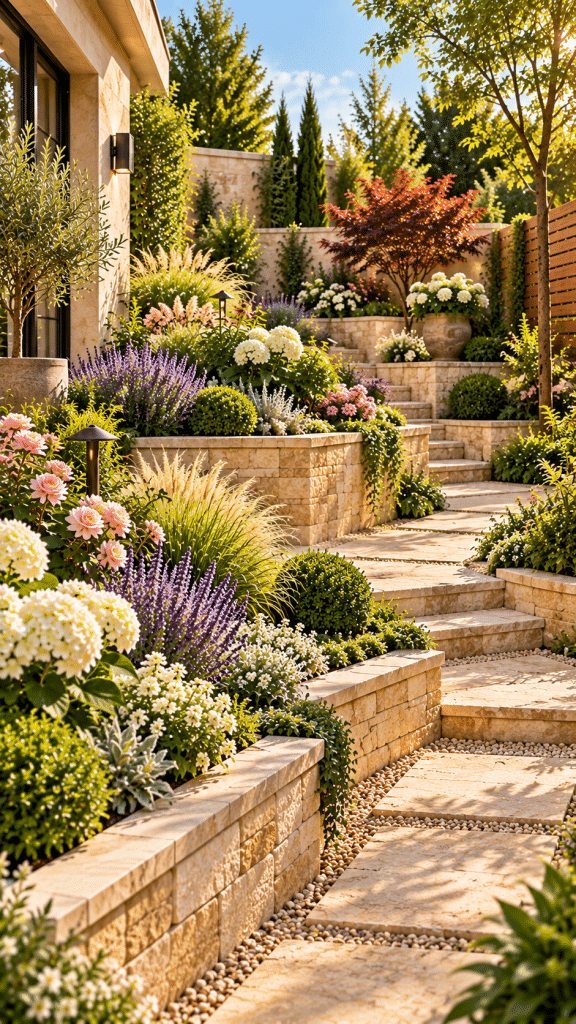
If your small garden feels flat, uninspiring, or poorly organized, introducing raised stone borders and multi-level planting beds can completely transform its appearance.
This approach creates architectural structure within the landscape, turning ordinary planting areas into sophisticated garden features.
Raised beds are particularly effective in small gardens because they establish clear boundaries, highlight beautiful plants, and introduce variations in height without requiring a large amount of land.
When designed with refined materials and balanced proportions, they can make even a modest backyard resemble a carefully planned luxury courtyard.
Why Raised Garden Borders Create a Luxury Appearance
Expensive-looking landscapes usually have strong structural elements.
These might include stone retaining walls, architectural steps, raised planters, or carefully defined planting terraces.
In large gardens, such features help organize expansive outdoor environments.
In small gardens, they provide an equally important function by introducing depth and order.
A raised border makes the garden feel intentionally designed rather than simply planted.
The clean edges create a visual framework that allows greenery and flowers to stand out.
Natural stone is especially effective because it combines durability with timeless beauty.
Light limestone creates a bright, Mediterranean-inspired appearance.
Warm sandstone introduces a relaxed countryside atmosphere.
Charcoal-gray stone offers a more contemporary aesthetic, particularly when combined with restrained planting arrangements.
For homeowners seeking a sophisticated modern look, smooth architectural concrete can also provide beautiful results.
The best material depends on the surrounding architecture, climate, maintenance preferences, and available budget.
Introduce Different Planting Heights
One of the greatest advantages of raised garden beds is the ability to create different levels within a compact outdoor space.
Instead of positioning all plants directly at ground level, arrange planting areas at two or three carefully considered elevations.
A low stone border can define the foreground planting area.
A slightly elevated bed can establish the middle layer.
A taller raised planter positioned near the back boundary can support a more prominent collection of shrubs or ornamental foliage.
This arrangement produces depth without depending entirely on plant height.
Even relatively small plants can make a strong visual impression when positioned within an elevated structure.
However, more levels do not automatically create a better design.
In extremely small gardens, one raised bed paired with a lower planting border may be more successful than several complicated terraces.
The height transitions should look deliberate and remain proportional to the available space.
For practical residential garden beds, modest heights of approximately 20–45 centimeters are often sufficient for decorative elevation, provided planting depth and soil conditions are appropriate.
Taller walls may require engineered foundations, drainage provisions, and compliance with applicable local building requirements.
Create a Sophisticated Natural Stone Composition
A beautifully landscaped garden should feature materials that complement one another.
For raised stone beds, consider combining one dominant hardscape material with a limited range of supporting textures.
For example, pale limestone raised borders can look stunning beside warm gravel pathways and deep green ornamental plants.
Alternatively, gray natural stone walls can contrast beautifully with creamy paving and soft flowering perennials.
Avoid combining several unrelated stone varieties in a tiny space.
Too many textures and colors can create visual confusion.
Instead, choose a material palette that feels cohesive.
An elegant combination might include:
- Warm beige limestone for raised borders.
- Fine natural gravel for surrounding ground surfaces.
- Dark green evergreen shrubs for architectural structure.
- White flowering perennials for seasonal softness.
- Compact ornamental grasses for delicate movement.
These materials create a sophisticated appearance while maintaining a strong connection to nature.
Use Raised Borders to Organize the Garden
Raised stone borders should serve a practical purpose within the landscape.
They can define planting areas, separate different ground surfaces, and make garden maintenance more manageable.
For a compact rectangular backyard, consider placing one continuous raised bed along the rear boundary.
This creates a clear visual destination and provides space for taller plants.
A second lower planting bed can extend along one side, introducing an asymmetrical composition that feels more interesting than identical borders on every edge.
In a square courtyard, an L-shaped raised border may help define the garden without occupying too much central space.
For irregularly shaped gardens, low curved stone beds can soften awkward corners and make the overall layout feel more harmonious.
The most successful configuration depends on the actual dimensions and access requirements of the property.
Always maintain enough open space for movement, maintenance, and drainage.
Combine Architectural Plants With Soft Greenery
Because raised beds already provide strong structural lines, the planting arrangement should balance that architecture with natural shapes.
Compact evergreen shrubs are excellent for creating a polished foundation.
Depending on local growing conditions, small hollies, dwarf conifers, compact pittosporum, or other climate-appropriate evergreen plants can provide year-round structure.
Between these plants, introduce softer textures using ornamental grasses, flowering perennials, or low-growing foliage.
A particularly beautiful combination includes architectural evergreen mounds surrounded by delicate grasses and small flowering plants.
The rounded shapes contrast with straight stone borders, making the composition feel less rigid.
For a modern garden, use fewer plant varieties and repeat them in organized groups.
For a romantic European-inspired landscape, introduce a slightly looser arrangement with gently overlapping foliage.
Both approaches can look luxurious when the proportions remain balanced.
Incorporate Subtle Height Changes
A multi-level garden does not necessarily require a sloping property.
Even a completely flat backyard can feature subtle changes in elevation through constructed planting beds.
For example, a slightly elevated rectangular planter can become the dominant visual element in one corner.
Nearby, a low stone-edged planting area can provide a secondary layer.
This creates an attractive relationship between high and low surfaces.
If your property naturally slopes, carefully designed terraces may help create usable planting zones and manage changes in elevation.
However, retaining walls should never be treated as purely decorative features when they support substantial soil loads.
Larger or load-bearing walls may require professional structural assessment to prevent drainage problems, soil movement, or instability.
For smaller decorative garden projects, low raised beds are often a more manageable solution.
Design Raised Beds for Healthy Plants
A raised bed must do more than look beautiful.
Plants need adequate root space, suitable soil, and reliable drainage.
Before construction, consider the mature root systems of the species you intend to grow.
Some compact flowering plants thrive in relatively shallow beds, while larger shrubs and small trees require significantly more rooting volume.
Avoid installing elaborate stone structures without determining whether the soil conditions will support the intended plants.
Where beds are built over compacted soil or impermeable paving, drainage design becomes particularly important.
Water should never remain trapped behind retaining structures or collect against a house foundation.
Use appropriate soil mixtures, drainage outlets, and construction techniques based on the site.
Also consider irrigation access.
Raised beds can dry out faster than surrounding ground-level soil, especially during hot weather.
A simple drip irrigation system or carefully positioned watering line can make ongoing maintenance considerably easier.
Best Materials for Raised Small Garden Landscaping
| Material | Visual Style | Best Application |
|---|---|---|
| Natural limestone | Elegant, warm, timeless | Classic luxury garden borders |
| Sandstone blocks | Rustic, organic, welcoming | Cottage-style raised beds |
| Architectural concrete | Clean, modern, minimalist | Contemporary garden structures |
| Gray natural stone | Sophisticated, understated | Modern European landscaping |
| Reclaimed brick | Traditional, textured, charming | Vintage-inspired garden borders |
Material durability depends on local conditions, installation quality, and exposure to moisture, freeze-thaw cycles, or intense sunlight.
Make Raised Garden Beds Look Professionally Designed
To create a truly sophisticated result, maintain consistent wall thicknesses, clean construction lines, and a restrained planting palette.
The stonework should feel connected to the architecture of the house.
For instance, if your home’s exterior features warm neutral colors, matching or complementary stone tones can create visual continuity.
Avoid creating oversized planters that overwhelm the available outdoor space.
The raised beds should frame the garden rather than consume it.
Remember that open space is an essential design element.
A beautiful stone border becomes more visually impressive when there is enough surrounding room to appreciate its shape and texture.
This landscaping concept is particularly suitable for compact modern backyards, small courtyards, and gardens where homeowners want a highly organized, architectural appearance.
🥉 Best 3 Small Garden Landscaping Ideas With a Sculptural Focal Tree and Gravel Garden Islands
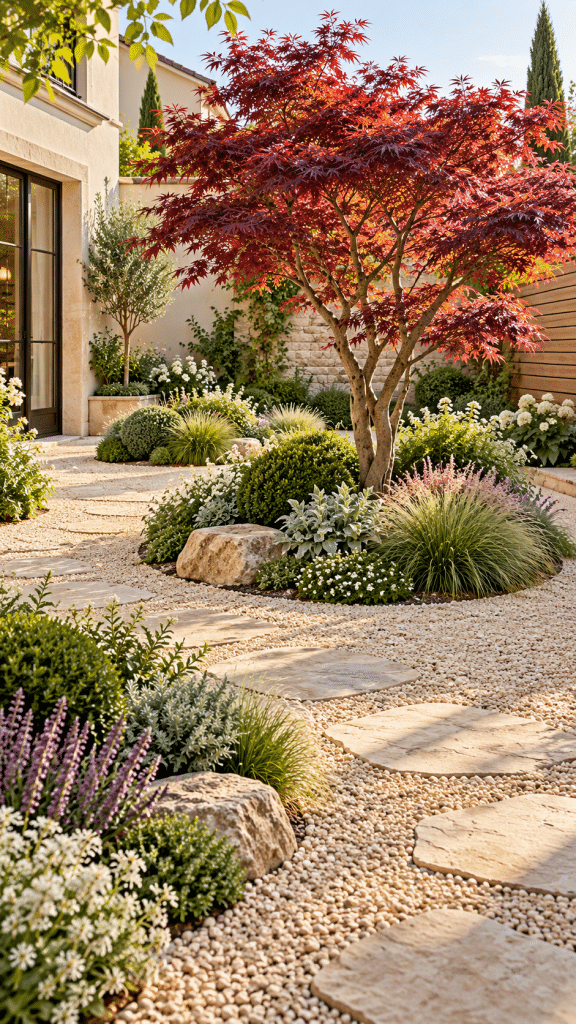
For homeowners who love sophisticated contemporary gardens, a landscape centered around one sculptural ornamental tree can create an exceptionally elegant result.
This approach relies on a single memorable focal point rather than numerous competing decorative features.
A carefully chosen small tree becomes the visual anchor of the landscape, while surrounding gravel garden islands, low-growing plants, and subtle stone details establish a balanced composition.
The result is a peaceful outdoor environment that feels architectural, mature, and beautifully curated.
Why a Single Focal Tree Can Transform a Small Garden
One of the most common mistakes in compact landscaping is introducing too many large plants.
Homeowners often assume that planting numerous shrubs and small trees will make the garden look lush.
Unfortunately, overcrowded planting can reduce usable space, block natural light, and make the area difficult to maintain.
A single well-positioned ornamental tree can create a stronger visual impact.
Its branching structure establishes height, while its canopy introduces shape and movement.
Depending on the species, the tree may also provide seasonal flowers, attractive foliage, interesting bark, or beautiful autumn colors.
The surrounding landscape can then be designed to complement its natural character.
This is a common principle in sophisticated garden design: allow one exceptional feature to establish the identity of the space.
Choose the Right Ornamental Tree
Selecting an appropriate tree is essential.
In small gardens, mature size matters far more than the dimensions of the tree when purchased.
A young tree may appear perfectly proportioned in the nursery but eventually develop a canopy and root system that exceed the available space.
Look for naturally compact species, suitable dwarf cultivars, or trees that respond well to appropriate professional pruning.
The ideal selection depends on your climate, soil conditions, sun exposure, and available rooting area.
For temperate gardens, compact Japanese maples can create beautiful sculptural silhouettes.
Certain dwarf flowering crabapples offer seasonal blossoms and attractive branching structures.
Compact serviceberries may provide delicate spring flowers and lovely autumn foliage.
For Mediterranean-inspired gardens, appropriately sized olive trees can introduce a timeless architectural appearance in suitable climates.
In warmer regions, carefully selected compact tropical ornamentals may be more appropriate.
The tree should complement the landscape rather than eventually dominate it.
Position the Tree for Maximum Visual Impact
The placement of a focal tree determines how effectively it transforms the garden.
In many small spaces, positioning the tree slightly away from the exact center creates a more natural and dynamic composition.
An off-center location encourages the eye to move through the landscape.
It can also establish asymmetrical balance with surrounding planting beds and open gravel areas.
However, positioning should follow practical site considerations rather than appearance alone.
Keep the mature canopy, root system, and maintenance requirements in mind.
Avoid placing trees too close to foundations, underground utilities, drainage infrastructure, or property boundaries.
A tree with beautiful proportions but insufficient growing space can become a significant maintenance problem.
In very narrow gardens, a compact tree near one corner may be more appropriate than a central planting.
For small square courtyards, an off-center focal tree surrounded by a restrained gravel composition can create a striking landscape statement.
Design Beautiful Gravel Garden Islands
Gravel is one of the most versatile materials for small garden landscaping.
Its texture creates a calm visual foundation, and it can complement natural stone, greenery, and architectural planting arrangements.
In this design, gravel garden islands surround or visually connect the focal tree with smaller planting groups.
Rather than covering the entire garden with a single uninterrupted gravel surface, create deliberate areas of different textures.
One planting island might feature the ornamental tree and a collection of compact groundcovers.
A second smaller island could contain ornamental grasses or low-growing flowering plants.
The spaces between these planted areas can be finished with decorative gravel or carefully selected paving stones.
This creates visual contrast between foliage and mineral textures.
The overall effect can resemble the restrained elegance of contemporary landscape architecture.
Select Gravel Colors That Complement the Garden
Gravel color has a surprisingly strong influence on the atmosphere of an outdoor space.
Warm beige gravel creates a soft, inviting appearance.
Pale cream gravel can make shaded courtyards feel brighter, although it may show dirt and fallen leaves more readily.
Natural gray gravel produces an understated contemporary finish.
For a more dramatic landscape, charcoal-toned gravel can provide striking contrast against vivid green foliage.
However, very dark materials can absorb substantial heat in sunny conditions.
Choose gravel according to the surrounding architecture, local climate, and maintenance requirements.
A sophisticated combination might feature warm cream gravel, natural sandstone stepping stones, and deep green ornamental foliage.
Another beautiful arrangement uses light gray gravel, pale stone edging, and a sculptural tree with dark burgundy leaves.
The goal is to create a harmonious composition using a small number of complementary materials.
Add Groundcover for Natural Softness
Gravel gardens can become visually harsh when they lack enough greenery.
Low-growing plants help soften the transition between stone surfaces and the focal tree.
Compact sedums, creeping thyme, dwarf ornamental grasses, and other suitable groundcovers can introduce texture while preserving the garden’s open appearance.
Choose plants according to their preferred soil and moisture conditions.
Some drought-tolerant groundcovers perform well in sunny, free-draining gravel gardens.
Others require more consistent moisture or partial shade.
For a refined appearance, arrange the plants in intentional groups rather than scattering individual specimens randomly.
Repeating two or three groundcover varieties can create a calm, cohesive landscape.
Allow enough space for plants to reach their expected mature spread.
This prevents overcrowding and maintains the carefully balanced composition.
Combine Gravel With Natural Stepping Stones
A few strategically positioned stepping stones can make the landscape more functional while enhancing its beauty.
Large natural stone slabs set within gravel create a sophisticated architectural effect.
They also provide convenient access for tree maintenance, watering, and garden care.
For an organic landscape, choose irregular natural stone shapes.
For a modern aesthetic, rectangular or square pavers may be more appropriate.
Avoid combining too many paving styles.
The stepping stones should complement the gravel rather than compete with the focal tree.
If the garden is extremely small, two or three well-positioned slabs may be enough.
The most elegant designs often use fewer elements with greater visual impact.
Maintain a Balanced Planting Composition
A focal tree should remain the dominant element of the landscape.
Surrounding plants should support its appearance rather than obscure its branching structure or canopy.
For example, a compact Japanese maple with delicate burgundy foliage can look stunning above low mounds of evergreen greenery.
Fine ornamental grasses can introduce gentle movement without competing with the tree.
A small number of pale flowering plants may add seasonal interest.
Avoid positioning tall shrubs immediately around the tree’s trunk.
Preserving open space beneath and around the canopy allows its natural form to remain visible.
Use mulch appropriately over the root zone, but keep it away from direct contact with the trunk. Where gravel is used, account for heat retention and the tree’s soil moisture needs.
A focal tree’s long-term health is more important than achieving a particular decorative arrangement.
Best Features for a Sculptural Small Garden Landscape
| Landscape Feature | Recommended Approach | Visual Benefit |
|---|---|---|
| Focal tree | Naturally compact ornamental species | Creates height and architectural interest |
| Gravel surface | One neutral gravel color | Establishes a calm, cohesive foundation |
| Groundcover | Low-growing, climate-appropriate plants | Softens hardscape surfaces |
| Stepping stones | Natural stone or simple geometric slabs | Adds practical access and refined texture |
| Accent planting | Repeated ornamental grasses or perennials | Introduces movement and seasonal interest |
How to Keep This Garden Looking Luxurious
The beauty of a sculptural gravel garden comes from simplicity, strong proportions, and consistent maintenance.
Keep gravel surfaces free from excessive fallen leaves and accumulated debris.
Maintain clean planting boundaries.
Prune the ornamental tree only when necessary and according to the requirements of its species.
Replace struggling plants rather than allowing empty or damaged areas to disrupt the overall composition.
Also consider the practicality of gravel in your climate.
In areas with heavy rainfall, the installation may require careful grading, permeable construction layers, and suitable drainage provisions.
Gravel alone does not solve poor site drainage.
In hot climates, extensive exposed gravel may increase surrounding surface temperatures, so incorporating sufficient living planting and suitable shade becomes particularly important.
When thoughtfully designed, this landscape offers a beautiful combination of natural elegance and architectural simplicity.
It is especially suitable for modern homes, minimalist courtyards, and homeowners who prefer carefully curated gardens over densely planted outdoor spaces.
How to Choose the Best Small Garden Landscaping Ideas for Your Outdoor Space
Although all three landscaping concepts can create impressive results, the ideal choice depends on the shape, conditions, and intended use of your garden.
Before beginning your project, evaluate the available space and identify the main features you want to achieve.
Some homeowners want a romantic pathway surrounded by flowers.
Others prefer a structured garden with architectural stone borders.
Still others are attracted to the simplicity of a single ornamental tree surrounded by beautiful natural materials.
Understanding these differences makes it easier to select an approach that complements your home and lifestyle.
Compare the Three Landscaping Styles
| Landscaping Concept | Best For | Main Visual Character | Maintenance Considerations |
|---|---|---|---|
| Curved Stone Pathways and Layered Planting Beds | Small rectangular gardens and romantic landscapes | Natural, lush, inviting | Regular plant trimming and pathway care |
| Raised Stone Borders and Multi Level Garden Beds | Compact modern backyards and structured courtyards | Architectural, organized, elegant | Wall inspections, irrigation, soil maintenance |
| Sculptural Focal Tree and Gravel Garden Islands | Minimalist gardens and small contemporary courtyards | Calm, refined, artistic | Tree care, gravel cleaning, weed management |
Each design has the potential to look beautiful when adapted correctly to the property.
The most important factor is choosing a clear landscaping direction instead of combining too many unrelated features.
Understanding Proportions in Small Garden Landscape Design
Proportion is one of the most important design principles in a compact outdoor environment.
A feature that looks elegant in a large estate garden can easily overwhelm a tiny courtyard.
For example, a broad stone pathway may dominate the entire garden if the surrounding planting areas are too narrow.
Similarly, an oversized raised planter can eliminate valuable open space.
A tree with a wide mature canopy may eventually block sunlight from neighboring plants.
To avoid these problems, evaluate every landscape element according to its mature or finished dimensions.
Measure the garden before purchasing materials or selecting plants.
Create a simple scaled layout showing the main structural features.
Identify the areas needed for walking, access, maintenance, and planting.
Then determine which design elements deserve the greatest visual emphasis.
Preserve Negative Space
Negative space refers to areas intentionally left open within a composition.
In landscaping, these areas might include gravel surfaces, simple paved sections, or small unplanted zones.
They provide visual relief and allow the eye to appreciate important garden features.
Without enough negative space, even beautiful plants and expensive materials can create an overcrowded appearance.
A small garden often looks more elegant with one impressive planting bed and a carefully preserved open area than with several competing features.
Use Repetition Instead of Variety
One of the easiest ways to create a professionally designed appearance is to repeat materials and plant combinations.
For example, using the same limestone along several planting borders creates continuity.
Repeating ornamental grasses at selected intervals establishes visual rhythm.
Using a consistent group of evergreen shrubs helps the garden feel unified.
Repetition makes the design look intentional.
By contrast, introducing a different stone, plant, or edging material in every corner can make the landscape appear fragmented.
The goal is to create an outdoor environment where individual features contribute to one overall design.
Selecting the Right Plants for Small Garden Landscaping
Beautiful landscaping depends on plants that remain appropriate for the available space.
When selecting trees, shrubs, perennials, and groundcovers, always consider mature size, sunlight requirements, soil conditions, and long-term maintenance.
A compact plant in a nursery container may eventually grow several times larger.
Ignoring this growth can lead to overcrowding, restricted circulation, and unnecessary pruning.
Prioritize Year Round Structure
Gardens that rely entirely on seasonal flowers may look spectacular for a few weeks but appear empty during other parts of the year.
A more reliable approach combines permanent structural plants with seasonal accents.
Evergreen shrubs can provide a stable foundation.
Ornamental grasses contribute texture and movement.
Flowering perennials introduce changing colors.
A carefully chosen ornamental tree can provide an important focal point throughout the seasons.
This balance creates a landscape that remains visually interesting even when certain plants are not flowering.
Match Plants to Sunlight Conditions
Different parts of a small garden may receive dramatically different amounts of sunlight.
A south-facing courtyard in the Northern Hemisphere may experience intense afternoon heat, while a garden surrounded by tall walls can remain shaded for much of the day.
Observe your space before selecting plants.
Pay attention to areas that receive direct sunlight, partial shade, or consistently low light.
Also consider how nearby buildings, fences, and existing trees affect the growing environment.
Choosing plants that naturally thrive under the available conditions typically produces healthier growth and reduces maintenance.
Consider Long Term Maintenance
A luxurious garden should be enjoyable, not unnecessarily demanding.
Some homeowners enjoy regular pruning, planting, and seasonal garden maintenance.
Others prefer a landscape that requires relatively little attention.
Choose plants and materials based on the amount of time you realistically want to invest.
Fast-growing shrubs may require frequent trimming.
Dense flowering beds often need periodic division and seasonal cleanup.
Gravel landscapes can require weed removal and surface maintenance.
Raised beds may need additional watering during hot weather.
No garden is completely maintenance-free, but thoughtful planning can significantly reduce unnecessary work.
Affordable Ways to Make Small Garden Landscaping Look Expensive
Creating a sophisticated landscape does not always require the most expensive materials.
Visual consistency and good design often have a greater impact than the total project budget.
One effective strategy is to invest in a single dominant feature.
This might be a beautiful natural stone pathway, a carefully constructed raised bed, or a well-chosen ornamental tree.
Then use more affordable supporting materials to complete the composition.
For example, a small quantity of attractive stone paving can make a strong visual impression when surrounded by simple groundcover plants.
A single natural stone raised border may provide more architectural interest than several unrelated decorative planters.
A healthy young ornamental tree can become increasingly beautiful as it matures.
Spend Money Where It Matters Most
Prioritize durable hardscaping, healthy plants, and proper site preparation.
Poor drainage, unstable paving, and inappropriate plant selection can create expensive problems later.
It is usually better to install fewer elements correctly than to fill the entire garden with inexpensive features that require frequent replacement.
For homeowners with limited budgets, consider completing the landscape in stages.
Begin with grading, drainage, and primary structural features.
Next, install the main planting beds and permanent plants.
Finally, introduce groundcovers and smaller seasonal additions.
This approach allows you to develop a cohesive garden without completing every detail at once.
Use Fewer but Better Coordinated Materials
A restrained materials palette can make a modest garden feel surprisingly luxurious.
Choose one dominant stone or paving material.
Select one complementary gravel or mulch finish.
Repeat a limited number of plant varieties.
Maintain consistent edging details.
These decisions create unity throughout the landscape.
Sophisticated garden design is often defined by the quality of the composition rather than the number of decorative elements.
Common Small Garden Landscaping Mistakes to Avoid
Even beautiful landscaping ideas can fail when the design does not account for practical limitations.
One frequent mistake is planting too densely.
Young plants may look sparse immediately after installation, encouraging homeowners to add unnecessary specimens.
As those plants mature, the garden becomes overcrowded and difficult to maintain.
Another common mistake is ignoring drainage.
Hardscape installations, raised beds, and gravel surfaces can all influence how water moves through the property.
Without appropriate planning, water may collect near foundations, pathways, or planting areas.
Overcomplicated designs are another problem.
A tiny garden rarely needs multiple competing focal points, several different paving materials, and numerous unrelated planting styles.
The most successful approach is often to select one dominant landscaping concept and develop it consistently.
Finally, avoid treating maintenance as an afterthought.
Plants require access for pruning and watering.
Stone surfaces need cleaning.
Trees need suitable growing conditions.
A beautifully designed landscape should function comfortably throughout its lifespan.
Frequently Asked Questions About Small Garden Landscaping Ideas
What Is the Best Landscaping Design for a Very Small Garden?
The best design depends on the property’s dimensions and intended use. For an extremely small garden, one strong focal point surrounded by restrained planting and simple hardscape materials often works particularly well. A compact ornamental tree, a low stone border, or a short stepping-stone pathway can create visual interest without overwhelming the available space.
How Can I Make My Small Garden Look Bigger?
Use gentle visual movement, layered planting, and strategically preserved open space. A subtly curved pathway can encourage the eye to move gradually through the garden, while carefully arranged plants create depth. Avoid oversized features, excessive material changes, and dense planting that blocks every view.
What Makes Small Garden Landscaping Look Expensive?
Cohesive materials, balanced proportions, healthy plants, clean edges, and well-maintained structural features contribute to a luxurious appearance. Natural stone, thoughtfully repeated planting combinations, and one distinctive focal feature can create an elegant result without requiring an enormous budget.
Are Raised Garden Beds Good for Small Backyards?
Yes. Raised garden beds can provide attractive structure, clearly defined planting zones, and variations in height. However, their dimensions should remain proportional to the garden, and they must provide appropriate soil depth and drainage. Oversized raised beds can reduce usable space in very compact backyards.
Is Gravel Landscaping Suitable for a Small Garden?
Gravel can be an excellent choice when installed appropriately. It provides attractive texture, complements natural stone, and can help define planting areas. However, gravel gardens still require weed management, occasional cleaning, and attention to drainage. In hot climates, lighter materials and adequate vegetation can help reduce excessive surface heat.
Which Trees Are Best for Small Garden Landscaping?
Naturally compact ornamental trees are often the most suitable choices. Depending on local climate and site conditions, options may include compact Japanese maples, dwarf flowering crabapples, certain serviceberries, or appropriately sized ornamental species adapted to warmer regions. Always verify mature canopy spread, root requirements, and suitability for the available planting space before purchasing.
Can I Combine Different Small Garden Landscaping Ideas?
Yes, but the overall design should remain cohesive. For example, a gently curved stone pathway can complement a small raised planting border. A sculptural tree may also work beautifully within a structured garden. The key is avoiding too many competing focal points or materials. Combining a few complementary elements is usually more effective than introducing every landscaping feature into one small space.
Final Thoughts on Small Garden Landscaping Ideas
The most beautiful Small Garden Landscaping Ideas prove that limited outdoor space can still offer extraordinary design possibilities.
A gently curved stone pathway surrounded by layered planting beds can create a romantic and inviting garden filled with natural movement.
Raised stone borders and multi-level planting areas can transform a flat backyard into a sophisticated architectural landscape.
A single sculptural ornamental tree surrounded by carefully composed gravel garden islands can establish a peaceful, luxurious atmosphere with surprisingly few elements.
Although these three approaches have different visual characteristics, they share the same essential principles: thoughtful proportions, harmonious materials, carefully selected plants, and a strong sense of visual organization.
Creating an expensive-looking garden is not about filling every available corner with elaborate features. It is about making deliberate design choices that allow natural beauty and architectural details to work together.
By focusing on permanent landscape structures, preserving valuable open space, and choosing materials that complement your home, you can transform even the smallest backyard into an elegant outdoor sanctuary.
With the right planning and attention to detail, your small garden can become one of the most beautiful and inviting spaces in your home.
