Pumpkin Flower Arrangements for Outdoor Fall Decor are one of the easiest ways to make a porch, patio, garden entrance, or outdoor dining area feel instantly seasonal without relying on ordinary pumpkin piles alone. By combining the sculptural shape of pumpkins with flowers, foliage, grasses, berries, and natural autumn materials, it is possible to create outdoor decorations that feel much richer, more intentional, and more visually impressive.
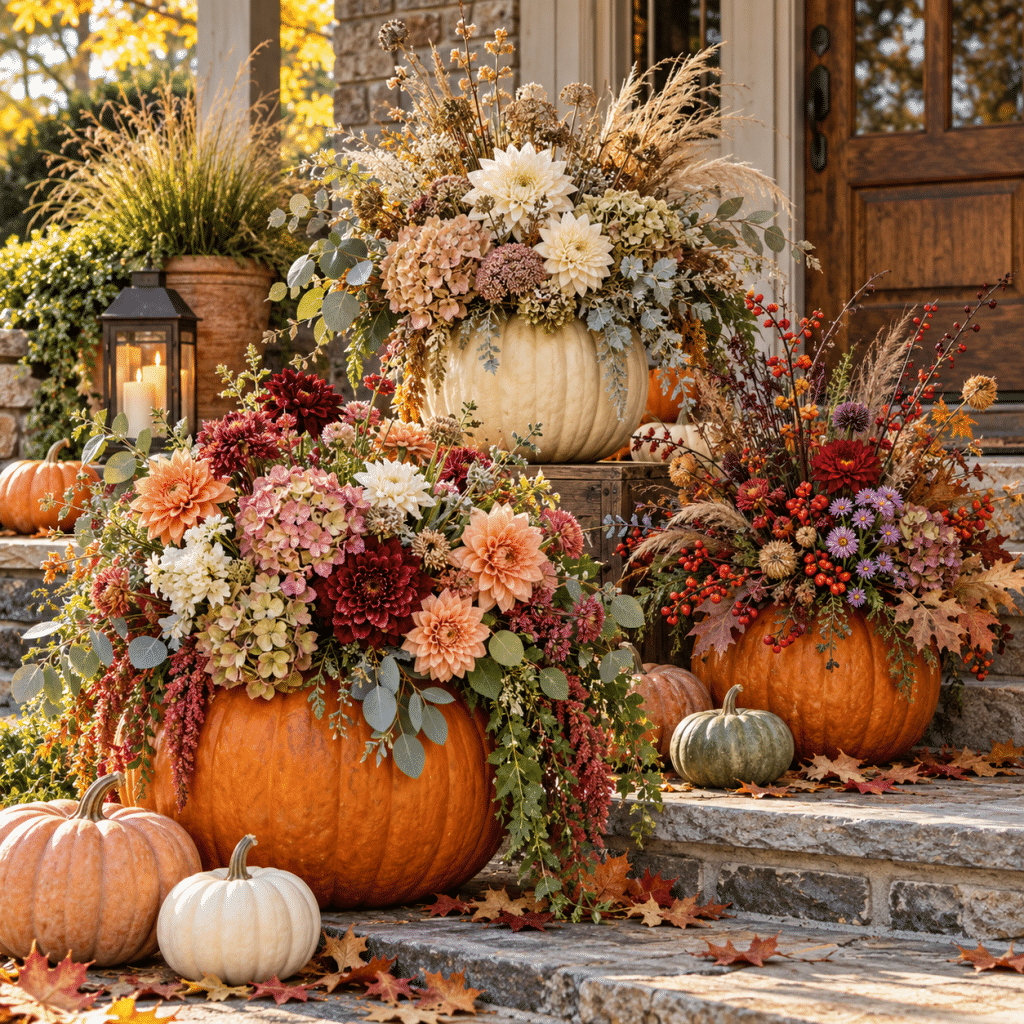
The best part is that pumpkin flower arrangements can suit almost every type of outdoor space. A romantic cottage porch can be filled with soft dahlias and trailing greenery, while a modern entrance can use pale pumpkins, muted chrysanthemums, and architectural grasses. Even a small front step can become a beautiful seasonal focal point when the pumpkin itself becomes the container for the floral display.
🎃 Instead of treating pumpkins and flowers as separate decorations, these arrangements combine both elements into one cohesive centerpiece. The result feels more polished and often takes up less space than a collection of individual pots, lanterns, and pumpkins scattered across the porch.
For a particularly memorable outdoor display, three styles stand out. The first celebrates abundant cottage-garden flowers spilling from a classic pumpkin. The second uses a sophisticated neutral palette for a more elegant and modern look. The third transforms a pumpkin arrangement into a dramatic woodland-inspired composition filled with branches, berries, grasses, and late-season flowers.
Each offers a very different interpretation of fall, making it easier to find an approach that matches the character of the home and surrounding garden.
Why Pumpkin Flower Arrangements Work So Well Outdoors
Pumpkins naturally have the colors, shapes, and visual weight associated with autumn. Even without additional decoration, a single pumpkin immediately signals the arrival of fall. Adding flowers turns that familiar seasonal element into something far more decorative.
Flowers introduce height, texture, movement, and color variation. A round pumpkin placed alone on a step tends to remain visually low, while a pumpkin topped with flowers creates a vertical composition that attracts attention from a greater distance.
This is especially useful around front entrances. A floral pumpkin placed beside a door or at the edge of a staircase can create the same visual impact as a large planter while still looking unmistakably seasonal.
🌾 Autumn flowers also connect pumpkins with the surrounding landscape. Chrysanthemums, dahlias, asters, sedum, ornamental grasses, hydrangeas, and berry branches naturally echo the colors and textures found in gardens during late summer and fall.
Because of this connection, pumpkin flower arrangements rarely look artificial when the materials are chosen carefully. They appear to belong outdoors.
Another advantage is flexibility. These arrangements can be rustic, minimalist, romantic, elegant, wild, or contemporary depending on the pumpkins and plant materials used.
A bright orange pumpkin filled with burgundy chrysanthemums feels traditional. A creamy white pumpkin holding beige grasses and dusty pink hydrangeas feels completely different even though the underlying concept is identical.
Best 3 Pumpkin Flower Arrangements for Outdoor Fall Decor
The most effective Pumpkin Flower Arrangements for Outdoor Fall Decor usually combine three characteristics: a strong pumpkin base, a clear floral color palette, and enough textural contrast to make the arrangement interesting from every angle.
Rather than adding every available autumn element, it is usually better to choose one dominant mood and allow the flowers, foliage, and accessories to reinforce it.
The three arrangements below offer distinctly different approaches.
| Arrangement | Main Style | Best Pumpkin Colors | Key Flowers and Materials | Best Location |
|---|---|---|---|---|
| 🥇 Cottage Garden Pumpkin | Romantic and abundant | Burnt orange, peach, cream | Dahlias, chrysanthemums, hydrangeas, eucalyptus | Porch steps and garden entrances |
| 🥈 Neutral Harvest Pumpkin | Elegant and modern | White, sage, pale beige | Cream mums, grasses, seed heads, muted hydrangeas | Modern front doors and patios |
| 🥉 Woodland Pumpkin | Natural and dramatic | Deep orange, bronze, dark green | Asters, berries, branches, grasses, dried foliage | Rustic porches and garden corners |
Each arrangement can be adapted according to the size of the pumpkin and the materials available locally.
Large pumpkins work beautifully as major statement pieces, but small and medium pumpkins can be grouped together to produce an equally impressive display.
🥇 Best 1 Pumpkin Flower Arrangement With Romantic Cottage Garden Blooms
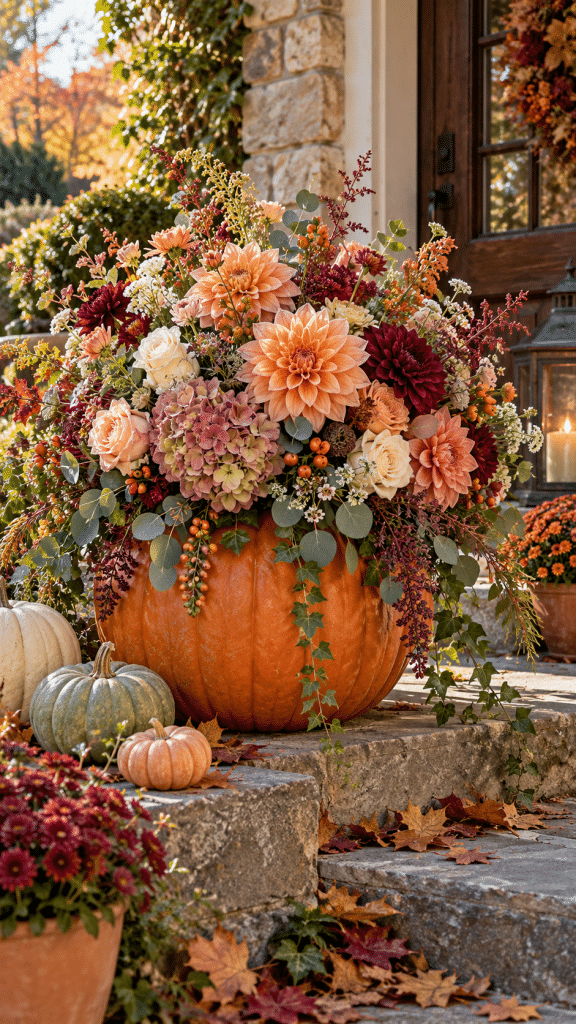
The first idea is the most lush and colorful of the three. It transforms a classic pumpkin into a miniature autumn garden overflowing with flowers.
This arrangement works especially well for homes with cottage gardens, traditional architecture, wooden porches, brick paths, rustic stone steps, or entrances surrounded by established planting.
Choose a large pumpkin in warm burnt orange, soft terracotta, muted peach, or creamy orange. Avoid an unusually bright artificial-looking pumpkin if the goal is a refined display. Slightly dusty or naturally uneven coloring often looks more attractive outdoors.
The pumpkin should feel substantial enough to support an abundant floral arrangement without visually disappearing beneath it.
Building the Cottage Garden Color Palette
The most beautiful cottage-style pumpkin arrangements rarely depend on one flower color. Instead, they use several related autumn shades layered together.
Start with warm peach and apricot flowers. Add deeper burgundy or wine-red blooms for contrast, followed by creamy ivory flowers to prevent the arrangement from becoming too dark.
Dahlias are particularly effective because their layered petals provide visual richness. Chrysanthemums add volume and classic autumn character, while hydrangeas help create softer transitions between the stronger colors.
🌸 A beautiful palette might include:
- peach dahlias
- burgundy chrysanthemums
- faded pink hydrangeas
- creamy garden roses
- rust-colored mums
- small purple asters
The colors do not need to match perfectly. In fact, slightly different shades usually create a more natural garden-inspired effect.
Add Foliage for Movement and Shape
Flowers alone can make the arrangement look dense and rounded. Foliage helps break up the shape.
Eucalyptus provides soft silvery-green tones that work especially well with warm pumpkins. Olive branches can create a slightly Mediterranean feeling, while trailing ivy adds romantic movement around the edge of the pumpkin.
Small fern fronds can also work beautifully if the overall style is more woodland-cottage than formal.
Allow some foliage to extend horizontally rather than arranging everything vertically. This creates a wider, more natural silhouette.
A few stems should gently trail downward over the pumpkin rather than remaining completely above it. This makes the flowers and pumpkin feel visually connected.
Use the Pumpkin as a True Floral Vessel
One of the easiest methods is to hollow out the top portion of the pumpkin and place a waterproof container inside.
The container should be slightly smaller than the opening so it remains hidden. A recycled plastic container, glass jar, or small florist bucket can work well.
Fill the inner container with water for fresh flowers.
Using an inner vessel has two important advantages. First, it prevents the flower water from sitting directly inside the pumpkin. Second, it allows the arrangement to be removed or refreshed without disturbing the pumpkin itself.
Important Note: If fresh flowers are being used outdoors, place them inside a separate waterproof container rather than filling a hollow pumpkin directly with water. Excess moisture inside the pumpkin can dramatically accelerate decay.
For longer-lasting outdoor displays, floral foam designed for fresh flowers can also be placed inside the waterproof container.
Make the Arrangement Look Naturally Abundant
A cottage pumpkin arrangement should not appear perfectly symmetrical.
Begin with several larger flowers as focal points, positioning them at slightly different heights. Add medium-sized flowers around them, followed by smaller blooms that fill the spaces.
The arrangement should be lower around the edges and slightly taller toward the center, but avoid creating a rigid dome.
Allow one or two flowers to lean outward.
A slightly irregular shape will look more like flowers gathered from an autumn garden rather than a formal florist arrangement.
Where to Display It
This style looks especially beautiful on wide porch steps.
Place the floral pumpkin on the second or third step and surround it with several smaller undecorated pumpkins. Use different sizes rather than identical pumpkins.
A few terracotta pots containing chrysanthemums or ornamental kale can extend the arrangement outward and help it blend with the porch.
For an even richer look, position the pumpkin beside an aged wooden chair, small bench, watering can, or rustic garden basket.
The surrounding objects should remain secondary. The pumpkin flower arrangement should still be the visual hero.
🥈 Best 2 Pumpkin Flower Arrangement With Elegant Neutral Harvest Flowers
Not every fall display needs strong orange, red, and yellow tones.
Neutral autumn decorating has become popular because it creates a softer transition between the garden and the home. Cream, beige, sage, taupe, faded green, and muted brown can produce a very sophisticated seasonal atmosphere.
A neutral pumpkin flower arrangement is particularly attractive around modern architecture, minimalist porches, black front doors, pale stone walls, white siding, or contemporary patios.
The result still feels unmistakably autumnal, but much calmer.
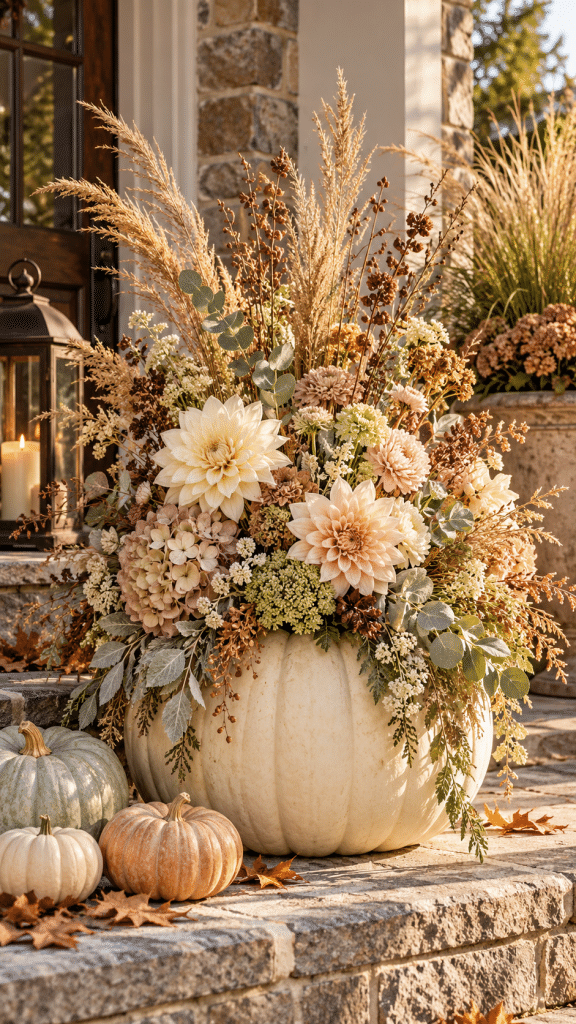
Choose White or Pale Pumpkins
The pumpkin itself determines the tone of this arrangement.
Look for pumpkins in creamy white, pale beige, muted sage green, gray-green, or soft dusty peach.
Pumpkins with natural imperfections are ideal. Slightly irregular shapes often look more organic and expensive than perfectly smooth decorative pumpkins.
For a modern display, one large pale pumpkin can be enough.
For a more layered arrangement, place one floral pumpkin among several smaller white and sage pumpkins.
🤍 Keeping the pumpkin palette restrained allows the textures of the flowers to become more noticeable.
Choose Flowers With Subtle Color Differences
A neutral arrangement should not be completely white.
Pure white alone can look flat outdoors, especially in strong daylight. Instead, combine several warm and cool neutral shades.
Cream chrysanthemums can form the primary floral mass.
Add muted beige hydrangeas, faded blush roses, pale green sedum, and small dried flower clusters.
The subtle color differences will make the arrangement look much more dimensional.
A few muted mauve flowers can also be introduced if the palette needs additional depth.
Introduce Ornamental Grasses
Grasses are one of the most effective ways to give a neutral pumpkin arrangement height.
Use airy stems rather than overly dense bundles.
Pennisetum, switchgrass, dried oat stems, wheat-like seed heads, and delicate fountain grasses all create beautiful movement.
The grasses should rise above the flowers and bend slightly outward.
When placed outdoors, even a small amount of wind will create gentle movement that makes the arrangement feel alive.
🌾 Try combining short flower clusters near the pumpkin with grasses extending significantly higher above them.
This contrast between compact flowers and airy stems is one of the main reasons neutral arrangements can look so sophisticated.
Add Seed Heads and Dried Materials
Neutral fall arrangements benefit greatly from dried botanical materials.
Lotus pods, poppy seed heads, dried hydrangeas, teasel, preserved fern, dried eucalyptus, and natural seed clusters can all contribute interesting shapes.
These materials also help the arrangement remain attractive as fresh flowers gradually fade.
Instead of hiding every dried stem among the flowers, allow a few sculptural seed heads to remain clearly visible.
Their unusual shapes provide a contemporary element that works beautifully with pale pumpkins.
Keep the Shape Architectural
Unlike the abundant cottage arrangement, this version should be more controlled.
Start with a few taller grasses positioned toward the back or slightly off-center.
Add medium-height flowers below them, then create a low ring of foliage or smaller blooms around the opening of the pumpkin.
Avoid filling every empty space.
Negative space is important in a modern arrangement. It allows the eye to appreciate individual stems and textures.
The final silhouette should feel airy rather than crowded.
Style It Beside a Modern Front Door
A neutral pumpkin arrangement looks especially striking when paired with dark architectural elements.
For example, place a large white floral pumpkin beside a matte black front door. Add two or three pale green pumpkins nearby and a tall planter containing ornamental grass.
The contrast between dark architecture and pale natural materials can create a dramatic but sophisticated entrance.
Warm lanterns can be added in the evening.
Choose simple lanterns made from black metal, aged brass, or clear glass rather than highly decorative designs.
Soft candlelight will bring out the warm beige and cream tones in the flowers.
🥉 Best 3 Pumpkin Flower Arrangement With Wild Woodland Branches and Berries
The third arrangement takes inspiration directly from the autumn landscape.
Instead of looking like a conventional bouquet placed inside a pumpkin, it feels more like a small woodland scene emerging from the pumpkin itself.
This makes it ideal for rustic garden entrances, woodland properties, cottage porches, stone walls, naturalistic gardens, and outdoor spaces surrounded by mature trees.
The palette can be deeper and moodier than the first two arrangements.
Think bronze, rusty orange, berry red, dark green, burgundy, muted purple, and warm brown.
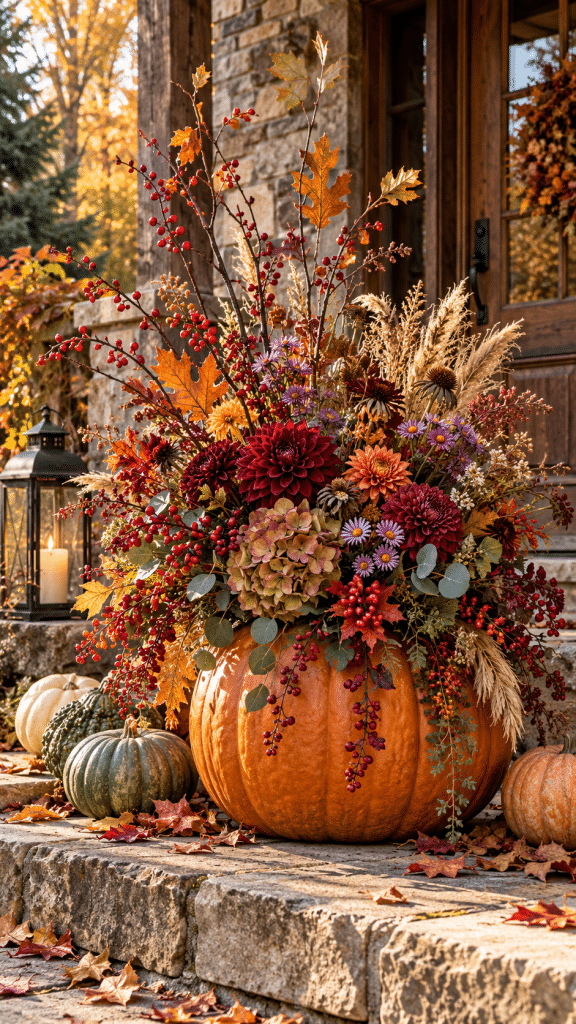
Start With a Deeply Colored Pumpkin
A classic dark orange pumpkin works extremely well here.
Bronze-toned pumpkins, dark green pumpkins, and muted red-orange varieties can also produce striking results.
The pumpkin should feel earthy rather than polished.
A slightly rough stem can actually enhance the look.
If the pumpkin has an attractive stem, consider cutting the opening around it in a way that allows part of the natural stem to remain visible beside the arrangement.
This small detail can make the display feel more organic.
Use Branches to Create Structure
Branches are the defining feature of the woodland arrangement.
Thin birch twigs, dark bare branches, berry branches, dogwood stems, or small pieces of twisted hazel can create height and architecture.
Position several branches toward the back and sides of the arrangement.
Avoid creating a tight bundle.
The branches should spread naturally, leaving visible spaces between them.
🍂 Their purpose is to create the feeling of a miniature woodland canopy rather than a flower vase.
Smaller flowers can then appear between the branches.
Add Autumn Berries
Berries introduce some of the strongest visual details in this arrangement.
Rose hips are ideal because their red-orange coloring pairs naturally with pumpkins.
Hawthorn-like berry clusters, hypericum berries, crabapple branches, or other non-toxic decorative berry stems can also work.
Berry stems should be distributed throughout the arrangement rather than placed in one concentrated group.
A few clusters extending outward can create beautiful points of color.
The berries are particularly attractive after rain because water droplets emphasize their glossy surfaces.
Add Late Season Flowers
The floral element should remain slightly restrained.
Asters are an excellent choice because their small purple or lavender flowers naturally appear in late-season gardens.
Deep burgundy chrysanthemums can provide richer color.
Sedum offers broad flower heads with muted pink and dusty red tones.
Dahlias can also be used, although choose darker or more subdued varieties rather than bright summer colors.
The goal is to make the flowers look like part of the woodland composition rather than the dominant feature.
Add Dried Leaves and Grasses
Dry textures are particularly important in this arrangement.
Use brown fern fronds, dried oak leaves, grasses, seed heads, and faded hydrangeas.
The combination of living flowers and dried materials represents the transition between late summer and autumn.
This layered mixture also gives the arrangement a much more complex texture.
Some dried foliage can extend downward against the pumpkin, creating a visual bridge between the arrangement and the ground.
Create an Asymmetrical Shape
Woodland arrangements look best when they feel slightly wild.
Instead of placing the tallest branch directly in the center, position it slightly to one side.
Allow other branches and grasses to extend outward in different directions.
Keep one side slightly fuller than the other.
This asymmetry creates natural movement.
It can also make a porch display more dynamic when the arrangement is viewed from the street.
Create a Natural Ground Layer
The woodland idea can extend beyond the pumpkin itself.
Place the finished arrangement on a bed of fallen leaves, moss, small pumpkins, or a simple wooden crate.
A few pinecones or small branches can be scattered around the base.
Avoid making the ground styling overly decorative.
It should feel as though the materials were collected naturally from the garden.
For evening displays, one or two lanterns can be added nearby.
Warm light works particularly well with the dark berry colors and bronze pumpkin tones.
How to Choose the Right Pumpkin for a Flower Arrangement
The pumpkin must be attractive, but structure is equally important.
Choose a pumpkin with a relatively flat base so it remains stable after flowers are added.
The upper surface should also provide enough room for the floral container.
Extremely tall pumpkins may look interesting but can become unstable when topped with a large arrangement.
Medium and wide pumpkins are generally easier to work with.
Inspect the skin carefully.
Avoid pumpkins with deep soft spots, cracks, or visible decay around the stem.
These weak areas can deteriorate quickly once the pumpkin is cut.
If the arrangement will remain outdoors for several days, select the freshest pumpkin available.
Real Pumpkin or Artificial Pumpkin
Both options have advantages.
A real pumpkin provides natural texture and authentic seasonal character. It works especially well for short-term decorations, parties, Thanksgiving gatherings, and autumn weekends.
Artificial pumpkins are better for decorations that need to last throughout the season.
A high-quality faux pumpkin can be cut or modified to hold a permanent floral insert.
Artificial pumpkins also work well with dried or faux flowers.
For covered porches, they can often be reused for several years.
The choice depends largely on whether authenticity or longevity is more important.
Fresh Flowers Versus Dried Flowers
Fresh flowers create the richest colors and most luxurious textures.
They are an excellent choice for special occasions or for outdoor areas that are seen frequently.
However, they require water and occasional replacement.
Dried flowers are much easier to maintain.
They also naturally suit autumn because their faded colors and papery textures reflect the changing season.
Some of the most effective arrangements combine both.
Fresh chrysanthemums, asters, or dahlias can provide color while dried grasses, hydrangeas, leaves, and seed heads create structure.
As the fresh flowers fade, they can be replaced without rebuilding the entire arrangement.
How to Make Pumpkin Flower Arrangements Last Longer Outdoors
Outdoor conditions can be surprisingly harsh on both pumpkins and flowers.
Direct sunlight can dry flowers quickly, while warm temperatures accelerate pumpkin deterioration.
Whenever possible, place the arrangement on a covered porch or in partial shade.
This protection can significantly extend its decorative life.
Avoid placing a cut pumpkin directly on damp soil.
Use a porch step, tray, stone surface, wooden board, or other dry base.
Air circulation underneath the pumpkin can help reduce moisture accumulation.
Fresh flowers should receive clean water regularly.
Remove any flowers that begin to deteriorate because decaying petals can affect neighboring stems.
Dried arrangements require much less maintenance but should still be protected from heavy rain.
Combining Pumpkin Flower Arrangements With Other Outdoor Fall Decor
Pumpkin flowers work best when they are part of a larger seasonal composition.
However, that does not mean every available autumn decoration should be used.
Choose two or three complementary materials.
For a cottage arrangement, terracotta pots, vintage baskets, and extra pumpkins work beautifully.
For a neutral arrangement, use simple lanterns, pale pumpkins, and architectural grasses.
For a woodland arrangement, incorporate leaves, branches, moss, and natural wood.
Repeating the same materials helps create visual cohesion.
For example, if burgundy flowers appear in the main pumpkin arrangement, place one smaller pot containing burgundy chrysanthemums elsewhere on the porch.
This repetition connects the different areas.
Creating a Layered Porch Display
Layering is one of the easiest ways to make a small number of decorations look substantial.
Place the largest pumpkin arrangement toward the back.
Add medium pumpkins around it, followed by smaller pumpkins near the front.
Vary the heights using steps, crates, stools, or planters.
The display should gradually descend toward the viewer.
🎃 Odd-number groupings often feel especially natural.
Three pumpkins clustered together usually look more relaxed than two pumpkins positioned symmetrically.
Five can work beautifully in larger spaces.
Using Pumpkin Flower Arrangements Around Outdoor Dining Spaces
These arrangements are not limited to front porches.
They can also decorate patios and outdoor dining areas.
A medium pumpkin filled with low flowers makes a beautiful centerpiece for an autumn table.
Keep the flowers low enough that guests can see across the table.
Smaller floral pumpkins can be placed along a long dining table.
Another option is to create one large pumpkin arrangement on a sideboard or outdoor console while keeping the dining table simple.
This creates seasonal atmosphere without crowding the eating area.
For evening entertaining, surround the pumpkin arrangement with small lanterns or candles protected inside glass containers.
The flowers will take on a completely different appearance under warm light.
Choosing Colors That Complement the House
Outdoor fall decorations are most successful when they relate to the architecture.
Homes with white or cream exteriors can support almost every pumpkin color.
Orange provides strong contrast, while white and sage create a softer look.
Red brick houses work beautifully with burgundy, cream, bronze, and deep green.
Gray homes often benefit from warm orange pumpkins because the contrast prevents the overall display from feeling too cool.
Black or charcoal exteriors look especially elegant with pale pumpkins and cream flowers.
Wooden houses and rustic cottages naturally suit woodland palettes with deep orange, berries, grasses, and branches.
Rather than copying a fixed fall color scheme, use the building itself as part of the palette.
Make Pumpkin Flower Arrangements Feel More Expensive
A luxurious outdoor arrangement does not necessarily require expensive flowers.
Scale and restraint often matter more.
Use fewer types of flowers but include enough stems of each type to create visual impact.
For example, a combination of cream chrysanthemums, faded hydrangeas, and ornamental grass can look more sophisticated than a mixture of ten unrelated flower varieties.
Limit the color palette as well.
Three primary colors plus greenery are usually enough.
Repeating the same flower several times creates rhythm.
Finally, remove damaged leaves and flowers before building the arrangement.
Small details become much more noticeable in close-up displays near front doors.
Final Thoughts on the Best 3 Pumpkin Flower Arrangements for Outdoor Fall Decor
The most beautiful Pumpkin Flower Arrangements for Outdoor Fall Decor combine seasonal character with the personality of the surrounding home and garden.
🥇 A romantic cottage garden pumpkin is ideal when the goal is abundance. Dahlias, chrysanthemums, hydrangeas, and trailing foliage transform an ordinary pumpkin into a rich floral centerpiece that looks especially beautiful on traditional porches and garden steps.
🥈 An elegant neutral harvest pumpkin creates a more modern impression. Cream flowers, pale pumpkins, ornamental grasses, and sculptural seed heads offer autumn atmosphere without relying on strong orange and red colors.
🥉 A wild woodland pumpkin arrangement creates the most naturalistic display. Branches, berries, asters, grasses, and dried foliage make the pumpkin appear as though it emerged directly from an autumn woodland.
The strongest outdoor fall decor rarely comes from simply adding more objects. It comes from choosing a clear mood and repeating the same colors, textures, and natural materials throughout the space.
A single carefully designed floral pumpkin can become the focal point of an entire front porch.
Surround it with a few supporting pumpkins, grasses, lanterns, or seasonal plants, and the entrance immediately feels warmer, more intentional, and ready for fall.
Whether the preferred look is romantic, elegant, or naturally wild, these three pumpkin flower arrangements offer enough flexibility to create an outdoor autumn display that feels distinctive rather than predictable.