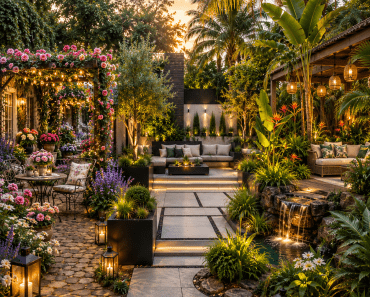
Creating a beautiful autumn garden does not require a large backyard, complicated landscaping, or an expensive seasonal makeover. Some of the most charming outdoor spaces are actually small yards where every planter, pathway, plant, and decorative detail has been carefully placed. With the right small fall yard garden ideas, even a narrow side yard, tiny front lawn, compact patio garden, or modest backyard corner can become an inviting autumn retreat filled with texture, color, and seasonal character.
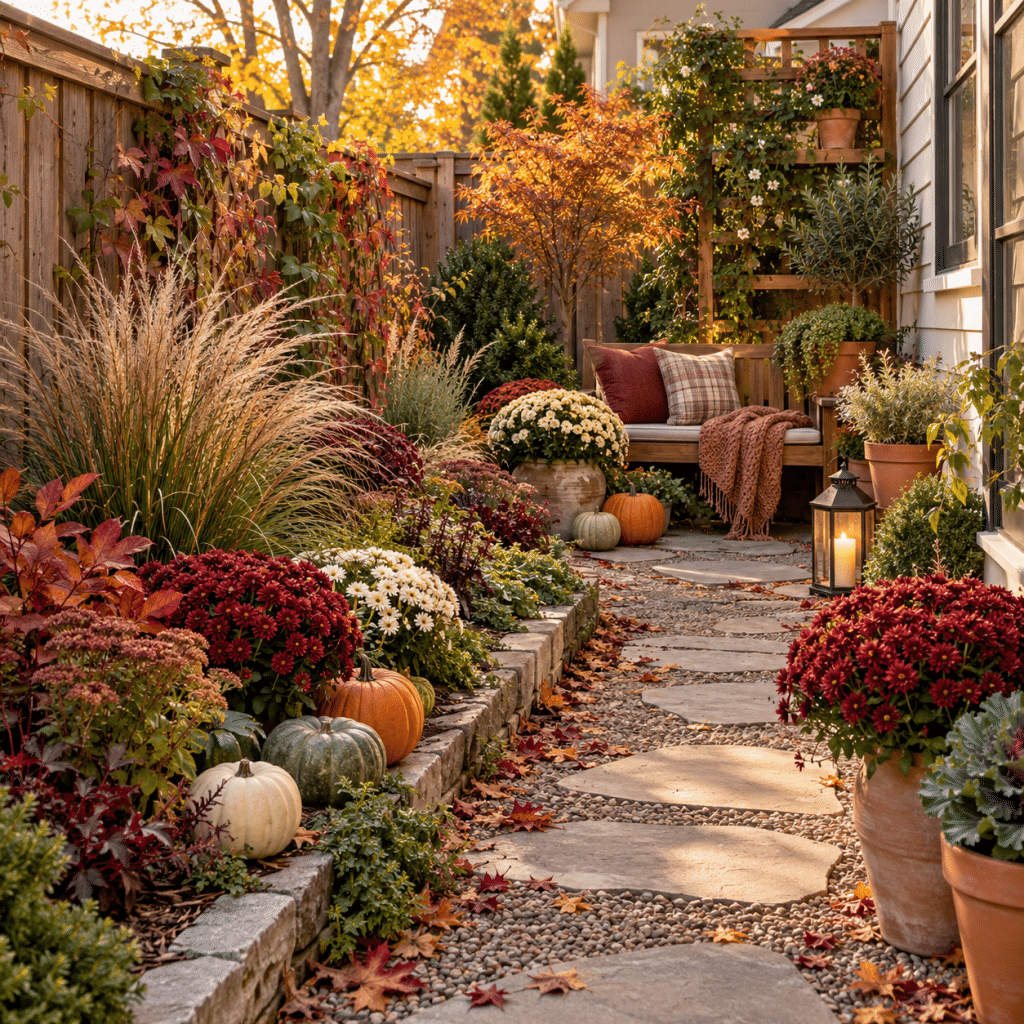
Fall is especially forgiving for small gardens because the season naturally favors layered planting, warm foliage, ornamental grasses, pumpkins, weathered wood, stone, and cozy outdoor details. Instead of trying to fill every empty spot, the goal is to create a few strong focal areas that make the entire yard feel intentional.
The best small autumn gardens often combine three important elements: seasonal plants, thoughtful layering, and one memorable focal point. 🍂 When these elements work together, a limited outdoor space can look richer and more polished than a much larger yard.
Below are the Best 3 small fall yard garden ideas for creating an outdoor space that feels cozy, abundant, practical, and beautifully connected to the season.
Why Small Fall Yard Garden Ideas Work So Well in Compact Outdoor Spaces
Small gardens can sometimes feel challenging because every square foot matters. Large shrubs may overwhelm the space, too many decorative items can create clutter, and complicated landscaping can make a narrow yard feel even smaller.
Autumn gardening offers a different approach.
Instead of relying on large structural plants, fall gardens can use seasonal layers. Ornamental grasses provide height, compact chrysanthemums add color, trailing plants soften planter edges, pumpkins create instant visual impact, and fallen leaves naturally contribute warmth and texture.
The result is a garden that feels full without requiring permanent landscaping changes.
Another advantage is flexibility. Many fall garden elements can be grown or displayed in containers. This means homeowners can experiment with colors, plant combinations, and arrangements without committing to major garden renovations.
A small yard can also benefit from stronger visual storytelling. In a large garden, plants may be spread across wide spaces. In a small garden, several carefully chosen elements appear together, creating a more concentrated seasonal effect.
Imagine a narrow garden bed containing bronze grasses, burgundy foliage, cream chrysanthemums, and several small pumpkins nestled between plants. Even if the bed measures only a few feet wide, it can still feel dramatic.
The secret is not adding more.
The secret is layering smarter.
Quick Comparison of the Best 3 Small Fall Yard Garden Ideas
| Small Fall Yard Garden Idea | Best For | Main Elements | Space Needed | Overall Look |
|---|---|---|---|---|
| 🥇 Layered Autumn Border Garden | Small front yards and narrow garden beds | Ornamental grasses, mums, foliage plants, pumpkins | Small to medium | Lush and natural |
| 🥈 Vertical Fall Garden Corner | Tiny patios and narrow side yards | Trellis, climbing plants, hanging pots, tiered planters | Very small | Tall and visually interesting |
| 🥉 Cozy Harvest Garden Nook | Small backyard corners and entry gardens | Bench, containers, herbs, pumpkins, lanterns | Small | Warm and inviting |
Each idea creates a different type of fall atmosphere while keeping the layout practical for smaller outdoor spaces.
🥇 Best 1 Small Fall Yard Garden Ideas With a Layered Autumn Border
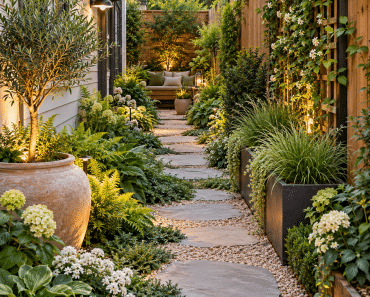
A layered autumn border garden is one of the easiest ways to make a small yard look professionally landscaped without using much space.
Instead of spreading plants across the entire lawn, create one concentrated garden border along a fence, walkway, porch, or property edge.
This narrow planting zone becomes the main visual feature of the yard.
The design works particularly well because plants are arranged according to height. Taller grasses or upright plants sit at the back, medium-height flowering plants fill the center, and low-growing plants or seasonal decorations soften the front edge.
This creates depth.
Even a border only three or four feet deep can appear much larger when plants overlap visually.
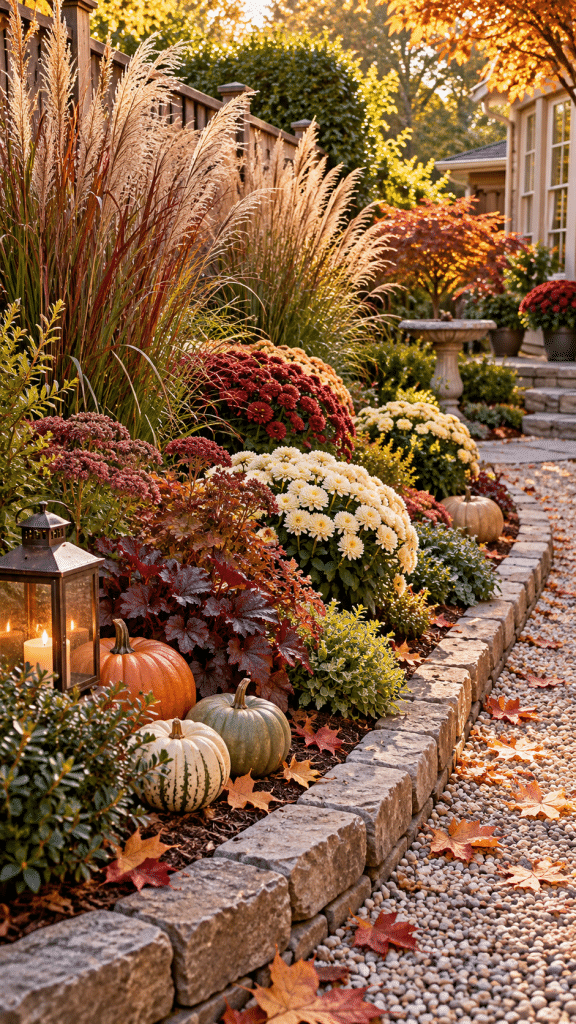
Use Ornamental Grasses as the Background
Start with one or two clumps of ornamental grasses.
Grasses immediately bring autumn character because their seed heads catch sunlight and move gently in the wind. They also provide vertical height without creating the heavy visual mass of large shrubs.
Good visual styles include grasses with:
- bronze foliage
- soft golden seed heads
- muted green blades
- reddish autumn tones
- feathery flower plumes
🌾 The movement of ornamental grass is especially valuable in small gardens. It prevents the space from feeling static or overly arranged.
Avoid planting too many different grass varieties. One repeating variety usually creates a cleaner and more cohesive design.
Add a Middle Layer of Autumn Flowers
In front of the grasses, place compact seasonal flowers.
Chrysanthemums are an obvious choice because they naturally produce dense clusters of flowers and are available in many autumn shades.
Instead of using extremely bright colors, consider a sophisticated palette built around:
- burnt orange
- burgundy
- rust
- cream
- muted yellow
- plum
- dusty pink
Repeating two or three colors throughout the garden creates stronger visual harmony.
For example, a small border could feature cream chrysanthemums beside burgundy foliage plants, with bronze ornamental grasses behind them.
The limited color palette makes the planting look intentional rather than random.
Bring Texture With Foliage Plants
Fall gardens do not need to rely entirely on flowers.
Foliage can often provide more interesting texture and longer-lasting color.
Consider plants with deep green, purple, silver, bronze, or burgundy leaves.
Leaf shape also matters.
Combining broad leaves with narrow grasses and small flowering plants creates contrast. This contrast makes the garden appear more detailed, even when relatively few plants are used.
🍁 A successful small fall garden often looks abundant because of texture rather than because of the number of plants.
Place Small Pumpkins Inside the Garden Bed
Instead of arranging pumpkins only on the porch, try placing a few directly inside the garden border.
Small pumpkins can sit between plants or along the front edge of the bed.
Choose different shapes and muted colors such as:
- soft orange
- pale cream
- dusty green
- muted yellow
- warm beige
Avoid lining them up evenly.
A loose, asymmetrical arrangement feels more natural and blends better with plants.
One large pumpkin combined with several smaller ones usually looks more interesting than many pumpkins of the same size.
Create a Natural Edge
The edge of the border also influences how polished the garden appears.
Natural stone, weathered brick, timber edging, or simply a clean soil line can define the planting area without making the garden look overly formal.
For a softer cottage-inspired design, allow small plants to spill slightly over the edge.
For a modern look, keep the line clean and simple.
Important Note: In a small yard, avoid filling every visible gap with plants or decorations. Leaving small areas of open soil, mulch, stone, or lawn gives the eye space to rest and often makes the garden appear larger.
Add One Simple Garden Feature
One carefully chosen feature can complete the border.
Possible focal points include:
- a small stone birdbath
- a simple wooden obelisk
- a rustic garden lantern
- a weathered clay pot
- a compact garden sculpture
The object should not dominate the garden.
Think of it as an anchor that gives the eye a natural place to pause.
The surrounding plants remain the main attraction.
🥈 Best 2 Small Fall Yard Garden Ideas With a Vertical Garden Corner
When ground space is limited, the smartest strategy is often to garden upward.
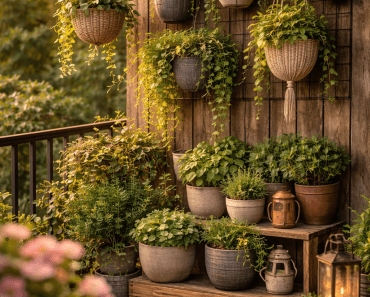
A vertical fall garden transforms fences, walls, narrow corners, and patio edges into productive decorative spaces.
This approach is especially useful for tiny urban gardens or narrow yards where there may not be enough room for traditional flower beds.
The goal is to create multiple layers at different heights rather than placing every plant at ground level.
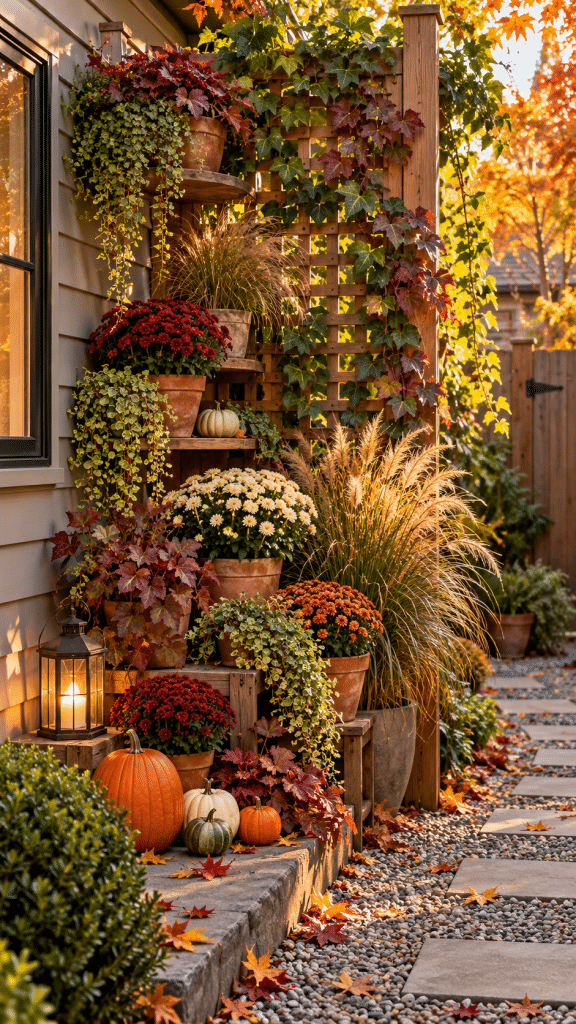
Start With a Simple Trellis
A wooden or metal trellis immediately establishes vertical structure.
It can be placed against a fence, attached to a wall, or installed inside a large container.
During fall, the trellis can support climbing plants or simply act as a decorative architectural feature surrounded by containers.
Natural wood works beautifully because its warm tones complement autumn foliage.
A slightly weathered finish often looks even better than perfectly new timber.
The trellis also draws the eye upward, making the yard feel taller and more spacious.
Use Tiered Planters
Tiered planters are extremely useful for small gardens.
Instead of placing several pots side by side, arrange them vertically using shelves, crates, plant stands, or stepped platforms.
This creates three or four planting levels while using the footprint of only one small corner.
Place larger containers near the bottom and smaller pots toward the top.
For autumn, try a combination such as:
bottom level — ornamental grass
middle level — chrysanthemums
upper level — trailing foliage or herbs
This arrangement creates a natural visual pyramid.
🍂 A tiered arrangement also makes seasonal changes easy. Individual pots can be moved, replaced, or replanted whenever necessary.
Add Trailing Plants for Softness
Vertical gardens can sometimes look rigid because shelves and trellises contain many straight lines.
Trailing plants soften those lines.
Allow foliage to spill over pots or hang from elevated containers.
Trailing ivy, creeping plants, or delicate vines can help connect separate planter levels visually.
This makes the entire display feel like one garden rather than a collection of unrelated pots.
Mix Ornamental Plants With Useful Herbs
A fall garden can also be practical.
Cool-season herbs can be grown alongside decorative plants.
Parsley, thyme, sage, and rosemary provide attractive foliage while also being useful in the kitchen.
Sage is particularly attractive in autumn displays because its soft grey-green leaves pair beautifully with burgundy, orange, and cream flowers.
Rosemary can provide upright structure.
Thyme can soften container edges.
This combination creates a garden that is decorative but still functional.
Add Hanging Containers
If the structure allows it, add one or two hanging containers above the main planting area.
Hanging planters create another layer without taking up ground space.
However, restraint is important.
Too many hanging baskets can make a tiny garden feel crowded.
Usually one large hanging planter or two smaller matching containers are enough.
Choose simple baskets in natural materials or understated finishes so attention remains on the plants.
Incorporate Subtle Autumn Decorations
Seasonal decoration can be introduced without overwhelming the vertical garden.
Try adding:
- one small pumpkin on a shelf
- a miniature lantern
- a bundle of dried seed heads
- a small ceramic pot
- a simple fall wreath nearby
Avoid adding every decoration at once.
Small spaces benefit from repetition and simplicity.
A few carefully repeated materials such as terracotta, wood, and natural foliage often look more sophisticated than many unrelated decorative objects.
Use Warm Evening Lighting
Vertical gardens become especially attractive after sunset when soft lighting highlights plants at different heights.
Small outdoor lanterns or warm string lights can be woven around the trellis.
The light should remain subtle.
The goal is not to illuminate the entire yard but to create a gentle glow around the garden corner.
✨ Warm lighting also extends the usefulness of the space as autumn evenings become darker earlier.
🥉 Best 3 Small Fall Yard Garden Ideas With a Cozy Harvest Garden Nook
The third idea transforms an unused garden corner into a cozy seasonal destination.
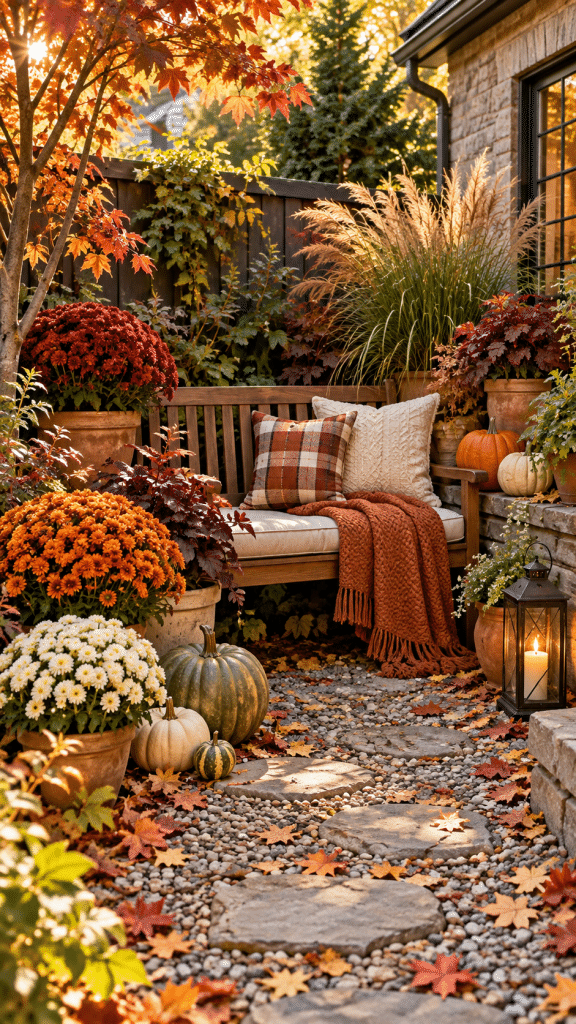
A harvest garden nook combines plants, seating, containers, and a few decorative elements to create a tiny outdoor retreat.
Instead of treating the yard only as landscaping, this approach makes the garden somewhere people can actually sit and enjoy.
It works especially well in backyard corners, beside a fence, near a garden shed, or next to a small patio.
Begin With a Small Bench
A compact bench immediately defines the space.
Wooden benches work particularly well because natural timber feels warm and seasonal.
The bench does not need to be large.
Even a narrow seat for one or two people can establish the idea of a garden retreat.
Position the bench against a fence or hedge so the seating area feels protected.
This also leaves more open space in front.
Surround the Bench With Containers
Containers create the feeling that the bench sits inside the garden rather than beside it.
Place taller pots toward the back corners and smaller containers near the front.
Try arranging three different heights.
For example:
a tall ornamental grass in a large pot
a medium planter filled with mums
a smaller container filled with herbs or trailing foliage
The variation creates depth.
Using containers in similar materials helps unify the arrangement.
Terracotta, aged stone, charcoal ceramic, or warm neutral pots all work beautifully.
Create a Rich Autumn Color Palette
A cozy garden nook benefits from deeper colors than a bright summer garden.
Consider a palette built around:
- burgundy
- rust
- terracotta
- amber
- bronze
- cream
- olive green
These tones naturally complement wood, stone, and dried foliage.
Avoid introducing too many bright primary colors.
The most relaxing garden corners usually rely on a restrained color family.
🍁 Deep autumn tones make a compact area feel intimate rather than visually chaotic.
Add Pumpkins in Different Sizes
Pumpkins are perfect for this style because they instantly communicate the harvest season.
Instead of creating a large pumpkin display, use a small cluster near the bench.
Mix one medium pumpkin with several smaller varieties.
A combination of cream, muted orange, dusty green, and pale yellow pumpkins can feel more sophisticated than using only bright orange.
Nestle some pumpkins beside containers so they appear integrated into the planting arrangement.
Introduce Dried Garden Materials
Dried materials can add another layer of texture.
Try using dried grasses, seed heads, hydrangea blooms, branches, or leaves collected from the garden.
These materials can be displayed inside a tall container or woven loosely into the surrounding planting.
They create a natural connection between the garden and the changing season.
Dried plants also require very little maintenance.
Add One Lantern Instead of Many
Lighting helps turn the garden nook into an inviting evening space.
A single lantern placed near the bench can often create more atmosphere than several small lights.
Choose a lantern with simple lines and warm illumination.
Placing it low to the ground allows light to highlight nearby pumpkins, foliage, and container textures.
This creates beautiful shadow patterns.
For additional light, small solar garden lights can be hidden between plants rather than placed prominently.
Make the Ground Part of the Design
Even a tiny seating area benefits from a defined ground surface.
Possible options include:
- gravel
- bark mulch
- stepping stones
- brick
- compact stone pavers
Changing the ground material helps visually separate the garden nook from the rest of the yard.
For example, a small gravel square with a bench and several containers can feel like a complete garden room despite occupying very little space.
How to Make a Small Fall Yard Garden Look Bigger
The size of a garden does not depend entirely on square footage.
Design choices can dramatically affect how spacious the yard feels.
One of the strongest techniques is creating depth through layers.
Place taller plants toward the edges or background and shorter plants closer to walkways. This encourages the eye to move through several visual levels.
Curved lines can also help.
A slightly curved garden border or stepping-stone path creates mystery because the entire garden cannot be seen at once.
Even a very small curve can make a yard feel deeper.
Another useful strategy is repeating plants.
Instead of buying ten unrelated plants, use three or four varieties and repeat them in different locations.
Repetition connects different parts of the yard and makes the garden feel organized.
Containers can also help define height.
Tall pots placed near fences draw attention upward, while lower containers near pathways keep the foreground open.
Best Plants for Small Fall Yard Garden Ideas
Plant choice matters because large aggressive plants can quickly overwhelm limited spaces.
Compact varieties are often more suitable.
Look for plants that provide multiple benefits such as foliage color, flowers, seed heads, or evergreen structure.
Some useful autumn categories include:
Ornamental Grasses
Grasses provide height and texture without occupying much visual space.
They are especially effective near fences or in the back layer of narrow beds.
Chrysanthemums
Mums offer concentrated seasonal color.
Instead of scattering many individual plants, group two or three together for stronger visual impact.
Heuchera
Heuchera is valuable for foliage.
Different varieties can offer burgundy, caramel, lime, or deep purple leaves.
Sedum
Sedum brings structure and interesting flower heads that can remain attractive even as they dry.
Herbs
Sage, rosemary, parsley, and thyme combine ornamental value with practical use.
Compact Evergreen Plants
A few evergreen plants help maintain structure after seasonal flowers fade.
This is especially important if the yard needs to remain attractive into winter.
Use Containers to Increase Flexibility
Containers are one of the strongest tools for small garden design.
They allow plants to be moved depending on sunlight, weather, or seasonal appearance.
A container looking tired near the front door can simply be moved to a less visible area.
Another advantage is height control.
Large containers can raise small plants closer to eye level.
This is useful in narrow yards where ground-level plants might otherwise disappear visually.
Grouping containers usually works better than spreading them around the yard.
Try arranging pots in groups of three using different heights.
For example:
one tall container
one medium container
one low wide pot
This produces a naturally balanced composition.
Keep Fall Yard Decor Connected to the Garden
The most beautiful autumn yards usually do not look like decorations were simply placed on top of the landscape.
Instead, seasonal objects appear to belong inside the garden.
Pumpkins can sit between plants.
Lanterns can be positioned near garden paths.
Dried grasses can come directly from the landscape.
Wooden crates can hold small containers.
Branches can become simple garden structures.
This approach keeps the yard feeling natural.
🎃 Think of fall decorations as extensions of the garden rather than separate accessories.
Avoid These Common Small Yard Mistakes
One of the biggest mistakes is using too many tiny decorations.
Small objects scattered everywhere create visual noise.
It is usually better to use fewer but slightly larger features.
Another problem is excessive color.
Five or six unrelated flower colors can make a small garden feel chaotic.
Choose a limited seasonal palette and repeat it.
Avoid placing every plant at the same height.
Without height variation, the garden appears flat.
Also avoid pushing everything against the fence.
Leaving some plants slightly forward creates layers and makes the layout feel more natural.
Finally, resist the temptation to fill every square inch.
Open lawn, gravel, mulch, or pathway areas provide contrast.
That contrast allows the planted areas to stand out.
A Simple Color Formula for a Beautiful Fall Garden
If choosing plants feels complicated, use a three-part color formula.
Start with one dominant color.
For example, burgundy.
Then choose one warm supporting color, such as rust or amber.
Finally, add one neutral, such as cream or soft green.
The palette might become:
burgundy foliage
rust chrysanthemums
cream pumpkins
green ornamental grasses
Because the colors repeat naturally, the entire garden feels coordinated.
Another elegant combination could be:
olive green
burnt orange
warm beige
Or:
plum
bronze
cream
Keeping the color palette narrow is one of the easiest ways to create a garden that looks professionally designed.
Small Fall Yard Garden Ideas Can Still Feel Abundant
A small yard does not need to feel sparse.
Abundance can come from layering textures rather than adding dozens of plants.
Combine grasses, flowers, foliage, seed heads, pumpkins, herbs, stone, timber, and seasonal leaves.
Each material contributes something different.
The garden becomes visually rich without becoming physically crowded.
That balance is especially important in compact landscapes.
A single well-designed corner can sometimes create more impact than landscaping the entire yard.
Choosing the Best Idea for Your Yard
The right option depends on the shape of the outdoor space.
For a narrow front garden or walkway, the layered autumn border garden is usually the easiest approach.
For extremely limited ground space, choose the vertical fall garden corner.
For a backyard where relaxation is the priority, the cozy harvest garden nook offers both beauty and function.
These ideas can also be combined.
A small yard might contain a narrow fall border along one fence and a tiny seating nook in the opposite corner.
Another yard might use vertical planters beside a patio while containers create seasonal color near the entrance.
There are no strict rules.
The strongest results usually come from selecting a few ideas and adapting them to the available space.
Final Thoughts on the Best Small Fall Yard Garden Ideas
The best small fall yard garden ideas prove that outdoor beauty is not determined by property size. Thoughtful plant placement, layered textures, seasonal foliage, compact containers, and a few carefully selected decorations can completely transform even the smallest yard.
🥇 A layered autumn border garden creates the richest traditional garden look while using only a narrow strip of land.
🥈 A vertical fall garden corner takes advantage of walls, fences, shelves, and trellises when ground space is extremely limited.
🥉 A cozy harvest garden nook turns an overlooked corner into a warm outdoor destination surrounded by plants, pumpkins, natural materials, and soft lighting.
The key is to avoid treating the small yard as a limitation.
Instead, use its scale as an advantage.
Compact gardens make it easier to create concentrated color, intimate seating areas, carefully layered planting, and strong seasonal focal points.
A few pots of autumn flowers, softly moving ornamental grasses, scattered pumpkins, textured foliage, and one inviting garden corner may be all that is needed.
With thoughtful layering and a restrained seasonal palette, even the tiniest outdoor space can become a beautiful fall garden that feels warm, abundant, and surprisingly spacious. 🍂