If you have been searching for fruit flies how to get rid of these tiny insects quickly, the most effective solution is usually not one dramatic spray or complicated treatment. Fruit flies are persistent because they reproduce around hidden food and moisture sources, so getting rid of them requires a combination of removing what attracts them, trapping the adults, and cleaning the places where the next generation may be developing.
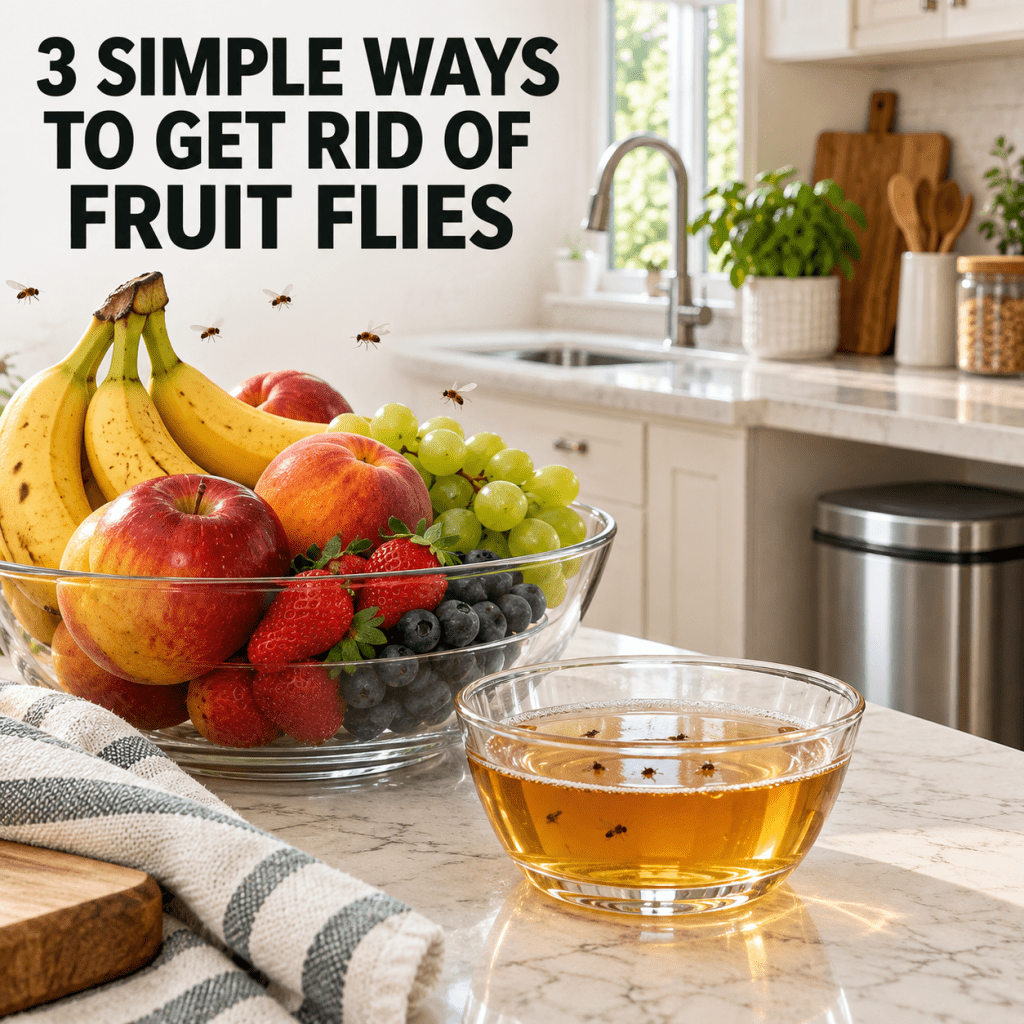
Fruit flies can seem to appear overnight. One day the kitchen looks perfectly normal, and the next you may notice tiny insects hovering around bananas, tomatoes, the trash can, a recycling container, or even the sink. 🍎 Their small size makes them easy to ignore at first, but a few flies can quickly become a noticeable nuisance when the right breeding conditions are available.
Fortunately, most household fruit fly problems can be controlled without turning the kitchen into a chemical treatment zone. The key is understanding that the visible flies are only part of the problem. Removing adult flies may make the room look better temporarily, but unless their food and breeding sources are eliminated, new flies can continue appearing.
The Best 3 fruit fly strategies below focus on attacking the problem from several directions. The first removes the conditions that allow fruit flies to multiply. The second captures the adults already flying around your home. The third targets overlooked breeding areas that can keep an infestation going even after the obvious fruit has been removed.
Used together, these methods can make a major difference and help prevent fruit flies from returning.
Why Fruit Flies Suddenly Appear in Your Home
Fruit flies are strongly attracted to fermenting organic material. Ripening fruit is one of the most familiar examples, but it is far from the only source that can attract them.
A bowl of peaches that has become slightly overripe, juice spilled underneath a kitchen appliance, residue inside a recycling bottle, or forgotten vegetable scraps can all create attractive conditions. Even a tiny amount of fermenting material may be enough to keep adult flies interested in an area.
Because fruit flies are extremely small, they can reach places that are easy to overlook during normal kitchen cleaning. A little liquid underneath a trash bag, residue inside the neck of a bottle, or food debris hidden under a refrigerator can sometimes support activity.
Fruit flies may also enter the home with produce. Fresh fruits and vegetables can occasionally carry eggs or very small larvae that are impossible to notice during normal shopping. Adult flies may also enter through doors, windows, screens, and other openings.
Once suitable food and moisture are available, their population can grow surprisingly quickly.
This is why successful fruit fly control requires more than simply killing the insects you see flying around.
Fruit Flies How to Get Rid of Them by Understanding Their Life Cycle
Before choosing a treatment, it helps to understand why fruit flies can be so persistent.
Adult fruit flies look for moist organic material where they can feed and lay eggs. Fermenting fruit and vegetable matter is particularly attractive. The eggs hatch into larvae, which develop in the food material before eventually becoming adults.
The cycle can happen quickly under favorable indoor conditions.
That means the fruit flies flying above your countertop today may not be the same insects you see several days later. Even if many adults are trapped, new ones can emerge from a breeding source that remains hidden somewhere in the kitchen.
This explains one of the most common frustrations people experience.
They place a trap on the countertop, catch many flies, and assume the problem is solved. Then another wave appears.
The trap did its job. The breeding source simply remained.
For this reason, think of fruit fly control as a three-part system:
remove the source → trap remaining adults → prevent another breeding cycle
That approach is much more reliable than relying on a trap alone.
Best 3 Fruit Fly Control Methods at a Glance
The three strategies work best together rather than as completely separate treatments.
| Best 3 Method | Main Purpose | Best Used For | Difficulty |
|---|---|---|---|
| 🥇 Remove Food and Breeding Sources | Stops reproduction | Almost every fruit fly problem | Easy |
| 🥈 Use a Vinegar Based Fruit Fly Trap | Captures adult flies | Reducing visible flies quickly | Very Easy |
| 🥉 Deep Clean Hidden Moist Areas | Eliminates overlooked breeding sites | Persistent or recurring problems | Moderate |
The first method is the most important because it addresses the reason fruit flies are multiplying.
The second provides immediate visible results by catching adults.
The third becomes especially important when fruit flies continue appearing even after produce and garbage have been removed.
Together, they create a much more complete control strategy.
🥇 Best 1 Remove Every Fruit Fly Food and Breeding Source
The most important step in controlling fruit flies is removing the material that allows them to survive and reproduce.
This may sound simple, but successful source removal needs to be more thorough than ordinary kitchen cleaning.
Start with fresh produce.
Inspect bananas, peaches, pears, tomatoes, onions, potatoes, melons, grapes, and other produce stored at room temperature. Fruit does not need to look completely rotten to attract fruit flies. Produce that has become very ripe can already produce fermentation odors that attract them.
Move ripe fruit into the refrigerator when appropriate.
Refrigeration greatly reduces the opportunity for fruit flies to reach the produce and also slows further ripening. Produce that should not be refrigerated can be stored in a clean covered container or consumed promptly.
Rotten or leaking produce should be discarded immediately.
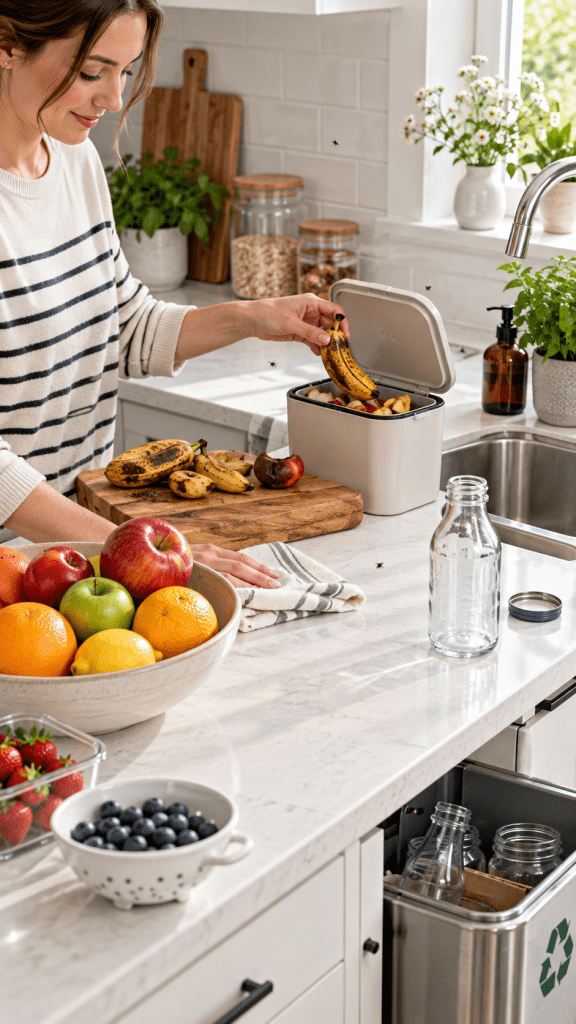
Check the Fruit Bowl Carefully 🍌
Fruit bowls are one of the most common fruit fly gathering places.
Remove every piece of fruit and inspect the bowl itself. Juice from damaged fruit can collect underneath other pieces without being immediately visible.
Wash the bowl with warm soapy water and dry it thoroughly before returning fresh produce.
Also inspect the counter underneath it.
A peach or plum may have leaked a surprisingly small amount of juice that is enough to create an attractive feeding area.
Clean the Trash Can Not Just the Trash Bag
Replacing the garbage bag may not be enough.
Small amounts of liquid frequently leak through bags or spill around the rim of a trash container. Organic residue can remain on the sides, underneath the lid, or at the bottom.
Remove the bag and wash the container thoroughly.
Pay special attention to grooves, hinges, handles, and the underside of the lid.
Allow the trash can to dry before inserting a fresh bag.
If possible, food scraps should be removed from the kitchen regularly rather than remaining in the garbage for several days.
Do Not Forget Recycling Containers
Recycling areas are another overlooked source.
Empty soda bottles, beer bottles, wine bottles, juice containers, and cans often contain a small amount of liquid.
That residue can ferment.
Rinse containers before placing them in the recycling bin and keep the recycling area clean.
If fruit flies frequently gather around the recycling container rather than the fruit bowl, leftover beverage residue may be contributing to the problem.
Look Under Appliances
A clean countertop does not necessarily mean a clean kitchen.
Small food particles and liquid spills can collect beneath:
- refrigerators
- microwaves
- coffee machines
- blenders
- toasters
- garbage cans
- kitchen carts
- freestanding cabinets
A small forgotten spill beneath an appliance can maintain fruit fly activity even after every piece of fruit has been removed from sight.
Move lightweight appliances and clean underneath them.
For larger appliances, inspect the surrounding area with a flashlight if moving them is difficult.
Clean Dishcloths Sponges and Mops
Moist cleaning materials can also hold organic residue.
A sponge that remains wet next to the sink may contain microscopic food material.
Wash reusable cloths regularly and allow sponges and cleaning tools to dry between uses.
Kitchen mops deserve attention too.
A damp mop stored in a dark utility corner can sometimes develop odors from accumulated organic material.
Cleaning these items improves general kitchen hygiene while removing another possible attraction for small flies.
Important Note: Trapping adult fruit flies without removing the breeding source usually provides only temporary relief. The most important part of long-term control is finding and eliminating every source of fermenting food or organic residue where new flies may be developing.
Once the kitchen environment becomes less attractive, the fruit fly population loses its ability to replace itself.
That is when traps become much more effective.
🥈 Best 2 Use a Simple Vinegar Fruit Fly Trap
After eliminating food and breeding sources, the next goal is reducing the number of adult fruit flies already flying around the room.
One of the simplest approaches is a vinegar trap.
Apple cider vinegar is commonly used because its fermented aroma can attract fruit flies.
The basic trap requires only a small container, vinegar, and a tiny amount of dish soap.
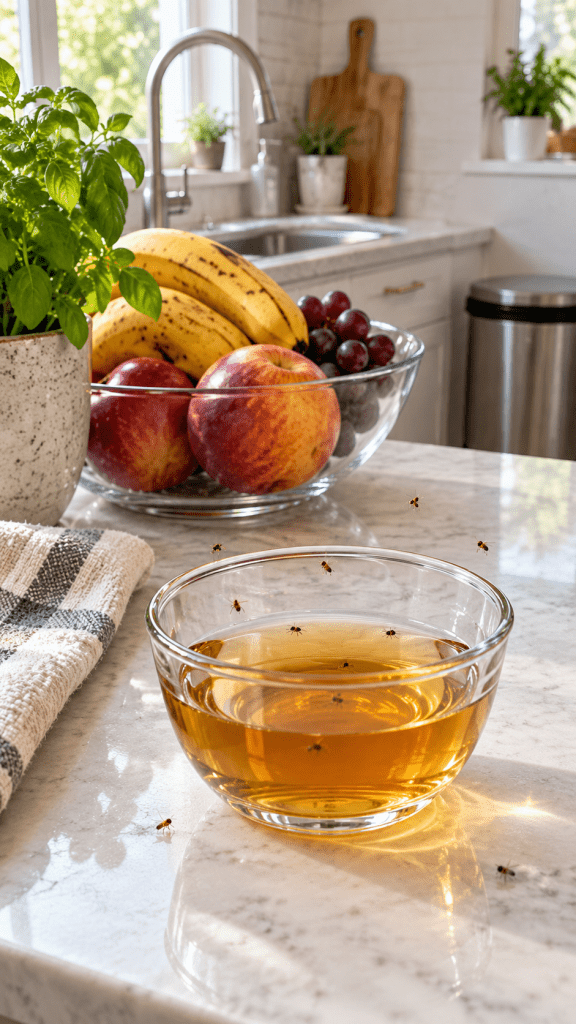
How to Make a Fruit Fly Vinegar Trap
Pour a small amount of apple cider vinegar into a shallow glass or bowl.
You do not need to fill the container. A small layer at the bottom is usually enough.
Add a drop or two of liquid dish soap.
The soap changes the surface tension of the liquid, making it more difficult for flies that contact the surface to remain on top.
Place the trap near the area where the flies are most active.
Good locations might include:
- near the fruit bowl
- beside the trash area
- close to recycling
- near the kitchen sink
- near a compost container
However, avoid putting the trap directly beside uncovered fresh food because the goal is to eliminate competing attractions.
Why Apple Cider Vinegar Works Well 🍎
Fruit flies naturally investigate fermentation odors because fermenting organic material can provide food and breeding opportunities.
Apple cider vinegar produces an aroma that mimics some of those signals.
That makes it useful as bait.
The trap will not solve the infestation by itself, but it can significantly reduce the number of adults while your cleaning efforts prevent additional generations from developing.
Make the Trap More Focused
Some people cover the container loosely with plastic wrap and make several tiny holes in the top.
The flies can enter through the openings but may have more difficulty leaving.
Another method is creating a small paper funnel and placing it inside a jar containing vinegar.
The narrow opening guides flies toward the bait.
Both approaches can work.
However, a simple uncovered dish with vinegar and dish soap is often sufficient when fruit flies are actively feeding in the room.
Where You Place the Trap Matters
Instead of automatically putting a trap in the center of the kitchen, watch where the flies gather.
If most activity is around the sink, place the trap nearby.
If they gather around recycling, place it close to that location.
If activity is strongest around a fruit bowl, inspect and remove the fruit first, clean the area, and then position a trap nearby.
Placement can help identify where the main attraction is located.
In fact, fruit fly behavior can function almost like a clue.
Clusters of flies repeatedly appearing in one specific part of the kitchen often indicate that something attractive is nearby.
Change the Trap Regularly
A trap that has been sitting for a long period can become dirty and less useful.
Refresh the bait when needed and wash the container before preparing a new trap.
Continue using traps while you monitor the kitchen for remaining activity.
The number of flies caught should gradually decline if the breeding source has truly been removed.
If the trap continues catching large numbers several days later, another source may still be present.
That is when the third strategy becomes particularly important.
🥉 Best 3 Deep Clean Hidden Moist Areas and Possible Breeding Zones
Sometimes the fruit bowl is gone, the trash has been washed, and vinegar traps are catching adults, yet tiny flies continue appearing.
This situation often means there is an overlooked source.
The next step is investigating areas containing moisture and organic residue.
The kitchen sink is a good place to start.
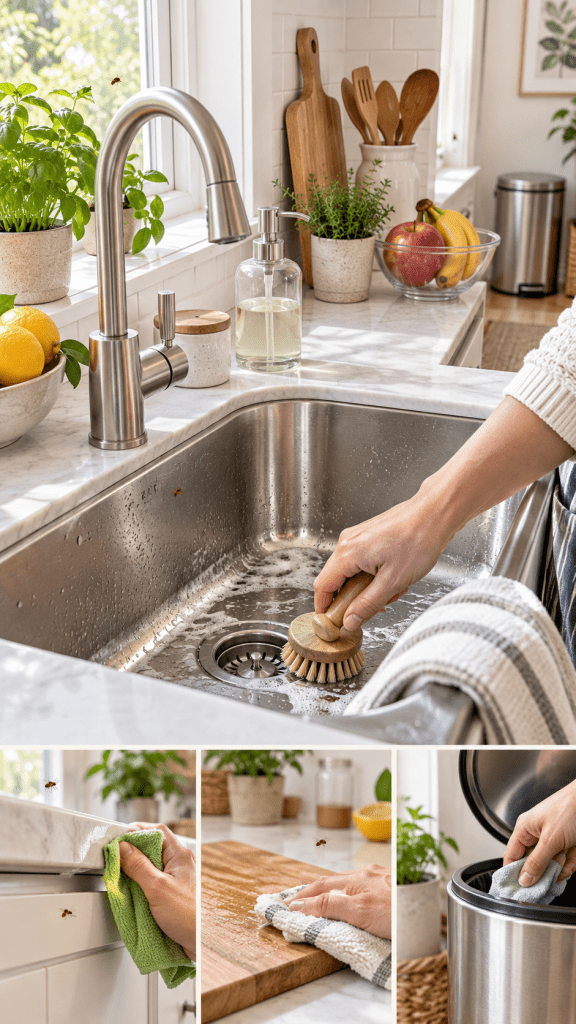
Inspect the Sink and Drain Area 🚰
Food residue can accumulate around sink strainers, garbage disposal components, drain openings, rubber seals, and nearby surfaces.
Scrub the sink thoroughly using normal household cleaning methods.
Remove strainers and clean them separately if possible.
Use a brush to clean around the drain opening where grime can collect.
Running very hot tap water can help rinse away loosened residue, but physical cleaning is often more important than simply pouring liquids into the drain.
If the drain smells unpleasant or has visible organic buildup, it deserves additional attention.
Fruit Flies Versus Drain Flies
It is important to recognize that every tiny flying insect around a sink is not necessarily a fruit fly.
Drain flies are another common household pest.
Fruit flies usually have compact bodies and often hover around fruit, beverages, food waste, and fermentation sources.
Drain flies tend to look fuzzier or moth-like and commonly rest on walls close to drains.
Another group called fungus gnats may appear around indoor plants.
They are usually darker, more mosquito-like, and closely associated with damp potting soil.
Knowing which insect you are dealing with matters because the source may be completely different.
A vinegar trap may catch some fruit flies, but it will not fix a fungus gnat problem developing in plant soil.
Check Garbage Disposal Areas
If your kitchen has a garbage disposal, food residue may remain inside areas that are not visible from above.
Follow the manufacturer’s cleaning instructions for the disposal.
Never put your hands inside the unit.
The goal is to remove accumulated organic material safely rather than simply covering the odor with fragrance.
A disposal that looks clean from the sink opening can still contain food film farther inside.
Inspect the Dishwasher
Dishwashers are another potential overlooked area.
Check the filter according to the appliance manufacturer’s instructions.
Food debris may accumulate there.
Also inspect the door seal and edges for residue.
Cleaning the filter regularly is beneficial for the dishwasher itself and reduces another potential source of organic material.
Look Behind the Refrigerator
A piece of fruit may roll underneath a refrigerator without anyone noticing.
Small onions, grapes, berries, cherry tomatoes, and food scraps can disappear into narrow spaces.
Even a forgotten potato or onion stored in a cabinet can eventually become a strong attraction.
Inspect difficult-to-see areas with a flashlight.
Also check storage baskets and pantry shelves.
Examine Pantry Produce
Potatoes, onions, garlic, and similar foods are often stored away from the main fruit bowl.
Because they may remain in cabinets or baskets for weeks, one spoiled item can easily go unnoticed.
Remove everything from the storage area periodically.
Inspect each piece.
Discard anything soft, leaking, moldy, or rotten.
Wash the container before returning good produce.
Check Coffee and Beverage Areas ☕
Coffee stations can contain several possible attractions.
Sweet syrups, milk residue, juice, wine, cocktail ingredients, kombucha, and spilled beverages can all leave sugary or fermenting residue.
Clean underneath bottles and containers.
Wipe the exterior of syrup dispensers.
Wash drip trays and removable components according to manufacturer instructions.
Even a tiny spill underneath a coffee machine may be difficult to notice.
A Simple Daily Routine to Break the Fruit Fly Cycle
Fruit fly control becomes easier when small cleaning habits are repeated for several days.
The goal is to make the kitchen consistently hostile to reproduction.
In the morning, inspect produce and empty any trap that needs refreshing.
During the day, wipe spills promptly.
After preparing food, remove fruit peels and vegetable scraps rather than leaving them on the counter.
In the evening, wash dishes, wipe work surfaces, clean the sink, and take out food waste when necessary.
This routine does not need to be complicated.
Consistency matters more than aggressive cleaning products.
Fruit flies thrive when small amounts of food remain available continuously.
Removing those opportunities repeatedly interrupts the cycle.
How Long Does It Take to Get Rid of Fruit Flies
People naturally want fruit flies to disappear immediately.
Traps may begin catching adults quickly, but eliminating the entire population usually requires patience because immature stages may already be developing somewhere in the home.
You may notice a major reduction after removing breeding sources and setting traps.
However, occasional adults may continue appearing for several days.
That does not automatically mean the strategy failed.
The most useful sign is the overall trend.
You should see fewer flies as time passes.
If the number remains high or begins increasing again, continue searching for another breeding source.
Persistent activity is usually a reason to investigate rather than simply add more traps.
Common Fruit Fly Mistakes That Make the Problem Last Longer
One common mistake is focusing only on the flies.
Swatting adults may provide momentary satisfaction, but it does nothing to remove eggs or larvae developing elsewhere.
Another mistake is leaving one attractive food source available while trying to trap the flies.
For example, placing vinegar next to a bowl of overripe peaches creates competition. The fruit may be even more attractive than the trap.
Remove the fruit first.
Cleaning only visible surfaces is another mistake.
Fruit fly sources are often found in inconvenient locations such as underneath appliances, inside recycling containers, around sink components, or behind storage bins.
A fourth mistake is assuming every tiny flying insect is a fruit fly.
If several weeks of fruit fly control make no difference, identification deserves another look.
The insects could be fungus gnats, drain flies, or another small household fly requiring a different approach.
Can You Prevent Fruit Flies Before They Become a Problem
Prevention is much easier than dealing with a large population.
Begin with produce management.
Buy quantities that can realistically be used before they become overly ripe.
Refrigerate suitable fruits once they reach the desired ripeness.
Inspect produce regularly rather than waiting until something begins leaking.
Clean food storage containers and fruit bowls routinely.
Another useful habit is rinsing beverage containers before recycling them.
This removes sugary and fermented residue that could attract insects.
Food scraps should be contained and removed frequently, especially during warm weather.
Keep sink and drain areas clean rather than waiting until odors develop.
Indoor compost containers should have secure lids and should be emptied frequently.
These small habits reduce the number of places where fruit flies can establish themselves.
What About Fruit Flies Around Indoor Plants
Tiny insects around plants are frequently mistaken for fruit flies.
If the insects consistently fly out of the soil when a plant is watered or disturbed, fungus gnats may be more likely.
Fungus gnats reproduce in moist organic potting soil.
Overwatering often contributes to the problem.
Allowing the upper portion of the soil to dry appropriately between waterings can help depending on the plant’s needs.
Yellow sticky traps are also commonly used to monitor and reduce adult fungus gnats.
However, plant care should always be adjusted to the requirements of the specific plant.
A tropical moisture-loving plant and a drought-tolerant succulent should not be treated identically.
Correct identification prevents wasted effort.
What About Fruit Flies in the Bathroom
Fruit flies can occasionally wander into bathrooms, but repeated activity there may suggest another source.
Inspect drains, trash containers, wet cleaning materials, and any organic residue.
If the flies appear fuzzy and gather around drain openings, drain flies are worth considering.
Bathrooms contain moisture but usually lack the abundant fermenting fruit material that attracts true fruit flies.
Therefore, heavy fly activity in a bathroom deserves investigation rather than automatic treatment with fruit fly bait.
Should You Use Insect Spray for Fruit Flies
A household insecticide may kill exposed adult insects when used according to its label, but it does not automatically eliminate the breeding source.
That makes sprays less important than sanitation for many ordinary household fruit fly problems.
In food preparation areas, unnecessary pesticide use may also be undesirable.
Removing attractive material, cleaning thoroughly, storing produce correctly, and trapping adults is often a more practical first approach.
If a pesticide product is used, always follow the label instructions carefully.
Never improvise mixtures of household chemicals.
More product is not automatically more effective.
Natural Fruit Fly Control Starts With Sanitation 🌿
The word natural is often associated with vinegar traps, essential oils, herbs, and homemade mixtures.
However, the most powerful nonchemical strategy is much simpler.
Sanitation.
A perfectly clean vinegar trap sitting beside rotting fruit cannot compensate for the continued breeding source.
On the other hand, removing the breeding material can sometimes cause the population to collapse even before many traps are used.
This is why cleaning deserves the 🥇 position among the Best 3 strategies.
The trap supports the process.
It does not replace it.
Why Fruit Flies Keep Coming Back
Recurring fruit flies usually indicate one of three situations.
First, a breeding source was overlooked.
Second, new produce continually introduces attractive material into the kitchen.
Third, the insects may have been misidentified.
If the problem repeatedly returns, conduct a room-by-room inspection rather than simply replacing the vinegar trap.
Look for patterns.
Where do the flies gather first?
What food is nearby?
Is there moisture?
Are there empty bottles?
Is there a compost container?
Are onions or potatoes stored nearby?
Is there a plant?
The location of the insects often provides important clues.
Fruit Flies How to Get Rid of Them Without Making the Kitchen Complicated
For most households, controlling fruit flies does not require dozens of homemade recipes.
Keep the process simple.
Start by removing ripe or damaged produce.
Wash the fruit bowl.
Empty and clean the garbage and recycling containers.
Wipe spills.
Inspect food storage areas.
Then place a vinegar trap where adult flies are most active.
Finally, investigate drains, appliances, beverage stations, pantry storage, and other hidden areas if activity continues.
The strategy works because each step addresses a different part of the problem.
Cleaning removes breeding opportunities.
Traps remove adults.
Inspection reveals anything the first cleaning missed.
Best 3 Fruit Fly Strategy for a Cleaner Kitchen
When fruit flies suddenly begin gathering around your kitchen, it can feel as though they appeared from nowhere. In reality, they are responding to something in the environment that provides food, moisture, or a place to reproduce.
That is encouraging because it means the problem usually has a discoverable source.
The 🥇 number one strategy is eliminating food and breeding material. Remove overripe produce, clean garbage containers, rinse recycling, wipe spills, and inspect hidden food storage areas.
The 🥈 second strategy is using a simple vinegar trap to reduce the adult population after competing food sources have been removed.
The 🥉 third strategy is investigating hidden moisture and organic buildup, including sink components, drains, appliance areas, pantry produce, recycling containers, and other easily overlooked locations.
These methods are most effective when used together rather than separately.
A trap catches what is flying today.
Cleaning prevents what might emerge tomorrow.
And careful inspection helps reveal why the flies appeared in the first place.
When searching for fruit flies how to get rid of them effectively, remember that the fastest-looking solution is not always the most important one. The real goal is not simply catching dozens of adult flies. It is removing the conditions that allow another generation to appear.
Keep food properly stored, maintain clean waste and recycling areas, inspect produce regularly, and respond quickly when the first few flies appear. 🍑
With those habits in place, the kitchen becomes much less attractive to fruit flies—and a small nuisance is far less likely to turn into a persistent infestation.