The best Garden Planting Ideas do much more than fill empty soil with flowers. Thoughtful planting can completely transform an outdoor space, making even a simple backyard feel layered, established, peaceful, and professionally designed. The secret is rarely about buying the most expensive plants. Instead, beautiful gardens usually depend on choosing the right plant combinations, repeating colors and textures, creating intentional layers, and planning how the garden will look throughout the changing seasons.
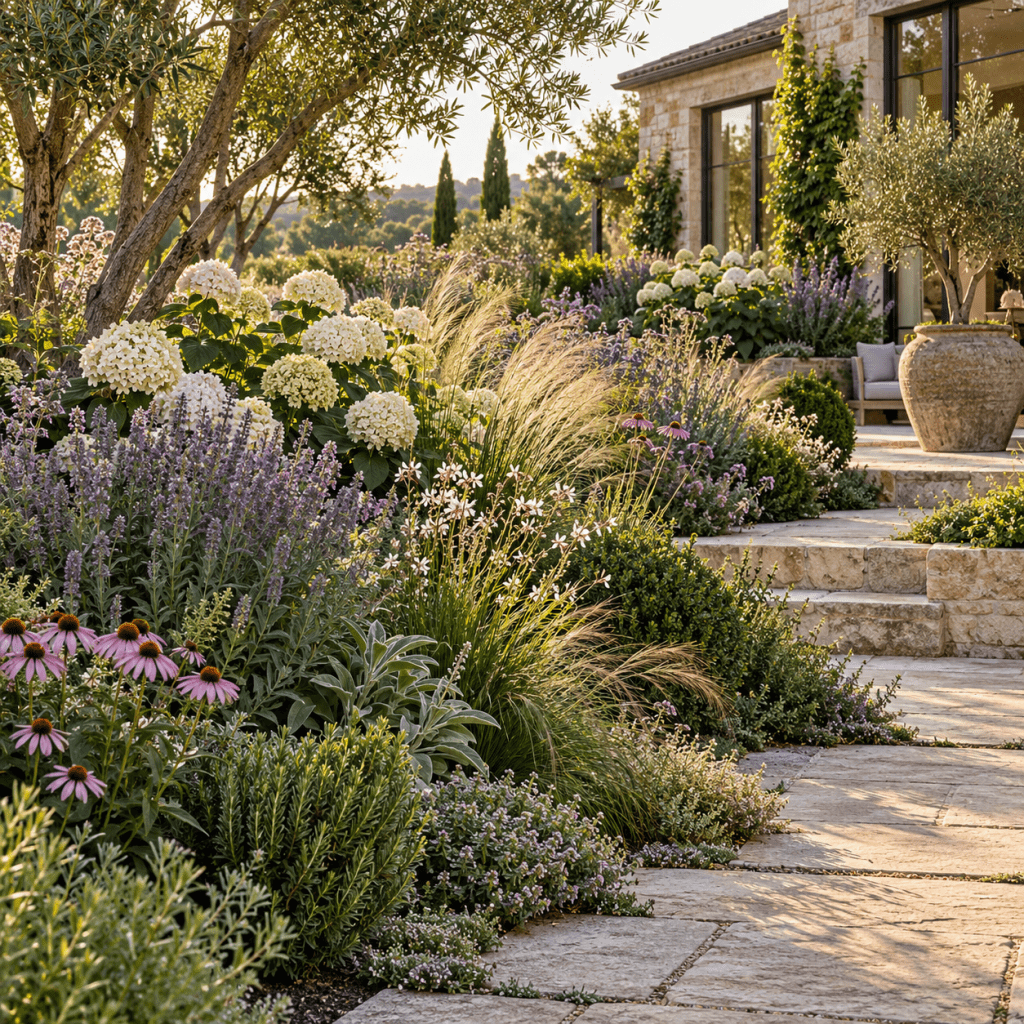
A well-planted garden should feel visually interesting without becoming chaotic. Some plants provide structure, others soften pathways, while flowering varieties introduce seasonal color. Grasses add movement, shrubs provide volume, and groundcovers help connect everything into one cohesive landscape. 🌿 When these elements are carefully combined, the result can feel remarkably sophisticated.
The most successful planting designs also consider how people actually experience the garden. A planting bed viewed from a kitchen window may need a different composition than one positioned beside a walkway. A small courtyard requires efficient layering, while a larger backyard can support broad drifts of plants and dramatic focal points.
Instead of filling the garden randomly, it is often more effective to build the landscape around one clear planting concept. The following Top 3 Garden Planting Ideas offer three distinctive approaches that can create a lush, attractive, and highly intentional outdoor environment.
Why Thoughtful Garden Planting Ideas Make Such a Big Difference
Planting is one of the strongest visual tools in landscape design. Hardscape materials such as stone, gravel, patios, fences, and pathways create structure, but plants bring the landscape to life. They introduce texture, movement, fragrance, seasonal change, and natural softness.
A garden with carefully planned planting often feels larger because different layers guide the eye through the space. Taller plants can create a background, medium-height plants form the main visual body, and low-growing varieties soften the edges. This layered effect creates depth that makes even relatively small planting beds appear richer.
Color also plays an important role. Using every flower color available can sometimes make a garden feel visually fragmented. A more controlled palette often looks more elegant. For example, soft white flowers mixed with lavender, green foliage, and ornamental grasses can create a calm contemporary garden, while burgundy foliage, deep pink flowers, and bronze grasses can produce a warmer and more dramatic atmosphere.
Texture is equally important. Large leaves beside fine grasses create contrast. Rounded shrubs next to airy flowering perennials prevent the planting from appearing flat. 🌾 Combining glossy, matte, feathery, upright, and cascading foliage can often provide more visual interest than flower color alone.
A thoughtful planting plan also helps reduce maintenance. When plants are chosen according to their mature size, sunlight requirements, soil conditions, and watering needs, they are more likely to thrive without constant intervention.
Quick Comparison of the Top 3 Garden Planting Ideas
Different gardens require different planting strategies. Some homeowners prefer a lush layered landscape, while others want something naturalistic or productive.
| Garden Planting Idea | Best For | Main Visual Effect | Maintenance Level | Key Plant Types |
|---|---|---|---|---|
| 🥇 Layered Perennial Garden | Front yards, borders, backyard beds | Lush polished and sophisticated | Medium | Shrubs, perennials, grasses, groundcovers |
| 🥈 Naturalistic Meadow Garden | Larger yards, relaxed landscapes | Soft flowing and organic | Low to medium | Ornamental grasses, native flowers, airy perennials |
| 🥉 Edible Ornamental Garden | Small yards, courtyards, family gardens | Beautiful productive and practical | Medium | Herbs, vegetables, flowers, fruiting plants |
Each idea can be adjusted according to local climate, available sunlight, garden size, and preferred color palette.
🥇 Top 1 Layered Perennial Garden Planting Ideas for a Lush Designer Look
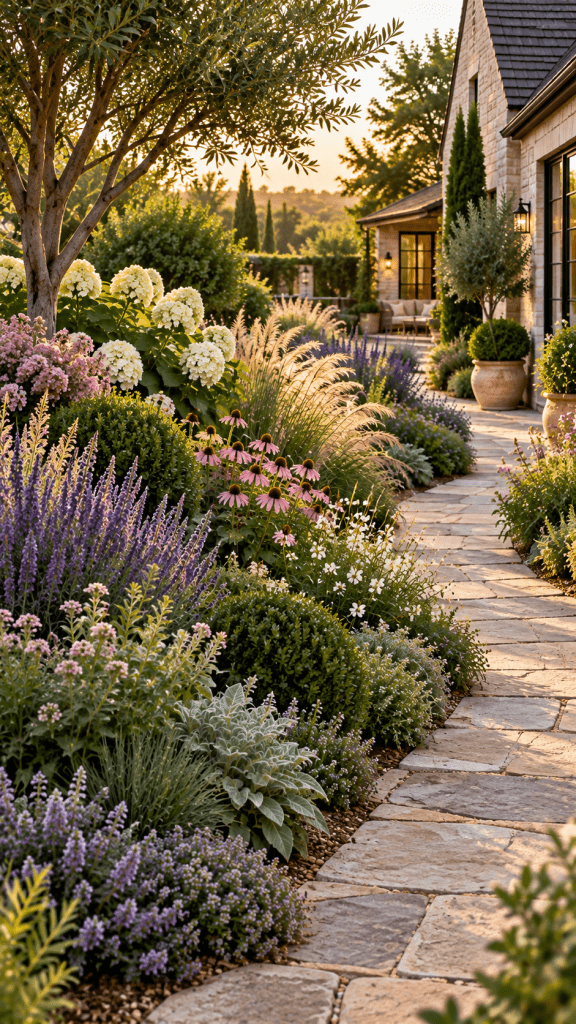
One of the most reliable ways to make a garden appear professionally designed is to create a layered perennial planting scheme. Instead of arranging plants individually with large empty spaces between them, this approach treats the garden as a composition.
The goal is to create several heights and textures that gradually transition from the back of the planting bed toward the front. Taller structural plants create the backdrop, medium-height flowering plants provide the main color, ornamental grasses introduce movement, and low-growing plants soften the border.
This style works beautifully around patios, along fences, beside walkways, around terraces, or across front-yard planting beds. 🌿 It can also be adapted to both traditional and contemporary architecture.
Garden Planting Ideas With Strong Structural Plants
Every sophisticated planting design benefits from a few plants that provide structure. These plants form the visual framework of the garden even when seasonal flowers are not blooming.
Evergreen shrubs are especially useful because they maintain shape throughout the year. Depending on climate, options may include boxwood, yew, pittosporum, dwarf conifers, compact holly, or evergreen viburnum varieties.
Small ornamental trees can also become elegant anchors. Japanese maple, multi-stem birch, crepe myrtle, serviceberry, olive trees in suitable climates, or small flowering trees can give planting beds height without overwhelming the landscape.
The key is restraint. Too many different structural plants can make the landscape feel disconnected. Repeating two or three varieties throughout the garden usually creates a stronger visual rhythm.
For example, a planting bed could repeat rounded evergreen shrubs every few feet, while one sculptural multi-stem tree becomes the main focal point. Around these structural plants, softer flowering varieties can be layered.
This combination creates a garden that still looks intentional during quieter seasons.
Add Flowering Perennials in Generous Groups
A common planting mistake is buying one plant of many different varieties. Although this creates diversity, it can also make the garden look visually busy.
Professional-looking gardens often use plants in repeated groups or drifts.
Instead of planting one lavender, one salvia, one coneflower, and one catmint, consider planting groups of three, five, or seven. These larger clusters create stronger blocks of color and allow individual varieties to make a visual impact.
🌸 Popular perennial combinations might include:
- lavender with white roses
- catmint with ornamental grasses
- echinacea with rudbeckia
- salvia with soft silver foliage
- hydrangeas with shade-tolerant groundcovers
- geraniums with structural evergreen shrubs
- gaura with airy grasses
The exact varieties should always suit the climate and light conditions of the garden.
Repetition is particularly important. If one cluster of lavender appears beside the patio, repeating lavender farther down the garden creates visual continuity.
Use Ornamental Grasses to Add Movement
Ornamental grasses have become an important element in modern landscape design because they introduce movement and texture without requiring dramatic flowers.
Their narrow foliage contrasts beautifully with broad-leaf plants and rounded shrubs. When wind moves through the grass, the entire planting bed becomes more dynamic.
🌾 Popular options may include fountain grass, switchgrass, feather reed grass, miscanthus, blue fescue, sedges, or native grass varieties depending on local growing conditions.
Tall grasses work beautifully toward the middle or back of large borders, while compact grasses can be used near pathways.
One effective combination is to position flowering perennials between loose groups of ornamental grasses. The flowers provide seasonal color while the grasses maintain structure before and after flowering periods.
During autumn, many grasses also develop warm gold, bronze, or copper tones, extending the visual interest of the garden.
Soften the Front Edge With Groundcovers
The front edge of a planting bed deserves just as much attention as the taller plants behind it.
Bare soil along a garden border can make a landscape look unfinished. Low-growing groundcovers create a soft transition between planting beds and pathways.
Depending on climate and light levels, possibilities might include creeping thyme, sedum, ajuga, low geraniums, pachysandra, sweet woodruff, creeping Jenny, lamb’s ear, or compact ornamental grasses.
Groundcovers can also help suppress weeds by reducing exposed soil.
For pathways, select plants that gently spill over the edge without completely blocking the route. This creates the impression that the garden has matured naturally over time.
Important Note: Always check the mature height and spread of plants before creating a layered border. Young nursery plants can look small initially, but overcrowding them may eventually reduce airflow, increase disease problems, and create unnecessary maintenance.
Create a Restrained Garden Color Palette
Color is where this planting concept can become particularly elegant.
Instead of choosing every available flower color, select a limited palette and repeat it throughout the landscape.
For a sophisticated neutral garden, consider white flowers, silver foliage, pale lavender, and multiple shades of green.
For a romantic garden, combine blush pink, mauve, soft purple, cream, and burgundy foliage.
For a warm autumn-inspired garden, consider terracotta flowers, deep burgundy leaves, golden grasses, muted orange tones, and dark green foliage.
🎨 The foliage should always remain part of the palette. Flowers may only bloom for several weeks, while leaves create color for months.
That is why combining green, silver, chartreuse, dark purple, bronze, and variegated foliage can keep a garden visually attractive even between flowering seasons.
Why This Is the Best Garden Planting Idea for a Polished Landscape
Layered planting works because it combines structure and softness.
The shrubs keep the garden organized. Perennials introduce color. Grasses create movement. Groundcovers connect the design.
The result feels rich without relying on excessive decoration.
It is particularly effective for homeowners who want their garden to look mature, sophisticated, and photogenic throughout much of the year. 🥇
🥈 Top 2 Naturalistic Meadow Garden Planting Ideas for a Relaxed Landscape
The second of these Garden Planting Ideas takes a very different approach.
Instead of creating a highly controlled landscape with clearly separated plants, a naturalistic meadow garden allows different varieties to intermingle. The effect feels softer, more relaxed, and more connected to the surrounding environment.
This style has become especially popular in contemporary garden design because it can create a beautiful landscape while supporting pollinators and reducing the need for formal pruning.
The goal is not to create an abandoned garden. Successful meadow-style planting is carefully planned even when it appears spontaneous.
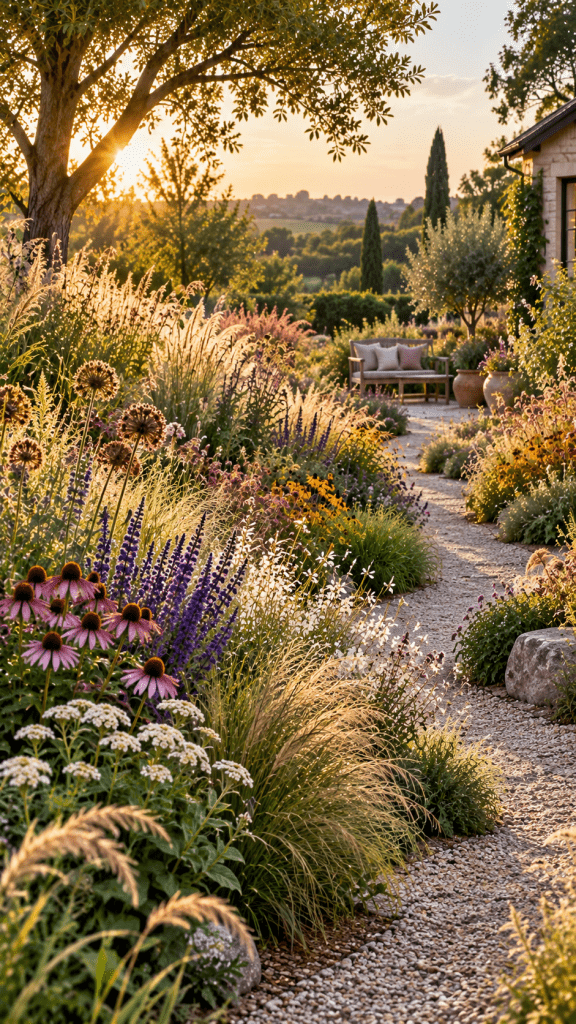
Start With Ornamental Grasses as the Foundation
Grasses are often the visual backbone of naturalistic planting.
They provide repeated vertical forms and continue looking attractive even when flowering plants move through different seasonal stages.
Tall switchgrass, feather reed grass, little bluestem, prairie dropseed, fountain grasses, and locally appropriate native grasses can all provide structure.
Instead of planting them in perfectly straight rows, distribute them through the planting area in loose groups.
This creates repetition without making the landscape feel rigid.
When sunlight passes through grass seed heads during late afternoon, the entire garden can develop a soft glowing quality. ✨ This makes meadow-style gardens particularly beautiful during late summer and autumn.
Mix Flowers With Different Shapes
Flower shape can be more important than flower color in naturalistic gardens.
Using only rounded flowers may create a repetitive appearance. Instead, combine several flower forms.
For example:
🌼 Daisy-like flowers such as echinacea and rudbeckia create recognizable circular forms.
🌿 Vertical flowers such as salvia and veronica introduce upright accents.
☁️ Airy flowers such as gaura create softness and movement.
🌸 Rounded clusters such as allium or certain yarrow varieties create strong focal shapes.
By combining these forms, the planting remains interesting even when several varieties share similar colors.
A beautiful palette might include dusty purple, pale pink, warm white, muted yellow, and soft green grasses.
Another option is to create a warmer prairie-inspired combination using rusty orange, golden yellow, burgundy, and bronze foliage.
Choose Native Plants Where Possible
Native planting can be especially valuable in meadow-style gardens.
Plants adapted to local conditions are often more capable of handling local temperatures, rainfall patterns, and soil conditions once established.
They may also provide food and habitat for local insects, butterflies, birds, and other wildlife. 🦋
This does not mean every plant in the garden must be native. However, using native species as the foundation can create a more resilient planting scheme.
Different regions have completely different native plant communities, so local nurseries, botanical gardens, extension services, or horticultural organizations can be useful when selecting appropriate species.
The overall design can still feel highly refined by repeating specific native plants throughout the landscape.
Create Winding Paths Through the Planting
A meadow garden becomes much more engaging when visitors can move through it.
Instead of viewing all plants from the edge, consider creating a narrow gravel, stepping-stone, mulch, or mown-grass pathway.
A gently curved path encourages people to explore the landscape.
Plants can slightly overlap the pathway edges, creating a sense of immersion. However, varieties with thorns or irritating foliage should be positioned farther away from walking routes.
A small bench placed at the end of the path can create a destination.
This simple feature transforms a planting bed into an experience.
Let Seed Heads Become Part of the Design
Traditional gardening often encourages removing flowers immediately after they fade.
Naturalistic gardening takes a different perspective.
Many dried seed heads have beautiful architectural forms. Coneflowers, alliums, grasses, sedums, and numerous prairie plants can remain visually attractive long after flowering.
Leaving selected seed heads through autumn and winter adds seasonal texture.
They may also provide seeds for birds.
❄️ In colder climates, frost settling on dried grasses and flower heads can create one of the most beautiful moments in the garden.
Instead of cutting the entire garden down immediately, consider leaving attractive stems until late winter or early spring where appropriate.
This extends the garden’s visual season dramatically.
Use Controlled Repetition to Prevent Chaos
A meadow garden may appear spontaneous, but repetition keeps it visually coherent.
Choose several dominant plants and repeat them throughout the landscape.
For example, purple coneflowers might appear in five different sections of the garden. A particular ornamental grass may weave through the entire planting bed.
This repetition connects different areas visually.
Without repetition, the garden can resemble a collection of unrelated plants.
Another useful technique is limiting the number of dominant flower colors. Three or four main colors usually create a calmer composition than using every available shade.
Why Naturalistic Garden Planting Ideas Feel So Peaceful
Naturalistic gardens appeal because they celebrate movement and seasonal change.
They do not need to look exactly the same throughout the year.
Spring may begin with fresh green growth. Summer can bring flowering perennials. Autumn introduces warm grasses and seed heads. Winter reveals the architecture of dried stems.
This seasonal evolution creates a landscape that feels alive.
🥈 For homeowners who prefer gardens that feel relaxed, ecological, and slightly wild while still being intentionally designed, naturalistic meadow planting can be an excellent choice.
🥉 Top 3 Edible Garden Planting Ideas That Look Decorative Too
Vegetable gardens do not need to look separate from ornamental landscapes.
One of the most interesting modern Garden Planting Ideas is combining attractive edible plants with flowers, herbs, and decorative foliage.
Sometimes called edible landscaping or potager gardening, this style allows the garden to become both beautiful and productive.
Instead of hiding vegetables behind the house, carefully selected edible plants can become part of the main landscape.
🍅 Tomatoes, herbs, lettuce, strawberries, peppers, kale, and fruiting shrubs can all contribute color and texture.
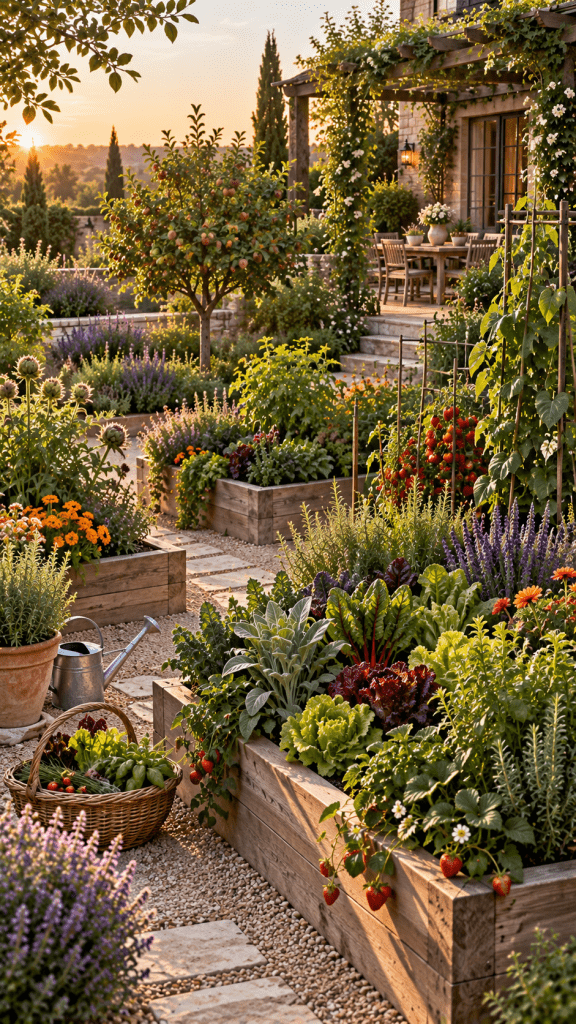
Combine Herbs With Flowering Plants
Many culinary herbs are naturally attractive.
Rosemary provides evergreen structure in suitable climates. Sage introduces soft gray-green foliage. Thyme forms low aromatic carpets. Basil provides bright green leaves. Chives produce attractive purple flowers.
These plants can be mixed with ornamental flowers.
For example, lavender, rosemary, thyme, and salvia can create a Mediterranean-style planting bed.
Another combination might include parsley, chives, calendula, lettuce, and compact flowers around the edge of a raised bed.
🌿 Mixing herbs with flowers can make vegetable areas appear much more integrated with the rest of the landscape.
Turn Raised Beds Into Landscape Features
Raised beds are practical, but they can also become architectural elements.
Instead of treating them as purely functional containers, choose materials that complement the house and garden.
Natural wood beds create warmth.
Brick provides a traditional appearance.
Dark metal can suit contemporary gardens.
Natural stone creates a timeless aesthetic.
Repeating the same material across several beds helps create visual consistency.
The spaces between beds are equally important. Gravel, stone pavers, brick pathways, or compacted surfaces can make the entire area look organized and intentional.
For a polished layout, arrange several beds around a central feature such as a large container, small ornamental tree, fountain, birdbath, or decorative trellis.
Use Vertical Planting to Save Space
Small gardens can become highly productive by growing upward.
Trellises allow climbing beans, cucumbers, peas, and some flowering vines to use vertical space instead of spreading across the ground.
Espalier fruit trees can also create beautiful living walls in suitable climates.
A narrow backyard could feature a row of raised beds along one side and climbing plants against a fence behind them.
This creates multiple planting layers without using much floor space.
Vertical structures also introduce height, which makes vegetable gardens feel more architectural.
🪴 Decorative supports made from wood, black metal, bamboo, or weathered steel can become part of the visual style.
Mix Edible Plants Based on Foliage Color
Flowers are not the only source of garden color.
Many edible plants have surprisingly decorative foliage.
Purple basil creates rich burgundy accents.
Red lettuce can introduce deep ruby tones.
Swiss chard may feature bright yellow, white, pink, or red stems.
Kale produces large sculptural leaves.
Artichokes can provide dramatic silver-green foliage in suitable climates.
Strawberry plants form attractive low-growing groundcover.
By treating edible plants as design materials, a vegetable garden can look just as visually interesting as a traditional ornamental border.
For example, a raised bed could combine purple basil, green lettuce, red-stemmed Swiss chard, marigolds, and trailing thyme.
The contrast of foliage creates an attractive composition even before harvesting begins.
Include Flowers for Color and Pollinators
Flowers can make edible gardens dramatically more attractive.
Calendula, nasturtium, marigolds, cosmos, zinnias, lavender, borage, and other climate-appropriate flowers can provide color among herbs and vegetables.
Many flowering plants can also attract pollinators.
🐝 Positioning flowers near vegetable crops creates visual variety while turning the edible garden into a lively ecosystem.
A useful design technique is repeating one or two flower varieties through several beds.
Instead of filling each raised bed with completely different flowers, repetition creates a stronger sense of design.
For example, the same soft orange calendula could appear at the corners of every raised bed.
Add Small Fruit Trees and Berry Plants
Edible landscaping becomes even more exciting when vertical layers are introduced.
Small fruit trees can provide height and shade.
Berry shrubs add medium-height structure.
Herbs and vegetables fill the lower layers.
Groundcovers such as strawberries can occupy the lowest level.
This creates an edible version of layered ornamental planting.
Depending on climate, suitable fruiting plants might include blueberries, raspberries, currants, strawberries, dwarf citrus, figs, apples, pears, peaches, or other regionally appropriate fruits.
Fruit trees can also be trained against walls or fences where space is limited.
The result can feel like a productive garden retreat rather than a traditional vegetable plot.
Why Edible Garden Planting Ideas Are Perfect for Smaller Homes
Space is valuable in smaller backyards.
Every planting area can serve more than one purpose.
An edible landscape provides flowers, greenery, herbs, vegetables, fruit, and visual beauty within the same space.
🥉 This makes it particularly appealing for homeowners who enjoy cooking, gardening, sustainable living, or simply growing some of their own food.
Even a small courtyard can contain a few beautiful containers filled with rosemary, thyme, tomatoes, strawberries, and seasonal flowers.
The key is treating the edible garden as part of the landscape rather than as a separate utility area.
How to Choose the Best Garden Planting Ideas for Your Space
All three planting approaches can create beautiful landscapes, but the best choice depends on the conditions of the garden.
Begin with sunlight.
A garden receiving six or more hours of direct sunlight can usually support a wider range of flowering plants, grasses, herbs, and vegetables.
Shadier spaces require different plant combinations. Hostas, ferns, heuchera, shade-tolerant groundcovers, hydrangeas, and other regionally appropriate shade plants may become more important.
Soil conditions should also influence plant selection.
Some plants thrive in moisture-retentive soil, while others prefer excellent drainage. Attempting to force plants into unsuitable conditions often creates unnecessary maintenance.
It is usually easier to choose plants that naturally suit the site.
Consider the Size of the Garden
Large gardens can support broad planting drifts, meadow landscapes, and multiple ornamental trees.
Small gardens benefit from more disciplined plant selection.
In compact spaces, repeating fewer varieties often looks more sophisticated than using dozens of different plants.
Vertical layers are particularly valuable.
A small ornamental tree can create height.
Medium shrubs provide structure.
Perennials add flowers.
Groundcovers fill gaps.
Even a narrow border can contain several visual layers when plants are carefully chosen.
Match Planting Style to the Architecture
The house should influence the planting style.
Modern architecture often looks beautiful with architectural grasses, sculptural shrubs, limited flower colors, and repeated plant forms.
Traditional cottages pair naturally with roses, hydrangeas, lavender, foxgloves, flowering perennials, and informal pathways.
Mediterranean-inspired homes may suit olive trees, rosemary, lavender, thyme, ornamental grasses, and drought-tolerant planting.
Rustic houses can support naturalistic meadows and loose perennial borders.
Matching the landscape to the architecture helps the property feel visually unified.
Garden Planting Ideas for Year Round Interest
A successful garden should not depend entirely on one flowering season.
Planning for year-round interest makes the landscape much more rewarding.
🌱 Spring can feature bulbs, flowering trees, emerging foliage, and early perennials.
🌸 Summer can bring abundant flowers, herbs, lush foliage, and ornamental grasses.
🍂 Autumn can showcase seed heads, warm grasses, berries, burgundy foliage, and changing leaves.
❄️ Winter can rely on evergreen shrubs, tree bark, dried grasses, sculptural branches, and strong garden structures.
When choosing plants, consider what each one contributes during different seasons.
A flowering shrub may provide spring blossoms but little winter interest.
An ornamental grass may appear modest in spring but become spectacular during autumn.
An evergreen may rarely produce dramatic flowers but provide essential structure during winter.
Combining plants with different seasonal strengths creates a more balanced landscape.
Easy Garden Planting Ideas for Creating Visual Depth
Depth is one of the easiest ways to make a garden look more professionally designed.
Start with taller plants toward the rear of deep borders.
Use medium-height shrubs and perennials through the middle.
Finish with lower plants along the front.
However, avoid arranging everything into perfectly straight height bands.
Allow some taller plants to move slightly forward and some shorter plants to appear farther back.
This irregular layering makes the landscape feel more natural.
Another technique involves partially obscuring certain areas.
A curved pathway disappearing behind tall grasses makes the garden feel larger because visitors cannot see everything at once.
A small tree positioned slightly off-center can create a similar effect.
Strategic planting encourages the eye to move through the garden rather than understanding the entire space immediately.
Common Garden Planting Mistakes to Avoid
Beautiful planting is often more about avoiding a few common mistakes than following complicated design rules.
One major mistake is planting too many unrelated varieties.
Garden centers make it tempting to buy one of everything, especially when plants are blooming. However, repeating fewer varieties usually produces a stronger design.
Another mistake is ignoring mature plant size.
A shrub that looks tiny in a nursery container may eventually become several feet wide.
Crowding plants too tightly can create maintenance problems later.
Poor placement according to light is another frequent issue.
Sun-loving plants may become weak in deep shade, while shade plants can burn in intense sunlight.
🌞 Always select plants according to the conditions where they will actually grow.
Finally, avoid designing only for flowers.
Leaves, bark, branches, grasses, fruit, seed heads, and plant shapes all contribute to the landscape.
The best gardens remain interesting even when very few flowers are open.
Simple Formula for Beautiful Garden Planting Ideas
A useful planting formula can make garden planning much easier.
Begin with one structural layer using shrubs or small trees.
Add one dominant flowering layer using repeated perennials.
Introduce one movement layer using grasses or airy plants.
Finish with one groundcover layer that connects the planting to pathways and edges.
Then choose a limited color palette.
For example:
🌿 Dark green evergreen shrubs
🌸 Soft white flowering perennials
💜 Lavender accents
🌾 Golden ornamental grasses
🤍 Silver-green groundcovers
This simple combination already provides structure, color, texture, and seasonal movement.
The exact plants can change according to climate, but the design principle remains the same.
Final Thoughts on the Best Garden Planting Ideas
The most beautiful gardens rarely depend on having the largest property or the biggest plant budget. Strong planting design comes from thoughtful combinations, repetition, layering, seasonal planning, and selecting plants suited to their environment.
Among these Top 3 Garden Planting Ideas, the layered perennial garden is ideal for creating a sophisticated designer appearance. 🥇 It combines structural shrubs, flowering perennials, ornamental grasses, and groundcovers into a rich landscape that looks polished throughout the seasons.
The naturalistic meadow garden offers something softer. 🥈 By combining grasses, native plants, flowers, seed heads, and winding pathways, it creates a landscape that feels peaceful, dynamic, and connected to nature.
The edible ornamental garden adds another dimension. 🥉 Herbs, vegetables, fruiting plants, flowers, and beautiful foliage can create an outdoor space that is decorative and productive at the same time.
Whichever approach is chosen, repetition remains one of the most valuable design principles. A garden usually looks more intentional when several beautiful plants are repeated rather than when dozens of unrelated varieties compete for attention.
Layering is equally important. Trees and shrubs create structure, perennials add color, grasses introduce movement, and low plants soften the ground.
Most importantly, successful planting should evolve throughout the year. Spring flowers, summer foliage, autumn grasses, winter branches, evergreen structure, fruit, berries, and seed heads can all contribute something different.
With careful planning, these Garden Planting Ideas can transform an ordinary outdoor area into a lush, welcoming landscape that feels established, balanced, and far more expensive than it actually is. 🌿✨