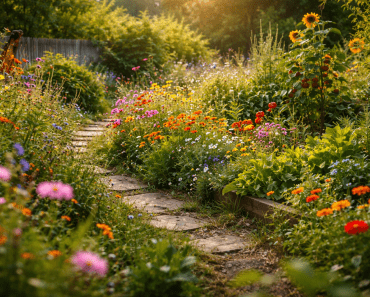
A beautiful garden does not need to depend on short-lived trends to make a memorable impression. Some materials become more attractive as they age, and brick is one of the best examples. The right Brick Landscaping Ideas can bring warmth, structure, character, and a sense of permanence to almost any outdoor space. Whether your garden is traditional, cottage-inspired, Mediterranean, rustic, or modern, brick can create a timeless foundation that works beautifully with plants, natural stone, timber, gravel, and greenery.
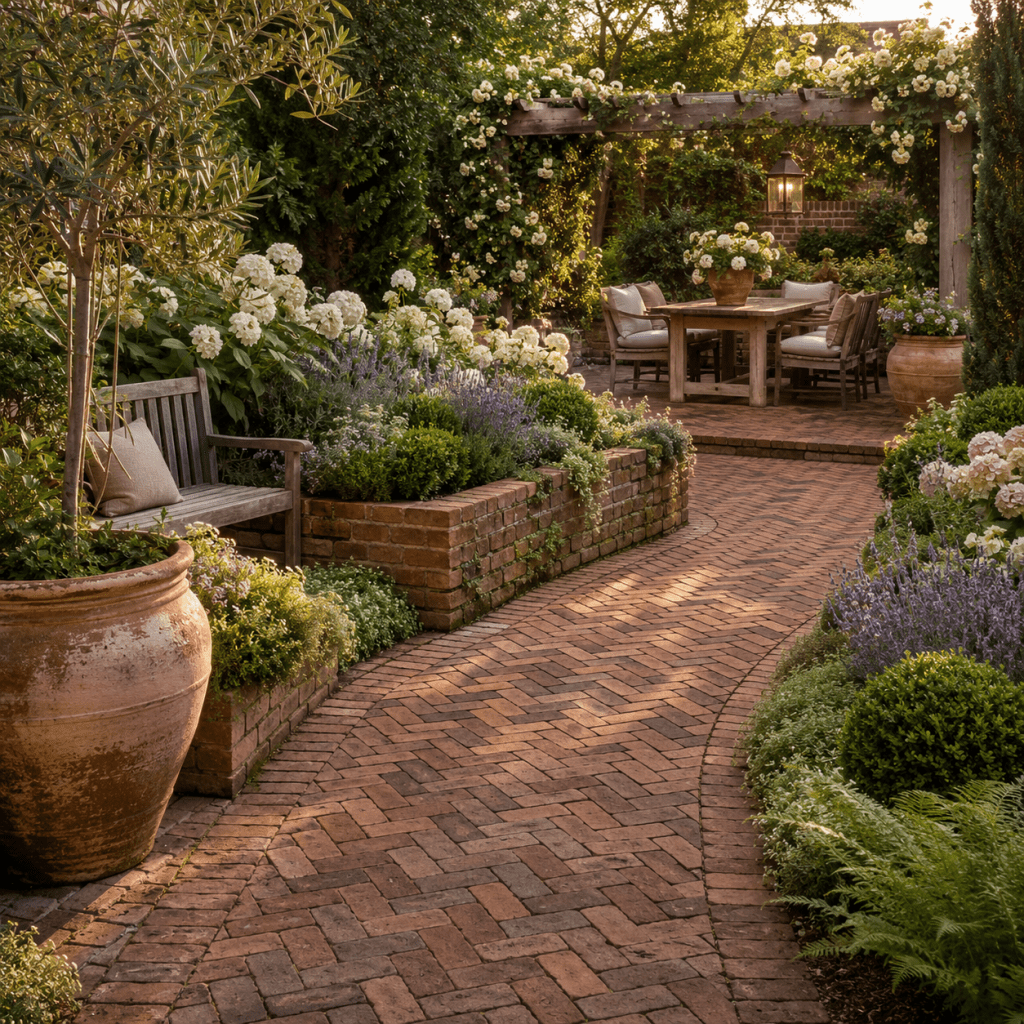
Unlike materials that can quickly look dated, brick develops subtle color variations, weathered edges, and natural patina over time. Those imperfections often make the landscape more beautiful rather than less attractive. A brick path covered with a little moss, a low garden wall softened by climbing plants, or a brick patio surrounded by mature greenery can instantly make a garden feel established and intentional. 🌿
The secret is not to cover every outdoor surface with brick. The most elegant gardens use it strategically. Brick works especially well when it defines circulation, creates garden rooms, frames planting beds, or provides a warm architectural backdrop for foliage and flowers.
Among the many ways to incorporate brick outdoors, three approaches stand out for their visual impact, versatility, and lasting appeal. These Top 3 Brick Landscaping Ideas focus on creating timeless garden paths, beautifully structured garden borders and walls, and inviting brick patios that become natural extensions of the home.
Why Brick Landscaping Ideas Continue to Look Beautiful for Decades
Garden trends change constantly. One year, highly polished concrete may dominate outdoor design. Another year, dark porcelain pavers or minimalist gravel landscapes become fashionable. Brick, however, rarely disappears.
One reason is its relationship with traditional architecture. Brick has been used for centuries in homes, courtyards, pathways, garden walls, terraces, and public landscapes. Because of that long history, the material carries a sense of familiarity and permanence that newer materials often struggle to reproduce.
Another advantage is color. Traditional brick includes more variation than people sometimes realize. Warm terracotta, deep red, soft brown, muted orange, faded rose, charcoal, and weathered burgundy can all appear within the same landscape. These tones work beautifully beside green foliage because warm brick and cool vegetation naturally create contrast.
Brick is also remarkably effective as a transition material. A brick path can visually connect a house with the garden. Brick edging can link flower beds to a brick exterior wall. A brick patio can soften the transition between architectural surfaces and natural planting.
🌱 The most successful brick landscapes usually combine structure with softness. The brick establishes clean lines and dependable surfaces, while plants spill over edges, grow between joints, climb nearby walls, or frame the hardscape with natural movement.
The Timeless Appeal of Weathered Brick in Garden Design
Perfectly new materials can sometimes make a landscape feel unfinished because they have not yet developed character. Brick is different. Even freshly installed brick often has enough texture and tonal variation to prevent the garden from appearing sterile.
As brick ages, small changes occur. Rain subtly alters the surface. Sunlight softens certain tones. Moss may appear in shaded corners. Tiny plants can establish themselves between joints. The overall effect becomes increasingly connected to the surrounding landscape.
This is why reclaimed brick is particularly popular in romantic garden design. Reclaimed materials can immediately introduce the visual depth that would otherwise take years to develop.
However, new brick can work equally well when the color and finish are chosen carefully. Slightly irregular or tumbled bricks often feel more natural in garden environments than perfectly smooth masonry units.
The goal should be harmony rather than artificial aging. Brick should feel like it belongs in the garden instead of appearing as a decorative element placed on top of it.
Quick Comparison of the Top 3 Brick Landscaping Ideas
Before exploring each design in detail, this comparison highlights where each idea works best.
| Brick Landscaping Idea | Best Location | Main Benefit | Ideal Garden Style | Difficulty |
|---|---|---|---|---|
| 🥇 Brick Garden Pathways | Front yards, side gardens, cottage gardens | Creates movement and strong visual structure | Cottage, traditional, English, rustic, transitional | Moderate |
| 🥈 Brick Garden Borders and Low Walls | Flower beds, raised gardens, property edges | Defines planting areas and adds architectural character | Traditional, Mediterranean, formal, rustic | Moderate to High |
| 🥉 Brick Patios and Garden Seating Areas | Backyards, courtyards, outdoor dining zones | Creates a warm and inviting outdoor living space | Farmhouse, cottage, Mediterranean, classic contemporary | High |
Each option can dramatically improve a garden, but their purpose is slightly different. Pathways organize movement, walls define space, and patios create destinations.
🥇 Top 1 Brick Landscaping Ideas With Timeless Garden Pathways
Few features transform a garden as effectively as a well-designed brick pathway.
A path does much more than provide somewhere to walk. It creates direction, reveals different areas of the landscape gradually, and encourages visitors to experience the garden rather than simply look at it from one location.
Brick is particularly effective for pathways because its smaller modular size allows designers to create straight routes, gentle curves, detailed borders, and interesting laying patterns. The result can feel formal and architectural or relaxed and romantic depending on the arrangement.
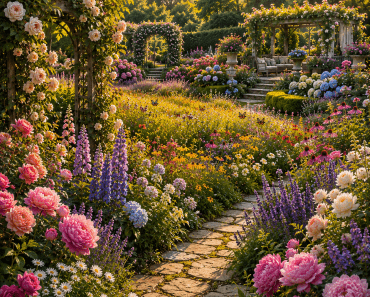
A beautifully aged brick walkway surrounded by lavender, ornamental grasses, hydrangeas, boxwood, or flowering perennials can become one of the most memorable features of an entire garden.
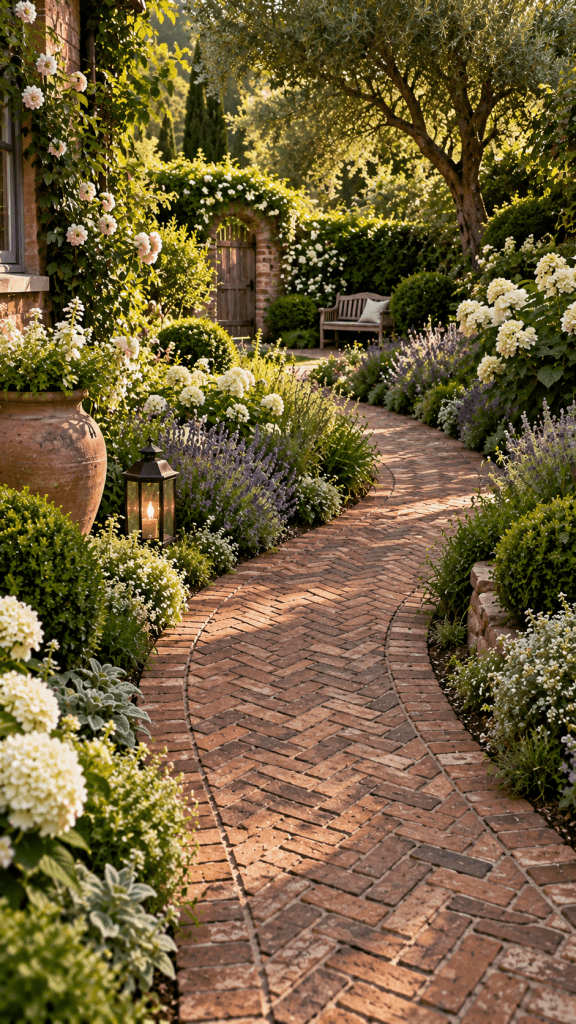
Use Curved Brick Paths to Make the Garden Feel Larger
Straight pathways are practical, but gentle curves can create mystery.
When a path disappears behind shrubs or curves around a planting bed, the viewer cannot immediately see the destination. This creates a sense that the garden continues beyond what is currently visible.
That visual technique is particularly valuable in smaller gardens.
Instead of showing the entire outdoor space at once, a curved brick path divides the experience into several moments. One section might pass through flowering perennials. Another could move beside ornamental grasses. The final section may lead toward a bench, courtyard, greenhouse, or hidden seating area.
🌿 Curves should generally feel natural rather than exaggerated. Wide gradual turns usually look more sophisticated than repeated sharp bends.
The surrounding planting can reinforce the curve. Soft plants such as catmint, thyme, lavender, creeping rosemary, ferns, and low ornamental grasses can gently lean toward the walkway and soften its edges.
Choose the Right Brick Pattern for the Mood of the Garden
The way bricks are arranged can significantly change the appearance of a path.
Running bond is one of the simplest patterns. Bricks are arranged in offset rows, creating a relaxed but organized surface. It works particularly well in traditional gardens and informal landscapes.
Basketweave creates a more decorative appearance by arranging small groups of bricks in alternating directions. It has a distinctly historic character and looks beautiful around older homes or cottage gardens.
Herringbone is one of the strongest and most visually dynamic options. Bricks meet at angles, creating a zigzag pattern that immediately attracts attention. It is especially effective on larger walkways or entrances.
For a softer rustic style, reclaimed bricks can be installed with slightly more visible variation. Their irregular tones make even a simple pattern interesting.
🧱 The pattern does not always need to be complicated. In many timeless landscapes, texture and planting provide enough visual detail, allowing a simple brick arrangement to look elegant.
Create a Brick Path With Soft Planting Along the Edges
One of the biggest mistakes in hardscape design is allowing pathways to feel disconnected from surrounding plants.
A timeless brick path should usually look embedded within the landscape.
Low-growing flowers can spill gently across selected edges. Groundcovers can settle between nearby stones. Ornamental grasses can introduce movement without blocking the walkway.
Plants such as creeping thyme can be particularly attractive near brick because their small leaves create delicate contrast against the rough masonry texture.
For shady gardens, ferns, hostas, hellebores, and woodland plants can create a completely different mood. Their deep greens make warm brick tones appear richer.
In cottage gardens, abundant flowers can soften almost every visible edge. Roses, foxgloves, salvia, nepeta, geraniums, and daisies help transform a structured pathway into something romantic and natural.
Use Brick Pathways to Connect Important Garden Destinations
Every path should lead somewhere meaningful.
A pathway that simply stops without purpose can make the landscape feel unresolved. Instead, brick walkways can connect the main entrance, patio, vegetable garden, greenhouse, pergola, firepit, garden shed, or outdoor dining area.
The destination does not need to be large.
Even a small bench beneath a tree can justify a beautiful garden path.
This approach turns the landscape into a sequence of destinations. Instead of treating the backyard as one open area, it becomes a collection of smaller experiences.
🌳 In larger gardens, multiple brick paths can intersect or branch into secondary routes. The main path can remain wider and more formal, while smaller paths become narrower and more informal as they enter planted areas.
Important Note: Outdoor brick pathways should be installed on a stable and properly prepared base with suitable drainage. Poor installation can cause sinking, uneven surfaces, or water accumulation even when high-quality bricks are used.
🥈 Top 2 Brick Landscaping Ideas With Garden Borders and Low Walls
Brick becomes even more architectural when it rises vertically.
Low brick walls, retaining edges, raised planting beds, and structural borders can instantly make a landscape feel more intentional. These elements create clear transitions between different parts of the garden while adding height and depth.
A low brick wall around a flower bed can frame plants almost like artwork. A raised vegetable garden built from brick can turn a practical growing area into an attractive architectural feature. A brick retaining wall can transform a difficult slope into several usable planting levels.
Unlike lightweight plastic or timber edging, brick tends to feel permanent.
That permanence contributes significantly to the timeless character of the landscape.
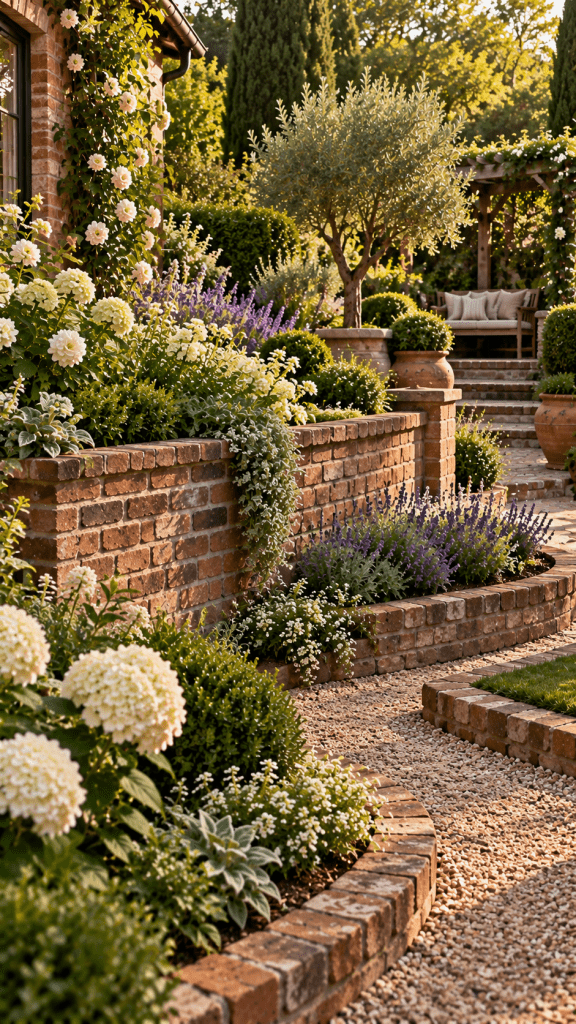
Create Raised Brick Flower Beds for Stronger Garden Structure
Raised beds are often associated with vegetable gardens, but they can be equally effective in ornamental landscaping.
A raised brick planting bed near a terrace or patio brings flowers and foliage closer to eye level. This makes small plants more visible and can create a stronger sense of enclosure around outdoor seating areas.
Brick beds also work beautifully near house walls.
For example, a long raised bed built along the edge of a patio can contain hydrangeas, roses, evergreen shrubs, herbs, or ornamental grasses. The plants soften the architecture while the masonry gives them a clear visual boundary.
The brick color should generally relate to nearby architecture.
If the house already contains brick, matching it exactly is not always necessary. Slight variation can add interest. However, extremely contrasting brick colors may make the garden feel visually fragmented.
Use Low Brick Walls to Create Garden Rooms
Many sophisticated gardens are not designed as one large open lawn.
Instead, they are divided into smaller areas known as garden rooms.
One area might contain dining furniture. Another may feature herbs and vegetables. A third could become a quiet seating garden surrounded by flowers.
Low brick walls can separate these areas without blocking views.
A wall approximately knee height can provide architectural definition while still allowing plants, trees, and distant parts of the landscape to remain visible.
It can also serve secondary purposes.
A wide wall cap may become occasional seating. Pots can be placed along the top. Trailing plants can spill over the edge.
🌿 When combined with hedges or climbing plants, brick walls can gradually disappear into the landscape while still providing essential structure underneath.
Combine Brick With Climbing Plants for an Established Garden Look
Brick and climbing plants are a classic combination.
Climbing roses, jasmine, clematis, ivy, and other vines can transform plain masonry into a lush garden feature.
The contrast is especially beautiful because the materials represent opposite qualities. Brick feels solid and permanent, while vines feel soft and constantly changing.
In spring and summer, flowers may dominate the composition. During autumn, foliage can introduce deeper colors. In winter, bare stems can create interesting lines against the brick.
This seasonal transformation helps the landscape remain visually engaging throughout the year.
For a more controlled appearance, climbing plants can be trained on supports positioned slightly away from the wall rather than allowing them to attach directly to masonry.
The result maintains the romantic effect while giving gardeners greater control over growth.
Build Brick Edging Around Curved Flower Beds
Full walls are not always necessary.
Sometimes a single row or double row of bricks is enough to define a planting area.
Brick edging works especially well around sweeping flower beds where it can create a clean separation between soil and lawn.
For traditional gardens, bricks can be laid flat in a simple horizontal line. For a slightly more decorative look, they can be installed vertically or at an angle.
The surrounding plants determine whether the result feels formal or relaxed.
Neatly clipped boxwood and symmetrical planting will emphasize formality. Loose perennials and grasses will make the same brick edge feel much more natural.
This versatility is one of the reasons brick remains useful across so many garden styles.
Add Depth With Multiple Brick Levels
Sloped properties often create landscaping challenges, but they also provide opportunities.
Instead of forcing the entire garden onto one level, brick retaining walls can create terraces.
The lowest area might become a lawn or patio. A middle level could contain shrubs and perennials. The upper terrace may hold fruit trees, ornamental grasses, or a kitchen garden.
This creates strong visual depth.
From the house, the eye moves upward through several layers of planting rather than looking across one flat surface.
Brick is particularly effective here because the repeated masonry links each level together.
The result can feel almost like an old European courtyard garden, especially when combined with terracotta pots, stone steps, herbs, flowering vines, and mature trees.
🥉 Top 3 Brick Landscaping Ideas With Warm Garden Patios
The third idea focuses on creating somewhere to stay rather than somewhere to walk.
A brick patio can transform a quiet corner of the garden into an inviting outdoor room.
Compared with very large concrete slabs, individual bricks create more texture and visual warmth. Even a simple rectangular patio can feel rich because hundreds of subtle joints and color variations appear across the surface.
Brick patios also age gracefully.
Small imperfections, mild discoloration, or occasional moss growth often add charm rather than making the surface look neglected.
For this reason, brick is especially attractive in gardens designed to feel relaxed, mature, and timeless.
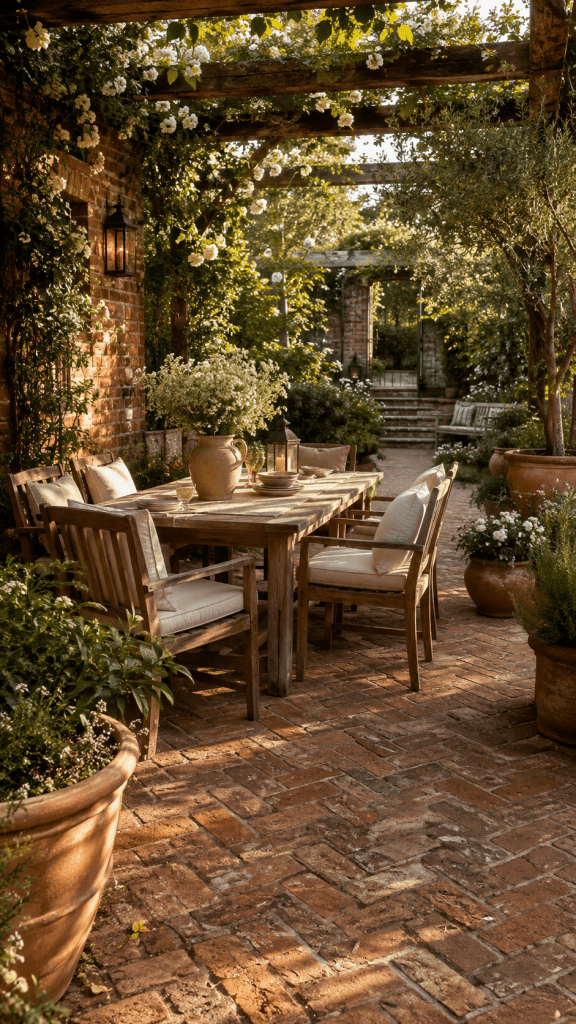
Position the Brick Patio Where the Garden Feels Most Inviting
The patio does not always need to sit directly outside the back door.
In some landscapes, a secondary patio positioned farther into the garden can become more interesting.
Imagine a brick terrace beneath a mature tree, surrounded by hydrangeas and ferns. Another possibility is a small circular patio at the end of a curved garden path. A brick seating area beside a rose-covered pergola can become a beautiful destination.
Creating distance from the house can make the garden feel larger because visitors physically move through the landscape before reaching the seating area.
However, patios intended for everyday dining may still benefit from being close to the kitchen.
The right location ultimately depends on function.
☕ A morning coffee area might benefit from early sunlight, while an evening dining terrace may work better in a position protected from intense afternoon heat.
Mix Brick With Natural Wood Furniture
Brick provides a warm architectural foundation, but furniture determines much of the atmosphere.
Natural wood is one of the easiest materials to combine with brick.
Oak, teak, acacia, and weathered timber can reinforce the earthy palette while introducing a softer texture.
A large wooden dining table placed on a brick patio can create a welcoming farmhouse atmosphere. Smaller café-style furniture can make the space feel like a European courtyard.
Neutral cushions in cream, beige, taupe, olive, or muted stripe patterns can soften the furniture without competing with the brick.
Avoid filling the patio with too many decorative colors.
The combination of brick, green plants, wood, and natural textiles already provides plenty of visual richness.
Frame the Patio With Layered Planting
A patio surrounded only by lawn may feel exposed.
Planting around the perimeter helps the space feel connected to the garden.
Begin with taller structural plants at the back. These might include small trees, evergreen shrubs, hydrangeas, viburnum, or ornamental grasses.
Add medium-height perennials in front.
Finally, use low plants or groundcovers closest to the patio surface.
This layered approach creates depth and makes the seating area feel protected without becoming enclosed.
Potted plants can provide another layer.
Terracotta containers are particularly attractive on brick because their warm tones belong to the same natural color family. Large pots can contain olive trees, rosemary, lavender, citrus, bay, hydrangeas, or seasonal flowers.
🌸 Instead of arranging many tiny containers, a smaller collection of substantial pots usually creates a more sophisticated look.
Add a Pergola or Garden Structure Above the Brick Patio
Vertical architecture can dramatically improve an outdoor seating area.
A pergola introduces height and gives the patio the feeling of an outdoor room.
Wooden pergolas work especially well with brick because both materials have natural warmth. Climbing roses, wisteria, jasmine, or grape vines can eventually soften the structure.
As plants mature, filtered sunlight moves across the brick throughout the day.
This combination of texture, light, and foliage can create an exceptionally atmospheric garden.
Outdoor lighting can extend the effect into the evening.
Simple wall lights, discreet landscape lights, lanterns, or warm string lights can illuminate the brick without overwhelming the space.
The goal is to reveal texture rather than flood the garden with brightness.
Use Brick Patios to Create a European Courtyard Feeling
Some of the most beautiful brick landscapes take inspiration from old courtyards.
The formula is surprisingly simple.
Start with a brick floor. Surround part of the space with masonry, hedges, fences, or planting. Introduce one focal tree or large container. Add comfortable seating and several carefully selected plants.
The result can feel intimate even in a relatively small backyard.
For additional character, use herbs such as rosemary, thyme, sage, and lavender.
These plants provide fragrance, texture, and muted color while strengthening the Mediterranean or European atmosphere.
A small water feature can also be effective.
The gentle sound of water contrasts beautifully with the solid brick architecture and helps create a calmer environment.
How to Choose Brick Colors That Will Not Look Dated
Color is one of the most important decisions when planning a brick landscape.
Bright uniform red brick can work beautifully in certain traditional settings, but softer mixed tones tend to offer greater flexibility.
Look for bricks containing several related colors rather than one completely consistent shade.
Weathered red mixed with brown, terracotta, charcoal, or faded orange can create more natural depth.
For modern homes, muted brown or charcoal brick may provide a more subtle connection to the architecture.
In cottage gardens, reclaimed red and terracotta bricks often feel especially appropriate.
The surrounding soil and plant colors matter as well.
Deep green foliage tends to intensify warm brick tones. Silver foliage from plants such as lavender or lamb’s ear can create a softer contrast. White flowers can brighten darker brick compositions.
The best choice should feel connected to both the house and landscape.
How to Make New Brick Landscaping Look Naturally Established
A newly built garden often looks neat but slightly empty.
Plants are usually small, masonry is clean, and the landscape has not yet developed its natural patina.
There are several ways to make new brick landscaping feel established more quickly.
Begin with varied planting sizes.
Instead of using dozens of identical small plants, combine several mature shrubs with medium perennials and low groundcovers. This creates instant layering.
Allow certain plants to grow close to brick edges.
Perfect gaps between masonry and vegetation can feel overly engineered. Carefully selected plants spilling slightly onto pathways or softening walls help integrate the hardscape.
Use natural materials nearby.
Weathered timber, terracotta, gravel, natural stone, linen, and aged metal all work beautifully with brick.
Finally, avoid excessive decoration.
A timeless landscape usually becomes more convincing when architectural materials and plants provide most of the visual interest.
Common Brick Landscaping Mistakes to Avoid
Brick is extremely versatile, but poor design choices can reduce its impact.
One mistake is using too many different brick colors.
A red walkway, pale yellow wall, dark brown patio, and unrelated brick house exterior can create visual confusion. Repeating similar tones helps the landscape feel cohesive.
Another mistake is creating paths that are too narrow.
A tiny walkway may look charming in photographs but become inconvenient during everyday use. Important circulation routes should feel comfortable enough for people to walk naturally.
Overly complicated patterns can also become distracting.
Decorative brickwork is most effective when used intentionally. If the patio, path, wall, edging, and steps all use different patterns, the garden can feel busy.
Drainage should never be ignored.
Standing water can cause maintenance problems and make outdoor surfaces uncomfortable or unsafe.
Finally, avoid leaving brick completely disconnected from planting.
The strongest landscapes create interaction between architecture and nature.
Simple Styling Ideas That Make Brick Landscapes Look More Expensive
Luxury landscaping often depends more on restraint than on the number of features.
One effective technique is repetition.
Repeat the same plant in several areas near brick surfaces. Lavender lining a pathway, hydrangeas appearing beside both a wall and patio, or matching terracotta containers positioned throughout the garden can create visual rhythm.
Keep outdoor furniture materials consistent.
A mixture of many unrelated furniture styles can make even an expensive patio feel cluttered.
Use fewer but larger accessories.
One substantial planter often has more visual impact than six small decorative pots.
Lighting should also remain subtle.
Warm illumination positioned near masonry can reveal brick texture after sunset while maintaining a sophisticated atmosphere.
Most importantly, leave space.
Not every section of the landscape needs decoration. Brick already provides detail through its joints, texture, and natural color variation.
Creating a Timeless Garden With Brick and Plants
A successful garden should feel better as it matures.
Brick supports that goal beautifully because it develops character alongside plants.
When trees become larger, vines begin climbing, and perennials fill empty areas, the brick remains as the structural framework underneath everything.
This balance between permanence and change is what makes brick landscaping so powerful.
The masonry stays relatively constant while the garden changes through the seasons.
Spring brings fresh leaves and flowers.
Summer surrounds the brick with abundant greenery.
Autumn introduces warm foliage that echoes the masonry tones.
Winter reveals the structure of paths, walls, and patios more clearly.
🍂 Few landscaping materials interact with seasonal changes as naturally as brick.
Which of the Top 3 Brick Landscaping Ideas Is Best for Your Garden
The best option depends on what the landscape currently needs.
If the garden feels disconnected or difficult to navigate, begin with 🥇 brick garden pathways. They create immediate structure while guiding visitors through different planting areas.
If the garden lacks definition or contains awkward slopes, 🥈 brick borders and low walls may provide the greatest transformation. They can organize flower beds, introduce new planting levels, and create architectural depth.
If the main goal is expanding outdoor living space, 🥉 a brick patio can become the heart of the garden. Surrounded by greenery, comfortable furniture, and subtle lighting, it can function as an outdoor dining room, conversation area, or peaceful retreat.
These ideas can also work together.
A brick path may begin at the house, pass beside raised brick flower beds, and eventually arrive at a hidden brick patio beneath a pergola.
When the same brick tone appears throughout the landscape, the separate elements feel connected.
Final Thoughts on Top 3 Brick Landscaping Ideas for a Timeless Garden
The best Brick Landscaping Ideas do not rely on decoration alone. They use brick as part of the garden’s architecture, creating structure that allows plants and outdoor living areas to shine.
🥇 Brick pathways are ideal for adding movement, charm, and a sense of discovery. Curved routes surrounded by soft planting can make even compact gardens feel larger and more immersive.
🥈 Brick borders and low garden walls provide definition and vertical interest. They can frame flower beds, create raised planting areas, divide the landscape into smaller rooms, and transform sloping ground into usable garden terraces.
🥉 Brick patios create destinations. Combined with natural wood furniture, layered planting, pergolas, terracotta pots, and warm lighting, they can turn ordinary backyards into inviting outdoor living spaces.
The strongest designs often combine all three ideas while maintaining a consistent material palette.
A path establishes the journey.
Walls shape the landscape.
A patio provides the destination.
Together, they create a garden that feels structured without becoming rigid, traditional without feeling outdated, and beautiful without depending on temporary trends.
Brick may gradually weather, plants may change, and garden styles may evolve, but the relationship between warm masonry and natural greenery remains remarkably timeless. 🌿🧱
For homeowners looking for landscaping that can become even more attractive with age, brick remains one of the most dependable materials available. Used thoughtfully, it can help create a garden that feels as though it has always belonged there and may continue looking beautiful for decades to come.