A cut flower garden layout is one of the most rewarding garden designs you can create if you love fresh flowers inside your home. Instead of buying bouquets from the store, you can simply walk outside and harvest armfuls of colorful blooms whenever you want. 🌸🌼 A well-planned cut flower garden layout allows you to grow flowers specifically meant for cutting, ensuring long stems, continuous blooming, and easy harvesting throughout the growing season.
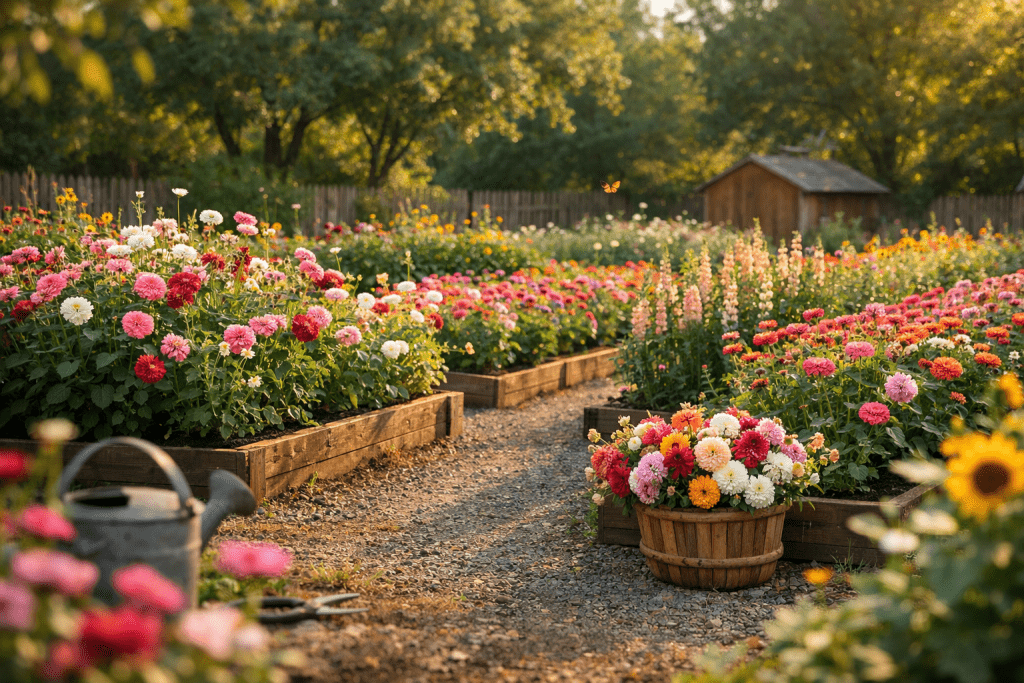
Unlike traditional ornamental gardens that prioritize aesthetics from a distance, a cut flower garden focuses on productivity, accessibility, and bloom succession. Every bed, path, and plant grouping is arranged in a way that maximizes flower production while keeping the garden easy to maintain.
In this guide, we’ll explore the Best 3 Cut Flower Garden Layout Ideas that gardeners love most. These layouts are beginner-friendly, highly productive, and perfect for anyone who wants to grow bouquets at home. Whether you have a small backyard or a larger garden space, these layouts can transform your outdoor area into a stunning flower harvest garden.
Best 3 Cut Flower Garden Layout Concepts That Maximize Flower Production 🌼
Before diving into each layout style, it helps to understand what makes a cut flower garden layout different from a typical decorative garden. A flower garden meant for cutting should prioritize:
- 🌸 Long-stem flower varieties
- 🌱 High planting density
- 🌼 Easy harvesting access
- 🌿 Continuous bloom succession
- 🌻 Efficient bed organization
Unlike ornamental landscaping, a productive cut flower garden focuses on structured planting beds rather than scattered flowers. Organized rows or blocks make planting, watering, and harvesting much easier.
Below is a helpful comparison of the three most effective layouts.
| Layout Type | Best For | Space Needed | Harvest Efficiency |
|---|---|---|---|
| Raised Bed Layout | Small gardens and beginners | Small to medium | Very high |
| Row Garden Layout | Large backyard flower farms | Medium to large | Extremely high |
| Cottage Style Cutting Garden | Decorative but productive gardens | Flexible | Medium |
Each of these layouts has its own strengths depending on your space, gardening style, and flower-growing goals.
Best 3 Cut Flower Garden Layout Designs Gardeners Love
1 Raised Bed Cut Flower Garden Layout for Organized Harvesting 🌸
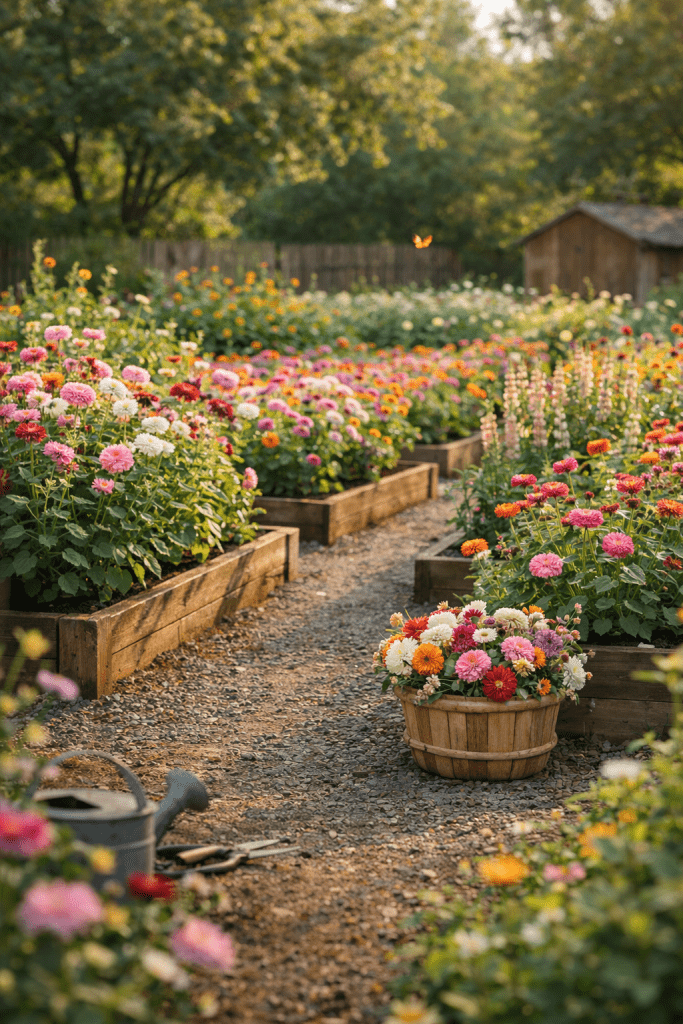
One of the most popular and beginner-friendly designs is the raised bed cut flower garden layout. This layout organizes flowers into neat, elevated beds that make planting, weeding, and harvesting significantly easier.
Raised beds are especially useful for gardeners who want a clean, structured, and highly productive flower garden. Because soil conditions can be controlled more easily, flowers tend to grow stronger stems and produce more blooms.
Why Raised Beds Work Perfectly for Cut Flowers
Raised beds improve drainage, soil fertility, and root health. These three factors are essential for growing strong, long-stem flowers suitable for cutting.
When flowers grow in loose, nutrient-rich soil, their stems become stronger and longer, which is ideal for bouquets. Additionally, raised beds warm up faster in spring, allowing earlier planting and extended blooming periods.
Another major benefit is accessibility. With beds separated by pathways, you can reach flowers from all sides without stepping on soil or damaging plant roots.
Ideal Raised Bed Layout Structure
Most gardeners design raised beds in rectangular shapes, typically about 3 to 4 feet wide. This width allows you to reach the center of the bed from either side without stepping inside.
Beds are usually arranged in parallel rows with walking paths between them. This structure creates a small flower farm look while maintaining a manageable garden size.
A common backyard layout might look like this:
- 🌸 4 to 6 raised beds
- 🌿 each bed 1.2 meters wide
- 🌼 30–40 cm planting spacing
- 🌻 gravel or mulch walking paths
This layout allows gardeners to grow a large number of flowers in a relatively small area.
Best Flowers for Raised Bed Cut Flower Gardens
Certain flowers thrive particularly well in raised beds due to their root structure and productivity.
Some of the best choices include:
- 🌻 Sunflowers
- 🌸 Zinnias
- 🌼 Cosmos
- 🌷 Tulips
- 🌹 Snapdragons
- 🌺 Dahlias
These flowers produce long stems and multiple blooms, making them ideal for cutting gardens.
Raised beds also make succession planting easier. Once one crop finishes blooming, another can quickly replace it.
Important note: In a productive cut flower garden layout, avoid planting flowers too far apart. Slightly closer spacing encourages longer stems because plants compete for sunlight.
2 Row Style Cut Flower Garden Layout for Maximum Flower Production 🌻
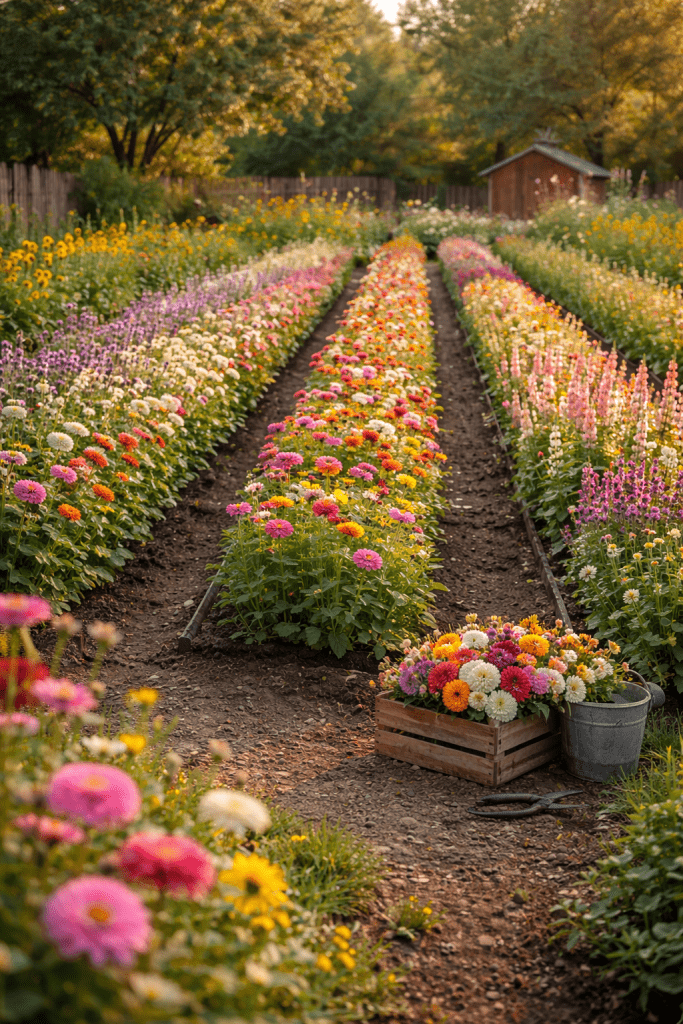
The second highly effective design is the row-based cut flower garden layout, which resembles a small-scale flower farm. This layout focuses entirely on productivity and efficiency.
Many professional flower growers and market gardeners use this method because it allows mass planting of the same flower varieties, simplifying harvesting and maintenance.
How the Row Layout Works
In a row-based garden, flowers are planted in long straight rows, similar to vegetable farming. Each row typically contains a single flower variety.
This structure makes it easier to manage irrigation, fertilization, and harvesting. For example, one row might contain zinnias while another contains snapdragons.
Rows also make it easier to plant flowers in succession cycles, ensuring blooms throughout the entire growing season.
Typical Dimensions of a Row Garden
Rows are usually spaced far enough apart to allow walking access.
A common layout might include:
- 🌼 rows 60–90 cm apart
- 🌸 flower spacing 20–30 cm
- 🌿 long rows running north–south for optimal sunlight
- 🌻 irrigation lines running along each row
This layout maximizes sunlight exposure and airflow, reducing disease problems.
Benefits of the Row-Based Cut Flower Garden Layout
The row garden layout has several major advantages.
First, it maximizes flower yield per square meter. By planting flowers in dense rows, you can grow far more blooms compared to scattered planting.
Second, harvesting becomes extremely efficient. Gardeners can quickly move down each row, cutting stems without stepping through beds or damaging plants.
Third, the layout is perfect for large bouquet harvesting sessions, especially if you grow flowers for selling or gifting.
Ideal Flowers for Row Gardens
Some flowers perform exceptionally well in row layouts due to their upright growth habit.
Popular choices include:
- 🌻 Sunflowers
- 🌸 Lisianthus
- 🌼 Snapdragons
- 🌺 Celosia
- 🌹 Stock flowers
- 🌷 Ranunculus
These flowers grow tall and straight, making them perfect for row planting systems.
3 Cottage Style Cut Flower Garden Layout That Blends Beauty and Harvest 🌺
For gardeners who want beauty as well as productivity, the cottage-style cut flower garden layout is an excellent option.
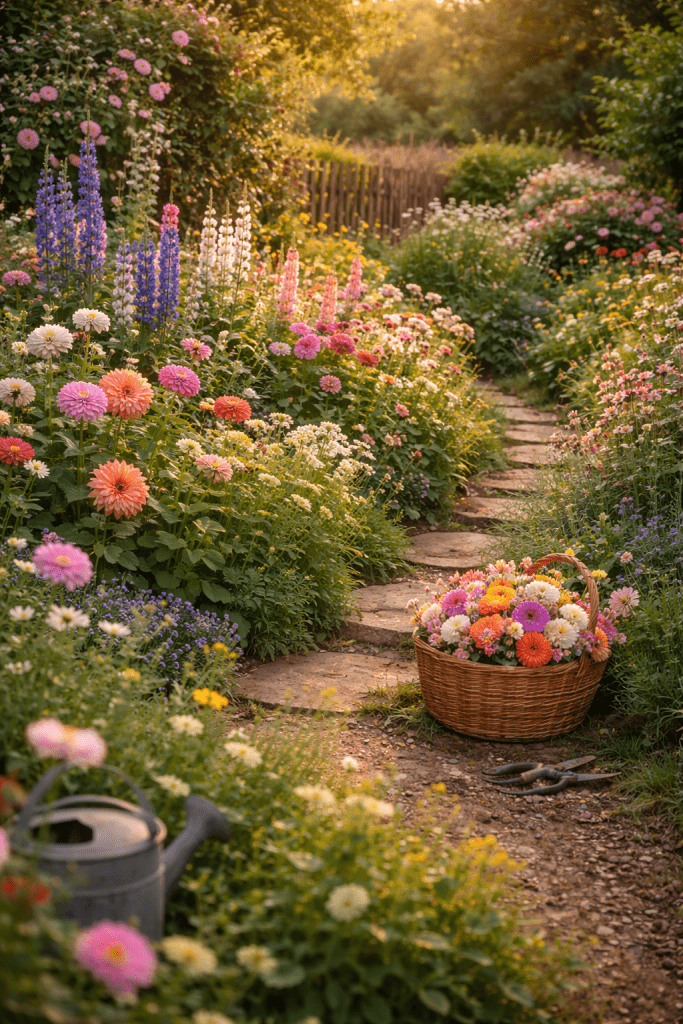
This layout blends traditional ornamental garden design with functional flower harvesting. Instead of strict rows or beds, flowers grow in mixed planting clusters that create a romantic garden appearance.
Cottage gardens feel lush, colorful, and slightly wild while still providing plenty of cut flowers.
How Cottage Style Layouts Are Organized
In this type of cut flower garden layout, flowers are planted in layered groups based on height and bloom time.
Tall flowers grow toward the back, medium-height flowers fill the center, and low-growing plants edge the beds.
This layering technique creates depth, texture, and visual richness.
A typical cottage cutting garden might include:
- 🌷 tall flowers such as delphiniums
- 🌸 medium flowers like dahlias
- 🌼 filler flowers such as cosmos
- 🌿 foliage plants like eucalyptus
This combination produces natural-looking bouquets straight from the garden.
Why Cottage Gardens Are Perfect for Flower Arranging
Cottage gardens often include filler plants, focal flowers, and foliage, which are the three essential components of bouquet design.
By growing these elements together, gardeners can harvest complete arrangements directly from their garden.
For example:
- 🌹 focal flower: rose or dahlia
- 🌸 secondary flower: zinnia
- 🌿 filler: feverfew or yarrow
- 🌱 foliage: mint or eucalyptus
This diversity ensures bouquets always look full and professional.
Creating Seasonal Bloom Waves
One beautiful feature of cottage cutting gardens is the natural succession of blooms.
Different flowers bloom at different times, meaning your garden changes throughout the year.
Spring might bring:
- tulips
- ranunculus
- sweet peas
Summer may feature:
- zinnias
- cosmos
- sunflowers
Autumn might include:
- dahlias
- chrysanthemums
- asters
This seasonal rhythm keeps the garden vibrant and productive for months.
Essential Design Principles for Any Cut Flower Garden Layout 🌿
No matter which layout you choose, a few core principles will dramatically improve the productivity of your flower garden.
Plan Your Garden Around Harvest Access
One of the most overlooked factors in a cut flower garden layout is accessibility.
You will be harvesting flowers frequently, so pathways should be wide enough to move comfortably while carrying tools or buckets.
Good path materials include:
- gravel
- wood chips
- stepping stones
These keep the garden tidy and reduce soil compaction.
Use Succession Planting for Continuous Blooms
Succession planting means planting flowers in intervals rather than all at once.
This technique ensures fresh blooms every few weeks instead of one large burst followed by a long gap.
For example:
- week 1 plant zinnias
- week 3 plant another batch
- week 5 plant a third batch
This strategy provides consistent bouquets throughout the season.
Include Filler Plants and Foliage
Bouquets rarely consist of just one flower type.
A productive cutting garden should include:
- focal flowers
- filler flowers
- greenery
Popular filler plants include:
- 🌿 baby’s breath
- 🌸 feverfew
- 🌼 yarrow
- 🌱 ammi majus
Greenery such as herbs and foliage plants adds texture and contrast to arrangements.
Design Your Garden for Sunlight
Most cut flowers require 6–8 hours of direct sunlight per day.
When planning your layout, avoid planting tall flowers where they will shade shorter plants. Position taller varieties on the north side of beds whenever possible.
This allows sunlight to reach every plant evenly.
Final Thoughts on Creating the Perfect Cut Flower Garden Layout 🌸
Designing a productive cut flower garden layout is one of the most fulfilling gardening projects you can undertake. With thoughtful planning, even a small backyard can produce hundreds of beautiful blooms throughout the growing season.
Whether you choose the organized raised bed layout, the high-efficiency row garden, or the romantic cottage-style cutting garden, the key is to design your space around harvesting, succession planting, and flower diversity.
A well-designed cut flower garden doesn’t just provide beauty outdoors—it fills your home with fresh bouquets, seasonal color, and the simple joy of harvesting flowers you grew yourself. 🌼🌻🌸
Once your garden is established, each season becomes easier and more productive, turning your outdoor space into a vibrant flower harvest paradise.