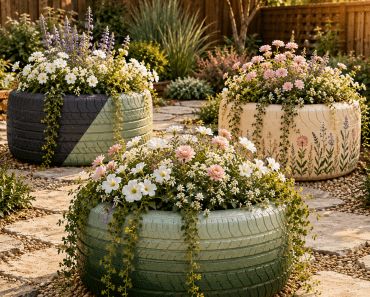
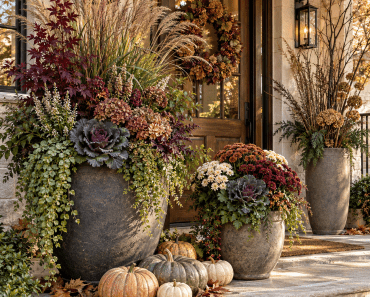
A beautiful outdoor space does not require a huge backyard, complicated landscaping, or an expensive renovation. With carefully chosen Deck and Balcony Planters, even a narrow apartment balcony, compact rooftop terrace, small wooden deck, or overlooked outdoor corner can become a lush and sophisticated retreat. The right containers introduce height, texture, color, privacy, and seasonal interest while making the entire space feel more thoughtfully designed.
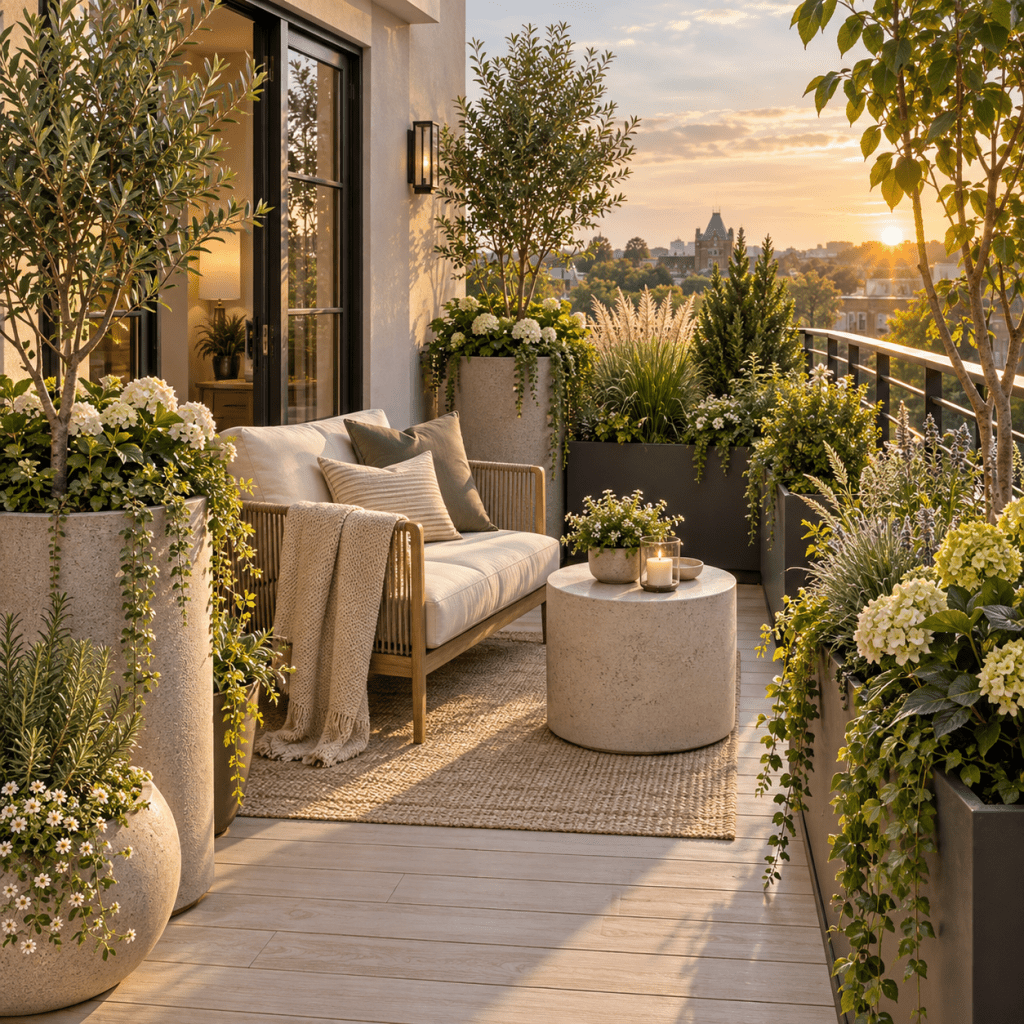
Planters are especially valuable in small outdoor areas because they allow plants to become part of the architecture. Instead of simply placing random flowerpots around the floor, a more intentional approach uses containers to define zones, frame seating areas, soften railings, create privacy, and guide the eye through the space.
The most stylish outdoor spaces often use surprisingly few planter styles. Rather than filling every available corner, successful designs repeat shapes, materials, or plant combinations to create visual rhythm. 🌿 This makes even inexpensive containers look more coordinated and luxurious.
For homeowners, renters, and apartment dwellers looking for inspiration, three planter approaches stand out for their combination of beauty, practicality, and flexibility. These Top 3 Deck and Balcony Planters ideas can work across many decorating styles, from contemporary minimalism to relaxed cottage gardens and sophisticated urban terraces.
Why Deck and Balcony Planters Can Completely Transform a Small Outdoor Space
Outdoor containers do much more than hold plants. When used strategically, they can become some of the strongest design elements on a balcony or deck.
One major advantage is flexibility. Traditional landscaping depends heavily on permanent garden beds, but containers can be rearranged whenever the space needs a refresh. A large planter can move beside a lounge chair during summer, frame an entrance during autumn, or become part of a seasonal display later in the year.
Planters also help create depth in areas where the architecture may otherwise feel flat. Balconies often consist of hard surfaces such as concrete floors, metal railings, glass panels, and exterior walls. Decks may contain large expanses of timber with very little natural softness. Plants introduce organic shapes that immediately balance those architectural lines.
Height is another important benefit. Tall grasses, shrubs, climbing plants, and small trees placed inside substantial containers can dramatically change the proportions of a compact outdoor area. Instead of decorating only at floor level, the greenery extends upward and creates the impression of a fuller garden.
Privacy is another reason Deck and Balcony Planters have become such a useful design solution. 🌱 Carefully placed containers filled with tall grasses, bamboo alternatives, evergreen shrubs, or trellised vines can partially screen neighboring windows and nearby buildings without constructing permanent walls.
Even small seasonal changes become easier. Containers filled with summer flowers can later transition into autumn grasses, evergreen branches, winter foliage, or spring bulbs. The structural planter remains the same while the planting evolves throughout the year.
The Best Materials for Deck and Balcony Planters
Choosing the right material affects both the appearance and performance of an outdoor container.
Ceramic planters provide a refined and handcrafted appearance. Matte finishes in ivory, sand, charcoal, olive, and terracotta can complement many outdoor styles. Large ceramic containers look particularly beautiful beside wooden decking or natural stone.
However, ceramic containers can become heavy when filled with soil. Weight should always be considered when decorating elevated balconies.
Fiberglass and fiberstone planters have become popular alternatives because they can imitate concrete or stone while remaining significantly lighter. Their clean surfaces suit contemporary balconies, modern decks, and minimalist outdoor spaces.
Traditional terracotta offers warmth and character. Its earthy orange and weathered tones work especially well in Mediterranean, cottage, farmhouse, and naturalistic designs. Over time, terracotta can develop attractive variations in color that make the containers feel established rather than brand new.
Metal planters create a sharper architectural appearance. Powder-coated steel, galvanized metal, and weathering steel can introduce strong contemporary lines. Dark metal containers look especially striking when paired with silver foliage, ornamental grasses, or architectural evergreens.
Wooden planters bring warmth to modern outdoor settings and blend beautifully with timber decking. Cedar and other outdoor-friendly woods can create a built-in appearance, particularly when rectangular planters are placed along deck edges.
Each material creates a different mood, so the best option depends on both the architecture and the desired atmosphere.
| Planter Type | Best For | Visual Style | Weight | Ideal Plants |
|---|---|---|---|---|
| Fiberglass or fiberstone | Balconies and modern decks | Minimal and architectural | Light to medium | Grasses shrubs small trees |
| Terracotta | Sunny balconies and relaxed decks | Mediterranean and natural | Medium to heavy | Herbs flowers lavender |
| Ceramic | Decorative seating areas | Elegant and refined | Heavy | Flowers foliage shrubs |
| Metal | Contemporary outdoor spaces | Clean and industrial | Medium | Grasses evergreens succulents |
| Wood | Large decks and privacy planting | Warm and natural | Medium | Shrubs grasses mixed planting |
The most coordinated outdoor spaces usually limit themselves to one or two primary planter materials. This repetition helps create the polished appearance often seen in professionally designed terraces.
🥇 Top 1 Deck and Balcony Planters With Layered Greenery and Architectural Grasses
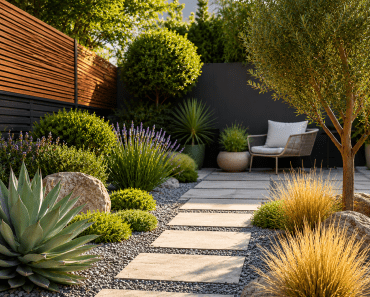
The first and perhaps most versatile approach uses layered greenery combined with ornamental grasses.
Instead of relying heavily on colorful flowers, this style focuses on texture, structure, movement, and different shades of green. The result feels calm, modern, sophisticated, and surprisingly luxurious.
Begin with one or two substantial containers positioned near an important architectural feature. On a deck, this might be beside outdoor steps or next to a lounge area. On a balcony, large planters can anchor the corners or frame the entrance from the interior room.
Fill these containers with plants that have strong silhouettes. Ornamental grasses are particularly effective because their narrow leaves create movement whenever there is a breeze. Fountain grass, feather reed grass, compact miscanthus varieties, and sedge can all provide this effect depending on climate and growing conditions.
Around the taller plants, introduce lower foliage with contrasting leaf shapes. Rounded leaves, trailing vines, compact herbs, and soft ground-cover plants create visual layers.
The goal is to avoid making every container look identical. Instead, repeat a few plants across several pots while changing their proportions.
For example, one large planter might contain a tall ornamental grass surrounded by soft trailing greenery. A second container could feature a compact evergreen shrub with the same trailing plant. A smaller pot might repeat the ornamental grass on a reduced scale.
This repetition visually connects the collection.
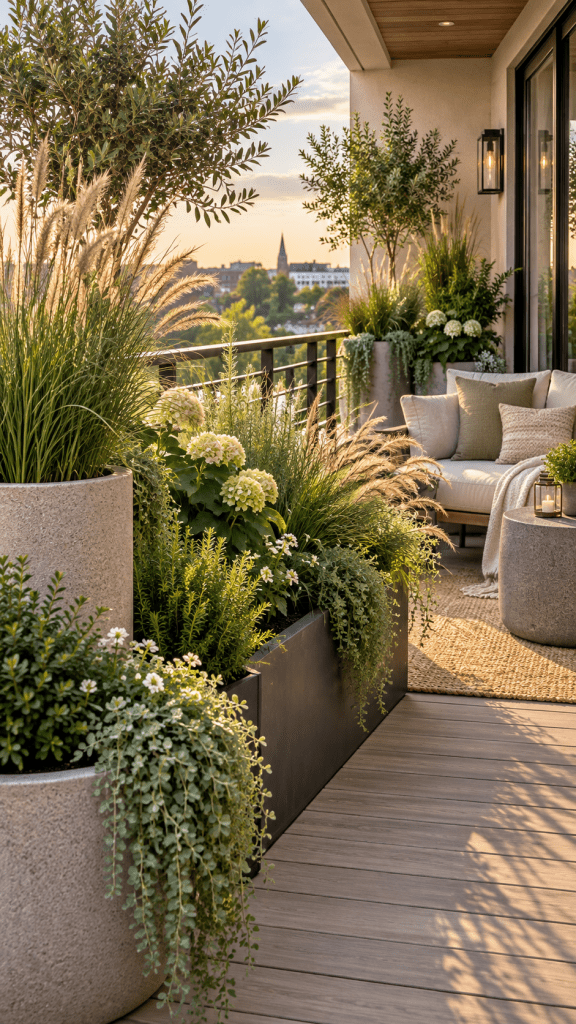
Use Different Heights Without Creating Clutter
One common mistake with small-space gardening is choosing containers that are all approximately the same size. When every planter sits at the same height, the arrangement can appear flat.
A better strategy combines tall floor planters, medium containers, and a few smaller accent pots.
Imagine a balcony corner with one tall cylindrical planter behind a lower round container. Add another smaller pot positioned slightly forward. The overlapping shapes create depth without requiring additional floor space.
Pedestal stands can also elevate smaller plants. However, the stands should remain visually simple so they do not compete with the plants.
Another option is using a narrow bench or low shelf to lift several lightweight containers. This creates vertical layering while leaving part of the floor open.
🌾 The strongest arrangements usually contain clear visual hierarchy. One planter should act as the hero, while nearby containers play supporting roles.
Create a Sophisticated Neutral Color Palette
Neutral planters allow foliage to become the primary decoration.
Warm white, greige, charcoal, stone gray, sand, muted olive, and weathered terracotta can all create a refined foundation.
For contemporary decks, consider large matte charcoal containers paired with pale timber furniture. The dark planters visually anchor the greenery while creating dramatic contrast.
For warmer settings, use natural stone-colored or sandy beige planters with linen cushions, woven furniture, and light wood.
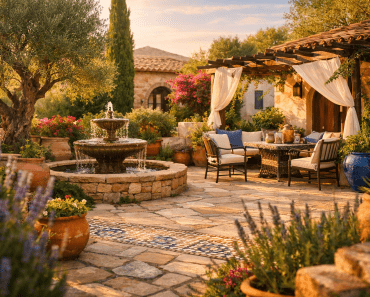
Terracotta works beautifully with Mediterranean-inspired planting. Olive trees, lavender, rosemary, thyme, and ornamental grasses can make a sunny balcony feel like a small courtyard garden.
Avoid using too many unrelated planter colors. A collection of bright blue, red, orange, white, black, and green pots can easily overwhelm a small outdoor space.
Instead, select one dominant finish and introduce subtle variation through size and texture.
Add Movement With Trailing Plants
Trailing greenery provides an important finishing layer.
Plants cascading gently over the edges of containers soften hard planter lines and make arrangements feel more established.
Trailing rosemary, creeping thyme, ivy alternatives, dichondra, sweet potato vine, or suitable flowering trailers can create this effect depending on climate.
On raised balconies, cascading plants also help visually connect the planter arrangement with the landscape beyond the railing.
For a more contemporary look, use trailing plants selectively. One or two containers with cascading foliage can provide enough softness without making the design feel overly wild.
🥈 Top 2 Deck and Balcony Planters for Privacy With Tall Sculptural Planting
Privacy can completely change how comfortable an outdoor space feels.
A balcony overlooking nearby apartments may technically provide outdoor space, but it may not feel relaxing if neighboring windows are only a short distance away. Similarly, a deck facing a road or neighboring property can feel exposed.
Tall Deck and Balcony Planters can provide a beautiful alternative to bulky privacy screens.
Instead of creating a solid barrier, plants produce a softer visual filter. Leaves and grasses allow light to pass through while reducing direct sightlines.
This creates privacy without making the space feel enclosed.
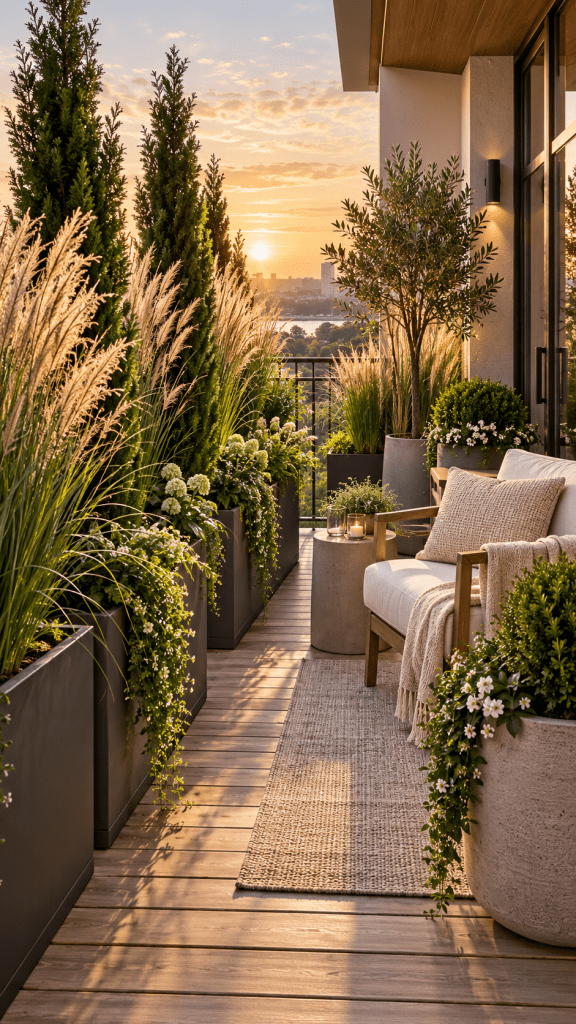
Choose Tall Rectangular Planters for Narrow Spaces
Rectangular planters are particularly useful on balconies because they can sit against railings or walls without consuming too much depth.
A narrow planter approximately the length of a seating area can function almost like a living partition.
Fill it with upright ornamental grasses, compact evergreen shrubs, or other tall plants suited to the local climate.
The most elegant designs avoid packing the plants too densely. A small amount of space between plants allows individual forms to remain visible while still creating screening.
On a deck, several rectangular containers can define the edge of an outdoor dining area. This creates the psychological feeling of a separate room while maintaining an open-air atmosphere.
If the deck overlooks a garden, the planters can also create a gradual visual transition between the raised deck and lower landscape.
Use Trellises to Multiply Vertical Growing Space
Trellised planters are ideal when floor space is extremely limited.
A slim planter positioned against a wall can support climbing jasmine, clematis, climbing roses, star jasmine, or other climbers appropriate for the region.
The plants grow vertically rather than spreading across the floor.
This technique can turn a plain balcony wall into a living green backdrop.
Black metal trellises create a modern architectural look, especially when paired with simple charcoal or stone-colored planters.
Natural wood trellises feel warmer and suit cottage, Scandinavian, rustic, and Mediterranean designs.
The trellis itself can become part of the décor even before the plant reaches full maturity.
Important Note: Before placing large planters filled with soil, mature plants, water, or stones on an elevated balcony or rooftop, verify the structure’s permitted load and any building or property rules. Large containers can become much heavier than they appear once watered.
Combine Privacy Plants With Seating
One of the easiest ways to make planter screening feel intentional is to connect it visually with the seating arrangement.
Place a tall planter behind one side of an outdoor sofa or lounge chair. Add another container slightly farther away to create an asymmetrical frame.
This arrangement provides partial privacy while creating the feeling of sitting inside a small garden room.
For dining balconies, long containers behind the chairs can soften the railing and make the space feel more intimate.
Lighting can strengthen this atmosphere after sunset.
Small warm outdoor lights placed near the base of tall grasses create interesting shadows. Subtle string lights or wall sconces can provide ambient illumination without overwhelming the plants.
The goal is not to flood the balcony with bright light. Gentle illumination makes leaves, grasses, and branches appear more dimensional at night.
🥉 Top 3 Deck and Balcony Planters With Seasonal Flowers Herbs and Edible Plants
The third approach combines beauty with productivity.
Rather than separating ornamental gardening from edible gardening, containers can include herbs, flowers, vegetables, and decorative foliage together.
This creates a relaxed and abundant appearance that is especially suitable for sunny decks and balconies.
A large planter might contain rosemary, sage, flowering nasturtiums, parsley, and compact ornamental grasses. Another container might feature cherry tomatoes supported by an elegant trellis with basil growing underneath.
Strawberries can trail over container edges. Chives produce attractive purple flowers. Thyme forms beautiful low-growing mats. Kale and Swiss chard can add dramatic foliage.
🍓 Edible plants can be just as visually appealing as ornamental species when arranged thoughtfully.
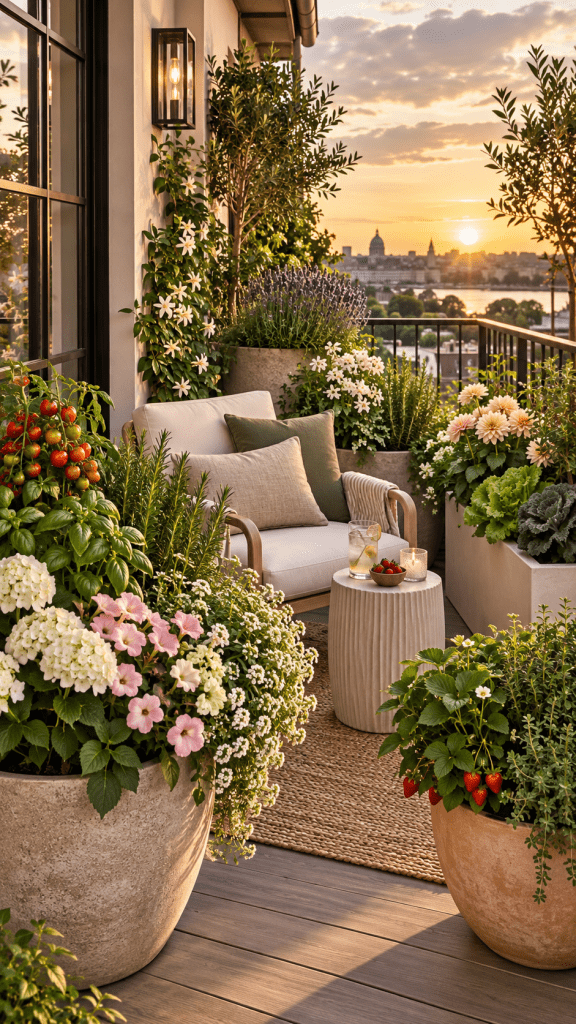
Create a Small Balcony Herb Garden
Herbs are among the easiest edible plants to incorporate into containers.
Rosemary provides upright structure.
Basil offers lush summer foliage.
Thyme creates low-growing texture.
Mint can fill its own container, preventing it from spreading aggressively among other plants.
Parsley creates dense green foliage while remaining useful for cooking.
A collection of herbs near the outdoor dining area can be both decorative and practical.
For a more polished appearance, avoid using many tiny plastic pots. Transfer the herbs into matching or coordinated containers.
Three medium terracotta pots filled with rosemary, basil, and thyme can look more intentional than ten unrelated nursery containers.
Herbs also make excellent companions for seasonal flowers.
Soft purple flowers, white blooms, or muted yellow varieties can be introduced between edible plants to create additional color.
Build Seasonal Displays Without Replacing Every Plant
Seasonal planter styling does not require emptying every container several times a year.
A more sustainable strategy keeps one structural plant in each large container while rotating smaller seasonal plants around it.
For example, an evergreen shrub may remain in the planter throughout the year.
In spring, bulbs and cool-season flowers can surround it.
During summer, colorful annuals or trailing plants can fill the lower layer.
Autumn can introduce ornamental grasses, warm-toned foliage, small decorative pumpkins nearby, or seasonal flowering plants.
Winter displays can incorporate evergreen branches or suitable hardy plants depending on the climate.
This method reduces work while maintaining year-round interest.
The structural plant becomes the anchor while seasonal plants provide temporary personality.
Use Flowers Strategically Rather Than Everywhere
Flowers create powerful focal points, but too many colors can make a compact balcony feel visually crowded.
Choose two or three dominant colors.
For a romantic balcony, combine blush pink, cream, and soft purple flowers.
For a contemporary space, consider white flowers combined with green foliage and dark planters.
For an autumn-inspired deck, use rust, burgundy, bronze, and muted gold.
Mediterranean spaces can feature lavender purple, terracotta, olive green, and warm white.
Repeating the same flower color across multiple containers helps the space feel coordinated.
Instead of placing five completely different flower combinations across the balcony, repeat one or two species.
This creates the impression of intentional landscape design.
How to Arrange Deck and Balcony Planters Like a Professional Designer
Successful planter styling depends heavily on placement.
Start by identifying the strongest visual zones.
The corner visible from inside the house is often an important location because the outdoor garden becomes part of the interior view.
Another strong location is beside the entrance to the balcony or deck.
A third may be beside the primary seating area.
Place the largest containers in these important zones before adding smaller pots.
This prevents the space from becoming cluttered.
Once the main containers are positioned, create smaller groupings rather than distributing individual pots evenly around the perimeter.
Groups of three can work particularly well when the containers vary in height.
A tall cylinder, medium round pot, and low bowl can create a balanced arrangement.
However, the rule of three does not need to be followed rigidly. In minimalist spaces, one oversized planter may be more powerful than multiple smaller containers.
Leave Visible Floor Space
One of the most important design principles for compact balconies is negative space.
Every empty area does not need decoration.
Visible floor space makes the balcony appear larger and allows special pieces to stand out.
If planters line every centimeter of railing, the balcony may begin to feel like storage rather than a garden.
Instead, create concentrated planting zones.
For example, place a lush planter group in one corner and a tall privacy planter along one side while leaving the remaining railing relatively open.
This balance allows the eye to move through the space.
Connect Planters With Outdoor Furniture
Planters should relate to the furniture rather than appearing randomly added afterward.
If the outdoor furniture has rounded shapes, cylindrical or softly curved planters can reinforce the design.
If the furniture is strongly architectural, rectangular containers may create a more cohesive appearance.
Materials can also connect the elements.
Natural wood furniture looks beautiful with stone, terracotta, cream ceramic, or charcoal planters.
Black metal furniture can coordinate with dark fiberglass, fiberstone, or powder-coated steel containers.
Woven furniture pairs naturally with warm neutral planters and relaxed planting.
Cushion colors can also repeat subtle shades found in flowers or foliage.
Choosing Plants for Sun Wind and Shade
A visually beautiful planter will struggle if the plants do not suit the conditions.
Balconies can have surprisingly extreme microclimates.
Upper-floor spaces may experience stronger wind than ground-level gardens. Walls can reflect heat. Covered balconies may receive very little rainfall even during storms.
Before selecting plants, observe how much direct sunlight reaches the space.
A sunny south- or west-facing balcony may require heat-tolerant plants.
A shaded balcony beneath another floor may perform better with foliage plants and shade-tolerant species.
Wind exposure also matters.
Tall plants with delicate stems may require protection in exposed locations.
Flexible ornamental grasses often handle movement better than brittle flowering stems, although species suitability always depends on local conditions.
Container size influences plant health as well.
Larger containers generally retain moisture longer than tiny pots and provide more room for roots.
This can make them easier to maintain during hot weather.
Drainage Is Essential for Healthy Deck and Balcony Planters
Beautiful containers need functional drainage.
Waterlogged soil can damage plant roots, while overflowing containers can stain decking or create problems on balconies below.
Use containers with adequate drainage holes whenever possible.
A suitable potting mix designed for container gardening is generally better than dense garden soil.
Depending on the location, saucers or discreet drainage trays may help control water.
Self-watering planters can be particularly useful for sunny balconies where containers dry quickly.
However, they should still be monitored because plant water requirements vary.
Grouping plants with similar moisture needs simplifies maintenance.
For example, drought-tolerant Mediterranean herbs should not necessarily share a container with plants requiring consistently moist soil.
Simple Styling Details That Make Planters Look More Expensive
Small details often separate an ordinary container garden from a polished outdoor design.
One effective technique is top dressing.
Decorative gravel, small pebbles, fine bark, or another suitable mulch can conceal exposed potting soil and create a cleaner finish.
The material should complement the planter.
Light gravel looks elegant with charcoal containers.
Warm stone chips pair beautifully with beige planters.
Natural bark works particularly well in relaxed woodland-inspired arrangements.
Another strategy involves repeating plant shapes.
If one planter contains soft ornamental grass, repeat the same grass elsewhere.
If one container features rounded evergreen foliage, use another rounded form across the seating area.
These visual echoes make the arrangement feel intentionally designed.
Restraint is equally important.
Luxury often comes from editing rather than adding.
One sculptural olive-style tree in a beautiful oversized planter can create more impact than several dozen tiny decorations.
Creating an Evening Atmosphere Around Planters
Decks and balconies often become most enjoyable during the evening.
Planters can contribute significantly to nighttime atmosphere.
Small outdoor uplights placed behind grasses produce dramatic silhouettes.
Low lanterns beside large containers provide warmth without distracting from the plants.
Solar lights can offer easy installation, although choosing warm light generally creates a softer residential atmosphere than very cool white illumination.
Candles inside protected lanterns can also create an intimate setting where appropriate and safe.
The plants themselves become part of the lighting composition.
Tall leaves cast shadows onto walls.
Grasses glow when illuminated from behind.
Tree branches create sculptural silhouettes.
This transforms a simple daytime planter arrangement into a completely different evening environment.
The Best Overall Strategy for Small Outdoor Spaces
The strongest Deck and Balcony Planters designs share several characteristics.
They use fewer container styles.
They create different heights.
They repeat plants or colors.
They leave enough open space.
They balance decorative beauty with practical function.
Most importantly, they treat containers as part of the overall outdoor design rather than isolated flowerpots.
The Top 1 layered greenery and architectural grass approach is ideal for creating a timeless, sophisticated outdoor retreat. It works particularly well for contemporary homes and people who prefer calm natural color palettes.
The Top 2 privacy planter approach is ideal for exposed balconies and decks where screening matters just as much as decoration. Tall rectangular planters, ornamental grasses, shrubs, and climbing plants can transform uncomfortable open areas into intimate garden rooms.
The Top 3 seasonal flower herb and edible planter approach creates a softer and more abundant atmosphere. It works beautifully for gardeners who enjoy changing displays, harvesting herbs, growing small edible crops, and introducing seasonal color.
These approaches can also be combined.
A balcony might use architectural grasses for structure, one tall privacy planter beside the seating area, and a small group of herb containers near the kitchen door.
A larger deck could use oversized foliage containers around the lounge zone while maintaining a separate edible container garden near the dining area.
The key is maintaining visual consistency.
Final Thoughts on Deck and Balcony Planters
A small outdoor space can still feel like a complete garden.
Thoughtfully selected Deck and Balcony Planters can bring greenery, privacy, seasonal color, edible plants, architectural structure, and personality into spaces where traditional landscaping is impossible.
The most effective designs do not depend on filling the balcony with dozens of plants. They depend on choosing containers with purpose.
Start with one strong focal planter.
Add another container to create height or screening.
Repeat a plant, material, or color elsewhere to connect the composition.
Then allow enough open space for the greenery to breathe.
🌿 Layered grasses and foliage create quiet sophistication.
🌱 Tall planted containers create privacy and architectural structure.
🌸 Seasonal flowers, herbs, and edible plants create personality and constant change.
With these Top 3 Deck and Balcony Planters ideas, even the smallest outdoor area can become a lush, comfortable, and highly styled extension of the home—one that feels less like an overlooked balcony or empty deck and more like a carefully designed private garden.